The global energy drink market is no longer just about caffeine and sugar; it is a high-stakes arena of lifestyle branding, functional innovation, and billion-dollar acquisitions. For years, the industry has been defined by a duopoly: the Austrian marketing juggernaut Red Bull and the American powerhouse Monster Energy. Together, they have commanded shelf space and consumer loyalty with an iron grip. However, the landscape has shifted dramatically. The era of the “two-horse race” is effectively over, replaced by a fragmented, hyper-competitive battlefield where “performance energy,” “clean labels,” and “influencer-led” brands are devouring market share.
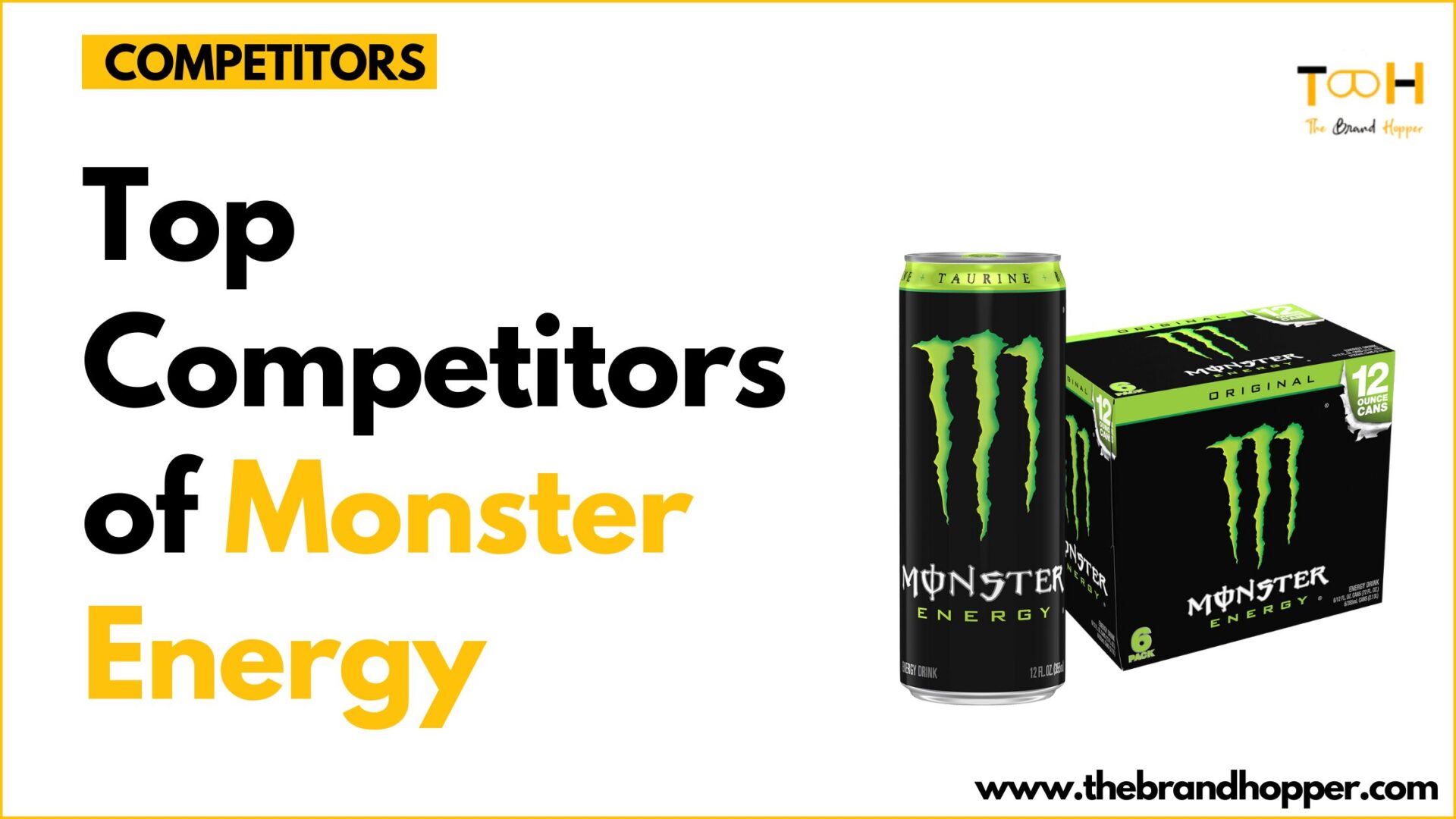
For Monster Energy, the threat is no longer just the blue-and-silver can of Red Bull. It is the fitness-focused rise of Celsius, the lifestyle cult of Ghost, and the regenerative mission of Yerba Madre. The consumer profile has evolved; they are no longer just gamers and extreme sports enthusiasts. They are exhausted parents, corporate professionals, gym-goers, and wellness advocates seeking a boost that aligns with their dietary values. This shift has forced legacy giants to adapt or die, leading to a wave of consolidation that has fundamentally reshaped the board.
In late 2024 and early 2025, the industry witnessed seismic changes. Keurig Dr Pepper’s acquisition of Ghost Energy and Celsius Holdings’ strategic purchase of Alani Nu have created new superpowers in the beverage aisle. These moves signal a maturity in the market where independent disruptors are being swallowed by conglomerates to fuel global expansion. Meanwhile, celebrity-backed ventures and heritage brands are recalibrating their strategies to survive in a saturated market.
To understand where the industry is going, we must look at the stories behind the brands chasing Monster’s tail. These are not just drink companies; they are marketing case studies in how to build communities, leverage digital culture, and disrupt established norms. Below is a comprehensive look at the top competitors of Monster Energy, their origin stories, and their standing in the fierce market.
Top Competitors of Monster Energy
1. Red Bull
Website – https://www.redbull.com/
The Origin Story – The story of Red Bull is the genesis myth of the modern energy drink industry. In 1982, Austrian entrepreneur Dietrich Mateschitz sat in a hotel bar in Thailand, jet-lagged and exhausted. He discovered a local tonic called Krating Daeng (Thai for “Red Bull”), a syrup-based drink popular among truck drivers and laborers for its ability to combat fatigue. Unlike others who might have seen a cheap local beverage, Mateschitz saw a global empire.
He partnered with Chaleo Yoovidhya, the creator of Krating Daeng, and spent three years adapting the formula for Western palates, adding carbonation and refining the flavor. When Red Bull launched in Austria in 1987, it didn’t just launch a product; it created a category. Mateschitz famously claimed, “We don’t bring the product to the people; we bring people to the product.” His strategy was to market a “feeling” rather than a beverage. By artificially limiting supply and targeting trendsetters in ski resorts and clubs, he built an aura of exclusivity that persists today.
The Strategy: Media House First, Drink Company Second – Red Bull differentiates itself by operating more like a media conglomerate than a beverage company. It owns Formula 1 teams, football clubs (RB Leipzig, Red Bull Salzburg), and sponsors thousands of extreme sports events annually. This content-first approach creates a “halo effect” where the can itself is merely a souvenir of the adrenaline-fueled lifestyle the brand promotes. While Monster focuses on volume and variety, Red Bull maintains a disciplined focus on its core premium brand, rarely deviating from its iconic 8.4oz slim can until recent years.
2025 Status and Recent Moves – As of 2025, Red Bull remains the undisputed global leader in terms of revenue and brand equity, though Monster often challenges it on volume in North America. The brand has remained resilient against the “clean energy” wave by expanding its “Editions” line (flavored variants like Juneberry and Curuba-Elderflower) without altering its core identity. Recent data suggests Red Bull holds roughly 39-40% of the market. Its resistance to acquisition and private ownership allows it to play the long game, ignoring quarterly pressures to maintain its premium positioning. However, the rise of performance energy has forced Red Bull to defend its flank, leading to more aggressive retail promotions and larger can sizes to compete with the 16oz standard set by Monster and Rockstar.
Also Read: Red Bull’s Success Story and Success Factors
2. Celsius

Website – https://www.celsius.com/
The Origin Story – Celsius is the industry’s greatest turnaround story. Founded in 2004, it spent over a decade in obscurity. Initially, it was marketed as a “negative calorie” diet drink—a clinically sterile value proposition that failed to resonate with consumers who wanted energy, not a weight-loss supplement. The brand struggled on the penny stock market, surviving near-bankruptcy multiple times.
The turning point came with the arrival of CEO John Fieldly and a complete brand overhaul around 2017-2018. They abandoned the diet gimmick and pivoted to a “lifestyle fitness” positioning with the tagline “Live Fit.” They ditched the scientific jargon for sleek, modern packaging and targeted a demographic previously ignored by the aggressive, masculine marketing of Monster and Red Bull: women and casual fitness enthusiasts.
The Strategy: Bridging Energy and Wellness – Celsius succeeded by creating a hybrid category: the “fitness energy” drink. It claimed to accelerate metabolism and burn body fat, backed by clinical studies, but marketed it through Instagram influencers, gym partnerships, and a clean, approachable aesthetic. It became the drink of choice for the “athleisure” generation. Their distribution strategy was equally brilliant, securing partnerships with PepsiCo in 2022 that instantly placed them in every convenience store and gas station in America, catalyzing hyper-growth.
2025 Status and Recent Moves – By 2025, Celsius has solidified its spot as the firm #3 player, biting huge chunks out of Monster’s market share. In a monumental move early this year, Celsius Holdings acquired Alani Nu (discussed below) for approximately $1.8 billion. This consolidation created a “better-for-you” beverage giant, controlling two of the fastest-growing brands in the sector. The merger allows Celsius to dominate the female demographic and cross-pollinate their distribution networks. Financially, Celsius continues to outperform legacy brands on growth percentage, though its stock has seen volatility as investors question if its triple-digit growth rates are sustainable in a cooling economy.
3. Ghost Energy

Website – https://drinkghost.com/
The Origin Story – If Red Bull is the corporate giant, Ghost is the cool kid at the back of the class who everyone wants to be friends with. Founded in 2016 by Dan Lourenco and Ryan Hughes, Ghost began as a sports nutrition brand (protein powders and pre-workout). Lourenco, a former pro bodybuilder and marketing savant, and Hughes, a fitness personality, wanted to build a brand that was “seen”—hence the ghost logo.
Their entry into the energy drink market in 2020 was a masterclass in hype marketing. Unlike competitors who formulated generic “fruit punch” flavors, Ghost pioneered the “authentic flavor collaboration.” They licensed official flavors from nostalgic candy brands like Warheads, Sour Patch Kids, Swedish Fish, and Bubblicious. This genius move made the product instantly recognizable and trustworthy to consumers who already loved those candies.
The Strategy: Transparency and Authenticity – Ghost’s motto, “Be Seen,” reflects their commitment to transparency. They were among the first to feature fully transparent labels, listing the exact dosage of every active ingredient (marketing the “efficacy” of ingredients like Alpha-GPC for focus). They treat their apparel and merchandise with as much care as their drinks, creating a streetwear-like hype culture around their “drops.”
2025 Status and Recent Moves – The biggest news in the energy sector for late 2024/early 2025 was the acquisition of Ghost Lifestyle by Keurig Dr Pepper (KDP). KDP, looking to diversify beyond coffee and soda, purchased a majority stake in Ghost, valuing the rapid riser at over $1 billion. This deal provides Ghost with KDP’s massive “Red” distribution system, solving their biggest bottleneck: availability. For Monster, this is a nightmare scenario; Ghost now has the funding and logistics to go toe-to-toe with them on shelf space nationwide while maintaining the “indie” cool factor that attracts Gen Z.
4. Rockstar Energy
Website – https://www.rockstarenergy.com
The Origin Story – Rockstar was founded in 2001 by Russell Weiner, the son of conservative radio host Michael Savage. Weiner saw an opening in the market that Red Bull had missed: value. At the time, Red Bull sold an 8oz can for $2. Weiner launched Rockstar in a 16oz can—double the size—for the same price. The tagline “Party Like a Rockstar” captured the hedonistic, excessive vibe of the early 2000s. It worked. Rockstar became the working man’s Red Bull and grew into a billion-dollar brand from Weiner’s San Francisco apartment.
The Strategy: The PepsiCo Era – For nearly two decades, Rockstar was the scrappy independent #3. However, in 2020, PepsiCo acquired Rockstar for $3.85 billion to utilize it as their primary weapon against Monster. The transition was rocky. PepsiCo immediately rebranded the cans, altering the formula and logo, which alienated many loyalists.
2025 Status and Recent Moves – In 2025, Rockstar is fighting to stabilize its market share. Under PepsiCo’s stewardship, the brand has pivoted away from the “party” image to a broader “fuel for every hustle” approach. They have invested heavily in the “Rockstar Unplugged” (hemp seed oil infused) and “Rockstar Focus” lines to compete with the functional beverage trend. While they remain a top-tier competitor due to Pepsi’s distribution muscle, the brand acts more as a portfolio defender for Pepsi than a cultural innovator. They are currently focusing on gaming partnerships and music festivals to regain cultural relevance with younger consumers who view the brand as a relic of the mid-2000s.
5. C4 Energy (Nutrabolt)
Website – https://cellucor.com/pages/c4-energy
The Origin Story – C4 Energy is the brainchild of Nutrabolt, a company founded in 2002 that originally focused on hardcore bodybuilding supplements. Their “C4” pre-workout powder was legendary in gym circles for its explosive energy and the “tingle” caused by Beta-Alanine. Recognizing that the energy drink market was shifting toward “performance,” they launched C4 in a can.
The Strategy: NSF Certified for Sport – C4 differentiates itself by bridging the gap between a soda and a supplement. They are one of the few energy drinks to carry the “NSF Certified for Sport” badge, meaning they are tested for banned substances. This allows them to market directly to college and pro athletes without the stigma attached to traditional energy drinks. Their marketing is high-intensity, partnering with WWE superstars and NFL players to emphasize physical performance.
2025 Status and Recent Moves – Following a $863 million investment from Keurig Dr Pepper in late 2022, C4 has seen its distribution footprint explode. By 2025, they have become a staple in grocery and convenience channels, moving out of the “supplement aisle” and into the main cooler. C4 is effectively challenging Monster’s “Reign” brand in the gym-goer demographic. Their recent strategy involves expanding into non-carbonated “Smart Energy” teas and waters to capture the white-collar productivity market, positioning themselves as a brain-booster as much as a body-booster.
6. Alani Nu: The Influencer Success

Website – https://www.alaninu.com/
The Origin Story – Alani Nu was founded in 2018 by fitness influencer Katy Hearn and her husband Haydn Schneider. Hearn, a personal trainer with a massive Instagram following, grew frustrated with the male-dominated, aggressively marketed supplement industry. She wanted to create a brand that she could trust and that spoke to women. Alani Nu started with colorful, minimalist packaging and flavors like “Cosmic Stardust” and “Mimosa.”
The Strategy: Trust and Taste – Alani Nu’s superpower was its direct connection to its consumer. They didn’t need TV commercials; they had Katy’s Instagram stories. They built a brand on trust, transparency, and arguably the best flavoring technology in the market. They made energy drinks feel like a guilt-free treat rather than a chemical necessity.
2025 Status and Recent Moves – As mentioned earlier, Alani Nu was acquired by Celsius Holdings in early 2025. Before the acquisition, Alani Nu had already cracked the top 10 energy brands, performing exceptionally well in Target and Kroger. Under the Celsius umbrella, Alani Nu is expected to expand internationally, taking its “for her” marketing strategy to Europe and Asia. The brand remains distinct from Celsius, focusing on flavor and fun, while Celsius focuses on fitness function.
7. ZOA Energy
Website – https://zoaenergy.com/
The Origin Story – Launched in 2021, ZOA Energy is the brainchild of Dwayne “The Rock” Johnson, his ex-wife and business partner Dany Garcia, Dave Rienzi, and John Shulman. The brand was built around Johnson’s persona: the hardest worker in the room. ZOA was marketed as a “healthy warrior” energy drink, featuring camu camu berries, electrolytes, and immunity-supporting vitamins.
The Strategy: Big Dwayne Energy – ZOA initially struggled with a formula that some consumers found too “vitamin-heavy” in taste. However, the brand showcased remarkable agility by rebranding and reformulating in 2024 to improve the taste profile and increase the caffeine content to match market standards (160mg). They leverage The Rock’s massive social media reach (hundreds of millions of followers) to bypass traditional advertising costs.
2025 Status and Recent Moves – In November 2024, Molson Coors expanded its minority stake to a majority ownership position, effectively taking control of the brand. This signaled a vote of confidence in ZOA’s potential to be a major portfolio player. In 2025, ZOA is aggressively pushing its “zero sugar” variants and leveraging Molson Coors’ beer distribution network to get into bars and restaurants as a mixer—a territory largely dominated by Red Bull.
8. Bang Energy

Website – https://www.bangenergy.com/en-us
The Story – No article on Monster’s competition is complete without mentioning Bang Energy. Founded by the eccentric Jack Owoc, Bang disrupted the industry in the late 2010s with “Super Creatine” and 300mg of caffeine, briefly threatening to overtake Red Bull. However, a series of disastrous lawsuits with Monster Energy (over false advertising of “Super Creatine”) and a failed distribution deal with PepsiCo drove the company into bankruptcy.
2025 Status – In a supreme irony, Monster Beverage Corp acquired Bang Energy out of bankruptcy in 2023 for $362 million. While technically now a Monster-owned brand, it remains a “competitor” on the shelf in terms of shelf-space allocation. Monster is currently attempting to rehabilitate the brand, stripping away the controversial claims and stabilizing its plummeting sales. It serves as a cautionary tale for other high-flying disruptors: rapid growth without operational discipline can be fatal.
9. Yerba Madre (Formerly Guayakí)
Website – https://yerbamadre.com/
The Origin Story – While not a traditional “energy drink” in the chemical sense, Guayakí (recently rebranded as Yerba Madre in 2025) is a fierce competitor for the natural consumer. Founded in 1996 by Alex Pryor and David Karr in California, the brand introduced the US to yerba mate, a naturally caffeinated South American holly plant. Their mission was “Market Driven Regeneration”—selling mate to fund the reforestation of the Atlantic Rainforest.
The Strategy: Counter-Culture Authenticity – Yerba Madre grew through grassroots marketing at music festivals and college campuses. Their yellow cans became a signal of environmental awareness. They refuse to compete on “hype”; instead, they compete on “vibe” and ethics.
2025 Status and Recent Moves – The 2025 rebrand to “Yerba Madre” (Mother Herb) was a risky but strategic move to double down on their indigenous roots and separate themselves from the flood of generic yerba mate competitors. They dominate the organic energy niche. As consumers become more skeptical of artificial sweeteners like sucralose (found in Ghost and Celsius), Yerba Madre’s sugar-sweetened and unsweetened organic options are seeing a resurgence among health purists.
10. Gatorade Fast Twitch
Website – https://www.gatorade.com/
The Origin Story – For decades, PepsiCo tried to crack the energy market with Mountain Dew variants, often failing to capture the sports crowd. In 2023, they finally utilized their biggest weapon: Gatorade. They launched Fast Twitch, a caffeinated energy drink (200mg) that is non-carbonated and packed with electrolytes.
The Strategy: owning the “Sideline” – Fast Twitch is the only energy drink you will see on the sidelines of the NFL, thanks to Gatorade’s exclusive contracts. By removing carbonation, they solved a major pain point for athletes: you can’t chug a Monster before a sprint without getting bloated. Fast Twitch is designed for “guzzle-ability.”
2025 Status – In 2025, Fast Twitch has carved out a solid niche in the “pre-game” occasion. It doesn’t try to be a lifestyle brand for gamers; it is strictly a tool for athletic performance. PepsiCo is leveraging this to bundle Fast Twitch with Gatorade sales in schools and sports complexes, locking out competitors from these high-volume venues.
11. 5-Hour Energy
Website – https://5hourenergy.com/
The Story – Founded by Manoj Bhargava in 2004, 5-Hour Energy created the “energy shot” market. While not a drink in a can, it competes for the same “need state”—immediate wakefulness. Bhargava famously kept the bottle small (2oz) so it could be placed at the checkout counter, creating the ultimate impulse buy.
2025 Status – While the “shot” market has flattened, 5-Hour Energy remains a cash cow with incredibly high margins and almost zero direct competition (having crushed copycats years ago). In 2025, they have innovated by launching a carbonated 16oz beverage line to compete directly with Monster, though their dominance remains in the little red bottle at the gas station register.
12. Prime Energy

Website – https://drinkprime.com/
The Story – Launched by YouTubers Logan Paul and KSI, Prime Hydration broke the internet in 2022. They followed up with Prime Energy in 2023. The brand was built entirely on “clout” and scarcity marketing, causing riots in UK supermarkets.
2025 Status – By 2025, the fever pitch has cooled significantly. Sales have dipped as the initial hype wore off and the brand faced scrutiny over caffeine levels in products marketed to children. However, Prime remains a dangerous wild card. They still command the attention of millions of Gen Alpha and Gen Z consumers. Their strategy has shifted from scarcity to ubiquity, but they face a tough battle to prove they are a staple brand and not just a passing fad.
Conclusion: The Future of the Shelf
As we move deeper, the energy drink market is characterized by a “barbell” dynamic. On one end, you have the massive, diversified giants (Monster, Red Bull, KDP/Ghost, Pepsi/Rockstar) fighting a war of distribution and logistics. On the other end, you have premium, niche players (Yerba Madre, ZOA) fighting a war of values and ingredients.
For Monster Energy, the days of easy growth are over. To stay ahead, they must fend off the “healthy” allure of Celsius, the “cool” factor of Ghost, and the “performance” credentials of C4. For the consumer, this competition is a win: better flavors, cleaner ingredients, and more choices than ever before to fuel the daily grind.
Also Read: Marketing Strategies of Monster Energy Drink
To read more content like this, subscribe to our newsletter