Imagine a hero. Not one wearing a cape, but one wearing an apron, a hard hat, or a stethoscope. This hero has a superpower: they provide the absolute best service in their town. Their coffee is richer, their repairs are more reliable, or their legal advice is sharper than anyone else’s.
But this hero has a fatal flaw. They are invisible.
In the physical world, their signage is bright. But in the digital kingdom—where 98% of modern consumers start their journey—they do not exist. Meanwhile, a mediocre competitor (let’s call them “The Generic Giant”) dominates the territory simply because they own the map.
This is not just a story about algorithms. It is a story about territory.
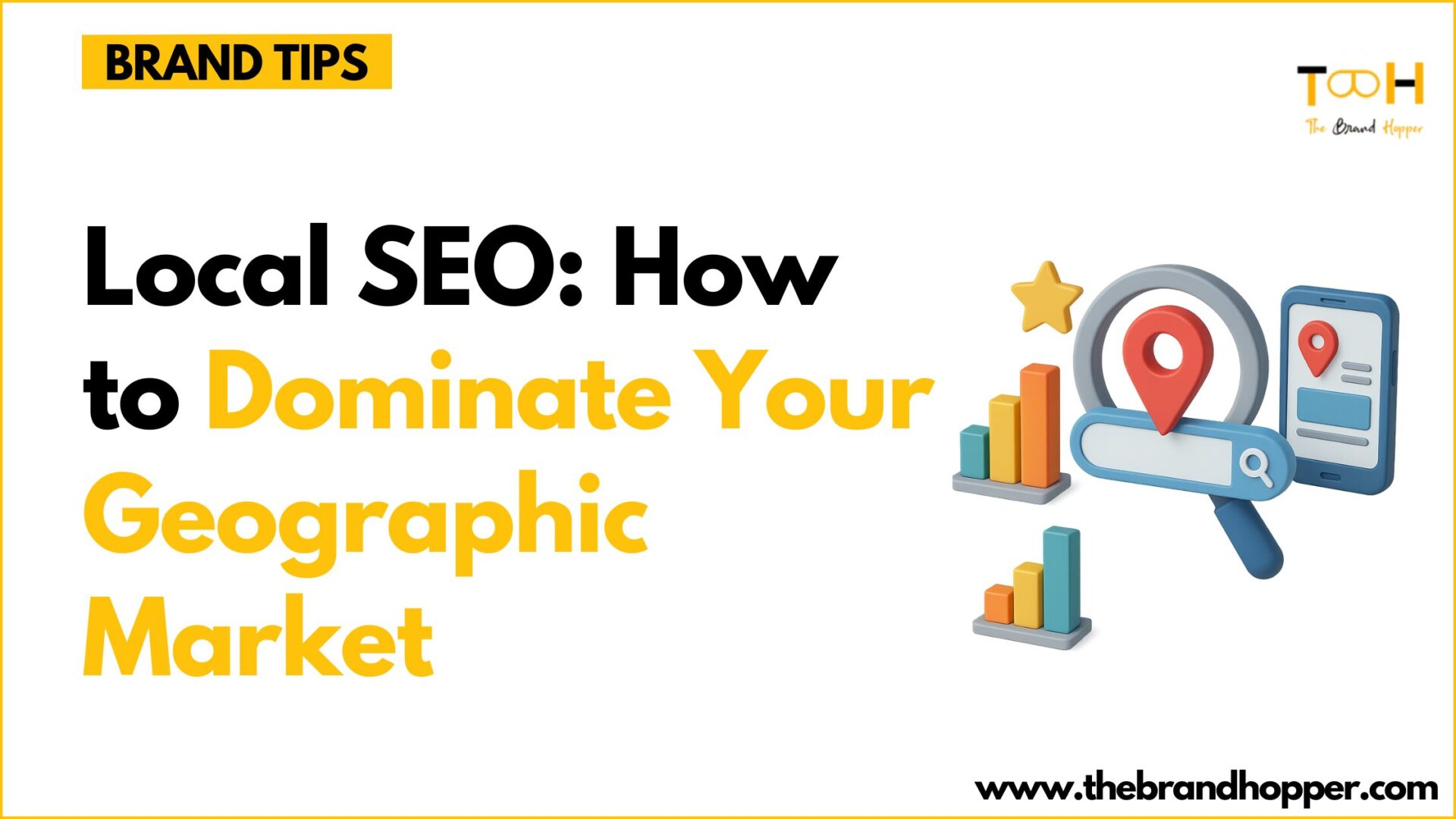
For any brand operating in a specific geographic area, the “map” is no longer paper. It is the Local Pack—those three coveted spots at the top of a Google search. If your brand story isn’t being told there, it isn’t being heard at all.
This article is your map to the hidden treasure. It is the guide on how to take your brand from a “hidden gem” to the undisputed ruler of your geographic market.
The Landscape of War (Why Local Matters)
Before we draw our swords, we must understand the battlefield. The digital landscape has shifted. The era of generic, global keywords is fading for local brands. We have entered the age of Hyper-Relevance.
Consider the modern consumer’s behavior. They don’t just search for “coffee shop.” They search for “coffee shop open now near me.” They crave immediacy and proximity.
The “Near Me” Phenomenon
The rise of mobile search has created an explosion in local intent. If your brand ignores Local SEO, you are essentially closing your doors to the customers standing right outside.
| Statistic | The Implication for Your Brand |
| 76% of people who search on their smartphones for something nearby visit a business within a day. | Speed to Sale: Local intent is high-intent. These aren’t window shoppers; they are buyers. |
| 28% of local searches result in a purchase. | Conversion Rate: Local SEO converts significantly higher than general organic traffic. |
| 46% of all Google searches have local intent. | Volume: Nearly half of the internet is looking for something specific to a location. |
The Villain: The Proximity Paradox
The villain in this story is the Proximity Bias. Google’s algorithm naturally favors businesses physically closest to the searcher. However, you can defeat this villain. You can expand your “digital radius” so that your brand appears prominent even to customers a few miles away.
Claiming Your Castle (Google Business Profile)
Every kingdom needs a castle. In the world of Local SEO, your castle is your Google Business Profile (GBP).
Many brands treat their GBP like a digital phonebook listing—static and boring. This is a mistake. Your GBP is your second homepage. It is often the only thing a customer looks at before deciding to visit.
To dominate your market, you must optimize your profile with the precision of a curator.
The Optimization Protocol
- The Name: strictly your legal business name. No keyword stuffing (e.g., “Bob’s Pizza – Best Pizza in Chicago” is a violation).
- The Categories: This is how Google files your brand. Be specific. You aren’t just a “Lawyer”; you are a “Personal Injury Attorney.”
- The Visual Story: Upload high-resolution photos of your interior, your team, and your work. A profile with photos receives 42% more requests for directions.
Brand Story Tip: Use the “Updates” feature on GBP like a micro-blog. Post about local community events you are sponsoring or new seasonal arrivals. Show Google you are alive and active in the neighborhood.
The Supply Lines (Citations and NAP Consistency)
A kingdom cannot survive without reliable supply lines. In Local SEO, these supply lines are called Citations.
A citation is any mention of your business across the web—on Yelp, Yellow Pages, Facebook, Bing, and industry-specific directories. But here is the catch: Consistency is King.
Google is a skeptical detective. If it sees your address listed as “123 Main St.” on your website, but “123 Main Street, Suite B” on Yelp, and “123 Main” on Facebook, it gets confused. Confusion leads to a drop in rankings.
We call this the NAP (Name, Address, Phone) usage.
The Trust Signal Table
| Component | Correct Format | Incorrect Format (The Ranking Killer) |
| Business Name | Elite Dental Care | *Elite Dental Care |
| Address | 4500 Broadway St, #201 | 4500 Broadway Street, Suite 201 (Inconsistent abbreviations) |
| Phone Number | (555) 019-2834 | 555-019-2834 (Using tracking numbers that differ per platform) |
Strategy: Conduct a “Citation Audit.” Use tools like BrightLocal or Moz Local to scan the web for inconsistencies and fix them. This cleans up your digital footprint, signaling to Google that you are a legitimate, trustworthy entity.
The Voice of the People (Reviews and Reputation)
In every great story, the hero needs allies. Your allies are your customers.
Reviews are not just vanity metrics; they are a primary ranking factor. Google reads your reviews to understand what you do and how well you do it. If a customer writes, “Best gluten-free pizza in Brooklyn,” they have just gifted you a powerful keyword association.
The “Review Velocity” Strategy
Do not get 50 reviews in one day and then silence for three months. That looks suspicious. Aim for a steady stream of feedback.
How to Respond (The Brand Voice)
- The Fan: “Thank you, Sarah! We’re glad you loved the espresso. See you next Tuesday!” (Reinforces loyalty).
- The Critic: “Hi John, we are sorry we missed the mark. We’d love to make it right…” (Shows future customers you are responsible).
Pro Tip: Don’t just ask for a review; guide the narrative. Instead of saying “Review us,” say, “If you enjoyed our summer landscaping service, please mention it in a review!” This encourages customers to use relevant keywords naturally.
Speaking the Local Dialect (On-Page SEO)
You cannot rule a land if you do not speak the language.
Many national brands fail locally because their website content is generic. To dominate a geographic market, your website must signal to Google that you are part of the local fabric.
This goes beyond just putting your city name in the footer. You need Location Pages.
If you service three distinct towns—say, Austin, Round Rock, and Pflugerville—you need a unique page for each. Do not duplicate the content and just swap the city name. That is “doorway page” spam.
The Local Content Blueprint:
- Local Landmarks: Mention that your office is “across from the Town Hall” or “near the Riverwalk.”
- Local Events: Write blog posts about your participation in the local charity run or food festival.
- Local Case Studies: “How we helped a historic home in [Neighborhood Name] restore their roof.”
Implicit vs. Explicit Keywords
To truly dominate, you must optimize for how people actually search.
| Keyword Type | Definition | Example | Strategy |
| Explicit Keywords | The searcher specifies the location. | “Plumber in Seattle“ | Use in Title Tags, H1 Headers, and URL slugs. |
| Implicit Keywords | The searcher assumes Google knows where they are. | “Emergency plumber” or “Plumber near me” | Optimize for “Near Me” by having robust GBP signals and mobile-friendly pages. |
The Victory (Measuring Domination)
How do you know when you have won? In a brand story, the victory is the transformation. In Local SEO, the victory is data.
You are moving from the “Invisible Brand” to the “Market Leader.” Here is the scorecard you should track:
- Grid Rank: Don’t just check if you rank #1 when you are at your office. Use a “Local Grid” tool to see if you rank #1 for people searching 5 miles away. The goal is to turn the entire map green.
- Direction Requests: This is a pure intent metric. If this number is going up, your foot traffic is going up.
- Click-to-Call: The direct line to revenue.
Epilogue: The New Ruler
Local SEO is not a technical checklist; it is a reputation management engine. It is the digital manifestation of your real-world hard work.
By claiming your profile, aligning your citations, gathering allies through reviews, and speaking the local language on your website, you do more than just “rank.” You build a moat around your business that competitors cannot easily cross.
You stop being the best-kept secret in town. You become the town itself.
The End.
Also Read: The Role of On-Page SEO in Content-First Marketing Strategies
To read more content like this, subscribe to our newsletter