Last Updated on December 22, 2025 by Team TBH
Chips Ahoy! is a flagship chocolate chip cookie brand owned by Mondelēz International (formerly Nabisco), first introduced in 1963. Over six decades it has become one of America’s most recognized cookie brands, available in a range of variants (Original, Chunky, Chewy, etc.) each signaled by distinct packaging colors.
Despite 95% brand awareness, Chips Ahoy! reaches only about 30% of U.S. households, so the company has substantial headroom to expand. Historically, the brand has emphasized fun and playfulness; its long-standing mascots (like the cartoon Chip character and the “Cookie Guys”) and happy, catchy taglines reflect this tone.
In recent years Mondelēz has revitalized Chips Ahoy! by leaning into that heritage – for example, bringing the animated spokes-cookie Chip back in marketing to embody a “happy-go-lucky” spirit. This blend of nostalgia and modern flair is core to the brand’s identity today.
Chips Ahoy’s global presence is broad – it’s sold worldwide (in some regions under different names like “Chips More” or “Pepitos”) – and it positions itself as a fun, family-friendly snack. In its messaging, opening a bag of Chips Ahoy is associated with joy and shared moments; a 2010 campaign even showed people breaking into dance when they sniffed the cookies. Underpinning all strategies is the legacy of Chips Ahoy! as a classic American cookie, while also adapting to changing consumer tastes.
Marketing Strategies of Chips Ahoy!
1. Brand Identity and Heritage
Chips Ahoy’s marketing strategy heavily draws on its long-established brand identity. The company has re-embraced its classic mascot and themes to rekindle consumer affection. For example, in a recent rejuvenation campaign Mondelēz “brought back a modernized version” of the original Chips Ahoy! mascot (Chip the Cookie). This move re-connects consumers with the “foundational” elements of the brand – nostalgia for longtime fans and a cheerful character to engage younger audiences. The core blue bag packaging was also refreshed in this rebrand, reinforcing the classic look.
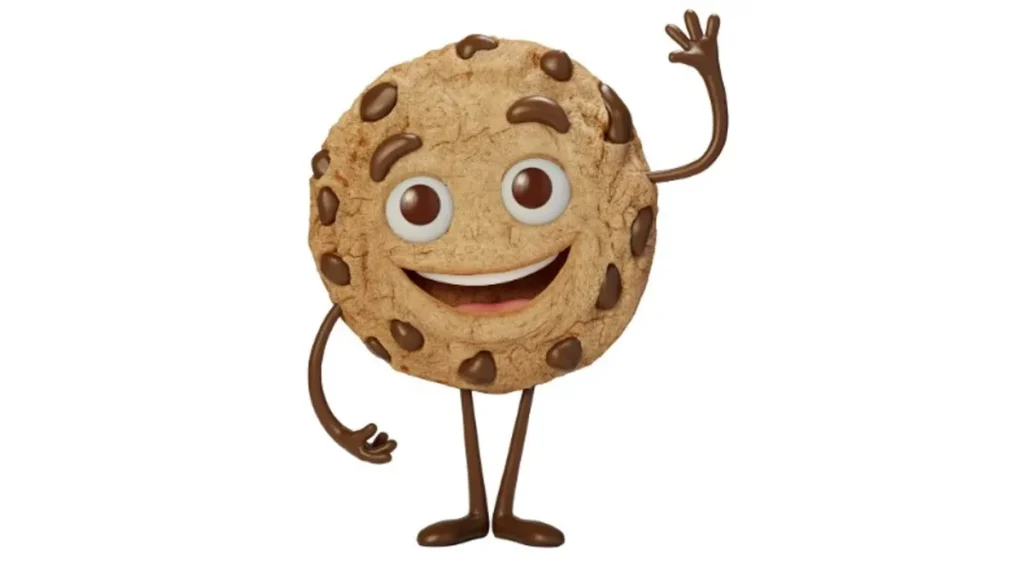
At the same time, Chips Ahoy highlights its heritage in advertising. Historical mascots like “Cookie Man” in the 1960s and the animated “Cookie Guys” in the 2000s built early brand equity. More recently, campaigns have played up the feeling of childlike joy that a bag of chips can spark. A 2010 TV campaign, for instance, showed the simple act of opening Chips Ahoy! inducing literal “happy feet” – people breaking into dance. In essence, Chips Ahoy’s identity strategy ties together this sense of fun and excitement with continuity from past generations.
By reminding consumers of how the brand made them feel (and updating those feelings with a modern look and Chip), the brand maintains emotional connection even as it targets new demographics.
2. Digital-First Media Strategy
Recognizing that younger consumers consume media differently than their parents, Chips Ahoy! has shifted almost entirely away from traditional TV advertising to digital channels. Mondelez has “completely ditched all linear TV advertising” for this brand. The majority of media spend now goes to social and digital platforms – notably TikTok, YouTube, and online video – which yield better returns from Gen Z viewers. This pivot was driven by data: the company found that its target growth segment is Gen Z, who spend far more time online than on TV. For example, Chips Ahoy ceased general TV spots and instead runs TikTok ads and sponsored YouTube content where its animated mascot Chip fits in organically.
In practice, this means tailoring content for each platform. Chips Ahoy produces short-form, engaging videos and interactive posts rather than long commercials. Marketing executives explain that the brand creates bite-sized animations and memes that work on TikTok or YouTube – formats that Gen Z favors. One Mondelez manager noted that “shorter formats, more engaging” content in the right digital places has significantly boosted media performance and ROI. The Chips Ahoy mascot Chip often appears shooting hoops or dancing in TikTok videos that feel native to the platform. This content strategy has paid off: Chips Ahoy! was recently named a top Gen Z brand by a marketing index.
3. Social Media and Influencer Campaigns
To reach younger audiences authentically, Chips Ahoy engages social media creators and influencers extensively. A standout example is its TikTok-centric campaign for the brand’s 60th anniversary.
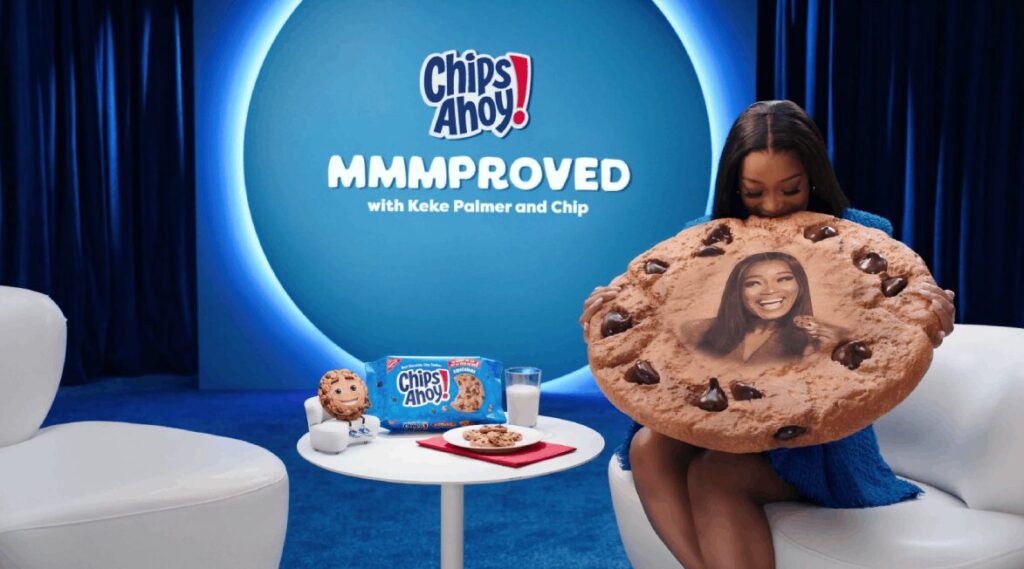
The campaign introduced a new Confetti Cake cookie and mobilized TikTok creators to celebrate. Chips Ahoy partnered with several Gen Z TikTok influencers to produce branded videos and an interactive “Branded Effect” filter where users could toss digital cookies to catch falling confetti. This TikTok activation generated massive buzz in Canada – the branded effect itself got over 34 million video views and spurred 1,436 user-generated posts. According to the campaign report, it boosted brand engagement and made younger consumers embrace the new cookie as a fun snack.
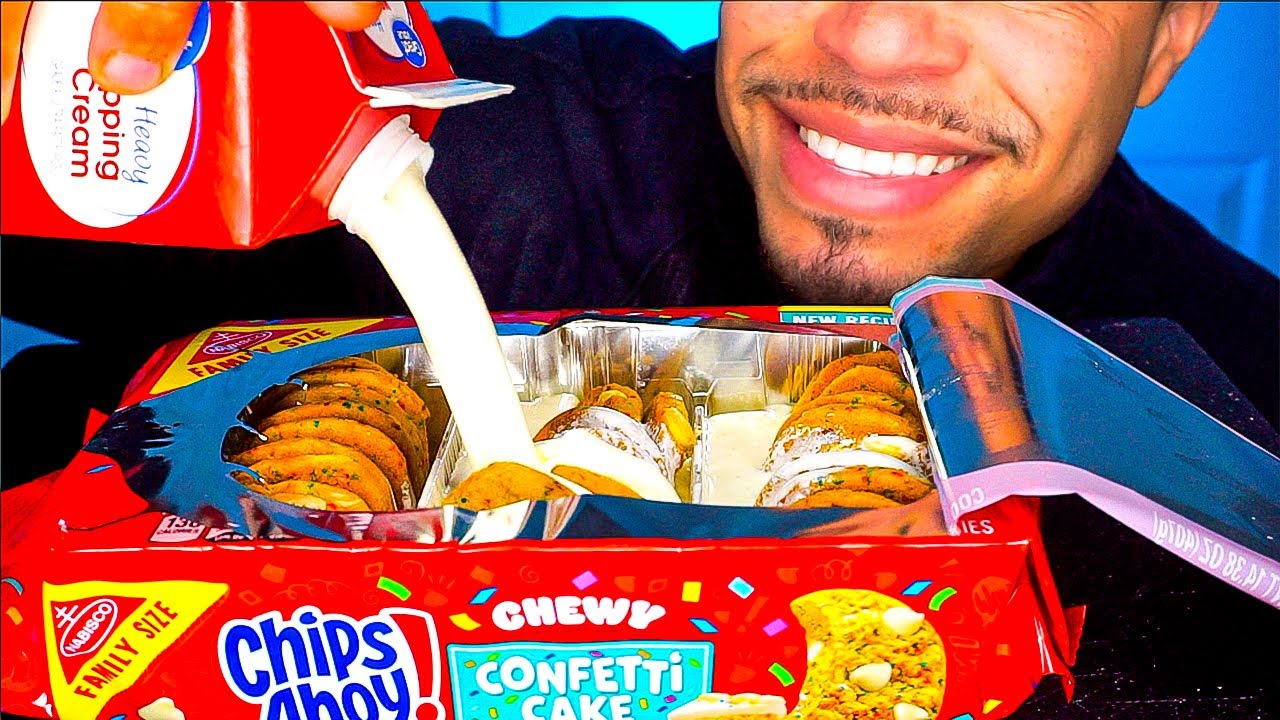
Influencer partnerships extend beyond TikTok. Chips Ahoy has collaborated with celebrities and online creators to amplify product launches. In 2023, they worked with actress/singer Keke Palmer to create branded content, and with dozens of micro-influencers to promote their gluten-free cookie line. For a Big Chewy cookie launch, they partnered with hip-hop artist Big Sean, designing co-branded merchandise and live events. These influencer campaigns are not just paid ads – the celebrities share Chips Ahoy content on their own channels to reach fans organically, which is then boosted by paid media. This influencer-driven approach allows Chips Ahoy to tap into niche communities and drive trends.
In addition, Chips Ahoy leverages social commerce features. They integrate shopping links and gamified shopping experiences within apps, making it easy for social media users to purchase cookies directly. While specific case studies on their social commerce are proprietary, industry reports note that the brand actively encourages online interaction (like hashtag challenges) that can lead to e-commerce sales. Overall, Chips Ahoy’s social media strategy is to meet Gen Z on their turf – using viral content, community-driven campaigns, and interactive tools to turn viewers into customers.
4. Partnerships and Collaborations
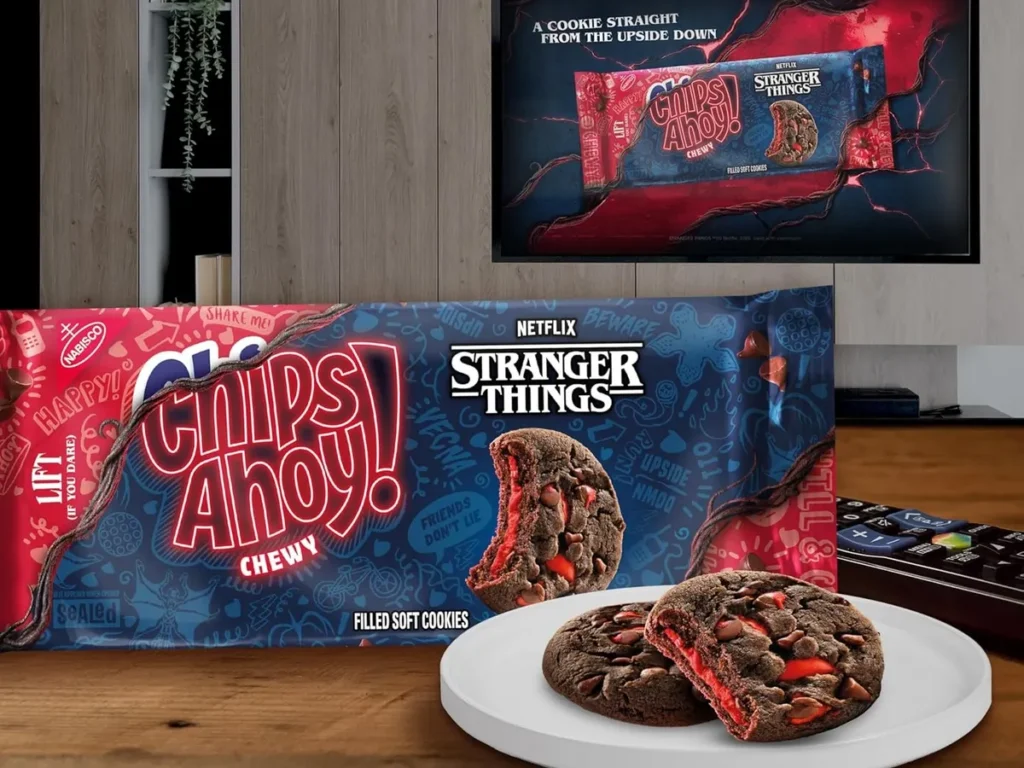
Another pillar of Chips Ahoy’s strategy is pop culture and cross-brand partnerships. These tie-ins create excitement and cultural relevance for the brand. The most recent high-profile example is a collaboration with Netflix’s hit series Stranger Things. In late 2025, Chips Ahoy launched a special “Stranger Things” cookie: an inky black, soft-chew chocolate chip cookie with a strawberry filling inside – inspired by the show’s dark ‘Upside Down’ dimension. The retro ‘80s-themed packaging and flavor (Chips Ahoy’s first-ever fruit cream center) were designed to resonate with Gen Z fans of the series. Mondelez’ innovation director explained that tapping into Stranger Things – a clear Gen Z cultural touchstone – was a deliberate way to insert Chips Ahoy into current pop culture. This collaboration generated significant media attention and positioned the brand as being “in the cultural conversation” with younger viewers.
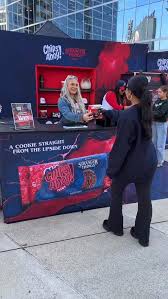
Chips Ahoy also partners with other entertainment and lifestyle brands. It has sponsored experiential events like immersive Stranger Things pop-up exhibits, where branded photo ops and cookie sampling were integrated into the fan experience. For example, a Chips Ahoy activation in Toronto for Stranger Things samples 80,000 cookies and racked up over 800,000 media impressions. Beyond that, the brand teamed up with sneaker designer The Shoe Surgeon and retailer NTWRK for limited-edition Chips Ahoy merchandise drops, and even ran promotions within the NBA 2K video game community on Twitch.
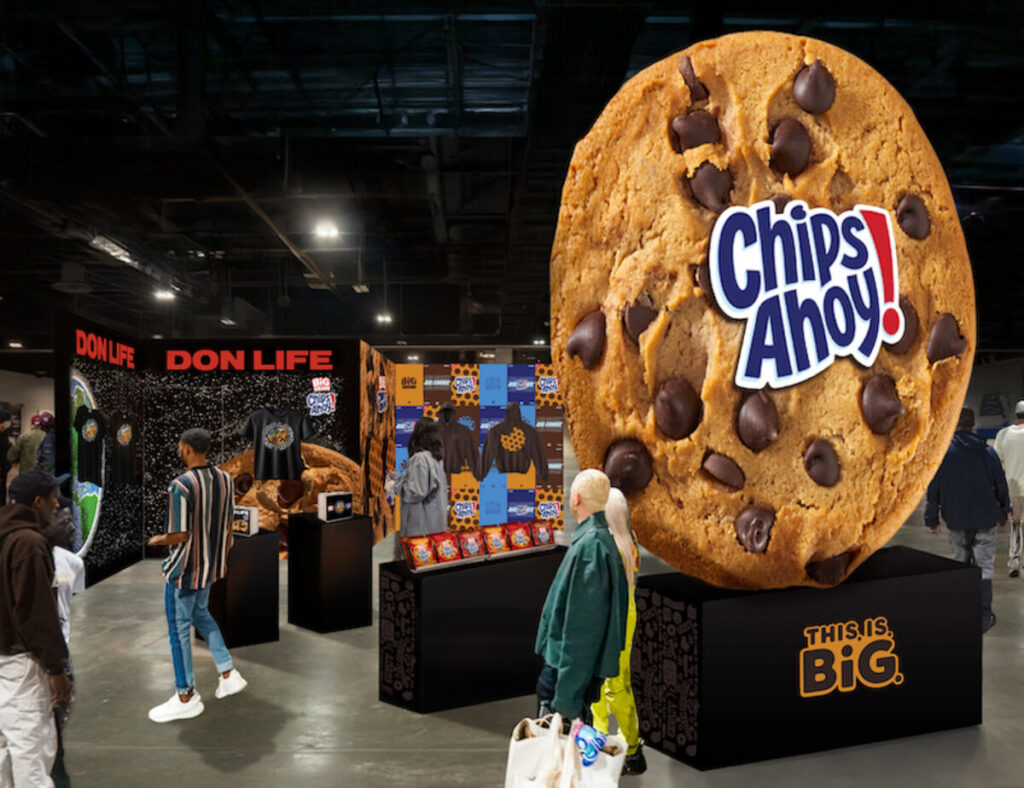
Music and celebrity tie-ins are part of this strategy too. In addition to Big Sean’s cookies launch, Chips Ahoy collaborated with live events: the Big Chewy cookie was unveiled at ComplexCon (a pop culture convention) with a Big Sean performance and on-site sampling. These partnerships — spanning TV, movies, music, gaming, and fashion — help place Chips Ahoy in trending contexts. By co-branding with popular IPs, Chips Ahoy not only grabs headlines but also gains one-to-one fan engagements (such as contest winners attending a yacht party or convention) that deepen audience affinity.
5. Product Innovation and Extensions
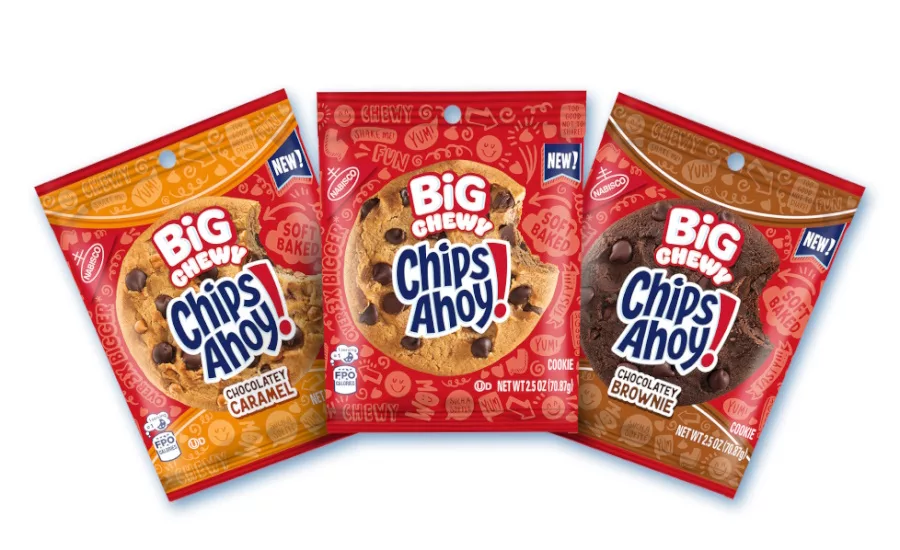
Chips Ahoy’s marketing is backed by a robust product innovation pipeline. The brand continually introduces new flavors, formats, and product lines to keep interest high. A major focus has been on new cookie varieties that address emerging consumer desires. For example, Mondelez launched the first-ever Chips Ahoy! Gluten-Free cookies in 2024, after research showed over 20% of households purchase gluten-free cookies and they were dissatisfied with existing options. Leveraging the Oreo brand’s prior success in gluten-free, Chips Ahoy recreated a gluten-free version that still met its taste standards. Similarly, noticing consumers wanted a bigger, more indulgent on-the-go snack, they introduced Chips Ahoy Big Chewy Cookies (three times larger than a regular cookie) in late 2024. These innovations were directly informed by talking to consumers about their snacking needs.
The brand has also expanded beyond cookies. In early 2025 Chips Ahoy debuted Baked Bites, square soft-baked treats (like small brownie-style bars) marking its first entry into the cakes and pastries category. This extension taps a larger $10 billion packaged cakes market by offering the familiar chocolate-chip taste in new form. And looking ahead, Chips Ahoy plans Fresh Stacks – compact sleeves of cookies – designed for freshness and portability. These packs (with 5 stacked cookies) were launched at a lower price (<$3) to appeal to value-conscious shoppers.
Alongside format innovations, Chips Ahoy experiments with novel flavors and limited editions to stay trendy. Recent examples include a Confetti Cake-flavored cookie (launched for the 60th birthday), a Cinnamon Bun flavor, and the aforementioned strawberry-filled Stranger Things cookie. According to Mondelez, Gen Z consumers love unique and bold flavors, so Chips Ahoy aims to push boundaries (even considering viral trends like “Dubai chocolate” or matcha in the future). All of these product launches are tightly linked to marketing: when a new cookie comes out, it’s always accompanied by targeted campaigns (TV or digital ads, influencer posts, partnerships) to maximize awareness. The results speak for themselves: in a single year of intense innovation, Chips Ahoy added about 2 million new households of shoppers, and sales began outpacing the stagnant biscuit category.
6. Experiential Marketing and Events
Chips Ahoy invests in experiential campaigns that turn consumers into participants and advocates. A prime example was the brand’s 60th anniversary celebration: Chips Ahoy chartered a “Happiest Birthday” yacht in Miami for influencers and contest winners, complete with cookie-themed floats, ice cream sandwiches, themed mocktails, and DJs. This Instagrammable event generated over 1 billion impressions and half a million sweepstakes entries. By creating a real-world “social moment,” Chips Ahoy not only rewarded fans but also created vast earned media buzz. The company explicitly noted that Gen Z craves immersive “reset” experiences, and the yacht party delivered an out-of-the-ordinary, shareable event.
Chips Ahoy also pops up at cultural gatherings. As mentioned, the brand launched its Big Chewy cookie at ComplexCon in Las Vegas – a youth culture convention – where attendees could sample the product and meet Big Sean. Similarly, the in-store bakery launches of Baked Bites came with demo stations and partnerships with retailers. The aforementioned Stranger Things immersive was another brand experience: Chips Ahoy placed cookies and branded sets inside the attraction for fans to try. In each case, the goal is to provide a memorable “Instagram-worthy” experience that people then share online, effectively extending the marketing reach.
Even outside large events, the brand uses guerrilla and OOH tactics. For example, Chips Ahoy placed out-of-home billboards and transit ads in key markets to accompany new product rollouts. The idea is to ensure that when consumers move from online to offline, the brand presence remains consistent. Combined, these live events, pop-ups, and ambient ads create an experiential layer: consumers don’t just see commercials for Chips Ahoy, they physically interact with it in fun contexts.
7. Data-Driven and Consumer Insights Strategy
Underlying all of Chips Ahoy’s marketing decisions is a heavy reliance on consumer data and insights. The brand continuously analyzes shopping behavior and trends to guide both product and marketing moves. For instance, Chips Ahoy tracked that about 20% of households buy gluten-free cookies, but many were dissatisfied with existing options. This insight directly led to reformulating a better-tasting gluten-free Chips Ahoy. Likewise, before launching Big Chewy, the team gathered feedback that on-the-go snackers wanted something “more indulgent, more satiating…not as messy,” which dictated the cookie’s extra-large size. Even the decision to create Fresh Stacks – smaller 5-cookie packs – was data-informed: researchers found that most biscuit sales come from under-$4 packs, so a sub-$3 Chips Ahoy pack at a desirable portion size would meet a gap.
The company also watches broader trends, especially among Gen Z. Mondelez’s innovation director noted that Gen Z snackers love to experiment with new or viral flavors, so Chips Ahoy aims to quickly ride such trends. They plan flavor drops (like the upcoming cinnamon bun or possible black sesame matcha flavors) based on trending tastes identified on social media or market forecasts. Operationally, they track sales and household penetration in near real-time. Recent data showed Chips Ahoy! gained roughly 2 million new households and grew sales faster than the overall cookie category after implementing the new strategies. These metrics are fed back into strategy discussions: low penetration in certain channels led to expansion into convenience and club stores, for example.
In short, Chips Ahoy’s marketing is highly iterative: launch a product or campaign, measure engagement and sales, learn consumer responses, and adjust. This data-driven approach ensures they stay aligned with consumer preferences. For example, noticing that Gen Z is always “online” but also craves real-life experiences, they balance digital ads with real events. The brand even acknowledges that Gen Z can “sniff out” inauthenticity, so they continuously test new ideas in small ways before scaling (a strategy direct from internal data metrics). This focus on insights – from analytics, social listening, and direct consumer research – underpins virtually all the strategies described above.
Also Read: Marketing Mix, STP, PESTEL & Porter’s Five Forces of Mondelez
To read more content like this, subscribe to our newsletter