
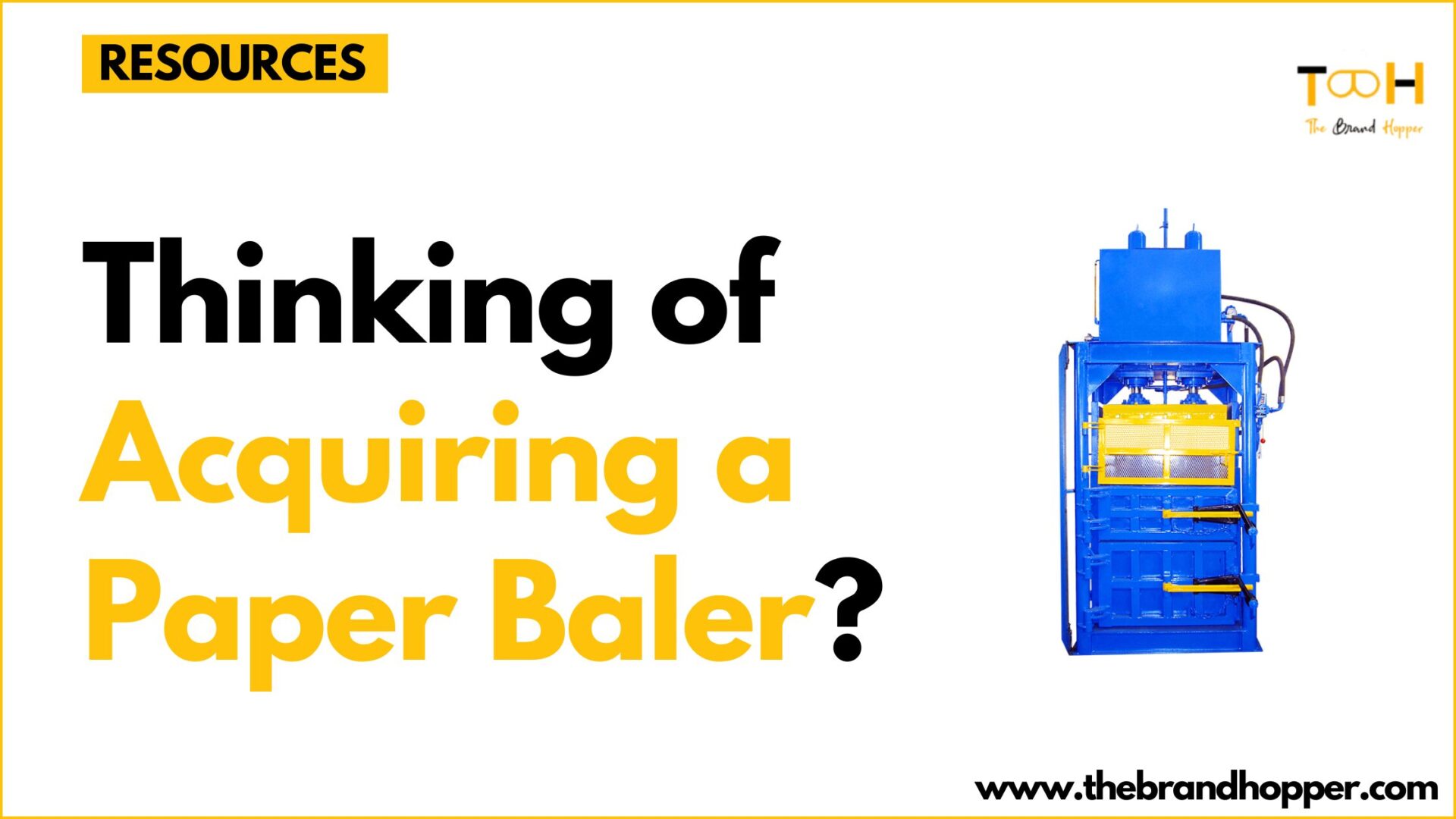
Are you noticing a big buildup of paper waste and large cardboard boxes filling up your office or warehouse space? It’s a headache every time you see it; it makes the workspace not only look unpleasing but it’s also bulky to work around and takes away crucial space you could be using to be productive. Or perhaps you’ve solved the inside issue and have massive recycling bins outside that you fill up daily and pay an arm and a leg for to get a recycling company to remove? If they ever come on time and on the correct day. It’s all a bit of a headache, isn’t it? Who would have thought that disposing of waste like cardboard boxes could become such a problem? Well, luckily for you, there is a solution for this and it comes in the form of a paper baler.
Paper balers have become a pretty popular option for businesses and warehouses. They’re quick and efficient but the problem lies in the fact that they seem to be pretty niche. Either you’ve never heard of them or you’ve got one and now know every detail. There doesn’t seem to be a middle ground. This article aims to fill in the gaps with the use of 10 major factors that you need to keep in mind when considering a paper baler. Are you ready? Great, it’s time to dive in.
1. Volume of Paper Waste
You first have to be realistic about how much waste you actually make. If you’re in a small office and only have a few boxes, then you likely don’t need a baler but if you’re in a big warehouse and keep tripping over the boxes, then yes, a baler might be just the ticket.
2. Type of Paper and Cardboard
As you know, loose office paper behaves very differently from thick corrugated cardboard. Some operations deal with a mix of both, while others handle one primary material. Different materials affect required pressing force, bale density and chamber size – yes, it’s getting technical now but don’t worry, you’ll slowly start to understand all these terms.
Knowing what will go into the baler ensures the machine can handle the workload without excessive wear.
3. Vertical vs Horizontal Balers
One of the biggest decisions is choosing between a vertical and a horizontal baler. Vertical balers are often better for small to medium waste volumes and when you have limited floor space. They’re also good if you have manual loading tasks you’ll be doing. On the other hand, horizontal balers are better suited for high-volume operations. So, if you have a big company, then you can also certainly go for the horizontal one. They’re also better if you have continuous feeding and automated systems.
4. Available Space and Layout
A baler isn’t something that can be squeezed into a corner without planning. Space requirements go beyond the footprint of the machine itself. Clearance for loading, unloading and maintenance matters just as much. Things to think about are ceiling height, access for forklifts or pallet jacks and space to store finished bales.
A machine that fits on paper may still cause workflow issues if the layout isn’t practical.
5. Bale Size and Weight
The bale is the size of the material that gets pushed out of the baling machine. At first, you might be asking yourself why that matters. But at the end of the day, you won’t be able to get around disposing of your recycling and whilst baling machines compress the size, you still need to have a recycling company dispose of the waste for you. Therefore, you ned to think of the size of the bale, as it will impact the price and access of certain companies you can reach out to.
6. Power Requirements
Paper balers come with different power needs depending on size and capacity. Some smaller units run on standard electrical connections, while larger machines require three-phase power.
Before buying, it’s important to check electrical availability at the site, the cost of any required upgrades and the energy efficiency of the machine. Ignoring power requirements can lead to unexpected installation delays and expenses. But you may not know what you even think about when it comes to the power requirements, so try to spend some time researching it or get in touch with a reliable and authoritative paper baler company, one that’s reputable in the market, to help you through this process.
7. Safety Features and Compliance
Safety should never be an afterthought. A baler involves moving parts, high pressure and heavy materials. These modern machines include multiple safety features designed to protect operators. The best ones have emergency stop buttons, interlocked doors or gates and clear operating controls. Compliance with local safety regulations is also essential, especially in workplaces with multiple operators.
8. Ease of Use and Training
A machine can be powerful and reliable but if it’s confusing to operate, problems will follow. Ease of use directly impacts efficiency and safety, which is why you need to train your staff on how to use it.
A user-friendly baler usually offers simple control panels and clear instructions and indicators that everyone on the team can easily follow. Plus, it will come with minimal manual adjustments, which is ideal.
9. Maintenance and Service Support
Like any industrial equipment, a paper baler needs regular maintenance. Access to service support and spare parts should be considered before making a decision.
Key maintenance considerations include frequency of servicing and availability of local technicians. Plus, you also need to think about the cost of replacement parts. A well-supported machine tends to have a longer lifespan and fewer unexpected breakdowns but this means that you need to know how to maintain it or at least be on top of things to ensure that maintenance happens regularly.
10. Long-Term Cost and Return on Investment
The upfront price of a paper baler is only part of the equation. Long-term costs and potential savings matter just as much. In many cases, the right baler pays for itself over time through reduced waste handling costs and improved efficiency.
Time to Get a Paper Baler?
Acquiring a paper baler is a practical step toward better waste management but only when the machine matches the real needs of the operation. Volume, space, material type and long-term costs all play a role in making the right choice. It’s a choice that only you can make. You have to think about the needs you have and whether or not a paper baler will help solve those for you.
By taking the time to evaluate these ten factors, the decision becomes less about guesswork and more about fit. The result is a baler that integrates smoothly into daily operations, improves organization and turns paper waste from a problem into a manageable resource.
To read more content like this, explore The Brand Hopper
Subscribe to our newsletter