Brands spend years refining how they look before a customer ever buys. Visual identity, tone, pricing logic, social proof. All of it is designed to answer one question in the customer’s mind: Can I trust this company?
But trust is not decided at checkout.
It is decided after.
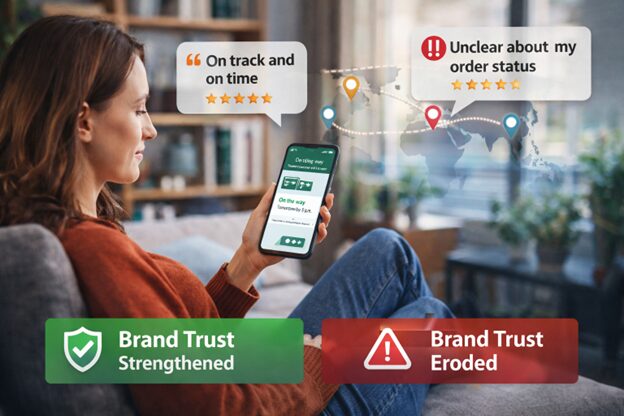
Once payment goes through, customers stop evaluating promises and start paying attention to behavior. This is where delivery transparency quietly becomes part of the brand itself.
What Delivery Transparency Really Means in Practice
Delivery transparency is often explained as tracking. That explanation is incomplete.
In real terms, delivery transparency is the brand’s ability to explain what is happening without hesitation once an order leaves the warehouse. It is the difference between clarity and guessing. Between confidence and deflection.
Customers do not need perfection. They need to feel that the brand understands its own process.
When that understanding is missing, trust starts leaking in small, hard-to-measure ways.
The Waiting Period Customers Never Forget
The most emotionally charged part of the customer journey is not the purchase. It is the waiting.
Money is gone. Expectations are set. Control is no longer in the customer’s hands.
During this phase, silence feels heavier than it should. A confirmation email with no follow-up. A tracking page that does not change. A delivery window that stays vague for days.
Nothing is technically broken, yet doubt creeps in.
This is not about impatience. It is about reassurance.
Brands that stay visible during this phase feel present. Brands that disappear feel careless, even when they are not.
Why Transparency Feels Like Respect
Clear delivery communication signals respect for the customer’s time.
When a brand explains delays early or updates progress honestly, customers adjust their expectations. They feel included rather than managed.
When communication is unclear, customers are forced to chase answers. Support tickets go up. Tone shifts. What could have been a neutral delay becomes a negative experience.
The brand has not changed, but the perception has.
And perception is what people remember.
How Unclear Delivery Messaging Damages Brand Memory
Customers rarely describe delivery issues in technical terms.
They do not say, “The carrier integration failed.”
They say, “They didn’t seem to know where my order was.”
That distinction matters.
Unclear delivery communication reframes the brand as disorganized or detached. Reviews start focusing on reliability instead of product quality. Conversations shift from excitement to caution.
At that point, the damage is not operational. It is reputational.
Why Growing Brands Feel This More Than Established Ones
As brands scale, complexity increases faster than systems.
More carriers. More regions. More handoffs. More exceptions.
Without a unified view of delivery status, teams rely on partial information. Support responses become cautious. Messaging becomes inconsistent.
Some brands reference consolidated tracking views like InstantParcels tracking simply to maintain coherence across different shipments. Not as a marketing tool, but as a way to answer customer questions without guessing.
The goal is not control. It is clarity.
Transparency Creates Calm, Not Just Satisfaction
Strong brands feel calm under pressure.
When delivery visibility is clear, brands communicate with steadiness instead of urgency. Even when delays happen, the message feels grounded.
That calmness transfers to customers.
People forgive problems more easily when they believe the brand understands what is happening. They become patient when explanations feel informed rather than improvised.
Over time, those moments shape loyalty.
Trust Is Built After the Sale
Brand trust is rarely won in a single moment. It is built through repeated experiences that feel predictable and honest.
Delivery transparency influences those experiences more than most teams realize, because it occupies the longest stretch of the customer journey.
Customers may forget the checkout page. They do not forget how the waiting felt.
Brands that remain visible after checkout earn something more durable than satisfaction. They earn confidence.
And confidence is what brings customers back.
To read more content like this, explore The Brand Hopper
Subscribe to our newsletter