Levi Strauss & Co. conceived “Go Forth” as a bold brand relaunch to reconnect its heritage of American pioneering with a new generation. The campaign (first unveiled July 4, 2009) was developed with agency Wieden+Kennedy (Portland) and aimed to cast Levi’s as the jeans of youthful optimism and self‑reliance.
Levi’s executives described Go Forth as “more than a campaign – a north star for the brand,” channeling the raw, eternally optimistic spirit that built Levi’s and America. This was a deliberate pivot: prior campaigns (e.g. the 2008 Levi’s 501 push) had driven product sales, but Levi’s sought to rejuvenate its image by evoking ideals rather than just fashion. As Marketing Week noted, the Go Forth platform was designed “as a rally cry to create positive change,” tapping into “modern consumer sentiment” of idealism.
Creative Concept and Messaging
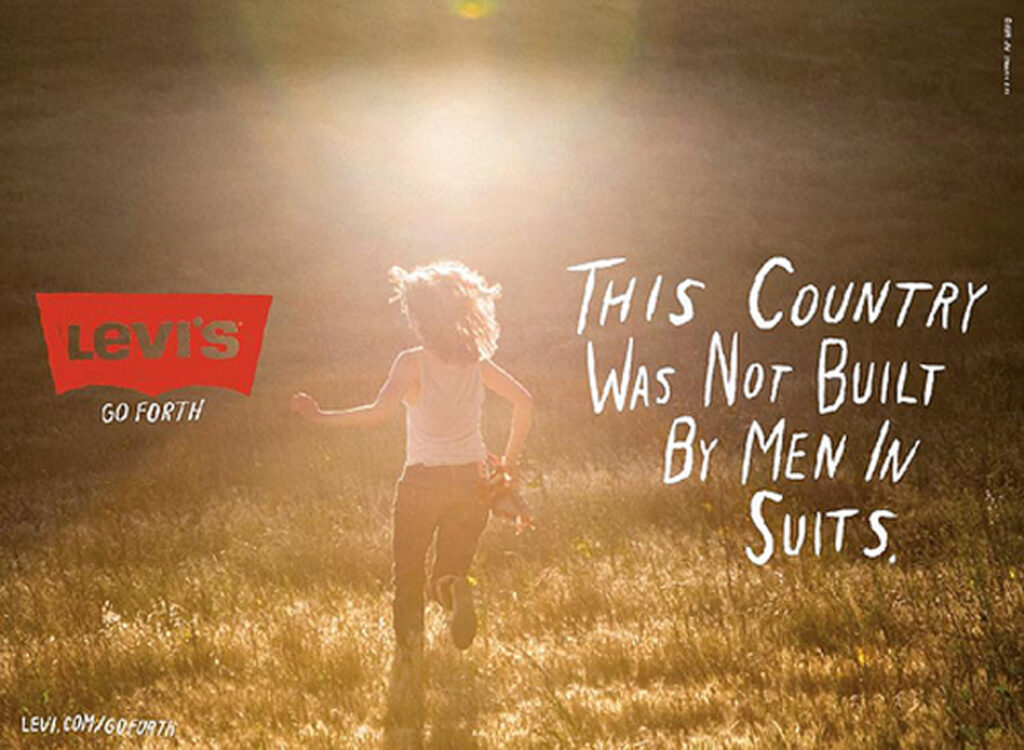
At its heart, Go Forth celebrated an American pioneer spirit through high-art storytelling. The campaign’s TV and print ads drew on classic poetry about individual courage and hope. For example, the film “America” features Walt Whitman’s own recorded recitation of his 1888 poem “America”, pairing Whitman’s lines about democracy and possibility with sweeping images of diverse Americans.

A companion film “O Pioneer!” (directed by emerging filmmaker M. Blash) continued this theme. In 2011 Levi’s even produced a special spot “Legacy” (directed by Lance Acord) built around Charles Bukowski’s poem “The Laughing Heart”, ending on the exhortation “Go forth” to underscore personal empowerment. As Levi’s creatives explained, Go Forth sought to share Whitman’s words “with today’s generation as a small ray of hope,” framing wearing Levi’s as “a statement to uncompromised ideals, self-reliance, hard work, and hope”.

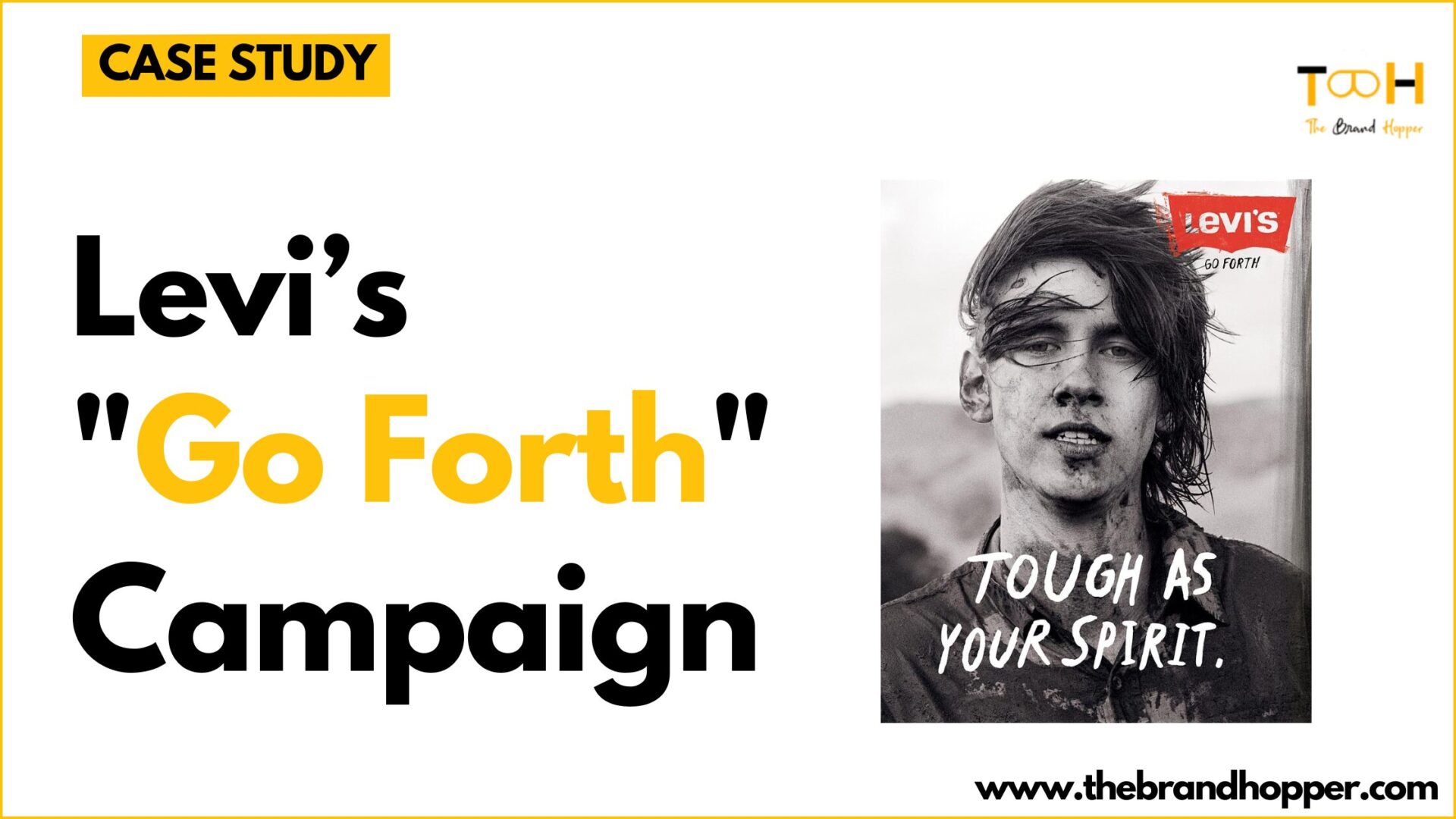
Importantly, the campaign made a point of keeping Levi’s jeans central: the ads show people actively wearing and using their denim. Renowned photographer Ryan McGinley shot the print/outdoor pieces, featuring young “Go Forthers” doing dirt-road adventures and urban work – symbolizing grit and optimism. These images were paired with provocative taglines like “this country was not built by men in suits” and “we will work for better times,” inviting viewers to “get their jeans dirty and experience life”. In short, Go Forth married lofty ideas with Levi’s iconic product.
-
Creative assets: TV/cinema films with poetic voiceover (Whitman/Bukowski); vibrant print and out-of-home ads by Ryan McGinley; and compelling taglines (“youthful optimism,” “new world,” etc.) that evoked hope and action.
-
Key messages: Self-reliance, resilience and building a “new America”; Levi’s as the uniform of young pioneers. The campaign explicitly positioned Levi’s jeans as the “jean of self-reliance, hard work, and an independent, hopeful spirit”.
- Emotional tone: Bold, uplifting and even provocative. Levi’s VP said “now, more than ever, the world needs people with a pioneering spirit” and described Go Forth as a “clarion call” for a generation.
Media Mix and Activation
Levi’s executed Go Forth through a fully integrated marketing mix across media channels and touchpoints. Two cinematic spots (“America” and “O Pioneer!”) led the TV and cinema rollout. (Notably, Cary Fukunaga – fresh off Sundance success – directed “America”.) These 60-second films premiered in July 2009 (and later on prime-time TV) in North America. Simultaneously, a print and outdoor campaign began in key youth publications (sports, fashion, music, culture) and urban markets like New York, LA, San Francisco and Chicago. Street posters and billboards carried the campaign’s dynamic imagery and slogans, reinforcing the youthful, pioneering vibe.

To amplify engagement, Levi’s launched digital and social initiatives. The centerpiece was the “Go Forth Expeditions” program – an interactive online experience inviting consumers to join the “Go Forth” movement. Participants were encouraged to document how they explore their world (“pioneer in their thoughts and action”), tapping into themes of exploration and discovery. Levi’s also integrated cause marketing: the brand leveraged Go Forth to support AIDS Walk, World AIDS Day and other “pioneering” social events, aligning its messaging of optimism and progress with concrete community action.
Moreover, Levi’s embraced social media and casting to further the message. For instance, the 2012 extension of the platform (“This is a Pair of Levi’s”) included a global Instagram casting (#iamlevis) to find real people (“pioneers”) embodying the brand’s spirit. In sum, Go Forth was rolled out as a “rally cry” across TV, film, print, outdoor, digital and social channels in North America, and – by 2011 – globally across 24 countries.
Launch and Global Rollout
Levi’s timed the Go Forth launch symbolically on July 4, 2009 – Independence Day in the U.S. – and immediately amplified it across the Americas. As the press release announced, “Go Forth” would span all brand touchpoints from design to retail, with campaign elements reaching “from the top of Canada to the bottom of Chile”.
Initial rollouts targeted the U.S. and Canada (where the ethos of American pioneers resonates strongly), but Levi’s soon pushed the theme worldwide. By mid-2011, Go Forth became Levi’s first-ever global brand campaign, launching in Europe and Asia-Pacific as well. The global expansion meant local adaptations of the core idea, but the underlying message remained: Levi’s as a democratizing force inspiring change.
Over the next few years Levi’s kept Go Forth alive as its signature brand platform. A 2012 global collection campaign (headlined “This is a Pair of Levi’s”) was explicitly billed as the “latest chapter” of Go Forth, extending the narrative of young people getting “dressed with purpose” and “up with a sense of intent” each day. In this way, Go Forth informed product styling and innovation (the denim designs themselves became proof points of the story), even as the messaging evolved with the times.
Results and Impact
Levi’s positioned Go Forth as a brand-defining platform, but its measurable business impact was mixed. Official reports show Levi’s overall revenues grew modestly around the launch years: fiscal 2010 net sales were $4.4 billion, rising to $4.8 billion in 2011, then dipping slightly to $4.6 billion in 2012. These figures suggest that after the campaign began, Levi’s companywide revenues peaked in 2011. (Notably, 2011 revenues include a strong global performance, so brand-specific 501-jeans sales may have followed similar trends.)
Levi’s emphasized positive brand effects. The company touted Go Forth as a “north star” that reignited Levi’s DNA of optimism and hard work. Industry recognition followed: the ads won creative awards and were praised for high production value and inspiring tone. Some anecdotal evidence suggests consumer buzz – the campaign’s poetic spots and slogans circulated widely online and in media.
However, analysts have questioned whether Go Forth delivered a solid ROI. One industry commentator noted that Levi’s ads “ladder[ed] too high” into idealism without a clear link to product, quoting an AdWeek remark: “Throw on a pair of Levi’s… and you’ll be ready to rule the world”. In fact, Brandgym reported that Levi’s sales remained stagnant despite the massive ad spend (about $80 million just in the U.S.). By 2012, Levi’s sales were not significantly higher than pre-campaign levels. (Some outside observers even claimed Levi’s or the agency “failed to marry the story with the brand,” suggesting the lofty narrative didn’t fully resonate with everyday shoppers.)
In summary, Go Forth succeeded at brand building – it refocused Levi’s image on its heritage of freedom and individuality. But its direct sales impact was limited. Levi’s later pivoted to more product‑centric messaging (e.g. the 2014 “Live in Levi’s” campaign) to reinject tangible value propositions after assessing Go Forth’s effects.
Controversies and Critiques
The campaign also encountered some controversies. In August 2011, a Go Forth spot featuring a protestor confronting riot police (part of the “Legacy” film) was temporarily pulled from UK TV amid riots, after critics argued it risked glorifying unrest. Levi’s clarified that the ad (with Bukowski’s “Laughing Heart” voiceover) was intended to capture general hope and resilience, not to endorse any specific political movement. This episode highlighted how a campaign built on zeitgeist and political metaphors could be sensitive to real-world events.
Overall, reviewers were divided. Admirers called Go Forth a “pioneering” approach that reaffirmed Levi’s soul. Skeptics felt the messaging overshadowed the product: one adland critic quipped it was “bad timing” and far removed from iconic earlier Levi’s ads (like the 1980s laundromat spot). Yet even dissenters acknowledged that Levi’s had at least started a conversation about purpose and possibility.
Legacy of “Go Forth”
By 2013-2014, Levi’s began transitioning to new creative while retaining the soul of Go Forth. The “This is a Pair of Levi’s” campaign (fall 2012) built on the Go Forth ethos by celebrating people who face each day with purpose (e.g. teachers, artists). Nevertheless, Go Forth had established Levi’s as a brand that speaks to aspirational ideals. It reinforced Levi’s narrative of Americana and individualism, which remains part of the brand’s identity.

In hindsight, Go Forth stands as an ambitious attempt to modernize Levi’s through storytelling and values – a case study in aligning an old brand with youthful energy. It demonstrates how Levi’s leveraged its history (Walt Whitman, 501 jeans) to craft a “campaign rooted in America’s raw, pioneering spirit”. Even though Levi’s later shifted strategies, many of Go Forth’s themes (optimism, empowerment, authenticity) continued to influence Levi’s marketing. The campaign remains a notable chapter in Levi’s branding: it reminds marketers that connecting heritage with new ideals can spark conversation, even if it may not instantly “move the sales meter”.
Also Read: A Case Study on Levi’s “501 Blues” Brand Campaign
To read more content like this, subscribe to our newsletter