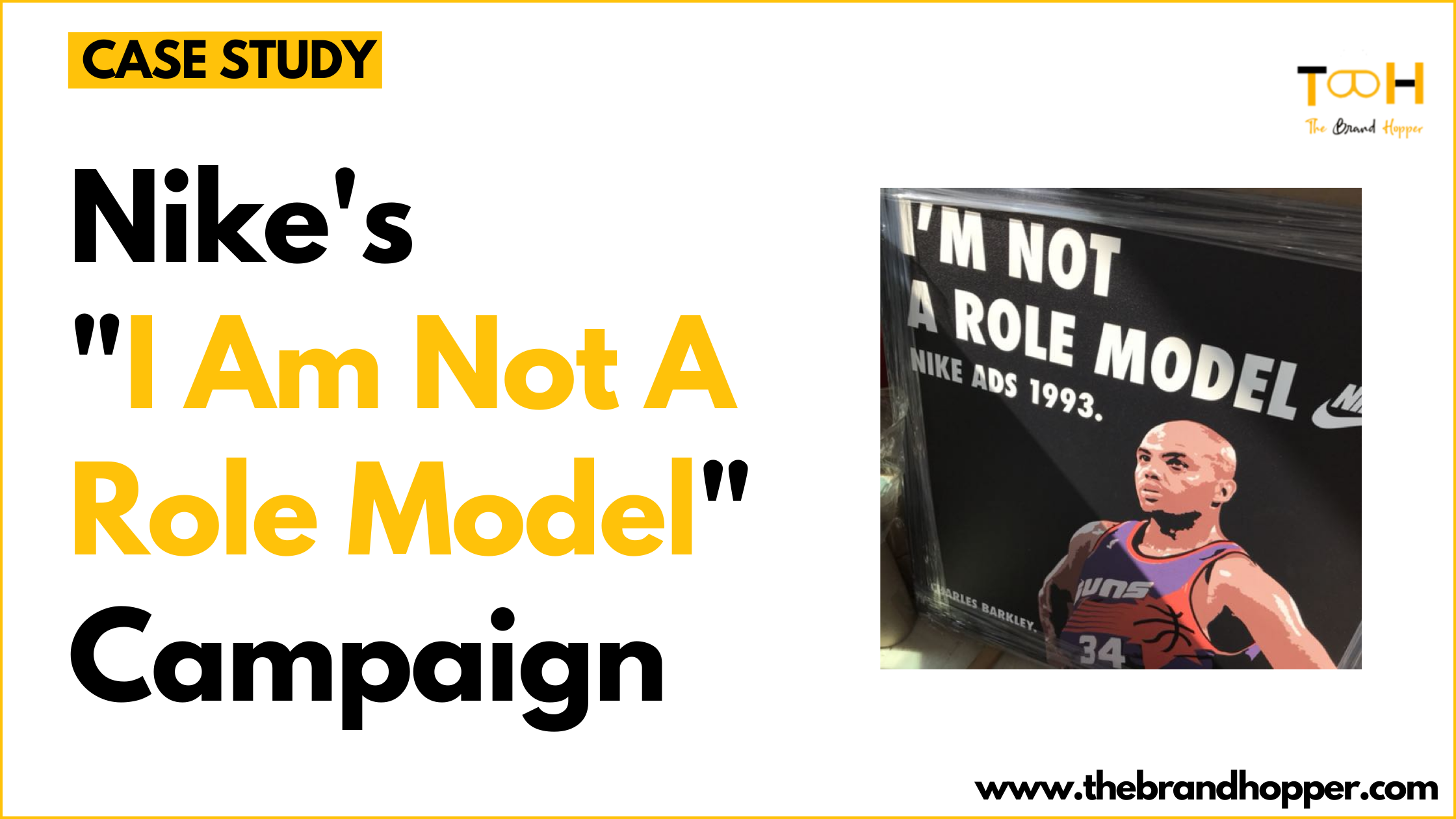
Nike’s 1993 “I Am Not a Role Model” campaign remains one of the most provocative and discussed advertising moments in sports marketing history. The campaign centered on NBA star Charles Barkley bluntly declaring that he “is not a role model” – a stark, unexpected message that immediately grabbed the public’s attention.
Launched as a TV commercial, the ad’s confrontational stance challenged the conventional expectation that famous athletes should behave as paragons for youth.
This case study examines the origins, execution, impact, and legacy of Nike’s “I Am Not a Role Model” campaign, from a marketing and branding perspective. We will explore how Nike leveraged an athlete’s controversial persona to spark a national conversation, the mixed reactions it elicited, and what lessons it offers for brand strategists today.
Background: Charles Barkley and the Role Model Debate
To understand the campaign, it’s important to know the context. By the early 1990s, Charles “Chuck” Barkley was one of the NBA’s biggest stars – and also one of its most outspoken, iconoclastic personalities. Unlike the universally beloved Michael Jordan, Barkley had a “bad boy” reputation, often speaking his mind and courting controversy.
In 1991, Barkley was involved in a notorious incident where he spat at a heckler in the stands (unfortunately hitting a young girl by accident), which intensified public scrutiny on his behavior. Around this time, Barkley began openly questioning the idea that athletes should be held up as role models for children. He was known to argue that athletic talent doesn’t equate to moral responsibility – “A million guys can dunk a basketball in jail, should they be role models?” he quipped, highlighting the flawed logic of automatic hero worship.
Barkley’s stance was a direct challenge to a widespread cultural expectation that sports stars owe society squeaky-clean behavior for the sake of the kids watching at home. This debate about athletes as role models set the stage for Nike’s campaign. In fact, Barkley himself conceived the idea for the commercial a few years prior.
As he later recounted, he first pitched the “I am not a role model” concept to Nike around 1989, only to be met with hesitation – “According to Charles, Nike said, ‘Are you freaking nuts?’”. Barkley’s motivation came from his personal observations: as a Black man visiting schools, he noticed a troubling trend that “more black kids wanted to be athletes and entertainers” while their white peers aspired to be doctors or lawyers. In his view, society’s fixation on athletes as role models was misplaced, potentially limiting the ambitions of minority youth. This conviction eventually found its outlet in the bold Nike ad that would air in 1993.
The Ad Concept and Execution
Nike’s advertising agency Wieden+Kennedy produced the Barkley spot with a distinctly gritty aesthetic. The commercial was filmed in black-and-white with tight close-up shots, creating a raw, serious tone that felt more like a public service announcement than a sneaker ad. The decision to strip away color and distractions put the focus squarely on Barkley’s face and words. There was no upbeat music, no on-screen product, and notably, Barkley is shown in generic Nike workout gear rather than his Phoenix Suns jersey. This minimalist approach signaled that the ad’s purpose was to deliver a message, not to glorify the athlete or any particular team.
In the 30-second spot, set against the backdrop of a basketball court, Barkley looks into the camera and speaks plainly:
“I am not a role model. I’m not paid to be a role model. I’m paid to wreak havoc on the basketball court. Parents should be role models. Just because I can dunk a basketball doesn’t mean I should raise your kids.”
This brief monologue hits several provocative points. Barkley asserts that his job is to excel in sports, not to guide children’s lives. He pointedly shifts that responsibility back to parents, effectively admonishing the audience: “Parents should be role models.” The closing line – “Just because I can dunk a basketball doesn’t mean I should raise your kids.” – is a memorable zinger that encapsulates the entire message. It’s an indictment of those who place athletes on pedestals, and it served as the campaign’s tagline in popular memory.
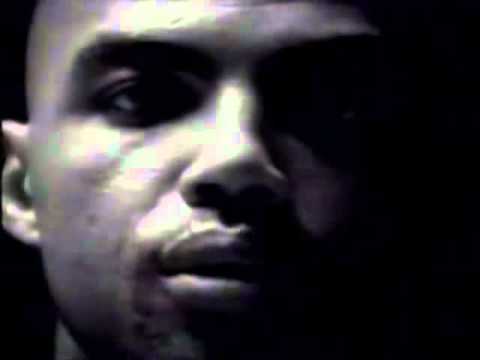
From a branding perspective, this was a high-risk, high-reward move by Nike. Barkley’s script was confrontational and could alienate some viewers, but it was also deeply authentic to who he was. In fact, Barkley himself wrote the ad’s text, ensuring the words aligned with his genuine viewpoint. By giving Barkley the platform to voice a controversial truth, Nike signaled that it was willing to “lean into” an athlete’s real personality, not just use him as a sanitized spokesperson. This approach turned a standard endorsement on its head – the athlete wasn’t praising the product or delivering a feel-good slogan, but rather issuing a challenge to societal norms.
Visually and narratively, the ad was stripped down yet hard-hitting. The black-and-white close-ups captured the intensity in Barkley’s expression, underscoring that he was deadly serious. At one point Barkley is shown performing a fierce, no-nonsense basketball move (a rebound or dunk) in slow motion, reinforcing his identity as an aggressive athlete – doing his job, as he says, on the court. The final shot simply displays Nike’s “Just Do It” slogan in white text on a black screen
Public Reaction and Controversy
When the “I Am Not a Role Model” commercial aired in 1993, it immediately ignited a firestorm of discussion. The campaign was groundbreaking for its time, sparking widespread debate about the proper role of athletes in society. Sports fans, parents, media commentators, and even politicians all had an opinion. Many viewers applauded Barkley for his honesty and courage in addressing a contentious issue so frankly. To a segment of the public (especially young adults and those tired of cookie-cutter ads), the campaign was a refreshing dose of truth-telling. Barkley was saying out loud what some felt privately – that athletic prowess does not automatically confer moral superiority or parenting ability.
However, the campaign was also highly polarizing. Along with praise came significant criticism directed at both Barkley and Nike. Some parents and educators were dismayed, interpreting the ad as a rejection of the positive influence athletes can have. They argued that whether he liked it or not, Barkley was a public figure whom kids admired, and stating “I am not a role model” sent a cynical message that could let athletes off the hook for bad behavior. Critics accused Nike of irresponsibility for broadcasting this message; after all, Nike heavily profits from youth idolizing sports heroes, so the ad struck some as disingenuous or even hypocritical. One journalist pointed out the irony: Barkley was declaring himself no role model in a commercial targeting the same youth who idolize athletes and buy Nike shoes. In other words, was it fair to profit from kids looking up to a star, and simultaneously claim that star shouldn’t be looked up to? This tension made the campaign a lightning rod for debate on ethics in sports marketing.
Notably, the conversation quickly extended beyond sports pages into mainstream culture and politics. The ad had struck such a chord that even U.S. Vice President Dan Quayle weighed in, surprisingly praising the message. Quayle – known for his emphasis on family values – called Barkley’s commercial a “family-values message,” lauding it for reminding parents and teachers to be role models instead of expecting celebrities to “raise your kids”. It’s not often that a sneaker advertisement gets endorsement from the White House! Quayle’s approval gave Nike an extra measure of legitimacy with more conservative audiences who might normally criticize the brand; it suggested that, controversial as Barkley’s stance was, it carried a socially constructive point about parental responsibility that even a politician could support.
On the flip side, some fellow athletes and coaches pushed back on Barkley’s viewpoint. They contended that like it or not, star players do inspire young people, and that athletes should strive to set a good example. The campaign thus fueled an ongoing debate in sports: Should athletes embrace being role models, or is it unfair to demand that of them? Nike’s ad had dropped a stone in a cultural pond, and the ripples included op-eds, talk show segments, and water-cooler arguments about sports and social responsibility.
From Nike’s perspective, any press is good press – and the press was enormous. The controversy kept the Nike brand in conversations without a single product mention. As a marketing strategy, this was Nike leveraging brand ethos over product promotion. By aligning itself with Barkley’s daring message, Nike broadcast that it stood for authenticity and wasn’t afraid of controversy. This resonated strongly with Nike’s core youth audience, who often value rebellion and “real talk.” As one analysis later noted, the ad helped establish Nike as a brand with an “edgy sense of authenticity”. It differentiated Nike from competitors by suggesting the company had a point of view on cultural issues, not just a desire to sell shoes.
Indeed, Nike’s ability to weather (and even benefit from) the mixed reaction proved instructive. Despite some calls for boycotts from offended groups, Nike did not apologize for the ad. Sales of Nike products did not slump – if anything, the buzz may have boosted Nike’s cool factor among young consumers who appreciated the bold stance. Internally, Nike’s marketing team saw that tapping into a genuine cultural conversation could deepen brand loyalty, even if it meant taking flak from some corners. The campaign became “super successful” in terms of brand visibility and impact, and it’s now remembered as one of the most iconic sports commercials ever.
Branding Strategy Analysis
From a branding and marketing strategy standpoint, the “I Am Not a Role Model” campaign is a case study in calculated brand risk-taking. Nike’s brand ethos has long been about inspiration, individuality, and pushing limits – encapsulated by the tagline “Just Do It.” In the late 1980s and early ’90s, Nike was defining itself not just through products but through storytelling and attitudes. Up to that point, a lot of Nike’s messaging had been positive and motivational (think of the upbeat “Bo Knows” ads, or Michael Jordan’s heroic image). The Barkley campaign introduced a more contrarian tone. It expanded the brand’s narrative by adding an anti-hero element.
Aligning with Authentic Personalities
A key strategy here was aligning the brand with an authentic personality, even if that personality was divisive. Nike recognized early on that Barkley’s brash candor could make for powerful marketing. Rather than forcing Barkley into the mold of a cookie-cutter endorser, Nike let “Sir Charles” be himself – warts and all – and built a campaign around his real beliefs. This lent the brand a sense of authenticity. Consumers (especially the younger demographic Nike courted) can detect when an ad is just phony marketing. In this case, nothing felt phony about Barkley’s rant; it was consistent with his public persona. That consistency made the message more credible and gave Nike credibility by association.
Nike effectively turned a perceived weakness (Barkley’s controversial reputation) into a strength. The campaign said, in effect, Nike isn’t just about the perfect, polished champions like Michael Jordan – it’s also home to the outspoken rebels like Barkley. In fact, the ad itself draws a contrast between Barkley and Jordan. As one retrospective put it, Barkley’s declaration drew a line in the sand between himself and Nike’s other top pitchman, the “clean-cut, kid-friendly Michael Jordan.” By doing so, “Nike showed there was room under its umbrella for more than one kind of superstar.” This was a savvy branding move: it widened Nike’s appeal to include fans who related more to Barkley’s edginess than Jordan’s perfection. In embracing diversity of personality, Nike bolstered its image as a broad cultural brand, not just a one-note company.
Emotional Impact Over Product Placement
Another notable strategy is that Nike prioritized emotional impact over product placement. The ad did not mention a single Nike product by name. The Nike Swoosh only appeared subtly on Barkley’s outfit and at the very end. Instead of selling shoes, the commercial was selling an attitude. This was brand marketing in a pure form – associating Nike with a bold message and the emotion it evokes. That emotion, interestingly, was a mix of defiance and introspection rather than the usual triumphant inspiration. It made viewers think and feel, even if that feeling was discomfort or disagreement. By engaging viewers on an emotional/intellectual level, Nike achieved something more enduring than a fleeting interest in a new sneaker. They became part of a cultural dialogue.
For marketers, it’s a classic lesson in brand values communication. Nike was essentially communicating its values: authenticity, honesty, and perhaps a bit of rebellion against convention. The absence of product shilling made the message more powerful and shareable – people talked about the ad itself, quoting Barkley’s lines, not about a shoe. In the long run, that kind of brand impression can translate into customer loyalty that outlives any single product campaign.
Handling Controversy and Staying True to the Core Audience
Nike also demonstrated how to handle controversy while staying true to the brand’s core audience. Nike’s target consumers (young males interested in sports, broadly speaking) were likely to respond positively to the ad’s candidness and the cool factor of Barkley’s swagger. Nike anticipated that even if some parents complained, the brand’s base – those who actually buy lots of athletic gear – would appreciate the authenticity. This turned out to be true. The controversy, rather than damaging Nike, reinforced its brand identity among its key demographic. The lesson: a brand needs to know who it is speaking to. By taking Barkley’s side in this debate, Nike essentially said to its young audience, “We get it. We’re on the side of realness, not preaching.” That built trust with those consumers.
Of course, courting controversy requires a fine balance. The message in this campaign, while bold, still carried a constructive angle (promoting parental responsibility). Nike executives could credibly defend the ad’s content as socially meaningful, not purely shock for shock’s sake. This likely helped Nike ride out negative feedback. If the ad had simply been offensive with no redeeming point, the backlash might have outweighed the benefits. The point here is that Nike was controversial with a purpose – sparking dialogue on a genuine issue that resonated with their brand narrative of empowerment (in this case, empowering parents and individuals to take charge, akin to “Just Do It” in life).
Results and Impact
Measuring the immediate “results” of a brand campaign like this in 1993 is tricky, since it wasn’t tied to a specific product launch. Nike didn’t release a Barkley sneaker alongside the ad (Charles Barkley did have signature Nike shoes, but this commercial was not explicitly about them). However, by qualitative measures, the campaign was a major success in elevating Nike’s brand profile. The ad became one of the most talked-about of that year. It solidified Charles Barkley’s place as a pop culture figure beyond basketball, and it reinforced Nike’s reputation for innovative, bold marketing. In lists of top Nike commercials through the years, “I Am Not a Role Model” consistently gets a mention as a classic example of Nike “changing the game” in advertising.
For Barkley’s own brand, the campaign was somewhat of a double-edged sword that ultimately leaned positive. He received “a lot of heat” initially – not everyone was happy with him effectively shrugging off a duty to be exemplary. Yet Barkley’s willingness to be controversial endeared him to many fans who found his honesty refreshing. In the long run, Barkley has remained a beloved figure (today a popular TNT sports commentator), and he still stands by the sentiments of the ad decades later. In fact, the sticking power of the phrase “I am not a role model” is evident: it’s arguably Charles Barkley’s most famous quote and has been referenced countless times in discussions about sports and celebrity.
For Nike, one could argue the campaign helped pave the way for future ventures into impactful, issues-oriented advertising. It proved that Nike could take a stance (or at least facilitate a spokesperson’s stance) and come out stronger. This maverick approach can be seen echoed in later Nike campaigns – for example, the 2018 Colin Kaepernick “Believe in Something” campaign, where Nike once again embraced a polarizing sports figure taking a stand on a social issue. By having “I Am Not a Role Model” in its legacy, Nike showed a consistency: it is a brand willing to risk controversy in service of authenticity and cultural relevance.
Legacy and Commemorations
The legacy of the Barkley campaign endures in both culture and Nike’s own marketing playbook. The phrase itself has entered the vernacular as a retort used far beyond basketball. Anytime a celebrity or athlete attempts to downplay their influence on youth, the media often harkens back to “I am not a role model,” showing how strongly Barkley’s message resonated.
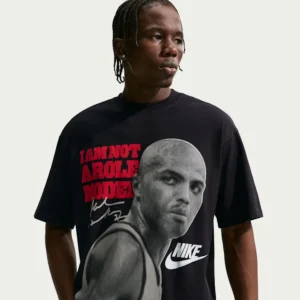
Recognizing the ongoing fan appreciation for this moment, Nike has occasionally paid tribute to the campaign in its merchandise. In 2023–2024, roughly thirty years after the ad, Nike even released limited-edition apparel featuring Barkley and the famous quote. For example, Nike dropped a special Charles Barkley graphic t-shirt with the words “I Am Not A Role Model” emblazoned on it, alongside Barkley’s photo and signature. The fact that Nike can merchandise this slogan today – and that consumers will buy it – speaks volumes about how the campaign has shifted from controversial to almost nostalgic and iconic. As one report noted, “Fast forward more than three decades, and the heat surrounding Barkley’s bold statement has finally cooled off. Even better, Nike is willing to pay tribute to the groundbreaking commercial with new t-shirts.” In other words, what was once incendiary is now part of Nike’s proud heritage.
From a branding perspective, that is a huge win. It means the risk Nike took in 1993 has paid off multiple times over, as the campaign became an asset for the brand. Nike can now celebrate it as proof of being ahead of the curve on tough conversations. The edginess became part of Nike’s identity. Furthermore, it set a template: campaigns like this show that when a brand mission (“authentic athletic empowerment” in Nike’s case) aligns with a spokesperson’s personal truth, the resulting message can achieve cultural immortality.
Lessons Learned
The “I Am Not a Role Model” case offers several key insights for marketers and brand managers:
-
Know Your Brand Values and Stand By Them: Nike’s campaign worked because the message, though divisive, was aligned with Nike’s longstanding ethos of pushing boundaries and celebrating authentic athletic voices. Brands should have clarity on their core values and be willing to reflect them even when it’s risky. Consistency builds credibility.
-
Authenticity Over Gloss: Modern audiences, especially youth, crave authenticity. Barkley’s no-nonsense delivery was more impactful than any scripted, polished endorsement could be. This case shows the power of letting go of tight control and trusting an authentic voice to shine. Consumers can form a deeper bond with a brand that “keeps it real.”
-
Differentiate the Brand: Nike distinguished itself from competitors by doing something unconventional. The ad wasn’t about shoes or performance; it was about philosophy. In a crowded advertising landscape, a bold, idea-driven campaign can set a brand apart and generate outsized attention. Don’t be afraid to take a unique angle that others in your industry might shy away from.
-
Engage Emotion and Conversation: The fact that people still talk about this ad decades later is proof of the lasting impact of campaigns that spark conversation. Nike tapped into an emotional/social issue that got people talking. Brands that can insert themselves into cultural dialogues (in a way that isn’t forced or tone-deaf) can gain enormous mindshare. Even controversy can be beneficial if it gets your brand talked about in connection with meaningful issues.
-
Prepare for Backlash, but Leverage Support: Any provocative campaign will have detractors. The key is to anticipate this and also recognize where your support will come from. Nike likely knew that while some would criticize them, a larger contingent of their target consumers would applaud the boldness. Having a thick skin and sticking to your message is crucial. In Nike’s case, the positive buzz and brand admiration outweighed the negatives, and they managed the PR expertly (even garnering unexpected allies like Dan Quayle!). The lesson: stand firm in the storm if you believe in the message.
-
Campaigns Can Transcend Products: This case underlines that brand marketing is about more than immediate sales – it’s about brand image in the long run. Nike invested in an idea, not a product, and it strengthened the brand’s foundation. Brands should balance product marketing with occasional “big idea” campaigns that build brand equity. The returns on the latter may be intangible at first, but can be extremely powerful over time.
Conclusion
Nike’s “I Am Not a Role Model” campaign is remembered as a milestone in sports marketing that dared to challenge audience expectations. By giving Charles Barkley a platform to repudiate the role model label, Nike sparked debate but ultimately reinforced its own brand identity as bold, authentic, and culturally savvy. The campaign taught marketers that taking a stand – if done sincerely and in alignment with brand values – can elevate a brand’s stature and create enduring impact. What began as a controversial commercial is now part of Nike’s legendary marketing history, proving that sometimes the riskiest moves pay off in the biggest way. In the end, Nike “just did it” – and in doing so, wrote a playbook on how brands can shape culture while selling shoes.
Also Read: A Case Study on Nike’s “Dream Crazy” Campaign
Also Read: The Power of Branding: A Look at Nike Iconic Brand Campaigns
To read more content like this, subscribe to our newsletter