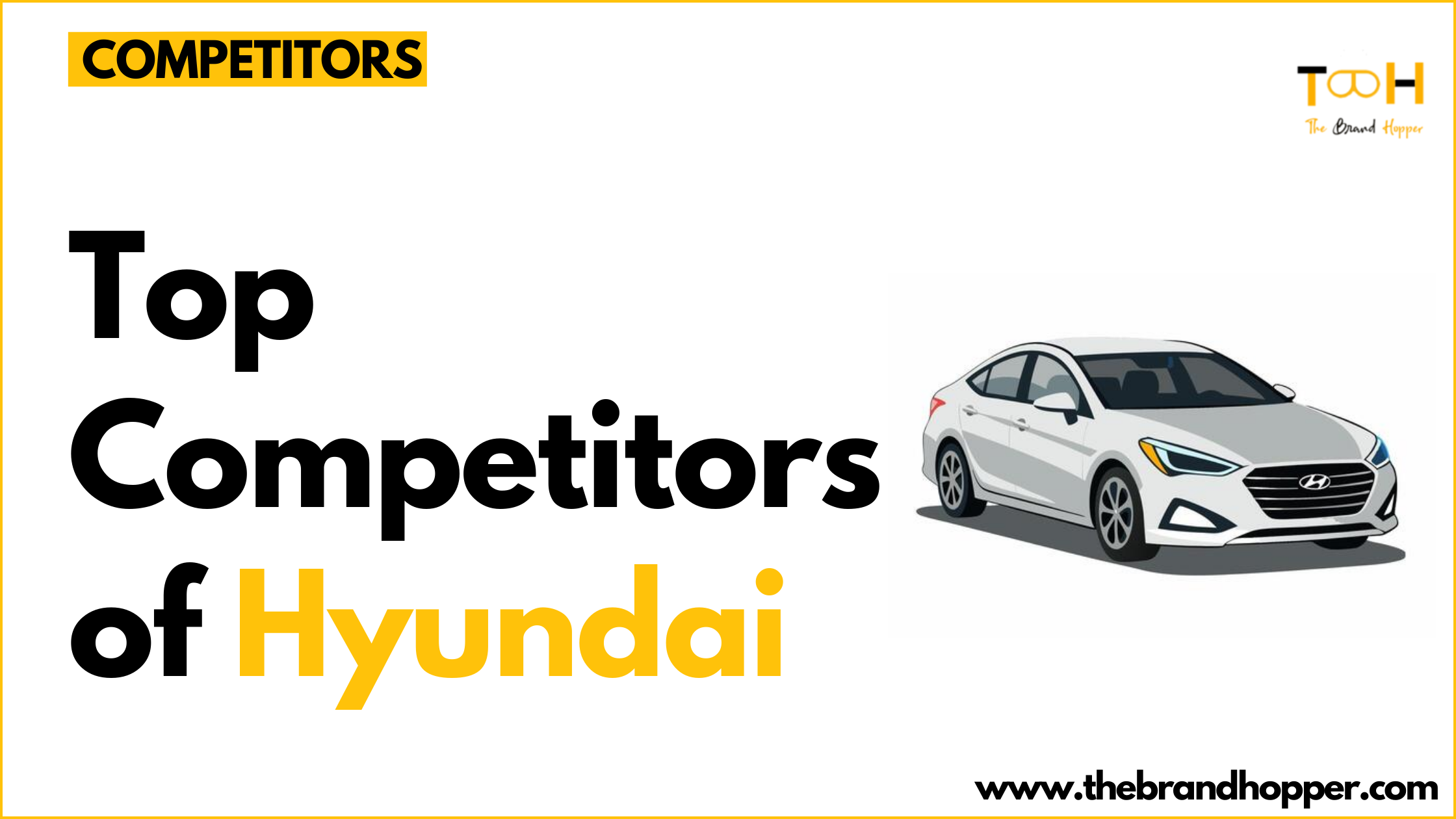
The story of Hyundai is one of the most remarkable transformations in industrial history. From its humble beginnings as a construction firm in 1947 to becoming a global automotive powerhouse, Hyundai has consistently defied expectations. Once viewed as a budget alternative with questionable quality, the brand has pivoted to become a leader in design, electric mobility, and “accessible luxury.” As we move through 2026, Hyundai finds itself at a critical juncture, transitioning from a traditional car manufacturer to a “Smart Mobility Solution Provider.”
This evolution has placed Hyundai in the crosshairs of an increasingly diverse set of rivals. No longer just competing with entry-level sedans, the South Korean giant now battles Silicon Valley tech titans, German luxury stalwarts, and aggressive Chinese EV manufacturers. The competitive landscape in 2026 is defined by a “multi-pathway” strategy—balancing internal combustion engines (ICE), hybrids, and battery electric vehicles (BEVs) while simultaneously racing toward autonomous driving and robotics.
Hyundai’s current strategy is a masterful blend of pragmatism and ambition. By utilizing the E-GMP (Electric-Global Modular Platform), they have created some of the world’s most awarded EVs, such as the IONIQ 5 and IONIQ 6. However, they remain grounded in market reality, aggressively expanding their hybrid lineup, including the landmark 2026 Palisade Hybrid, to meet consumer demand where infrastructure still lags. This flexibility is Hyundai’s greatest weapon against competitors who have bet exclusively on a single technology.
To understand Hyundai’s position today, one must look at the “Brand Story” of its rivals. Each competitor represents a different challenge: some test Hyundai’s engineering prowess, others its pricing power, and some its ability to innovate in software. Below, we provide a comprehensive analysis of the top 10+ competitors shaping Hyundai’s journey in 2026.
Top Competitors of Hyundai
1. Toyota
Website – https://global.toyota/en/
Toyota remains Hyundai’s most formidable global rival, particularly as the market experiences a resurgence in hybrid demand. In 2026, the battle between the two centers on the “Hybrid vs. EV” transition. While Hyundai has been faster to market with dedicated EV platforms, Toyota’s decades-long mastery of hybrid technology gives it a massive volume advantage in markets like North America and Southeast Asia.
Toyota is currently competing with Hyundai by leaning into its reputation for bulletproof reliability. The 2026 Toyota Corolla Hybrid and RAV4 Hybrid remain the benchmarks that Hyundai’s Elantra and Tucson hybrids aim to unseat. Toyota’s strategy is conservative but effective: they focus on incremental improvements rather than radical design shifts, appealing to a risk-aversive customer base.
How it competes with Hyundai:
-
Reliability vs. Warranty: Toyota sells on the “300,000-mile” reputation, while Hyundai counters with its industry-leading 10-year/100,000-mile warranty.
-
AWD Availability: Toyota offers All-Wheel Drive across almost its entire hybrid sedan range (like the Corolla), a feature Hyundai is still catching up on in some segments.
-
Market Scale: Toyota’s massive production capacity allows it to maintain lower prices through economies of scale that Hyundai is only now starting to match.
2. Tesla
Website – https://www.tesla.com/
In the electric arena, Tesla is the yardstick by which all Hyundai IONIQ models are measured. By 2026, the competition has shifted from “range” to “price and software.” Tesla’s aggressive price cuts throughout 2025 and 2026 have forced Hyundai to slash interest rates and offer significant discounts on the IONIQ 5 to remain competitive.
Hyundai competes with Tesla by offering “a better car experience.” While Tesla focuses on a minimalist, tech-first approach (often removing physical buttons), Hyundai retains driver-centric ergonomics and physical controls that many users prefer. The 2026 IONIQ 5 has been praised for its superior ride quality and faster 800V charging architecture compared to the Tesla Model Y.
How it competes with Hyundai:
-
Supercharger Network: Despite Hyundai joining the NACS (North American Charging Standard), Tesla’s integrated charging ecosystem remains a significant pull for consumers.
-
Autopilot vs. Highway Driving Assist (HDA): Tesla’s Full Self-Driving (FSD) marketing remains a powerful brand differentiator, even as Hyundai’s HDA 2 offers more predictable, hands-on-wheel safety for the average driver.
-
Direct-to-Consumer Model: Tesla’s lack of a traditional dealer network contrasts with Hyundai’s established, though sometimes friction-heavy, dealership experience.
3. Volkswagen

Website – https://www.volkswagen-group.com/en
Volkswagen is Hyundai’s primary rival for the title of “World’s Most Versatile Automaker.” Much like Hyundai, VW has a massive portfolio ranging from affordable hatchbacks (ID.3/Polo) to premium SUVs. In 2026, VW is pushing its MEB+ platform, focusing on longer ranges and faster software integration to counter Hyundai’s E-GMP success.
The competition is particularly fierce in Europe, where the VW ID.4 and the Hyundai IONIQ 5 battle for the top spot in the electric crossover segment. Volkswagen competes by leveraging its deep roots in European engineering and a much larger network of brands (Skoda, SEAT, Audi) that can share development costs.
How it competes with Hyundai:
-
Modular Platforms: VW’s MEB platform allows for a staggering variety of body styles, from the ID. Buzz van to the ID.7 sedan, challenging Hyundai’s more focused IONIQ lineup.
-
Software-Defined Vehicles: VW is investing billions in its CARIAD software unit to match Hyundai’s “Pleos” operating system, aiming to turn cars into mobile digital hubs.
-
Heritage: In the “Brand Story” department, VW uses its iconic history (like the Beetle-inspired ID. Buzz) to create an emotional connection that Hyundai’s futuristic “Parametric Pixel” design language is still building.
4. BYD

Website – https://www.bydglobal.com/
Perhaps the most dangerous competitor for Hyundai in 2026 is China’s BYD (Build Your Dreams). BYD has successfully overtaken Tesla in global EV sales and is now moving aggressively into Hyundai’s strongholds in Europe, Australia, and Southeast Asia.
BYD competes on a level of vertical integration that Hyundai is still striving for. BYD manufactures its own batteries (the famous “Blade Battery”), which allows them to produce EVs like the Dolphin and Atto 3 at prices Hyundai struggles to meet. In response, Hyundai is launching the “Inster” (Casper Electric) to fight BYD in the budget EV segment.
How it competes with Hyundai:
-
Price War: BYD’s ability to offer high-range EVs for under $20,000 in certain markets is a direct threat to Hyundai’s value proposition.
-
Battery Technology: BYD’s LFP (Lithium Iron Phosphate) battery tech is widely considered the safest and most cost-effective in the industry.
-
Rapid Iteration: BYD releases new models and facelifts at a pace that makes the traditional 5-7 year automotive lifecycle look glacial.
5. Kia

Website – https://www.kia.com/
The relationship between Hyundai and Kia is unique. While Hyundai Motor Group owns roughly 33.8% of Kia, the two operate as fierce competitors in the showroom. In 2026, Kia has carved out a “sportier, bolder” identity, while Hyundai has moved toward a “sleek, sophisticated” aesthetic.
Kia often undercuts Hyundai slightly on price while offering more standard features in base trims. For example, the 2026 Kia Seltos has recently been updated with a larger wheelbase and more cargo space, directly challenging the Hyundai Creta’s dominance in the compact SUV market.
How it competes with Hyundai:
-
Design Language: Kia’s “Opposites United” design philosophy often appeals to a younger, more aggressive demographic compared to Hyundai’s “Sensuous Sportiness.”
-
Feature Loading: Kia frequently introduces tech (like the 10-way power seat in the Seltos) before Hyundai rolls it out to the equivalent model.
-
Warranty: Both share the same 10-year warranty, removing one of Hyundai’s main advantages and forcing the competition to be about pure product merit.
6. Honda
Website – https://www.honda.com/
Honda competes with Hyundai by focusing on “the joy of driving.” While Hyundai has moved toward a more relaxed, comfortable ride in its mainstream models, Honda maintains a reputation for sharp steering and engaging chassis tuning, even in family SUVs like the CR-V.
In 2026, Honda has finally accelerated its EV partnership with Sony (Afeela) and GM, putting pressure on Hyundai’s tech-heavy interiors. However, Honda’s conservative approach to hybrids means they often have fewer options than Hyundai’s diverse Kona/Tucson/Santa Fe/Palisade hybrid lineup.
How it competes with Hyundai:
-
Driving Dynamics: Honda vehicles (Civic, Accord) generally offer a more connected feel to the road than the Elantra or Sonata.
-
Resale Value: Honda still holds a slight edge in long-term residual value, a key metric for lease-focused consumers.
-
Interior Simplicity: Honda’s “Man-Maximum, Machine-Minimum” philosophy contrasts with Hyundai’s screen-heavy “digital cockpit” approach.
7. Ford

Website – https://www.ford.com/
In North America, Ford is a major obstacle for Hyundai’s ambitions in the light truck and rugged SUV segments. The 2026 Ford Maverick is the primary rival to the Hyundai Santa Cruz. While the Santa Cruz is essentially an “SUV with a bed” focusing on lifestyle and comfort, the Maverick leans into its “truck first” identity with a standard hybrid and better fuel economy.
Ford also competes heavily in the large electric SUV space. The Ford Mustang Mach-E and the upcoming 3-row electric SUVs are direct rivals to Hyundai’s IONIQ 5 and the new IONIQ 9.
How it competes with Hyundai:
-
Towing & Utility: Ford’s Maverick Tremor offers actual off-road hardware, whereas Hyundai’s Santa Cruz XRT is largely a cosmetic package.
-
Brand Loyalty: Ford’s “Built Ford Tough” branding carries immense weight in the American heartland, where Hyundai is still perceived as an “import” brand.
-
Commercial Sales: Ford’s dominance in fleet and commercial sales gives it a data and volume advantage that Hyundai has yet to replicate.
8. General Motors (GM)

Website – https://www.gm.com/
GM is competing with Hyundai through massive investments in its “Ultium” battery platform. By 2026, GM has a full range of electric vehicles from the affordable Chevy Equinox EV to the luxury Cadillac LYRIQ.
The real battle between GM and Hyundai, however, is in the “Software-Defined Vehicle” (SDV) and autonomous space. GM’s Cruise and Super Cruise technologies are currently seen as more advanced than Hyundai’s initial autonomous offerings. Hyundai has responded by doubling down on its partnership with Boston Dynamics to integrate robotics into its factories and future vehicles.
How it competes with Hyundai:
-
Hands-Free Driving: Super Cruise is widely regarded as the best Level 2+ system on the market, putting pressure on Hyundai’s Highway Driving Assist.
-
Domestic Production: GM’s ability to leverage U.S. tax credits through localized battery production has given it a pricing advantage over Hyundai’s imported models.
-
Brand Tiering: GM’s clear separation between Chevrolet (Value), GMC (Trucks), and Cadillac (Luxury) is often more distinct than the relationship between Hyundai and its luxury arm, Genesis.
9. Stellantis (Jeep, RAM, Peugeot)
Website – https://www.stellantis.com/en
Stellantis represents a “multi-brand” threat, particularly in Europe and South America. In 2026, Stellantis is utilizing its “STLA” platforms to offer electric and hybrid options across its 14 brands.
Jeep, in particular, competes with Hyundai’s SUV range. The Jeep 4xe hybrid models have become top-sellers, challenging the Santa Fe and Tucson hybrids for “adventure-ready” families. Meanwhile, in Europe, brands like Peugeot and Fiat compete with Hyundai’s i10, i20, and i30 models for urban dominance.
How it competes with Hyundai:
-
Iconic Branding: Jeep’s “Go Anywhere” brand story is incredibly hard to beat, even if Hyundai’s HTRAC All-Wheel Drive system is technically competent.
-
Regional Dominance: Stellantis has a massive market share in Brazil and Italy, regions where Hyundai is still fighting for a top-three spot.
-
Shared Architectures: Stellantis’ ability to use one platform for a Fiat, an Opel, and a Peugeot allows them to flood segments with more variety than Hyundai’s single-brand approach.
10. Nissan
Website – https://www.nissan-global.com/EN/
Nissan and Hyundai have been rivals for decades, but in 2026, the competition has moved into the “Midsize SUV” space in emerging markets. Nissan’s new SUV, based on the CMF-B platform (shared with Renault), is a direct challenger to the Hyundai Creta and Tucson.
Nissan stands out by offering “e-Power” technology—a unique hybrid system where the engine only acts as a generator for the electric motor. This provides an “EV-like” driving experience without the need for a plug, a middle-ground strategy that competes with Hyundai’s traditional hybrids.
How it competes with Hyundai:
-
e-Power Technology: This unique powertrain is a strong selling point for customers who want the smoothness of an EV but aren’t ready to switch to full battery power.
-
Safety Tech: Nissan’s ProPILOT Assist is a very strong competitor to Hyundai’s SmartSense suite, often offered at a lower price point.
-
Off-Road Heritage: With the Patrol and Pathfinder, Nissan maintains a “rugged” brand story that Hyundai’s urban-focused crossovers (like the Venue and Kona) don’t emphasize.
11. Emerging Chinese Challengers (Xiaomi, Geely, Nio)
Beyond BYD, a new wave of Chinese “Tech-First” brands is entering the fray. Xiaomi, the smartphone giant, launched its SU7 EV which has sent shockwaves through the industry with its superior software integration. Geely (owner of Volvo and Polestar) uses its “SEA” platform to produce vehicles that rival Hyundai in both luxury and tech.
These brands are competing with Hyundai by redefining what a car is. They view the vehicle as a “third living space” with massive screens, AI assistants, and seamless ecosystem integration with smartphones—an area where Hyundai is currently playing catch-up with its new “Atria AI” and “Gleo AI” initiatives.
The Road Ahead: Hyundai’s Strategic Outlook
As we look toward 2030, Hyundai’s competition is no longer just other car companies. The 2026 “EV Price War” has proven that surviving in the automotive industry now requires being a technology company that happens to make cars.
Hyundai’s declaration of full-scale entry into robotics—aiming for 30,000 units a year by 2028—is a clear signal. They aren’t just trying to beat Toyota or Tesla; they are trying to own the future of mobility. Whether it’s through the humanoid robot “Atlas” in their factories or “Software-Defined Vehicles” that update like a smartphone, Hyundai is building a brand story of “Progress for Humanity.”
The competition is fierce, but Hyundai’s ability to pivot—from the “underdog” of the 90s to the “innovator” of the 2020s—suggests that their brand story is far from over. In a world of price wars and shifting technologies, Hyundai’s flexibility remains its most powerful engine.
Also Read: Marketing Strategies, Marketing Mix & STP of Hyundai
Also Read: Who are Paccar’s Top Competitors in Commercial Vehicle Industry?
To read more content like this, subscribe to our newsletter