Last Updated on June 19, 2025 by Team TBH
Whatnot is a U.S.-based livestream commerce startup launched in late 2019. It enables users to buy and sell collectibles and other goods via live video auctions. The platform began with a focus on toys and hobby collectibles (notably Pokémon cards and Funko Pop figures) but has since added dozens of product categories.
Investors describe it as “eBay meets Twitch”, merging an online marketplace with entertainment. The company grew rapidly — by late 2024 it reported roughly $3 billion in annual gross merchandise volume — and by early 2025 had raised about $746 million in funding at a nearly $5 billion valuation. For context, livestream shopping is already a roughly $500 billion industry in China, highlighting the vast opportunity Whatnot is pursuing in the U.S. market. This format proved especially appealing to dedicated collectors, as it filled a gap between casual browsing and traditional auction marketplaces.

Founding Story of Whatnot
Whatnot was founded in December 2019 in Los Angeles by Grant LaFontaine and Logan Head. Initially, the co-founders considered a general classifieds idea, but quickly pivoted to leverage their personal passion for collectibles.
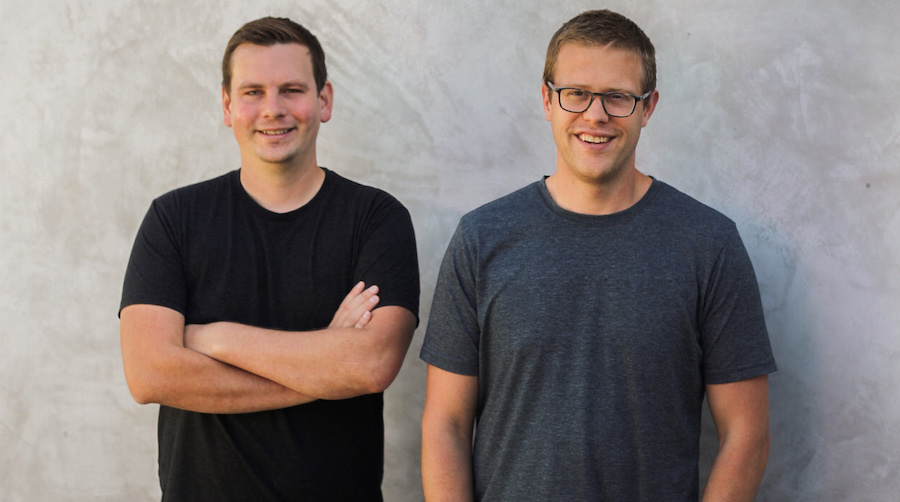
In early 2020, they joined Y Combinator’s Winter 2020 batch and focused the business on Funko Pop figures. By mid-2020, the team had built the first live-auction feature into the app.
In the first live sale on Whatnot, LaFontaine sold $5,000 worth of Funko Pops in just a few hours. This validated the live-auction format and set the stage for rapid growth into other categories.
LaFontaine and Head tapped into their existing collector networks to seed early users (they even built a small Discord community of hobbyists), effectively using word-of-mouth to attract buyers and sellers. Within months, they expanded beyond Funko Pops to sports and gaming cards based on user interest, turning Whatnot’s early user base into a diverse marketplace.
Founders of Whatnot
Grant LaFontaine (Co-founder & CEO)
LaFontaine is a serial entrepreneur and product manager. He previously worked at Facebook and Google and co-founded the shopping app Kit (acquired by Patreon). A lifelong collector, he has bought and sold cards and memorabilia since childhood, bringing deep hobbyist insight to Whatnot.
Logan Head (Co-founder & CTO)
Head earned a BS in Management Information Systems from the University of Montana. Before Whatnot, he was a senior product manager at sneaker marketplace GOAT (and founder of a sneaker-related startup, Fight Club, later acquired). As CTO, Head leads engineering and product, applying his e-commerce expertise to Whatnot’s technology and feature set.
Business Model of Whatnot
Whatnot operates as a two-sided marketplace combining live video and commerce. Vetted sellers livestream their products in real time while buyers tune in to watch, chat, and bid. By emphasizing interactive shopping, Whatnot delivers what investors call an “experience-based” marketplace. For example, a16z’s Connie Chan described shopping on Whatnot as essentially a “virtual group treasure hunt” – a social entertainment experience that drives purchases.
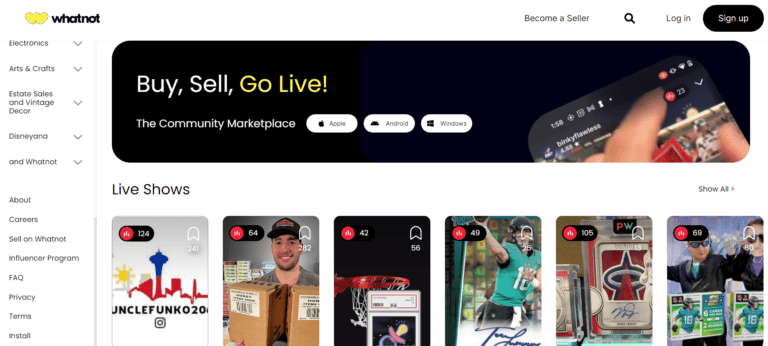
In practice, the Whatnot sales process works like this:
-
Seller Onboarding: Sellers must apply and be vetted before hosting streams (fewer than half of applicants are accepted).
-
Live Sales: Approved sellers list items and schedule livestream events. Each item is shown on camera, and the host runs an auction (or a fixed-price sale) for that item.
-
Bidding: Viewers place bids or tap to buy during the live video. Auctions use a “sudden-death” countdown (each new bid resets the timer) to drive excitement.
-
Transaction & Fulfillment: When an item sells, Whatnot collects payment, takes its commission, and provides a prepaid shipping label. The seller ships the item; Whatnot then releases funds to the seller.
-
Platform Services: The app is free to use for buyers (Whatnot earns only the commission and fees on completed sales). It provides integrated tools (analytics, shipping-label printing, etc.) to streamline selling on the platform.
The result is a full-service marketplace for collectors: users simply tune into streams to shop, while Whatnot handles checkout, payment processing, and logistics.
Revenue Streams of Whatnot
Whatnot generates revenue from multiple sources:
-
Sales Commissions: The primary source is a commission on each sale. Whatnot charges an 8% fee on the final sale price. (During special promotions, fees have been temporarily reduced to 4% in some categories to spur activity.)
-
Payment Fees: In addition to the commission, Whatnot adds standard payment-processing fees (around 2.9% + $0.30 per transaction). These fees cover credit card and PayPal processing.
-
Advertising & Promotions: In 2023, Whatnot introduced paid promotion tools. For example, its “boosted livestreams” product lets a seller pay for top placement in the category feed for 15 minutes. CEO LaFontaine notes that with users watching over an hour of video per day, the platform can monetize attention with ads. These ad products (paid previews, promoted streams, etc.) are an emerging source of revenue.
-
Other Income: Whatnot also builds partnerships and loyalty programs. It collaborates with brands to sell exclusive collectibles (e.g. limited-edition Marvel comic packs for special events). It offers a free “Rewards Club” loyalty program (with badges and perks) for buyers, which boosts engagement (though it doesn’t directly generate revenue). The company may explore additional offerings (such as subscriptions or sponsorship deals) in the future.
Funding and Investment History of Whatnot
Whatnot’s funding journey began after its success in YC. The startup raised roughly $4 million in seed funding in late 2020, led by early backers such as Y Combinator and Andreessen Horowitz. In March 2021 it closed a $20 million Series A (led by a16z’s Connie Chan). Two months later (May 2021) it secured $50 million in Series B funding (led by Y Combinator Continuity’s Anu Hariharan).
Later, Whatnot raised much larger sums: a $150 million Series C in September 2021 valued it at $1.5 billion, and a $260 million Series D in July 2022 raised its valuation to $3.7 billion. The Series E round in January 2025 brought another $265 million at a $4.97 billion valuation.
Key investors across these rounds include a16z, DST Global, Y Combinator Continuity, CapitalG (Google), BOND Capital, Greycroft, and others. Overall, Whatnot has raised about $746 million to date.
Funding Rounds of Whatnot
| Date | Round | Amount | Valuation | Lead Investors |
|---|---|---|---|---|
| Dec 2020 | Seed | $4M | – | Y Combinator, a16z, Wonder, etc. |
| Mar 2021 | Series A | $20M | – | a16z (Connie Chan), YCC, Animal |
| May 2021 | Series B | $50M | – | YCC (Anu Hariharan), a16z, Animal |
| Sept 2021 | Series C | $150M | $1.5B | a16z, YCC, CapitalG |
| Jul 2022 | Series D | $260M | $3.7B | DST Global, CapitalG, BOND, a16z, YCC |
| Jan 2025 | Series E | $265M | $4.97B | Avra, DST Global, Greycroft, a16z, CapitalG, BOND, Durable, YCC |
Table: Major funding rounds for Whatnot (values in USD). Valuations are shown when disclosed; “–” indicates not reported. (Sources: company announcements and news.)
Competitor Analysis of Whatnot
Key players and alternatives in the livestream commerce space include:
| Competitor | Founded | Focus / Model | Notable Funding / Scale |
|---|---|---|---|
| Whatnot | 2019 | Collectibles-focused livestream marketplace | ~$746M raised (all rounds), $5B valuation (2025); niche: card and toy collectors |
| Popshop Live | 2019 | Livestream marketplace for indie creators | $20M raised Series A (2021) at ~$100M valuation; targets fashion/beauty and indie brands |
| CommentSold | 2015 | Live-commerce SaaS for retailers (FB/IG) | ~6,000 sellers (SMBs); >12M users; lifetime GMV >$4.4B; backed by Permira |
| TikTok Shop | 2020 | Livestream & short-video social commerce | Owned by ByteDance; US GMV projected ~$17.5B (2024); massive global user base |
| NTWRK | 2018 | Curated live shopping (Gen-Z streetwear) | ~$50M raised (Series B 2021); sells limited-edition drops with celebrity hosts |
| Social/Platforms: Facebook/Instagram Live, Amazon Live, Shopify Live (and others) offer livestream shopping features via existing social or retail platforms, though not as dedicated marketplaces. |
Table: Comparison of selected livestream shopping platforms and companies (based on public data).
Competitive Advantage of Whatnot
Key competitive advantages include:
-
Specialized niche: Whatnot focuses on collectors and hobbyists, building a highly engaged community rather than chasing mass-market fashion.
-
Interactive commerce: Unique auction formats (sudden-death countdowns, giveaways) and live engagement make shopping entertaining.
-
Trust & authenticity: Strict seller vetting and community standards ensure buyers can trust item quality, unlike many general marketplaces.
-
Strong engagement metrics: On average, users watch over 1 hour of live video per day on Whatnot, indicating high stickiness.
-
Scale and growth: As of 2024, Whatnot hosted ~175,000 hours of livestreams per week, and over 500 sellers each did $1M+ in annual sales. (About two-thirds of sellers were earning >$10k/month and one-quarter >$300k/year.)
Taken together, these factors have helped Whatnot become the largest livestream shopping app in the U.S. by early 2025.
Additional Strategic Insights on Whatnot
-
Pandemic Tailwinds: Launched in 2019, Whatnot benefited from shifts to online engagement during the COVID-19 pandemic. With people at home, collectors embraced livestream platforms for community and shopping, giving Whatnot an early growth surge.
-
Investor & Mentor Support: As a YC alum backed by top VCs (Andreessen Horowitz, Y Combinator Continuity, etc.), Whatnot has leveraged investor networks. These partners have provided strategic guidance and helped with marketing and partnerships.
-
Partnerships: Whatnot has formed brand partnerships to create exclusive drops and events. For example, in 2024 Whatnot and Marvel released a limited run of collectible comic trading packs during New York Comic Con, available only on the platform. Such collaborations (with entertainment franchises, sports leagues, etc.) generate excitement and media buzz.
-
International Expansion: While ~85% of current users are U.S.-based, Whatnot is expanding globally. By early 2025 it had launched in the U.K., Canada, and parts of Europe (France, Germany, Netherlands, Belgium), and it plans to enter Australia and additional European markets in 2025. These expansions broaden Whatnot’s addressable market beyond North America.
-
User Growth & Engagement: The user base has grown rapidly. The Whatnot app surpassed 11 million first-time downloads by late 2024, and reports show nearly 500 sellers have crossed the $1M annual sales mark. The company has introduced features like the “Rewards Club” (a loyalty program where buyers earn badges and perks), which early data suggest increases repeat purchases and time spent. The user base is heavily skewed toward U.S. hobbyists – about 85% of visits are from America, 65% of users are male, and roughly 78% are under age 45.
-
Category Diversification: Originally built for collectibles, Whatnot now spans many categories. It offers fashion, electronics, home goods, pet supplies and more. CEO Grant LaFontaine noted in 2023 that fashion had become Whatnot’s fastest-growing segment and would soon surpass collectibles as the largest category. This diversification – some have likened Whatnot to a “live shopping Amazon” – makes the platform appealing to a wider range of shoppers.
-
Technology Platform: Whatnot’s mobile apps (iOS and Android) support high-quality video streaming and real-time chat. The platform provides integrated tools (secure payments, automated shipping labels, sales analytics) so that even individual sellers can easily run professional livestream auctions.
-
Community Building: Whatnot invests in its community of sellers and buyers. Popular sellers often become influencers, and the platform supports them with tools and analytics to grow their businesses. These efforts strengthen network effects: enthusiastic sellers attract loyal buyer followings, and high engagement drives word-of-mouth growth.
These initiatives – from exclusive product drops to global rollouts and loyalty programs – complement Whatnot’s core proposition. Together, they show how Whatnot has positioned itself for continued expansion in the growing live-commerce industry.
Overall, Whatnot’s story shows how a startup can leverage community to create a new shopping paradigm, turning collectors’ passions into a live marketplace. Its growth and partnerships underscore its position as livestream shopping continues to grow.
Also Read: Gopuff: Founders, Business Model, Revenue, Competitors
To read more content like this, subscribe to our newsletter