Last Updated on November 17, 2025 by Team TBH
Garnier is a French mass-market beauty and personal care brand, founded in 1904 by Alfred Amour Garnier. Now part of L’Oréal, Garnier offers a wide range of hair care, skin care and body care products worldwide. From its origins with the first plant‑based hair lotion, the brand grew to include sun care (1936) and home hair color (1960).
Over the decades Garnier expanded into skincare and developed popular sub‑brands like Fructis (hair care), SkinActive (skincare) and Ambre Solaire (sun care). It emphasizes “green” or “natural” ingredients and accessibility, aiming to make “Green Beauty… accessible to all.”
Garnier has earned certifications (e.g. Leaping Bunny cruelty‑free as of 2021) and emphasizes inclusivity – for example, its UK marketing stresses celebrating “ALL skin, inclusive of ALL races, genders, ages & sexual orientations.”
The brand’s global positioning targets value‑conscious youth with messages of self‑care and care for the planet, aligning its product innovation and campaigns to social and environmental concerns.
Marketing Strategies of Garnier
1) Sustainability and Green Marketing Initiatives
Garnier has made “Green Beauty” a core brand promise. Its marketing often highlights sustainability commitments across the value chain. For example, L’Oréal’s news releases describe Garnier’s goal of zero virgin plastic by 2025 (saving 40,000 tonnes of plastic per year) and 100% renewable energy at factories. The brand publicizes that 97% of new products have an improved environmental profile and that it uses nearly all vegan ingredients. To educate consumers, Garnier launched a global campaign with National Geographic CreativeWorks to “empower 250 million people to live greener” by 2025. Adrien Koskas (Global Brand President) explained that Garnier not only develops eco‑friendly products (solid shampoos, refillable bottles, cardboard tubes, etc.) but also produces online video content and expert tips to make sustainability accessible for ordinary people.
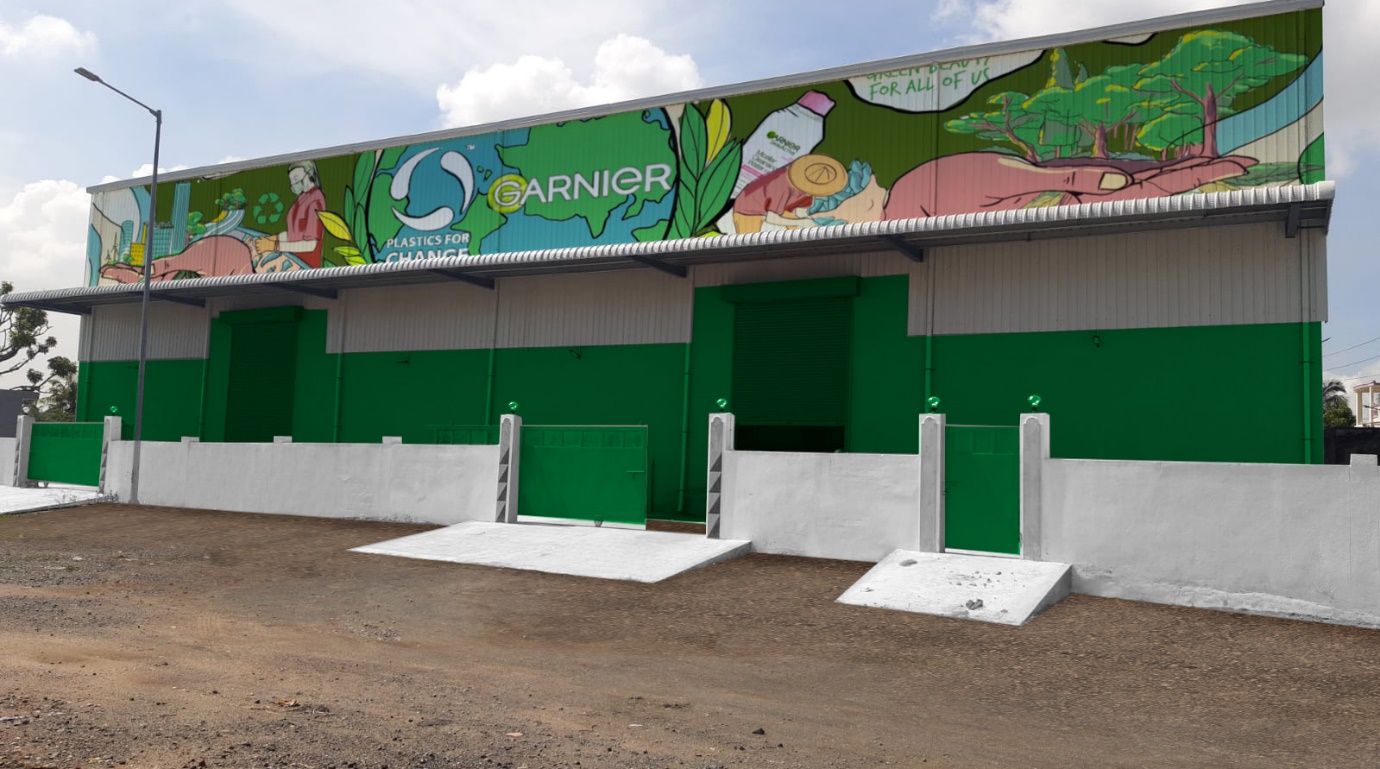
One flagship effort is the “One Green Step” campaign, which encourages consumers to share daily eco‑friendly habits on social media. Garnier runs an annual report and a short viral video under this banner, pledging for each share to finance the recycling of plastic bottles via NGO partners. For instance, each time the campaign video is shared Garnier pays to recycle five plastic bottles, and ten bottles per user post, aiming to recycle two million bottles overall The campaign ties directly to Garnier’s brand values: “removing barriers [to sustainable living] is key,” and Garnier has partnered with organizations like Plastics For Change (in India) and Ocean Conservancy to turn collected waste into social and environmental benefitThis cause-based, social‑media‑driven effort reinforces Garnier’s green image and involves customers in its mission of waste reduction.
Garnier also markets its sustainable product innovations extensively. In 2020 and 2021 it introduced a range of solid (bar) shampoos under the “Whole Blends” and “Ultimate Blends” labels, first in the UK and then in the U.S.. These bars use 100% recyclable cardboard packaging and up to 94% plant‑based ingredients. Global news wires highlighted that the bars use 70% less transportation energy than liquid bottles and are tailored to last the equivalent of two months of use. In press materials Garnier’s leadership framed the shampoo bars as a “huge milestone” and a way to help consumers take a #OneGreenStep towards sustainability. Relatedly, Garnier launched on-pack innovations like hair care with integrated AR experiences: for example, during an Earth Month “Beauty Responsibly” campaign, packaging featured scannable codes that showed ingredient provenance and triggered eco‑donations when shared on social media. Through all these channels, Garnier’s communications weave product benefits with its green commitments, positioning the brand as a leader in accessible eco‑friendly beauty.
2) Social Media and Influencer Marketing
Garnier maintains a strong digital presence, especially on platforms popular with Millennials and Gen Z. The company regularly enlists influencers and user‑generated content to boost brand awareness. In France, Garnier’s TikTok campaign for the new Fructis Hair Food shampoo range is a prime example. Garnier sponsored a branded hashtag challenge #FructisHairFoodChallenge in 2023, inviting users to post “before and after” hair transformations using a fun 2D branded effect. The campaign ran paid TopView and In-Feed ads to kick it off, and then highlighted the best user videos in a mashup ad. It achieved extraordinary engagement: over 250 million video views and more than 109,000 user‑generated videos in the first month. Nielsen studies showed ad recall up 27.5%, proving TikTok’s creative formats could drive awareness among younger consumers.
Beyond TikTok, Garnier shifted to “micro‑influence” strategies to emphasize authenticity. Garnier moved from a macro‑influencer approach to a community of “Garnier Lovers” (hundreds of micro and nano‑influencers) through a tool called Skeepers. The goal was to let real consumers – not paid celebrities – become the faces of the brand. Garnier’s Advocacy Manager, Thomas Jouanin, summarized the new ethos: “Our stars are our consumers. Using micro‑influence was an obvious choice for us to continue to communicate authentically and demonstrate the effectiveness of our products.”. In one campaign tied to the reality TV show Koh Lanta, these micro‑influencers were given creative challenges (like filming a shampoo “spa” session) that organically highlighted Garnier Ultra Doux products. This generated much higher engagement and trust than generic sponsored posts.
Garnier’s influencer network is leveraged globally for local campaigns. For instance, during Eid al‑Fitr 2024 Garnier’s Middle East team activated 69 beauty creators across Saudi Arabia and UAE to promote the Color Naturals hair dye line. These influencers produced a mix of in-store and at-home tutorials, showing how the product works in real-life settings. The campaign strategy stressed diversity: multiple content styles and demographics were represented, which broadened reach and resonance. Vamp’s report notes the result was a “remarkable engagement” (27% average engagement rate) and solid impressions for the brand in the region. This localized creator strategy complements more centralized digital campaigns – for example, Garnier Vietnam’s TikTok launch of a new serum (#GiGiGiGi challenge) generated nearly one billion views in four weeks. By tapping both global trends (branded hashtag challenges) and local influencers, Garnier maximizes its social‑media impact across markets.
3) Product Innovation and New Launches
A continual stream of new products is central to Garnier’s marketing momentum. The brand often uses innovations to spark press coverage and social buzz. L’Oréal’s recent financial reports highlight Garnier’s product launches: hair care streaks like “Sleek & Stay” conditioners, new Fructis shampoos, and hair color lines such as Garnier Good and Color Sensation were rolled out in 2024. In skincare, Garnier created headlines with the launch of an invisible pimple patch under its Pure Active line. These patches were heavily promoted via social media influencers and skincare blogs, addressing Gen Z’s interest in “TikTok‑able” solutions. A separate Garnier press release boasted that the Whole Blends solid shampoo bars use 94% plant‑based ingredients and are free of silicones or dyes – details emphasized in marketing to environmentally conscious shoppers.
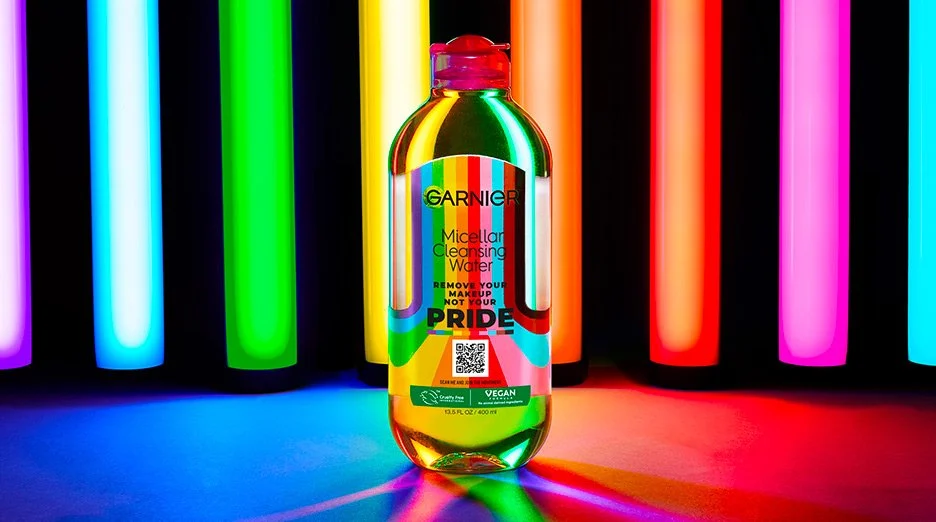
Packaging and convenience innovations also feature in Garnier’s product marketing. In the U.S. and UK, the new solid shampoo bars (mentioned above) were marketed as “zero-plastic” alternatives, and Garnier ran digital ads and in-store displays highlighting their eco‑friendly design. In another example of packaging-driven marketing, Garnier UK offered a rainbow‑themed limited edition of its Micellar Cleansing Water during Pride Month. The bottle design reinforced an inclusive message (“celebrate the skin you are in”) while 10p per bottle sold was donated to an LGBT+ youth charity. Garnier also experiments with “gifts with purchase” (GWPs) to drive trial: an exclusive green hair chalk included with Earth Month purchases encouraged social posts with #GarnierBeautyActivist and even triggered TerraCycle donations for each photo shared. By linking product launches and packaging to social causes and freebies, Garnier keeps new items in the spotlight while reinforcing its brand themes.
4) Experiential and Omnichannel Engagement
Garnier’s marketing extends into real-world experiences that connect online and offline channels. For example, the brand has invested in interactive retail promotions. During an Earth-conscious campaign, many Garnier product packs included augmented reality (AR) codes. Scanning these codes on a smartphone would overlay graphics about ingredient sources or sustainable tips, making the shopping experience more engaging. Similarly, Garnier hosted pop-up events tied to popular media. The French “Koh Lanta” influencer campaign invited creators to a branded event where they participated in show‑themed challenges – effectively a physical engagement that generated authentic social content. Such experiential tactics blur the line between product trials and marketing content, leaving consumers with memorable brand interactions.
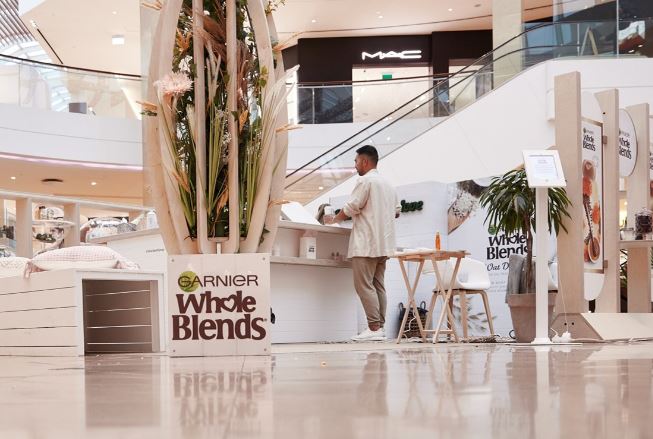
Sampling and targeted promotions are another key part of Garnier’s strategy. During back‑to‑school 2018, Garnier ran a multi-campus sampling tour in partnership with the student network Her Campus. College students received free kits (including product samples and gift cards) and were encouraged to post about their “green routine.” In that campaign, Garnier delivered over 500,000 samples on campuses nationwide and partnered with large retailers (Walmart, Target) on exclusive bundles. The result was measurable: for instance, Target reported 7% sales growth on featured Garnier items and a 50% sell-through rate on a limited‐edition GWP bag. These omnichannel efforts – combining sampling, retail displays, and digital incentives – help Garnier capture interest at the point of purchase and online simultaneously.
Additionally, Garnier makes extensive use of quizzes, virtual try-on tools, and mobile apps to enhance the digital shopping journey. (For example, its website offers hair color try-on and product recommendation quizzes.) While these tools are not always promoted in traditional ads, they reflect Garnier’s focus on meeting consumers wherever they are – be it scrolling on Instagram or browsing in a supermarket aisle – and providing an integrated brand experience.
5) Inclusive and Cause-Driven Campaigns
Diversity, equity and inclusion are prominent themes in Garnier’s marketing. The brand strives to represent all identities and causes. As one Garnier site states, the mission is “to celebrate ALL skin” and ensure inclusivity of all genders, orientations, races and ages. This ethic appears in advertising: Garnier campaigns feature models of different ethnicities and body types, and its Ambassadors include influencers who speak on minority issues. Internally, Garnier has admitted using brand marketing to educate audiences about social topics (e.g. LGBT+ allyship in schools) as part of its broader All-of-Us commitment.
A concrete example is Garnier’s Pride initiatives. In the UK, Garnier introduced a limited-edition “Rainbow” Micellar Water with packaging celebrating Pride and donated £0.10 from every unit sold (up to £50,000) to Just Like Us, an LGBT+ youth charity. The campaign included educational content about LGBT+ experiences and featured Garnier ambassadors active in the community. Until 2024 Garnier was a platinum sponsor of NYC Pride events, and although it scaled back in 2025 it had previously used Pride Month to reinforce its inclusive brand image. In marketing terms, these efforts align the product (a universally appealing cleanser) with social values that resonate with younger consumers, reflecting authenticity in brand purpose.
Garnier has also targeted inclusion through the lens of ethnic and cultural representation. In Brazil, for instance, it co‑created a skincare line specifically for black women with singer Iza, directly addressing darker skin needs. More broadly, Garnier partnered with Gold House (an Asian Pacific cultural organization) in the U.S. to launch the Gold Green Grant – a funding program for Asian-Pacific entrepreneurs innovating in sustainability. This program not only provides grants and mentorship, but it was prominently featured in Garnier’s Asian Pacific American Heritage Month advertising. L’Oréal press noted that Garnier’s campaign “featured pervasive inclusion of Asian Pacific creatives, not just in front of the camera but also at every level of decision-making”. Such culturally focused campaigns show Garnier adapting its marketing to affirm diverse communities, with measurable outreach (e.g. campaigns displayed in Walgreens stores during May) and philanthropic partnerships.
Overall, Garnier’s cause-driven campaigns signal that “beauty” for the brand includes social responsibility. By tying donations (to LGBT+ and refugee causes), community education, and celebration of diversity into its product launches, Garnier reinforces the idea that buying its products also supports meaningful initiatives. Executives describe this as part of “inclusive marketing” – an approach that, while sometimes criticized as activism, is core to Garnier’s modern positioning and helps differentiate it from competitors.
6) Partnerships and Collaborations
Garnier frequently collaborates with outside organizations to amplify its marketing. Many of these partnerships align with the brand’s green and community initiatives. For example, Garnier’s “One Green Step” program works with environmental NGOs: Plastics For Change (a social enterprise in India) and Ocean Conservancy are cited partners that collect and recycle plastic waste whenever consumers engage with the campaign. In its product press releases, Garnier also highlights collaborators like the Bee Conservancy – donating to bee-protection projects to complement its use of sustainably sourced honey in Whole Blends products. By associating with well-regarded nonprofit causes, Garnier bolsters credibility on sustainability and taps into cause-marketing audiences.
Retail and media partnerships are another common tactic. The 2018 “Beauty Responsibly” campaign united Garnier’s hair and skincare lines and was rolled out through major partners. For Earth Month and back-to-school, Garnier worked with Walmart and Target (U.S. retailers) to offer exclusive bundles, in-store activations, and co-branded content. These partnerships ensured eye-catching displays (like eco-themed giveaways) in front of millions of shoppers and tied in with national initiatives (e.g. TerraCycle recycling drives). On the media side, Garnier teamed with National Geographic on the aforementioned edutainment series, leveraging NatGeo’s expertise and audience to reach consumers on environmental topics. It also uses social platforms strategically – for example, by backing branded content programs on TikTok and Instagram, Garnier makes its campaigns partially co-produced with the channel (as in #FructisHairFood).
Creative agencies are partners as well: the 2007 global rebranding with the new strapline “Take Care, Garnier” (emphasizing health and nature) was developed with Publicis, and more recent influencer activations use specialist firms like Vamp and Skeepers for execution. These collaborations – whether with nonprofits, retail giants, or creative agencies – enable Garnier to scale its campaigns and integrate varied expertise. Each partnership is chosen to reflect a facet of Garnier’s identity (natural care, social values, digital savviness) and to reach target demographics in new ways.
7) Global Reach and Localized Campaigns
Although Garnier is a global brand, it tailors marketing to local markets and cultures. Its product offerings often vary regionally: for example, the Brazilian co-development of skin care for black women shows how Garnier adapts to local demographics. Similarly, Garnier’s “Herbal Essences” and “Olia” lines are marketed differently around the world to suit regional hair types and preferences. The brand’s global website frameworks allow customization – country sites may highlight different hero products (e.g. Ambre Solaire sun creams in sunny markets, micellar water in Europe, hair serums in Asia) and run local influencer campaigns.
Campaign execution also reflects local culture. In the Middle East, Garnier’s Color Naturals hair color was promoted specifically during Eid, an important festival. Content and creators were chosen to resonate with Gulf audiences, merging salon tutorials with festive storytelling. In India, Garnier launched a #OneGreenStep campaign aligned to local recycling initiatives (e.g. bottle return programs). European markets see region‑specific ads (for instance, PSA-style commercials on water conservation in showers). Even its sponsor partnerships vary: the UK Pride charity drive mentioned above was specific to the UK, while Garnier USA’s partnership with Gold House is centered on Asian-American representation.
Across channels, Garnier leverages global reach when possible but adapts creative details. The TikTok #FructisHairFood challenge was run in France, Vietnam and other countries with different music, languages, and influencers per market. Its social media accounts post regionally relevant content (tips for tropical climates in India, fall hair care in the U.S., etc.). By balancing a unified brand identity (“Green Beauty for All”) with local execution, Garnier maximizes relevance: global brand building (like its overall “Green Beauty” message) is reinforced through local cultural touchpoints (festivals, languages, local stars). This glocal strategy ensures that marketing spend in each market hits home with consumers’ daily lives and values.
Also Read: Decoding L’Oreal Winning Marketing Strategy
To read more content like this, subscribe to our newsletter