Last Updated on December 11, 2025 by Team TBH
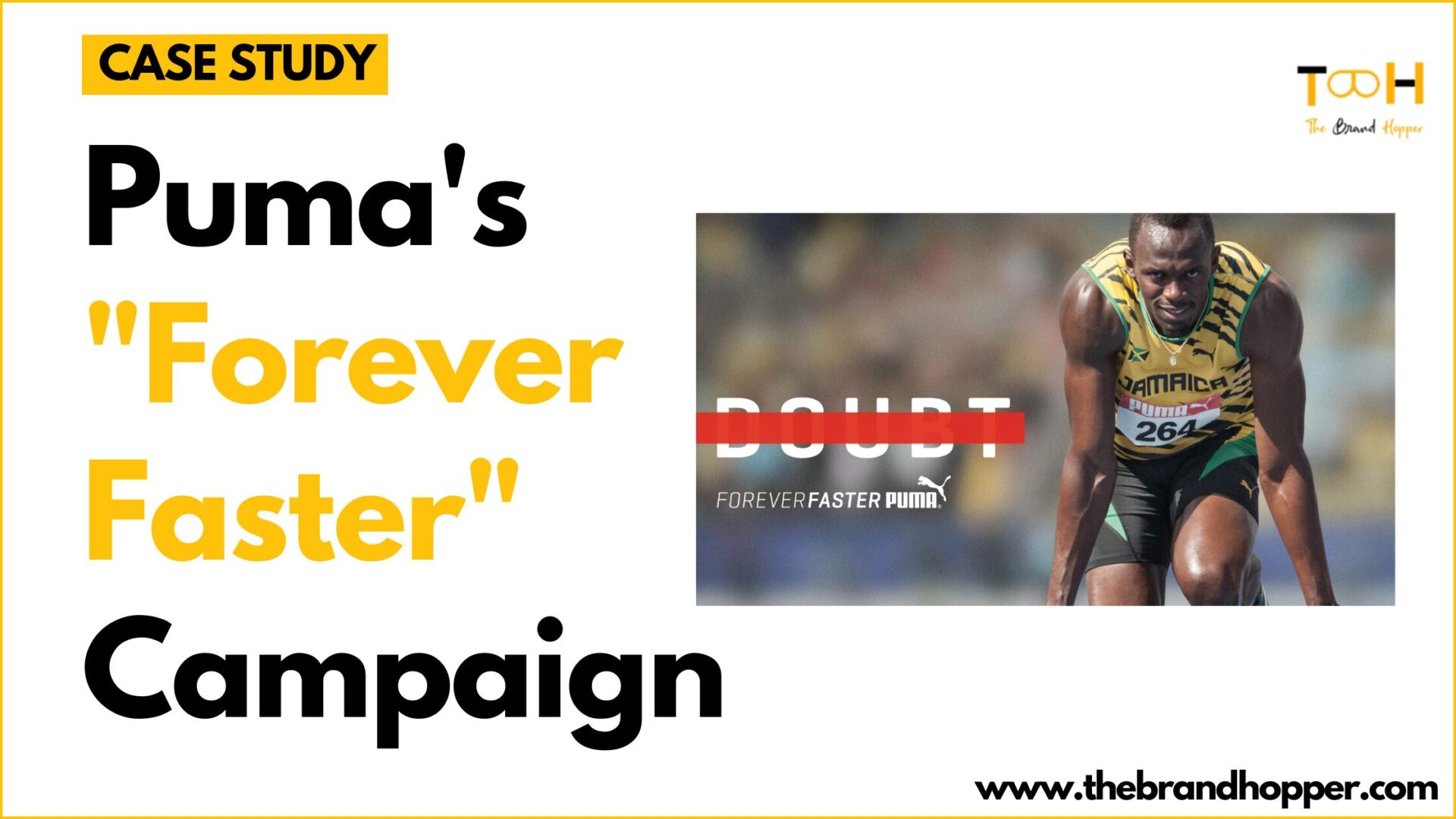
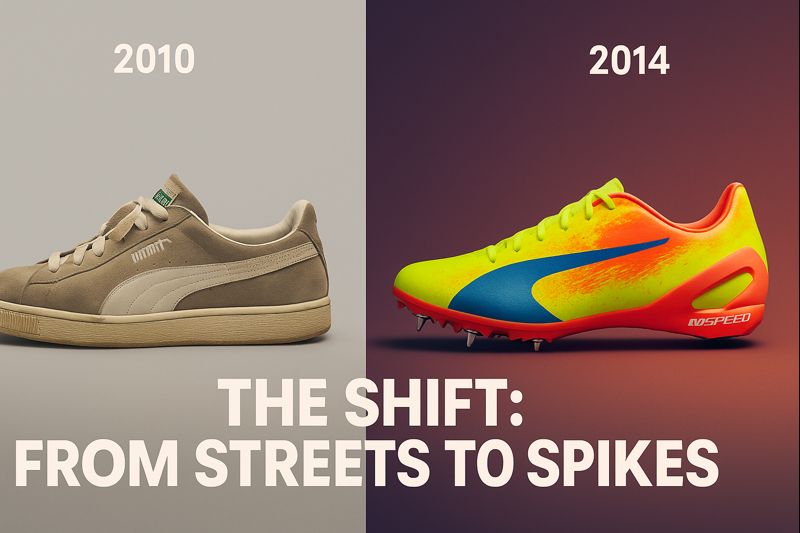
In a global sportswear market dominated by titans like Nike and Adidas, PUMA faced a critical identity crisis in the early 2010s. The brand had drifted too far into “lifestyle,” diluting its performance credibility. In 2014, PUMA launched “Forever Faster,” a daring strategic platform designed not just as a marketing tagline, but as a corporate ethos.
This case study explores the decade-long journey of “Forever Faster,” from its rebellious 2014 inception featuring Usain Bolt to its sophisticated 2024 global relaunch “See The Game Like We Do.” It analyzes how PUMA leveraged its heritage of speed to reclaim its status as a performance powerhouse, unifying its disparate categories under one powerful, singular message.
Brand Context & The Challenge
The “Lifestyle” Trap
By 2013, PUMA was struggling. While the brand had found success in the early 2000s by pioneering the “sport-lifestyle” niche (think Formula 1 casual shoes), the strategy had backfired. Serious athletes began to view PUMA as a fashion brand that made sneakers, rather than a sports brand that offered performance gear.
-
The Competitor Landscape: Nike owned “Just Do It” (Inspiration). Adidas owned “Impossible is Nothing” (Achievement). PUMA lacked a clear performance narrative.
-
The Financial Picture: Sales were stagnating, and the brand was losing shelf space in key performance retailers like Foot Locker and Dick’s Sporting Goods.
The Strategic Pivot
In 2013, Bjørn Gulden took over as CEO with a clear mandate: PUMA must be a sports brand again. The objective was to strip away the confusion and return to the brand’s founding DNA. Rudolf Dassler founded PUMA in 1948 with the vision of giving athletes the “speed of a puma.”
-
The Big Idea: Own “Speed.”
-
The Logic: Speed is an objective metric in sports. You are either faster, or you are not. It is aggressive, competitive, and distinctly PUMA.
Phase I: The 2014 Launch – “Calling All Troublemakers”
The Creative Concept
The 2014 launch was not polite; it was visceral. PUMA needed to make noise. The agency, JWT New York, developed a campaign that equated “Fast” with “Rebellion.” Being fast required confidence, swagger, and a willingness to break the rules.
The campaign tagline: “Forever Faster.”
The “Troublemakers”
PUMA selected ambassadors who were not just elite athletes, but cultural disruptors.
-
Usain Bolt: The face of the campaign. The fastest man alive, known for his showmanship.
-
Mario Balotelli: The “bad boy” of Italian football, famous for his “Why Always Me?” shirt.
-
Rickie Fowler: The golfer bringing flat-brimmed hats and neon colors to a traditional sport.
Execution: The TVC
The hero TV commercial, “Calling All Troublemakers,” set the tone. It featured Bolt and Balotelli in a hot tub surrounded by models, implying a rockstar lifestyle earned through athletic dominance. The voiceover challenged the viewer: “Obedience will be discouraged.”

-
Viral Tactic: PUMA used a “Flock to Unlock” mechanic on Twitter. Fans had to tweet #ForeverFaster to reveal the new commercial, leveraging the athletes’ massive social followings to create a digital groundswell before the TV premiere.
Challenges & Critique
-
The Trademark Battle: PUMA faced legal hurdles in the EU. The European Union Intellectual Property Office (EUIPO) initially rejected the trademark “Forever Faster,” labeling it as “laudatory” (simply praising the product) rather than distinctive. PUMA had to fight to prove the phrase was a unique brand indicator.
-
The “Macho” Tone: While effective at grabbing attention, the “hot tub” imagery drew some criticism for being slightly dated and male-centric, a criticism PUMA would address in later years by pivoting heavily toward women’s training.
The Evolution: 2015–2023
“Forever Faster” did not remain static. Between the initial launch and the 2024 relaunch, the platform served as an umbrella for various sub-strategies.
The Rihanna Effect (The “Fenty” Era)
Recognizing the criticism of its male-heavy launch, PUMA made a genius pivot in 2015 by appointing Rihanna as Creative Director. While this leaned back into lifestyle, it was done under the “Forever Faster” mantra—speed in trendsetting. This era arguably saved the brand financially, making PUMA relevant to Gen Z women.
Return to Basketball
In 2018, PUMA re-entered the NBA after a 20-year hiatus. They applied the “Forever Faster” ethos to hoops but adapted the culture. They signed LaMelo Ball, the modern equivalent of a “troublemaker”—flashy, talented, and internet-famous.
The 2024 Relaunch – “See The Game Like We Do”
Fast forward to 2024. PUMA had regained stability but needed “Brand Elevation.” The market was fragmented; PUMA Running, PUMA Hoops, and PUMA Football felt like different companies.
The 2024 Objective
To launch the first truly global brand campaign in ten years. The goal was Unification. One message for every category, from the Olympics to the NBA to the Euro Cup.
The Insight: Speed as a Superpower
The new CEO, Arne Freundt, refined the definition of “Forever Faster.” It wasn’t just about running fast; it was about mental speed.
-
The Core Insight: Great athletes see the game differently. They see opportunities before others do. Speed allows you to “See The Game Like We Do.”
The Global Campaign Creative
The 2024 campaign was a massive multimedia blitz.
-
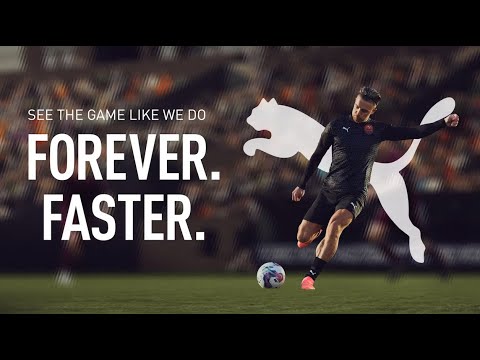
The Hero Film: A high-energy montage featuring Neymar Jr., Antoine Griezmann, Breanna Stewart, and Mondo Duplantis. The camera work was frantic, utilizing “POV” shots to simulate the athlete’s perspective—blurring crowds, heightened focus, and distorted time.
-
Visual Identity: The campaign used a distinct visual language—high contrast, motion blur, and a new “sonic identity” (sound logo) to make the brand instantly recognizable on social media feeds like TikTok.
Media Strategy: “Unmissable”
PUMA moved away from traditional TV-heavy buys to high-impact placements.
-
3D Billboards: PUMA took over Piccadilly Circus (London) and other major landmarks with 3D anamorphic billboards where the PUMA cat appeared to leap out of the screen, reinforcing the “breaking limits” theme.
-
The “Year of Sport”: The campaign was timed to overlap with the “Super Cycle” of sports: The Paris Olympics, The Euros, and Copa América. PUMA ensured “Forever Faster” signage was visible on the shoes of winning athletes (like Mondo Duplantis breaking the world record) during these peak broadcast moments.
Implementation & Marketing Channels
The success of “Forever Faster” lay in its 360-degree execution.
Social Media & Influencer Strategy
-
TikTok Integration: PUMA recognized that Gen Z consumes sports through highlights, not full games. They partnered with creators to make “speed challenges” and utilized the specific “See The Game” audio track to encourage user-generated content.
-
Athlete “Takeovers”: Instead of polished PR posts, PUMA allowed athletes like LaMelo Ball to post raw, “POV” style content that aligned with the campaign theme.
Experiential Marketing
-
PUMA Labs: Pop-up experiences at major sporting events where fans could test their speed against the “ghost” of Usain Bolt (using LED screens along a track).
-
The “Nitro” Experience: To promote their new running technology, PUMA created testing zones where runners could feel the difference of the “Nitro” foam, directly connecting the “Forever Faster” brand promise to product innovation.
Retail Execution
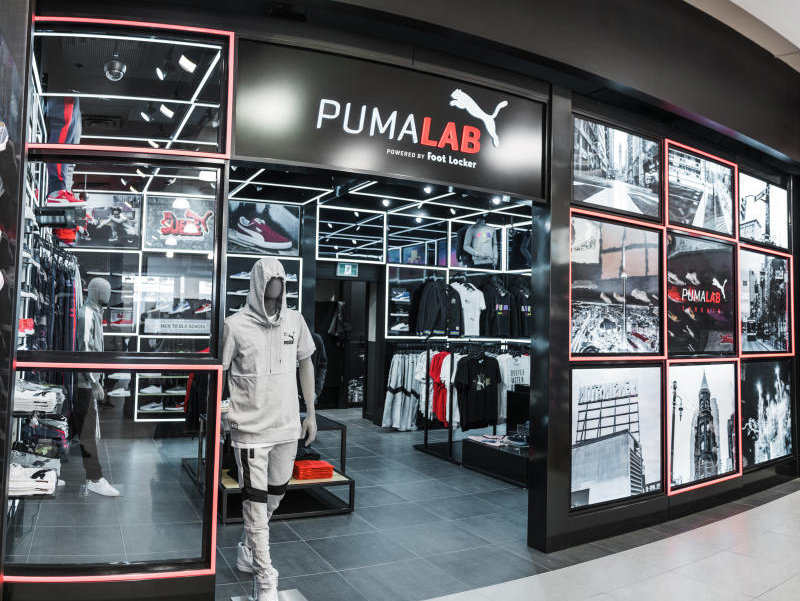
In-store, “Forever Faster” became a navigational tool. Stores were reorganized not just by gender, but by “speed” categories (Race, Train, Play). The visual merchandising used dynamic mannequins frozen in sprinting or jumping motions to convey energy even when static.
Results & Impact
Financial Turnaround (2014-2024)
The “Forever Faster” platform correlates with PUMA’s most successful financial decade.
- 2013 Sales: Approx €3 Billion.
- 2023 Sales: Approx €8.6 Billion.
The relentless focus on performance credibility allowed PUMA to raise its average price point, moving away from the discount bin and into premium tiers.
Brand Sentiment
- 2014: Seen as a “faded” lifestyle brand.
- 2024: Recognized as a top 3 global performance brand. The “See The Game Like We Do” campaign reportedly drove a significant lift in “Brand Consideration” among the 16-24 demographic, a notoriously difficult audience to capture.
Operational Speed
“Forever Faster” wasn’t just marketing; it changed the supply chain. PUMA shortened its production lead times, allowing them to react to trends (like the “Daddy Shoe” trend or the “Terrace Culture” trend) faster than competitors.
Key Takeaways for Marketers
1) Brand Platforms > Campaign Taglines: “Forever Faster” is not a tagline; it is a filter for decision-making. If a product, bold decision, or athlete isn’t “Fast,” PUMA doesn’t touch it.
-
2) Consistency Builds Equity: By sticking to one core message for 10+ years (even while evolving the creative), PUMA built genuine memory structures in the minds of consumers.
-
3) Heritage is a Weapon: PUMA didn’t invent a new personality; they rediscovered their old one. Brands should look to their archives to find their authentic “superpower.”
-
4) Unification is Powerful: In a fragmented media landscape, having one single message across Running, Football, and Lifestyle amplifies the budget and impact.
Conclusion
The PUMA “Forever Faster” case study is a masterclass in brand resilience. It demonstrates how a heritage brand can modernize itself not by chasing every trend, but by doubling down on its core truth. By owning “Speed”—a universal language in sports—PUMA successfully navigated a turnaround that saved the company from irrelevance and propelled it back to the podium. Whether through the rebellious swagger of Usain Bolt in 2014 or the psychological insight of 2024, PUMA has proven that to survive in the sports industry, you cannot just play the game; you have to change the pace.
Also Read: Case Study: IKEA’s “The Wonderful Everyday” Campaign
To read more content like this, subscribe to our newsletter