Last Updated on March 3, 2026 by Team TBH
Picking an ecommerce platform is like picking a business partner. You’re not just choosing a website builder—you’re choosing how you’ll get paid, how you’ll scale, and how many headaches you’ll outsource to software.
Two of the most serious “grown-up” options are Shopify and BigCommerce. Both can power a real brand. Both can handle serious catalogs. Both can integrate with everything from Instagram to ERP systems. But they win for different reasons—and they tend to fit different business personalities.
Here’s a deep, practical comparison so you can confidently choose the one that matches your store’s reality.
The 10-Second Summary
-
Choose Shopify if you want the fastest launch, the largest app ecosystem, the smoothest overall experience, and you’re okay with adding apps (and costs) as you grow.
-
Choose BigCommerce if you want more built-in ecommerce features, more flexibility for SEO/control, strong multi-storefront capability, and zero platform transaction fees by default.
Now let’s get into the details.
Pricing: Similar on Paper, Different in Real Life
At a glance, both platforms look “same-same” on tier names and entry points.
BigCommerce plan pricing (Essentials)
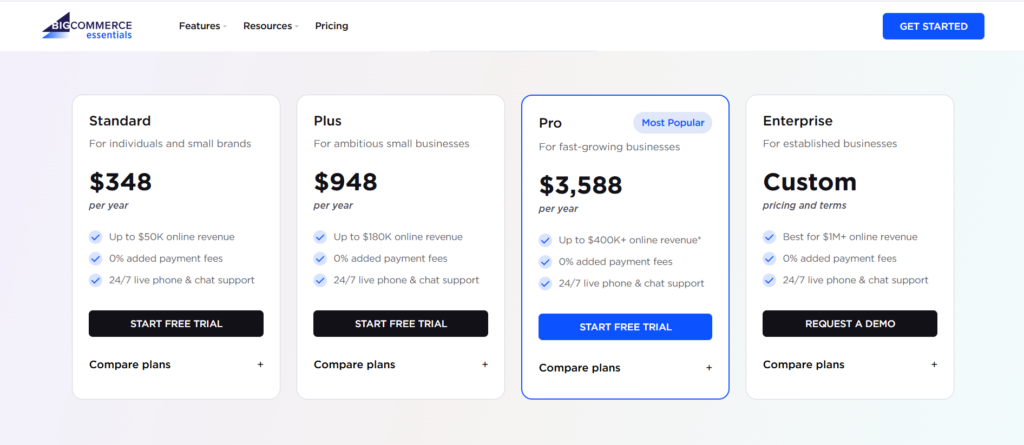
BigCommerce’s Essentials pricing lists:
- Standard: $348/year
- Plus: $948/year
- Pro: $3588/year
- Enterprise: custom
Shopify pricing
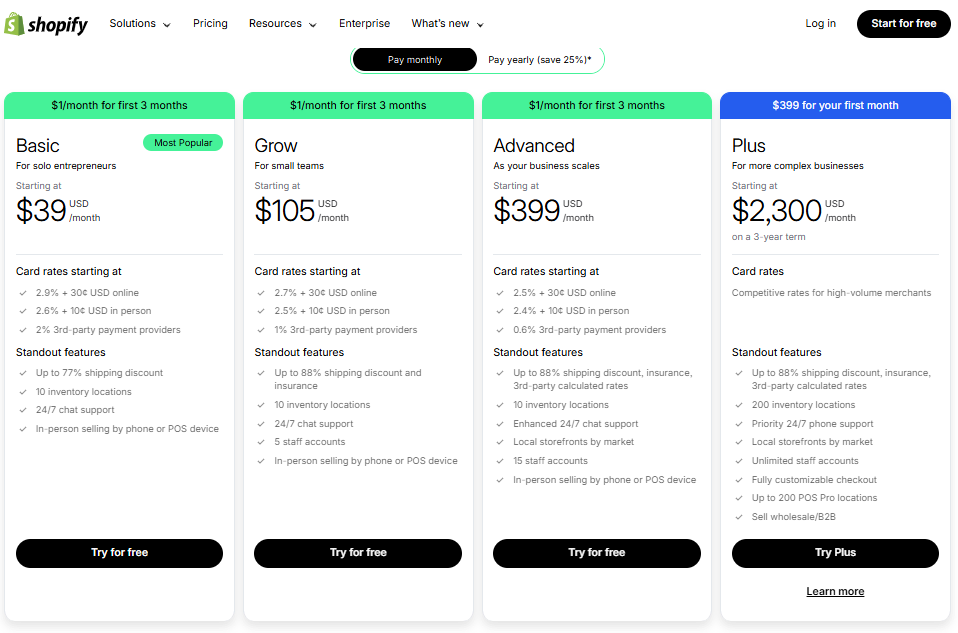
Shopify’s pricing varies by region and edition, but it publishes pricing tiers on its official pricing page (and it’s known for multiple plans that scale up as your needs grow).
TBH reality check: the “platform fee” is only one line item. The bigger difference usually comes from:
- Apps (Shopify often relies more on apps for advanced needs)
- Themes (paid theme costs can add up)
Payment fees and transaction rules (this can be a major swing factor).
Transaction Fees & Payments: The Sneaky Cost Center
Shopify: can add extra fees if you don’t use Shopify Payments
Shopify charges payment processing fees (normal), and it may also charge an additional fee when you use third-party payment providers (this is the part that surprises many store owners). Shopify explains payment providers and plan-based card fees on its pricing page.
Shopify also publishes examples of Shopify Payments fee structures by plan level (e.g., different rates for Basic/Grow/Advanced).
BigCommerce: no platform transaction fees
BigCommerce is widely positioned as having no additional platform transaction fees on plans, while you still pay your payment processor (Stripe/PayPal/etc.) like any store.
TBH takeaway:
If your store uses a payment provider that isn’t Shopify Payments, BigCommerce can be cleaner (and often cheaper) from a “platform fee” point of view.
Ease of Use: Shopify is the smoothest “start-to-sale” experience
If you want to go from “I have a product” to “I’m selling online” without a long learning curve, Shopify tends to feel more polished.
Why?
- Very guided onboarding
- Strong theme ecosystem
- Huge number of pre-built integrations
- Best-in-class POS tie-ins for online + offline retail (Shopify is frequently highlighted as a top POS option for omnichannel merchants).
BigCommerce is not hard—but it often feels more like a platform designed for merchants who already know what they want, especially when you start customizing deeper commerce behaviors.
TBH rule of thumb:
- Beginner, solo founder, “I want sales this weekend” → Shopify
- Operator mindset, “I want control and fewer paid add-ons later” → BigCommerce
Themes & Design: Both are Good, Shopify Usually Feels More “Modern-first”
Both platforms offer professional themes—free and paid—and both can look premium.
A mainstream comparison notes that both have responsive themes with paid theme marketplaces on each side.
Where Shopify often wins is:
- Theme aesthetics and UX polish
- More theme developers
- More “plug-and-play” customization via apps
Where BigCommerce often wins:
- Fewer “you must install an app for that” moments for certain ecommerce features
- Cleaner setup for stores that want strong built-ins rather than an app stack
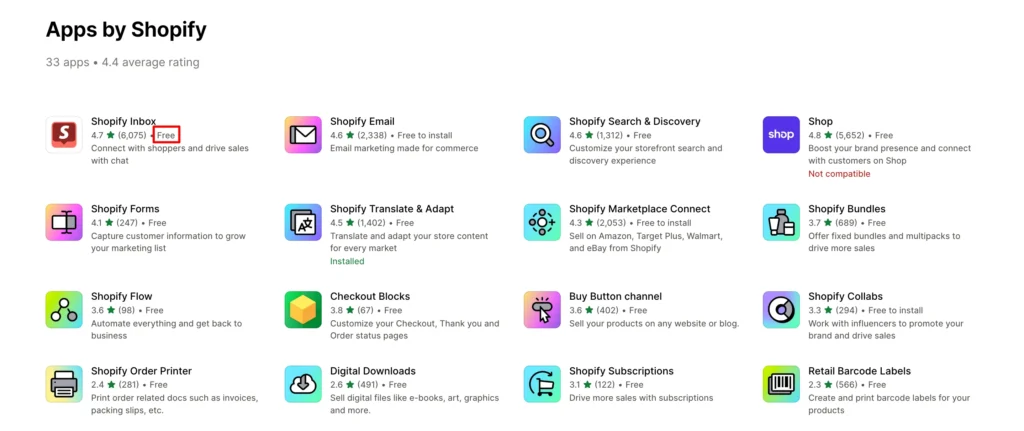
App Ecosystem: Shopify is the App Empire
If ecommerce platforms were smartphones:
- Shopify is iOS + App Store on steroids.
- BigCommerce is Android with more built-in tools and a more “configure it properly” vibe.
A recent industry dataset estimates the Shopify App Store has tens of thousands of apps published by many vendors.
What this means in real life:
- Shopify can integrate with almost anything.
- But a “simple” store can become a monthly subscription sandwich (email app + review app + upsell app + analytics app + search app… you get it).
BigCommerce has an app marketplace too, but it generally leans into built-in ecommerce functionality and integrations with many payment providers (BigCommerce highlights broad gateway support).
SEO & Performance: BigCommerce tends to give more control out of the box
Both can rank well on Google. But BigCommerce often gets love from more technical SEO folks because it pushes “built-in SEO foundation” messaging: clean URLs, built-in tools, performance-optimized storefronts.
Shopify can absolutely do SEO—many brands rank extremely well—but some deeper SEO/customization tasks can feel constrained unless you’re comfortable with workarounds, apps, or headless builds.
TBH takeaway:
- Content-heavy SEO + technical control priorities → BigCommerce edge
- SEO plus speed-to-market and marketing automation via apps → Shopify edge
B2B, Multi-storefront, And Complex Catalogs: BigCommerce shines for “commerce architecture”
This is where BigCommerce often quietly wins.
Multi-Storefront (BigCommerce)
BigCommerce supports Multi-Storefront, letting one BigCommerce “store” power multiple storefronts, each with its own domain/branding.
If you run:
- multiple brands
- regional storefronts
- wholesale + DTC with separate experiences
…that capability matters a lot.
Headless commerce
Both support headless commerce.
- BigCommerce positions itself as API-first, supporting REST and GraphQL and headless builds.
- Shopify’s headless story centers around Hydrogen + Oxygen, and Shopify has been shipping ongoing updates under its Editions (e.g., developer improvements and storefront tooling).
TBH takeaway:
- If you want “enterprise-like architecture” without going full custom, BigCommerce often feels purpose-built.
- If you want headless but still want Shopify’s ecosystem and workflow, Shopify’s Hydrogen/Oxygen path is very attractive.
Omnichannel Selling: Shopify is the friendliest for selling everywhere
Both support marketplaces and social channels, but Shopify’s strength is the “sell anywhere” narrative and execution—especially when you care about:
- in-store POS
- social commerce integrations
- pop-ups/events
- unified inventory experience
Shopify is frequently rated highly for omnichannel POS experiences in buyer guides.
BigCommerce also supports broad payment gateways and global payment acceptance options, which matters for international selling setups.
Support & Ecosystem
Shopify’s ecosystem is massive: apps, agencies, developers, communities, tutorials—there’s always someone who has solved your problem before.
BigCommerce’s ecosystem is smaller but often skews toward:
- more technical teams
- more mid-market/enterprise merchants
- agencies used to handling complex catalogs, B2B, and integrations
A clean visual comparison table (TBH-ready)
| Factor | Shopify | BigCommerce |
|---|---|---|
| Best for | Fast launch + scaling with apps | Built-in features + commerce control |
| Pricing (platform) | Published tiers vary by region | Standard $39, Plus $105, Pro $399 |
| Platform transaction fees | Can apply with third-party payments | No platform transaction fees (processor fees still apply) |
| App ecosystem | Huge (tens of thousands reported) | Smaller; leans more on built-ins |
| SEO control | Strong, but can feel constrained for deep technical tweaks | Strong built-in SEO foundation emphasis |
| Multi-storefront | Possible, often via setups/apps/advanced configs | Native Multi-Storefront capability |
| Headless options | Hydrogen + Oxygen hosting path | API-first headless positioning |
| Omnichannel POS | Often considered top-tier | Solid integrations, less “POS-first” branding |
So… which one is better?
Choose Shopify if:
- You want the simplest path to launch
- You prefer a huge app marketplace and don’t mind paying for add-ons
- You’re doing DTC, social selling, or omnichannel retail
- You want a “mainstream” platform where hiring help is easy
Choose BigCommerce if:
- You want more built-in commerce features
- You care about SEO control and technical flexibility
- You need multiple storefronts under one operational roof
- You dislike the idea of platform transaction fees and prefer payment-provider flexibility
Final TBH verdict
If your business is at the “let’s move fast and sell” stage, Shopify usually wins on simplicity and ecosystem gravity.
If your business is at the “let’s build a scalable commerce machine” stage (multi-store, B2B, complex catalog, custom integrations), BigCommerce often feels more commerce-native and less app-dependent.
Also Read: Notion vs Obsidian: Which Note App Is Better?
To read more content like this, subscribe to our newsletter