Last Updated on March 25, 2026 by Team TBH
Every 1 in 6 enterprise businesses recalls their experience where a few seconds of downtime or a minor security flaw resulted in millions of dollars in lost revenue.
In 2026, the cost of technical debt is higher than ever, and a poorly built platform can stall a global rollout or lead to massive security vulnerabilities.
Enterprise web development requires a specialized engineering
approach that prioritizes high-concurrency architecture, deep API integrations, and strict data privacy compliance. Achieving this level of seamless infrastructure is nearly impossible without the assistance of an agency that specializes in enterprise-ready web development services.
These firms provide the technical leadership needed to modernize legacy stacks and deploy cloud-native solutions that grow alongside the
business. We’ve compiled a list of the leading agencies that provide the expert assistance necessary to turn complex technical requirements into stable enterprise business assets.
NEWMEDIA.COM
NEWMEDIA.COM is a solid choice for enterprise brands that need more than a good-looking website. They build large-scale digital experiences with performance, flexibility, and long-term growth in mind, which makes them especially valuable for companies that need their website to support real business operations, not just branding.
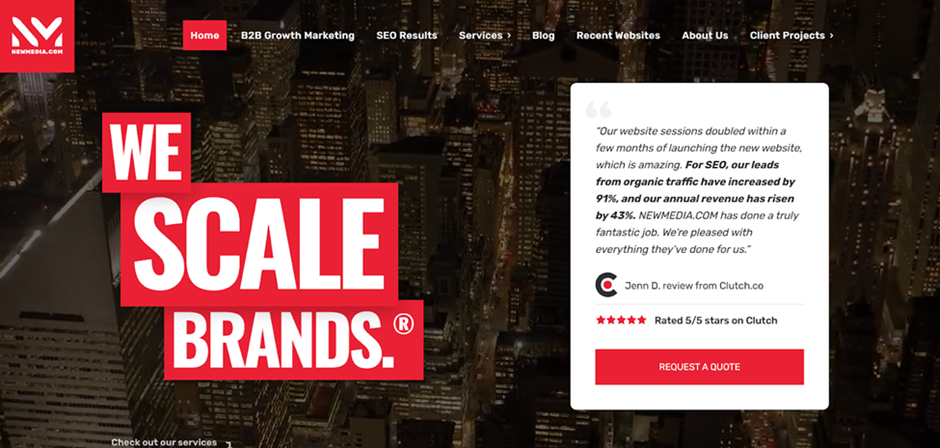
Best for: Enterprise brands, fast-growing companies, and organizations that need scalable, custom-built websites backed by strategy, UX, and long-term technical support.
Notable capabilities: Custom enterprise web development, UX/UI strategy, CMS implementation, system and third-party integrations, scalable website architecture, performance optimization, conversion-focused development, and long-term technical support.
Accenture Song
Accenture Song treats web development as a total digital transformation effort. Their teams are built to overhaul the entire customer experience by reengineering the technology that powers it.
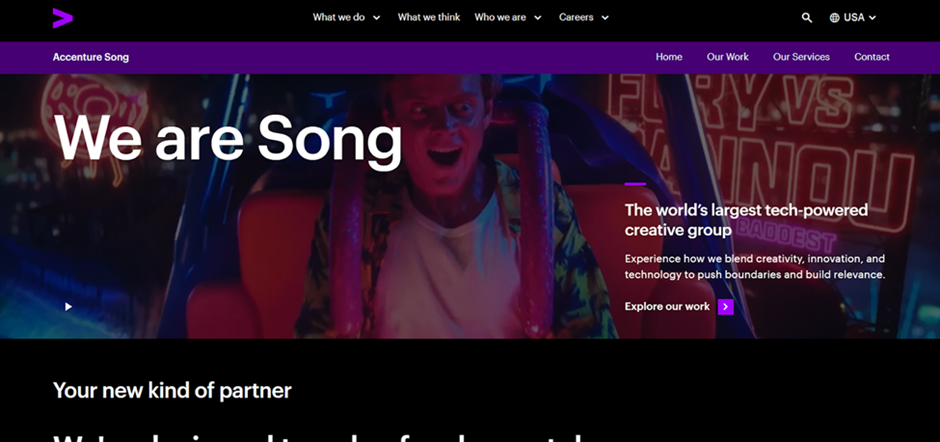
For a global enterprise, this means moving beyond a simple website to a fully integrated ecosystem where commerce, service, and marketing live on a unified, AI-driven platform.
They bring the scale necessary to manage thousands of developers and designers across multiple time zones simultaneously.
Best for:
Fortune 500 conglomerates and global firms that need to rebuild their entire digital service layer from the ground up.
What they do best:
- They design and deploy massive, cloud-native architectures that support millions of concurrent users across global markets without latency or downtime.
- They integrate complex back-office systems and ERPs directly into the web experience to automate business processes and improve operational efficiency.
- They utilize generative AI and machine learning to create hyper-personalized digital interfaces that adapt in real-time to user behavior.
Where they are not ideal:
Their immense size and focus on total corporate transformation create a high degree of bureaucratic overhead, making them poorly suited for agile projects that require fast, independent execution.
Notable capabilities:
Cloud-scale engineering, AI-driven personalization, global commerce integration, legacy modernization, and massive-scale project governance.
Publicis Sapient
Publicis Sapient identifies as a digital business transformation partner that uses engineering and data to modernize legacy enterprise systems.
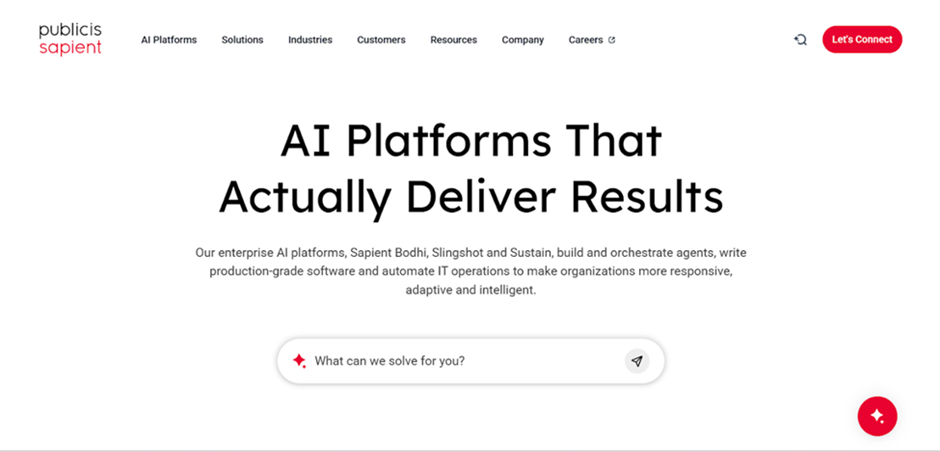
They specialize in building “agentic” AI platforms that automate complex business tasks directly through the web interface.
Their development process is particularly effective at helping companies in highly regulated industries, like finance and healthcare, build digital platforms that meet strict global compliance and data privacy standards.
Best for:
Multinational corporations in regulated industries that require deep engineering talent and a focus on long-term digital business transformation.
What they do best:
- They modernize aging codebases and legacy infrastructure to create modern, agile web platforms.
- They build secure, enterprise-grade AI applications that integrate directly into the web front-end.
- They develop digital architectures that pass the most stringent security and compliance audits in the global financial and healthcare sectors.
Where they are not ideal:
Their engineering-first culture can lead to long development cycles and massive technical roadmaps that may feel overly complex for brands primarily focused on creative marketing and content.
Notable capabilities:
Legacy system modernization, enterprise AI deployment, regulatory compliance engineering, digital product design, and high-security web architecture.
Also read: Top Coca-Cola Competitors
Vention
Vention provides high-end engineering talent for enterprises that need to scale their development capacity quickly without sacrificing quality.
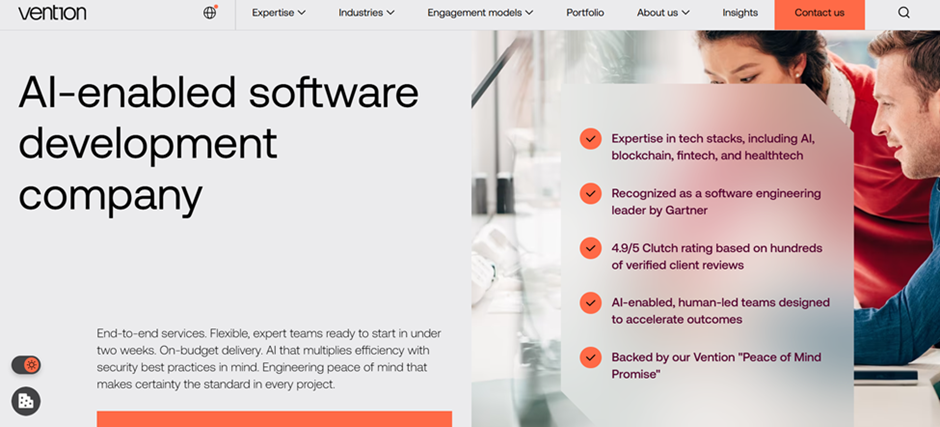
They operate as a strategic partner that can deploy entire teams of specialized developers to tackle complex, long-term projects.
Unlike standard outsourcing firms, they focus on deep technical integration, working as an extension of the client’s internal IT department to build custom software, advanced web applications, and integrated digital platforms.
Best for:
Tech-heavy enterprises that need to scale their technical teams rapidly for custom web and software development projects.
What they do best:
- They provide specialized engineering teams that integrate directly into existing enterprise workflows.
- They execute high-quality custom web development across a wide range of modern frameworks.
- They help organizations transition from monolithic architectures to modern microservices.
Where they are not ideal:
They function primarily as a technical execution partner, meaning they are less ideal for brands that need a high-end creative agency to lead their brand strategy and visual design.
Notable capabilities:
Custom software development, microservices architecture, cloud-native engineering, team augmentation, and advanced web application development.
BairesDev
BairesDev is a massive technology solutions company that specializes in providing high-performance development teams that can handle the most demanding enterprise projects.
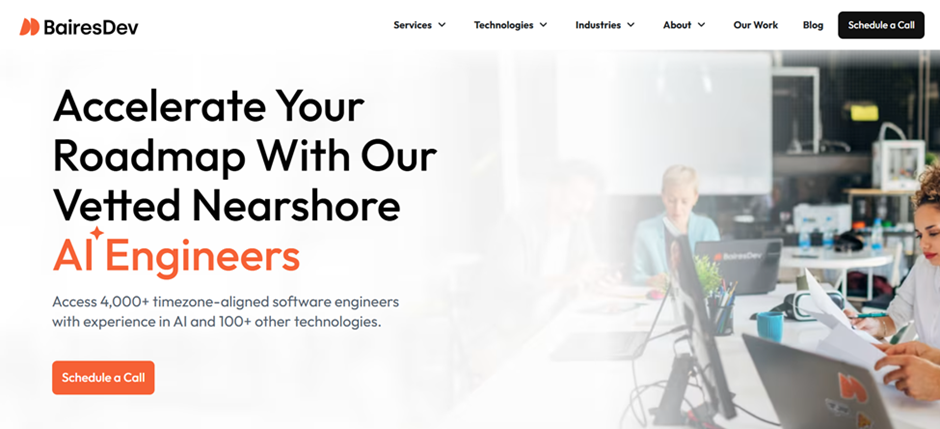
Their focus is on delivering high-quality code and robust digital infrastructure at a pace that matches the modern business cycle.
They are a go-to partner for organizations that require massive, cross-functional teams to build, maintain, and optimize global web platforms that serve millions of users daily.
Best for:
Global enterprise brands that require massive engineering scale and a reliable partner to manage the end-to-end development of complex web ecosystems.
What they do best:
- They deploy highly vetted, senior-level engineering teams to build custom enterprise web platforms.
- They provide complete end-to-end digital transformation services, from initial architectural design to ongoing maintenance and optimization of global sites.
- They excel at managing large-scale, distributed development projects that require precise coordination and high-quality output across multiple time zones.
Where they are not ideal:
Their massive scale and focus on engineering execution mean they are often less suited for projects that require a boutique, hands-on creative touch or deep brand-led storytelling.
Notable capabilities:
Full-stack web development, QA automation, cloud computing, big data integration, and enterprise software engineering.
10up
10up is a specialized engineering firm that excels in building high-performance digital platforms using open-source technologies.
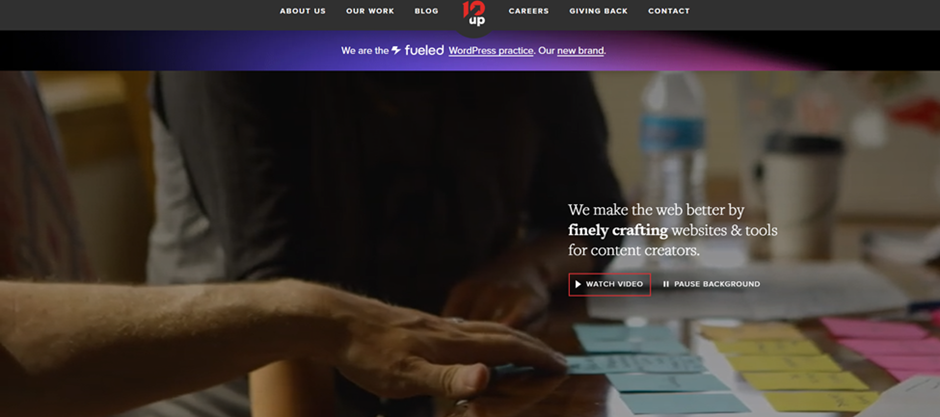
They focus heavily on the content creator’s experience, ensuring that massive enterprise teams can manage complex websites without technical friction.
By contributing directly to the platforms they use, such as WordPress and React, they maintain a deep level of expertise that allows them to build custom, scalable solutions for some of the largest media and consumer brands in the world.
Best for:
Content-heavy enterprise brands, media organizations, and large publishers require high-scale, open-source content management systems.
What they do best:
- They engineer massive-scale WordPress and React-based platforms that support millions of monthly visitors.
- They create intuitive, custom editorial workflows that empower large content teams to publish across multiple channels and regions without needing developer intervention.
- They prioritize web performance and accessibility, ensuring that complex enterprise sites are fully optimized for all users and search engine crawlers.
Where they are not ideal:
Their specialization in open-source CMS environments means they are not the right fit for organizations that require development on proprietary enterprise platforms like Adobe Experience Manager or Sitecore.
Notable capabilities:
Enterprise WordPress development, React and headless architecture, audience strategy, accessibility audits, and long-term platform maintenance.
thoughtbot
thoughtbot is a design and development consultancy that focuses on building high-quality digital products through a rigorous, agile process.
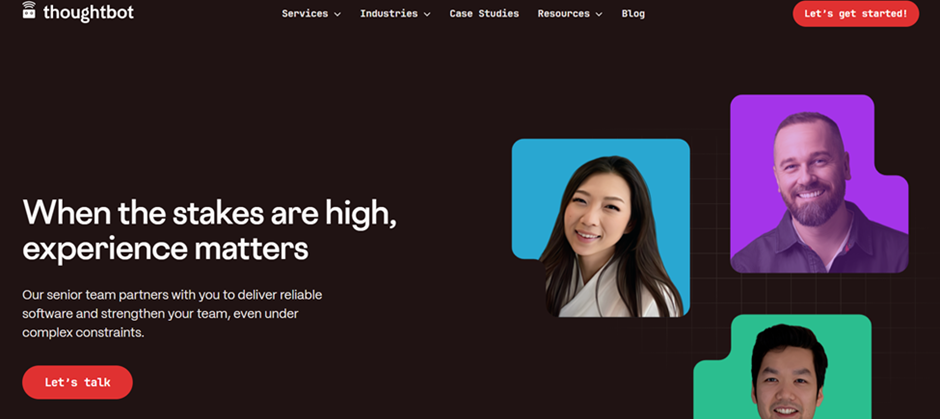
The firm approaches web development from a product perspective, working closely with enterprise teams to validate ideas, design seamless user experiences, and build scalable applications.
Best for:
Enterprises and well-funded B2B startups that need to build custom web applications or digital products from scratch with a focus on high-quality code.
What they do best:
- They utilize a proven, agile methodology to move from initial concept to a functional web application in remarkably short timeframes.
- They write clean, tested code that allows enterprise platforms to remain stable and easy to update as business requirements evolve.
- They integrate senior-level designers and developers into a single team.
Where they are not ideal:
They are a product-focused consultancy, making them less suited for massive, multi-region corporate websites that are primarily built for marketing and static content management.
Notable capabilities:
Ruby on Rails development, React and specialized front-end engineering, product design sprints, mobile application development, and technical code audits.
DockYard
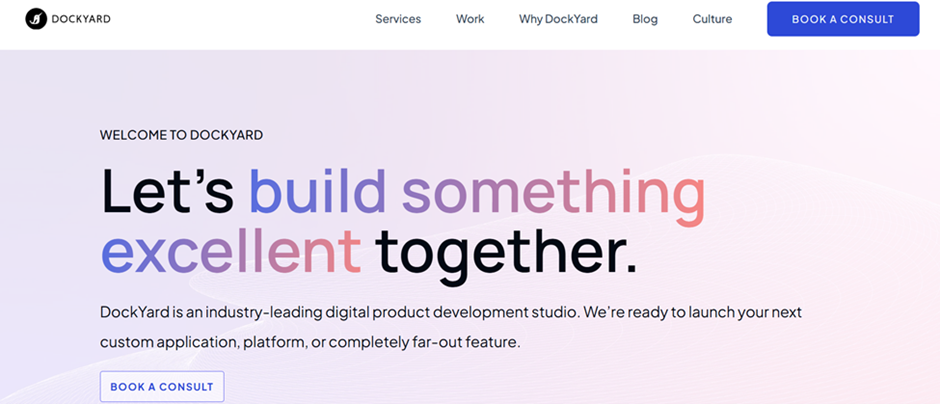
DockYard is a digital product agency who are leading experts in the Elixir programming language and the Phoenix framework.
They are a top choice for organizations that need to support thousands of simultaneous users on a single platform, such as real-time dashboards, gaming sites, or complex financial tools.
DockYard combines this deep technical niche with a strong focus on user experience, ensuring that even the most complex technical applications remain easy and intuitive for the end user to navigate.
Best for:
Enterprises requiring high-concurrency, real-time web applications and specialized software that must handle massive simultaneous user loads.
What they do best:
- They build fast and stable web applications using Elixir and Phoenix.
- They design custom, data-heavy interfaces that simplify complex information for enterprise-level decision-makers.
- They utilize advanced front-end technologies like Ember.js and React to create responsive experiences within the web browser.
Where they are not ideal:
Their reliance on specialized languages like Elixir can make it difficult for a client’s internal IT team to take over maintenance if they do not have developers trained in those specific frameworks.
Notable capabilities:
Elixir and Phoenix development, real-time application architecture, specialized UI/UX design, Ember.js expertise, and digital product strategy.
IBM iX
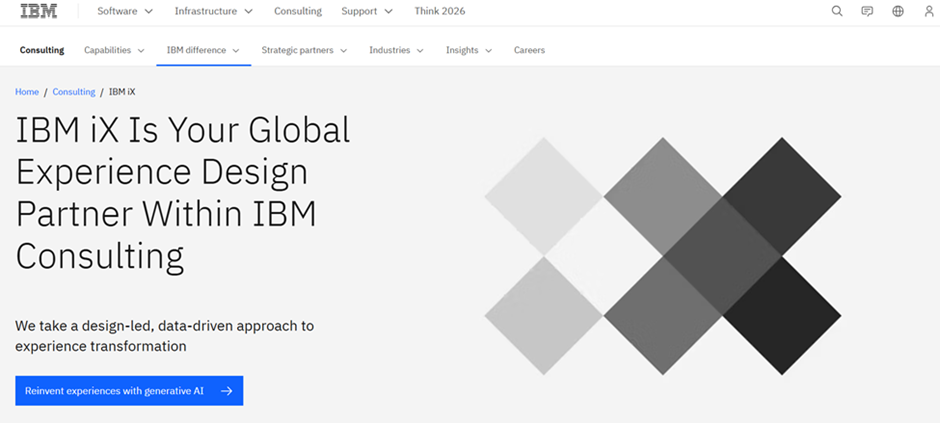
IBM iX functions as the experience design and consulting arm of IBM, bringing the massive technical resources of the parent company to bear on enterprise marketing and web development.
They approach every project through the lens of “design thinking,” focusing on solving business problems by improving the customer journey.
They are experts at managing the data-heavy back-ends required for global commerce and personalized customer experiences.
Best for:
Multinational corporations and Fortune 500 companies need to integrate web platforms with massive internal data sets and AI-driven business tools.
What they do best:
- They leverage IBM’s Watson AI to create personalized web experiences to automate complex customer interactions.
- They design and manage massive global commerce platforms that require deep integration with supply chain, inventory, and financial systems.
- They provide the high-level security and governance needed for government agencies and large-scale enterprises to operate safely in the digital space.
Where they are not ideal:
The sheer scale of the organization can result in a slow, consultancy-heavy process that involves multiple layers of management, which can frustrate teams looking for a fast-moving, agile agency partner.
Notable capabilities:
AI-driven personalization, enterprise commerce, data-led design, cloud integration, and global digital strategy.
EPAM
EPAM is known for its ability to handle extremely large and technically complex projects.
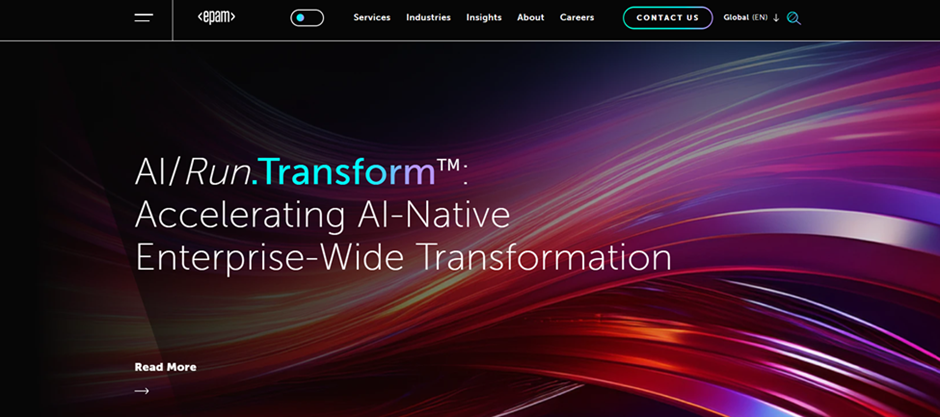
They employ thousands of specialized engineers across the globe, allowing them to provide 24/7 development support and massive scale for enterprise transformations.
EPAM treats web development as a core component of a broader software engineering ecosystem, ensuring that a brand’s website is perfectly synchronized with its mobile apps, internal databases, and third-party integrations.
Best for:
Global enterprises requiring massive-scale software engineering, legacy system modernization, and ongoing 24/7 technical support for complex digital ecosystems.
What they do best:
- They provide immense engineering scale, deploying large, multi-disciplinary teams to execute complex platform migrations and custom software builds simultaneously.
- They modernize aging enterprise technology stacks, moving legacy applications to the cloud to improve performance, security, and developer agility.
- They build robust, integrated digital platforms that connect every part of a global business, from front-end marketing sites to back-end ERP systems.
Where they are not ideal:
As an engineering-first organization, they may lack the high-end creative and brand-strategy focus that some marketing-led enterprise teams require for a major site relaunch.
Notable capabilities:
Platform engineering, cloud-native development, legacy modernization, big data and analytics, and managed infrastructure services.
Deloitte Digital
Deloitte Digital operates as a creative digital consultancy that combines the business rigor of a “Big Four” firm with the creative talent of a modern agency.

They focus on building web platforms that solve complex business challenges while providing a premium user interface.
Their teams are experts at integrating web development with broader business functions, such as customer loyalty programs, CRM systems, and digital sales tools.
Best for:
Enterprises and global brands that need to connect their web presence with large-scale business operations like CRM, loyalty, and digital commerce.
What they do best:
- They integrate web platforms deeply with enterprise CRM and marketing automation tools.
- They design and build premium digital experiences for financial services, healthcare, and retail sectors.
- They utilize advanced data analytics to track user behavior across the entire digital ecosystem to optimize the platform for ROI.
Where they are not ideal:
The premium nature of their consulting and development services involves high hourly rates and significant project overhead, making them unsuited for organizations with more modest, execution-focused budgets.
Notable capabilities:
Digital CRM integration, experience-led commerce, business strategy, cloud engineering, and multi-channel marketing automation.
Merkle
Merkle operates as a key part of the Dentsu network with a focus on the deep technical architecture required for hyper-personalization and global commerce.
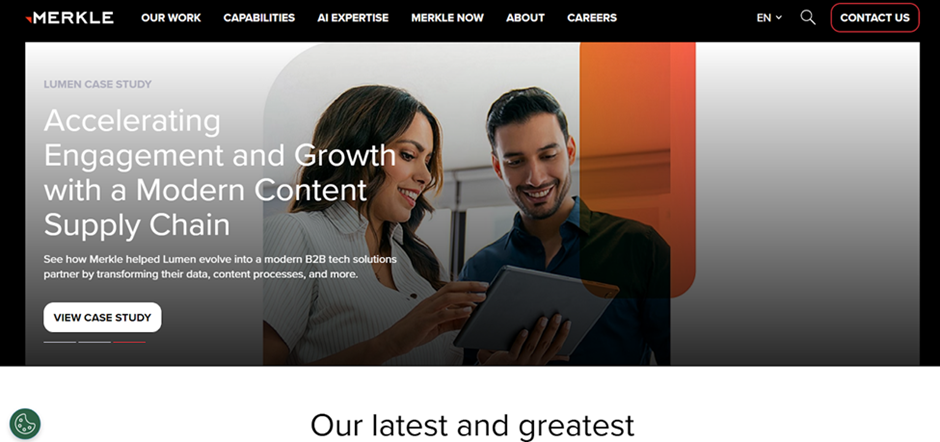
They utilize their proprietary Merkury identity platform to unify fragmented customer data into a single, actionable view, allowing enterprises to deliver consistent experiences across thousands of digital touchpoints.
Their development teams prioritize high-performance, future-ready technology stacks that integrate seamlessly with major enterprise partners like Adobe, Salesforce, and Sitecore.
Best for:
Fortune 500 retail, financial, and healthcare enterprises that require high-scale data integration and global commerce platforms.
What they do best:
- They engineer complex architectures that resolve individual customer identities across multiple platforms.
- They build and manage massive, multi-region eCommerce and content platforms.
- They utilize advanced AI and machine learning to optimize digital interfaces.
Where they are not ideal:
Their heavy focus on proprietary data engineering and identity resolution creates a highly technical onboarding environment that significantly extends project timelines.
The infrastructure-first approach makes their service model inflexible for brands seeking fast, creative-led marketing sites without overhauling their underlying data architecture.
Notable capabilities:
Identity resolution (Merkury), enterprise CMS and commerce integration (Sitecore, Adobe), headless architecture, AI-driven personalization, global technical governance, and deep data security compliance.
How We Rank Enterprise Web Development Companies
To determine which agencies truly lead the enterprise web development space, our team looked at the technical evidence of their work. We analyzed case studies to see if these firms report on actual engineering metrics, reduced server response times, and improved security posture.
We thoroughly reviewed how these companies structure their development lifecycles, their approach to data privacy, and their ability to maintain high performance under massive traffic loads during peak seasons.
Finally, our experts assessed their ability to integrate with complex back-office systems by reading through verified client reviews. The resulting list highlights the twelve partners who move beyond design to provide the high-stakes website development support necessary for global enterprise businesses.
The Key Takeaways
Treating a website overhaul as a one-time capital expenditure is a primary reason enterprise platforms become obsolete within months of launch. The true cost of an enterprise website is often hidden in its long-term maintenance and the internal resources required to keep it functional.
Selecting an agency that ignores technical debt or uses overly proprietary frameworks creates a “vendor lock-in” that can drain budgets for years. Modern engineering partners emphasize transparency, clean documentation, and open standards to ensure that the internal IT department can eventually manage or extend the platform.
To read more content like this, explore The Brand Hopper
Subscribe to our newsletter