Last Updated on September 25, 2025 by Team TBH
Imagine Amazon’s early 2000s server rooms: rows of humming hardware and engineers frantically managing them. Amazon.com’s retail arm was straining under its own growth, pushing the company to invent slick ways to manage computing power. This behind-the-scenes tale, told by AWS’s own founders, shows how a quiet internal fix turned into a cloud empire. What began as solving Amazon’s own scaling headaches slowly evolved, almost by accident, into Amazon Web Services (AWS) – the world’s dominant cloud platform.

In the late 1990s and early 2000s, Amazon was still mainly an online bookstore struggling with hyper-growth. To keep up, the company built its IT “operating system” in pieces: payment, shopping cart, search, and warehouse systems. According to AWS CEO Andy Jassy, Amazon “untangled that mess into a set of well-documented APIs” around 2000. In other words, Amazon reorganized its own infrastructure into modular services that could be easily reused. Jassy later recalled, “So very quietly around 2000, we became a services company with really no fanfare”. By building services for its own developers — essentially creating a private cloud — Amazon realized it had built something bigger than itself. Internally, Amazon teams could now “consume their peer internal development team services” without reinventing everything. This shift was motivated by Amazon’s low margins: as Jassy noted, Amazon learned to run “reliable, scalable, cost-effective data centers out of need”.
Soon an obvious idea formed: if Amazon could efficiently run huge data centers for itself, why not let others tap into that power? At a 2003 executive offsite, Jeff Bezos’s team realized they had become experts at handling compute, storage, and databases — an “operating system of sorts for the internet”. However, at the time they didn’t plan to launch a full-fledged cloud business. “In retrospect it seems fairly obvious, but at the time I don’t think we had ever really internalized that,” Jassy said of the meeting. By summer 2003 they started sketching the idea of selling their infrastructure to developers. As Jassy admits, “I don’t think any of us had the audacity to predict it would grow as big or as fast as it has”. The cloud was born not as a grand ambition, but as an extra application of Amazon’s own hard-won infrastructure lessons.
The Spark of AWS: S3 and EC2
In 2006, AWS formally launched with two services: S3 (Simple Storage Service) and EC2 (Elastic Compute Cloud). S3 arrived in March 2006 to solve a critical problem: storing Amazon’s massive growing data with security and reliability. Months later in August 2006, EC2 gave customers instant access to computing power via virtual machines. In Amazon’s words, S3 and EC2 let “anything you could do in a massive data center” be done remotely with a click. These releases were initially modest (the AWS blog reported “little fanfare”), but they opened the door to the pay-as-you-go cloud concept. Now companies didn’t need to buy servers or build data centers upfront – they could rent storage and computing capacity on demand, like plugging into an invisible power grid for computing.
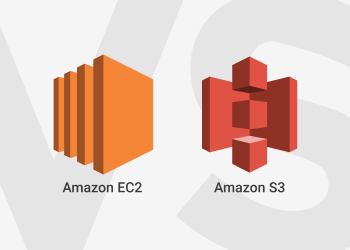
Key AWS milestones unfolded rapidly. By March 2006 AWS offered S3 (storage) and, just a few months later in August 2006, EC2 (compute) came online. Soon after, Amazon introduced services like SimpleDB and SQS (queuing) to flesh out the stack. These early services were rolled out quietly, almost as an experiment. But as customers — many external — began to try AWS’s virtual servers and storage, Amazon realized demand was genuine. Before long, projects that needed servers could be started with no hardware purchases: just click, configure, and run.
- 2006 (March) – Amazon launches S3 (Simple Storage Service) to store data in the cloud.
- 2006 (August) – Amazon launches EC2 (Elastic Compute Cloud), allowing customers to rent virtual servers in minutes.
- 2008 – AWS gains momentum; Microsoft announces Azure (first codenamed “Project Red Dog”) in 2008 to compete with AWS.
- 2012–2015 – AWS adds hundreds of new services (databases, analytics, machine learning, IoT, etc.), solidifying the “broadest cloud” claim.
- Today – AWS spans dozens of geographic regions, offers 200+ products, and powers thousands of startups and enterprises worldwide.
Unplanned Growth: From Side Project to Success
In fact, the name “Web Services” was no marketing gimmick; it reflected Amazon’s journey from a monolithic retailer to an internet services firm. The early AWS team, led by Jassy and others, realized they needed to run Amazon’s business like a services platform. After launching S3 and EC2, the take-up surprised even them. The AWS blog recalls that they began AWS “to rethink IT infrastructure completely so that anyone—even a kid in a college dorm room—could access powerful tech”. And it worked: small teams, students, and startups found that AWS gave them enterprise-grade tech overnight.
The language on Amazon’s “Origins” page is telling: building AWS was about “revolutionizing IT for developers” so that “even a kid in a dorm room” could tap into Amazon’s huge computing power. This means AWS wasn’t just a product; it was a democratizing force. Before AWS, a startup might need years and millions to buy servers; after AWS, it could launch with zero capital investment in hardware. That shockingly broad accessibility was almost accidental. As the tech giant’s founders later admitted, no one set out to create a trillion-dollar business. They merely saw it as logical to let developers use Amazon’s excess capacity. Over time, “they had the makings of a business that would become AWS” without much initial planning.
This unintentional boom is echoed in retrospective accounts. A Fortune report dubbed AWS an “awkward side project” that quietly surpassed Amazon’s original shopping business. In interviews, AWS executives have said they never imagined the scale AWS would reach. Jassy said with a laugh, “We didn’t have the audacity to predict” its eventual size. In other words, AWS grew organically: as teams built more services for each other, outside developers quietly joined in, and the ecosystem snowballed.
Like an unexpected skyscraper emerging from the morning fog, AWS slowly towered above Amazon’s retail roots. By 2010, Amazon execs realized they had a multi-billion-dollar unit on their hands. Sometime around then, AWS hit profitability — a rarity at Amazon, which traditionally reinvests all profits. “We’re at a point where this piece of our company is bigger than our whole e-commerce business,” Amazon CFO Tom Szkutak said years ago. That became official in financial filings: AWS now consistently generates the majority of Amazon’s operating profits. For example, in Q4 2024 AWS sales were $28.8 billion (about 16% of Amazon’s total sales) but its operating income was $10.6 billion, 50% of Amazon’s operating profit. Over all of 2024, AWS hit $107.6 billion in revenue and $39.8 billion in profit, accounting for 58% of Amazon’s total operating income. In short, this “side project” became the company’s cash cow.
A Cloud of Startups and Enterprises
The real kicker was who started using AWS. Young companies flocked to AWS long before big IT budgets got involved. AWS celebrates its “Startup Success Stories” — Netflix, Airbnb, Lyft, and countless others. An AWS blog gushes that “some of the most well recognized tech companies today have expanded globally with support from AWS services”. For example, Netflix built its streaming video service entirely on AWS by 2012, hosting millions of customers without ever owning a physical data center. Airbnb similarly rode AWS’s scalable infrastructure to handle rapid growth from hundreds of users to tens of millions. These stories were repeated: as one small company’s traffic spiked, AWS elastically added servers; if an idea failed, the team simply shut down those servers. It was a risk-free launchpad for innovation.
Beyond startups, enterprises and government agencies gradually climbed on board too. Initially, big companies were cautious (until 2011, it was even illegal for U.S. federal agencies to use AWS). But the combination of pay-as-you-go pricing and the need to spin up new projects quickly proved irresistible. Soon financial services, media companies, and universities began running critical apps on AWS. In effect, AWS reshaped IT: no longer did you need to pre-order hardware months in advance. You could click to provision CPUs and storage in minutes. This on-demand model is often explained with simple metaphors: “It’s like switching from buying an entire power plant to just paying for the electricity you use.” That utility-like analogy helped non-technical decision-makers grasp the revolution.

The human side of AWS’s rise is telling too. Engineers like the woman above found they could deploy new features overnight on AWS rather than wrestling with hardware. Many former Amazon executives and early employees went on to start their own cloud-based businesses, perpetuating the cycle. In fact, Amazon even ran programs like AWS Activate, giving free credits to entrepreneurs so they’d adopt the platform. The more startups thrived on AWS, the more AWS grew — a virtuous cycle AWS’s team barely anticipated.
An Ever-Growing Catalog of Services
From its humble start with storage and VMs, AWS exploded into dozens of services. Today AWS offers over 200 products: databases, developer tools, analytics, machine learning, IoT, blockchain, you name it. It has more than 30 geographic regions worldwide and dozens of Availability Zones (separate data centers) to ensure reliability. Amazon essentially built an entire computing ecosystem. AWS’s growth is akin to adding new wings and floors to a building as demand surges — often without a master plan. For example, when Netflix needed a global content delivery network, AWS launched CloudFront. When startups needed easy databases, AWS launched DynamoDB and RDS. Each need fostered a new service.
This relentless addition made AWS a one-stop shop. Jassy likens it to an “operating system of the internet,” where developers can build anything on a foundation of standardized blocks. Even organizations that start on one cloud sometimes expand to others. But AWS’s head start gave it an unmatched breadth. In cloud market share, AWS has led by a comfortable margin for years. By 2017 it held roughly one-third of the global cloud infrastructure market. Even in late 2023, AWS retained about 31% share, far ahead of Microsoft Azure (24%) and Google Cloud (11%). (Combined, AWS, Azure, and Google commanded 67% of the market in Q4 2023.) This dominance translates to a $97 billion annual run rate for AWS as of late 2023.
AWS’s growth also put pressure on competitors. Microsoft had to pivot from its on-premises software world to build Azure (launched in 2008) as a direct response to AWS. Google similarly expanded beyond App Engine into a full Google Cloud Platform. The “cloud wars” are ongoing: Microsoft and Google have invested billions (and in Microsoft’s case, even partnered with OpenAI) to catch up. Nevertheless, AWS’s lead has shaped their strategies. AWS’s pace of innovation has forced rivals to rethink software delivery everywhere. Today’s enterprise hybrid-cloud and multi-cloud strategies are a direct consequence of AWS normalizing on-demand infrastructure.
Revolutionizing IT and Culture
The AWS story is not just a timeline of products; it’s a tale of culture change. In the early 2000s, businesses bought servers by the dozen, installed them in corporate datacenters, and paid for them whether they used them or not. AWS flipped this model. Like moving from buying a fleet of cars to using ride-sharing by the minute, companies moved from capital expenses to operational expenses. If their needs doubled overnight, AWS simply added more “virtual servers” behind the scenes. This elastic scalability — adding computing power like stretching an elastic band — meant growth was no longer limited by hardware.
AWS even introduced developer-friendly services that let companies experiment freely. For instance, with AWS’s Auto Scaling, a site can automatically get more servers as traffic spikes, and release them when traffic drops. A common metaphor: “It’s like having lights that automatically turn on in more rooms when guests arrive.” This kind of metaphor helped laypeople understand cloud power. With AWS pioneering such features, developers stopped worrying about procuring hardware and started focusing on ideas. It’s no exaggeration to say AWS helped create today’s app-driven economy: from mobile apps to big data analytics, nearly every modern tech innovation rides on cloud services.
Legacy and Impact
Today AWS is recognized as the company’s most profitable segment. While Amazon’s e-commerce and advertising churn large revenues, AWS supplies the lion’s share of profit. It’s the engine under Amazon’s hood. Beyond financials, AWS has reshaped how the world thinks about IT. Legacy tech giants (IBM, Oracle, others) have pivoted or acquired cloud startups just to stay relevant. Meanwhile, new companies like Zoom, Uber, and Spotify (in addition to Netflix/Airbnb/Lyft) rarely build private datacenters anymore. They spin up AWS infrastructure instead, focusing on features over servers. In interviews and shareholder letters, Amazon leaders often point out that AWS is powering not just businesses, but innovation itself.
As AWS continues expanding (adding AI services, quantum computing, and more), its origins feel almost quaint — just an internal tool to make Amazon faster. Now it is a cloud empire, a digital skyline in the computing world. The irony is clear: an empire built from what-ifs and leftover capacity. An Amazon blog once quipped that AWS started so anyone (even “a kid in a dorm”) could launch a web project. Today, that vision has come true on a massive scale. We all live in the cloud they never planned — paying for computing like water or electricity — thanks to the accidental giant AWS became.
“We didn’t have the audacity to predict it would grow as big or as fast as it has,” Jassy admitted. Yet here we are: the cloud has become the new normal in IT, all because a retail company quietly realized it had a second business in its basement. In 2025, the question is not whether AWS will continue growing (its trillion-dollar run rate suggests yes), but what new chapters will be written in this unplanned success story.
Also Read: Success Story and Success Factors of Amazon
Also Read: Marketing Strategies, Marketing Mix and STP of Amazon
To read more content like this, subscribe to our newsletter