Most companies get this wrong from the start
The wrong branding agency doesn’t just waste money. It costs time, momentum, and – here’s the part nobody mentions – the psychological toll of doing it all over again six months later.
Most businesses waste $15,000–$30,000 by hiring agencies that create visually appealing designs without any strategic foundation. The culprit? A fundamental misunderstanding of what branding actually is. A logo is one small piece of the puzzle. Real branding determines how customers perceive a business, what it stands for, and whether people trust it enough to buy. That distinction matters – enormously.
So before diving into portfolios and pricing decks, it helps to understand what’s actually being purchased.
Branding vs. design: a distinction worth making
These two terms get used interchangeably. They shouldn’t be.
Design is a craft – typography, color, layout, visual execution. Branding is a strategy. It connects a company’s identity to its positioning in the market, the emotions it triggers, and the story it tells across every touchpoint. A modern brand connects three layers at once: positioning (the space a company occupies in its category), story and messaging (how value gets articulated to buyers), and identity and experience (how that story shows up visually and verbally across the website, product, and campaigns).
Agencies that lead with aesthetics first – and strategy never – tend to deliver work that looks impressive in a pitch deck and dissolves in real-world conditions.
The numbers reinforce this. 68% of companies say brand consistency adds 10–20% to revenue growth, and 84% of consumers say authenticity directly impacts their purchase decisions. Consistency doesn’t happen by accident. It’s the result of strategic groundwork laid before anyone opens Figma.
What to actually look for when evaluating agencies
1. Strategy before aesthetics
The first question to ask any prospective agency: How do you approach brand strategy? If the answer skips directly to visual direction, that’s a red flag. The best agencies build positioning frameworks, audience analysis, and messaging architecture before touching a single design element.
When it comes to digital-first brand and product alignment, agencies like Clay stand out for combining deep strategic thinking with execution – making them particularly well-suited for tech-forward companies and startups. For anyone looking to benchmark which agencies consistently deliver on both fronts, Clay’s branding ranking offers one of the more rigorous and evidence-based assessments available – rated across strategic foundation, real case studies, and verifiable public proof.
2. Relevant portfolio – not just a beautiful one
A stunning portfolio with zero relevance to a company’s industry is essentially decorative. Businesses should look for work that mirrors their sector, their audience size, and their growth stage. A luxury hospitality rebrand tells very little about an agency’s ability to handle a B2B SaaS identity system.
3. Transparent pricing and realistic timelines
Complete branding – covering strategy, full visual identity, and messaging – typically runs $15,000 to $75,000+, while branding projects generally take two to four months from start to finish. Any agency that can’t give a clear cost structure early in the conversation is either disorganized or hiding something.
4. How they handle the first conversation
The sales process is a preview of the working relationship. Agencies that listen more than they pitch, ask about business objectives before showcasing awards, and offer honest assessments of scope – those are the partners worth a second meeting.
Here’s a practical checklist for initial agency evaluation:
- Do they ask about business goals before presenting visual concepts?
- Can they explain their brand strategy process step by step?
- Do their case studies include measurable outcomes (not just pretty visuals)?
- Are pricing ranges disclosed upfront?
- Do they specialize in the relevant industry or company size?
- Is there senior-level involvement throughout the project – or just at the pitch?
The cost of choosing wrong
This part doesn’t get discussed enough. A consulting firm that paid $20,000 for a rebrand ended up with a polished logo but no clearer positioning – leaving the sales team still struggling to explain what made them different from competitors. Eighteen months later, they hired a strategic agency for $35,000 to fix what the first one missed.
That’s $55,000 for what should have been a single, well-chosen engagement.
The cost isn’t only financial, either. Every month without effective branding costs a company the ability to charge premium prices, close deals faster, and attract better customers. Brand equity compounds – in both directions.
As brand strategist Marty Neumeier famously put it, “A brand is not what you say it is. It’s what they say it is.” No agency can control perception entirely – but the right one builds a foundation that makes the desired perception far more likely.
Red flags that are easy to miss
Not all warning signs are obvious. Beyond the obvious mismatch signals (irrelevant portfolio, vague pricing, zero strategy discussion), watch for these subtler ones:
Over-promising timelines. Solid branding work takes time. An agency promising a full brand identity in three weeks either has a templated process or is setting up for disappointment.
Awards as the primary selling point. Recognition matters, but it measures historical work – not fit for a specific brief. Some of the most awarded agencies in the world have quietly delivered mediocre strategic results.
No post-delivery support. Brand guidelines are a starting point, not a finish line. Agencies that disappear after handing over files leave companies without the guidance needed to implement consistently across teams and channels.
Consistent brand presentation across platforms can increase revenue by roughly 23% – and that kind of consistency requires ongoing alignment between creative output and business execution.
Final thoughts
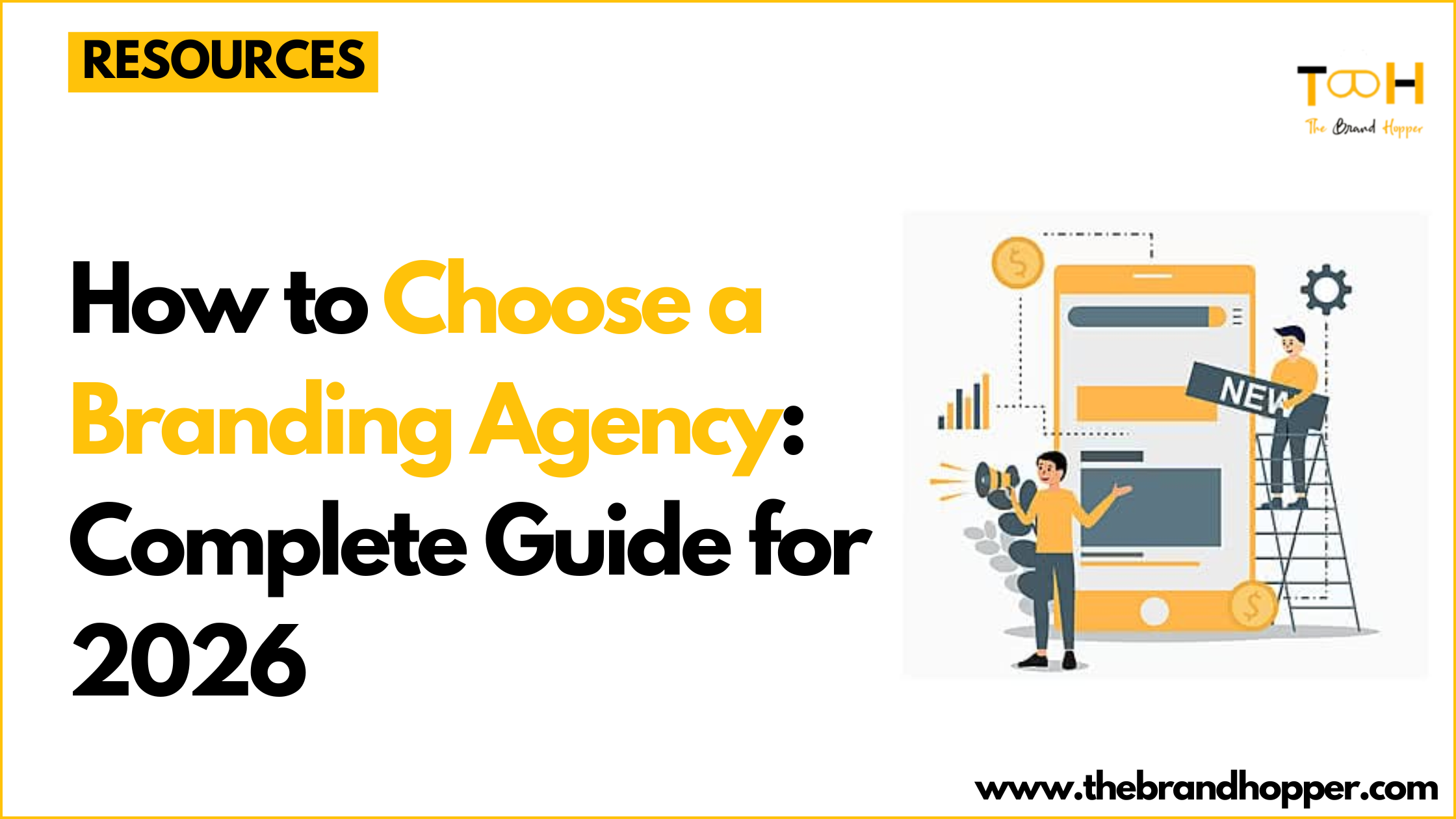
Choosing a branding agency in 2026 is less about finding the most decorated name and more about finding the right strategic fit. The market is full of agencies that produce genuinely beautiful work. Far fewer combine that craft with the kind of strategic rigor that makes branding a commercial asset rather than an aesthetic exercise.
The right agency should feel like an extension of the team – not just a vendor delivering files. That means shared investment in outcomes, honest communication about challenges, and the ability to articulate not just how a brand will look – but how it will grow.
The companies that get branding right don’t always have the largest budgets. They have the clearest briefs, the most honest conversations, and the patience to choose partners who treat strategy as the foundation – not the afterthought.
To read more content like this, explore The Brand Hopper
Subscribe to our newsletter