Last Updated on October 29, 2025 by Team TBH
Introduction
BuildOps is a Los Angeles-based startup providing an all-in-one cloud software platform for commercial contractors in trades like HVAC, plumbing, electrical, and mechanical services.
Founded in 2018, the company addresses a critical gap in the construction and facility service industry: many contractors responsible for keeping hospitals, data centers, and commercial buildings running have long been stuck with “Stone Age” technology or siloed systems.
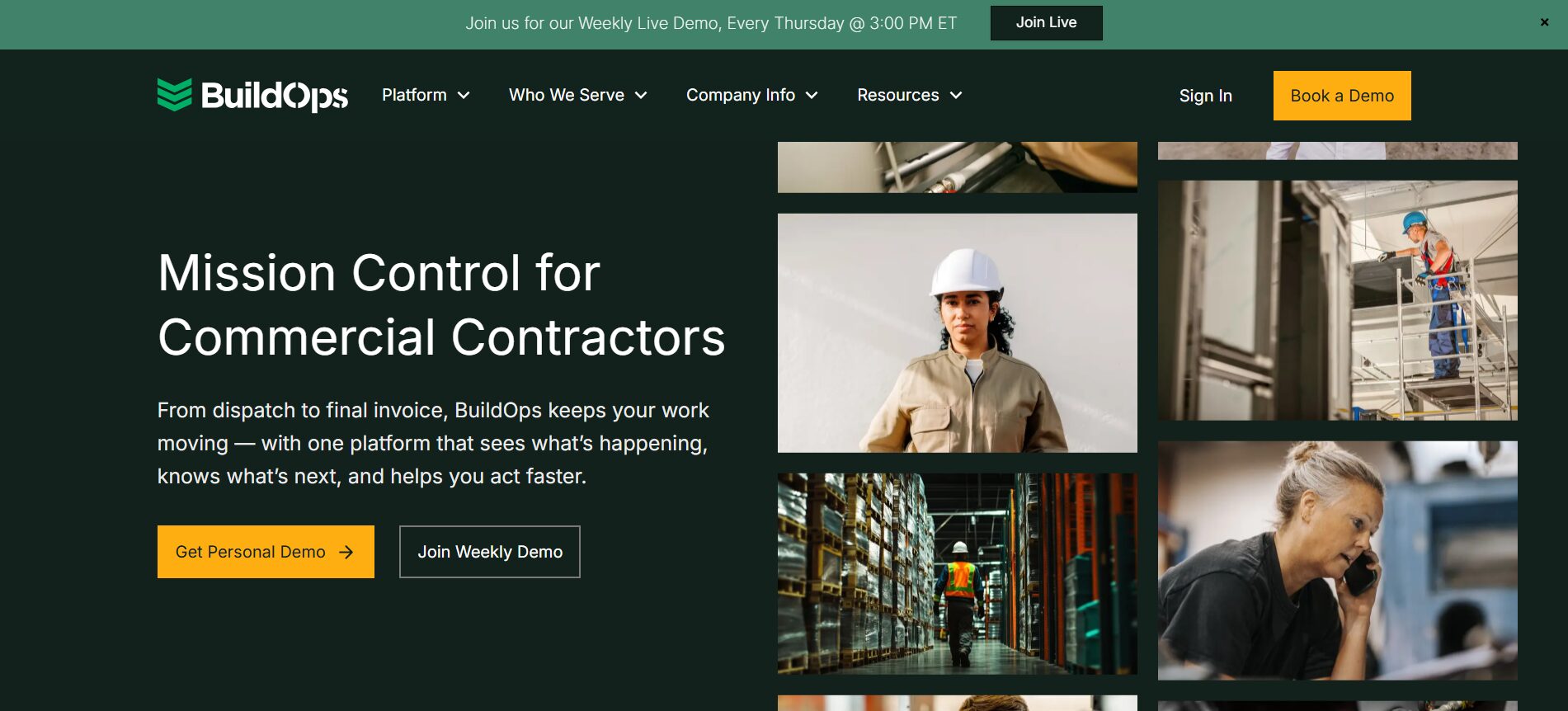
BuildOps’s mission is to be the “mission control for commercial contractors,” integrating core operations – from scheduling and dispatch to project management, inventory, and accounting – into a single modern SaaS suite.
By 2025, BuildOps has achieved unicorn status with a valuation over $1 billion, fueled by surging demand for its platform and triple-digit growth rates.
This article provides a comprehensive case study of BuildOps, examining its founding story, the founders’ backgrounds, business model and revenue streams, funding history, competitive landscape, competitive advantages, product offerings, and an outlook through 2025.
Founding Story of BuildOps
BuildOps was born from first-hand frustration with the inefficiencies in commercial contracting operations.
Co-founder and CEO Alok Chanani served as a U.S. Army combat engineer and later ran a commercial real estate and construction business.
In the late 2010s, Chanani observed that even sizeable contractors – some with 100+ employees and tens of millions in revenue – were “running these businesses on WhatsApp, Dropbox, Google, text… It felt like madness”. Critical field work was coordinated with pen-and-paper or cobbled-together consumer apps, resulting in lost information, scheduling chaos, and costly delays.
Sensing an opportunity to revolutionize how specialty contractors operate, Chanani teamed up with longtime friend Steve Chew, whose tech background complemented Chanani’s industry experience.
The pair set out to build a purpose-built platform that would replace the “broken, outdated systems” contractors were using with a true all-in-one solution.
They envisioned software that could unify service and project management with real-time data, giving contractors instant visibility into their business and potential problems.
In 2018, BuildOps was officially founded in Santa Monica, CA, with a clear brand mission: to bring modern technology to the “unsung heroes” who maintain America’s infrastructure.
Early development involved incorporating feedback from trade contractors to ensure the product fit real-world workflows.
By 2019, BuildOps had built a minimum viable product and attracted seed funding to accelerate its vision of an “operations platform for the trades”.
Founders of BuildOps
BuildOps’s founding team brings a powerful blend of industry insight, technical expertise, and business acumen:
Alok Chanani (Co-Founder & CEO)

A former Army Captain and Wharton MBA, Chanani led combat engineering units in Iraq before transitioning to real estate and construction.
He founded and ran a general contracting firm, where he saw first-hand how even large contractors struggled with disorganized processes.
Chanani’s leadership under pressure and deep respect for skilled tradespeople shaped BuildOps’s mission-driven culture.
As CEO, he is the visionary steering BuildOps to address contractors’ pain points with technology. Chanani is also a serial entrepreneur, having built a national real estate company prior to BuildOps.
Steve Chew (Co-Founder & COO)

Chew holds a Harvard MBA and has a rich tech background scaling enterprise software.
He helped lead European operations at Nextag (an e-commerce platform sold for $1.2 billion) and later headed product strategy for Microsoft Outlook and Exchange’s move to the cloud.
This experience in cloud transformation proved invaluable for BuildOps’s development.
As BuildOps co-founder and Chief Operating Officer, Chew leverages his product management expertise to build a “new revolution in cloud-based technology meeting the unique needs of specialty contractors”.
His perspective from Microsoft – where he witnessed industries embracing cloud solutions – underscored the opportunity to modernize contractors’ software.
Neeraj Mittal (Founding CTO)

Mittal is a seasoned technologist who learned to code at age nine and previously built a software platform for his father’s large contracting business.
His early exposure to the operational challenges of contracting gave him a head-start in designing BuildOps’s architecture.
At BuildOps, Mittal was the chief technologist responsible for turning Chanani and Chew’s vision into a robust, user-friendly SaaS product.
Under his technical leadership, BuildOps created a cloud platform that could handle both field service workflows and heavy project management tasks in one system. (Note: By 2025, BuildOps is often publicly represented by Chanani and Chew; Mittal’s role has been behind the scenes building the product.)
This trio’s complementary backgrounds – Chanani’s trade industry insights, Chew’s enterprise software experience, and Mittal’s coding and domain knowledge – were instrumental in BuildOps’s early success. They also attracted a strong advisory and investor network. For example, BuildOps is veteran-owned (with Chanani’s military background) and won support from figures like NFL legend Joe Montana, who cited “very few world-class technology solutions for commercial subcontractors like BuildOps”.
Business Model of BuildOps
1. Software-as-a-Service (SaaS)
BuildOps operates a Software-as-a-Service (SaaS) business model targeted at commercial contracting companies. Its platform is typically sold on a subscription basis with per-user licensing under annual (or multi-year) contracts.
In practice, a contracting firm pays a monthly or annual fee for each user (field technician, dispatcher, project manager, etc.) who accesses the software.
As of 2025, BuildOps’s pricing is positioned as a premium, enterprise-grade solution – around $150 per user per month as a base rate – reflecting the depth of its features for the commercial market.
Customers often sign on for the full suite to replace multiple disparate tools with BuildOps’s single platform, which consolidates functionality that was historically fragmented.
2. Medium to Large Commercial Contractors
Crucially, BuildOps focuses on medium to large commercial contractors (from those with “a dozen to thousands of employees”), rather than residential or small home-service shops.
This influences its go-to-market approach. The company uses a direct sales and high-touch onboarding strategy: prospective clients typically engage via demos and pilot programs rather than self-service sign-up.
BuildOps emphasizes ROI for its customers, often sharing success stories where clients doubled revenue or significantly improved efficiency by adopting the software.
Once onboard, customers become recurring revenue sources through subscription renewals and potential upsells of new modules or add-ons (for example, BuildOps introduced a “Fleet+” vehicle management module and “Payments+” integration as new offerings in 2023-2024).
Additionally, BuildOps keeps implementation costs modest – it offers comprehensive onboarding services for a nominal one-time fee, avoiding “astronomical implementation fees” that some enterprise software vendors charge. This lowers the barrier for contractors transitioning from legacy systems.
3. Investment in Product Development and AI
The business model also involves continuous investment in product development and AI capabilities to drive customer value.
BuildOps’s platform leverages the data flowing through it to provide insights – for instance, using AI to project cost overruns on projects before they happen.
By improving contractors’ profitability and service quality, BuildOps aims to justify its subscription cost many times over.
The company has explicitly prioritized growth over short-term profitability: “We’re in a hyper-growth stage… profitability is not a core focus… Our focus is on growth, R&D, and expanding market reach,” Chanani noted.
This means BuildOps is plowing capital into scaling its salesforce, entering new geographic markets (such as opening a major East Coast office in Raleigh in 2024), and even strategic acquisitions.
In 2023, BuildOps acquired a smaller software firm (PWSWARE, maker of Perfectware Solutions) to fold in complementary capabilities and customer base.
Overall, the model is to land mid-to-large contractors, expand usage within those accounts, and maintain a high renewal rate by becoming mission-critical to their operations. With over 1,000 contractor customers by early 2025, BuildOps’s SaaS model has achieved significant scale.
Revenue Streams of BuildOps
1. Recurring Subscription Fees
BuildOps’s revenues come primarily from recurring subscription fees for its cloud software platform.
The core revenue stream is subscription licenses, billed per user per month (usually under annual contracts).
For example, a regional mechanical contracting firm might license BuildOps for 50 users (field techs, dispatchers, managers), paying a predictable monthly fee for each user. Larger enterprises may negotiate enterprise-wide licenses.
These subscription fees grant access to the full platform or specific modules depending on the contract.
BuildOps offers tiered functionality – base features versus advanced modules – which can influence pricing.
Advanced capabilities such as comprehensive reporting/analytics or integrations may come at an extra cost on top of the base user license. This modular pricing allows clients to start with core features and upgrade as needed, creating additional upsell revenue for BuildOps.
2. Implementation and Training Services
Another revenue component is implementation and training services, though BuildOps positions these as low, one-time fees.
Unlike some legacy vendors who derive significant revenue from lengthy on-site implementations, BuildOps provides onboarding (data migration, user training, configuration) for a nominal fee or sometimes folded into the subscription, aiming to recoup just costs and ensure customer success.
The rationale is to remove cost friction in the sales process and speed up time-to-value for the customer, rather than use services as a profit center.
Over time, as customers adopt the platform, BuildOps may also generate revenue from additional services or partnerships – for instance, integrating third-party services (like payment processing via “Payments+”) could involve referral fees or a share in transaction revenue.
However, as of 2025, such streams are nascent; the vast majority of BuildOps’s ~$X million annual revenue comes from SaaS subscriptions (the company’s revenue roughly tripled in 2021 and 2022 and doubled in 2023 and 2024, indicating exponential growth off a small base).
BuildOps has not focused on advertising or data monetization as revenue streams – its customers’ data is private to them, and BuildOps’s value proposition is as a secure enterprise platform. T
he company’s customer-centric approach (charging directly for software and support) aligns with its long-term strategy of becoming the industry standard operating system for commercial contractors.
As it continues to innovate (e.g., adding AI-driven features that might be packaged as premium add-ons) and possibly pursue an IPO, BuildOps’s revenue mix may evolve.
For now, recurring subscription revenue provides a high-margin, predictable financial foundation, with strong net dollar retention as contractors deepen their use of the platform.
This recurring model has attracted investors, as it can scale quickly with relatively low incremental cost – reflected in gross margins comparable to other SaaS leaders in construction tech (80%+ range) and the company’s rapid valuation rise.
Funding and Funding Rounds of BuildOps
Since its inception, BuildOps has raised significant venture capital across multiple funding rounds, fueling its product development and rapid expansion. Table 1 summarizes BuildOps’s major funding rounds and key investors:
Table 1 – BuildOps Funding History
| Date | Round | Amount Raised | Lead Investor(s) | Post-Money Valuation |
|---|---|---|---|---|
| Nov 2019 | Seed | $5.8 million (est.) | Fika Ventures, MetaProp VC, Global Founders Capital, others | – (early-stage) |
| May 2022 | Series A | $43 million | Next47 (Siemens’ VC arm); participated by Founders Fund, 1984 Ventures, and notable angels (e.g. Metta World Peace) | Not disclosed |
| May 2023 | Series B | $50 million | Fika Ventures and 01 Advisors (VC firm led by ex-Twitter CEO Dick Costolo) | Not disclosed (total funding >$100M) |
| Mar 2025 | Series C | $127 million | Meritech Capital Partners; new investors BOND Capital, Schneider Electric’s SE Ventures; existing investors (Founders Fund, Next47, etc.) | ~$1 billion (unicorn) |
Sources: Company press releases and news reports.
BuildOps’s early seed funding in 2019 allowed it to build out the initial platform and hire core engineers. That seed round included prominent proptech and construction tech investors like MetaProp (a real estate tech fund) and Fika Ventures, signaling confidence in BuildOps’s vision even at the concept stage.
By 2022, having demonstrated product-market fit, BuildOps closed a large Series A of $43 million. Siemens-backed Next47 led this round, underscoring how industrial players saw strategic value in BuildOps; in fact, Siemens (via Next47) viewed BuildOps as “revolutionizing the world of specialty contractors”, filling a void where previously contractors “didn’t have great options for software to run the entirety of their business”.
This round also drew participation from Founders Fund (Peter Thiel’s VC) – an early backer that continued in subsequent rounds – and notable individuals such as Joe Montana (through Liquid 2 Ventures).
In 2023, BuildOps raised an additional $50 million in what can be considered a Series B.
Uniquely, this round was co-led by its seed investor Fika and 01 Advisors, the fund of Dick Costolo and Adam Bain (former Twitter execs). Costolo also joined the board, bringing hyper-growth experience.
The Series B brought total funding to over $100 million by mid-2023.
Other new investors in this round included strategic backers like the State of Michigan (perhaps via a growth fund), Telstra Ventures, and real estate firm CBRE’s executives, reflecting broad interest from both tech and industry stakeholders. The infusion was used to scale sales and marketing and accelerate product development (e.g., AI features, as noted).
Finally, in March 2025, BuildOps announced its Series C of $127 million, propelling the company to a unicorn valuation of approximately $1 billion.
Meritech Capital, known for late-stage investments in enterprise software, led the round.
BOND Capital and Schneider Electric’s venture arm joined as new investors, which is noteworthy – Schneider Electric (a Fortune 500 energy management firm) likely sees BuildOps as strategically relevant to contractors who install and maintain critical electrical/HVAC systems. Existing backers like Founders Fund, Next47, and StepStone also participated.
With this round, BuildOps’s total venture funding climbed above $225–250 million to date.
The company indicated the funds would fuel further hiring (doubling down on engineering and go-to-market), international expansion, and potential M&A opportunities to bolster its platform.
CEO Chanani also hinted that “going public is part of the vision” in the future – a sentiment echoed by investor Dick Costolo, who stated they aim to “fuel BuildOps to an IPO” when the time is right.
It’s worth noting how BuildOps’s valuation and investor roster reflect confidence in its market. By 2025, BuildOps is valued at $1 billion on ~$127M Series C investment – an impressive leap from its earlier stages. Its trajectory parallels other successful vertical SaaS companies.
The involvement of Founders Fund (Thiel) and Meritech (a Dropbox, Salesforce backer) suggests belief that BuildOps can dominate its niche. Additionally, industry veterans like Paul Madera of Meritech joined BuildOps’s board, calling it “the most complete commercial services operating system in the industry”.
Such endorsements, combined with ample capital, position BuildOps strongly for the coming years.
Competitors of BuildOps
BuildOps operates in the competitive landscape of construction tech and field service management software. Key competitors range from startups in similar niches to large established platforms. Below are some of BuildOps’s notable competitors and how they compare:
ServiceTitan
Perhaps the closest analogue to BuildOps in spirit, ServiceTitan is a fellow Southern California company providing cloud software for the trades. Founded in 2013, ServiceTitan initially focused on residential home services (plumbers, HVAC repair shops) but has since expanded into commercial contracting as well.
ServiceTitan is significantly larger in scale – by late 2024 it served over 11,800 contracting businesses (mostly SMBs) and went public on the Nasdaq in Dec 2024 at a valuation of nearly $9 billion. Its platform offers a broad suite (CRM, dispatch, scheduling, marketing tools, etc.), and ServiceTitan’s success validated the demand for trades-oriented SaaS.
However, ServiceTitan’s strengths and focus differ from BuildOps’s. ServiceTitan built its base among home service and small contractors, and while it now markets to larger commercial firms, it has a “broader approach” that is less specialized on the complex project-driven work of commercial contractors. In contrast, BuildOps has tailored its product to integrate service and project management needs of commercial trades (e.g. mechanical and HVAC firms doing large installations and maintenance contracts).
One practical difference: ServiceTitan is known for its polished CRM and call-booking features for service sales, whereas BuildOps emphasizes operational depth (like robust project job costing and field progress tracking).
Both are direct competitors as all-in-one platforms for contractors – indeed, BuildOps itself publishes content on being a “ServiceTitan commercial alternative” – but BuildOps often pitches its more enterprise-ready features and focus on the commercial side as a key differentiator.
Procore
Procore is a heavyweight in construction software that indirectly overlaps with BuildOps.
A public company since 2021, Procore offers a leading construction project management platform used by general contractors, construction managers, and owners. In 2024, Procore generated over $1.1 billion in revenue and had more than 15,000 customers worldwide (primarily general contracting firms).
Procore’s software covers project financials, drawings, bidding, site communications, and more – excelling at large-scale project coordination. For specialty subcontractors (BuildOps’s audience), Procore can manage the project execution piece.
However, Procore was not originally designed for service contractors or maintenance workflows; it has gaps in field service management that BuildOps fills.
A comparison is telling: “Procore excels at comprehensive bid management across large projects, while BuildOps focuses on streamlined workflows for service contractors,” one industry review noted. BuildOps includes dispatching, preventative maintenance scheduling, and service agreements – features outside Procore’s scope.
Additionally, Procore’s business model (enterprise pricing often tied to project volume rather than per-user) differs from BuildOps’s straightforward per-seat subscription.
For a contracting company, Procore might be used by construction project teams, while BuildOps could run the service division. Indeed, some larger firms may use both.
But as competitors, BuildOps positions itself as the better fit for specialty contractors who need an “all-in-one” operational system, as opposed to Procore’s focus on project collaboration. Procore’s presence, however, indicates the massive opportunity in construction tech – BuildOps is effectively extending similar cloud benefits to the service side of the industry.
ServiceTrade

ServiceTrade is a privately held SaaS company (founded 2012) that directly competes with BuildOps in the commercial service contractor niche. Based in North Carolina, ServiceTrade’s platform is designed for mechanical service, HVAC, fire protection, and other commercial service contractors.
It offers tools for dispatch scheduling, quotes, maintenance contract management, and a customer portal for clients to see service history. ServiceTrade has been operating longer than BuildOps and has a solid customer base among midsize service contractors in the U.S. One of ServiceTrade’s selling points is rich asset tracking and customer transparency – it provides clients a real-time portal instead of static reports, which “builds trust by giving clients visibility into ongoing work,” something the company contrasts with BuildOps’s more traditional reporting outputs.
ServiceTrade also touts faster quote-to-cash processes and a laser focus on technician mobility. In terms of comparison, ServiceTrade and BuildOps have similar target markets, but BuildOps aims to be a more comprehensive end-to-end solution.
For example, BuildOps incorporates project management features for installation jobs and ties in accounting workflows, whereas ServiceTrade emphasizes service work exclusively. ServiceTrade’s pricing is flexible and tailored to contractor size, potentially making it attractive to smaller companies that find BuildOps’s pricing premium.
Both companies claim strong customer support and a deep understanding of the trades. As of 2024, industry commentary notes that ServiceTrade has a “specialized focus on commercial contractors, unlike ServiceTitan’s broader approach” and offers a “comprehensive suite” comparable to BuildOps.
The competition between BuildOps and ServiceTrade often comes down to specific feature needs and scale: BuildOps might win with a contractor looking for a unified platform to consolidate four+ legacy systems into one, while ServiceTrade might appeal to a contractor primarily seeking best-in-class service ticket management with customer portal access.
Jobber and Other SMB-focused Apps:
On the lower end of the market, BuildOps faces indirect competition from field service software aimed at small businesses. One example is Jobber, a Canadian startup (founded 2011) that provides easy-to-use software for home service businesses (landscaping, plumbing, cleaning, etc.).
Jobber has over 200,000 service professionals on its platform globally and reached a valuation above $2 billion in 2023 after a major funding round. Its product handles scheduling, invoicing, and simple CRM. While Jobber and similar tools (e.g. Housecall Pro, Service Fusion, Kickserv) are not direct competitors for BuildOps’s core mid-market and enterprise customers, they underscore the breadth of demand in this space.
A small 10-person HVAC company might start with Jobber or ServiceTitan’s lower tier, then “graduate” to a more robust system like BuildOps as it grows. BuildOps differentiates by targeting sophisticated contractors who need advanced project tracking, integrations, and scalability that lighter-weight apps can’t provide. For instance, BuildOps can handle complexities like multi-phase commercial jobs, union payroll integration, and API connectivity to ERPs – requirements beyond the scope of SMB solutions.
Competitor Benchmarking: Table 2 provides a high-level comparison of BuildOps and three prominent competitors:
Table 2 – BuildOps vs. Selected Competitors (2025)
| Company | Focus Market & Users | Scale and Traction (2025) | Notable Strengths vs. BuildOps |
|---|---|---|---|
| BuildOps (LA, founded 2018) | Commercial specialty contractors (HVAC, mechanical, electrical). Mid-size to large firms (dozens to 1000s of employees). | ~1,000 contractor customers; 375+ employees and 100% YoY growth; $1B valuation. Backed by Founders Fund, Meritech. | All-in-one operations platform (service + project mgmt + analytics in one). Purpose-built for trades; modern UI and mobile; AI features for cost prediction. High-touch support and rapid iteration. |
| ServiceTitan (Glendale, founded 2013) | Home service and commercial contractors. Many small businesses/tradesmen users. Moving upmarket to larger contractors. | 11,800+ businesses using platform; IPO in 2024 at ~$9B valuation; ~$625M IPO raise for growth. Global expansion in progress. | Comprehensive feature set for service businesses (call booking, marketing). Mature product with proven ROI for service revenue growth. Large user community and integration ecosystem. However, less focus on project execution for large jobs. |
| Procore (Carpinteria, founded 2002) | Construction project management for GCs, subs, owners. Users are project managers, supers, estimators on job sites. | ~15k customers (general & specialty contractors); $1.22B revenue in 2024; Public company (NYSE: PCOR) valued ~$7–8B. Widely adopted on large construction projects. | Industry-leading project collaboration platform (drawing management, RFIs, financial control). Scalable for enterprise construction. Strong integration marketplace. Not specialized for service maintenance workflows; pricing is custom/project-based. |
| ServiceTrade (Durham, founded 2012) | Commercial service contractors (mechanical, fire protection, facility maintenance). Technicians and service coordinators as primary users. | Hundreds of contracting companies (exact # not public); tens of thousands of technicians use the mobile app. Steady growth with regional strongholds in U.S. | Deep focus on service operations: best-in-class customer portal for transparency, asset tracking, and quick quoting. Established player in maintenance contracting. However, narrower scope (does not manage large install projects in depth); smaller R&D budget relative to BuildOps’s war chest. |
Sources: Reuters, company data, industry analyses.
In summary, BuildOps faces competition from both upstart and incumbent software providers, but it has carved out a strong position in the commercial contractor segment. Its challenge will be to fend off larger players encroaching on its turf (e.g., ServiceTitan pushing into commercial, Procore adding more subcontractor features) while also outperforming the specialist competitors in innovation and customer satisfaction. Given the size of the market (the U.S. commercial contracting services market is estimated around $800 billion), multiple winners can coexist, but BuildOps aims to be the leading platform exclusively for the trades.
Products and Services
BuildOps provides a comprehensive suite of software products under one platform, designed to run virtually every aspect of a commercial contracting business. The platform is modular yet integrated – customers can use individual modules as needed, with all data shared across the system. The major products and services BuildOps offers include:
BuildOps Dispatch Board interface, showing a scheduler’s view of field technicians and jobs for the week.
-
CRM+ (Customer Relationship Management): A sales and customer management module built for contractors’ service sales cycle. CRM+ allows tracking of leads, opportunities, and customer accounts with industry-specific features. Contractors can manage service contract opportunities, track quotes, and monitor their sales pipeline in real time. The module provides dashboards for sales reps and managers – e.g. forecasting reports of maintenance contract revenue and manpower needs. It also includes mobile surveying and estimating tools to streamline creating proposals. For instance, sales staff can use CRM+ to generate professional proposals with standardized terms and customized scopes of work on the fly. By centralizing customer communication and history, CRM+ helps contractors improve their win rate and client relationships.
-
Dispatching & Scheduling: At the heart of BuildOps is a powerful dispatch board and scheduling engine. Dispatchers can view all upcoming jobs, drag-and-drop assignments to field technicians, and see status updates in real time. The scheduling system accounts for technician skill sets, location, and availability, optimizing who should be assigned to each work order. It supports both on-demand scheduling (e.g., emergency service calls) and planned scheduling (recurring maintenance, multi-day project tasks). The goal is to eliminate the whiteboards and phone tag; when a dispatcher assigns a job in BuildOps, the technician instantly gets the details on their mobile app. The platform can send automated notifications to customers about ETA and appointment reminders as well. This module improves responsiveness and resource utilization for contractors – some BuildOps clients reported significant increases in daily jobs completed after implementation.
-
Mobile App for Field Technicians: BuildOps offers a native mobile application (for iOS and Android) that serves as the daily tool for technicians in the field. The app provides technicians with their job list for the day, complete with addresses (with GPS navigation), job scope, client contact info, and any notes or history (like past service on a piece of equipment). Techs can check in/out of jobs on the app (feeding time tracking), record work done, capture photos of completed work or equipment issues, and even generate quotes for additional work on site. The mobile app works offline and syncs when back online, critical for mechanical rooms or remote facilities. By equipping techs with real-time data and a straightforward interface, BuildOps’s mobile app boosts field productivity – techs spend less time calling the office for information and more time getting the job done. One user review highlighted it as “one solution that does it all… from parts ordering to inventory… talks seamlessly to every part of their business”, underscoring how the mobile piece ties into the bigger platform.
-
Project Management: Unlike many field service systems, BuildOps includes robust project management capabilities for larger installation or construction jobs that contractors undertake. This covers creating project work breakdowns, assigning project tasks, tracking progress % complete, and managing project-specific budgets and purchase orders. BuildOps allows project managers to schedule crews, log daily reports (work completed, any delays or safety notes), and manage change orders within the platform. It essentially bridges service operations and construction project management. While not as elaborate as dedicated PM software like Procore, BuildOps’s project module is sufficient for many specialty contractor projects and has the advantage of linking to service and maintenance in one customer record. The platform can generate job costing reports in real time – as hours and materials are logged by techs, managers see the job’s profitability and can detect overruns early. This integration of project and service data is a unique selling point for contractors who do both.
-
Time Tracking: BuildOps has built-in timecard and labor tracking functionality. Field employees can clock in and out of jobs on the mobile app, or office admins can log hours, and all that data rolls up into timesheets. The system can differentiate between billable labor vs. internal hours, apply overtime rules, and even integrate with payroll systems. By tying time entries to specific work orders or project tasks, BuildOps enables precise labor costing and helps eliminate paper timesheets. One benefit is faster payroll processing – hours entered in BuildOps can be exported to QuickBooks or ADP for payroll, reducing errors and administrative work.
-
Invoicing & Payments: Once work is completed, BuildOps streamlines the billing process. The platform can automatically generate invoices based on completed work orders or milestone billings for projects. It pulls in labor hours, materials used (from inventory records or purchases), and any other charges, then allows the office to review and send an invoice to the customer in just a few clicks. BuildOps supports progress billing (for long projects, invoice % complete), T&M (time and materials) invoicing, and fixed-price invoices. The Payments+ feature (introduced in 2023) integrates payment processing, meaning contractors can accept credit card or ACH payments directly through BuildOps. This helps speed up cash flow – customers can pay online upon receiving the invoice. The platform tracks invoice status and can send reminders, giving contractors visibility into accounts receivable. By closing the loop from service call to invoice to payment, BuildOps helps clients get paid faster (“speed to cash” is a touted benefit, as ServiceTrade’s comparison also notes).
-
Inventory & Equipment Management: For contractors that maintain warehouses or truck stock, BuildOps provides tools to manage inventory of parts and equipment. Technicians can consume parts on a work order (scanning QR codes or selecting from lists), which deducts from inventory. The system supports reordering thresholds, so it can alert when stock for a critical part is low. It also tracks equipment at customer sites – building an asset history. For example, an HVAC unit at a client’s building would have a record in BuildOps, and every service, inspection, and part replacement on that unit is logged. This gives both the contractor and the customer a full service history on each asset, valuable for proactive maintenance and capital planning. Asset tracking is an area BuildOps continuously develops (and where ServiceTrade also focuses heavily).
-
Service Agreements: Many commercial contractors rely on maintenance contracts (service agreements) for recurring revenue. BuildOps has dedicated functionality to manage these agreements. Users can set up contract terms (e.g. quarterly inspections for 2 years on specified equipment for a fixed price), and BuildOps will automatically generate the scheduled work orders at the agreed intervals. It also tracks contract profitability – comparing the contract revenue to the cost of labor and parts used in fulfilling it. Service agreement management helps contractors ensure they don’t miss any contracted visits and provides upsell opportunities (the system can flag recommended repairs during an inspection visit, which can then be quoted). By embedding contract management, BuildOps helps contractors increase renewal rates and demonstrate value to their clients with reports on preventive maintenance performed.
-
Reporting & Analytics: BuildOps includes a suite of reporting tools and dashboards giving insight into operations and financial performance. Standard reports cover areas like technician utilization, service response times, work order volume by type, revenue by customer or contract, and project cost tracking. Executives can see KPIs such as monthly recurring revenue from service contracts, or gross profit per project. The CRM+ module adds sales funnel reports (planned vs. actual sales, quote win rate, etc.). What sets BuildOps’s reporting apart is that it’s real-time and integrated – because all data is in one system, a report can easily combine project and service info (for example, total revenue per customer including construction jobs and service work). The platform also offers custom report builders and is investing in more AI-driven analytics to highlight anomalies or opportunities automatically. These analytics help contractors identify inefficiencies (e.g., which types of jobs tend to run over budget) and make data-driven decisions to improve.
-
Integrations and API: While BuildOps aims to provide all core functions internally, it recognizes many contractors use other software (particularly for accounting). Thus, BuildOps offers integrations with common accounting packages like QuickBooks, and has an Open API to connect with ERPs or specialty systems. Procore integration is one example, allowing project data to sync for contractors using both systems. The platform’s strategy is to play nicely in the tech ecosystem – e.g., integrate with fleet tracking systems, IoT sensor platforms (for remote equipment monitoring), or CRM marketing tools, as needed by clients. This flexibility is an additional service advantage, ensuring BuildOps can fit into a customer’s IT landscape.
To illustrate, consider a customer scenario: Haynes Mechanical, a large HVAC service firm (notionally one of BuildOps’s 1,000+ customers). Using BuildOps, Haynes’s dispatchers schedule technicians for HVAC maintenance calls via the Dispatch Board; technicians complete work orders and record parts used via the Mobile App; the system triggers an Invoice which is emailed to the client and paid online (Payments+); the completed work logs update the equipment’s history under that customer’s profile; Haynes’s managers then review a monthly dashboard showing revenue per technician and contract performance. All of this happens within BuildOps, whereas previously it might have required 3-4 different software tools and significant manual data transfer.
By offering such a comprehensive, connected suite of products, BuildOps delivers value in efficiency, accuracy, and business insight. Its products and services continue to evolve – for instance, BuildOps launched its inaugural user conference (“Forge”) in late 2023 to introduce new features like enhanced API connectivity and to gather feedback for the roadmap. As of 2025, BuildOps’s product suite has been recognized in industry rankings (named a Top Construction Tech product for 2025) and is considered a leading platform powering the operations of critical infrastructure service teams.
Conclusion
In just a few years, BuildOps has grown from a problem observed on construction job sites to a market-leading, venture-backed platform that is transforming how commercial contracting companies operate. Its brand story – rooted in empowering the often overlooked tradespeople with modern technology – resonates strongly in an industry undergoing rapid digitization.
By focusing relentlessly on the needs of HVAC, mechanical, electrical, and other specialty contractors, BuildOps carved out a lucrative niche where it now stands as a clear innovator.
The company’s business analysis reveals a venture that has balanced vision and execution: a compelling mission backed by a solid SaaS business model, significant funding, and a savvy scaling strategy prioritizing growth over short-term profits. BuildOps’s financial trajectory (over $250M raised and 100%+ annual growth) underscores investor and customer belief in its approach.
Heading into 2025 and beyond, BuildOps is positioned at the forefront of a wave of modernization in the construction and facility services sector. Its competitive advantages – especially the integrated nature of its platform and its data-driven capabilities – will be tested as competitors respond and new tech (AI, IoT) further changes the landscape.
The competitive analysis shows that while BuildOps is not without formidable rivals (ServiceTitan, Procore, ServiceTrade, etc.), it has thus far managed to differentiate itself through specialization and superior product-market fit for commercial contractors.
To maintain its edge, BuildOps will need to continue investing in product innovation (as planned with its new funding), maintain high customer satisfaction, and possibly expand its offerings (for example, deeper analytics or global market support).
The company’s leadership and brand ethos also contribute to its long-term outlook.
Alok Chanani’s story of an Army veteran turned construction entrepreneur turned tech CEO provides authenticity to the brand’s promise of supporting the “unsung heroes” who keep the world’s infrastructure running.
Initiatives like partnering with Mike Tyson to promote careers in the trades indicate BuildOps’s broader commitment to the ecosystem, not just selling software.
This kind of industry goodwill can translate into a loyal community of customers and advocates, something that pure technical features alone cannot secure.
In conclusion, BuildOps’s journey exemplifies a successful intersection of domain expertise and technology in a traditionally low-tech industry. The startup identified a critical inefficiency, delivered a solution with tangible ROI for its users, and built a strong business around it.
As a result, by 2025 BuildOps is not only a billion-dollar enterprise in valuation but also a key enabler of productivity for thousands of contractors across North America.
The next chapter likely involves global expansion and an eventual IPO, as hinted by its CEO – steps that could further solidify BuildOps’s role as a standard-bearer in commercial contracting software. If BuildOps continues on its current trajectory, it may well achieve what it set out to do: rewire the commercial contracting industry and in the process build an enduring, highly valuable enterprise software brand.
Also Read: ServiceTitan – Founders, Business Model, Growth, Revenue, Competitors and Future
To read more content like this, subscribe to our newsletter