Last Updated on October 29, 2025 by Team TBH
A Company on the Brink of Collapse
In the mid-1990s, Apple Computer was in dire straits. The company that once sparked a personal computing revolution had lost its way. Product lines had sprawled into a confusing tangle, innovation had stalled, and rivals like Microsoft dominated with Windows. Apple’s finances told a grim story: over a billion dollars in annual losses, a sinking stock price, and dwindling consumer confidence. By 1997, many in Silicon Valley and on Wall Street believed Apple was close to death. It was a company in need of a miracle – or perhaps a hero.
Enter Steve Jobs. The very co-founder Apple had ousted in 1985 returned to the company’s helm in 1997, initially as “interim” CEO. His mandate was nothing short of turning around a sinking ship. Jobs faced skepticism about whether even he could save Apple, but he brought with him a clear vision, a ruthless focus, and a touch of showmanship that would soon become synonymous with the Apple brand’s revival. What followed under his leadership has become the stuff of modern business legend – a comeback story of innovation, bold decisions, and masterful branding.
Returning to Core Principles and “Thinking Different”
Steve Jobs’ first moves were all about focus. Assessing Apple’s chaotic product lineup, he famously declared, “Stop everything.” Jobs slashed dozens of underperforming projects and gadgets, including the Newton PDA (a device ahead of its time but a huge cash drain). He streamlined Apple’s offerings down to a simple matrix: a desktop and a laptop, each for consumer and professional markets. Four main products – that was it. This radical simplification cut costs and allowed Apple’s small team to concentrate on building a few great products really well rather than dozens of mediocre ones. For a company that had been spread too thin, this clarity was a desperately needed breath of fresh air.
Another shocking early decision was announcing a partnership with arch-rival Microsoft. At the 1997 Macworld Expo, with a giant screen showing Microsoft’s Bill Gates looming behind him, Jobs revealed that Microsoft would invest $150 million in Apple and continue developing Microsoft Office for Mac. Some Apple die-hards booed at the mention of Microsoft, but Jobs calmly explained that for Apple to survive, old rivalries had to be set aside. “We have to let go of the notion that for Apple to win, Microsoft has to lose,” he noted. The infusion of cash and continued software support from Microsoft gave Apple badly needed stability – and signaled to the world that Apple wasn’t going away. It was a pragmatic business move that shocked the tech industry but underscored Jobs’ willingness to do whatever it took to save his company.
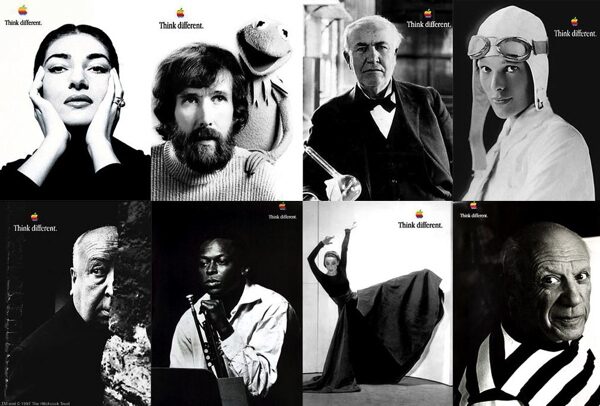
During this period, Jobs also began rebuilding Apple’s brand identity from the ground up. He understood that Apple needed more than a financial turnaround – it needed to reclaim the hearts and minds of customers. In 1997, Apple launched the now-iconic “Think Different” advertising campaign. These ads featured black-and-white images of famous innovators and rebels – Albert Einstein, Mahatma Gandhi, Amelia Earhart, Pablo Picasso – with a simple tagline: “Think Different.” The campaign was a bold statement that Apple was not just another tech company; it was the torchbearer for creativity, innovation, and nonconformity. Internally, Jobs told employees that marketing is about values: even as Apple fought for its life, it must remind consumers what the brand stands for. “Think Different” did exactly that. It associated Apple with the spirit of genius and originality, and it struck a chord. Suddenly, Apple was cool again. The company wasn’t just selling computers; it was selling the idea that by choosing Apple, you were choosing to be one of the “crazy ones” who could change the world. This masterstroke of branding set the stage for Apple’s revival by making people believe in the company’s vision before the new products even arrived.
The iMac: Design as a Lifeline
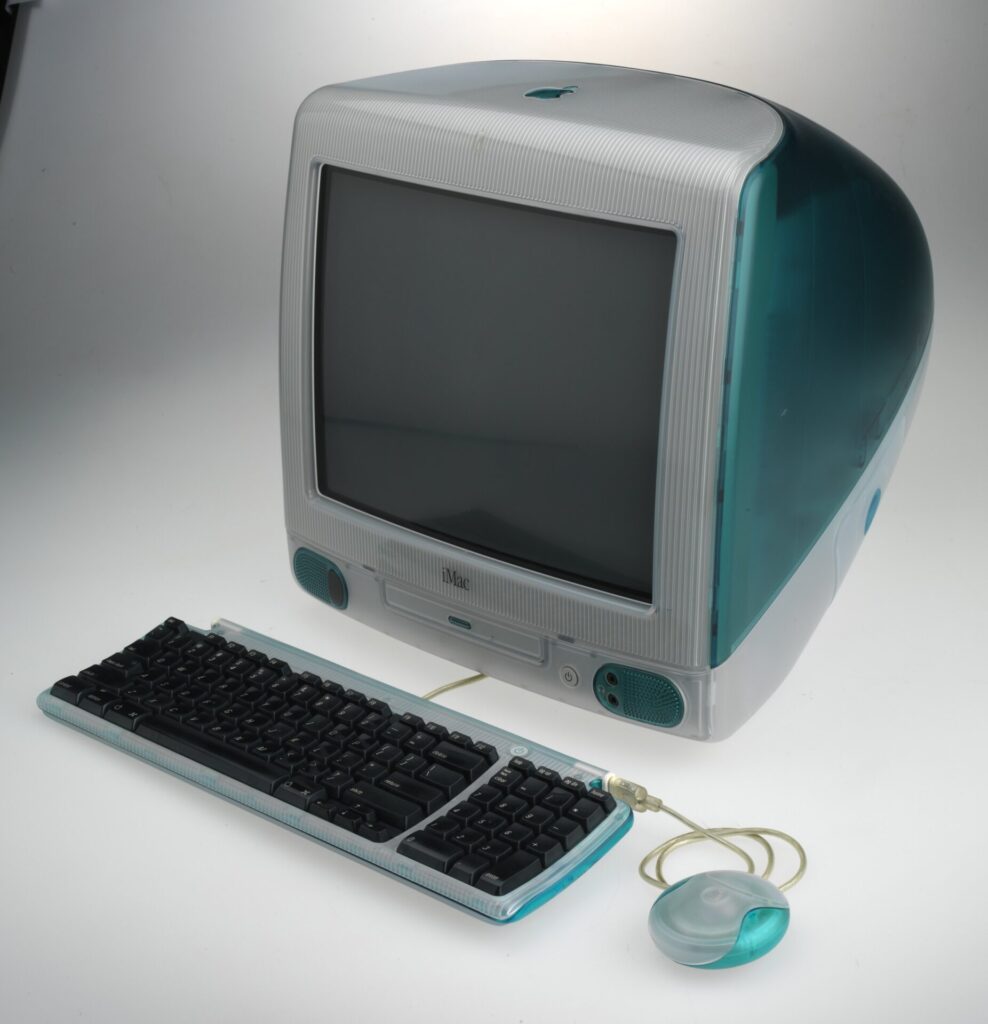
In 1998, Apple unveiled the iMac, the first major product of the Jobs return era – and proof that innovation was alive again at Apple. This wasn’t an ordinary computer; it looked like nothing else on the market. The original iMac G3, in its playful Bondi Blue shell, was an all-in-one desktop inside a translucent, gumdrop-shaped case. At a time when PCs were boring beige boxes, the iMac was fun, colorful, and inviting. Its curved form and see-through plastics (a design led by a young Jony Ive, who would become Apple’s famed design chief) made technology feel approachable to everyday people. Even the name “iMac” (the “i” highlighting its focus on the Internet) signaled simplicity and a new identity.
Importantly, the iMac wasn’t just about aesthetics – it embodied Jobs’ philosophy of making cutting-edge technology easy to use. It eliminated outdated technologies like floppy disks, embraced USB, and came internet-ready out of the box. Apple’s marketing played up the iMac’s user-friendliness with slogans like, “There is no step three!” for getting on the Internet. The bet on design and simplicity paid off: the iMac sold nearly 800,000 units in its first five months, an astonishing number for Apple at the time. By the end of that year, Apple turned a profit – its first profitable year since 1995.
The iMac was more than a hit product; it was Apple’s declaration that it was not only alive, but it could lead in design and delight again. Tech pundits credited the iMac with “saving Apple from financial ruin” as it drew droves of new customers. Equally important, the iMac reintroduced Apple as a brand with personality. Suddenly, a personal computer could be a fashion statement – available in blueberry, grape, tangerine, and other vibrant colors in later models. This fusion of technology and style became a hallmark of Apple’s resurgence. The iMac made computing fun and signaled that under Jobs’ leadership, Apple would zig where others zagged.
Rebuilding the Buzz and Cultivating Hype
Parallel to product innovation, Steve Jobs was hard at work cultivating something money can’t easily buy: buzz. Every Apple product launch became an anticipated media event. Jobs’ keynote presentations – typically delivered in his trademark black turtleneck, jeans, and sneakers – took on a near-mythical status in tech culture. He had a flair for showmanship, unveiling products with dramatic reveals and one-more-thing surprises that kept audiences (and the press) enthralled. This was a deliberate strategy: Apple would not just make great products, it would stage great stories around those products.
For example, to launch the iMac in 1998, Jobs theatrically pulled the curtain off the boldly colored machine to gasps from the crowd. He spoke about the convergence of technology and liberal arts, emphasizing how Apple was different from other computer makers. The product itself was groundbreaking, but Jobs’ passion on stage turned the launch into a moment of culture. That approach continued with each subsequent product – secrecy and speculation swirled before launches, and excitement followed after. Under Jobs, Apple mastered the art of building anticipation and then delivering products that often exceeded expectations, reinforcing customers’ faith and fanaticism. By the late 1990s, consumers and the media were again paying close attention to Apple, eager to see what Steve Jobs would do next.
Expanding the Digital Lifestyle: iPod and the Music Revolution
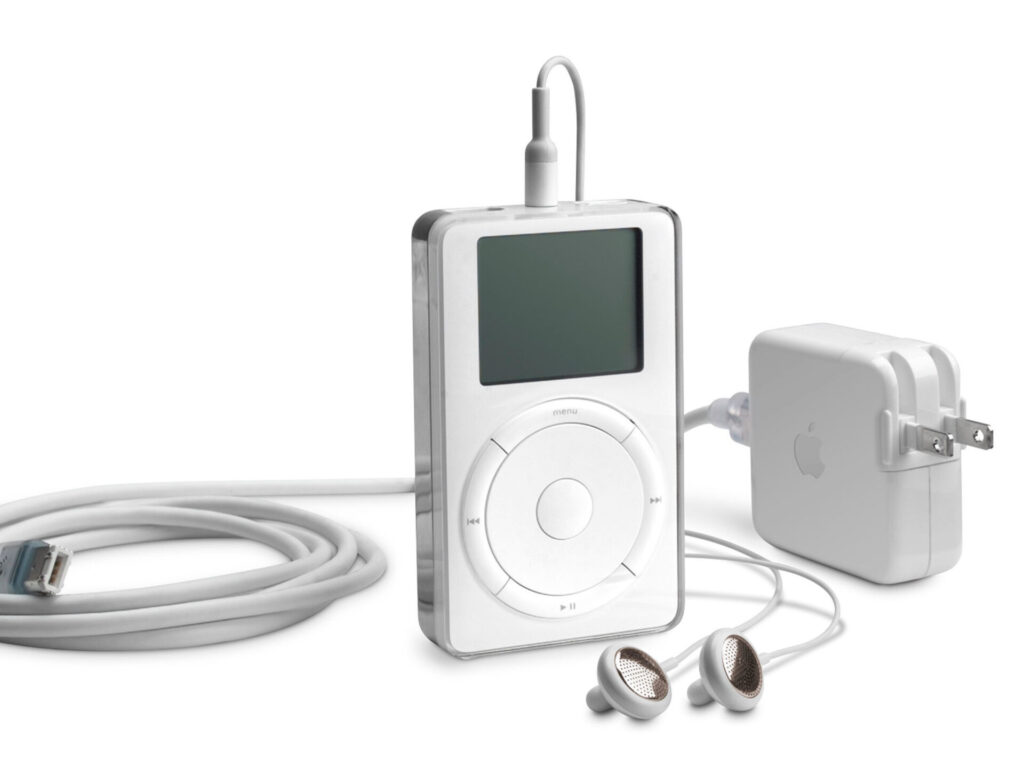
After stabilizing the Mac business, Jobs set his sights on new frontiers. He spoke of a concept called the “Digital Hub” – the idea that personal computers would become the center for new digital devices like music players and cameras. In October 2001, Apple debuted the product that would define the next era of its comeback: the iPod. Clad in pure white with a simple scroll wheel, the iPod was a sleek MP3 music player capable of holding “1,000 songs in your pocket.” It was quintessential Apple: beautiful to look at, easy to use, and far ahead of anything else on the market.
The iPod and its companion software iTunes (which managed your music on the Mac) together created an ecosystem that made digital music accessible to everyone, not just tech enthusiasts. Up until then, figuring out how to download or carry music digitally was complicated and often illegal. The iPod+iTunes combo changed that overnight. In 2003, Apple took it a step further by launching the iTunes Music Store, persuading major record labels to sell songs legally for $0.99 each. This move was revolutionary – it legitimized digital music and offered a user-friendly alternative to piracy. People could suddenly buy single songs (not just expensive CDs) and easily sync them to their iPods. Within a week of its launch, the iTunes Music Store sold a million songs, highlighting pent-up demand. Apple was not just selling a gadget; it was reshaping an industry’s business model.
The impact on Apple’s brand was enormous. The once-dying computer maker had reinvented itself as a leader in consumer electronics and digital media. Apple became synonymous with cool gadgets and innovation in the eyes of the public. The iPod itself became a pop culture phenomenon – those distinctive white earbud headphones turning into a status symbol on city streets. Apple’s edgy silhouette iPod advertising campaign (bright backgrounds with dancing figures in black grooving with their iPods) made the device an icon of the early 2000s. By dominating digital music, Apple drew millions of new customers into its world, many of whom bought Macs later on. This “halo effect” – the iPod’s success boosting Mac sales – was a deliberate strategic goal of Jobs. Under his leadership, Apple demonstrated that it could extend its brand into new markets successfully. The company that was once just a niche computer maker was now at the center of digital lifestyle, all within a few short years.
By the mid-2000s, Apple’s finances were healthier than ever. The iPod line kept expanding (Mini, Nano, Shuffle) and Apple’s profits from both device sales and music downloads soared. Perhaps just as important, Apple’s brand loyalty was growing stronger. Customers who bought one Apple product often fell in love with the experience and bought more. The company’s emphasis on design, user experience, and aspirational marketing was building a devoted fan base that any business would envy.
Reinventing Retail: The Apple Store Experience
Even as Apple’s products were gaining momentum, Steve Jobs identified another weakness in the company’s path to growth: traditional retail channels. Before 2001, buying a Mac or an iPod meant dealing with third-party electronics retailers or department stores, where Apple products were just one item on a crowded shelf (often overshadowed by Windows PCs). Jobs believed Apple needed to control how its products were presented and sold, to deliver the same exceptional experience in stores that customers got when unboxing a Mac or iPod at home. So in May 2001, Apple made a move that many skeptics called risky – it opened its very first Apple Retail Store, at Tyson’s Corner in Virginia.
Critics at the time pointed out that other computer makers had tried branded stores and failed. But Jobs had a very different vision for the Apple Store. These sleek, modern stores were meticulously designed (with clean lines, glass, and light wood floors) to reflect Apple’s product design ethos. More importantly, they were oriented around letting customers experience Apple devices hands-on. In Apple Stores, people could test-drive Macs, play with iPods, and later on touch the latest iPhones and iPads – all in an environment tailored to showcasing those products’ best features. Well-trained, friendly staff (not on commission) were there to help, not upsell. This was a radical departure from the typical electronics store. Apple Stores also introduced innovations like the Genius Bar for tech support, reinforcing the idea that buying Apple was a long-term relationship, not a one-off transaction.
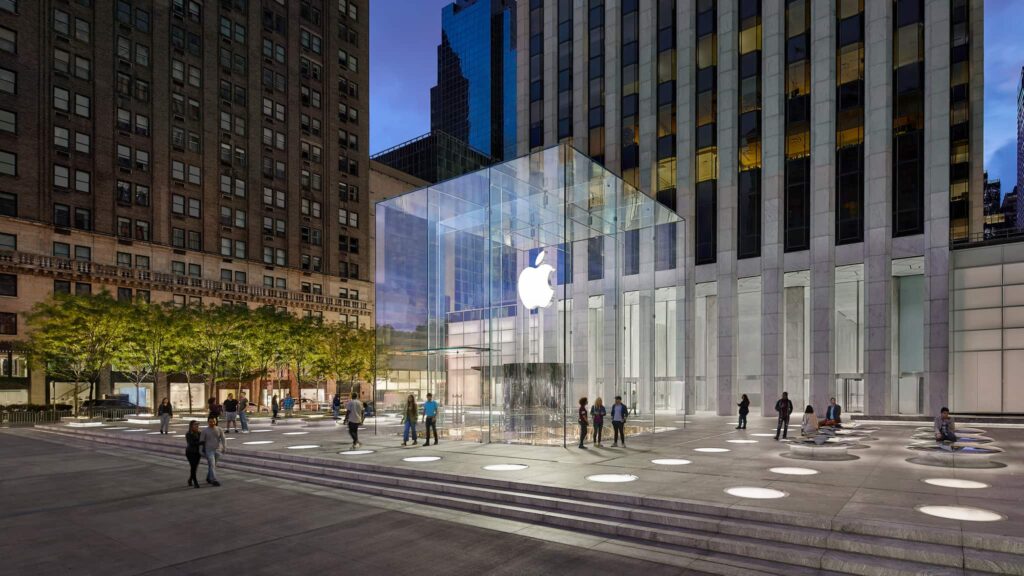
The Apple Store strategy proved to be brilliant. By bringing the brand experience directly to consumers, Apple built deeper loyalty. Sales per square foot in Apple’s stores soon surpassed even luxury retailers – an unheard-of feat in the industry. Within a few years, Apple Stores became iconic destinations in major cities around the world, from New York’s Fifth Avenue (with its famous glass cube entry) to London, Paris, Tokyo, and beyond. Far from being a money-losing vanity project, the retail stores turned into a major asset for Apple’s brand. They not only drove product sales but also acted as living billboards for Apple’s values of innovation, style, and customer-friendly design. As Jobs would later boast, during one holiday quarter Apple Stores welcomed tens of millions of visitors – more people in a single quarter than lived in some large U.S. states. Clearly, the Apple Store gamble had paid off in spades, helping transform Apple into one of the most valuable companies in the world by making the brand experience tangible in every city.
The iPhone Revolution: Apple Leads the Mobile Era
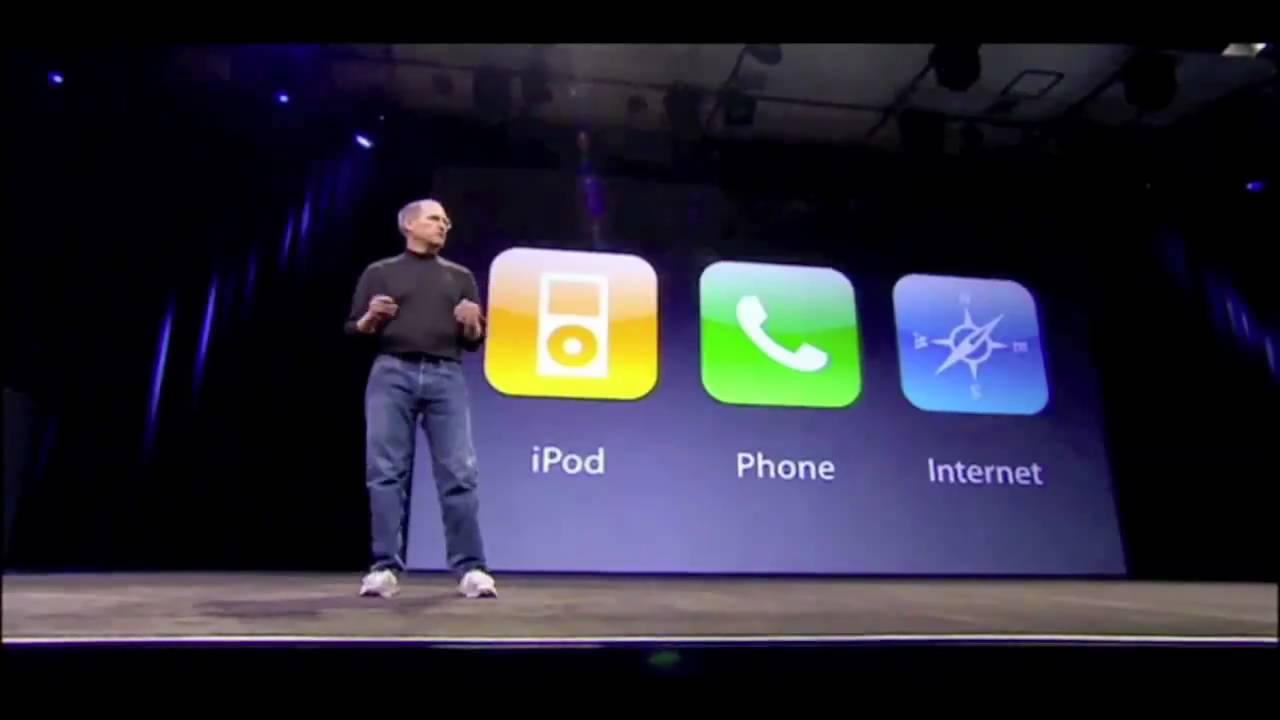
All of Apple’s efforts – the revitalized Macs, the iPod juggernaut, the retail stores, the brand rebuilt around innovation – set the stage for the company’s biggest breakthrough yet. In January 2007, on a Macworld Expo stage in San Francisco, Steve Jobs looked out at an electrified audience and said: “Every once in a while, a revolutionary product comes along that changes everything.” He then revealed the iPhone. At first, many thought it was an iPod or phone or internet device – Jobs teased that it was all three. “These are not three separate devices,” he declared. “This is one device, and we are calling it iPhone.” The crowd erupted in applause. It was a masterful introduction for a product that would truly change the world.
The iPhone exemplified Apple’s strengths in one package. It was a beautiful piece of hardware – a slim touchscreen device with just a single button – and it ran intuitive software that put the internet, music, and phone calls in your pocket with a touch of your finger. It challenged conventions of what a phone could be, eliminating the physical keyboard and stylus that were standard in smartphones of the time in favor of multi-touch gestures. While competitors scoffed initially (Microsoft’s CEO quipped that no one would pay $500 for a phone), consumers saw the iPhone for what it was: a revolutionary leap. By 2008, lines formed outside Apple Stores whenever a new iPhone model came out, reminiscent of the fervor for the latest must-have gadget. Apple expertly marketed the iPhone as not just a phone but a “smartphone” for everyone, emphasizing how it merged a phone, an iPod, and an internet communicator.
Following quickly on the iPhone’s heels, Apple launched the App Store in 2008, inviting third-party developers to create apps and effectively birthing the modern app economy. In doing so, Apple positioned the iPhone not just as a device but as a platform that could continually do more things as new apps emerged. This move echoed the earlier iTunes strategy – get an early lead in defining a digital marketplace and use it to drive hardware sales. It worked phenomenally. The iPhone (along with iPod Touch and later the iPad) became the centerpiece of the mobile computing revolution, and Apple was at the white-hot center of technology innovation once again.
From a business perspective, the iPhone’s success propelled Apple into an entirely new stratosphere. The company’s revenue and profit curves accelerated sharply upward as the iPhone became one of the best-selling products of all time. By the end of the 2000s, Apple went from teetering on bankruptcy to consistently ranking among the world’s most valuable corporations. In 2011 – just fourteen years after Apple was nearly given up for dead – the company briefly surpassed ExxonMobil to become the most valuable public company in the world. It was a symbolic moment: a triumph of innovation and brand excellence over the adversity that Apple had faced in the 90s. Steve Jobs’ vision, once doubted, had been spectacularly vindicated.
Conclusion: Leadership, Innovation, and Brand—A Recipe for Revival
Apple’s comeback under Steve Jobs is often called the greatest turnaround in business history, and for good reason. Jobs achieved it not with one magic bullet, but through a combination of strategic focus, relentless innovation, and marketing genius. He returned to basics – making great products and crafting a compelling brand story around them. Each bold decision reinforced the others: simplifying the product line cleared the way for exceptional new devices; partnering with Microsoft bought time and resources to innovate; “Think Different” redefined Apple’s image, attracting customers’ imagination; the iMac proved that design and simplicity could win people’s hearts; the iPod and iTunes expanded Apple into new markets and created a halo effect; Apple Stores deepened customer engagement; and the iPhone capped it off by reinventing an entire industry.
Underlying all these moves was Steve Jobs’ leadership – at times demanding and uncompromising – with an unwavering belief in Apple’s unique ethos. He insisted on end-to-end control of the user experience, a marriage of form and function in design, and marketing that spoke to aspirations rather than just product specs. Jobs also fostered a culture that celebrated creativity and excellence; he often said Apple sat at the intersection of technology and the liberal arts. This culture produced products that not only worked well but felt personal, almost magical, to users. In an age of generic commodity gadgets, Apple made technology feel human.
For a business audience, the lessons from Apple’s comeback are plentiful. Focus and simplicity can be more effective than trying to do everything. Great products come from saying “no” to a hundred good ideas to concentrate on a few amazing ones. Branding is about storytelling – communicating what your company stands for in a way that inspires. Customer experience matters at every touchpoint, from using a device to walking into a store. And perhaps most of all, innovation is a powerful lifeline: even a company on the brink can be saved if it can rekindle innovation and connect with its customers’ values.
Steve Jobs, sadly, passed away in 2011, just a few years after the iPhone’s debut. But by then Apple was well out of the woods – it was thriving, with a pipeline of products and a brand stronger than ever. In the decade that followed, Apple (led by Tim Cook, whom Jobs groomed as his successor) only grew more dominant, releasing the iPad and Apple Watch, and becoming the first company to reach a trillion-dollar valuation. None of that would have been possible without the dramatic turnaround story authored by Jobs in 1997-2007.
Apple’s comeback story is a testament to the idea that even a dying company can find its spark again with the right vision. It reads almost like a Silicon Valley fairy tale: the founder returns to his kingdom, slays the dragons of bureaucracy and stagnation, and with some enchanted products, revives the realm. Yet it’s all true – and it reshaped not just one company, but entire industries. Apple’s journey from near bankruptcy to global trendsetter shows how product innovation combined with passionate leadership and brand rebirth can defy the odds. It’s a story that continues to inspire entrepreneurs, executives, and marketers around the world: proof that with clarity of purpose and a bit of audacity, even the darkest chapters can lead to an incredible comeback.
Also Read: Apple’s Top Commercials and Brand Campaigns
To read more content like this, subscribe to our newsletter