Last Updated on December 4, 2025 by Team TBH
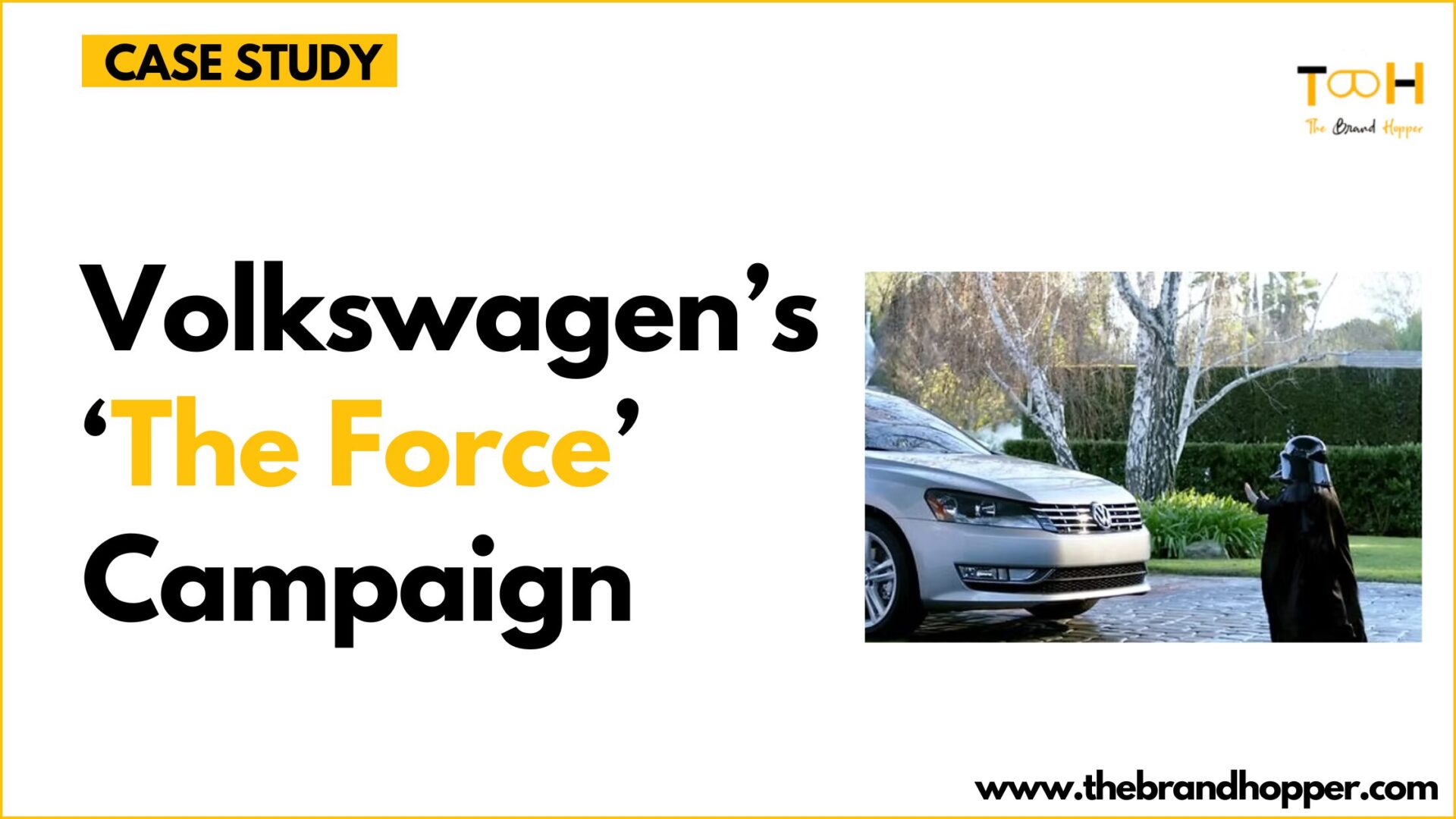
Volkswagen’s 2011 Super Bowl commercial “The Force” became one of the most iconic automotive ads of all time, blending nostalgia, humor, and heart to deliver a powerful brand message. The ad features a pint-sized Darth Vader attempting to wield the Force around his home, only to be astonished when he seemingly starts his dad’s Volkswagen Passat using magical powers.
Launched in an era when Volkswagen was eager to boost its presence in the U.S. market, “The Force” not only captured the public’s imagination but also pioneered new strategies in Super Bowl advertising.
This case study explores the campaign’s background, creative concept, execution, and the impact it had on both Volkswagen’s brand and the advertising industry at large.
Background and Campaign Objectives
In 2011, Volkswagen was preparing to introduce the all-new 2012 Passat to American consumers – a redesign aimed at making the model bigger, more stylish, and more affordable for the U.S. market. The Passat had historically been a niche player in the midsize sedan category, far overshadowed by competitors like the Toyota Camry, which had dominated the segment for years.
Coincidentally, Toyota was launching a new Camry at the same time as Volkswagen’s Passat debut, raising the stakes for VW’s launch. The company’s leadership set ambitious goals: they wanted to transform the Passat into a high-volume seller (moving from roughly 10,000 units a year to potentially 10,000 per month) and contribute significantly to Volkswagen’s growth in the U.S.
To achieve these objectives, Volkswagen needed more than just a traditional car launch – it required a cultural moment. The brand had sat out the Super Bowl for over a decade, but saw Super Bowl XLV (February 2011) as the perfect stage to make a splash. The Super Bowl’s massive viewership (often over 100 million people) presented an unparalleled opportunity to create nationwide awareness for the new Passat. VW’s marketing team and their agency, Deutsch LA, set out to craft a campaign that would get people talking about Volkswagen again, generate excitement for the Passat, and reshape perceptions of the VW brand in America.
The overarching goal was to make the Passat part of the cultural narrative, so that when the car hit showrooms, consumers would already feel a connection to it.
The Creative Idea – “The Force”
The creative concept that Deutsch LA developed was both simple and emotionally resonant: show a child dressed as Darth Vader attempting to use “the Force” in everyday life, and tie that magical moment of discovery to the Volkswagen Passat. This idea brilliantly leveraged a piece of pop culture that spans generations – Star Wars – to tell a story about wonder and family that aligned with Volkswagen’s friendly, fun-loving brand personality. The young boy (actor Max Page, unbeknownst to viewers) embodies every child’s fantasy of having superpowers. In the ad, he marches around his suburban home in full Darth Vader costume, trying (and failing) to telekinetically move objects: a doll, the family dog, a kitchen appliance – all to the famous “Imperial March” music from Star Wars playing in the background.
Finally, when the boy’s father arrives home in a new Volkswagen Passat, the mini Darth Vader focuses all his might on the car – and to his astonishment, the car’s engine roars to life. Unbeknownst to the child, his father, watching from the kitchen window, has secretly activated the Passat’s remote-start feature with a push of his key fob. The commercial ends with the child flabbergasted by his apparent success, to the gentle amusement of his parents. Not a word is spoken throughout the spot; the storytelling relies entirely on visuals, music, and the little Vader’s expressive body language. This creative choice gave the ad a universal, almost storybook quality that transcended language and spoke to a broad audience.
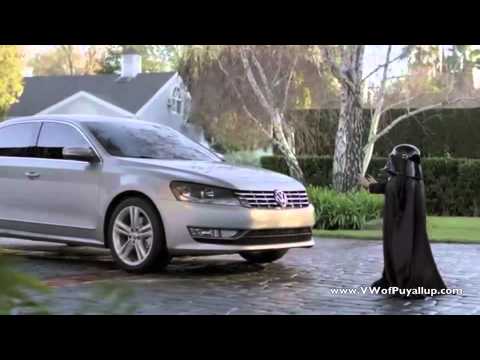
The concept managed to tap into nostalgia for Star Wars while also delivering a heartwarming family moment, which was crucial. By invoking the familiar magic of a beloved film franchise, the ad immediately grabbed viewers’ attention through nostalgia and pop-culture relevance. More importantly, it tied that magic to the Volkswagen brand in a way that felt natural and endearing. The Passat itself plays a supporting role in the story – the car is the enabler of the child’s “force” – subtly highlighting a new feature (remote start) and the vehicle’s presence in a family’s daily life without needing a hard sell.
The emotional storytelling approach was very much by design: Volkswagen wanted an advert that would create an emotional connection first and foremost, associating the VW name with feelings of joy, surprise, and delight. Humor was also key to the creative strategy. In line with VW’s brand voice, which often embraces lighthearted, witty advertising, “The Force” uses gentle comedy (a tiny Darth Vader taking his role very seriously) to engage the audience. As Advertising Age later noted, the spot “pulls people in” with humor and nostalgia, yet still manages to showcase the vehicle’s stylish new design and features in the process.
It’s interesting to note that the inspiration for “The Force” reportedly came from a real-life image that struck the creative team. Time Magazine later revealed that a photograph of a little boy dressed as Darth Vader in a Burger King inspired Deutsch’s team during the ad’s development. This anecdote underscores how a culturally iconic image can spark a creative idea that resonates widely. The choice to partner with Lucasfilm was also significant – Volkswagen worked with Lucasfilm to secure rights to the Darth Vader character and the Star Wars soundtrack, lending authenticity to the ad. That partnership even extended beyond the commercial itself (as we’ll see later in the campaign’s fan engagement efforts).
Campaign Execution and Media Strategy
Volkswagen’s execution of “The Force” campaign was as innovative as the ad’s content. At a time when the norm was to keep Super Bowl ads under wraps until game day, VW boldly decided to release “The Force” online before the Super Bowl. In fact, they uploaded the 60-second extended cut of the commercial to YouTube on the Tuesday before the game, four days ahead of its TV debut. This was a calculated gamble by VW’s marketing chief Tim Ellis and the Deutsch team – one that went against conventional wisdom in 2011. The rationale was to generate early buzz and social media conversation so that by Sunday’s Super Bowl broadcast, the ad would already have momentum. The strategy paid off enormously.
Within the first 24 hours of its online release, “The Force” amassed over 1 million YouTube views, and by the end of the week it had reached about 8 million views even before it ever aired on television. By the morning of Super Bowl Sunday, it was clear Volkswagen had a viral sensation on its hands. People were sharing the video across social networks and via email, and news outlets were starting to talk about the “adorable mini-Darth Vader ad” even before the game. The early release strategy not only built anticipation, it also allowed VW to dominate the conversation; effectively, “The Force” won the Super Bowl ad war before the game even began. After seeing VW’s success, many other advertisers immediately began reconsidering their “secrecy” approach. In the years that followed, early teasers and full releases of Super Bowl ads online became commonplace – a shift largely credited to the splash that “The Force” made.
On Super Bowl Sunday (Feb 6, 2011), Volkswagen still had a 30-second cut of “The Force” slated to air during the game (along with a separate spot for the new Beetle). Even though the TV version was abridged to fit a 30-second slot, it packed the same punch – and benefited from the groundwork laid by the viral 60-second version circulating online. During the game broadcast, the commercial provided a refreshing moment of family-friendly humor amid the usual blitz of loud, high-concept Super Bowl ads. It stood out by virtue of its simplicity and charm. In a night where many brands chase shock value or slapstick laughs, Volkswagen’s heartfelt mini-Darth Vader left a memorable impression. The spot resonated so strongly that USA Today’s Ad Meter (a popular consumer ranking of Super Bowl ads) scored “The Force” as the #3 Super Bowl commercial of 2011 – an impressive showing, especially for Volkswagen’s first Super Bowl appearance in over ten years.
Beyond the TV spot itself, Volkswagen’s campaign extended into a broader integrated marketing effort. The company engaged with viewers on social media, where the ad was being widely discussed and shared. The young actor, Max Page, appeared on morning shows like NBC’s Today shortly after the Super Bowl, his identity “unmasked” to the delight of audiences. This earned media (free publicity) amplified the campaign’s reach and gave Volkswagen additional positive exposure. Volkswagen also smartly kept the Star Wars theme alive in its marketing. In the following year, for example, VW released a teaser before the next Super Bowl featuring dogs barking the “Imperial March” tune – a wink to the previous year’s success. While that was technically a different campaign for a different model, it demonstrated how VW sought to continue benefiting from the goodwill and brand buzz generated by “The Force.”
As part of fan outreach, Volkswagen even took the campaign beyond traditional media: the company teamed up with Lucasfilm to produce a special Star Wars-themed Passat displayed at the 2011 San Diego Comic-Con. This custom vehicle was wrapped in illustrations by a comic book artist and emblazoned with Star Wars imagery and logos. The car generated buzz among the enthusiast community and was ultimately auctioned off to benefit the Stand Up to Cancer charity. This creative PR move reinforced the connection between Volkswagen and the Star Wars universe, and it demonstrated VW’s savvy in turning a commercial into a broader cultural event.
From a media strategy standpoint, “The Force” campaign was groundbreaking. It combined TV advertising’s biggest stage with the amplification power of digital and social media. By seeding the content online early and encouraging sharing, Volkswagen reached an estimated 50 million viewers on YouTube in addition to the 100+ million watching the Super Bowl on TV. The timing and multi-platform approach maximized impressions while keeping media spend efficient (after all, a YouTube view cost far less than a TV impression during the big game). In many ways, Volkswagen demonstrated a template for modern Super Bowl campaigns – one where the TV spot is just the centerpiece of a larger, multimedia rollout that extends before, during, and after game day.
Results and Impact
“The Force” campaign was a tremendous success by multiple measures. First and most immediately, it achieved massive viewership and virality. The extended ad accumulated over 8 million views before the Super Bowl broadcast and continued climbing rapidly thereafter. By the day after the game, the YouTube count had surpassed 15 million. Within a few months, it had reached tens of millions of views, and by the end of 2011 it logged approximately 49 million+ views. It was the most-viewed ad of Super Bowl XLV and, in fact, one of the most-watched viral ads of any kind up to that time. The commercial also set sharing records: by 2013 “The Force” was reported to be the most shared advertisement ever on social media (with over 5.2 million shares). It held the crown as the most-shared Super Bowl ad for more than three years. In short, the campaign didn’t just reach a large audience; it actively engaged people to the point that they became brand advocates, voluntarily spreading Volkswagen’s message through their own networks.
The industry recognition followed the popular acclaim. “The Force” won numerous awards, underlining its creative and strategic triumph. It took home two Gold Lion awards at the Cannes Lions International Festival of Creativity, one of the advertising world’s highest honors. It also earned a coveted Gold Pencil at The One Show in 2011 (in the non-broadcast category. Adweek named it the “Best Commercial of 2011”, and it topped virtually every critic’s list of memorable ads from that year. Later on, in May 2011, the spot was voted the greatest commercial of all time on a CBS prime-time special Clash of the Commercials: USA vs. the World – a testament to how quickly “The Force” became a pop culture touchstone. Such accolades reinforced Volkswagen’s reputation for creative advertising excellence and kept the conversation going long after Super Bowl Sunday.
Crucially, the campaign also delivered on Volkswagen’s business and brand objectives. The immediate lift in brand awareness and favorability was evident. Marketing analysts noted that the ad drove a significant increase in traffic to VW’s websites, as curious viewers went online to learn more about the new Passat and Volkswagen’s lineup. Volkswagen reported surges in showroom visits and online lead inquiries in the weeks following the Super Bowl. Perhaps more importantly, surveys indicated that purchase consideration for Volkswagen saw an uptick after the ad’s debut. By engaging viewers emotionally rather than with a hard sell, VW effectively planted a positive association in millions of minds – an impact that’s harder to measure than sales, but invaluable for long-term brand building.
And what about sales? While no single ad can single-handedly guarantee a car’s commercial success, the Passat’s performance after “The Force” was encouraging. The 2012 Passat (built at VW’s new Chattanooga plant) went on sale in mid-2011 to strong demand. By the end of that year, U.S. sales of the Passat had more than doubled compared to the previous year, reaching nearly 23,000 units in 2011 (note that the car was only on sale for part of that year). In 2012, the first full year of availability, Passat sales continued to climb substantially, reflecting that VW had finally secured a foothold in the midsize sedan segment. While “The Force” was certainly not the only factor – the car itself was well-reviewed and competitively priced – the campaign undeniably kick-started consumer awareness and interest on an unprecedented scale. Volkswagen’s U.S. CEO at the time even credited the Super Bowl ad with helping change the “trajectory” of the VW brand in America, making it once again part of everyday conversation for consumers shopping for cars.
Another significant impact of “The Force” was on the advertising playbook for future Super Bowls. As noted earlier, Volkswagen’s move to pre-release the spot online was a groundbreaking tactic. After witnessing VW’s success, many brands in subsequent years adopted the strategy of releasing teasers or full ads ahead of the Super Bowl to maximize buzz. Additionally, “The Force” demonstrated the power of storytelling and emotional appeal in Super Bowl ads, at a time when many advertisers were more focused on slapstick humor or shock value. The spot’s triumph suggested that audiences could be won with heartwarming narratives and that such ads could have just as much viral traction as any gimmick. Josh Sanburn, writing for Time, aptly summarized the shift, saying the campaign “changed Super Bowl commercials forever” by showing that the Super Bowl could be leveraged as an entire campaign, not just a one-off 30-second slot Today, it’s standard practice for companies to integrate their Super Bowl ads with social media, pre-game publicity, and post-game follow-ups – a blueprint that “The Force” helped establish.
Conclusion and Lessons Learned
Volkswagen’s “The Force” campaign stands as a masterclass in brand storytelling and marketing innovation. By courageously pairing a timeless pop-culture reference with a simple, human story, VW created an advertisement that struck an emotional chord around the world. The campaign’s success can be attributed to several key factors:
-
Emotional Resonance: Rather than pushing product specs, the ad focused on feelings – wonder, surprise, humor, and warmth. This emotional connection made viewers actually care about the ad and, by extension, about Volkswagen. In marketing terms, “The Force” exemplified the principle of affective conditioning – associating a brand with positive emotions by way of a memorable narrative.
-
Brand Fit: The commercial was perfectly in tune with Volkswagen’s brand identity. VW has long positioned itself as a approachable, family-friendly brand (“Drivers wanted,” as past taglines suggested) with a fun streak. A tiny Darth Vader discovering the new Passat in the driveway – with a mix of humor and heart – was a natural extension of that persona. Even without heavy branding throughout the ad, consumers walked away remembering it was a Volkswagen that brought the magic to life.
-
Strategic Risk-Taking: Volkswagen took a calculated risk by breaking the mold of Super Bowl advertising – first by returning to the Super Bowl stage after years away, and second by releasing the ad early online. Both moves paid off. The early release, in particular, showed bold foresight. It demonstrated how earned media and social sharing could amplify paid media, effectively multiplying the impact without multiplying the cost. Tim Ellis, VW’s marketing chief for the campaign, had to convince others to embrace this unconventional approach, and his success has influenced Super Bowl marketing strategies ever since.
-
Integrated Campaign Execution: “The Force” was not treated as just a one-off TV spot, but as the centerpiece of a broader campaign. VW supported it with online engagement, PR (Max Page’s media appearances), social media content, and even that special-edition Passat at Comic-Con for the fan community. This 360-degree approach maximized the campaign’s reach and helped embed the ad in popular culture beyond the typical Super Bowl Monday water-cooler talk.
-
Measuring Impact: Finally, Volkswagen ensured that the campaign was tracked for real results – not just views and “buzz,” but brand metrics and sales indicators. The spike in website traffic and the noted rise in purchase consideration showed that the ad translated into genuine consumer interest. And the subsequent sales growth of the Passat provided tangible evidence that an ad can entertain and sell. In fact, a neuromarketing study conducted by Sands Research had predicted the ad’s effectiveness by measuring viewers’ brainwave responses in advance – “The Force” scored off the charts for neuro-engagement, validating the power of its emotional triad of nostalgia, empathy (parental love), and humor.
It’s worth acknowledging that no campaign is without skeptics. Some industry observers later mused whether “The Force” drove long-term brand loyalty or just short-term buzz, and if such a universally loved ad perhaps benefited Volkswagen’s ad agency (in awards and fame) even more than it did VW’s bottom line. However, the evidence of increased shopper consideration and the Passat’s improved market performance suggest that the campaign delivered meaningful value to the brand, not merely viral fame. In the end, “The Force” achieved what great branding campaigns aspire to: it made millions smile and talk about the brand, it differentiated Volkswagen in a crowded market, and it left a lasting legacy in advertising playbooks.
Also Read: A Case Study on Volkswagen’s Think Small Campaign
Also Read: How Volkswagen Brand Campaigns Connect with Customers
To read more content like this, subscribe to our newsletter