Last Updated on May 21, 2026 by Team TBH
Hybrid work gave us freedom, but it scattered our people. By 2025, an estimated 32.6 million Americans—nearly a quarter of the workforce—will work remotely, according to Forbes. When face-to-face time is scarce, every in-person hour matters. Yet the phrase “company retreat” still conjures awkward trust falls and stolen weekends.
This guide fixes that. We sifted through high-ranking lists and real employee gripes, then filtered every idea for impact, inclusivity, feasibility, and freshness. The result: 12 retreat formats, grouped by outcome, with quick cost cues and proof you can show finance—so you pick the right option fast and spark genuine enthusiasm.
Why off-site retreats boost engagement

Face-to-face time is the glue hybrid schedules lack. When people step away from screens and share real experiences, communication rises and silos shrink. Research shows teams that meet off-site see a 26 percent jump in productivity and tighter collaboration once they return.
Stronger bonds also fight churn. Companies that build purposeful connection through retreats report up to 73 percent lower voluntary turnover. Replacing one high performer costs far more than a long-weekend off-site, so the investment quickly pays for itself.
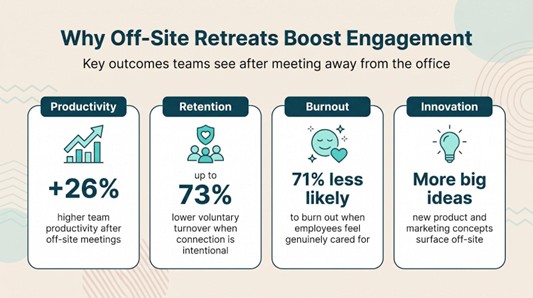
Retreats lift morale, too. In Gallup’s latest pulse, stress is at record highs, yet employees who feel “cared for” are 71 percent less likely to burn out. A well-planned getaway signals genuine care and that goodwill carries into daily work.
Creative sparks fly when routine disappears. A Forbes case study found that product ideas and marketing angles surfaced because teammates brainstormed poolside instead of in another video call.
Bottom line: off-site retreats aren’t perks, they’re strategic tools that raise engagement, protect talent, and fuel innovation while reminding people why working here is worth it.
How we selected these 12 ideas
We didn’t throw darts at a Pinterest board. We reviewed more than fifteen top-ranking retreat round-ups, read HR forum threads, and tested each suggestion against four clear filters.
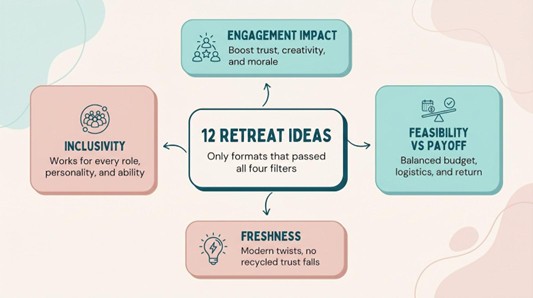
First, engagement impact. If an activity doesn’t deliver noticeable gains in trust, creativity, or morale, it didn’t make the cut.
Second, inclusivity. A worthwhile retreat serves every fitness level, personality, and time zone. Anything likely to sideline parents, introverts, or remote staff was refined or rejected.
Third, feasibility versus payoff. Budgets differ, so we balanced low-cost wins with larger investments and flagged the difference. You’ll see quick-start ideas beside bigger productions, but all offer a clear return on effort.
Finally, freshness. Teams groan at recycled trust falls, so we favored novel twists such as VR escape rooms or purpose-driven service projects to keep the program 2026-ready, not 2006.
Need a shortcut? Many retreats crumble because no one owns the logistics timeline. After fifteen years of running destination off-sites, the corporate retreat planning checklist from Team Retreats breaks the process into bite-sized milestones—from defining KPIs to post-retreat pulse surveys—and flags the ideal booking window (three months ahead, or six if you want first-choice resorts). Follow it and you’ll spend the final weeks refining content, not chasing room blocks.
Following that timeline prevents the last-minute scrambles that derail many off-sites and gives you space to apply the four filters above with calm confidence.
Every idea that made the list delivers proven value, welcomes diverse teams, and is realistic to run. That’s the standard before anything reaches your planning checklist.
Active & adventure retreat ideas

Nothing bonds a team faster than shared adrenaline.
When we hike a ridge together, cheer a colleague up a climbing wall, or run an obstacle race side by side, titles fade. People coach, laugh, and high-five as humans first and job roles second. The trust earned in those moments returns to the office as smoother hand-offs and quicker problem-solving.
We open this segment with a crowd-pleaser that offers easy logistics and wow factor.
1. All-inclusive team getaway
Picture the crew landing at a beachfront resort on Thursday afternoon. Bags slide to rooms, welcome mocktails appear, and the only request is “meet on the sand by sunset.”
An all-inclusive package simplifies life for planners and guests. Lodging, meals, meeting space, and on-site fun (kayaks, volleyball, even a quick snorkel lesson) fall under one invoice. You spend energy shaping connection rather than juggling vendors.
The engagement magic lives in the in-between moments. Morning paddleboarding turns strangers from finance and design into instant teammates. A casual strategy chat over tacos feels lighter because everyone’s relaxed and sun-warmed. By dinner, inside jokes sprout that echo in Slack for months.
Costs stay clear. Off-season dates or destinations a short flight away often land in the mid-price range per person, well below a patchwork of city hotels and restaurants. Ask resorts for corporate bundles that include a private conference room and one guided activity; you’ll often see discounts unavailable to the public.
Planning tips:
- Build a rhythm: light activity before lunch, focused workshop mid-afternoon, open social evening.
- Reserve at least one meal off-property to sample local flavor and prevent “resort bubble” fatigue.
- Encourage a digital-detox window. Collect phones for the morning snorkel, then return them at lunch. The present-moment buzz is worth it.
Most teams head home sun-kissed, refreshed, and newly connected. They also carry a shared highlight reel that reshapes how they see each other at work: “Remember when our CFO nailed that paddleboard headstand?” Those stories outlast tan lines and keep collaboration playful long after the trip ends.
2. Outdoor adventure challenge
Trade fluorescent lights for forest canopy and watch teamwork surface in record time.
A guided ropes course or zip-line park forces colleagues to rely on each other, literally. One person belays while another steps off a platform, trusting that shared safety line. The instant someone calls “Got you,” hierarchy dissolves. Teammates see who encourages, who strategizes, and who keeps everyone laughing when knees shake forty feet up.
Beyond the high wires, add ground-level puzzles such as giant balance beams, blindfolded maze walks, or a timed bridge-building task with limited supplies. These elements widen inclusivity and prove that problem-solvers on the ground are as crucial as daredevils in the air.
Planning pointers:
- Book certified facilitators. Safety briefings and professional gear turn nerves into excitement.
- Layer difficulty. Offer alternate routes or spotting roles so every fitness level feels welcome.
- Debrief right away. Gather in a circle, share quick wins, and tie insights back to work (“How did clear calls help us clear the wall?”).
Expect to spend roughly the cost of a nice client dinner per person, but the return is a stream of inside jokes and fresh trust no slide deck can match.
3. “Survivor” team challenge camp
Drop your team into a friendly wilderness competition and watch natural leaders emerge.
A Survivor-style camp strings together mini-quests such as fire-building, compass navigation, puzzle stations, and makeshift raft races. Each task taps different strengths, so analytical minds and athletic sprinters both get hero moments.
You control the storyline. Split employees into mixed-department “tribes,” hand out color buffs, and announce that trophies await the highest-scoring crew. Two hours in, marketing will cheer for engineering, finance will plan with design, and people who barely knew each other on Monday will trade high-fives like longtime friends.
Make it safe and inclusive:
- Rotate roles. Someone hesitant to climb can map routes or manage supplies.
- Keep challenges short, about 15 to 20 minutes each, to maintain energy and give everyone a turn.
- End with a campfire debrief where tribes share wins and lessons, then connect insights to work: “What trick helped us solve the tarp puzzle, and how can we use that next quarter?”
Budget stays refreshingly low. With a rented campground, basic materials, and a facilitator, costs often match a single evening gala yet create richer stories. Employees head home dirty, tired, and beaming, convinced they work with the most capable crew on earth.
Creative and idea-sparking retreat ideas

Fresh thinking thrives when routine disappears.
Change the scenery, mix disciplines, and suddenly the quiet developer riffs with the head of marketing on a brand-new feature. That cross-pollination is exactly what this set of retreats is built to spark.
4. Hackathon retreat
Give the team one bold challenge and a ticking clock, then step back.
Whether the prompt is “Build a feature our customers will love by tomorrow” or “Pitch a process that halves support tickets,” a hackathon channels healthy competition into solving a real business pain.
The recipe is simple:
- Kick off with rapid-fire idea pitches.
- Let employees self-organize into squads that span titles and offices.
- Supply whiteboards, sticky notes, and prototype kits so ideas move from heads to hands fast.
Energy stays high because progress is visible. By dinner, prototypes ping across laptops. By breakfast, squads rehearse three-minute demos. A panel of peers or execs votes, and top concepts earn budget to ship.
Why it works:
- Ownership. People feel heard when their idea moves forward, so engagement rises.
- Collaboration. Silos fade; a finance analyst might shape UX while an engineer crunches cost models.
- Fast payoff. At least one prototype often joins the product roadmap, proving the retreat paid for itself.
Keep costs low by focusing on food, simple swag, and a small trophy, then enjoy Monday’s stand-up buzzing with “During the hackathon, we discovered…”.
5. Improv comedy workshop
Laughter is a shortcut to psychological safety.
Invite a seasoned improv coach, slide tables aside, and spend two hours playing “Yes, and” games. Within minutes, even the shyest analyst riffs on an imaginary hot-air-balloon mishap while the VP gleefully adds plot twists.
These low-stakes scenes teach three priceless habits.
First, active listening. You can’t build on a partner’s idea unless you hear it fully.
Second, rapid iteration. Scenes flip every thirty seconds, forcing quick pivots that mirror real-world project changes.
Third, ego suspension. Everyone takes turns looking silly, which normalizes vulnerability and sparks trust.
The ripple effects are clear. Teams that finish an improv clinic report shorter brainstorming sessions and faster consensus because “Yes, and” replaces “No, but” reflexes. Ideas stack instead of stall.
Logistics stay simple: one open room, a coach, and a box of goofy props. Costs usually match a standard training session, yet the energy boost lingers for months. Wrap the session with a quick debrief that asks what felt different about saying yes to every suggestion, and watch eyes light up as people connect that freedom to daily collaboration.
Finished in under half a day, an improv workshop slips neatly between a morning keynote and an evening mixer, priming creativity for everything that follows.
6. Collaborative art or film project
Creativity sticks when the team leaves with a physical souvenir.
Hand everyone a blank canvas, literally. It could be a wall-sized mural sketched by a local artist, ready for colleagues to fill with color. Or try a 90-second “commercial challenge” where mixed-skill crews script, shoot, and edit a video about company values in one afternoon.
Either way, the magic is the shared artifact. People negotiate a theme, assign roles, and solve small production crises together. Designers coach accountants on brush technique, engineers learn framing tips from social media interns, and hidden talents surface in real time.
The finished piece lives on. A mural brightens the lobby and reminds visitors, and staff, of collective imagination. A film premieres at the retreat’s closing dinner, earns roaring applause, and later powers employer-brand posts on LinkedIn.
Execution tips:
- Provide flexible roles so introverts can storyboard or edit while extroverts narrate.
- Set a crisp deadline of two to four hours to keep energy high and avoid perfection paralysis.
- Hire a facilitator or videographer to polish the final output quickly, so teams see a professional result before they leave.
Expect mid-range costs for supplies, expert guidance, and a small projector rental. The lasting visual says, “We built this together,” nudging collaboration long after paint dries or credits roll.
7. Mindfulness and yoga retreat
Swap packed agendas for slow breaths and birdsong.
Start each morning with a guided yoga flow on a deck overlooking water or mountains. Follow with ten minutes of meditation while phones stay tucked away. Research shows that a 24-hour digital detox can cut cortisol by about 28 percent and lift focus once people return to work.
Group dynamics matter. We bond when we wobble through tree poses together, then laugh it off in sun salutations. Introverts enjoy the quiet; extroverts discover calm they rarely schedule. Everyone leaves with a simple toolkit of breathing exercises they can use before the next high-stakes demo.
Keep planning simple:
- Bring in a certified instructor; most cost less than a catered lunch.
- Offer chair or gentle yoga options so every ability level feels welcome.
- Provide mats and water on site to remove prep stress for travelers.
Finish the day with healthy meals and plenty of unscheduled time. Teams head home lighter, clearer, and ready to tackle that backlog. Slowing down together can be the quickest route to real progress.
8. Team spa and relaxation day
Sometimes the boldest culture move is telling everyone to unplug.
Book a half-day at a neighborhood spa or bring massage chairs onsite. Colleagues trade laptops for robes, chat in the steam room, and share fresh fruit instead of meeting notes. The message is clear: we value your well-being, not just your output.
Shared relaxation pays off at work. When stress hormones drop, creative thinking rebounds and patience returns, two qualities every cross-functional project needs. Many employees rank the spa block as their top retreat memory because it feels like a genuine thank-you.
Execution made easy:
- Negotiate group packages that bundle one treatment and facility access for a predictable per-head fee.
- Offer a choice such as massage, facial, or a quiet meditation lounge, so personal comfort wins.
- Close with a light gratitude circle where each person names a colleague they appreciate. Appreciation sinks in when everyone is still blissfully relaxed.
Budget usually lands in the low-to-mid range, yet the goodwill payoff is huge. People leave looser, kinder, and ready to jump into tough sprint goals without snapping at each other.
9. Picnic and “recess” games
Remember grade-school field day? Re-create that carefree vibe and watch workplace tension melt.
Pick a sunny park, cater a picnic spread, and scatter simple gear such as frisbees, cornhole boards, or a tug-of-war rope. The plan is light on rules and heavy on choice. Some teammates will jump into a kickball match, others will lounge on blankets swapping travel tips. Both interactions build real connection.
Why it works:
- Unstructured play invites authenticity. People reveal personalities that rarely surface in status meetings.
- Low intensity means inclusivity. Anyone can join a giant Jenga round or cheer from the sideline.
- Family-friendly option. Open the afternoon to partners or kids, and you support work-life balance while showing off company culture.
Keep logistics breezy:
- Reserve a pavilion, set up shade, and stock coolers with non-alcoholic drinks first so no one feels pressured.
- Plan one optional “Company Olympics” relay for a burst of friendly rivalry, then hand out dollar-store medals that become desk trophies.
- Capture candid photos. A post-retreat collage on the intranet keeps the good vibes alive long after the last water-balloon pops.
Cost is little more than catering and a park permit. Employees head home feeling seen, relaxed, and newly bonded. That simple afternoon can lift morale for an entire quarter.
10. Volunteer and community service retreat
Shift the focus from team-building to world-building and watch commitment rise.
Schedule half a day, or a full one, partnering with a local nonprofit. Habitat builds, coastal clean-ups, or meal-packing lines all work because they reveal character while meeting real needs.
The dynamic feels electric. A software architect learns nail-gun basics from a customer success rep. The CEO folds boxes next to a new intern. Hierarchy fades in shared purpose, and gratitude flows both ways.
Planning tips:
- Align with values. If sustainability tops your mission, pick an environmental project; if education matters, tutor kids or stock school libraries.
- Confirm details early. Good nonprofits plan months out, so lock group size, supplies, and rain plans to keep tasks meaningful.
- Celebrate the impact. A quick tally like “We packed 4,000 meals in three hours” gives the team a concrete win to share back at the office.
Costs stay minimal: transport, snacks, and perhaps a donation. Yet the return shows up in surveys where employees cite the service day as proof the company “walks its talk.” That authenticity beats any glossy culture slogan you could print on swag.
11. Leadership and personal growth workshops
A retreat is the perfect moment to sharpen skills people rarely polish during the daily rush.
Bring in a seasoned facilitator for a two-hour clinic on crucial conversations, smart decision making, or storytelling for influence. When teammates learn and practice together, role-playing tough client calls or breaking down a Harvard-style case, they build a shared language they can use on future projects.
Why it works:
- Signals investment. Employees stay longer when they see a clear path to growth.
- Creates a safe rehearsal space. Messing up a negotiation exercise costs nothing but teaches the full lesson.
- Spreads a leadership mindset. Even non-managers head home ready to own outcomes, raising overall accountability.
Implementation steps:
- Survey the team on skill gaps about a month out.
- Book an expert or invite an internal pro who loves teaching.
- Keep the session interactive with small-group debates, rapid feedback, and a capstone “apply it tomorrow” plan.
Costs usually fall in the low-to-mid range, covering the facilitator and printed workbooks. The return shows up in faster decisions and stronger initiative long after the retreat ends.
12. “Hack the company” brainstorm
Turn your people into architects of the future, and watch commitment climb.
Set aside an afternoon when every employee can propose, debate, and refine ideas that improve how the company works. Think product tweaks, culture fixes, or bold five-year bets. Provide flip charts, voting dots, and a promise from leadership to act on the winners.
The format is simple:
- Topic stations. Label room corners “Customer Wow,” “Process Painkillers,” “Dream Benefits,” and “Moonshot Revenue.”
- Rotating huddles. Small groups spend 15 minutes per station, jotting solutions and building on prior notes.
- Dot-vote finale. Everyone gets three stickers to support the ideas they believe will have the biggest payoff.
Energy stays high because the stakes feel real. When an intern’s idea lands in the top three and the COO says, “Let’s pilot this next quarter,” you build a culture where voice equals value.
Keys to success:
- Capture each idea digitally before boards are wiped.
- Publish a post-retreat action list with owners and deadlines; nothing erodes trust faster than missed follow-through.
- Celebrate progress aloud. A Slack post noting that “No-Meeting Wednesday” began as a retreat hack reminds everyone their input matters.
Costs are almost nil, while the effect on engagement and shared ownership is easy to spot. Sometimes the best retreat activity is simply fixing work itself.
At-a-glance idea comparison
Choosing a retreat format should feel easier than wrangling calendars.
Scan the table below to find the sweet spot for your budget, group size, and desired outcome in seconds. We rated each idea on five factors you told us matter most: bonding power, cost, ideal headcount, planning lift, and remote inclusivity. Match options with stakeholder priorities before you dive into logistics.
| Retreat idea | Bonding impact | Cost level | Ideal group size | Planning effort | Remote-friendly |
| All-inclusive getaway | 🔥🔥🔥🔥 | $$ | 20-100 | Moderate (vendor handles most) | Partially |
| Outdoor adventure challenge | 🔥🔥🔥 | $ | 10-50 | Moderate | No |
| “Survivor” team camp | 🔥🔥🔥 | $ | 10-50 | High (DIY) | No |
| Hackathon retreat | 🔥🔥🔥 | $ | 10-100 | Low-moderate | Yes |
| Improv workshop | 🔥🔥 | $ | 5-30 | Low | Possible |
| Collaborative art or film | 🔥🔥 | $ | 10-60 | Moderate | Possible |
| Mindfulness and yoga | 🔥🔥🔥 | $ | 5-50 | Low | Yes (hybrid) |
| Spa and relaxation day | 🔥🔥 | $-$$ | 5-50 | Low | No |
| Picnic and recess games | 🔥🔥 | $ | 10-100+ | Low | Yes (local) |
| Volunteer service | 🔥🔥🔥🔥 | $ | 5-100+ | Moderate | Possible |
| Growth workshops | 🔥🔥 | $-$ | 5-50 | Moderate | Yes |
| “Hack the company” brainstorm | 🔥🔥🔥🔥 | $ | 10-200 | Low | Yes |
Use this matrix as a quick filter. Need maximum bonding on a lean budget? Volunteer service tops the list. Looking for remote-friendly creativity? The hackathon retreat checks every box. Keep the table handy when finance or HR asks, “Why this idea?” The answer sits one row away.
Measuring engagement return on investment after your retreat
A retreat is an investment, and smart teams prove the return.
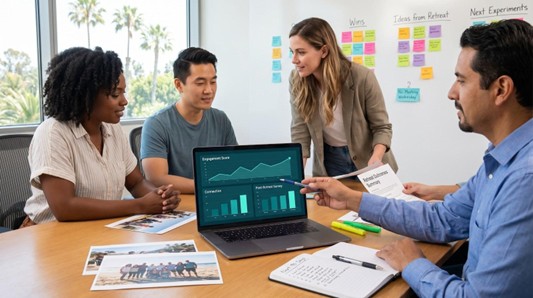
Start by setting success metrics before anyone boards the shuttle. Pick two or three that tie directly to your goal, such as post-event employee net promoter score (eNPS), cross-team project launch speed, or voluntary turnover over the next six months. Clear targets keep everyone focused and quiet the “Was it worth it?” doubts later.
Within 72 hours of coming home, send a five-minute pulse survey. Ask people to rate connection, motivation, and clarity of company direction, then leave space for one open comment. Quick feedback captures fresh emotion and surfaces fixes while memories are vivid.
Track behavior, not just sentiment. Did departments that met on the ropes course file fewer duplicate tickets? Did hackathon ideas turn into shipped features? Log those wins in a simple spreadsheet; patterns appear fast when you look.
At the three-month mark, revisit your original metrics. If engagement scores rose and turnover dipped, spotlight the retreat’s role in your next leadership deck. Pair numbers with real quotes such as “I finally feel part of a team after Cancun” because stories stick deeper than charts.
Finally, close the loop with your people. Share what you measured, what improved, and what you’ll adjust next time. Transparency turns attendees into co-designers and keeps energy high for year two.
Proving return on investment is less about fancy dashboards and more about disciplined follow-through. Do that, and budget approvals get easier every cycle.
Conclusion
Bottom line: off-site retreats aren’t perks, they’re strategic tools that raise engagement, protect talent, and fuel innovation while reminding people why working here is worth it.
To read more content like this, explore The Brand Hopper
Subscribe to our newsletter