Last Updated on August 12, 2026 by Team TBH
Quick answer: For pure status, resale value, and long-term investment potential, Rolex wins — its sport models routinely sell above retail thanks to engineered scarcity and a fiercely independent ownership structure. But Omega offers arguably richer horological heritage (it’s the actual watch that went to the Moon), lower entry prices, no waiting lists, and better everyday value. If you want the ultimate status symbol, buy Rolex. If you want a genuinely great watch without the wait or the markup, Omega is very hard to beat.
Rolex and Omega are the two most recognized names in Swiss watchmaking, and shoppers cross-shop them constantly — both make exceptional, prestigious timepieces in a similar price bracket. But the companies behind them, and what you’re actually buying into, are very different. Here’s a full, practical comparison.
Who Owns Rolex vs Omega?
This is the single biggest difference between the two brands, and it explains almost everything else on this list.
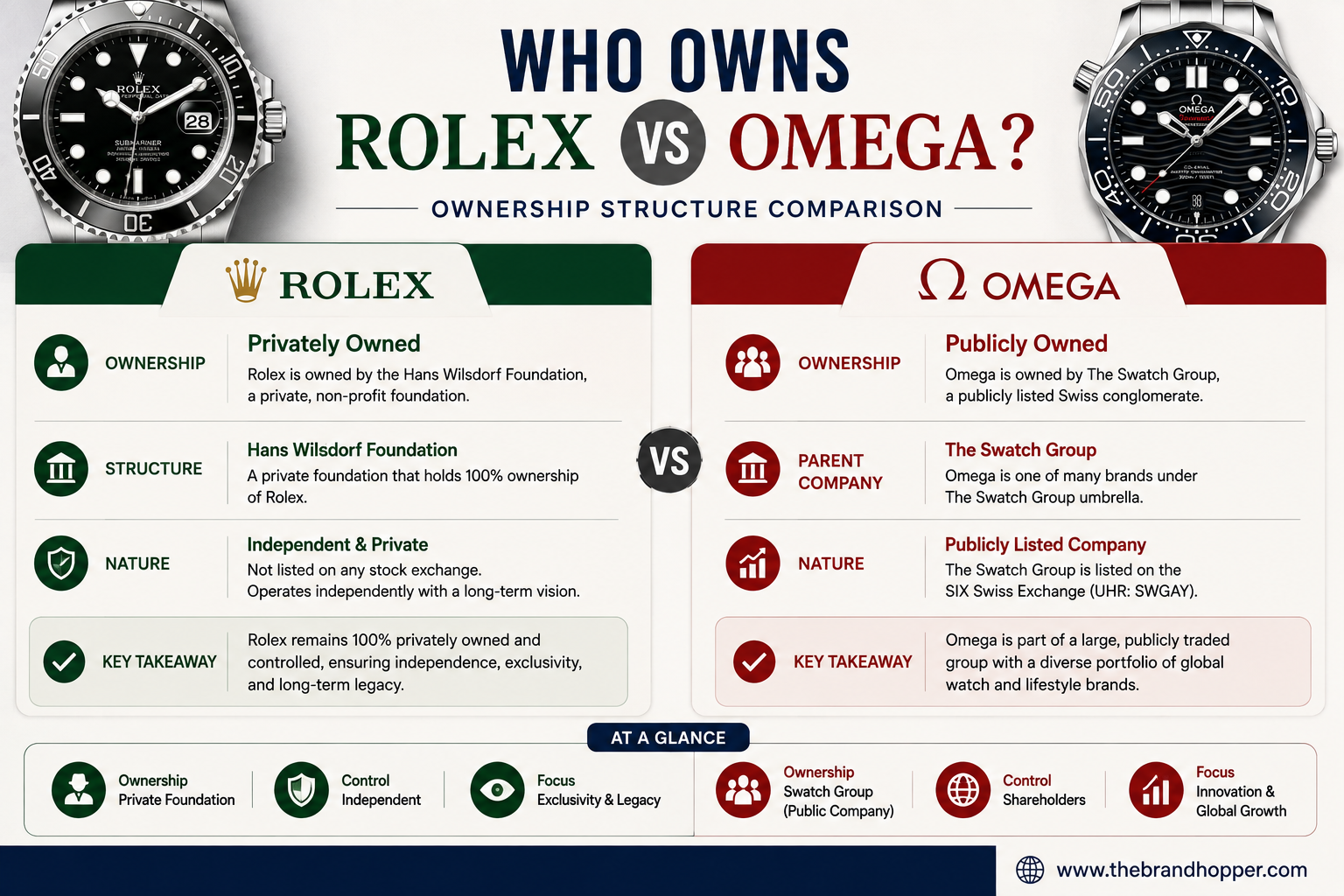
Rolex is owned outright by the Hans Wilsdorf Foundation, a private Swiss charitable foundation established by founder Hans Wilsdorf in 1944. Rolex has no public shareholders, isn’t traded on any stock exchange, and isn’t part of LVMH, Richemont, or any other luxury conglomerate. Profits are largely reinvested into the foundation’s charitable work and the brand itself, insulating Rolex from the quarterly pressure public companies face to chase growth.
Omega, by contrast, is one of roughly 16 watch and jewelry brands owned by the Swatch Group, a publicly traded Swiss conglomerate listed on the SIX Swiss Exchange. Omega became part of Swatch Group when it formed in 1983 through the merger of ASUAG and SSIH (Omega’s parent company at the time). As a public company, Swatch Group answers to shareholders and reports its financials openly — Omega is estimated to generate around 2.8 billion Swiss francs annually within a group that posted roughly $7.55 billion in trailing 12-month revenue.
History & Heritage
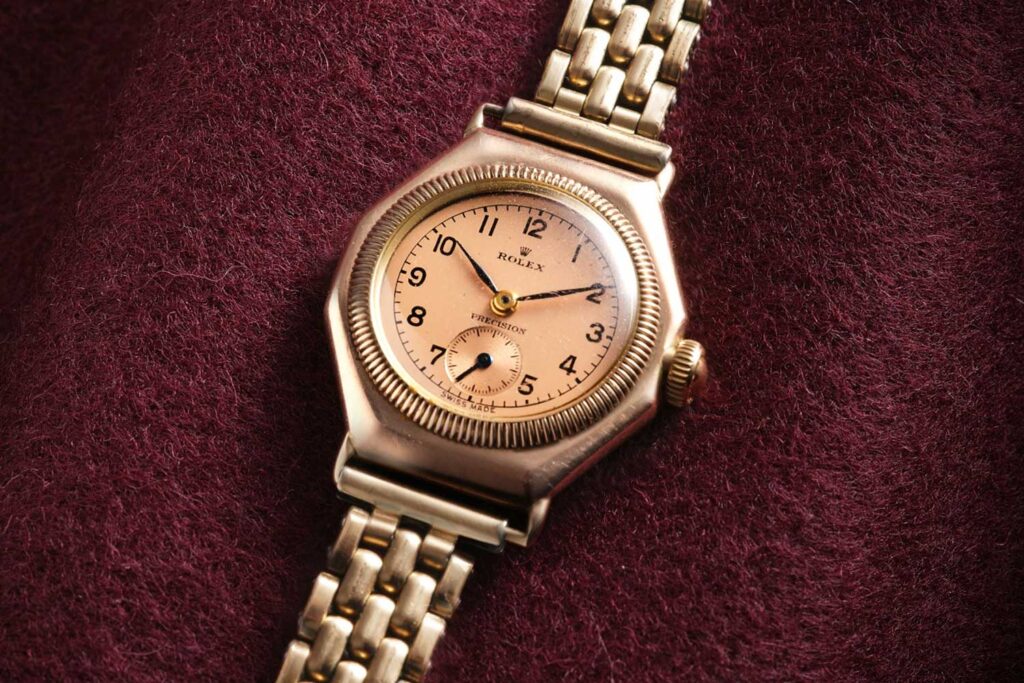
Rolex was founded in 1905 in London by Hans Wilsdorf and Alfred Davis, originally as Wilsdorf & Davis, before adopting the Rolex name in 1908 and relocating to Geneva in 1919. Rolex pioneered the first waterproof wristwatch case (the Oyster, 1926) and the first self-winding Perpetual rotor movement (1931), innovations still central to its watches today. A Rolex Oyster Perpetual was famously worn on Sir Edmund Hillary’s 1953 Everest summit expedition.
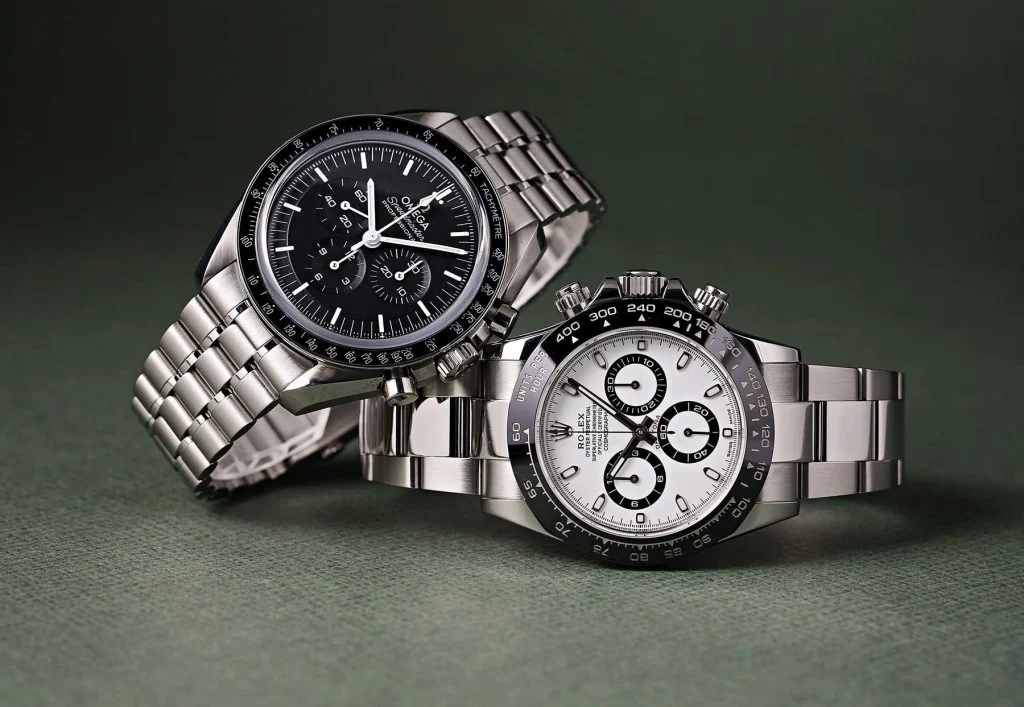
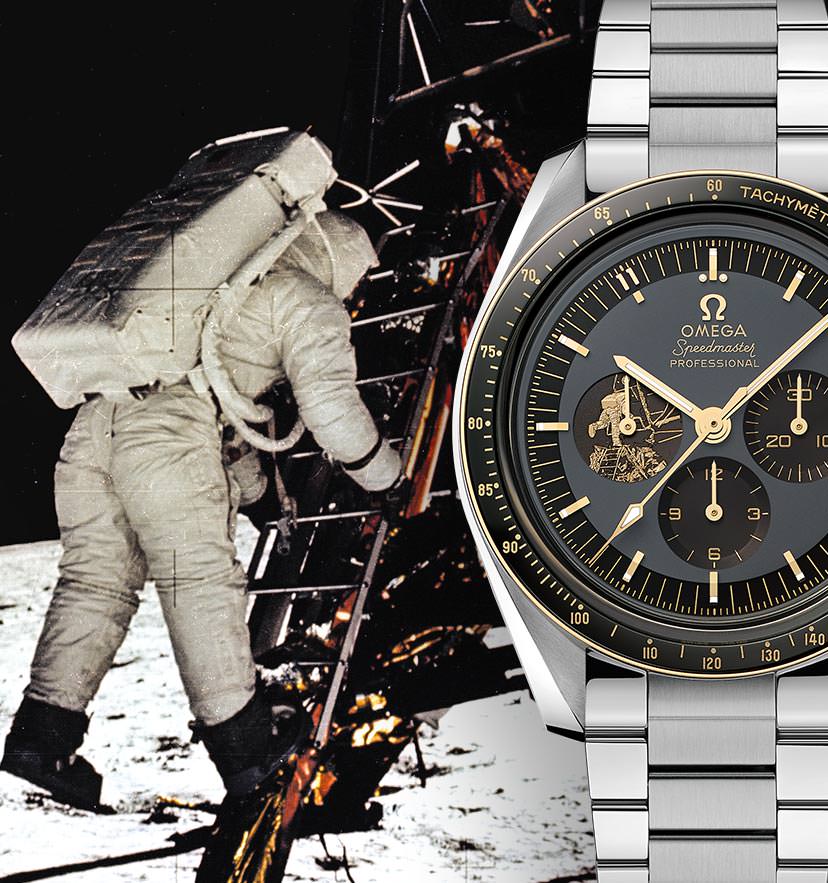
Omega is considerably older, founded in 1848 in La Chaux-de-Fonds by Louis Brandt, and has arguably the more dramatic heritage flex: the Omega Speedmaster Professional is the only watch NASA has ever qualified for spacewalks, and it was worn on the Moon during the Apollo 11 mission in 1969, permanently earning it the nickname “Moonwatch.” Omega has also been the official Olympic Games timekeeper since 1932 and has outfitted James Bond on-screen since 1995’s GoldenEye.
Price & Accessibility
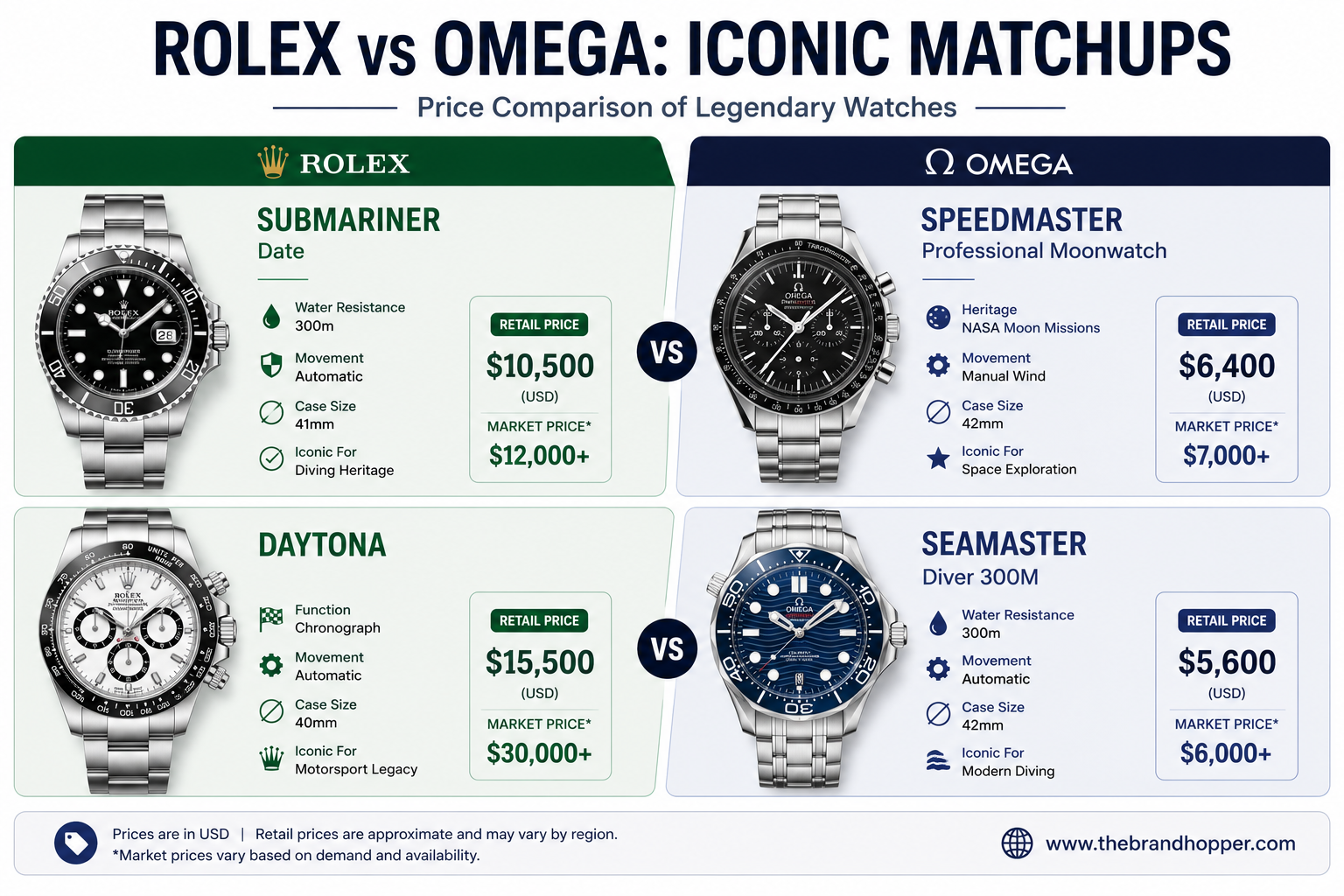
Omega is meaningfully more accessible at the entry level. The Speedmaster Professional Moonwatch typically retails between $5,000 and $6,600, and the Seamaster 300M sits around $5,500. Rolex’s comparable sport models run higher: the steel Submariner retails between roughly $8,000 and $14,000, and the Daytona starts around $15,000.
Beyond price, Rolex’s biggest accessibility problem is availability: Omega watches can generally be bought off the shelf, while popular Rolex models require lengthy waits.
Resale Value & Investment Potential
This is where the two brands diverge most sharply. Rolex’s steel sports models — the Submariner and Daytona especially — routinely sell for 20% to 50% above retail on the secondary market, with sport models overall retaining 80% to 120%+ of their original value. That’s a direct result of Rolex deliberately constraining supply relative to demand.
Omega watches, while well respected, behave more like typical luxury goods: currently produced models trade at roughly 38% below retail on average on the secondary market. If you’re buying a watch partly as a store of value, Rolex has a dramatically stronger track record. If you simply want the best watch for the money you’re spending today, Omega often wins.
Exclusivity & Waiting Lists
Rolex produces an estimated 1 million watches a year (down from a peak closer to 1.2 to 1.3 million), yet deliberately keeps popular models scarce at authorized dealers. Most models carry a 6 to 18 month wait; the steel Daytona alone can take one and a half to three years.
Omega produces roughly 460,000 to 700,000 watches annually and, outside of rare limited editions, is typically available to buy immediately — no waitlist, no relationship-building with a dealer required.
Which Brand Is Best for You?
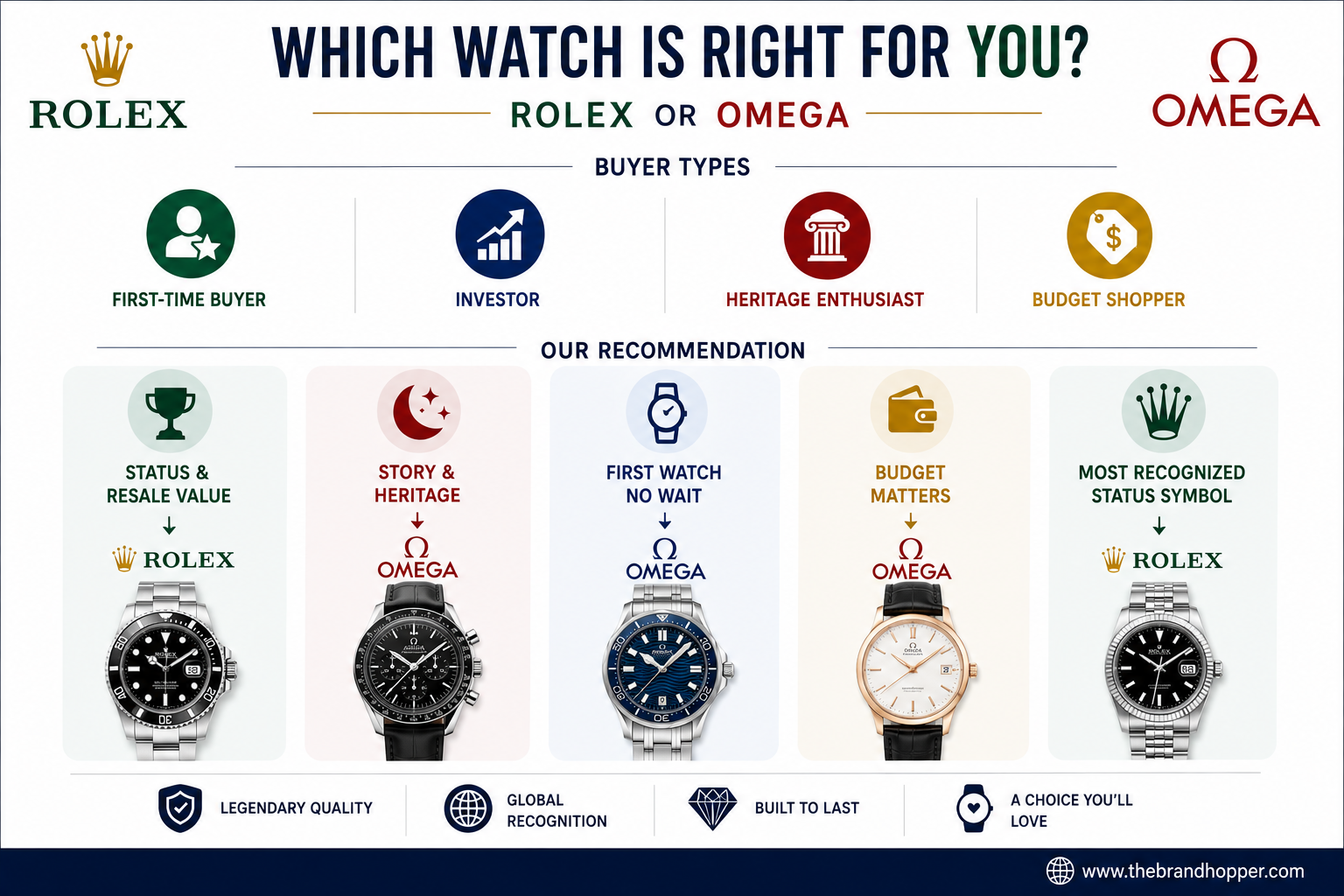
- If status and resale value matter most: Rolex is the clear choice — its scarcity strategy has made certain models genuinely appreciating assets.
- If you want a story-rich watch tied to real history: Omega’s Moonwatch and Olympic heritage are hard to top at any price.
- If you’re buying your first luxury watch and don’t want to wait: Omega gets you a genuinely excellent Swiss watch today, without a dealer waitlist.
- If budget matters: Omega offers more watch, and more brand heritage, per dollar at the entry level.
- If you want the single most universally recognized status symbol: Rolex remains unmatched — even people with no watch knowledge recognize the crown logo.
Rolex vs Omega at a Glance
| Category | Rolex | Omega |
| Owner | Hans Wilsdorf Foundation (private) | Swatch Group (public, SIX: UHR) |
| Founded | 1905, London/Geneva | 1848, La Chaux-de-Fonds |
| Est. annual revenue | ~$12.6 billion | ~2.8 billion CHF (~$3.1B) |
| Annual production | ~1 million watches | ~460,000–700,000 watches |
| Entry sport-watch price | ~$8,000–$14,000 (Submariner) | ~$5,000–$6,600 (Speedmaster) |
| Typical wait time | 6–18 months (Daytona: 1.5–3 years) | Generally available immediately |
| Resale performance | Sport models often sell 20–50% above retail | Typically trades ~38% below retail |
| Signature heritage | Everest 1953, Oyster/Perpetual innovations | Apollo 11 Moon landing 1969, Olympics since 1932, James Bond |
| Best known for | Status, scarcity, investment value | Space heritage, value, accessibility |
Final Verdict
Rolex and Omega are both excellent, genuinely well-engineered Swiss watches, so this isn’t a quality contest — it’s a question of what you’re optimizing for. Rolex’s independent, foundation-owned structure lets it manage scarcity in a way no public company could, and that scarcity is precisely what drives its resale premiums and prestige. Omega, backed by the publicly traded Swatch Group, competes instead on heritage, innovation, and value, offering comparable engineering without the wait or the markup. Neither choice is wrong; they’re simply built for different priorities.
Frequently Asked Questions
Q. Is Rolex better than Omega?
A. It depends on your priority. Rolex generally wins on resale value, exclusivity, and brand status. Omega generally wins on price, availability, and heritage storytelling (notably its Moon landing history). Both are considered top-tier Swiss watchmakers.
Q. Who owns Rolex?
A. Rolex is owned by the Hans Wilsdorf Foundation, a private Swiss charitable foundation established by founder Hans Wilsdorf in 1944. It has no public shareholders and is not part of any luxury conglomerate.
Q. Who owns Omega?
A. Omega is owned by the Swatch Group, a publicly traded Swiss watch and jewelry conglomerate that also owns brands like Longines, Tissot, and Breguet.
Q. Why do Rolex watches hold their value better than Omega?
A. Rolex deliberately limits supply of its most popular models relative to demand, creating consistent waiting lists that push resale prices for models like the Submariner and Daytona above retail. Omega generally has better in-store availability, which reduces secondary-market scarcity and pricing pressure.
Q. Is Omega a good alternative to Rolex?
A. Yes. Omega offers comparable Swiss watchmaking quality, arguably richer historical heritage through NASA and the Olympics, and lower prices with no waiting list, making it a strong choice for buyers who want quality without Rolex’s scarcity-driven markup.
Q. Which brand is more prestigious, Rolex or Omega?
A. Rolex is generally considered the more universally recognized status symbol, largely due to its independent ownership, engineered scarcity, and decades of positioning as the default luxury watch. Omega is highly respected within watch communities but doesn’t carry quite the same mainstream prestige.
Also Read: Timekeeping Titans: Inside Rolex Marketing Strategies and Mix
To read more content like this, explore The Brand Hopper
Subscribe to our newsletter