Last Updated on September 9, 2026 by Team TBH
A food program is almost never short of food. It is short of a refrigerated van, a driver, and the paid hours to stay open when working families can come.
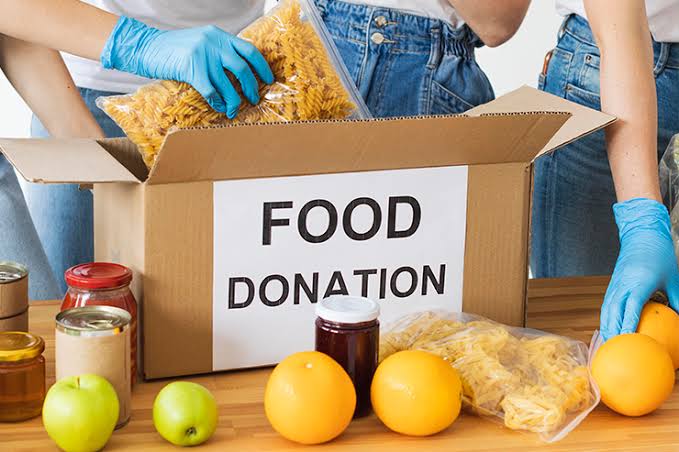
That is not the picture most people carry. The picture is a card table, volunteers in matching shirts, and a wall of donated cans, and it has quietly taught the public that cans are the scarce thing. People who run these programs will tell you the cans are the easy part. Cold storage, miles, and staff time are what run out, and none of the public money for food assistance is shaped to pay for them.
This piece covers what the food costs against what moving it costs, where federal funding goes and where it stops, and why the needs that decide outcomes are the ones that sound like overhead.
What the food costs, and what moving it costs
Before looking at where money comes from, start by separating two costs usually lumped together: the food itself, and everything it takes to move it.
Donated food is the cheap part
Food arrives in a food program by several routes, and most of them are close to free. Surplus from a distributor that could not sell it. A supermarket’s short-dated stock. Whatever comes out of a school drive in November.
That stream is genuinely valuable, and it is also the cheapest part of the operation to sustain. If tonnage were the only problem, the category would have been solved decades ago.
Which makes donated money different in kind from donated cans
Here is the part that gets lost. Donated food is whatever somebody else decided not to sell. Purchased food is the only food an organizer actually chooses.
That distinction matters most where diet is specific. A donation stream is heavy on shelf-stable carbohydrate, thin on produce and protein, and rarely includes halal or kosher goods or the staples a community actually cooks with. Programs that fixed it did so by buying from suppliers who stock it.
Which is roughly why dedicated giving platforms exist: HealthCommons, built only for public health causes, treats food security fundraising as one of them, on the reasoning that money and cans are not interchangeable inputs.
The expensive part is refrigeration and miles
Anything perishable needs a cold chain, and a cold chain is capital. A refrigerated van, its maintenance, its fuel, its driver, and somewhere to plug it in overnight.
Programs without one face a decision that sounds absurd from outside: turning down free produce because there is no way to collect it cold and no way to hold it once collected. The food was available. The infrastructure was not.
If the expensive part is infrastructure, the obvious question is why public food money does not cover it. The answer is in how that money is shaped.
Where public money goes, and where it stops
None of this is because food assistance is unfunded. It is because of how the funding is shaped.
Money on a card, spent at a store
The largest food assistance programs work by putting money on a card that a household spends at a retailer. The design is deliberate and has real advantages: it preserves choice, and it moves buying power rather than boxes.
It also means nothing in that stream reaches the pantry, the van, or the volunteer, because the pantry is not the retailer. The scale of need it addresses is not small. An estimated 13.7% of US households, about 18.3 million of them, were food insecure at some point in 2024, and 5.4% experienced very low food security, according to the USDA Economic Research Service.
Card-based assistance is the main federal answer to that figure, and none of it is operating money for a community organization.
Commodity programs ship product, not capacity
A second route sends bulk commodity food to states for distribution. Useful, and again not money. It arrives as a product, and the product needs exactly the storage and transport that nobody funded.
So the more successful a program is at attracting donated and commodity food, the more logistics cost it takes on. Programs describe growing their way into a cash problem.
School meals stop when school does
School meal programs reimburse per meal served, on the program’s own terms, during the school year. They are one of the most effective food interventions in the country and they have a structural hole in them shaped like July and August.
Filling that hole is almost entirely a local, voluntary, donation-funded activity.
Those are the gaps in the big programs. A second set of gaps sits inside the way every program is measured, and it is less visible.
The parts nobody counts
Nutrition funding counts meals. That accounting decision quietly defines what a food program can afford to do.
Anything that is not a meal has no funder
Helping a household apply for assistance it already qualifies for. The ride to the pantry for someone without a car. An interpreter. A dietitian’s hour. Staying open one evening a week so people with jobs can come.
None of that is a meal, so none of it is reimbursed, and all of it is frequently the actual difference between a household eating and not eating.
Which is why the ask is so hard to make
There is no photograph of an interpreter, and no donor has ever been moved by a paragraph about vehicle maintenance. The needs that are easiest to fund are the ones already best supplied, and the needs that decide outcomes are the ones that sound like overhead.
That mismatch, more than any shortage of generosity, is what shapes the category.
Some programs have stopped fighting that mismatch and started working with it. Two changes in how they raise money have made the biggest difference.
How the funding side is changing
Two things have shifted in how this work gets paid for, and both follow from the same realisation.
Programs have started pricing logistics openly
Instead of asking for food or for general support, more programs now publish the specific unglamorous number: the cost of a year of cold transport, or of one route run weekly, or of the evening opening.
It performs better than the general appeal, for the same reason a builder’s quote beats an estimate. A donor can see what they bought.
Giving has started sorting by cause rather than by platform
The other change is where the ask lives. A general fundraising site treats a food program as one campaign among all possible campaigns, and a donor who cares specifically about hunger has no way to find it. Cause-sorted platforms invert that, which matters more for a need like this than for almost anything else, because the constituency exists and simply cannot locate the work.
The unglamorous version is the accurate one
None of this makes food drives pointless. Donated food feeds people, and the November drive is often how a community first learns the program exists.
It does mean the mental model most of us carry is wrong in a way that affects what gets funded. A food program is not a collection of cans. It is a small logistics company with a social purpose, and its binding constraints are the ones any logistics company has: vehicles, cold, fuel, hours, and someone to answer the phone.
Recognising that changes what a useful contribution looks like. The tinned goods are welcome. What usually stands between a full warehouse and a fed household is a refrigerated van in working order.
To read more content like this, explore The Brand Hopper
Subscribe to our newsletter