Last Updated on September 22, 2026 by Team TBH
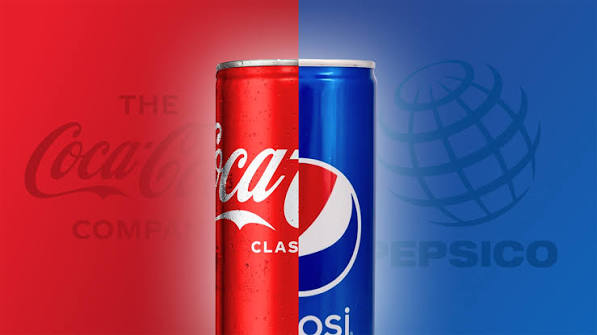
Few corporate rivalries are as old, as culturally embedded, or as endlessly debated as Coca-Cola versus Pepsi.
Grocery store aisles, fast-food fountain contracts, Super Bowl ad slots — for more than a century, these two companies have fought for the same shelf space and the same taste buds.
But “which one is winning” is a more complicated question than a blind taste test can answer, because Coca-Cola and Pepsi aren’t actually the same kind of company anymore.
Here’s the complete picture of how Coca-Cola and PepsiCo actually compare today, from their founding stories through the decades-long “Cola Wars” to their current market share, brand value, and latest earnings.
How It All Began: Two Pharmacists, Two Sodas, One Rivalry
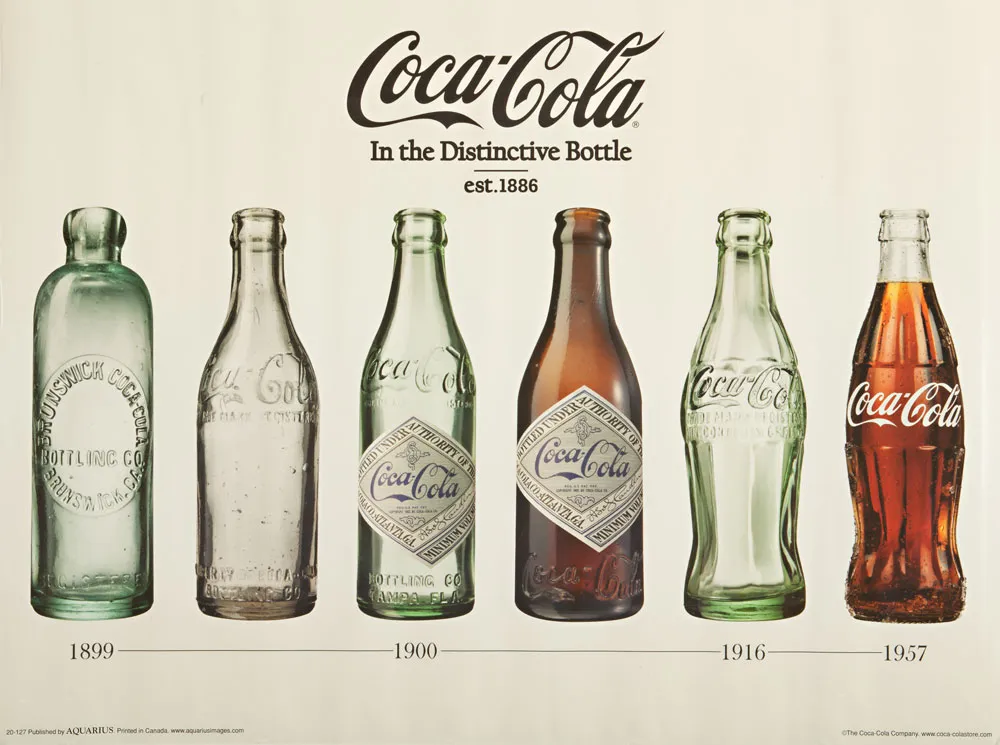
Coca-Cola’s story starts in 1886, when Atlanta pharmacist John S. Pemberton invented a caramel-colored, coca-leaf-and-kola-nut-flavored syrup that he began selling as a soda fountain drink.
Pemberton sold off portions of his rights before his death, and by 1888 the recipe and business had been fully acquired by Asa Griggs Candler, a fellow Atlanta businessman who formally incorporated The Coca-Cola Company in 1892 and built the aggressive distribution and marketing machine that would define the brand for the next century.
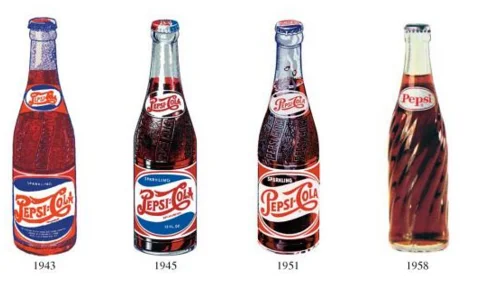
Pepsi’s origin follows a strikingly similar arc: in 1893, New Bern, North Carolina pharmacist Caleb Bradham created a digestive tonic he called “Brad’s Drink,” renaming it Pepsi-Cola in 1898 in reference to the digestive enzyme pepsin, and formally founding the Pepsi-Cola Company in 1902.
From nearly the beginning, the two companies were locked in competition, though for decades it was distinctly uneven — Coca-Cola had far wider distribution, stronger brand recognition, and an early head start exporting internationally, while Pepsi competed primarily on price, positioning itself as the affordable cola alternative for cash-strapped consumers, particularly during the Great Depression.
The Cola Wars: How the Rivalry Became Legendary
What had been a lopsided competition for decades exploded into open corporate warfare during the 1980s, a period now permanently remembered as the “Cola Wars.”
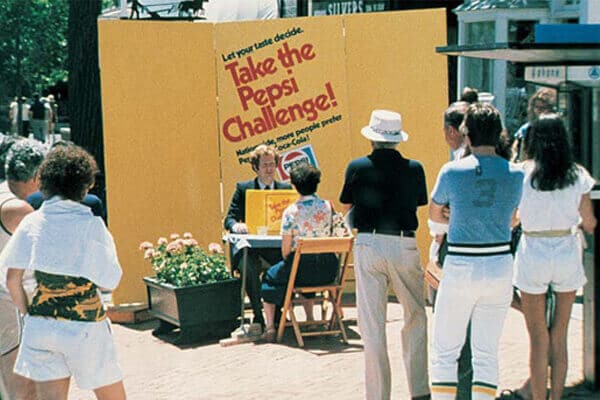
Pepsi fired the opening shot with the “Pepsi Challenge,” a blind taste-test marketing campaign that repeatedly showed consumers preferring Pepsi’s sweeter formula over Coca-Cola’s — a campaign so effective that it rattled Coca-Cola’s leadership into one of the most notorious blunders in marketing history.
In 1985, Coca-Cola discontinued its original formula in favor of “New Coke,” a sweeter recipe designed to beat Pepsi head-to-head in taste tests; the backlash was immediate and fierce, forcing the company to reintroduce the original recipe as “Coca-Cola Classic” within just 79 days.
Throughout the decade, both brands escalated their advertising spending dramatically, enlisting major celebrity endorsements (Pepsi famously signed Michael Jackson) and pouring resources into increasingly elaborate television campaigns, cementing cola marketing as one of the defining battlegrounds of consumer advertising for the rest of the 20th century.
While the fiercest years of the Cola Wars have cooled, the underlying rivalry between the two companies remains very much alive today, playing out through retail shelf placement, fast-food exclusivity contracts, and sponsorship battles rather than head-to-head ad campaigns.
Market Share: Coca-Cola’s Enduring Advantage in Soda
Despite decades of competition, Coca-Cola has never actually lost its position as the world’s dominant soft drink brand.
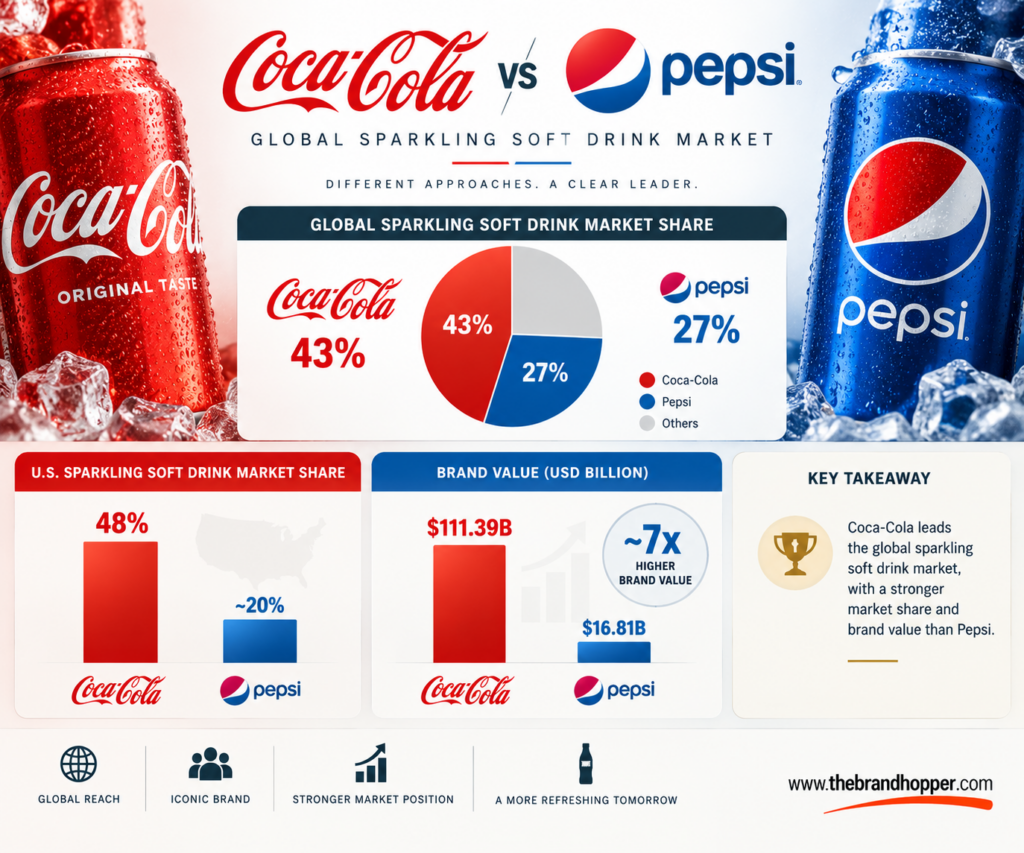
Coca-Cola’s volume share of the global sparkling (carbonated) soft drink category is estimated at approximately 43%, while in the U.S. specifically — the category’s most closely tracked market — Coca-Cola has held roughly 48% of total carbonated soft drink sales, more than double Pepsi’s domestic share.
That gap becomes even starker when measured by brand value rather than volume: independent brand valuation research places Coca-Cola’s brand worth at approximately $111.39 billion, compared to Pepsi’s $16.81 billion — a gap of nearly seven times, reflecting not just market share but decades of more consistent, globally unified brand messaging around the Coca-Cola name itself, in contrast to PepsiCo’s more fragmented, multi-brand approach to its beverage portfolio.
Beyond Soda: Why PepsiCo Is Actually the Bigger Company
Here’s where the comparison gets genuinely interesting: despite trailing badly in the cola category itself, PepsiCo is the larger overall corporation by total revenue.
That’s because PepsiCo made a strategic decision decades ago that Coca-Cola largely avoided — diversifying heavily beyond beverages into snack foods.
PepsiCo’s portfolio includes Frito-Lay (Lay’s, Doritos, Cheetos, Tostitos), Quaker Oats, Gatorade, Tropicana (partially divested), and a wide range of other food and snack brands, with roughly 60% of PepsiCo’s total business now coming from food products and only about 40% from beverages.
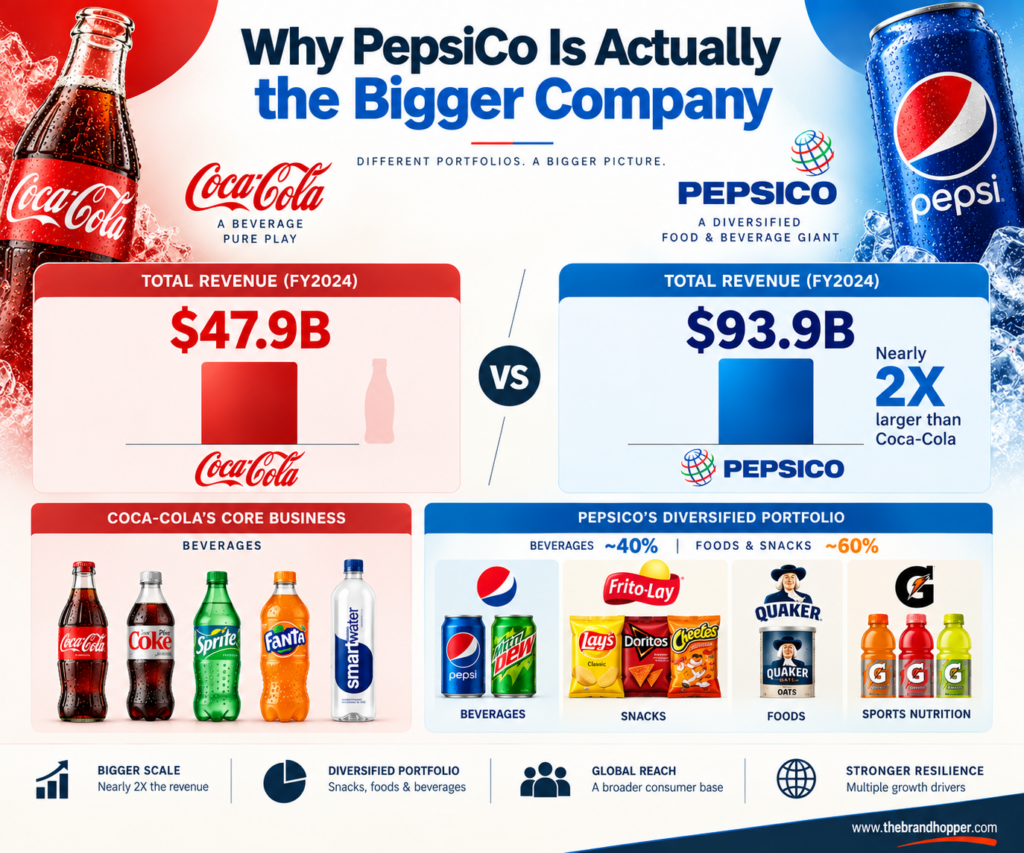
This diversification strategy has made PepsiCo a genuinely different kind of company than Coca-Cola — less a pure beverage business and more a diversified global consumer packaged goods giant that happens to also sell cola — and it shows up directly in the topline numbers, with PepsiCo’s total revenue of $93.93 billion running nearly double Coca-Cola’s $47.9 billion, even though Coca-Cola dominates the beverage category both companies originally competed in.
Leadership: Quincey vs. Laguarta
Both companies are currently led by experienced company veterans steering very different strategic priorities.
James Quincey has served as Chairman and CEO of The Coca-Cola Company, overseeing a period of renewed operational focus following years of portfolio simplification (Coca-Cola shed dozens of smaller, underperforming brands over the past decade to concentrate on its highest-potential names), with Quincey specifically highlighting the “resilience and momentum” reflected in the company’s most recent full-year results.

Ramon Laguarta has served as PepsiCo’s Chairman and CEO since 2018 and 2019 respectively, having joined the company back in 1996 and risen through leadership roles across multiple international markets before taking the top job; under Laguarta, PepsiCo has continued to lean into its diversified food-and-beverage model while navigating cost pressures that weighed on the company’s most recent profitability.

Financial Performance: The Latest Scorecard
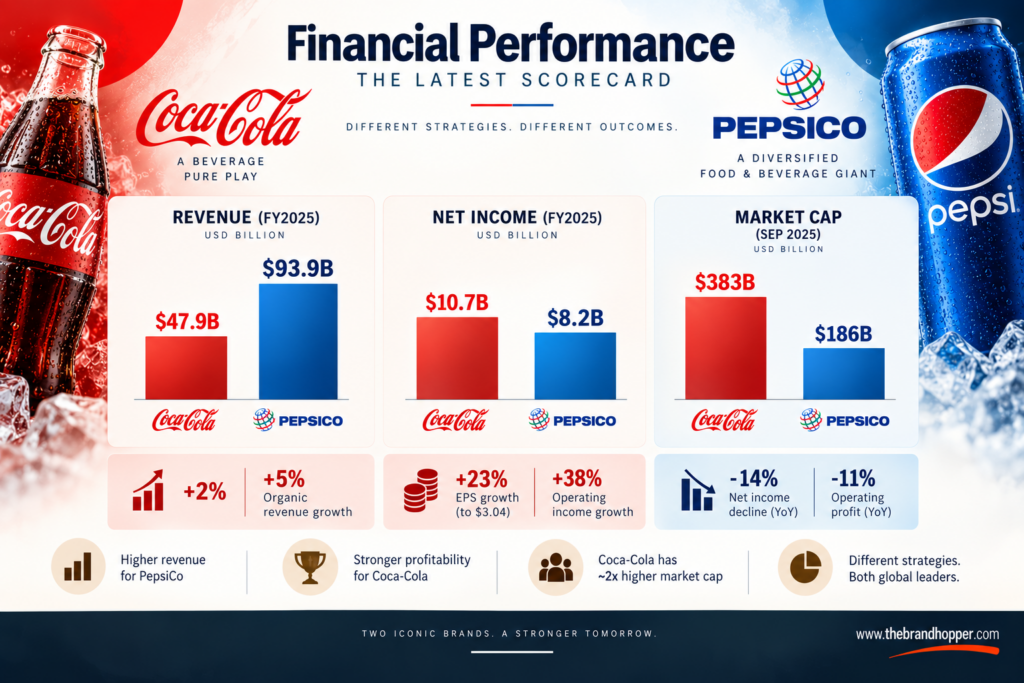
The two companies’ most recent full-year results underscore just how differently their respective strategies are playing out financially.
The Coca-Cola Company reported full-year net revenues of $47.9 billion, up 2% overall with organic revenue growth of 5%, alongside full-year EPS growth of 23% to $3.04 (comparable EPS up 4% to $3.00) and operating income growth of 38%, reflecting a business that, despite modest topline growth, is converting that growth into strong bottom-line profitability.
PepsiCo, by contrast, generated total revenue of $93.93 billion, an increase over the prior year’s $91.85 billion, but net income actually declined to $8.24 billion from $9.58 billion the year before, with operating profit down 11% to $11.5 billion, a drop the company attributed to rising operating costs, specific impairment charges, and elevated commodity costs.
In market value terms, Coca-Cola’s stock market capitalization of roughly $383-396 billion is more than double PepsiCo’s approximately $186-190 billion, reflecting investors’ preference for Coca-Cola’s higher-margin, more profitable beverage-first model even though PepsiCo generates significantly more total revenue.
Global Reach: Distribution, Bottling, and International Presence
Part of Coca-Cola’s enduring market share advantage traces directly back to its distribution model.
Coca-Cola operates through a vast global network of independent and company-owned bottling partners, a structure the company began building more than a century ago that today allows Coca-Cola products to reach over 200 countries and territories, often cited as more than the number of countries recognized by the United Nations.
This bottler network gives Coca-Cola deep, locally embedded distribution infrastructure in markets ranging from remote rural regions to dense urban centers, a logistical advantage that’s genuinely difficult for competitors to replicate quickly.
PepsiCo also maintains an extensive international footprint, particularly strong across snack food distribution alongside its beverage business, but its beverage-specific global reach has historically trailed Coca-Cola’s in both depth and market penetration, especially outside North America and Latin America, where Pepsi has traditionally been more competitive.
This distribution gap helps explain why, even in markets where blind taste tests have sometimes favored Pepsi’s sweeter formula, Coca-Cola has usually maintained the larger overall market share — availability and shelf presence matter as much as taste preference when it comes to actual purchasing behavior.
Which Brand Actually “Leads” the Market?
The honest answer depends entirely on what “leading” means to you.
If the question is about the soft drink category specifically — market share, brand value, consumer mindshare — Coca-Cola is unambiguously the winner, and has been for well over a century, with a global sparkling beverage share nearly five times larger than Pepsi’s and a brand value roughly seven times greater.
But if the question is about overall corporate scale and revenue diversification, PepsiCo is actually the bigger business, generating nearly double Coca-Cola’s total revenue thanks to its dominant snack food portfolio sitting alongside its beverage business.
Investors, meanwhile, have historically rewarded Coca-Cola’s more focused, higher-margin model with a substantially higher market valuation despite its smaller revenue base — a signal that profitability and brand strength, not just topline size, ultimately drive how Wall Street scores this decades-long rivalry.
Coca-Cola vs. Pepsi at a Glance
| Category | Coca-Cola | PepsiCo |
| Founded | 1886 (Atlanta, Georgia) | 1898 (New Bern, North Carolina) |
| Founder | John S. Pemberton | Caleb Bradham |
| Global sparkling drink share | ~43% | Significantly smaller (distant #2) |
| U.S. carbonated drink share | ~48% | Less than half of Coca-Cola’s share |
| Brand value | ~$111.39 billion | ~$16.81 billion |
| 2025 total revenue | $47.9 billion | $93.93 billion |
| 2025 net income / EPS | EPS $3.04 (+23%) | $8.24 billion (down from $9.58B) |
| Business mix | ~Almost entirely beverages | ~60% food, ~40% beverages |
| 2026 market capitalization | ~$383-396 billion | ~$186-190 billion |
| CEO | James Quincey | Ramon Laguarta |
| Key non-soda brands | Minute Maid, Sprite, Fanta, smartwater | Frito-Lay, Quaker, Gatorade, Tropicana |
Key Takeaways
More than a century after two pharmacists in different states invented competing sodas, Coca-Cola remains the clear leader in the beverage category itself — commanding roughly 43% of global sparkling soft drink volume and a brand value near $111.39 billion, versus Pepsi’s $16.81 billion — while PepsiCo has quietly become the larger overall corporation by leaning hard into snacks and food, generating nearly double Coca-Cola’s total revenue at $93.93 billion.
Financially, Coca-Cola posted stronger profitability in its latest full year, with EPS growth of 23% and a market capitalization more than double PepsiCo’s, even as PepsiCo’s own net income declined amid rising costs.
Under CEOs James Quincey and Ramon Laguarta respectively, both companies continue pursuing distinctly different strategies — Coca-Cola doubling down on beverage focus and brand strength, PepsiCo leaning into diversification — making direct comparison less about a single winner and more about which metric you value most.
Frequently Asked Questions
Q: Which company has a bigger market share, Coca-Cola or Pepsi?
A: Coca-Cola holds a significantly larger market share in soft drinks specifically, with an estimated 43% of global sparkling soft drink volume and roughly 48% of the U.S. carbonated soft drink market, more than double Pepsi’s share in both cases.
Q: Which is worth more, Coca-Cola or PepsiCo?
A: As a brand, Coca-Cola is worth far more, valued at approximately $111.39 billion versus Pepsi’s $16.81 billion. As a company by market capitalization, Coca-Cola is also larger at roughly $383-396 billion versus PepsiCo’s $186-190 billion.
Q: Which company makes more revenue, Coca-Cola or PepsiCo?
A: PepsiCo generates significantly more total revenue — $93.93 billion versus Coca-Cola’s $47.9 billion — because PepsiCo’s business includes major snack and food brands like Frito-Lay and Quaker Oats alongside beverages, while Coca-Cola remains almost entirely beverage-focused.
Q: Who founded Coca-Cola and Pepsi?
A: Coca-Cola was invented in 1886 by Atlanta pharmacist John S. Pemberton and later built into a company by Asa Griggs Candler. Pepsi was created in 1893 by New Bern, North Carolina pharmacist Caleb Bradham, who founded the Pepsi-Cola Company in 1902.
Q: What were the Cola Wars?
A: The Cola Wars refer to the intense marketing rivalry between Coca-Cola and Pepsi that peaked in the 1980s, including Pepsi’s “Pepsi Challenge” blind taste tests and Coca-Cola’s disastrous 1985 “New Coke” reformulation, which was reversed within 79 days due to consumer backlash.
Q: Who are the CEOs of Coca-Cola and PepsiCo?
A: James Quincey serves as Chairman and CEO of The Coca-Cola Company. Ramon Laguarta has served as PepsiCo’s CEO since 2018 and Chairman since 2019, after joining the company in 1996.
Q: Does PepsiCo own more brands than Coca-Cola?
A: PepsiCo’s portfolio is more diversified, spanning both beverages and snack foods (including Frito-Lay, Quaker Oats, and Gatorade), with roughly 60% of its business coming from food products. Coca-Cola has simplified its portfolio in recent years to focus more narrowly on its strongest beverage brands.
Q: Is Coca-Cola more profitable than PepsiCo?
A: Coca-Cola posted stronger recent profitability, with full-year EPS growth of 23%, while PepsiCo’s net income declined to $8.24 billion from $9.58 billion the prior year amid rising operating costs and commodity pressures.
Also Read: Who Owns Pepsi? Parent Company & Brands
Also Read: Who Owns Coca-Cola? Major Shareholders Explained
To read more content like this, subscribe to our newsletter