Last Updated on September 29, 2026 by Team TBH
Few technology brands carry as much history as HP, whose origins are deeply connected to the early development of Silicon Valley. But the HP consumers interact with today — the company behind PCs, printers and related solutions — is a different legal entity from the enterprise technology company Hewlett Packard Enterprise, following the historic 2015 separation of Hewlett-Packard.
HP Inc. is a publicly traded company listed on the New York Stock Exchange under the ticker HPQ. Its ownership is primarily institutional, with no single shareholder holding a controlling stake. The company is currently led by Interim CEO Bruce Broussard following the departure of Enrique Lores in early 2026.
Here is the picture of who owns HP Inc., how the company emerged from the 2015 split, who runs it today and how its financial performance has developed heading into the end of fiscal 2026
How HP Began: The Garage That Started Silicon Valley
HP’s origin story begins with Bill Hewlett and Dave Packard, who met while studying engineering at Stanford University in the 1930s and subsequently became close friends and business partners.
In 1939, Hewlett and Packard formally established their business partnership with approximately $538 in capital and equipment. They began operating from a small garage at 367 Addison Avenue in Palo Alto, California, a location that has since become one of the most famous landmarks associated with Silicon Valley.
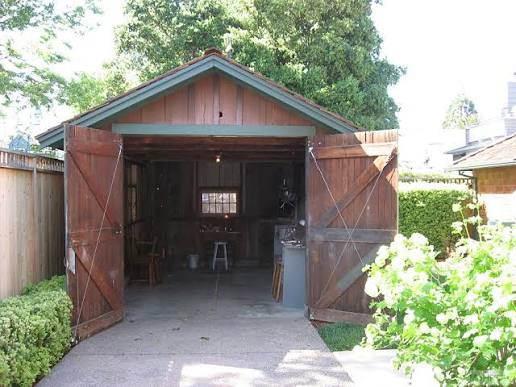
The two founders reportedly decided the order of their names through a coin toss, with Hewlett winning — resulting in the name Hewlett-Packard.
The company’s first major product was an audio oscillator, an electronic test instrument that was relatively inexpensive compared with competing products at the time. Walt Disney Studios became one of HP’s early customers, purchasing oscillators for work related to the sound system used in the 1940 animated film Fantasia.
From that modest beginning, Hewlett-Packard expanded over the following decades into computers, printers, servers, networking equipment, software and enterprise technology, becoming one of the world’s largest technology companies.
The original Hewlett-Packard business eventually became too broad to operate as a single focused technology company, setting the stage for one of the most important corporate separations in the industry’s history.
The 2015 Split: HP Inc. and Hewlett Packard Enterprise
The defining event in understanding modern HP is the separation of the original Hewlett-Packard Company into two independent publicly traded businesses.
The separation became effective on November 1, 2015.
HP Inc. retained the company’s personal systems and printing operations — the businesses most consumers associate with the HP name. These include personal computers, notebooks, desktops, workstations, printers and related products and services.
Hewlett Packard Enterprise, or HPE, became the separate enterprise technology company, focusing on areas including servers, storage, networking and other enterprise infrastructure and services.
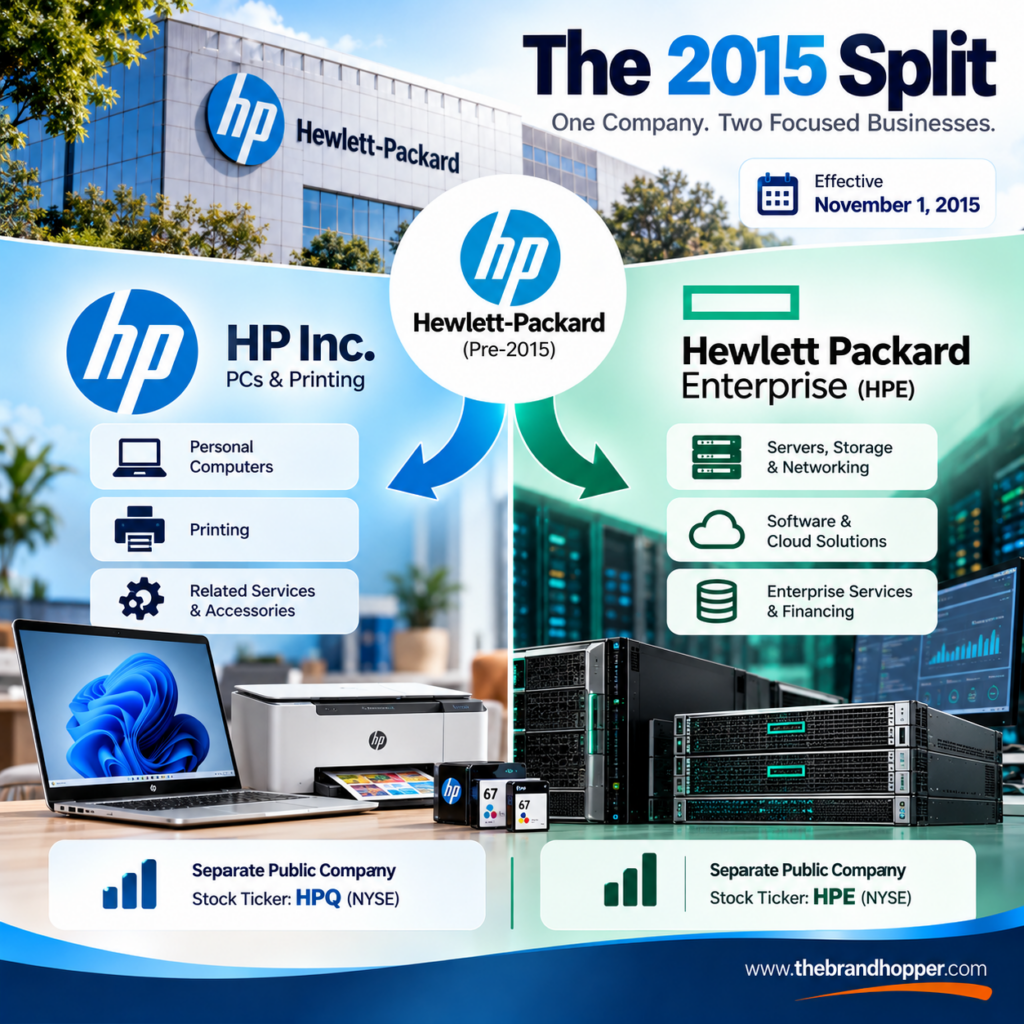
The separation created two independent public companies with different stock tickers, boards, management teams and strategic priorities.
Existing shareholders of the original Hewlett-Packard Company received ownership interests in both resulting companies as part of the separation.
Today, HP Inc. and Hewlett Packard Enterprise are completely separate publicly traded companies despite sharing the same corporate heritage and the Hewlett-Packard name.
Who Owns HP Inc. Today? A Widely Dispersed Institutional Shareholder Base
HP Inc. does not have a controlling shareholder.
The company’s ownership is dominated by institutional investors, particularly large asset-management firms. HP’s 2026 proxy statement identified three shareholders with beneficial ownership of more than 5% of the company’s outstanding common stock, based on the information available to HP:
- The Vanguard Group — approximately 14.2%
- BlackRock, Inc. — approximately 9.6%
- State Street Corporation — approximately 5.7%
The proxy statement notes that some of these ownership figures were based on earlier SEC Schedule 13G filings and therefore may not represent the exact holdings on the date of publication. Nevertheless, they provide the company’s latest disclosed picture of its major beneficial owners.
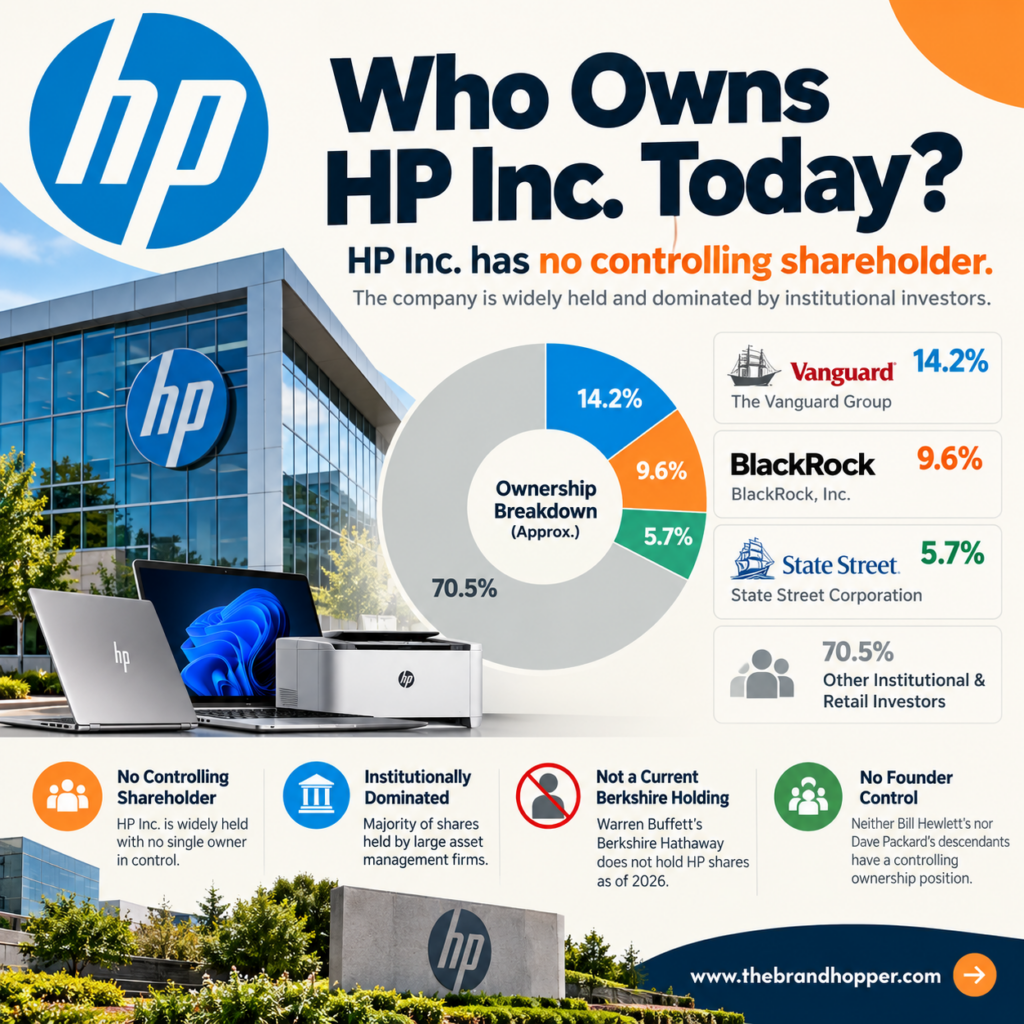
Importantly, Warren Buffett’s Berkshire Hathaway is not a current major shareholder of HP Inc. Berkshire previously held a substantial HP position, but its latest Form 13F filing covering June 30, 2026 does not report an HP Inc. position.
This means HP’s current ownership structure is best described as institutionally dominated and widely held, rather than founder-controlled, family-controlled or controlled by an activist investor.
Neither Bill Hewlett’s nor Dave Packard’s descendants have a controlling ownership position in modern HP Inc.
Leadership: Enrique Lores and HP’s “Future of Work” Strategy
HP’s leadership underwent a major change in early 2026.
Enrique Lores, who had served as HP’s President and CEO since November 2019, stepped down from the company effective February 3, 2026, to pursue another professional opportunity. He subsequently became President and CEO of PayPal.
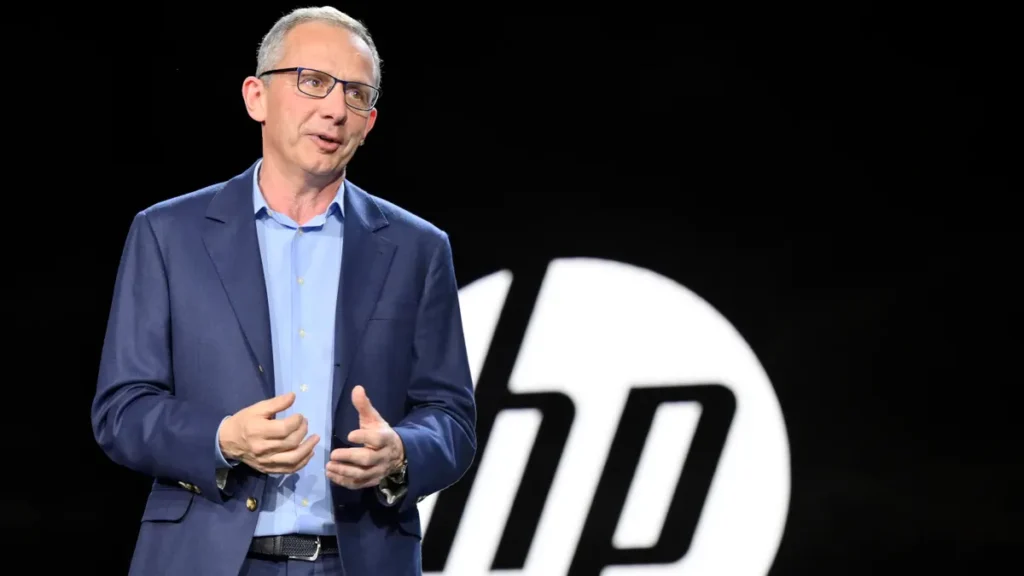
HP appointed Bruce Broussard, a member of HP’s board since 2021 and former CEO of Humana, as Interim CEO effective February 3, 2026. HP’s board also established a CEO Search Committee and retained an executive search firm to assist with finding a permanent successor.
As of September 29, 2026, Bruce Broussard remains Interim Chief Executive Officer of HP Inc. HP’s current executive leadership page continues to identify him in that role.
Broussard brings more than three decades of leadership experience across public companies, healthcare, international business and technology-enabled transformation.
Chip Bergh continues to serve as Chair of HP’s Board of Directors.
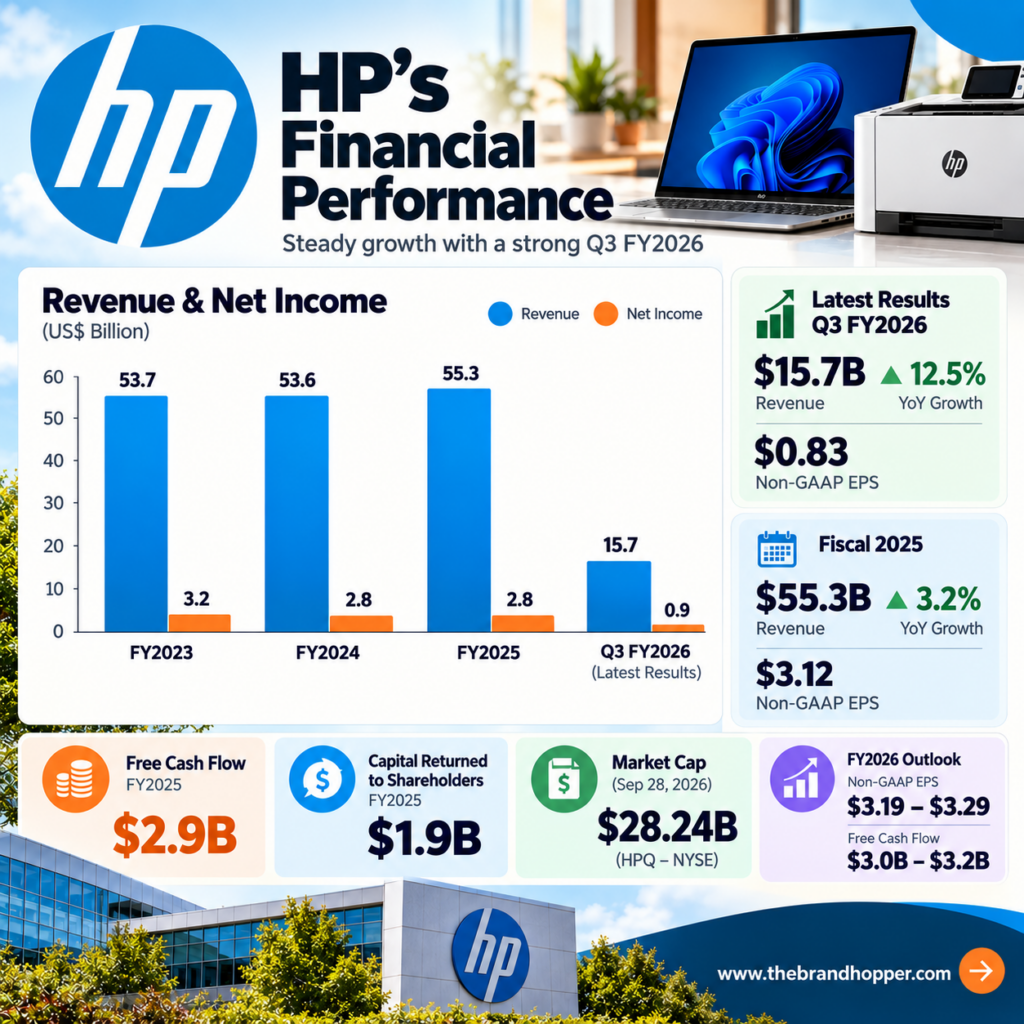
HP’s Financial Performance
HP’s fiscal year ends on October 31.
The company’s latest completed fiscal year is fiscal 2025, but its most recent financial information comes from its fiscal 2026 third-quarter results, released on August 26, 2026.
HP’s Market Value in 2026
HP Inc. trades on the New York Stock Exchange under the ticker HPQ.
At the September 28, 2026 market close, HP Inc. had a market capitalization of approximately $28.24 billion, based on a closing share price of $31.32.
Market capitalization changes continuously with HP’s share price, so this figure represents a dated snapshot rather than a permanent valuation.
HP remains one of the world’s major personal-computing and printing companies. In personal computing, it competes with companies such as Dell Technologies and Lenovo, while its printing business competes with companies including Canon, Epson and Brother.
Why HP’s Ownership Structure Matters
HP’s ownership structure is primarily institutional rather than founder- or family-controlled.
The company’s latest proxy identifies The Vanguard Group, BlackRock and State Street as the three disclosed beneficial owners holding more than 5% of HP’s outstanding shares.
This means that HP’s shareholder base is spread across major asset managers and other institutional and individual investors rather than being controlled by the Hewlett or Packard families.
At the same time, HP is navigating an important leadership transition. Bruce Broussard is currently serving as Interim CEO while the company searches for a permanent successor.
Operationally, HP is also dealing with changes across the PC and printing markets, including demand for AI-enabled PCs, higher component costs, memory supply constraints and tariff-related pressures.
The company’s latest results show particularly strong growth in Personal Systems, while Printing remains under greater pressure. In Q3 FY2026, Personal Systems revenue increased 18%, compared with a 2% decline in Printing revenue.
The “HP Way” and Its Lasting Influence on Corporate Culture
Beyond its ownership structure and financial performance, HP’s founding era left a lasting mark on corporate culture through what became known as the “HP Way.”
Developed under Bill Hewlett and Dave Packard, the management philosophy emphasized trust in employees, decentralized decision-making, open communication and management by walking around.
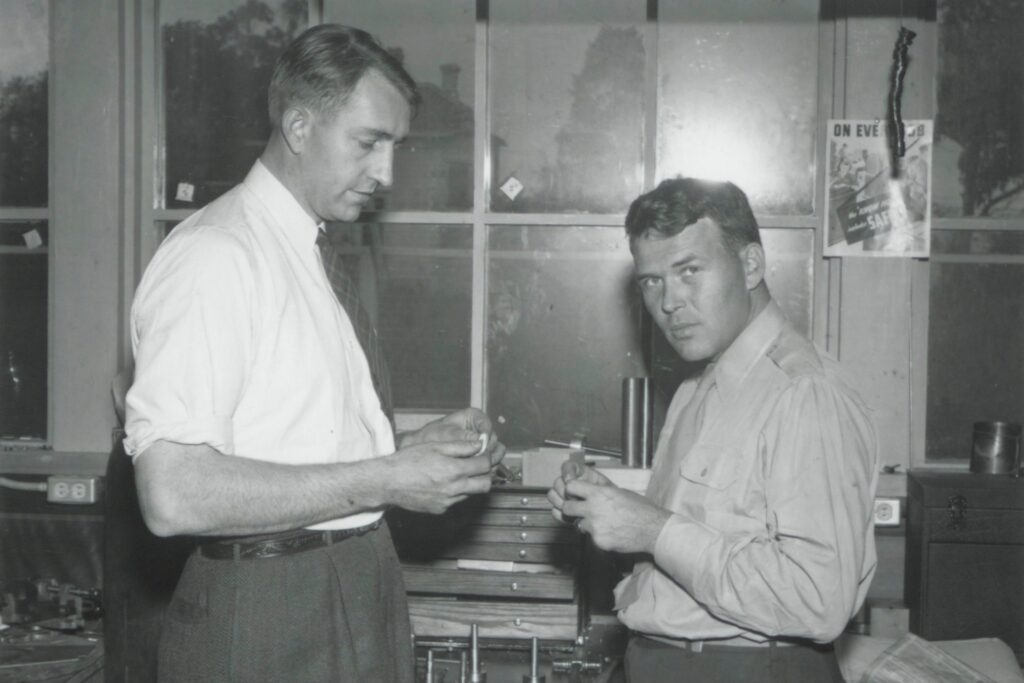
The HP Way became one of the most frequently cited examples of Silicon Valley management culture and influenced how many technology companies thought about employee autonomy and organizational structure.
Practices associated with the HP Way included flexible working arrangements, employee participation in company success and an emphasis on communication between management and employees.
The modern HP Inc. is far larger and structurally different from the company Hewlett and Packard created in 1939. It is now a publicly traded corporation with a predominantly institutional shareholder base and two principal operating businesses: Personal Systems and Printing.
Nevertheless, the founders’ management philosophy remains an important part of HP’s historical and corporate identity.
HP Inc. Ownership at a Glance
| Category | Detail |
|---|---|
| Founded | 1939 |
| Founders | Bill Hewlett and Dave Packard |
| Headquarters | Palo Alto, California |
| First major product | Audio oscillator |
| 2015 corporate split | Hewlett-Packard separated into HP Inc. and Hewlett Packard Enterprise |
| Stock listing | NYSE: HPQ |
| Largest disclosed shareholder | The Vanguard Group — ~14.2% |
| Other disclosed >5% holders | BlackRock — ~9.6%; State Street — ~5.7% |
| Current controlling shareholder | None |
| Current CEO | Bruce Broussard — Interim CEO |
| Former CEO | Enrique Lores — departed in February 2026 |
| Board Chair | Chip Bergh |
| Core businesses | Personal Systems and Printing |
| Sister company | Hewlett Packard Enterprise (HPE) |
| FY2025 revenue | $55.3 billion |
| FY2025 GAAP diluted EPS | $2.65 |
| FY2025 free cash flow | $2.9 billion |
| Q3 FY2026 revenue | $15.7 billion |
| Q3 FY2026 revenue growth | +12.5% YoY |
| Q3 FY2026 Personal Systems revenue | $11.8 billion |
| Q3 FY2026 Printing revenue | $3.9 billion |
| FY2026 adjusted EPS outlook | $3.19–$3.29 non-GAAP |
| FY2026 free cash flow outlook | $3.0–$3.2 billion |
| Market capitalization | ~$28.24 billion as of Sept. 28, 2026 |
Key Takeaways
HP Inc.’s ownership story traces back to one of Silicon Valley’s most famous founding partnerships — the 1939 business created by Bill Hewlett and Dave Packard.
The modern HP Inc. emerged from the November 2015 separation of the original Hewlett-Packard Company into HP Inc. and Hewlett Packard Enterprise. HP Inc. retained the personal-computing and printing businesses, while HPE became the separate enterprise infrastructure company.
Today, HP Inc. is primarily owned by institutional investors. Its 2026 proxy identified The Vanguard Group at approximately 14.2%, BlackRock at approximately 9.6% and State Street Corporation at approximately 5.7% as the three disclosed beneficial owners with holdings above 5%.
Warren Buffett’s Berkshire Hathaway is no longer a major HP shareholder. Berkshire previously held HP shares, but its latest Form 13F for June 30, 2026 reports no HP Inc. position.
HP’s leadership also changed significantly in 2026. Enrique Lores departed as CEO, and Bruce Broussard was appointed Interim CEO on February 3, 2026. As of September 29, 2026, Broussard remains in that role while HP conducts its search for a permanent CEO.
Financially, HP generated $55.3 billion in fiscal 2025 revenue and $2.9 billion in free cash flow. Its latest quarterly results show stronger momentum in fiscal 2026: Q3 revenue reached $15.7 billion, up 12.5% year over year, driven primarily by strong Personal Systems performance.
Personal Systems revenue increased 18% to $11.8 billion, while Printing revenue declined 2% to $3.9 billion. HP subsequently raised its fiscal 2026 earnings and free-cash-flow outlook.
At the September 28, 2026 market close, HP’s market capitalization was approximately $28.24 billion.
The modern HP is therefore best understood as a widely held public technology company with predominantly institutional ownership, a separate enterprise sibling in HPE, a leadership transition underway, and a business increasingly focused on AI-enabled personal computing while continuing to operate its large global printing business.
Frequently Asked Questions
Q: Who owns HP Inc.?
A: HP Inc. is a publicly traded company with no controlling shareholder. Its ownership is primarily institutional. HP’s 2026 proxy identified The Vanguard Group at approximately 14.2%, BlackRock at approximately 9.6%, and State Street Corporation at approximately 5.7% as the disclosed beneficial owners holding more than 5% of HP’s outstanding shares. These percentages are based on the ownership information available to HP for its 2026 proxy and may not represent each institution’s exact current position.
Q: Who founded HP?
A: HP was founded by Bill Hewlett and Dave Packard in 1939. The two engineers established their business partnership in Palo Alto, California, initially operating from a garage at 367 Addison Avenue. The company became Hewlett-Packard, with the order of the founders’ names reportedly determined by a coin toss won by Hewlett. Their first major product was an audio oscillator, which helped establish HP as an electronics and test-equipment company.
Q: Is HP Inc. the same company as Hewlett Packard Enterprise?
A: No. The original Hewlett-Packard Company separated into two independent publicly traded companies on November 1, 2015. HP Inc. retained the personal systems and printing businesses, while Hewlett Packard Enterprise (HPE) became the separate enterprise technology company focused on areas including servers, storage, networking and other enterprise infrastructure and services.
Q: Does Warren Buffett own HP stock?
A: Berkshire Hathaway previously held a large position in HP Inc., but the previously reported approximately 10.70% stake is no longer accurate. Berkshire’s principal Form 13F filing for the quarter ended June 30, 2026 does not list HP Inc. as a holding. A separate Berkshire-related 13F filing reported 8.46 million HP shares for the quarter ended March 31, 2026, so Berkshire’s historical HP position should not be described as a current 10.70% ownership stake.
Q: Who is HP’s CEO?
A: Bruce Broussard is HP Inc.’s Interim Chief Executive Officer. He was appointed to the role in February 2026 following Enrique Lores’s departure. Broussard previously served as President and CEO of Humana and has been a member of HP’s board since 2021. As of September 29, 2026, HP continues to identify Broussard as its Interim CEO.
Q: What was HP’s revenue in its most recent fiscal year?
A: HP Inc. reported fiscal 2025 net revenue of $55.3 billion, up 3.2% year over year. However, the latest financial information is now from fiscal 2026. In Q3 FY2026, HP reported $15.7 billion in net revenue, up 12.5% year over year. For the first nine months of fiscal 2026, revenue reached approximately $44.5 billion. Q3 FY2026 GAAP net earnings were approximately $0.66 billion, compared with $0.76 billion in the prior-year quarter.
Q: What was HP’s first product?
A: HP’s first major product was an audio oscillator, an electronic test instrument developed by Bill Hewlett and Dave Packard. Walt Disney Studios became one of HP’s early customers and purchased HP oscillators for work associated with the sound system used in the 1940 animated film Fantasia.
Q: Is HP a family-controlled company?
A: No. HP Inc. is a widely held public company and is not controlled by the Hewlett or Packard families. Its largest disclosed beneficial owners are institutional investors, including The Vanguard Group, BlackRock and State Street. No individual shareholder or founding family is disclosed as having a controlling ownership position.
Also Read: History, Financials And Marketing Strategies Of HP
To read more content like this, subscribe to our newsletter