
Last Updated on November 9, 2026 by Team TBH
Open ChatGPT and ask for the best tools in your category. If your product is not in the first few names, your Google rankings don’t matter much to that buyer. Many SaaS brands rank well and still miss AI answers.
AI tools pull from more than your site. They weigh third-party reviews, comparison pages, forum threads, and how clearly the web describes what you sell. Fixing that takes technical SEO, original content, and outside mentions working together. More generic blog posts just won’t do it.
We reviewed 14 SaaS SEO agencies to help you find a partner that can get your product named in AI answers, not just ranked on Google.
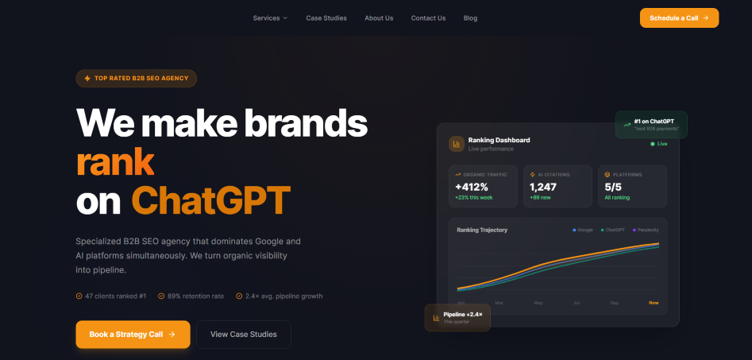
B2BSEO.io
B2BSEO.io is a B2B-focused SEO agency for SaaS companies that want search visibility to contribute to demos and pipeline, not just more sessions. The agency’s work includes AI visibility analysis, content, internal linking, digital PR, and link-building, with attention to how brands appear in Google and AI-generated answers.
Where B2BSEO.io Stands Out
The agency connects traditional SEO with AI visibility work instead of managing them as separate campaigns. It can include strengthening commercial pages, such as product, comparison, and alternative pages, while building the content and brand authority that help buyers find and recognize a company in search and AI answers.
B2BSEO.io also tracks AI-platform visits and mentions alongside organic performance.
What the Evidence Says
B2BSEO.io reports more than 20 B2B case studies, including TrackDesk, where monthly clicks grew from about 100 to 5,000, and FeedBird, where organic clicks rose 66% to 49.4K in six months.
FeedBird also recorded 600 AI-assistant sessions in 28 days. These examples show growth in search and AI-related activity; prospective clients should ask how the agency defines and attributes AI visibility, and how it connects those signals to qualified leads or pipeline.
The agency also has a 5.0 rating across 7 Clutch reviews and 50+ five-star Upwork reviews. Engagements are month-to-month, with custom pricing.
What to Ask Before Hiring
- Which AI visibility metrics will you track, and how will you report them alongside leads and pipeline?
- What work would you prioritize for our product, comparison, and alternative pages?
- Can you show a case study from a SaaS company with a similar sales cycle and buyer?
- How will you distinguish AI-referred visits and mentions from qualified demand?
Who May Want to Compare Other Options?
B2BSEO.io is built for B2B companies, including SaaS brands. Companies looking for a full-service marketing partner, a content-only provider, or SEO for a consumer-focused business may find a different agency setup more suitable.
Omniscient Digital
Omniscient Digital builds organic growth programs for B2B SaaS companies, and it puts SEO, GEO, content, digital PR, analytics, and conversion work into one system. They talk about pipeline and recurring revenue, which we find more useful than an agency that promises more traffic and stops there.
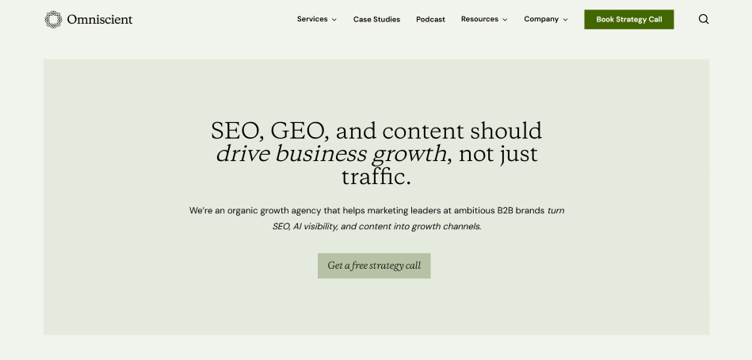
Where Omniscient Digital Stands Out: GEO gets its own strategy and its own measurement process. The work can include LLM visibility audits, competitor citation analysis, technical roadmaps, content engineering, and digital PR. They then tie AI citations to downstream pipeline signals, so you aren’t handed a single visibility score with no business context.
What the Evidence Says: Omniscient Digital helped Convert raise LLM visibility by 81% and AI citations by 140% in 60 days. Their B2B SaaS work also includes $3.7 million in pipeline for Smartling and 810% organic growth for Jasper.
What to Ask Before Hiring: Full-service engagements start at $10,000 per month. Ask which parts of the program get the most budget and who owns implementation, because a proposal can look complete while technical changes or conversion work stays with the client.
Who May Want to Compare Other Options: Early-stage SaaS companies that are still working out their ideal customer profile or positioning may struggle to justify the spend.
The agency fits better when a company has product-market fit, reliable sales data, and enough internal support to act on an organic growth program.
Discovered Labs
Discovered Labs treats AI visibility as its own acquisition channel. They build high-volume content and technical programs for B2B SaaS companies that want to be named in ChatGPT, Claude, Perplexity, and traditional search.
Their CITABLE framework covers answer modeling, entity mapping, structured data, backlinks, and content production.
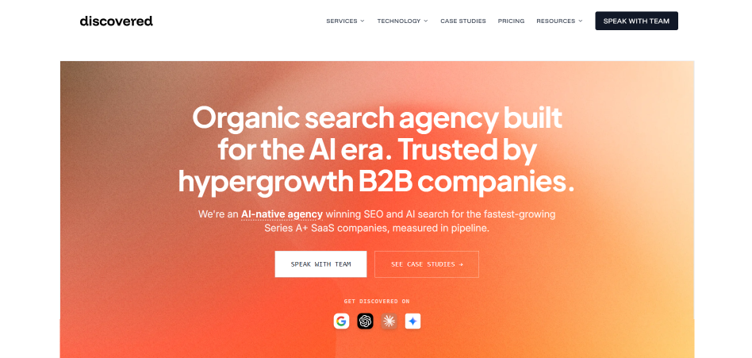
Where Discovered Labs Stands Out: Few agencies publish an AEO offer this clearly packaged. A client can start with a fixed sprint or move into monthly production of up to 20 or 40 articles. That takes some of the guesswork out of custom retainers, and it makes the agency easier to judge before you commit to a bigger campaign.
What the Evidence Says: For one B2B SaaS company, Discovered Labs reports lifting AI-referred trials from 575 to more than 3,500 in seven weeks. That campaign included 66 optimized articles and produced a 600% lift in citations across ChatGPT, Claude, and Perplexity.
What to Ask Before Hiring: The AEO Sprint costs €6,995, and monthly plans start at €6,995 and go up to €10,995. Ask how their team keeps subject accuracy high at that publishing pace, and how many interviews your experts will need to give.
Who May Want to Compare Other Options: A company that wants a slower publishing schedule built around executive thought leadership may find this model too production-heavy.
Animalz
Animalz is still one of the better-known content agencies in B2B SaaS. Its services now run across SEO, AEO, technical SEO, content refreshes, citation outreach, Reddit engagement, and thought leadership.
They still care about editorial quality more than most SEO firms do, and that counts for a lot when the product is hard to explain.
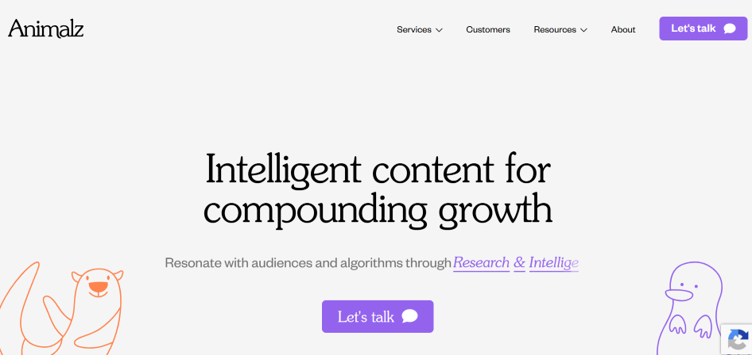
Where Animalz Stands Out: Their biggest strength is turning a company’s internal expertise into content that doesn’t read like outsourced SEO copy. Animalz also treats AI visibility as an editorial and authority problem.
What the Evidence Says: Animalz reports helping SupportLogic rebuild its content strategy and grow organic traffic fivefold. Their website also points to 172% year-over-year MQL growth from another program, and they back the work with a content refresh tool and an SEO forecasting system.
What to Ask Before Hiring: Animalz doesn’t publish standard pricing. Find out how much of the proposed scope goes to strategy, original production, content refreshes, technical SEO, and off-site citation building.
Who May Want to Compare Other Options: Teams facing a major migration, international architecture, or JavaScript indexation problems may need a more technical partner.
Companies that mainly want high-volume link acquisition or cheap article production won’t be a good match either.
Genevate
Genevate started with generative search, so GEO isn’t an add-on to an older SEO menu. They help B2B and technology companies shape how AI platforms describe and recommend them. The work spans SEO, GEO, agentic search optimization, strategic PR, executive entity development, and AI visibility reporting.
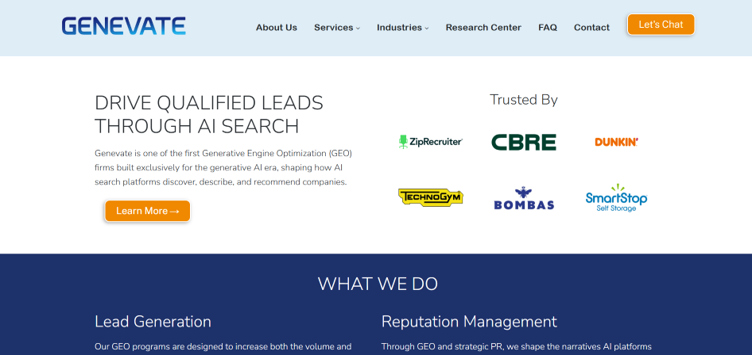
Where Genevate Stands Out: They pay close attention to whether the story is told correctly. That matters when an AI platform knows the category but gets the company wrong. Genevate audits how models talk about the brand, founders, products, and competitors, then uses owned content, third-party coverage, entity optimization, and authority statements to improve that picture.
What the Evidence Says: Genevate names clients including ZipRecruiter, CBRE, Dunkin’, and Talentfoot, and its process includes custom dashboards and quarterly manual benchmarks.
What to Ask Before Hiring: Pricing isn’t public. Ask for a SaaS example that shows the starting prompt set, citation sources, model coverage, timeline, and qualified leads produced. You should also confirm how much traditional technical SEO comes with the GEO program.
Who May Want to Compare Other Options: If you’d like a large public library of SaaS revenue case studies, you may want more proof before signing. Genevate fits brands that care about reputation, executive visibility, and how AI systems frame their category.
LoudFace
LoudFace runs SEO, AEO, content, CRO, and Webflow delivery for B2B SaaS and fintech companies. It feels more hands-on than advisory. The team ships work every week, reports AI visibility by engine, and connects those readings to demo requests, signups, and pipeline instead of hiding everything in one blended score.
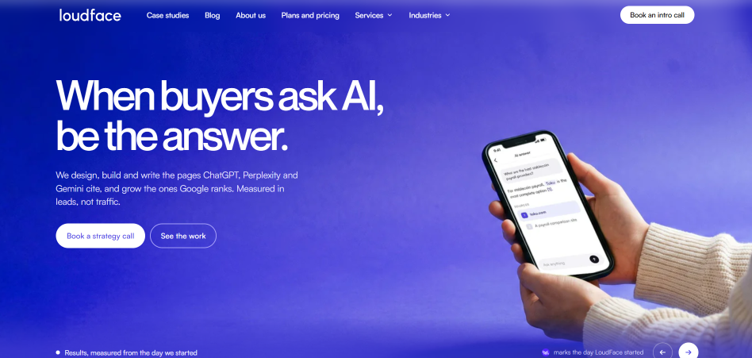
Where LoudFace Stands Out: LoudFace publishes its method. They explain how they test LLM crawler access, map buyer prompts, write answer blocks that models can pull from, win third-party mentions, and track citations platform by platform. Clients get a live AI visibility panel, so there’s no waiting for a monthly slide deck.
What the Evidence Says: A stealth fintech client went from 0.53% AI visibility to a peak of 10.46% in seven weeks. LoudFace also helped Toku reach 97.8% visibility on a high-intent stablecoin payroll prompt, and their own 90-day study looked at 128,515 citations across three AI search surfaces.
What to Ask Before Hiring: Engagements start at $5,000 per month. Fixed-scope work sits inside a retainer with a three-month minimum, so ask how many pages, technical changes, conversion tests, and third-party placements each tier includes.
Who May Want to Compare Other Options: Large enterprise SaaS sites with several international domains may need a deeper enterprise technical bench. The model suits companies that want one hands-on team to build pages, improve conversion paths, and run AI visibility work together.
NEWMEDIA.COM
NEWMEDIA.COM is a full-service digital agency that covers SEO, AI search, web development, content, PR, and conversion. Their range can help a SaaS company whose search trouble starts with poor site architecture or an outdated website, and not with a shortage of articles.
Where NEWMEDIA.COM Stands Out: The team can work on the website and the visibility strategy at once. That lets them handle schema, indexation, internal linking, commercial pages, content clusters, authority signals, and conversion paths without splitting the job across several vendors. Their platform, RankOS™, tracks AI citations, entity strength, and traditional search performance.
What the Evidence Says: The agency publishes a defined AI SEO process that covers LLM visibility analysis, model behavior monitoring, content optimization, and technical fixes. They publish how they deliver the work. SaaS buyers should still ask for a named AI-search case study with pipeline or revenue figures during the sales process.
What to Ask Before Hiring: NEWMEDIA.COM doesn’t publish a standard SaaS SEO or AI SEO price. Ask which specialists will handle technical SEO, content, development, PR, and reporting, and whether website implementation is part of the retainer or a separate project.
Who May Want to Compare Other Options: If all you need is a narrow GEO audit, you may not use the agency’s range.
NEWMEDIA.COM makes more sense for SaaS businesses that want search strategy, technical implementation, content, and website support from one partner.
Siege Media
Siege Media blends SEO content, digital PR, link building, design, and GEO. Their SaaS work is meant for companies that need authority as much as content volume. They skip the basic keyword article and make studies, tools, visual assets, and other resources that can earn links and citations.
Where Siege Media Stands Out: Original data sits at the center of their AI-search strategy. Siege Media reports that proprietary research gets 30% to 40% more visibility in LLM answers than content without data.
What the Evidence Says: Siege Media reports creating $7.2 million in additional traffic value for Zapier. That campaign also generated 47,200 AI Overview citations and reached 96% visibility across tracked LLM queries.
What to Ask Before Hiring: Pricing for SaaS GEO work isn’t published. Ask whether digital PR, design, technical SEO, and link acquisition are included in the quoted retainer. We’d also ask for separate targets for content output, earned placements, Google performance, and AI citations.
Who May Want to Compare Other Options: Small SaaS teams that want a few articles a month may find Siege Media too large and too expensive.
Companies focused mainly on executive thought leadership may also prefer an agency with a heavier interview-led editorial model.
Skale
Skale specializes in organic growth for SaaS and technology companies. Its programs combine technical SEO, content, link building, conversion work, migrations, and AI visibility.
They plan around signups, demos, MRR, and pipeline, and they don’t stop at keyword rankings, which makes their positioning easier to trust.
Where Skale Stands Out: Their AI brand-mention work starts with the sources that answer engines already cite. Skale then targets those publications through outreach while improving the client’s own content and technical foundation. We think that outside-in approach is useful, because a brand can publish good content and still be missing from the third-party sources that shape AI recommendations.
What the Evidence Says: Skale reports helping Jitter lift AI brand coverage from 22% to 55%, with mentions and domain citations growing 90 times in four months. Their wider SEO work includes taking Happy Scribe from 2,700 to 70,000 monthly signups and raising Rezi’s revenue by 86%.
What to Ask Before Hiring: Full-scope engagements start at $4,000. Confirm what that price includes, since AI citation outreach, content production, technical SEO, and conversion work can call for different levels of effort.
Who May Want to Compare Other Options: Non-SaaS companies should look elsewhere. Skale’s focus is one of its main strengths, but it also narrows who it fits.
A company that only needs a one-time audit may not get full value from an integrated model.
Omnius
Omnius works with SaaS, fintech, and AI companies that need SEO and AI visibility tied to signups. The team covers technical SEO, programmatic SEO, content clusters, landing pages, and GEO. They have more technical depth than many content-led firms, and they publish breakdowns of how their campaigns work.
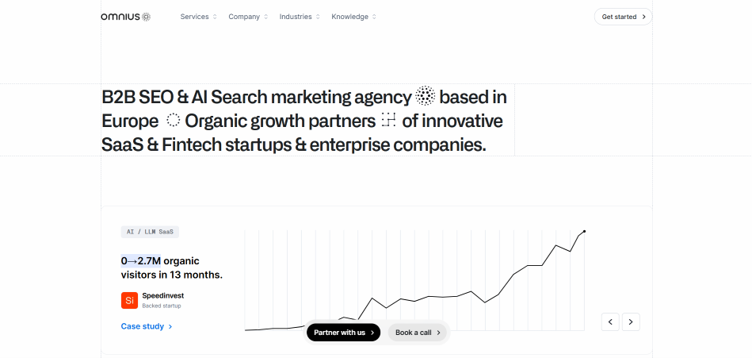
Where Omnius Stands Out: Programmatic SEO is a main strength here. Omnius can build structured page systems around integrations, use cases, templates, or other repeatable data. They also know those pages need controlled indexation, distinct intent, internal linking, and enough unique value to avoid thousands of thin URLs.
What the Evidence Says: Omnius reports 2.73 million organic clicks and more than 600 top-three rankings for TextCortex. One programmatic campaign took an AI client from 67 to over 2,100 monthly signups in ten months, and their own AI-search case study records 106% visibility growth.
What to Ask Before Hiring: Pricing is custom. Ask how Omnius decides between editorial content, programmatic pages, and technical changes. More pages isn’t automatically the right answer, and the proposed architecture should rest on search demand and product data.
Who May Want to Compare Other Options: Companies that need paid acquisition, brand campaigns, or a full creative department may want a broader agency.
Omnius fits best when organic search, programmatic execution, and signups are the main problems.
Quoleady
Quoleady is a B2B SaaS SEO and AI visibility agency. Their work covers technical SEO, expert-led content, original research, digital PR, link building, entity optimization, and GEO. They serve startups and software companies at later stages, though their best work seems to be content and authority building.
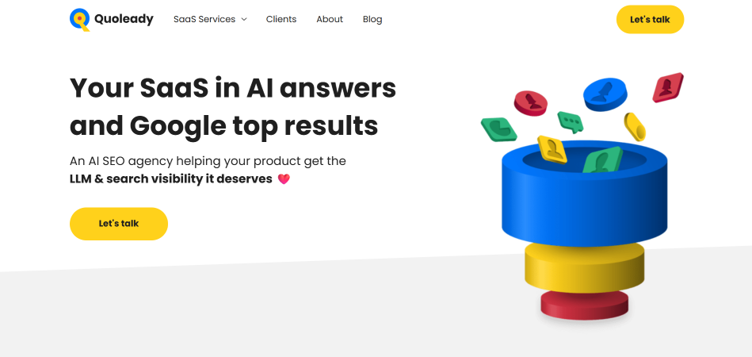
Where Quoleady Stands Out: They make the link between SEO and AI visibility easy to follow. Their process maps traditional keywords next to the prompts buyers type into ChatGPT and other answer engines.
What the Evidence Says: The agency reports growing Effy AI from zero to 60,000 monthly organic visits through long-tail content. Quoleady also shares its working process and pricing more openly than many SaaS SEO agencies, which helps buyers see what they’re comparing before a sales call.
What to Ask Before Hiring: SEO and AI visibility services start at $3,500 per month. Content production starts at $2,250 per month, and link building starts at $300 per link. Ask which combination the agency recommends and why.
Who May Want to Compare Other Options: Enterprise SaaS companies planning a large migration or running millions of URLs may need a larger technical team.
Quoleady looks better suited to companies whose main opportunities are in content, commercial pages, authority, and AI citations.
NoGood
NoGood is a growth agency and not a pure SaaS SEO specialist. The team pairs SEO and AEO with paid media, CRO, creative, lifecycle marketing, and experimentation. Their broader view can help a SaaS company when organic visibility is only one piece of a bigger acquisition problem.
Where NoGood Stands Out: They run their own tooling for AI search. Goodie tracks brand visibility across large language models while the agency works on structured data, semantic markup, content, authority signals, and conversion attribution.
What the Evidence Says: NoGood helped SteelSeries grow year-over-year AI search traffic by 23 times and AI-platform conversions by 27 times, with Perplexity visibility improving by 75%. The campaign ran for ten months and included technical optimization, citation development, and platform-level monitoring.
What to Ask Before Hiring: NoGood doesn’t publish standard AEO or SaaS SEO pricing. Ask whether the proposed team will focus mainly on organic search or spread the budget across several growth channels. The answer should match the problem you’re trying to solve.
Who May Want to Compare Other Options: Companies that want a narrow SEO engagement may end up paying for capabilities they won’t use. NoGood fits growth teams that want AI search connected to paid acquisition, creative testing, landing pages, and conversion work.
Driven Metrics
Driven Metrics builds connected SEO, GEO, and agentic search programs for small and mid-sized companies. The process covers technical foundations, content architecture, structured data, authority signals, citation tracking, and conversion paths.
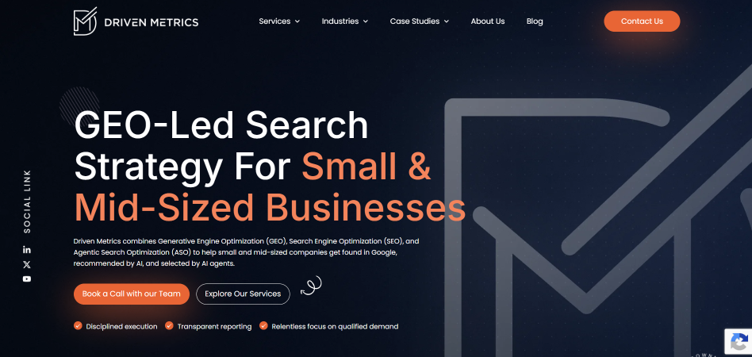
Where Driven Metrics Stands Out: Their model accounts for three search environments: traditional results, AI-generated answers, and autonomous agents that may compare vendors for the buyer. We also like the line they draw between AI visibility and AI selection. Getting product information, evidence, and conversion paths ready for future agents takes more than adding FAQs to blog posts.
What the Evidence Says: For a SaaS company, Driven Metrics reports 122% organic growth within six months. Other public results include more than 1,200 verified organic inquiries for a pediatric mental health practice, along with 196 AI-referred sessions.
What to Ask Before Hiring: Pricing isn’t public. SaaS companies should ask for a full software case study and request a breakdown of technical work, content output, citation development, and attribution.
Who May Want to Compare Other Options: Enterprise SaaS companies may prefer an agency with a longer record on large migrations, international SEO, and complex platform architecture.
Driven Metrics looks more suitable for lean teams that want hands-on execution and clear reporting.
Avenue Z
Avenue Z pairs AEO with technical SEO, content, PR, and earned media. They serve SaaS and B2B companies as well as fintech and consumer brands. Their core argument holds up: AI systems learn about a brand from its own pages and from trusted outside sources, so search and communications teams can’t work in isolation.
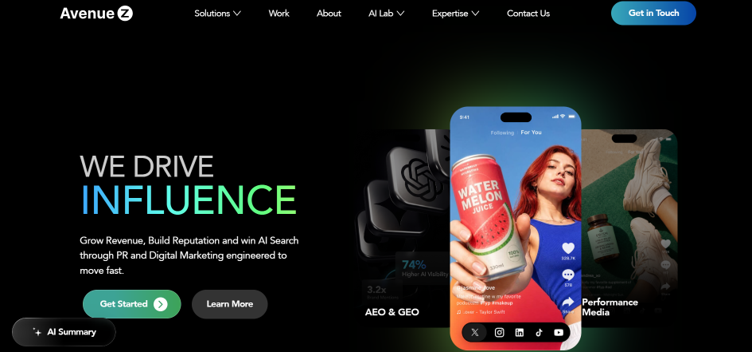
Where Avenue Z Stands Out: PR isn’t treated as a separate awareness exercise here. Avenue Z uses media coverage and third-party mentions to strengthen the network of sources around a brand. Their AIVx framework then tracks citations, prompt coverage, platform visibility, and category benchmarks, and the agency is also a certified partner of Profound.
What the Evidence Says: For Prometeo, Avenue Z reports 357% AI visibility growth and an 867% increase in average monthly AI referral traffic. The campaign combined technical fixes, AI-citable content, FAQs, PR, Peec tracking, and Looker Studio reporting, and Prometeo reached the top position against its tracked competitors.
What to Ask Before Hiring: Pricing isn’t published. Ask how the budget splits between technical SEO, content, PR, and AI visibility measurement. You should also find out which media placements their team can pursue and which results stay outside their control.
Who May Want to Compare Other Options: Teams that only need technical SEO may find the PR-led model broader than necessary. Avenue Z is more convincing for brands that want to improve how they appear across AI answers, media coverage, and high-intent category searches at the same time.
Before You Book a Call: Know What You Need
Agencies sell what they are good at, so walk in knowing your own problem. Three checks help you get there.
Identify What Is Holding Growth Back
Check where the problem sits. If key pages are slow, poorly indexed, or buried under duplicate URLs, technical SEO comes first. If your site is sound but buyers can’t find answers about pricing, integrations, or alternatives, you need commercial content.
If competitors outrank you with weaker pages, links and digital PR are the likely fix. If rankings are fine but AI tools never name you, the work shifts to citations, comparison pages, and third-party mentions.
Take Stock of Your In-House Team
List who you already have: writers, developers, and a product marketer who can review technical claims. An agency that writes content is less useful if nobody on your side can approve drafts or ship site changes. Knowing this early tells you whether to look for full execution or a strategy-led partner.
Define What Success Looks Like
Pick the numbers before the call. Demos, trial sign-ups, and pipeline are better targets than traffic. If you want AI visibility, decide how you will judge it, such as how often your brand is named for your top buying questions. Bring your budget range too, since it saves time on both sides.
Questions That Make the First Call More Useful
Ask questions that reveal how the agency thinks and who will complete the work. These five tend to tell us more than a long presentation:
- What would you investigate during the first 30 days, and why?
- Which parts of the strategy will your team implement directly?
- How will you connect rankings and AI citations with trials, demos, pipeline, or revenue?
- Which technical, content, and authority-building deliverables are included in the quoted price?
- Can you show us a relevant SaaS campaign and explain what your team changed?
A good agency should answer these questions in practical terms. Be careful when the response stays at the level of “content quality,” “topical authority,” or “data-driven growth” without naming the work behind those phrases.
How to Compare Proposals After the Call
Don’t compare proposals by article count alone. Ten articles from one agency may include interviews, original research, product screenshots, technical optimization, and distribution. Ten articles from another may mean lightly edited AI drafts.
Start with the business objective. Each proposal should explain which problem the agency found, what they will do first, and how the work connects with qualified demand.
Then compare the full scope. Check whether technical implementation, content production, link building, digital PR, conversion work, and AI visibility tracking are included or charged separately. Confirm who owns analytics setup and whether reporting reaches pipeline and revenue.
Look closely at the AI-search component. The proposal should name the platforms, prompt groups, starting metrics, and reporting method. “GEO optimization” is not a deliverable by itself.
Finally, review the people and contract. Find out who will lead the account, who will do the daily work, and how much access you will have to senior specialists. Check the minimum term, notice period, ownership of content, and what happens if priorities change.
To read more content like this, explore The Brand Hopper
Subscribe to our newsletter