Last Updated on November 27, 2026 by Team TBH
What are you actually buying when you buy a turnkey dropshipping store? Usually a finished storefront with products loaded and no customers yet, which saves setup time but not the work of finding buyers. Less often, it is a running business with sales, suppliers and a profit record, which costs far more because you are paying for profit that already exists.
Mixing up the two is the most expensive mistake in this market. A storefront sold with screenshots of someone else’s revenue is still a storefront. This guide separates the routes, shows what each hands over, explains how ownership moves to you, and ends with checks to run before paying anyone. AutoDS is best for a ready-to-launch first store, BeBiggy and Dropbuild cover ready-made and custom-built storefronts, and Flippa and Empire Flippers are where established stores change hands.
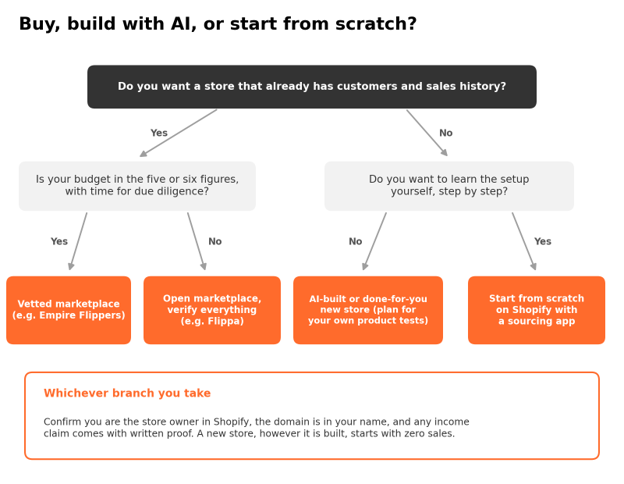
Four routes to a turnkey dropshipping store
| Route | What you receive | Sales history | What keeps costing |
| AI-built store | A new store in your own Shopify account, products listed | None | Shopify plan, tool subscription, ads |
| Ready-made store | A finished template store, delivered in about a day | None | Shopify plan, any paid apps, ads |
| Custom-built store | A store designed to your brief, plus marketing assets | None | Shopify plan, domain, ads |
| Established store | A running business with customers and suppliers | Yes | Everything the store already pays for |
Every route needs a store plan and an advertising budget. The established route adds the existing app stack, email tool and ad accounts, which move to you on day one.
Route 1: a store built for you in your own account
1. AutoDS: Best for a ready-to-launch first store
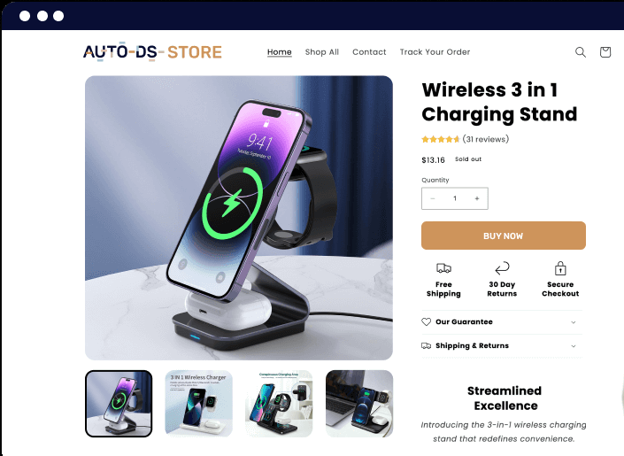
With the AutoDS AI Store Builder, you pick a niche and the tool builds a Shopify store with a customizable theme, 10 vetted best-selling products, ready-made product pages and a free .store domain. Because the store is created under your own Shopify login, there is nothing to transfer later. Banners, layout, colors and fonts stay editable, and product research, importing and orders run from the same account afterward.
Route 2: a ready-made store off the shelf
2. BeBiggy: Best for a stocked starter store delivered in a day
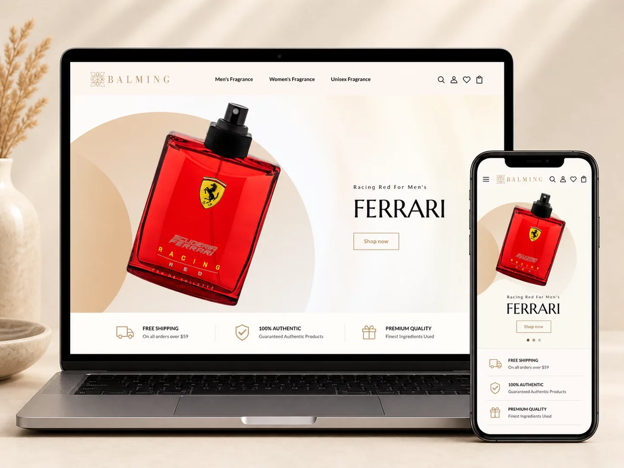
BeBiggy sells finished Shopify stores from a catalog, each with a live demo that is exactly what you receive. Delivery takes up to 24 hours, or up to 72 for a customized store. Starter stores come with up to 100 products and higher tiers with up to 10,000. Ownership is full and permanent with no profit sharing, and lifetime support is included. BeBiggy does not accept returns or cancellations, so spend time on the demo first.
Route 3: a custom-built store with marketing assets
3. Dropbuild: Best for a branded store with ad creatives included
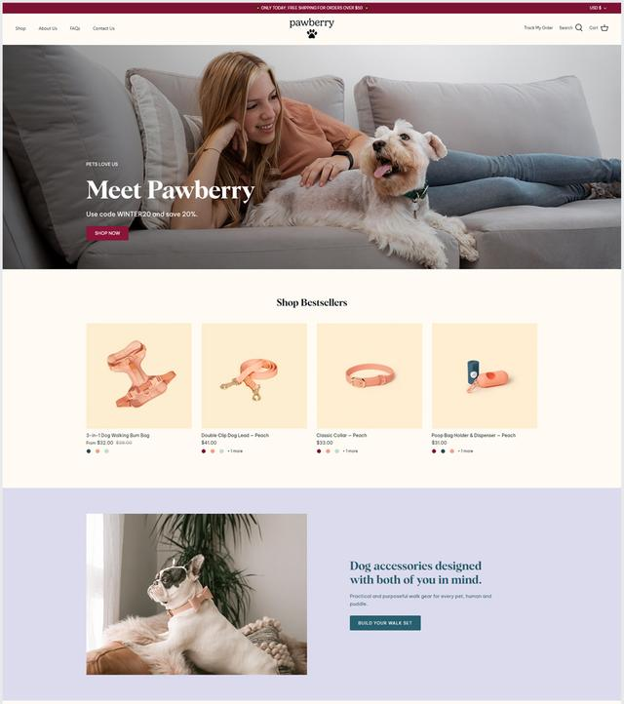
Dropbuild builds a store to your brief, with a premium theme and logo, and adds what most builders leave out: video ads with ad copy, a Facebook ads strategy with a target audience, and social posts, 15 for a one-product store and 30 for a niche store. A one-product store is ready in 7 days and a niche store in 10. Once you approve it, full ownership is transferred with instructions for selling.
Route 4: an established store with sales history
4. Flippa: Best for browsing established dropshipping stores
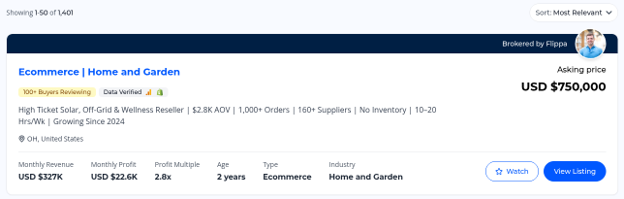
Flippa is the widest open marketplace, with 1,401 dropshipping businesses listed on 23 November 2026. Each card shows monthly revenue and profit, profit multiple and age, and a “Data Verified” badge means figures come from connected sources such as Shopify or Stripe rather than the seller’s typing. Payment runs through escrow, and smaller listings rely more on your own checks.
5. Empire Flippers: Best for a vetted business with a year of profit
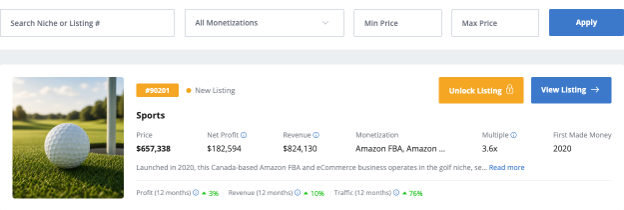
Empire Flippers lists only businesses with at least 12 months of earnings, and at least two people manually check the seller’s identity, revenue, profit and traffic before a listing goes live. Buyers prove their funds before unlocking listing details. It suits buyers with serious capital who want vetting done before they start their own.
How does ownership actually reach you?
Where a store is built decides how much of it you own on day one. A store created under your own Shopify login is yours from the start. One built by an agency or bought from an owner has to be transferred, and Shopify’s guide to changing store ownership sets out the steps. A custom domain transfers separately from the store, payout details must change to the new owner, and the transfer only completes when you accept it. Staff or collaborator access alone means you do not own the store yet.
What is an established store’s price really measuring?
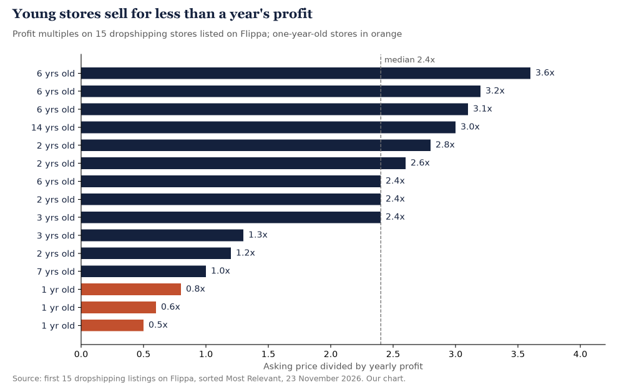
Mostly a bet on how long the profit will last. Marketplaces express it as a profit multiple: asking price divided by yearly profit. Across the first 15 dropshipping listings on Flippa on 23 November 2026, multiples ran from 0.5x to 3.6x, with a median of 2.4x, roughly 29 months of profit paid up front. All three one-year-old stores asked less than a year’s profit, while every listing above 3x was at least six years old. Young profit is priced cheaply because a store that grew on one product or one ad channel can fade as fast as it rose.
Red flags in turnkey dropshipping stores for sale
Most problems in this market are visible before you pay, if you know where to look:
- Revenue screenshots for a brand-new store. A store built last week cannot have a sales record; screenshots usually belong to someone else’s store.
- “Passive income” promises. Every store needs products tested, ads run and customer emails answered. A listing that suggests otherwise is selling the dream, not the store.
- No live demo or store address. You should be able to click through the exact store you will receive.
- Profit with no source. For an established store, figures typed into a listing without connected data or documents are only claims.
- One product, one ad account. A store whose profit comes from a single product on a single channel can lose most of it when either changes.
- Pressure to pay today. Countdown discounts on a store purchase leave no time for the checks below.
Seven checks before you pay
- Ask how the store reaches you. Your own account, a Shopify transfer and staff access are three different levels of ownership.
- Search one product description in quotes. If many stores return the same text, you are buying a template sold many times.
- Place a real order to your own address to see delivery time, packaging and tracking.
- Match payouts to the profit claim. For a running store, compare a live view of payouts with the profit and loss statement.
- List every monthly charge, from apps and email tools to theme subscriptions.
- Read the refund terms before paying; some store sales are final.
- Treat income claims with care. The FTC’s advice on vetting a business opportunity is a useful reminder to ask for written proof behind any earnings figure.
What the first 30 days after buying look like
Whichever route you take, the first month decides whether the store becomes a business:
- Week 1: make it yours. Confirm ownership, domain and payouts, rewrite the About page and policies in your own words, and place a test order.
- Week 2: pick what to test. Choose two or three products with a clear margin after shipping, and prepare product pages and creatives for each.
- Week 3: run small tests. Spend a modest, fixed daily budget per product and watch cost per add-to-cart and per purchase rather than likes.
- Week 4: cut and double down. Drop products that are not converting and move budget to the one that is. For an established store, compare your results with the seller’s figures for the same month last year.
New owners often skip week 1 and go straight to ads. Fixing ownership or payment details later, with live orders in flight, is far harder.
One line per scenario
- First store, little time: a store built in your own account.
- Want to see exactly what you get: a ready-made store with a live demo.
- Want ads and branding handed over: a custom build with creatives.
- Have capital and want existing profit: an established store, with your own due diligence.
- Want the most protection on a large purchase: a vetted marketplace.
FAQ
Are pre-built dropshipping stores worth it?
They are worth it when setup time is your bottleneck and you already have a plan for traffic. A pre-built store removes setup work, not the need to find a winning product and pay for ads.
What is the difference between a turnkey store and an established business?
A turnkey store is a new storefront with no customers. An established business comes with sales, suppliers and a profit record, which is why it is priced as a multiple of yearly profit.
Can I resell a pre-built store later?
Yes, if you own it, but buyers pay for profit history, not for the build. A store with a year of steady, verified profit can be listed on a marketplace.
How long does it take to get a turnkey store?
From minutes for an AI-built store, to about a day for a ready-made store, to one or two weeks for a custom build. Buying an established store takes longer because of due diligence and the ownership transfer.
To read more content like this, explore The Brand Hopper
Subscribe to our newsletter