Last Updated on November 23, 2026 by Team TBH
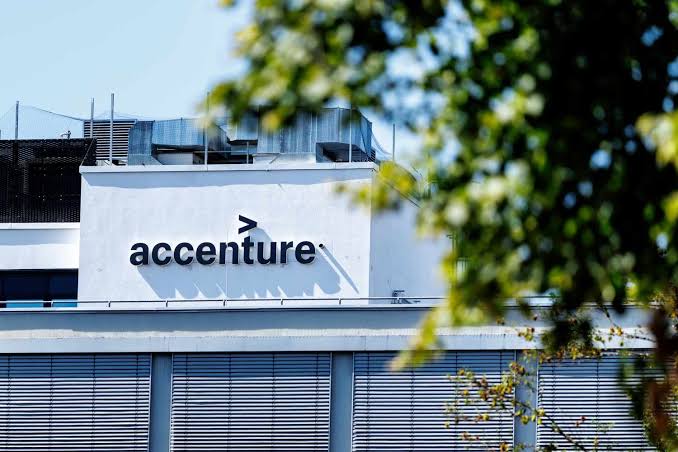
In the cutthroat arena of global professional services, Accenture stands as a formidable force, reporting revenues of $74.2 billion for its fiscal year ended August 31, 2026, up 5% in local currency and 6% in U.S. dollars. With approximately 814,000 professionals worldwide, Accenture has evolved far beyond its origins as Andersen Consulting, becoming one of the world’s largest consulting and professional services companies and a recognized leader in digital transformation, artificial intelligence, and cloud services. Its clients include approximately three-quarters of the Fortune Global 100 and Fortune Global 500 companies.
Accenture’s fiscal 2026 performance was supported by continued demand for technology transformation and managed services. New bookings reached $84.5 billion, up 5% in U.S. dollars, while free cash flow stood at $11.6 billion. The company returned $11.5 billion to shareholders through dividends and share repurchases. Its business combines consulting and managed services, with capabilities spanning strategy, technology, operations, engineering, cybersecurity, digital marketing, and AI-led transformation.
Yet no company dominates the professional services landscape unchallenged. Accenture competes across multiple, overlapping industries—facing the Big Four accounting networks in strategy and risk consulting, IT services majors in technology outsourcing, elite strategy boutiques in C-suite advisory, and specialist firms in digital transformation. The competitive landscape has become increasingly complex as artificial intelligence reshapes consulting, technology implementation, and managed services. This article profiles 17 significant competitors challenging Accenture across consulting, IT services, strategy, and digital transformation.
Top 17 Competitors of Accenture
Accenture faces competition from a diverse mix of Big Four accounting firms, elite strategy consultancies, India-headquartered IT services companies, and large technology outsourcing businesses. The following profiles examine each competitor’s scope, latest available financials, areas of competitive overlap, and strategic positioning relative to Accenture.
| Competitor | Latest available revenue | Primary competitive arena |
| IBM Consulting | $21.06B (2025) | IT consulting, AI, cloud, managed services |
| Deloitte | $74.5B (FY2026) | Audit, tax, strategy, technology consulting |
| PricewaterhouseCoopers | $60.2B (FY2026) | Audit, tax, advisory, digital |
| Ernst & Young (EY) | $57B (FY2026) | Audit, tax, strategy and transactions |
| KPMG | $39.8B (FY2025) | Audit, risk, tax, digital advisory |
| Capgemini | €22.47B (2025) | IT services, cloud, digital transformation |
| Infosys | $20.16B (FY2026) | IT outsourcing, cloud, digital services |
| Tata Consultancy Services | $30.02B (FY2026) | IT services, BPO, digital transformation |
| McKinsey & Company | ~$16B (estimate) | High-level strategy, M&A, organizational transformation |
| Boston Consulting Group | $14.4B (2025) | Growth strategy, digital, AI |
| Wipro | $10.48B IT Services (FY2026) | IT services, cloud, digital transformation |
| Cognizant | $21.11B (2025) | IT services, digital engineering, healthcare IT |
| HCLTech | $14.66B (FY2026) | IT services, engineering, AI-led transformation |
| Bain & Company | Not publicly disclosed | Strategy, private equity advisory, M&A |
| DXC Technology | $12.64B (FY2026) | IT outsourcing, managed services, cloud |
| Gartner | $6.50B (2025) | Research, advisory, technology insights |
| NTT DATA Group | ¥5.005T (FY2026) | IT services, managed services, cloud |
Note: These figures represent different reporting periods and business scopes. IBM and Wipro figures are for specific business segments, while most other figures represent consolidated company or network revenue. McKinsey’s figure is an external estimate, and Bain does not publish comparable global revenue.
1. IBM Global Services
IBM is one of Accenture’s most direct and long-standing rivals in the global technology and consulting services market. Following the 2021 spin-off of its managed infrastructure services business into Kyndryl, IBM has sharpened its focus on Consulting, Software, and Infrastructure, with hybrid cloud and artificial intelligence forming central pillars of its strategy.
IBM reported total revenues of $67.5 billion for calendar 2025, up approximately 8% in constant currency. Its Consulting segment generated $21.055 billion, compared with $20.692 billion in 2024, while Software generated $29.962 billion. These figures make IBM Consulting one of Accenture’s largest direct competitors in enterprise technology services.
The head-to-head competition between IBM Consulting and Accenture intensifies in artificial intelligence. IBM reported a cumulative generative AI book of business exceeding $12.5 billion since inception, including more than $10.5 billion attributable to Consulting, although this is a cumulative bookings measure rather than annual AI revenue. Its watsonx portfolio provides AI development, deployment, and governance capabilities that IBM Consulting uses to differentiate its enterprise transformation engagements.
IBM and Accenture also compete for large-scale technology modernization, cloud transformation, and managed services contracts. IBM’s deep relationships across financial services, healthcare, government, and industrial markets provide significant incumbent advantages, while its acquisition of HashiCorp in 2025 strengthened its infrastructure automation and hybrid cloud capabilities.
2. Deloitte

Deloitte is Accenture’s closest rival in overall professional services scale, reporting aggregate global revenue of $74.5 billion for its fiscal year ended May 31, 2026. This represented 5.7% growth in U.S. dollars compared with FY2025, putting Deloitte slightly ahead of Accenture’s $74.2 billion FY2026 revenue. Deloitte’s global workforce also expanded to nearly 500,000 professionals.
Deloitte’s Consulting practice encompasses strategy, technology, human capital, and business transformation, competing directly with Accenture’s consulting and technology capabilities. Its investments in cloud transformation, AI, analytics, and enterprise technology partnerships position it strongly for large-scale transformation mandates.
Deloitte’s foundational strength as a Big Four accounting network gives it an advantage in audit, tax, and regulatory relationships that Accenture cannot replicate. Conversely, Accenture’s scale in technology implementation, software engineering, and managed services provides a strong competitive proposition for organizations seeking end-to-end technology transformation.
3. PricewaterhouseCoopers (PwC)

PricewaterhouseCoopers (PwC) is one of the Big Four accounting networks and a significant competitor to Accenture in strategy consulting, digital advisory, and technology transformation. PwC reported global gross revenues of $60.2 billion for the fiscal year ended June 30, 2026, up 5.7% in U.S. dollars and 3.5% at constant exchange rates. This represented an improvement over its FY2025 growth rate.
PwC competes with Accenture in management consulting and technology advisory, particularly in digital strategy, operational transformation, risk management, regulatory compliance, and enterprise technology modernization. The firm invested $3 billion across its global network during FY2026 to expand capabilities, particularly in AI and technology.
The fundamental strategic difference between PwC and Accenture remains their respective business models. PwC’s strength lies in its credibility across financial, regulatory, assurance, and risk matters, while Accenture has established itself as a major partner for large-scale technology implementation, outsourced operations, and digital product development. As PwC continues expanding its technology capabilities, the boundary between advisory and execution is becoming increasingly blurred.
4. Ernst & Young (EY)

Ernst & Young (EY) is a Big Four professional services network and a direct competitor to Accenture across strategy and transactions consulting, technology advisory, and risk management. EY reported global revenues of approximately $57 billion for its fiscal year ended June 2026, representing 4.7% growth in local currency compared with FY2025.
EY’s competitive overlap with Accenture is particularly significant in Consulting and EY-Parthenon. Its Consulting business generated $17.4 billion in FY2026, while EY-Parthenon, its strategy and transactions business, generated approximately $6.8 billion. EY’s AI services sales grew 49%, demonstrating its increasing focus on enterprise-wide AI transformation.
EY’s Wavespace innovation centres and EY.ai initiative reflect its ambition to strengthen AI-driven consulting and technology capabilities. Its partnerships with Microsoft, SAP, and other enterprise technology providers also position it to compete for the same transformation mandates as Accenture.
Like other Big Four firms, EY benefits from established audit, tax, and financial advisory relationships with major corporations. These relationships provide access to senior decision-makers and cross-selling opportunities, while Accenture’s technology delivery capabilities and managed services footprint provide a different competitive advantage.
5. KPMG

KPMG is a Big Four professional services firm that competes with Accenture primarily in strategy consulting, risk management, regulatory compliance, and technology advisory. Its latest verified full-year revenue is approximately $39.8 billion for FY2025, based on the combined revenues of its global member firms. KPMG also disclosed full-basis FY2025 revenue of $40.2 billion before adjustments for businesses sold or exited.
KPMG’s Advisory practice includes management consulting, risk consulting, and technology consulting, with significant exposure to financial services, healthcare, government, and industrial markets. KPMG Ignition, its network of innovation centres, supports digital transformation, co-innovation, and design thinking engagements that overlap with Accenture’s innovation and technology consulting capabilities.
KPMG’s competitive strength relative to Accenture lies in its credibility with heavily regulated industries and its deep risk advisory capabilities. For clients in banking, insurance, and healthcare, where regulatory compliance, model risk management, and financial crime prevention are strategic priorities, KPMG offers an alternative to Accenture’s broader transformation approach.
Its alliances with Microsoft, ServiceNow, Workday, and Oracle further strengthen its enterprise technology consulting capabilities. However, KPMG’s overall revenue should not be directly compared with Accenture’s as an equivalent technology services business because it includes audit, tax, and other professional services.
6. Capgemini

Capgemini is a French multinational IT services and consulting company and one of Accenture’s most direct competitors in technology-led business transformation. The company reported full-year revenues of €22.465 billion for 2025, up 1.7% from €22.096 billion in 2024. Revenue growth at constant exchange rates was 3.4%, while operating margin remained stable at 13.3%.
Capgemini competes with Accenture in cloud transformation, enterprise application services, SAP and Salesforce implementations, digital engineering, data analytics, and intelligent industry. Its acquisition of Altran in 2020 strengthened its engineering and research and development capabilities, creating additional overlap with Accenture Industry X.
Capgemini’s European heritage gives it a geographic advantage in several Continental European markets, particularly France, Germany, and Benelux. Its Applied Innovation Exchange network and Capgemini Research Institute also strengthen its positioning in innovation, technology research, and digital transformation.
The company’s strategic direction is increasingly focused on AI-led transformation. Generative AI bookings contributed more than 8% of total bookings in 2025, while Capgemini’s 2026 growth outlook reflects its emphasis on AI-led transformation, intelligent operations, and cloud services.
7. Infosys

Infosys is an Indian multinational IT services and consulting company and one of Accenture’s most significant competitors in technology outsourcing, digital transformation, and enterprise platform services. The company reported revenues of $20.158 billion for FY2026, ended March 31, 2026, representing 3.1% growth in constant currency. Its large deal total contract value reached $14.9 billion, with 55% representing net-new business.
Infosys competes with Accenture across application development and maintenance, cloud migration, infrastructure management, SAP and Oracle transformation, cybersecurity, data analytics, AI, and business process outsourcing. Its Infosys Consulting subsidiary also competes for strategic advisory and enterprise transformation mandates.
Infosys Topaz is its AI-first services portfolio, supporting enterprise AI adoption through a combination of AI platforms, industry solutions, and ecosystem partnerships. Infosys reported that AI-led programs had been deployed across 90% of its top 200 clients in FY2026, reflecting the increasing importance of AI in its business model.
Infosys’s key competitive advantage over Accenture lies in its cost-efficient delivery model. Its substantial India-based workforce, supported by global delivery centres, allows it to price large technology outsourcing engagements competitively. However, the company is increasingly moving beyond traditional outsourcing into strategic transformation, cloud, and AI-led enterprise services.
8. Tata Consultancy Services (TCS)

Tata Consultancy Services (TCS) is India’s largest IT services company and one of the most significant global competitors to Accenture in technology outsourcing, digital transformation, and enterprise platform services. TCS reported full-year revenues of $30.017 billion for FY2026, ended March 31, 2026, compared with $30.18 billion in FY2025. Its operating margin reached 25%, while annualized AI revenue crossed $2.3 billion in the fourth quarter of FY2026.
TCS competes with Accenture across application services, cloud infrastructure, enterprise platforms, cybersecurity, analytics, and business process services. Its Banking, Financial Services and Insurance (BFSI) business is particularly important, creating considerable competitive overlap with Accenture’s financial services practice.
TCS’s proprietary platforms, including TCS BaNCS for banking and financial services, provide industry-specific software capabilities and create long-term client relationships. Its AI investments and enterprise technology partnerships also support its ambition to compete for higher-value transformation engagements.
TCS’s competitive advantage over Accenture is rooted in its delivery scale, long-term client relationships, and capital-efficient operating model. Its 25% FY2026 operating margin demonstrates the profitability of its delivery model, although margin comparisons must account for differences in business mix and accounting adjustments. TCS ended FY2026 with approximately 584,519 employees globally.
9. McKinsey & Company

McKinsey & Company is widely regarded as one of the world’s most prestigious management consulting firms and represents a distinct form of competition for Accenture. Rather than competing primarily on technology delivery scale, McKinsey focuses on strategic advisory, C-suite relationships, organizational transformation, and high-level business strategy. External estimates place its annual revenue at approximately $16 billion, although McKinsey does not publicly disclose audited global revenue figures.
McKinsey and Accenture compete at the strategic planning and C-suite advisory level, particularly when large organizations are deciding how to allocate transformation budgets, restructure business units, or navigate technological disruption. McKinsey’s QuantumBlack division provides AI and advanced analytics capabilities, while McKinsey Digital advises clients on technology-led business transformation.
McKinsey has increasingly expanded its technology and AI capabilities to compete in areas traditionally dominated by technology services companies. QuantumBlack offers data science, machine learning engineering, and AI strategy services, while its broader digital practice overlaps with Accenture’s consulting and technology offerings.
McKinsey’s competitive strength lies in its brand reputation, analytical capabilities, and relationships with senior executives and boards. Accenture, in contrast, offers greater implementation scale and managed services capabilities, making the two firms competitors in some engagements and complementary partners in others.
10. Boston Consulting Group (BCG)

Boston Consulting Group (BCG) is one of the Big Three strategy consulting firms and a significant competitor to Accenture in management consulting, digital strategy, and AI advisory. BCG reported global revenues of $14.4 billion for 2025, up 7% from $13.5 billion in 2024, marking its 22nd consecutive year of revenue growth. Its global workforce expanded to approximately 33,500 employees.
BCG and Accenture compete when clients require strategic insight combined with technology execution for large-scale business transformation. BCG has historically focused on growth strategy, portfolio optimization, organizational design, and corporate development, while Accenture has offered greater scale in technology implementation, process redesign, and managed services.
This distinction is becoming less pronounced as BCG expands its technology delivery capabilities through BCG X, its technology build and design business. BCG reported that technology- and AI-focused services represented more than 40% of its total revenue in 2025, supported by 25% year-on-year growth in AI services.
BCG’s competitive strategy involves deepening its technology capabilities while retaining the intellectual reputation and C-suite access associated with elite strategy consulting. Its partnerships with major technology providers also strengthen its ability to deliver AI-led transformation projects that increasingly overlap with Accenture’s services.
11. Wipro

Wipro is one of India’s major IT services companies and a direct competitor to Accenture in technology outsourcing, digital services, cloud transformation, and business process management. Wipro reported FY2026 IT Services revenue of approximately $10.48 billion for the year ended March 31, 2026, down 0.3% in reported U.S. dollar terms. Its total gross revenue was approximately $9.9 billion, reflecting a different reporting scope and currency conversion.
Wipro competes with Accenture across cloud and infrastructure services, enterprise application management, digital engineering, cybersecurity, and AI and data analytics. Its acquisitions of Capco, Ampion, and Rizing have strengthened its financial services consulting, cybersecurity, and SAP capabilities.
Capco, in particular, competes with Accenture’s financial services consulting practice across capital markets, banking, and insurance. Its specialized regulatory, transformation, and technology advisory capabilities help Wipro compete for complex financial services engagements.
Wipro’s competitive positioning relative to Accenture is shaped by its cost-competitive delivery model and large offshore workforce. CEO Srinivas Pallia, who took the role in April 2024, has emphasized moving the business toward higher-value consulting and AI-led services. Wipro’s AI.360 initiative and partnerships with AWS, Google Cloud, and Microsoft Azure support this strategy.
12. Cognizant Technology Solutions
Cognizant is a U.S.-headquartered IT services company with a substantial India-based delivery model. It competes directly with Accenture across technology outsourcing, digital engineering, healthcare IT, financial services technology, and enterprise platform services. Cognizant reported full-year 2025 revenues of $21.108 billion, up 7% year-on-year and 6.4% in constant currency.
Cognizant’s competitive overlap with Accenture is particularly pronounced in healthcare and financial services, where it has developed substantial industry expertise. Its TriZetto healthcare technology platforms provide payer and benefits administration solutions, while its engineering services capabilities compete with Accenture Industry X for aerospace, automotive, and industrial clients.
Cognizant’s AI strategy includes Cognizant Neuro and its broader AI and digital engineering capabilities. The company signed 28 large deals during 2025, while its NextGen initiative focuses on improving its workforce structure, operating model, and cost competitiveness.
Under CEO Ravi Kumar S, Cognizant has been repositioning itself toward strategic consulting and AI-led enterprise transformation. Its investments in talent, technology partnerships, and onshore delivery capabilities target the same enterprise customers that Accenture serves, making it a significant competitor in the global IT services market.
13. HCLTech

HCLTech is one of India’s major IT services companies and an increasingly significant competitor to Accenture in cloud services, digital engineering, product engineering, and enterprise IT management. HCLTech reported FY2026 revenues of approximately $14.664 billion for the year ended March 31, 2026, representing 6% growth in U.S. dollars and 3.9% growth in constant currency. New deal wins reached $9.3 billion.
HCLTech’s most distinctive competitive strength relative to Accenture lies in its engineering and research and development services business. Its capabilities support product companies and industrial manufacturers developing software-embedded products, connected platforms, and next-generation engineering solutions, directly overlapping with Accenture Industry X.
HCLTech has also been expanding its generative AI services through its AI offerings and partnerships with major cloud and enterprise technology providers. Annualized Advanced AI revenue reached $620 million in the fourth quarter of FY2026, highlighting the growing contribution of AI-related services to its business model.
HCLTech’s partnerships with AWS, Google Cloud, Microsoft Azure, SAP, Salesforce, and ServiceNow allow it to deliver enterprise cloud and AI transformation services. Its engineering capabilities, competitive pricing, and growing AI portfolio make it a strong competitor in technology-led transformation.
14. Bain & Company
Bain & Company is the third member of the elite MBB strategy consulting group, alongside McKinsey and BCG. It competes with Accenture in high-level management consulting, private equity advisory, corporate strategy, and business transformation. Bain is privately held and does not publish audited global revenue figures, so estimates of its annual revenue should not be treated as confirmed financial results.
Bain’s competitive overlap with Accenture is concentrated in management consulting for large corporations, turnaround advisory, digital strategy, and go-to-market strategy. The firm is particularly well known for its private equity practice, advising investment firms on acquisition targets, due diligence, value creation planning, and exit strategies.
Bain’s strategy consulting approach emphasizes measurable results, business performance, and client return on investment. Its digital capabilities cover AI, analytics, agile operating models, and technology strategy, competing with Accenture for strategy-to-implementation engagements.
Bain’s long-term relationships with private equity firms and their portfolio companies create a strong competitive position in the private equity advisory market. Accenture competes more directly when engagements extend into technology implementation, operations transformation, and large-scale digital modernization.
15. DXC Technology
DXC Technology is a U.S.-based IT services and solutions company that competes with Accenture in IT outsourcing, managed services, and enterprise technology modernization. Formed in 2017 through the merger of Hewlett Packard Enterprise’s services business with Computer Sciences Corporation, DXC has established significant relationships in legacy enterprise IT, government technology, and infrastructure management.
DXC reported FY2026 revenues of $12.64 billion for the year ended March 31, 2026, down 1.8% year-on-year and 4.8% on an organic basis. Its Consulting and Engineering Services segment generated approximately $5.02 billion, while Global Infrastructure Services contributed approximately $6.34 billion.
DXC competes with Accenture most directly in IT outsourcing and infrastructure managed services, including data centres, enterprise applications, service desks, and end-user computing. Its incumbent relationships with banks, airlines, healthcare systems, and government agencies overlap with the client base Accenture pursues for digital transformation.
DXC has been working to reposition its business toward cloud, security, and AI-driven services. Its OASIS AI-based orchestration platform and ongoing portfolio restructuring are part of this strategy, although declining organic revenues indicate that the company continues to face challenges in transitioning away from traditional IT outsourcing.
16. Gartner

Gartner is one of the world’s leading technology research and advisory firms and a distinctive competitor to Accenture. Rather than competing primarily through large-scale technology implementation, Gartner influences the same strategic and technology decisions that Accenture seeks to shape through its research, advisory, benchmarking, and consulting services.
Gartner reported full-year 2025 revenues of approximately $6.497 billion, up 4% from 2024. Its Insights segment generated approximately $5.073 billion, while Conferences contributed $645 million and Consulting generated approximately $552 million.
Gartner’s competitive dynamic with Accenture operates across two dimensions. First, its Magic Quadrants, Hype Cycles, Market Guides, and Peer Insights reviews influence enterprise technology purchasing decisions, including the evaluation and selection of consulting and technology services providers.
Second, Gartner’s executive advisory programs provide guidance to CIOs, CTOs, CFOs, and other senior executives on technology strategy, organizational priorities, and business transformation. These areas overlap with Accenture’s Strategy & Consulting practice, although Gartner’s core research subscription model differs considerably from Accenture’s implementation-led business.
Gartner’s subscription-based research model creates recurring revenue and long-term relationships with technology decision-makers. Where Gartner provides research-backed recommendations and independent benchmarking, Accenture focuses on implementation, technology integration, and organizational change management.
17. NTT DATA Group

NTT DATA Group is one of the world’s largest IT services companies and an important competitor to Accenture in Japan, the wider Asia-Pacific region, and international markets. NTT DATA reported consolidated net sales of approximately ¥5.005 trillion for the fiscal year ended March 31, 2026, compared with ¥4.639 trillion in FY2025, representing growth of approximately 7.9%.
NTT DATA competes with Accenture across cloud transformation, digital workplace services, enterprise application services, cybersecurity, managed IT services, and AI-driven business transformation. Its acquisition of Dell Technologies’ IT services business in 2016 established a significant North American presence, while its acquisition of Everis strengthened its European consulting and IT services capabilities.
NTT DATA’s strategy reflects a deliberate push toward higher-value digital transformation and technology services. Its investments in AI, automation, cloud-native development, and data centre infrastructure support its ambition to compete more directly with global technology consulting companies.
NTT DATA also benefits from its relationship with parent company Nippon Telegraph and Telephone Corporation, providing access to significant capital, telecommunications infrastructure, and established Japanese corporate relationships. These advantages make it a formidable competitor for Accenture in Japan and other markets where local technology expertise and long-term enterprise relationships are particularly important.
Frequently Asked Questions (FAQ)
1. Who is Accenture’s biggest competitor?
Deloitte is Accenture’s closest rival by total global revenue, reporting $74.5 billion for FY2026 compared with Accenture’s $74.2 billion. However, their businesses have different compositions because Deloitte includes audit, tax, and assurance services. IBM Consulting is among Accenture’s most direct competitors in technology consulting, while McKinsey, BCG, and Bain compete in high-level strategy advisory. TCS and Infosys are major competitors in global IT services.
2. How does Accenture compare to McKinsey, BCG, and Bain?
The key difference is breadth versus specialization. McKinsey, BCG, and Bain (collectively known as MBB or the Big Three) specialize in high-level strategic advice to CEOs and boards, while Accenture combines consulting with large-scale technology implementation and managed services.
Accenture’s FY2026 revenue of $74.2 billion is substantially higher than BCG’s $14.4 billion in 2025 and the external revenue estimates available for McKinsey. Bain does not publish comparable global revenue figures. However, the firms compete for different types of consulting engagements, and total revenue alone does not measure their relative strategic influence.
3. Is Accenture bigger than the Big Four consulting firms?
By total global revenue, Deloitte reported $74.5 billion in FY2026, marginally exceeding Accenture’s $74.2 billion. PwC reported $60.2 billion, EY reported $57 billion, and KPMG’s latest verified FY2025 figure was $39.8 billion.
However, these comparisons include audit, tax, assurance, and other professional services that Accenture does not offer. Comparing only consulting and technology-related revenue provides a more meaningful assessment of their competitive overlap.
4. What makes Accenture different from Infosys, TCS, and Wipro?
Accenture differentiates itself through its global consulting footprint, technology implementation capabilities, managed services, and strategy-to-execution business model. Infosys, TCS, and Wipro also provide enterprise consulting, AI, cloud, and digital transformation services, but their operating models and delivery economics differ.
Accenture reported $74.2 billion in FY2026 revenue, compared with TCS’s $30.02 billion, Infosys’s $20.16 billion, and Wipro’s $10.48 billion in IT Services revenue. These figures demonstrate the differences in scale, although Wipro’s figure represents only its IT Services segment.
5. What is Accenture’s revenue and how has it grown?
Accenture reported $74.2 billion in revenues for its fiscal year ended August 31, 2026, representing 6% growth in U.S. dollars and 5% in local currency. New bookings reached $84.5 billion, while free cash flow was $11.6 billion.
The company returned $11.5 billion to shareholders through dividends and share repurchases. These results reflect continued demand for consulting, technology transformation, managed services, and AI-related enterprise capabilities.
Conclusion
Accenture’s $74.2 billion in annual revenue and approximately 814,000-strong global workforce position it among the world’s largest professional services companies. Yet its competitive landscape is increasingly complex. Deloitte has reached comparable revenue scale, while PwC and EY are expanding their technology and AI capabilities. IBM Consulting remains a significant technology services competitor, and McKinsey, BCG, and Bain continue to strengthen their technology execution capabilities.
The Indian IT services companies are also becoming increasingly important competitors. TCS reported $30 billion in annual revenue, Infosys crossed the $20 billion milestone, and HCLTech reached approximately $14.7 billion in FY2026. Their growing AI, cloud, engineering, and consulting capabilities demonstrate that competition is no longer restricted to traditional outsourcing and cost-efficient technology delivery.
Artificial intelligence is becoming one of the most important dimensions of this competitive race. Accenture’s strategy increasingly focuses on enterprise reinvention, AI and data capabilities, intelligent operations, and technology-led business transformation. IBM’s cumulative generative AI book of business exceeded $12.5 billion, BCG reported that technology- and AI-focused services represented more than 40% of its 2025 revenue, and EY recorded 49% growth in AI services sales in FY2026. These figures illustrate different measures of AI activity and should not be compared as equivalent revenue metrics.
Ultimately, Accenture’s competitive resilience will depend on its ability to maintain its global client relationships, deliver measurable business outcomes, scale AI-led transformation, and combine strategic consulting with technology implementation. As competitors invest in similar capabilities, the distinction between traditional strategy consulting, IT services, and digital transformation will continue to narrow.
Also Read: Broadcom’s Top Competitors & Rivals (2026)
To read more content like this, subscribe to our newsletter