Last Updated on September 10, 2026 by Team TBH
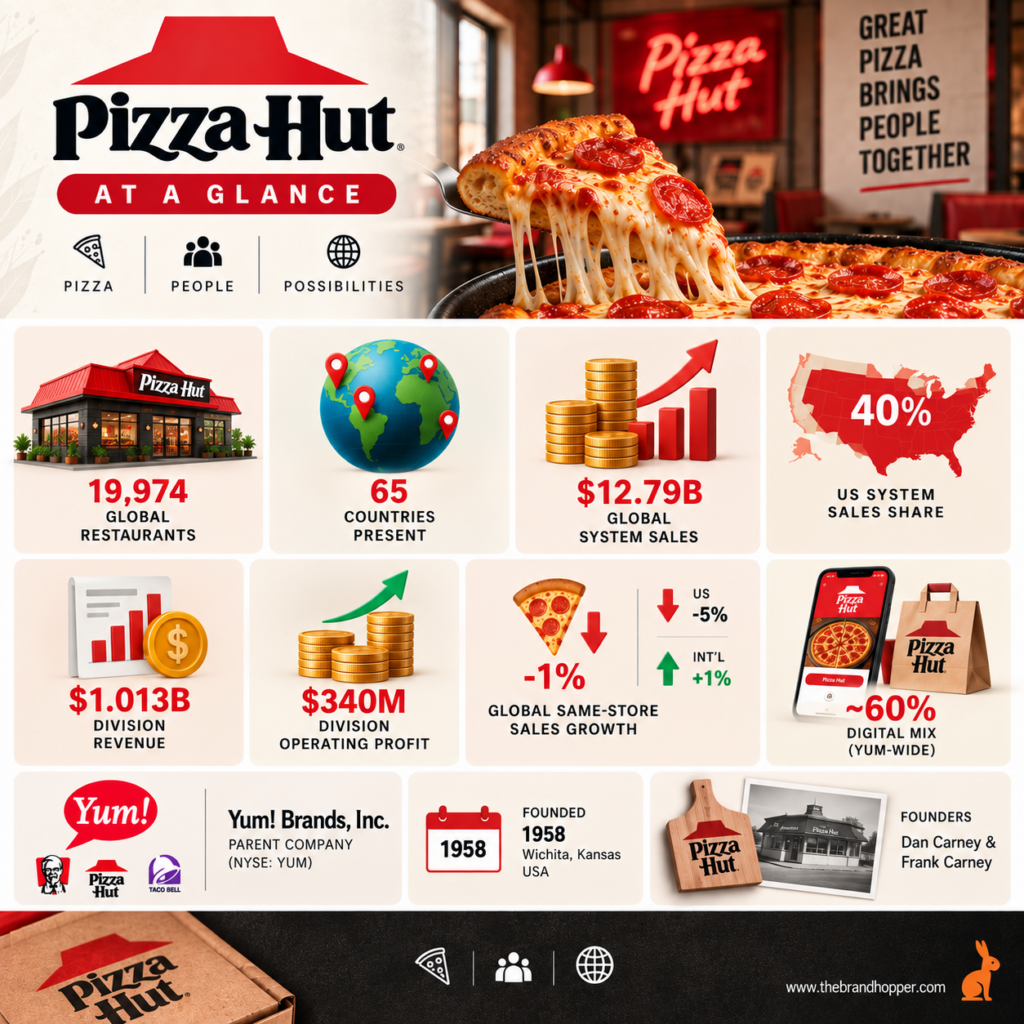
Pizza Hut is one of the most recognised pizza brands on the planet. Founded in a tiny Wichita, Kansas storefront in 1958, the chain grew into a global powerhouse operating 19,974 restaurants across 65 countries as of FY2025. For over six decades, Pizza Hut did not just sell pizza — it shaped how the world experienced it.
Yet the brand today stands at a crossroads. US same-store sales fell 5% in FY2025 while digital-native rivals pressed hard on both delivery speed and price. Parent company Yum! Brands commenced a formal strategic review of its options for Pizza Hut in Q4 2025, underscoring the urgency of transformation. Understanding what has worked — and what must evolve — requires a clear-eyed look at the brand’s full marketing machine.
This deep-dive examines Pizza Hut’s marketing strategies, the classic 4Ps of its marketing mix, its STP framework, competitive positioning, landmark campaigns, and what the road ahead holds.
The Founding Story of Pizza Hut: From a Borrowed $600 to a Global Empire
In 1958, Dan Carney and Frank Carney borrowed $600 from their mother, Rose, and signed a lease on a tiny building on Blaine Street in Wichita, Kansas. The name “Pizza Hut” was chosen because the building’s roadside sign had room for only eight letters — three for “pizza” and five for a second word. The brothers picked “Hut” because the modest structure looked like one.
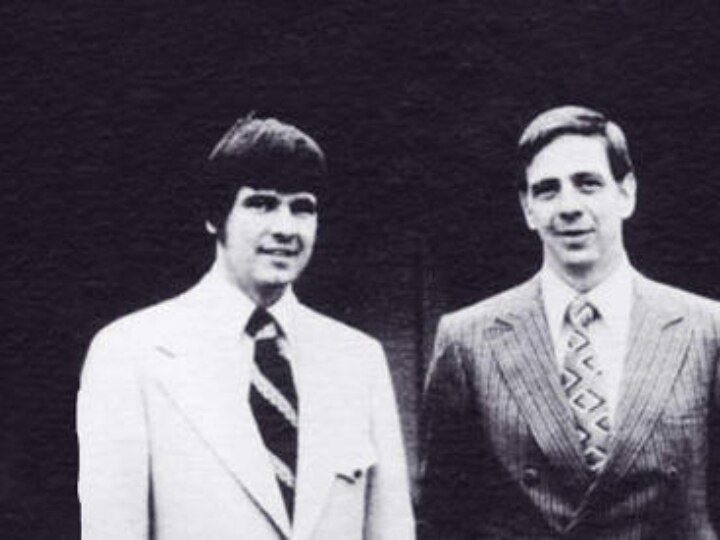
The first location served thin-crust pizzas in a sit-down setting, a novelty in a region dominated by burgers and fried chicken. Within a year, the Carneys had opened a second restaurant and began franchising. The formula was simple: a family-friendly dine-in experience anchored by a consistent, affordable pizza. By 1966, there were 145 Pizza Hut outlets. By 1977, the system had crossed 3,000 locations, and PepsiCo acquired the chain for $300 million.
When Yum! Brands spun off from PepsiCo in 1997, Pizza Hut became one of its three flagship brands alongside KFC and Taco Bell. The brand continued expanding internationally through the 1980s and 1990s, becoming one of the first American restaurant chains with a major presence in China, India, Southeast Asia, and the Middle East. That global footprint remains one of Pizza Hut’s greatest competitive assets today.
The iconic red roof — a design staple of freestanding Pizza Hut buildings — became a powerful symbol. Even as the brand pivoted to delivery-only and non-traditional formats in later years, the red roof has persisted as a shorthand for nostalgia, comfort, and family pizza nights. It is a branding asset most competitors simply cannot replicate.
Pizza Hut’s Global Footprint
Pizza Hut’s international diversification is one of its most distinct attributes in the quick-service restaurant (QSR) industry. With 19,974 units operating across 65 countries as of 2026, the brand’s international network represents a significant buffer against domestic headwinds.
| Market | % of System Sales (FY2025) | SSS Growth (FY2025, ex F/X) |
| United States | ~40% | -5% |
| China | ~19% | +2% |
| Asia (ex. China & India) | ~13% | +3% |
| Europe | ~12% | -3% |
| Latin America | ~7% | Flat |
| Middle East / Africa | ~4% | +8% |
| Canada | ~3% | +2% |
| India | ~2% | +2% |
The United States remains the largest single market, contributing roughly 40% of global system sales, though it is also the biggest drag on overall performance with US same-store sales down 5% in FY2025. China, the second-largest market at 19% of system sales, delivered positive same-store sales growth of +2%, as did emerging markets like the Middle East and Africa (+8%) and Latin America (flat to positive).
This bifurcation matters for marketing strategy. In the US, Pizza Hut must compete aggressively on value and digital convenience. In international markets, it often occupies a more premium positioning relative to local alternatives, allowing different promotional mechanics, higher average check sizes, and stronger brand affinity among aspirational consumers.
The brand opened 1,184 gross new restaurants across 65 countries during FY2025 — demonstrating continued franchise appetite internationally even as the US estate was rationalised. The structural mix of the business is gradually shifting eastward, and marketing strategy must account for this geographic evolution.
Marketing Strategies of Pizza Hut
Pizza Hut’s marketing playbook has evolved significantly over its 65-year history. What started as local print advertising and a focus on dine-in experience has transformed into a sophisticated, multi-channel approach that spans celebrity partnerships, sports sponsorship, gamification, sustainability, and data-driven digital marketing. Below, we examine each major pillar in depth.
1. Nostalgia Marketing & Brand Heritage
Few QSR brands have as rich a heritage to mine as Pizza Hut. The iconic red roof, the Book It! reading programme (which ran from 1984 and has rewarded over 200 million students with free pizzas), and the signature Pan Pizza — introduced in 1980 — are cultural touchstones for generations of consumers.
Pizza Hut has consistently tapped this nostalgia, particularly in the US market. Campaigns referencing the dine-in experience, the salad bar, and original crusts resonate with millennial and Gen X consumers who grew up with the brand. The strategic challenge is balancing nostalgia with contemporary relevance — a balance that has not always been easy when delivery-first competitors are reshaping consumer habits.
The brand’s heritage also provides a moat that challengers cannot easily cross. No other pizza chain can claim the genuine history, the original dine-in format innovation, and the genuine nostalgia that Pizza Hut commands. Leaning into this in advertising creates emotional resonance that performance marketing alone cannot achieve.
2. Celebrity Endorsements: The Tom Brady Partnership
One of Pizza Hut’s most impactful marketing moves in recent memory was its multi-phase partnership with retired NFL quarterback Tom Brady. The flagship campaign, titled “Pizza Before the Hut,” debuted ahead of the NFL season in late 2025 and immediately generated significant earned media.
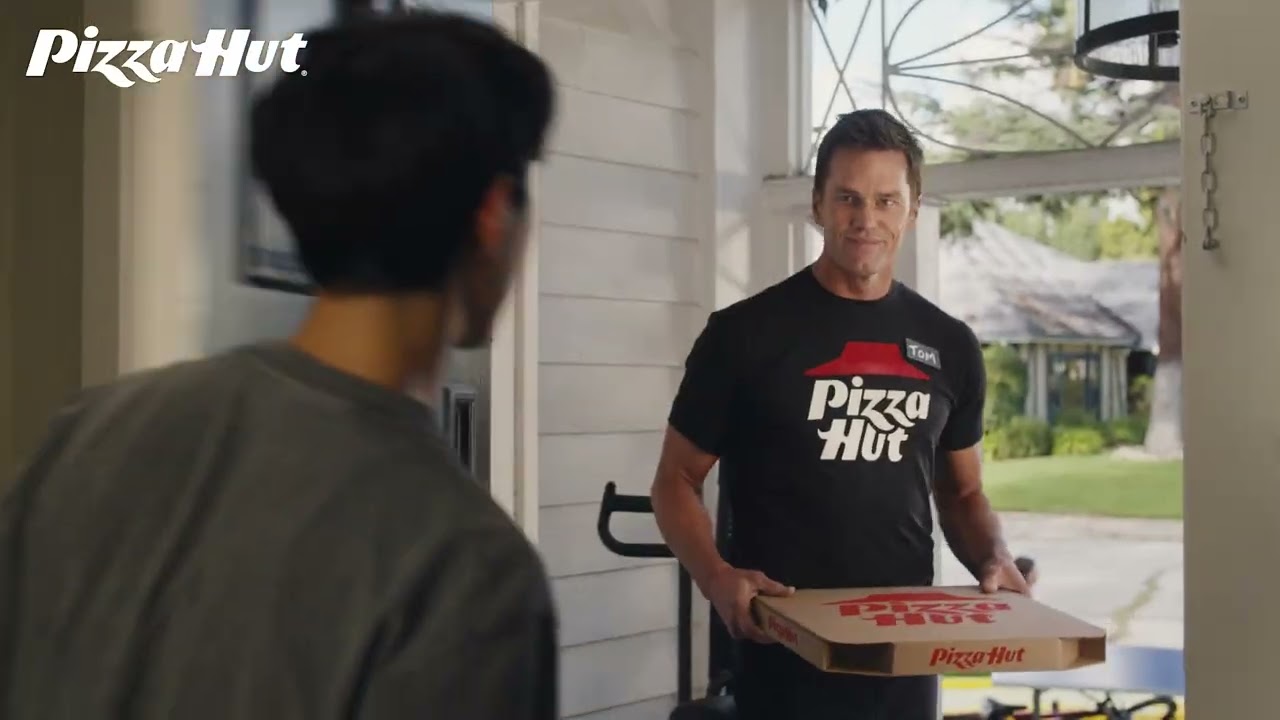
In the campaign’s hero spot, Brady is reimagined as a Pizza Hut delivery driver, pitching the idea that any NFL quarterback should say “pizza” immediately before “hut” during a snap count — a playful reinterpretation of one of American football’s most fundamental rituals. The ad cleverly combines Brady’s iconic status as a seven-time Super Bowl winner with self-deprecating humour, making the brand feel both premium (associating with the world’s most celebrated quarterback) and accessible (the joke lands for both casual fans and hardcore football enthusiasts).
The campaign’s financial anchor was the $10 Big New Yorker pizza — a large, foldable slice-style pizza designed to capture game-day eating occasions. By linking Brady to a specific, affordable product at a compelling price point, Pizza Hut converted celebrity attention into transactional behaviour, not just brand awareness.
The partnership also extended beyond advertising into social media content, where Brady’s considerable personal following amplified reach organically. Pizza Hut tracked engagement carefully, using the campaign to also drive Hut Rewards programme sign-ups through QR codes embedded in broadcast spots.
3. Sports Sponsorship: Official Pizza of the NFL
Pizza Hut holds the official designation as the Official Pizza Sponsor of the National Football League (NFL) — a partnership that provides extraordinary marketing leverage given that the NFL is the most-watched sports league in the United States.
The NFL partnership gives Pizza Hut exclusive rights to use league branding in advertising, in-store displays, and digital campaigns. This is particularly powerful during high-viewership moments like Super Bowl Sunday, conference championship weekends, and Monday Night Football, when pizza consumption spikes dramatically.
The sponsorship works as a channel amplifier. By combining NFL imagery with value promotions — like the Big Dinner Box at $19.99 and the $10 Big New Yorker — Pizza Hut connects aspirational sports entertainment with family-friendly price points. The brand has historically seen measurable order lifts on game days when its NFL creative is active in market.
From a competitive standpoint, holding the NFL sponsorship is a significant differentiator. Domino’s and Papa John’s have pursued league and team-level sponsorships but neither has held the top-tier “Official Pizza” designation. This positioning reinforces Pizza Hut’s scale and helps defend its market share during the most commercially important pizza-buying occasions of the year.
4. Value Marketing & Everyday Promotions
Value has become a battleground in the US pizza market, and Pizza Hut has responded with a structured approach to recurring, predictable deals that train customers to return on specific occasions.
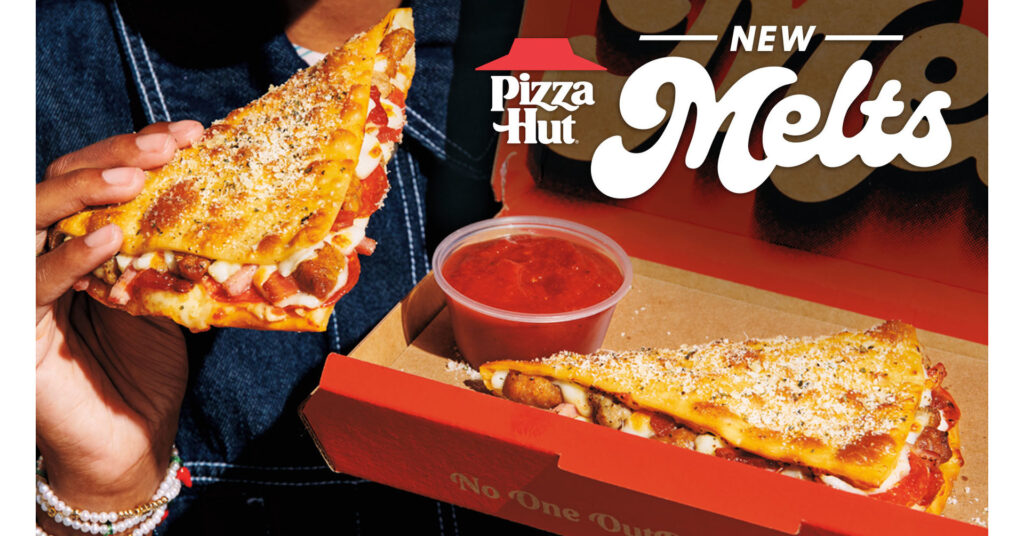
Melts Monday is perhaps the clearest expression of this strategy. Every Monday, customers can purchase Pizza Hut Melts — a folded, personal-sized pizza — for $4.99. The recurring nature of the deal creates a habit loop: Monday arrives, and Melts Monday messaging is deployed via push notification, email, and social media, nudging customers at the precise moment when the offer is relevant. The deal also addresses the challenge of lower traffic on weekdays, one of the persistent operational pain points for QSR chains.
The Big Dinner Box (launched in October 2025 in partnership with Josh Allen and Pepsi) is Pizza Hut’s answer to the group/family occasion. Priced from $19.99, the box contains a combination of pizza, breadsticks, and wings — a full meal for a family at a competitive price point. The Josh Allen tie-in (the Buffalo Bills quarterback is one of the most marketable players in the current NFL) extended the NFL partnership beyond just the Brady creative, giving Pizza Hut two distinct athlete endorsement voices in market simultaneously.
The $10 Big New Yorker tied to the Tom Brady campaign represents premium-value positioning: a large pizza at a price that signals quality without straying into discount territory. Anchoring it at $10 also creates a psychologically compelling offer in an era when major rival Domino’s Mix & Match deal and Papa John’s value offers are constantly in the consumer’s field of vision.
5. Hut Rewards: Driving Loyalty Through Data
Hut Rewards is Pizza Hut’s structured loyalty programme that rewards members with points for every dollar spent. Points can be redeemed for free pizzas, sides, and exclusive member-only promotions. The programme is tiered, with higher spend unlocking better benefits and greater personalisation.
From a marketing strategy perspective, Hut Rewards serves three functions. First, it creates switching costs: once a customer accumulates points, there is a tangible financial incentive to continue ordering from Pizza Hut rather than a competitor. Second, it provides first-party data: every loyalty transaction gives Pizza Hut insight into individual preference patterns, order frequency, and basket composition — data that feeds personalised push notifications and targeted offers. Third, it anchors the digital relationship: the primary channel for Hut Rewards management is the Pizza Hut mobile app, making loyalty a direct driver of app adoption and regular usage.
Pizza Hut uses behavioural segmentation within Hut Rewards to identify lapsed customers and deploy win-back campaigns with specific incentives. The programme is particularly effective in India, where mobile-first consumers are accustomed to digital loyalty mechanics and Pizza Hut reports that 65% of orders in the country flow through its mobile app.
6. Tech Innovation & Viral Marketing Stunts
Pizza Hut has repeatedly used technology-driven stunts to generate earned media and position itself as a forward-thinking brand rather than a legacy chain.
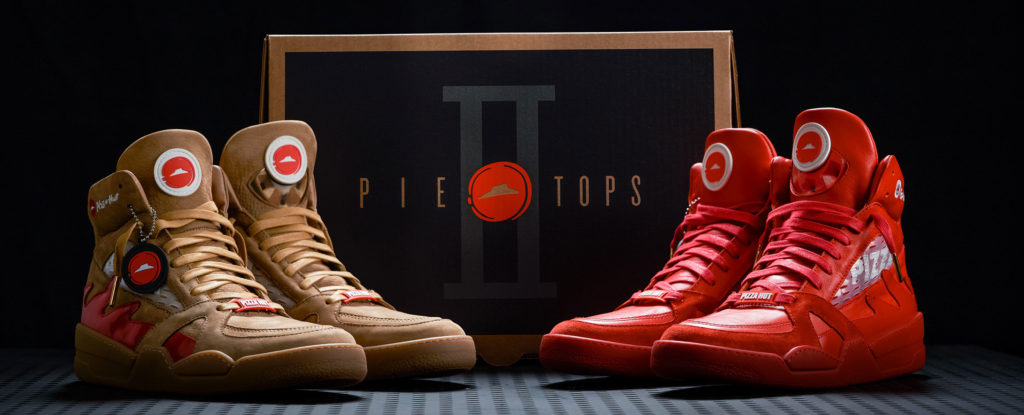
The Pie Tops campaign remains one of the most creative stunts in QSR marketing history. Pizza Hut released a limited-edition pair of Bluetooth-connected sneakers that allowed wearers to order a pizza by pressing a button on the shoe. The sneakers integrated with the Pizza Hut app to place a pre-saved order. While functional, the primary value was earned media: the campaign generated coverage in mainstream news, tech publications, and culture media that would have cost multiples of the production budget in paid advertising.
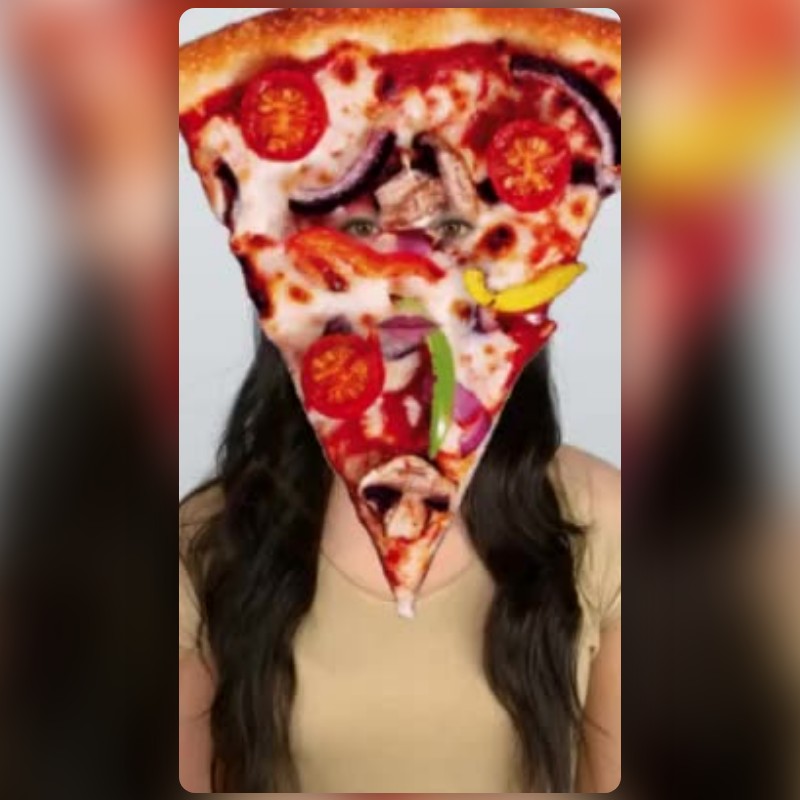
The Snapchat AR lens campaign targeted younger consumers with a pizza-themed augmented reality filter — pizza sunglasses overlaid on the user’s face. The lens generated organic user shares, extending reach through Snapchat’s native viral mechanics. For a brand competing with younger-skewing rivals like Domino’s, which has prioritised tech-first marketing for over a decade, this kind of pop-culture brand presence in youth-facing platforms is critical.
The Fortnite collaboration took a different approach: Pizza Hut embedded itself within one of the world’s most popular video games, offering real-world free pizza rewards to players who achieved specific in-game milestones. This “play to earn pizza” mechanic blurred the boundary between entertainment and purchase, reaching the Gen Z and younger millennial audience in their own environment.

Collectively, these tech stunts reinforce a brand narrative that says Pizza Hut is not content to be a legacy brand coasting on heritage. The playfulness signals cultural relevance and creativity, which is essential when the pizza category’s growth consumers are digital natives who have never set foot in a red-roof dine-in restaurant.
7. Digital-First Strategy & Mobile App
Pizza Hut’s digital strategy has accelerated significantly over the past three years. Across the Yum! Brands system, digital sales were approaching $40 billion annually in FY2025, with digital mix at nearly 60% of all orders. Pizza Hut’s own digital channel is a critical interface for loyalty programme engagement, value deal redemption, and personalised marketing.
In India — one of Pizza Hut’s fastest-growing international markets — 65% of all orders are placed through the mobile app. This is a remarkable figure that illustrates the structural opportunity for digital-led growth in markets where smartphone penetration has outpaced delivery infrastructure. Pizza Hut India has invested heavily in a frictionless app experience, including saved address management, split billing features, and an AI-powered chatbot for order assistance.
In the US, the app anchors the Hut Rewards programme and serves as the primary channel for exclusive promotional pricing. Pizza Hut has progressively shifted promotional spend toward in-app activation, where the cost of offer delivery is negligible relative to direct mail or broadcast and where conversion data is immediately measurable. The brand also uses app-level A/B testing to optimise promotion messaging, offer structure, and checkout flows continuously.
AI is playing an increasing role in Pizza Hut’s digital marketing. Personalised product recommendations based on order history, dynamic pricing experiments, and predictive win-back offers for lapsed customers are all informed by machine learning models operating on the Hut Rewards dataset. This data flywheel — more orders generate better data which enables better personalisation which drives more orders — is the same logic that has powered Domino’s digital supremacy, and Pizza Hut is working to close the gap.
8. Sustainability & Responsible Brand Positioning
Pizza Hut has made measurable commitments to sustainable packaging. The brand earned a Forbes Sustainable Packaging Award for a 68% reduction in plastic usage across its packaging range. This is a significant achievement in a segment historically reliant on plastic cups, cutlery, and packaging sleeves, and it resonates with the sustainability-conscious consumer cohort that increasingly factors environmental impact into purchase decisions.
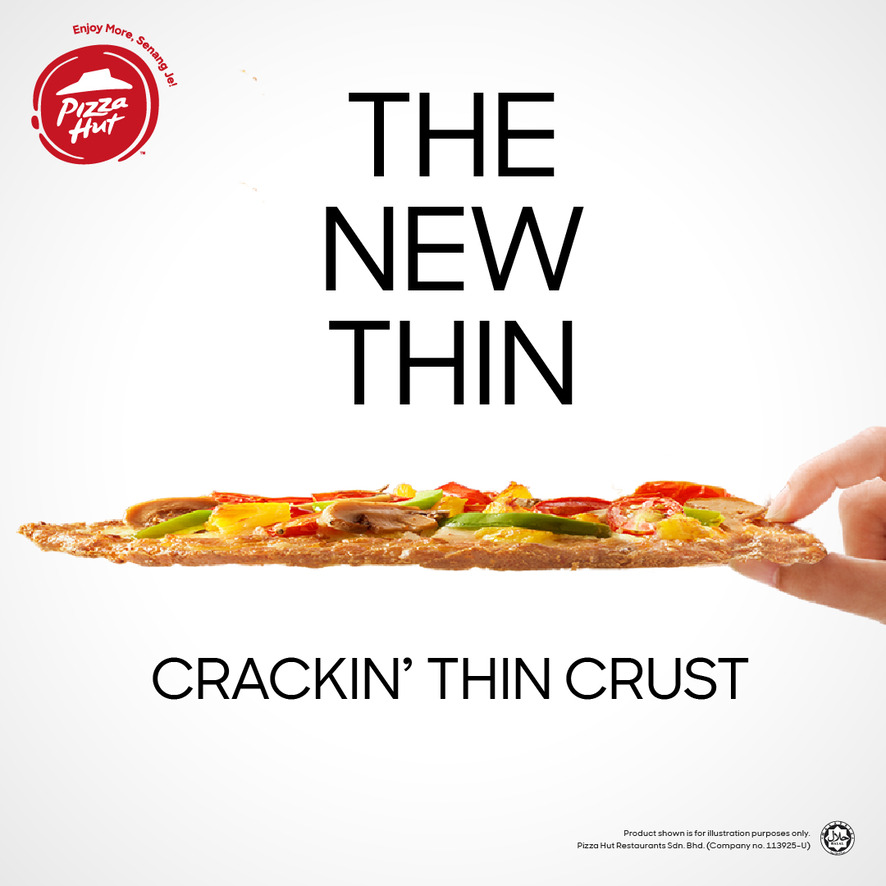
On the product side, Pizza Hut has diversified its menu to include health-conscious options such as its Thin Crust (“Skinny Pizza”) range, which offers a lower-calorie alternative to the classic Pan Pizza. Menu diversification to include lighter options, vegetarian toppings, and, in select international markets, plant-based proteins, acknowledges the wellness trend that has reshaped QSR category dynamics globally.
Sustainability as a marketing pillar is still nascent at Pizza Hut compared to categories like FMCG or fashion, but it serves a defensive function: it removes a potential point of criticism that could erode brand equity among younger consumers who actively curate their ethical consumption choices. Publicising the 68% plastic reduction through media and in-store materials demonstrates accountability and progress rather than empty aspirational messaging.
9. Strategic Review & Brand Reinvention
In Q4 2025, Yum! Brands CEO Chris Turner announced a formal review of strategic options for the Pizza Hut brand — a significant development that reflects the sustained pressure the brand has faced in the US market. US same-store sales declined 5% in FY2025 (down 8% on a 2-year stack), system sales in the US fell 7% excluding lapping the extra trading week, and the brand closed a net 251 US locations during the year.
Yum! Brands incurred approximately $41 million in advisory charges associated with the strategic review in FY2025, classifying them as Special Items given their expected ongoing magnitude. The Company also began consolidating Pizza Hut entities into a single ownership structure as part of this review — simplifying the IP and legal footprint ahead of any potential transaction.
From a marketing perspective, the strategic review does not halt the brand’s marketing activity but it does signal a critical juncture. The “Raise the Bar” priorities articulated by Yum! leadership — which focus on operational improvement, technology deployment, and franchise health — set the framework within which Pizza Hut’s marketing must demonstrate measurable return. Campaigns like Pizza Before the Hut and Melts Monday are not just brand-building exercises; they are evidence in the strategic review case file that Pizza Hut’s consumer proposition can be rebuilt.
Also Read: Marketing Strategies and Marketing Mix of Yum Brands
Marketing Mix of Pizza Hut: The 4Ps
1. Product
Pizza Hut’s product portfolio is structured to serve multiple occasion types and customer segments. The core offering is pizza across three primary formats: Pan (thick crust, signature product), Hand Tossed, and Stuffed Crust. Each format appeals to different taste preferences and positioned accordingly in pricing and marketing.
Beyond core pizza, the menu includes pasta, chicken wings, breadsticks, garlic bread, sides, and desserts. Combo offerings such as the Big Dinner Box bundle multiple items into a shareable format designed for families and group dining occasions. The Melts product — a folded, personal-sized pizza — represents a genuine product innovation that addresses the individual lunch occasion, expanding daypart reach beyond the traditional dinner and weekend peaks.
Internationally, Pizza Hut adapts its menu significantly to local tastes. In India, paneer and spiced chicken toppings are prominent. In China, the menu includes seafood options, rice dishes, and dim sum in some locations. In the Middle East, halal certification and regional spice profiles are standard. This localisation strategy is a key competitive advantage in markets where a purely American menu would underperform.
Pizza Hut has also invested in introducing healthier, lower-calorie options — its Thin Crust range, for example, reduces calories per slice while maintaining the brand’s flavour profile. This menu evolution reflects a broader understanding that health consciousness is no longer a niche concern but a mainstream purchase driver.
2. Price
Pizza Hut employs a multi-tiered pricing architecture that serves different segment needs simultaneously. At the premium end, specialty and stuffed-crust pizzas carry full-price positioning, justified by premium ingredients and craftsmanship perception. At the value end, specific promotions anchor price expectation at competitive levels: $4.99 Melts Monday, $10 Big New Yorker, and $19.99 Big Dinner Box.
The coexistence of premium and value pricing is deliberate. Pizza Hut’s core customer base includes families seeking affordable meals (who respond to the Big Dinner Box and Melts Monday deals) as well as occasional treat buyers who are willing to pay more for a premium experience. By maintaining both tiers, the brand avoids the race-to-the-bottom trap that pure value positioning entails while also staying competitive during the period when consumer price sensitivity is high.
Price-bundling is a particularly effective mechanism. By combining pizza, wings, and sides into a single price, Pizza Hut increases the average check size relative to a single-product purchase while delivering a perception of value through the bundle total. This is the logic behind the Big Dinner Box and similar combo offers that have been a recurring feature of Pizza Hut’s promotional calendar.
3. Place
Pizza Hut operates through a hybrid distribution model that has evolved considerably from its dine-in origins. The estate includes traditional dine-in restaurants, delivery-focused units without dining rooms (often called “delcos” or delivery/carry-out units), and non-traditional locations in airports, sports venues, universities, and travel plazas.
In the US, the shift toward delivery and carry-out formats has accelerated as the red-roof dine-in model has proved economically challenging for franchisees. The 250+ US closures announced in early 2026 were concentrated in underperforming dine-in locations where changing consumer habits and lease economics made ongoing operation unsustainable. The remaining US estate is weighted more toward delivery and hybrid formats.
Internationally, the model varies significantly. In China, Pizza Hut operates a more premium dine-in-heavy estate, positioning itself as an experience-oriented brand rather than a quick-service one — a positioning that commands higher average checks and stronger brand affinity than its US equivalent. In India, the brand operates a mix of mall-based dine-in restaurants and delivery hubs. In the Middle East and Southeast Asia, the franchise model dominates, with local master franchisees adapting the physical format to local market conditions.
Digital ordering channels function as a “fourth place” layer on top of the physical estate. Whether a customer orders through the Pizza Hut app, website, or third-party aggregators like DoorDash and Uber Eats, each digital touchpoint is part of the brand’s distribution network. Optimising the experience across these channels is as strategically important as site selection for physical restaurants.
4. Promotion
Pizza Hut’s promotional mix is broad and multi-channel, spanning broadcast advertising, digital video, social media, influencer partnerships, experiential marketing, sports sponsorship, in-store point-of-sale, and email/push notification marketing through the Hut Rewards database.
Television remains important during peak NFL moments, where the Official Pizza of the NFL designation enables branded integrations into broadcast. Digital video on YouTube, streaming platforms, and social media extends reach among audiences who have moved away from linear television. The Tom Brady and Josh Allen creative executions are designed to work across both broadcast and digital without modification, maximising production ROI.
Social media is primarily used for community management, promotional announcement, and campaign extension. Pizza Hut maintains active presences on Instagram, TikTok, X (formerly Twitter), and Facebook. Its TikTok content skews toward food porn visuals, campaign-driven challenges, and gaming collaborations — formats that earn organic engagement from younger audiences.
Performance marketing — paid search, social retargeting, and programmatic display — is deployed primarily to convert in-market intent into orders. Customers who have visited the Pizza Hut website without ordering, or who have engaged with a social media post, are retargeted with specific offers calibrated to their browsing behaviour. This performance layer ensures that brand-building investment is complemented by precision conversion marketing.
STP Analysis of Pizza Hut: Segmentation, Targeting & Positioning
1. Segmentation
Pizza Hut segments its market across multiple dimensions. Demographically, the primary target household is family-oriented, with children aged 6–16 in the home, a household income between $40,000 and $100,000, and a geographic location in suburban or semi-urban areas. A secondary segment comprises young adults (18–34) who are frequent online orderers and value-seekers.
Psychographically, Pizza Hut targets consumers who value shared meal experiences, football fandom, and brand nostalgia. Behaviourally, the brand segments by occasion: game-day gatherings, Friday night family dinners, office team lunches, and birthday celebrations. Each occasion has a distinct product bundle and promotional message in the Pizza Hut playbook.
Geographically, segmentation is more granular internationally: in India and Southeast Asia, the aspirational middle class is a key segment, whereas in the US and UK, Pizza Hut competes more aggressively for the mass-market family diner and delivery customer. In China, the brand occupies a premium family dining segment that differs significantly from its positioning elsewhere.
2. Targeting
Pizza Hut’s primary target in the US is the “family occasion” consumer: a household with children, typically ordering for a group meal, where total ticket size is high and where convenience and familiarity are key purchase drivers. This segment is served through value bundles, NFL-themed content, and family occasion promotions.
The secondary target is the “individual value seeker” — a young adult who orders frequently through the app, is enrolled in Hut Rewards, and responds to recurring value mechanics like Melts Monday. This segment is engaged primarily through mobile, social media, and gaming collaborations like the Fortnite partnership.
Internationally, the targeting varies considerably. In India, Pizza Hut targets urban middle-class consumers aged 18–35 who are digitally fluent, aspirational, and treat a Pizza Hut meal as a premium affordable indulgence. In China, the target is the experience-driven family dining segment, where the brand’s positioning is elevated relative to local QSR alternatives.
3. Positioning
Pizza Hut’s positioning in the US can be described as: “The iconic American pizza brand that brings families together, backed by the fun of football and the guarantee of great value.” This positioning relies on three pillars: cultural heritage (the original pizza dine-in experience), sports cultural relevance (NFL Official Pizza), and accessible value (bundled deals and recurring promotions).
The challenge with this positioning is that it is under siege from multiple angles. Domino’s has owned the “digital-first delivery” space. Papa John’s has occupied “premium quality.” Little Caesars has locked up “cheapest pizza you can get right now.” Pizza Hut must carve out a space that is simultaneously authentic to its heritage and compelling to consumers who may not feel nostalgic for a brand they encounter primarily through app notifications.
“Raise the Bar” — Yum! Brands’ strategic framework — implies a positioning pivot toward stronger operational fundamentals, better digital experience, and improved franchise economics. If executed, this could shift Pizza Hut’s positioning from “the nostalgic pizza brand under pressure” to “the experience-and-value hybrid that your family can always count on.” That is a story worth telling, but it requires execution to match.
Pizza Hut Competitors: The Competitive Landscape
The global pizza QSR market is intensely competitive. Pizza Hut faces direct competitors at the national level in the US and from local operators in international markets. It competes with other large pizza chains such as Domino’s Pizza, Papa John’s, and Little Caesars.
For a detailed competitive analysis, see: Pizza Hut Competitors on Comparably
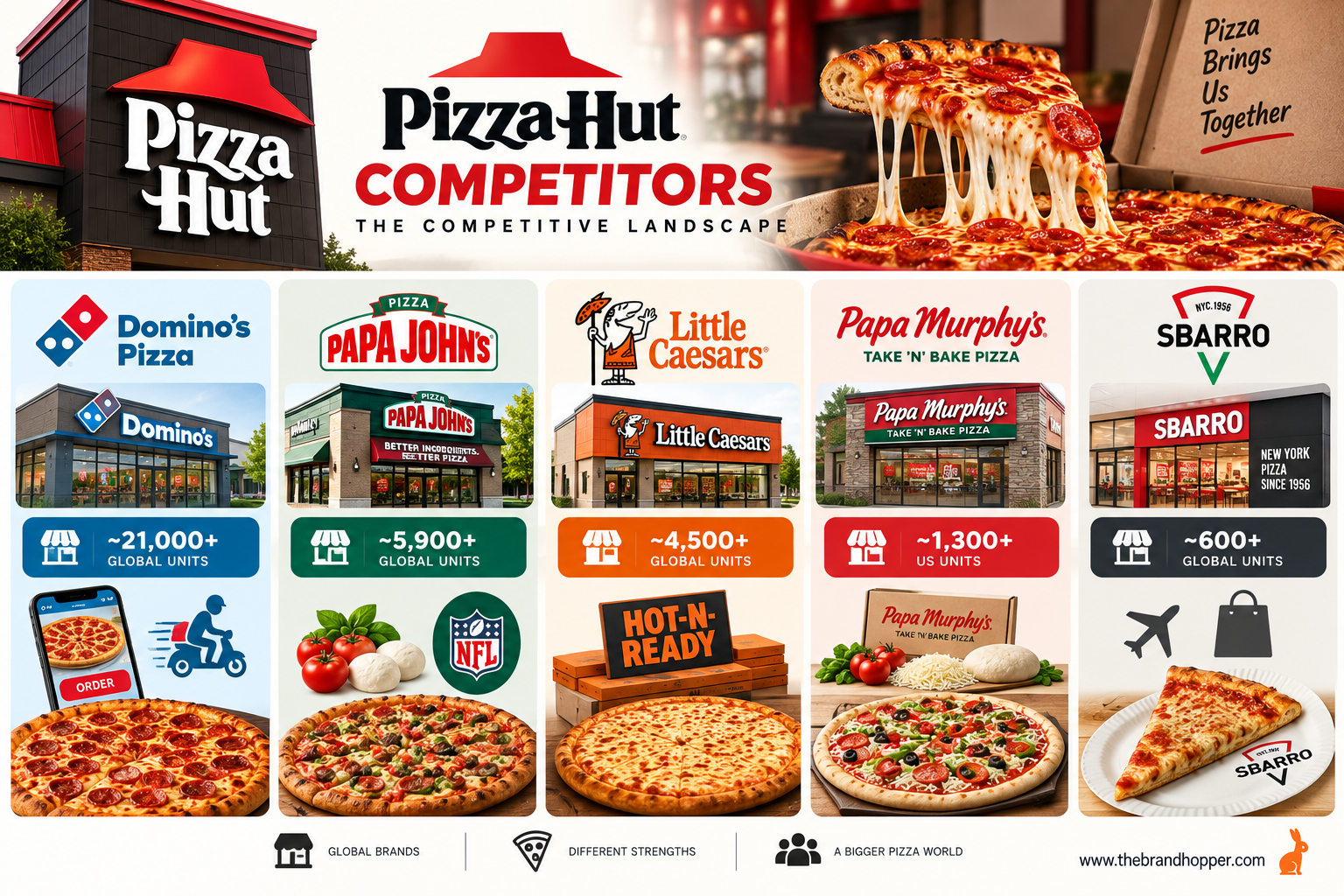
Domino’s is Pizza Hut’s most formidable rival. Domino’s pioneered the 30-minute delivery guarantee, built a technology stack that is the envy of the QSR industry, and has consistently posted positive same-store sales in the US while Pizza Hut has struggled. The Domino’s app, loyalty programme (Piece of the Pie Rewards), and GPS order tracker set consumer expectations that Pizza Hut’s digital experience is measured against.
Papa John’s positions itself as the premium, better-ingredient alternative. Its Papa Rewards loyalty programme and endorsement from NFL players (it previously held the official NFL pizza sponsorship before Pizza Hut recaptured it) make it a credible dual-threat on quality and sports culture. Little Caesars, meanwhile, competes almost entirely on price with its Hot-N-Ready model, offering a ready-to-pick-up pizza for an aggressive price point with zero wait time — a proposition that performs strongly during economic downturns.
The emergence of third-party delivery platforms (DoorDash, Uber Eats, Grubhub) has also changed competitive dynamics. These platforms surface dozens of local and regional pizza options alongside the national chains, putting pressure on Pizza Hut to ensure its digital presence, ratings, and promotional presence on these platforms are competitive. A bad review experience on DoorDash can have immediate and measurable impact on local market share.
Landmark Campaigns: A Deeper Look
1. “Pizza Before the Hut” ft. Tom Brady (2025)
“Pizza Before the Hut” launched in late 2025 ahead of the NFL season and ran nationally across broadcast, digital video, and social channels. The campaign centred on a 30-second television spot in which Tom Brady — the most decorated quarterback in NFL history — appears in a Pizza Hut uniform as a delivery driver. The conceit: Brady is on a mission to get quarterbacks everywhere to say “pizza” before saying “hut” when they call a play at the line of scrimmage.
The campaign tied directly to the $10 Big New Yorker product, creating an end-to-end marketing moment from awareness (Brady’s cultural cache) to transaction (a specific, compelling price point). Pizza Hut reported strong social media engagement during the campaign’s opening week, with #PizzaBeforeTheHut trending on X in the US on the day of launch. The earned media value of Brady’s social posts alone — he has over 12 million followers across platforms — extended the campaign’s reach significantly beyond its paid media buy.
2. Big Dinner Box with Josh Allen & Pepsi (October 2025)
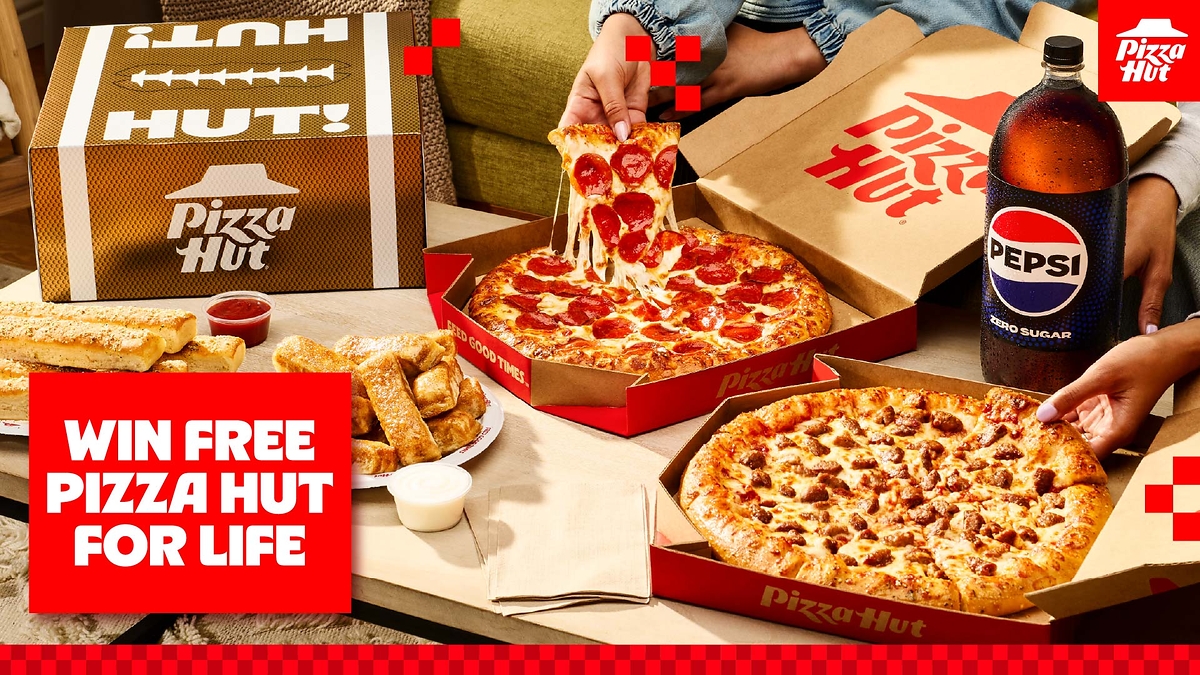
Launched in October 2025 as the NFL season reached full stride, the Big Dinner Box campaign featured Buffalo Bills quarterback Josh Allen in a co-branded activation with Pepsi. The Big Dinner Box — priced from $19.99 — offers a combination of pizza, wings, and breadsticks, designed for the game-day family or small group occasion.
The Allen partnership extended Pizza Hut’s NFL creative roster beyond Brady, targeting football fans in different regional and demographic markets. Allen, known for his playful social media presence and broad appeal among younger NFL fans, connected with an audience that Brady — despite his universal recognition — may not reach as naturally. The Pepsi co-branding also reinforced Pizza Hut’s long-standing partnership with the PepsiCo beverage portfolio, a natural synergy from the brand’s PepsiCo ownership era.
3. Melts Monday: The Habit-Building Promotion
Melts Monday is less a campaign and more a strategic marketing system. Launched to give the Melts product — a personal, folded pizza introduced as a permanent menu item — a recurring weekly occasion, the mechanic is simple: every Monday, Melts are $4.99. Every Monday, Pizza Hut sends push notifications, emails, and social posts to remind its audience.
The power of Melts Monday lies in its predictability. Customers who are enrolled in Hut Rewards anticipate the Monday offer; it becomes a feature of their weekly routine. Over time, this habit formation is more durable than a one-off promotional campaign because it changes behaviour rather than merely responding to a single stimulus. The individual ticket value of a $4.99 Melt may be lower than a full pizza order, but the frequency of visit and the associated Hut Rewards data generated per customer make it a net positive for the brand’s long-term marketing engine.
4. Fortnite Collaboration: Pizza in the Metaverse
Pizza Hut’s partnership with Epic Games’ Fortnite represents one of the boldest entries into gaming-native marketing by any QSR brand. Under the collaboration, players who achieved specific in-game milestones were rewarded with real-world Pizza Hut pizza — bridging the gap between virtual achievement and physical reward in a way that few brands have managed successfully.
The campaign targeted the 18–34 male demographic that Fortnite attracts in large numbers and that Pizza Hut needs to re-engage in the US. For this cohort, traditional broadcast advertising has diminishing returns; their attention is in-game, and marketing that meets them there — on their terms, with a relevant reward — is far more persuasive than a pre-roll ad they skip after five seconds.
Frequently Asked Questions (FAQs)
Q: What is Pizza Hut’s current global restaurant count?
A: As of FY2025, Pizza Hut operates 19,974 restaurants across 65 countries, making it one of the world’s largest pizza chains by unit count (Source: Yum! Brands Q4 2025 Earnings Release, February 2026).
Q: Who are Pizza Hut’s main competitors?
A: Pizza Hut competes primarily with Domino’s Pizza, Papa John’s, and Little Caesars in the quick-service pizza segment. Domino’s leads on digital ordering speed, while Papa John’s targets premium positioning and Little Caesars owns the value segment with its Hot-N-Ready model.
Q: What is Pizza Hut’s “Raise the Bar” strategy?
A: “Raise the Bar” is the multi-year strategic framework announced by Yum! Brands that sets the priorities for operational excellence, digital innovation, and customer experience improvements across all its brands, including Pizza Hut. It focuses on unit economics, tech deployment, and franchise health.
Q: Does Pizza Hut have a loyalty programme?
A: Yes. Hut Rewards is Pizza Hut’s loyalty programme. Members earn points for every dollar spent, which can be redeemed for free pizzas and exclusive deals. The programme uses personalised push notifications and app-exclusive offers to increase order frequency and customer lifetime value.
Q: What is Pizza Hut’s “Melts Monday” deal?
A: Melts Monday is a recurring value promotion where customers can purchase Pizza Hut’s Melts (a folded, personal-sized pizza) for just $4.99 every Monday. The programme drives traffic on a traditionally slower day of the week and rewards loyal customers with consistent value.
Q: Who founded Pizza Hut and when?
A: Pizza Hut was founded in 1958 by brothers Dan Carney and Frank Carney in Wichita, Kansas, USA. They borrowed $600 from their mother to open the first location. Within a decade, the chain expanded dramatically, and Pepsico acquired it in 1977. It became part of Yum! Brands when that company spun off from Pepsico in 1997.
Q: What was the “Pizza Before the Hut” campaign?
A: “Pizza Before the Hut” was a creative national campaign featuring retired NFL quarterback Tom Brady. In the campaign’s centrepiece TV spot, Brady plays a Pizza Hut delivery driver and challenges quarterbacks to say “pizza” before saying “hut” on the field — a humorous twist on the standard football snap count. The campaign tied directly to the $10 Big New Yorker pizza promotion.
Q: Is Yum! Brands selling Pizza Hut?
A: In Q4 2025, Yum! Brands announced a strategic review of options for the Pizza Hut brand. The review was prompted by the brand’s sustained sales pressure, particularly in the US market, and was intended to explore all avenues to unlock shareholder value. Yum! Brands incurred approximately $41 million in advisory charges related to this strategic review during FY2025.
Q: How does Pizza Hut use technology in marketing?
A: Pizza Hut has deployed technology marketing at multiple levels: the Pie Tops sneaker campaign (shoes with embedded Bluetooth ordering), a Snapchat AR lens featuring pizza-themed sunglasses, a Fortnite collaboration that rewarded in-game winners with free pizzas, and AI-powered ordering through its mobile app. In India, 65% of all orders are placed through mobile, illustrating the brand’s digital-first traction in emerging markets.
Q: What is Pizza Hut’s pricing strategy?
A: Pizza Hut uses a hybrid pricing strategy that combines premium pricing for dine-in experiences and specialty products with value-anchored promotions to drive volume. Key price points include the $4.99 Melts Monday deal, the $10 Big New Yorker pizza, and the Big Dinner Box bundle starting at $19.99. Internationally, prices are adapted to local purchasing power and competitive dynamics in each market.
Conclusion
Pizza Hut’s marketing strategy is a fascinating study in how a heritage brand navigates the dual pressures of legacy expectation and modern disruption. On one hand, the brand possesses genuine competitive advantages that no rival can easily replicate: the oldest and most culturally embedded pizza brand in the world, a 19,974-unit global network spanning 65 countries, the NFL’s Official Pizza designation, and a menu that has defined what pizza means for generations of consumers.
On the other hand, the US business is under structural pressure. Same-store sales declined 5% domestically in FY2025, the US estate has been rationalised through closures, and Yum! Brands has initiated a formal strategic review of the brand’s future ownership structure. These are serious signals that require more than incremental marketing improvement.
The brand’s recent marketing moves — the Tom Brady “Pizza Before the Hut” campaign, the Josh Allen Big Dinner Box activation, Melts Monday, and the Fortnite gaming collaboration — are all steps in the right direction. They demonstrate that Pizza Hut can be creative, culturally relevant, and value-forward simultaneously. The question is whether these campaigns can translate into sustained same-store sales recovery, particularly in the US, where the competitive intensity from Domino’s, Papa John’s, and Little Caesars is unrelenting.
Internationally, the picture is more encouraging. Pizza Hut’s presence in 65 countries, with positive momentum in markets like the Middle East (+8% SSS), India (+2% SSS), and China (+2% SSS), demonstrates that the global brand equity remains strong where competition is less intense and where Pizza Hut’s premium-affordable positioning resonates more clearly.
The path forward for Pizza Hut’s marketing strategy lies in three imperatives: doubling down on digital — both in the app experience and in data-driven personalisation through Hut Rewards; rebuilding US consumer trust through consistently delivered value mechanics like Melts Monday and the Big Dinner Box; and accelerating international growth marketing in markets where the brand’s fundamentals are still improving. Whether Pizza Hut executes this agenda as part of Yum! Brands or under new ownership, the marketing blueprint it has built is the right foundation. The execution is what will determine whether the iconic red roof rises again or fades further from relevance.
To read more content like this, subscribe to our newsletter