Last Updated on September 4, 2026 by Team TBH
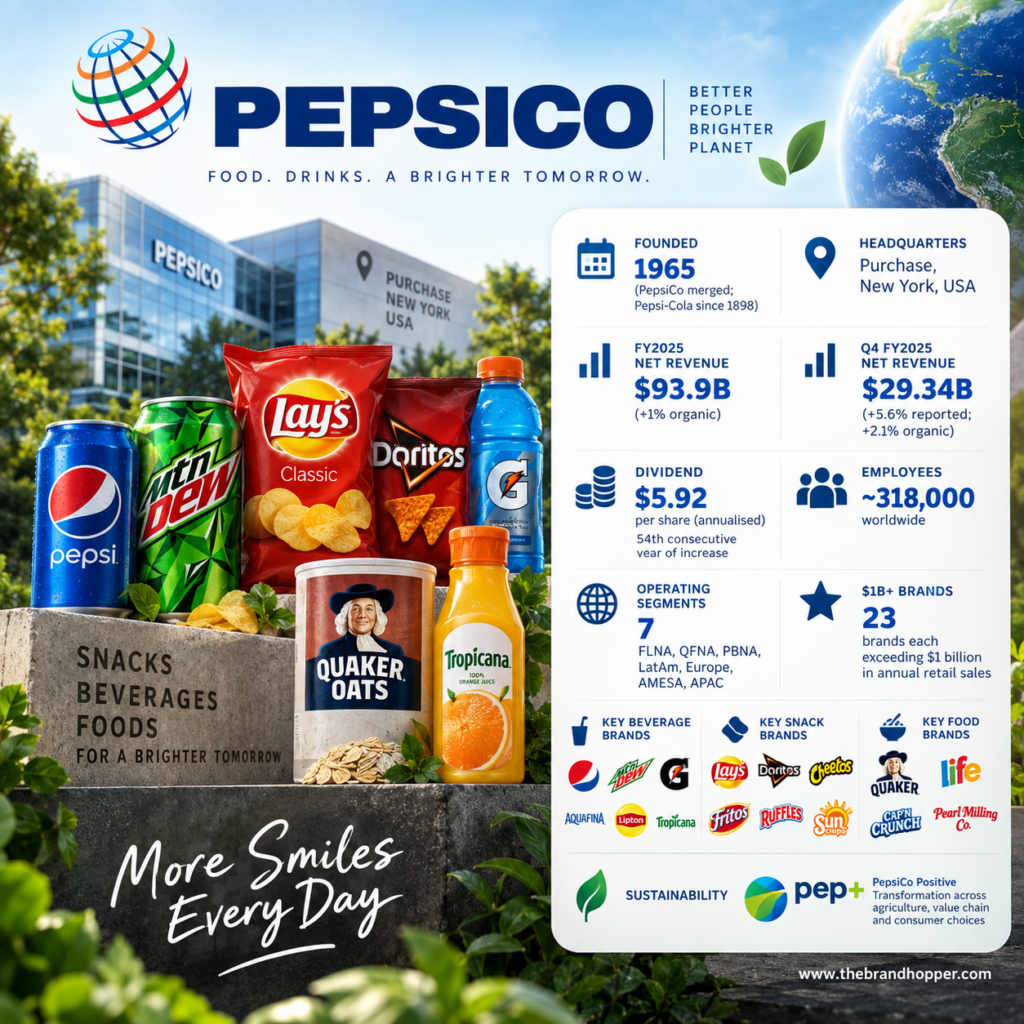
PepsiCo, Inc. is one of the world’s most formidable consumer brands — a multinational food, snack, and beverage corporation headquartered in Purchase, New York, with origins stretching back to 1898 when pharmacist Caleb Bradham created the drink that would become Pepsi-Cola. Over more than a century of innovation, acquisition, and adaptation, PepsiCo has evolved from a single beverage into a global powerhouse with a portfolio that spans every occasion, every meal, and nearly every country on earth.
In FY2025 (full year ended December 31, 2025), PepsiCo reported net revenues of $93.9 billion — up from $91.9 billion in FY2024 — with organic revenue growth of 1% for the year. Fourth-quarter revenues rose 5.6% to $29.34 billion, demonstrating sequential acceleration into the year-end.
The company operates through seven reporting segments: Frito-Lay North America (FLNA), Quaker Foods North America (QFNA), PepsiCo Beverages North America (PBNA), Latin America, Europe, Africa/Middle East/South Asia (AMESA), and Asia Pacific/Australia/New Zealand/China (APAC). This multi-segment architecture means PepsiCo does not face a single monolithic competitor — it faces a different competitive set in each segment and geography.
PepsiCo’s portfolio includes 23 brands each generating over $1 billion in annual retail sales, including iconic names like Pepsi, Lay’s, Doritos, Mountain Dew, Gatorade, Cheetos, and the Quaker Oats Company. Its global reach spans over 200 countries and territories, positioning it as a critical player in the everyday lives of billions of consumers. PepsiCo also announced a 4% increase in its annualised dividend to $5.92 per share — its 54th consecutive annual dividend increase — a testament to the durability of its business model.
The Competitive Landscape PepsiCo Navigates
PepsiCo’s competitive environment is more complex than most companies of comparable size. Because it competes simultaneously in carbonated soft drinks, energy drinks, sports drinks, juices, snack chips, cereals, and packaged foods, it faces a uniquely broad set of rivals — including mega-caps like Coca-Cola and Nestlé, snack-focused challengers like Mondelez and Kellanova (now part of Mars), fast-growing disruptors like Celsius Holdings, and mission-driven alternatives like Beyond Meat, Oatly, and Impossible Foods.
The competitive pressures in these markets are intensifying. Health-conscious consumers are shifting spending toward lower-sugar, lower-sodium, and plant-based alternatives. GLP-1 weight-loss medications (Ozempic, Wegovy) are reducing caloric consumption among millions of users — a headwind that snack-heavy companies like PepsiCo must navigate carefully.
Meanwhile, the energy drink category is booming: Celsius’s revenues surged 86% to $2.5 billion in FY2025, Red Bull crossed €12.2 billion, and Monster hit record $8.3 billion — all putting pressure on PepsiCo’s Rockstar Energy. Understanding who PepsiCo’s 16 most significant competitors are — and why — requires looking across all its categories.
Top 16 PepsiCo Competitors
1. The Coca-Cola Company
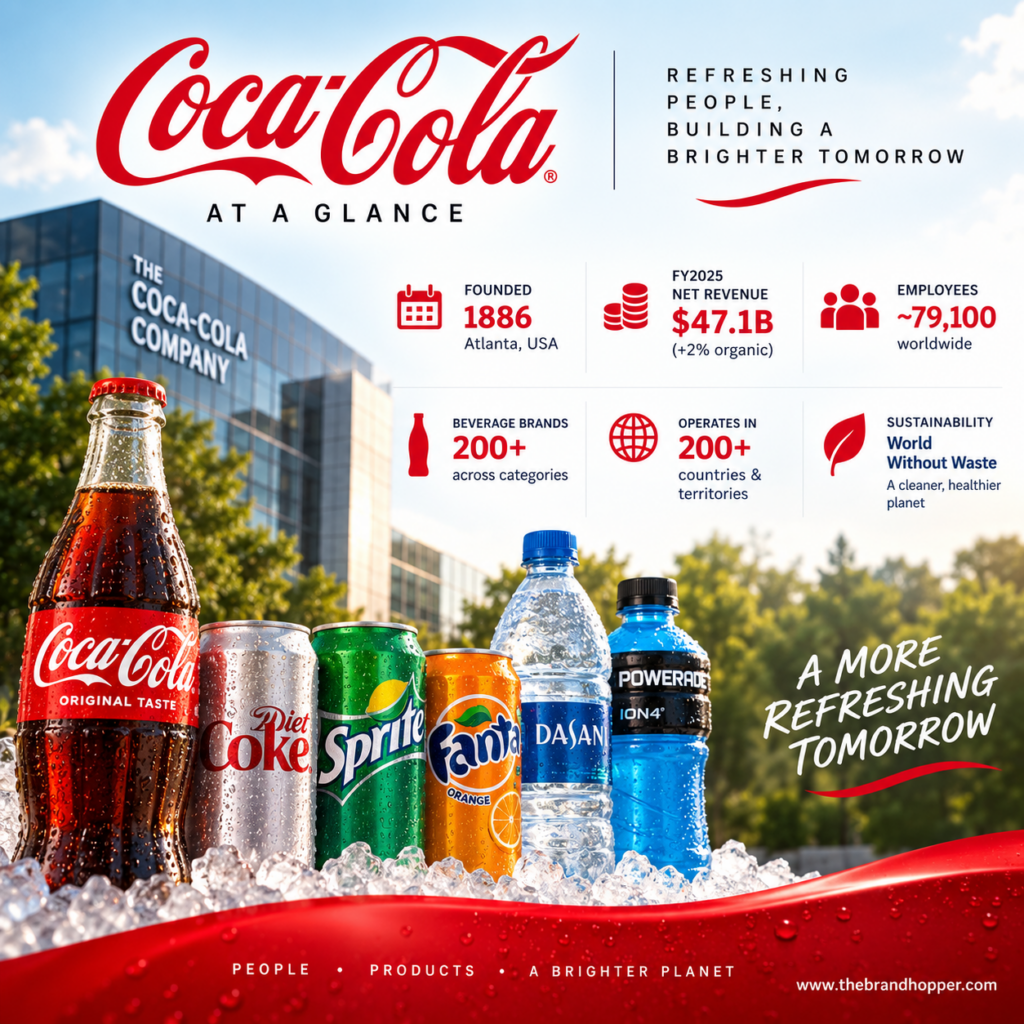
The Coca-Cola Company is PepsiCo’s longest-standing and most significant direct competitor — and the “Cola Wars” between the two is one of the most storied rivalries in business history. In FY2025 (full year ending December 31, 2025), Coca-Cola reported net revenues of $47.9 billion, up 2% on a reported basis and 5% organically — again outpacing PepsiCo’s organic growth rate. Coca-Cola Zero Sugar was the standout performer, delivering 14% unit case volume growth for the full year, as consumers shifted toward reduced-sugar options within the Trademark Coca-Cola portfolio. The company guided to 4-5% organic revenue growth and 7-8% comparable EPS growth for the following year.
Coca-Cola competes with PepsiCo across every major non-alcoholic beverage category: Coca-Cola and Pepsi in CSDs, Powerade vs. Gatorade in sports drinks, Dasani vs. Aquafina in water, Minute Maid/Simply vs. Tropicana in juices, Gold Peak vs. Pure Leaf (Lipton JV) in RTD tea, and Costa vs. Starbucks RTD (PepsiCo JV) in ready-to-drink coffee. Coca-Cola also holds approximately 19.7% equity stake in Monster Beverage Corporation, giving it indirect exposure to the energy drink boom and a financial interest in PepsiCo’s energy drink competitors.
The fundamental strategic difference between the two companies is critical: Coca-Cola remains almost entirely a beverages business, while PepsiCo generates approximately 55% of North American revenues from snacks and food through Frito-Lay. Coca-Cola’s 5% organic growth in FY2025 versus PepsiCo’s 1% highlights the current competitive dynamic — Coca-Cola is winning the beverage growth battle, while PepsiCo’s snack portfolio provides stability and cross-margin diversification.
2. Keurig Dr Pepper (KDP)
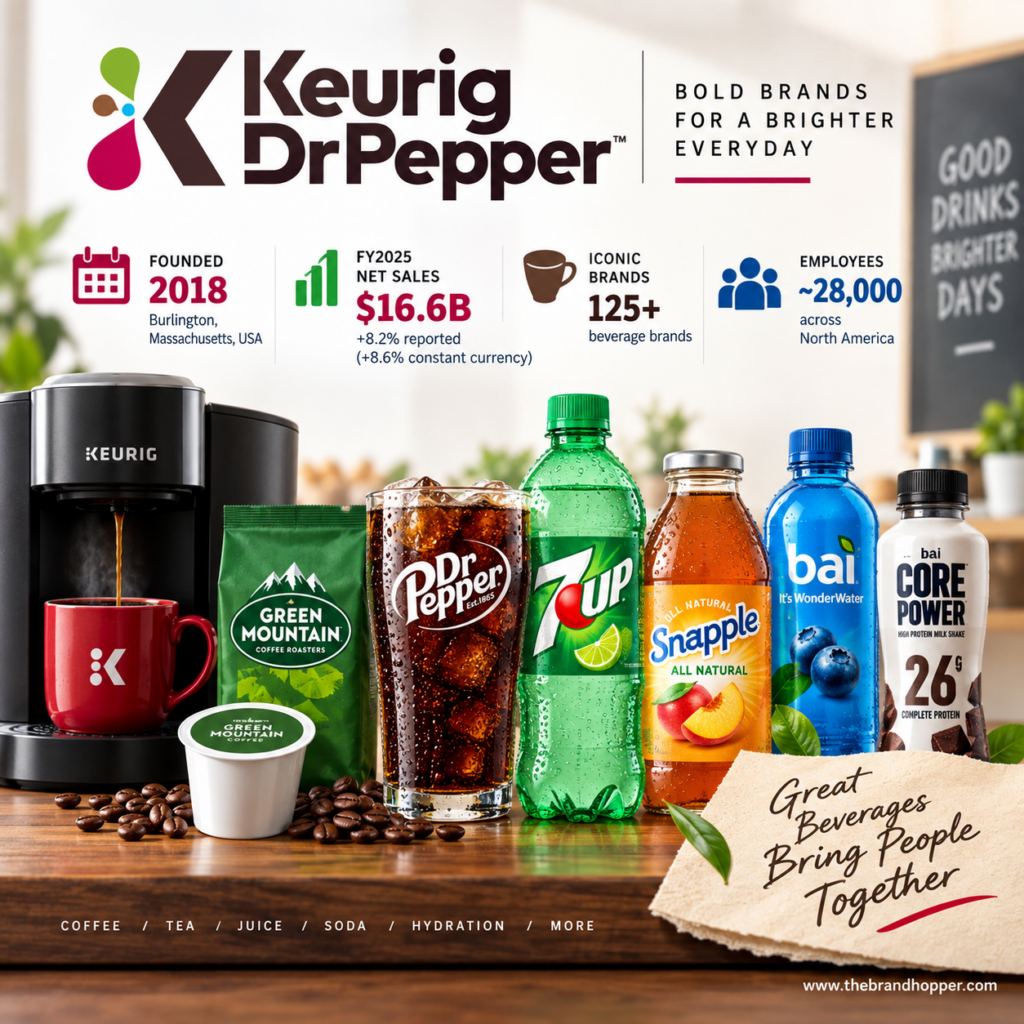
Keurig Dr Pepper (NASDAQ: KDP) is the third-largest non-alcoholic beverage company in North America, formed from the 2018 merger of Keurig Green Mountain and Dr Pepper Snapple Group. In FY2025, KDP reported net sales of $16.6 billion — up 8.2% on a reported basis and 8.6% in constant currency — driven by volume/mix growth of 4.8% and favorable net price realization of 3.8%. This strong FY2025 performance reflects KDP’s momentum across its portfolio of 125+ owned, licensed, and partner brands including Dr Pepper, Canada Dry, 7UP, Snapple, Mott’s, A&W, Hawaiian Punch, and the Keurig single-serve coffee system.
KDP competes with PepsiCo in several specific beverage segments. Dr Pepper is the third most consumed carbonated soft drink in the United States, competing with Pepsi for on-shelf share in convenience stores, supermarkets, and restaurants. In flavored CSDs, KDP’s Canada Dry, 7UP, A&W, and Sunkist brands compete with PepsiCo’s Starry, Mug Root Beer, and Lipton. In premium sports drinks, KDP’s BodyArmor competes against PepsiCo’s dominant Gatorade franchise. KDP’s 8.2% reported growth in FY2025 materially outpaced PepsiCo’s reported beverage revenue growth — a sign of growing competitive intensity.
KDP’s Keurig business provides a differentiated revenue stream entirely absent from PepsiCo’s portfolio: recurring, habit-forming pod sales across tens of millions of household single-serve coffee machines. As the US at-home premium coffee market continues to grow, this recurring revenue model gives KDP financial resilience that PepsiCo’s beverage segment cannot replicate. KDP is also investing in the rapidly growing Mexican carbonated water and agua fresca categories, and in expanding Dr Pepper’s national reach in markets where it has historically under-indexed.
3. Monster Beverage Corporation
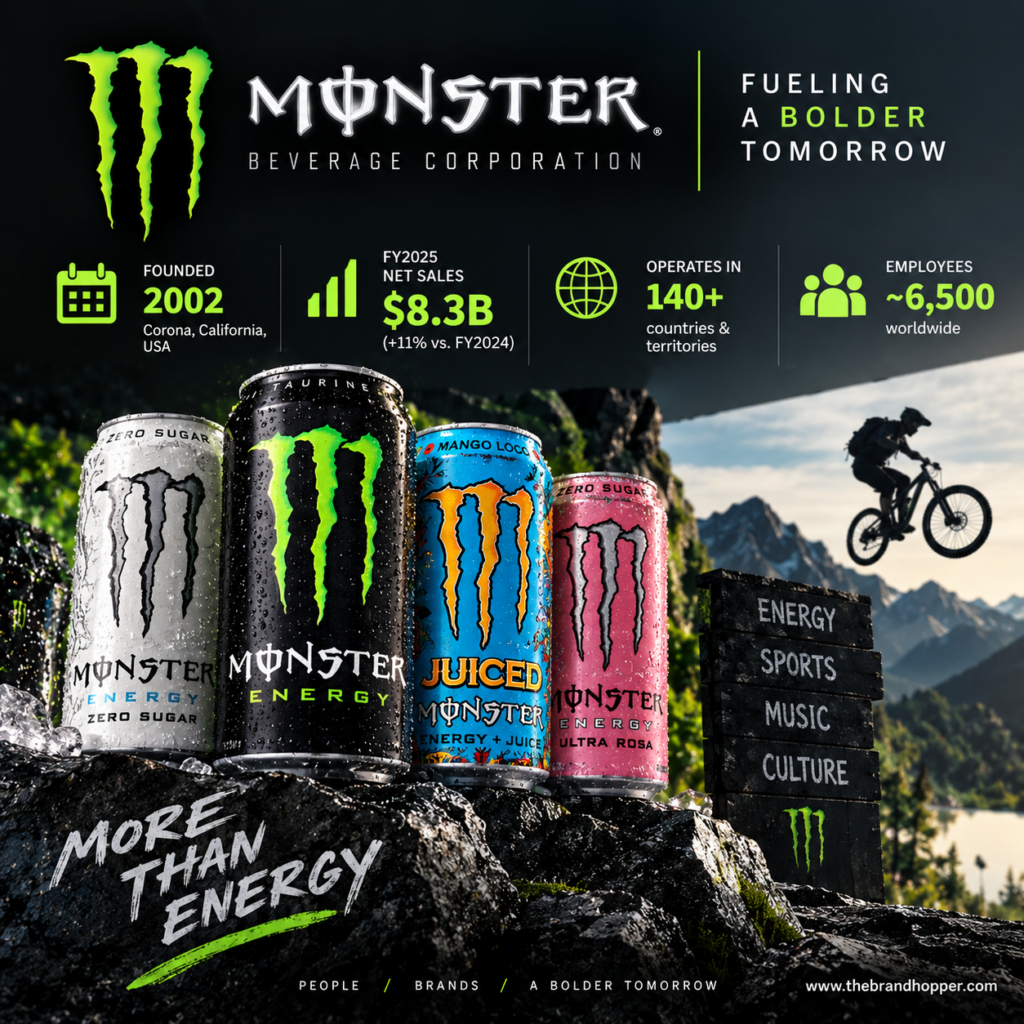
Monster Beverage Corporation is the world’s leading energy drink company by volume and the primary competitor to PepsiCo’s Rockstar Energy Drink — acquired by PepsiCo for $3.85 billion in 2020. Monster reported record net sales of $8.3 billion in FY2025 — up approximately 11% from $7.49 billion in FY2024 — driven by continued international expansion (now the #1 energy drink in many European markets), premiumisation, and product innovation across Monster Zero Ultra, Reign Total Body Fuel, and its NOS and Full Throttle brands. Monster holds approximately 36% of the U.S. energy drink market by dollar sales, the dominant position in a category growing well into double digits annually.
Monster’s competitive advantage over PepsiCo’s Rockstar Energy is substantial. Monster has built one of the most powerful brand identities in consumer culture — particularly among 18-34 male consumers — through decades of grassroots marketing, extreme sports sponsorships (Formula 1, motocross, gaming, esports), and relentless product innovation. Rockstar Energy, despite PepsiCo’s massive direct-store delivery (DSD) distribution advantage, has consistently lost market share versus Monster. The competitive dynamic is further complicated by PepsiCo’s own distribution agreement with Celsius — Monster’s fastest-growing challenger — which creates an unusual three-way tension between Monster, Celsius, and Rockstar within PepsiCo’s energy portfolio strategy.
Monster’s strategic alliance with Coca-Cola — which distributes Monster globally and holds approximately 19.7% equity — creates a powerful structural barrier to PepsiCo’s energy drink ambitions. Monster benefits from Coca-Cola’s cold-chain distribution in international markets while Coca-Cola benefits from Monster’s cultural relevance and high-growth financials. For PepsiCo’s Rockstar, competing against a brand backed by both Monster’s cultural equity and Coca-Cola’s global infrastructure represents a significant structural challenge with no obvious near-term resolution.
4. Red Bull GmbH
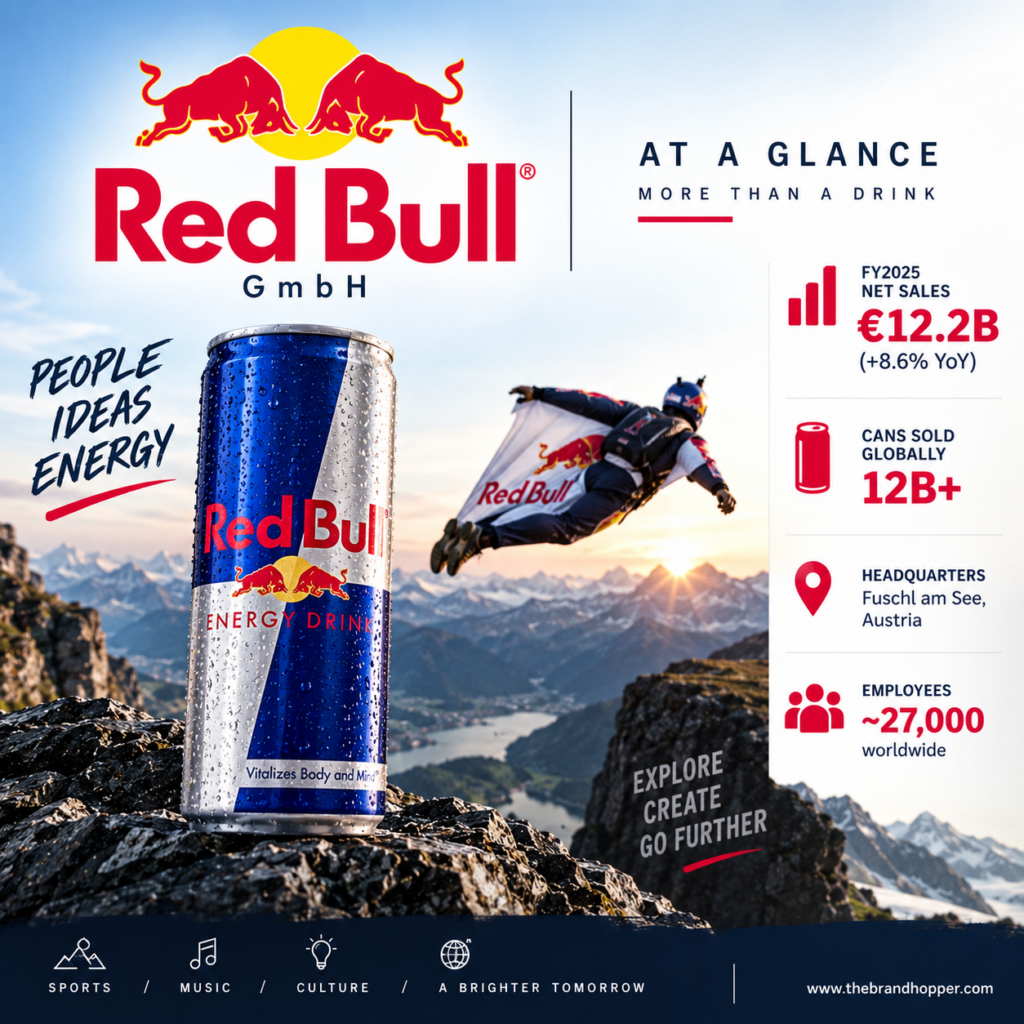
Red Bull GmbH, the Austrian company that invented the modern energy drink category, continues to grow at a pace that belies its scale. The company reported net sales of €12.2 billion in FY2025 — up 8.6% from the prior year and approximately $14.3 billion at prevailing exchange rates — with over 12 billion cans sold globally. Red Bull remains the world’s largest energy drink brand by revenue, nearly double Monster Beverage’s net sales. Red Bull’s consistent ability to sustain premium pricing while growing volume across more than 175 countries makes it one of the most consistently successful consumer brands in the world.
Red Bull’s competition with PepsiCo centres on the energy drink market, where its Original, Sugarfree, and Editions flavors compete directly with PepsiCo’s Rockstar Energy and Mountain Dew Energy. Red Bull commands approximately 26% of the U.S. energy drink market by dollar sales — second only to Monster — and its combined market share with Monster leaves Rockstar competing for a shrinking residual. Red Bull’s distribution model is unique: the company sells directly to retailers in most markets, ensuring absolute pricing control, brand purity, and margin maximisation without dependence on a single bottler.
Beyond its product, Red Bull’s ownership of Formula 1 teams (Oracle Red Bull Racing and the RB team), football clubs across Austria, Germany, the US, Brazil, and Ghana, and its extensive action sports and esports event calendar represents an unparalleled sports marketing ecosystem. For PepsiCo, competing with Red Bull is competing with a cultural institution built over 40 years of sport and adventure marketing. PepsiCo’s celebrity endorsement-driven energy campaigns have not produced the same cultural resonance — a deficit that will require either a transformative brand strategy for Rockstar or a major acquisition to address.
5. Mondelez International
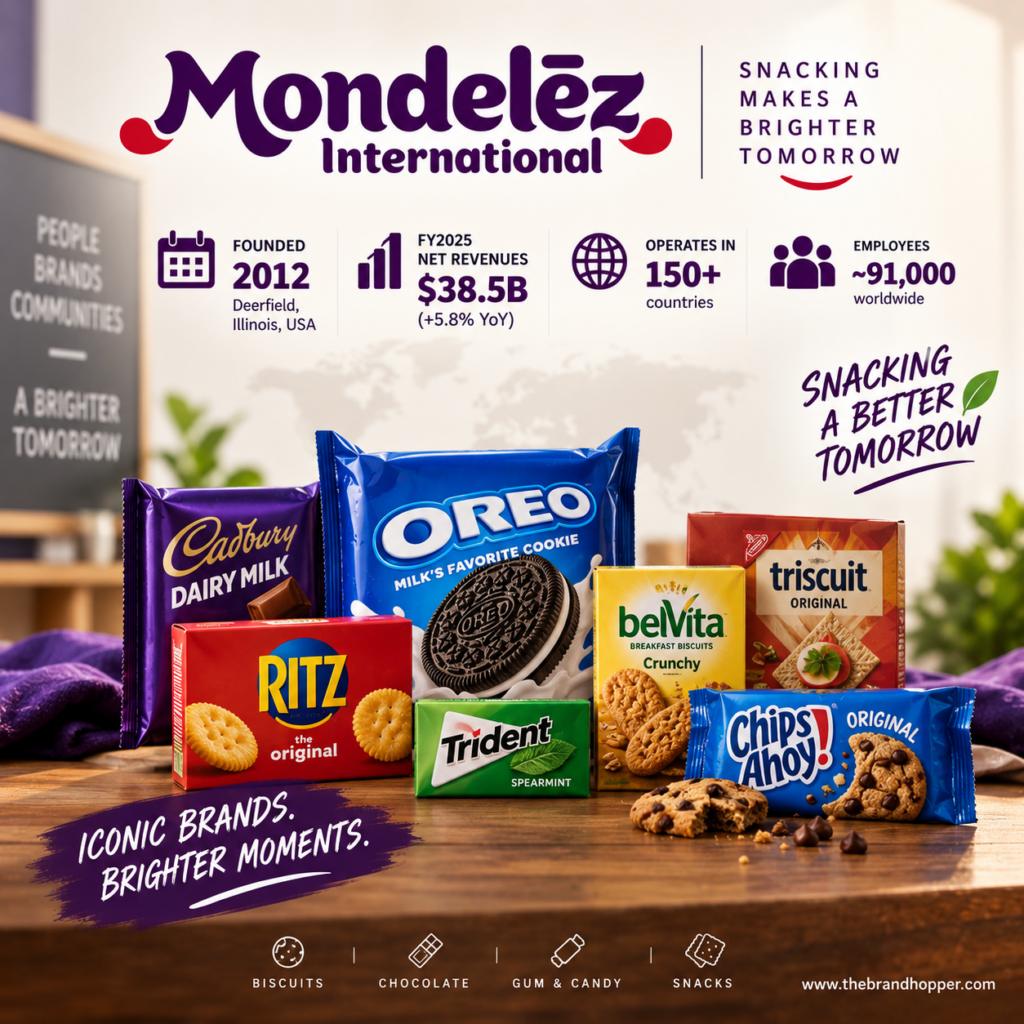
Mondelez International is the world’s largest snacking company focused on biscuits, chocolate, baked snacks, and confectionery. In FY2025, Mondelez reported net revenues of $38.5 billion — up 5.8% on a reported basis — driven by higher net pricing, though margins were significantly compressed by unprecedented cocoa cost inflation. Free cash flow remained robust at $3.2 billion, and the company returned $4.9 billion to shareholders via dividends and buybacks. Key brands include Oreo, Cadbury, Chips Ahoy!, Ritz, BelVita, Milka, and Toblerone — all of which command dominant positions in their respective global categories.
The competition between Mondelez and PepsiCo plays out primarily in the “snacking” space — any food or beverage consumed between meals. While PepsiCo dominates savoury snacks (chips, puffs, pretzels, popcorn) through Frito-Lay, Mondelez dominates sweet biscuits, chocolate, and crackers. Both companies are competing for the same finite consumer snacking budget, particularly in convenience and impulse channels. The growing overlap in “better-for-you snacking” — where both companies are investing in portion-controlled, lower-calorie formats — is making the competitive dynamic increasingly direct.
Mondelez’s competitive advantages include an extraordinary international footprint (approximately 85% of net revenues outside the US), near-unassailable market positions in biscuits and chocolate, and its Clif Bar acquisition (completed 2022 for $2.9 billion) which moved it directly into the nutrition and energy bar segment where PepsiCo’s BARE Snacks and Quaker Chewy bars also compete. Mondelez’s FY2025 revenue outpaced PepsiCo’s organic growth rate, underscoring the competitive health of its portfolio even amid cocoa cost headwinds.
6. Nestlé S.A.
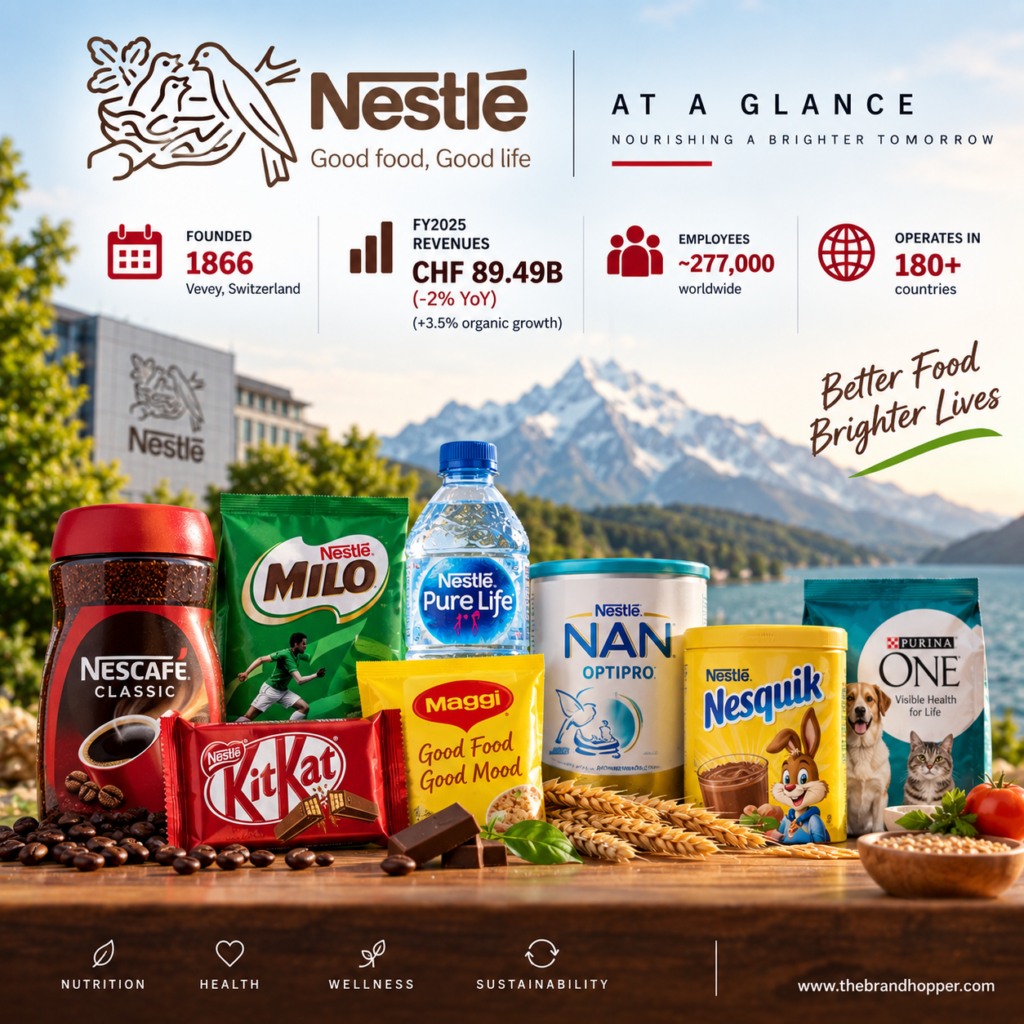
Nestlé S.A. is the world’s largest food and beverage company by revenue, competing with PepsiCo across breakfast cereals, nutritional beverages, confectionery, coffee, and culinary products. In FY2025, Nestlé reported total revenues of CHF 89.49 billion (approximately $103 billion at prevailing exchange rates) — a 2% decline from CHF 91.4 billion in FY2024, though the company achieved 3.5% organic sales growth and 0.8% real internal growth (RIG), with free cash flow of CHF 9.15 billion. The revenue decline on a reported basis reflects adverse currency movements rather than underlying volume weakness. Nestlé employs approximately 275,000 people across 186 countries.
In North America, Nestlé’s most direct competition with PepsiCo occurs in breakfast products (Nestlé cereals internationally compete with Quaker globally), nutrition bars, and coffee (Nescafé and Nespresso compete in RTD coffee where PepsiCo distributes Starbucks products). In confectionery and ice cream — KitKat, Smarties, Mövenpick — Nestlé competes for snacking occasions where PepsiCo’s Frito-Lay and Quaker also compete. Nestlé’s “Nes” platform brands and its science-based nutrition portfolio are targeting similar health-oriented consumer segments as PepsiCo’s pep+ sustainable choices initiative.
Nestlé’s FY2025 strategic update included an accelerating portfolio reshaping — divesting lower-margin or non-core assets while doubling down on high-growth categories including pet food, premium coffee, and health science nutrition. For PepsiCo, a refocused Nestlé concentrating capital on its highest-growth and most relevant categories represents a more targeted (if somewhat narrower) competitive threat than the broad multi-category overlap of prior years.
7. The Kraft Heinz Company
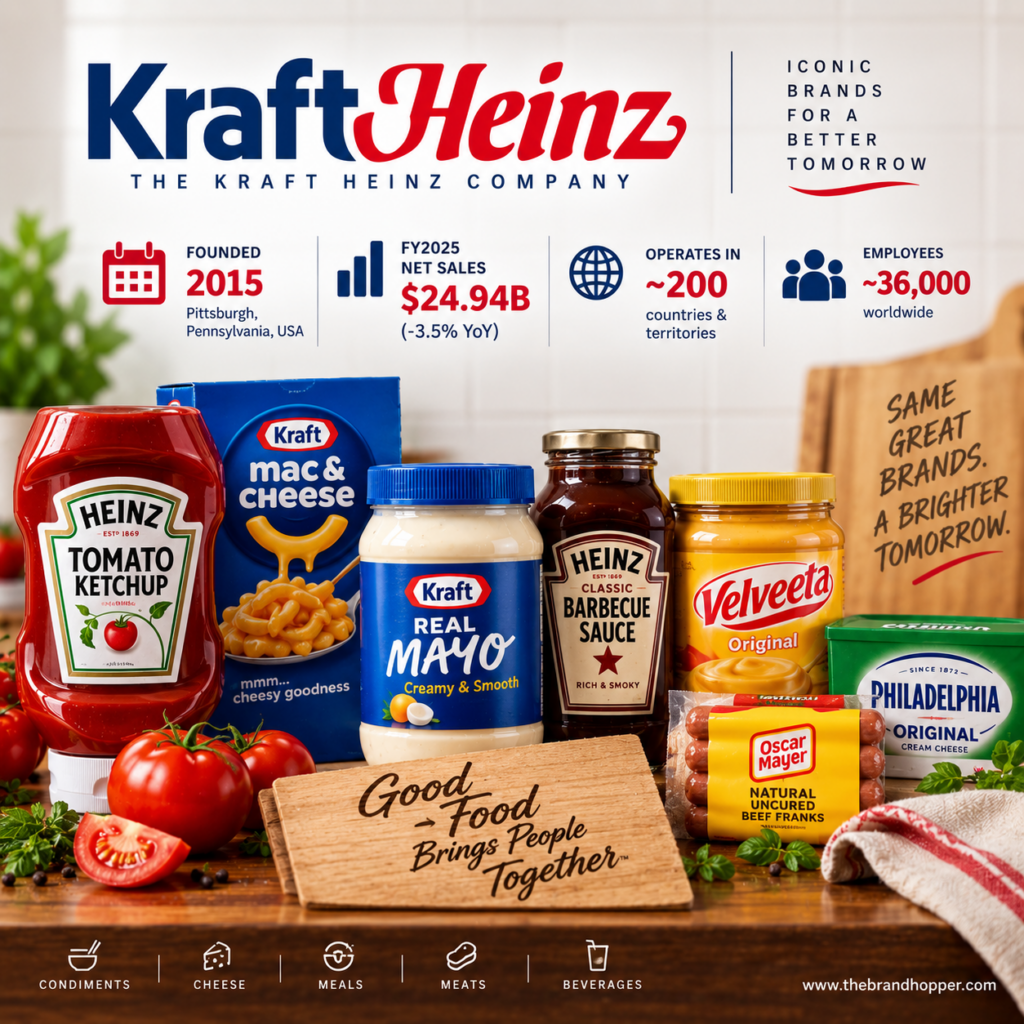
The Kraft Heinz Company — formed from the 2015 merger of Kraft Foods Group and H.J. Heinz Company — reported net sales of $24.94 billion in FY2025, down 3.5% from $25.85 billion in FY2024, with organic net sales also declining 3.4%. The decline reflects ongoing volume pressure as the company works to recover consumer demand following the aggressive pricing of prior years, compounded by changing consumer preferences toward fresh and less-processed foods. Despite the top-line challenges, Kraft Heinz continues to invest in its “Agility & Scale” transformation, focusing on its most iconic and highest-equity brands.
Kraft Heinz’s portfolio — Heinz ketchup, Kraft mac & cheese, Philadelphia cream cheese, Oscar Mayer, Lunchables, Jell-O, and Maxwell House — competes with PepsiCo across meal and snack occasions. Oscar Mayer Lunchables compete for the after-school and on-the-go meal occasion that Quaker also serves. Maxwell House competes in the hot coffee category where PepsiCo’s Starbucks RTD distribution (via JV) holds relevance. Heinz’s condiments compete for household pantry space alongside PepsiCo products in ways that influence grocery purchasing decisions at the category level.
Kraft Heinz’s 3.5% revenue decline in FY2025 positions it as a company under structural pressure — the cumulative result of post-merger cost-cutting that underinvested in brands for years, leaving market share vulnerable to both private label and healthier alternatives. For PepsiCo, this creates a competitive opportunity: Quaker can position itself as a premium, nutritious alternative to the processed food segments where Kraft Heinz struggles to retain volume.
8. Kellanova (Mars, Inc.)
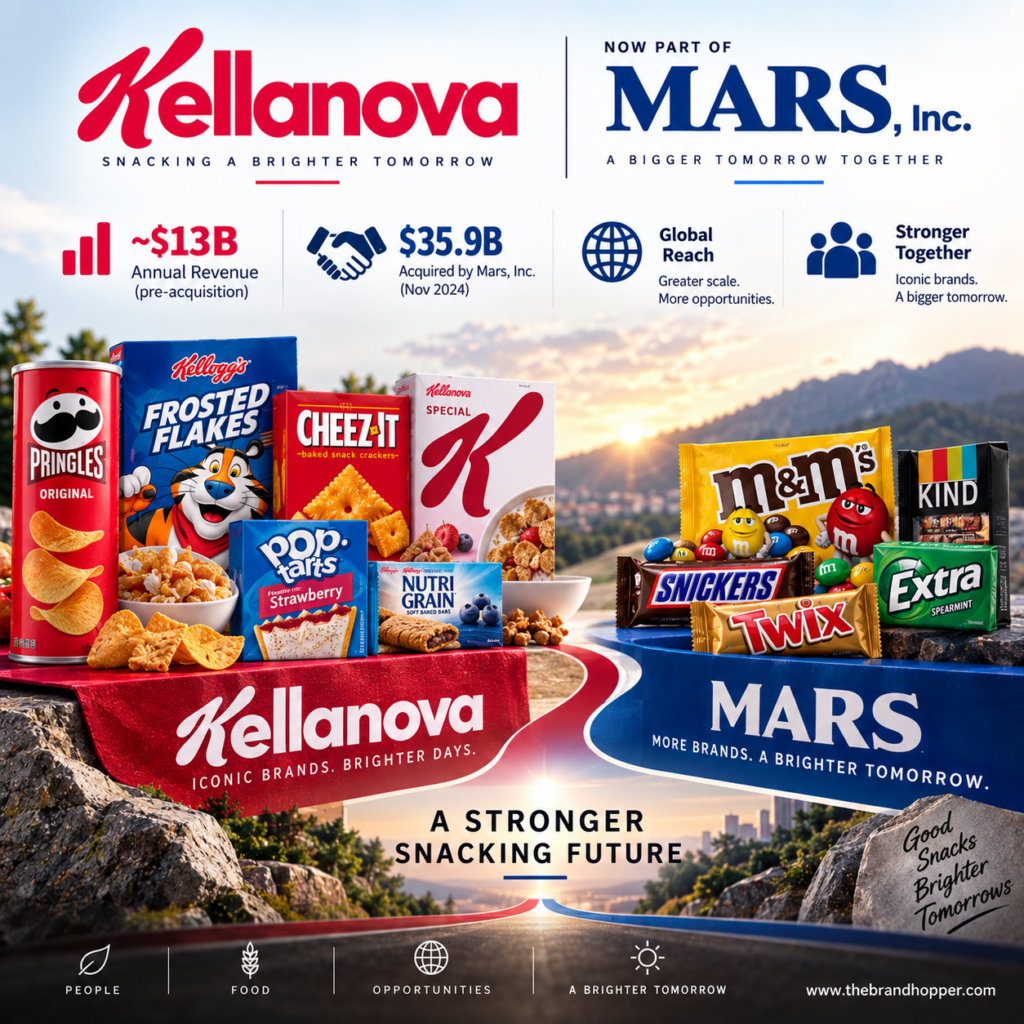
Kellanova — formed from the snack-focused spin-off of Kellogg Company’s North American cereal business in 2023 — was acquired by Mars, Inc. in November 2024 in a landmark deal valued at approximately $35.9 billion — one of the largest food and beverage acquisitions in history. Prior to the Mars acquisition, Kellanova generated approximately $13 billion in annual revenue. Now integrated into Mars’s global empire (which also owns M&M’s, Snickers, Twix, Orbit, Wrigley, and KIND), Kellanova has access to vastly expanded capital and global distribution.
Kellanova’s snack portfolio — Pringles (world’s second-largest potato chip brand), Cheez-It, Pop-Tarts, Nutri-Grain, RXBAR, Town House, and Club crackers — competes directly with PepsiCo’s Frito-Lay portfolio globally. Pringles is the primary battleground: in the global crisps/chips category, it competes directly with Lay’s, Ruffles, and Doritos for retail shelf space, foodservice contracts, and consumer loyalty. Cheez-It competes in the baked snack cracker segment where PepsiCo’s breadstick and cracker products also appear. Pop-Tarts competes with Quaker’s granola bars for the breakfast pastry and on-the-go snack occasion.
The Mars acquisition dramatically escalates the competitive intensity. Mars is a $50 billion+ private conglomerate with deep pockets, no quarterly earnings pressure, and a long-term ownership mindset. The combination of Mars’s financial patience and Kellanova’s established snack portfolio creates a competitor that PepsiCo’s public-company management team views as a material strategic challenge. Accelerated Pringles international expansion — particularly in markets where Lay’s lead is smaller — and aggressive Cheez-It innovation are expected to be the primary competitive battlefronts.
9. General Mills, Inc.
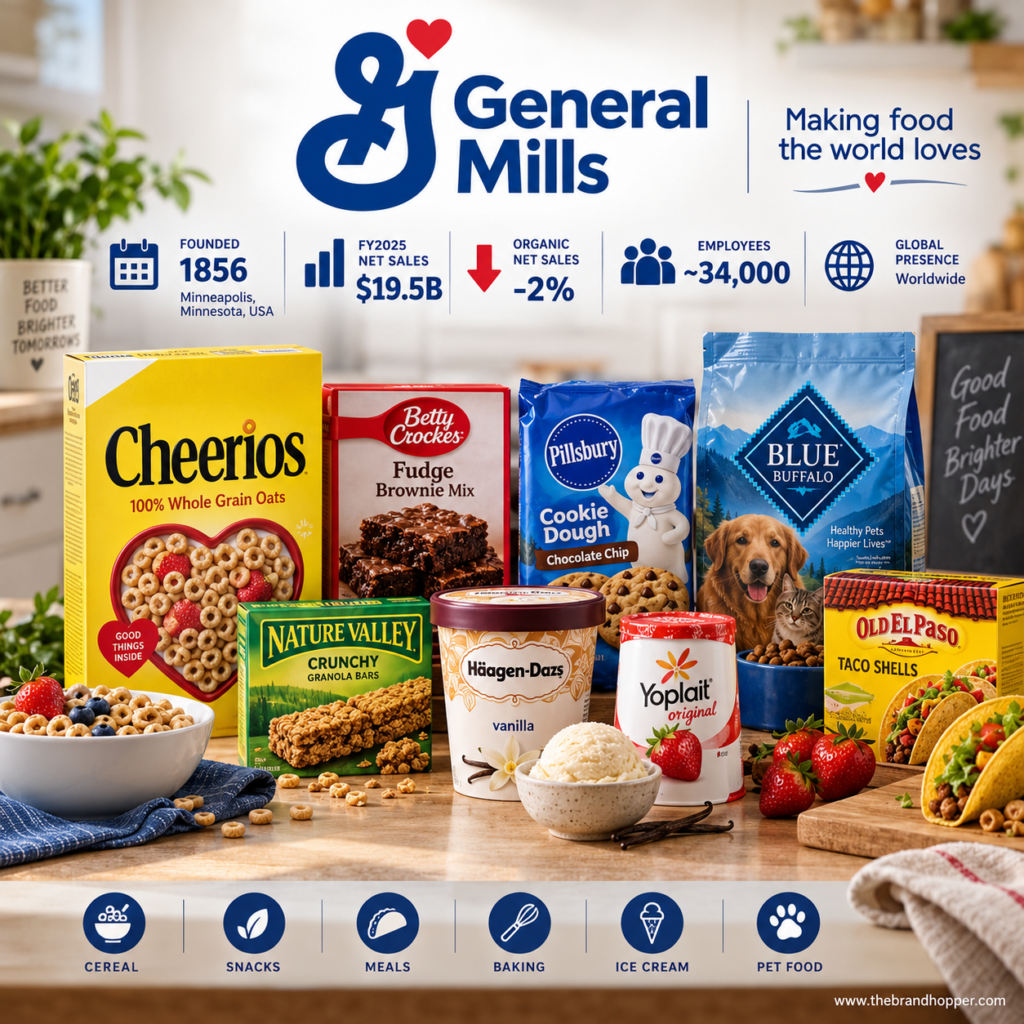
General Mills, Inc. is a leading global food company whose portfolio spans cereals, snack bars, yogurt, baking products, and pet food. In its fiscal year ending May 2025, General Mills reported net sales of approximately $19.5 billion — down modestly from the prior year, with organic net sales declining 2% versus year-ago levels as the company faced volume pressure following post-pandemic pricing. Key brands include Cheerios, Lucky Charms, Cinnamon Toast Crunch, Nature Valley, Fiber One, Annie’s, Betty Crocker, Pillsbury, and Old El Paso.
General Mills competes with PepsiCo most directly in breakfast cereals and grain-based snacks. In cereals, General Mills’ Big G brands compete for the same breakfast occasions that PepsiCo’s Quaker Oats seeks to own. In snack bars and energy bars, Nature Valley, Fiber One, and Annie’s organic snacks compete with PepsiCo’s Quaker Chewy bars, BARE Snacks, and Off the Eaten Path. Annie’s in particular represents a direct competition with PepsiCo’s better-for-you snacking strategy: both companies target parents and health-conscious consumers seeking cleaner ingredient lists and organic certification.
General Mills has made pet food (Blue Buffalo, ~$2B annually) a major growth pillar, differentiating it strategically from PepsiCo. However, the company’s core food and snack portfolio faces the same macro challenges as PepsiCo’s: GLP-1 drug adoption reducing caloric intake, consumers trading toward private label amid inflation, and younger demographics de-prioritising traditional processed breakfast foods. General Mills’ FY2025 organic sales decline of 2% mirrors similar challenges at PepsiCo’s Quaker segment.
10. Conagra Brands
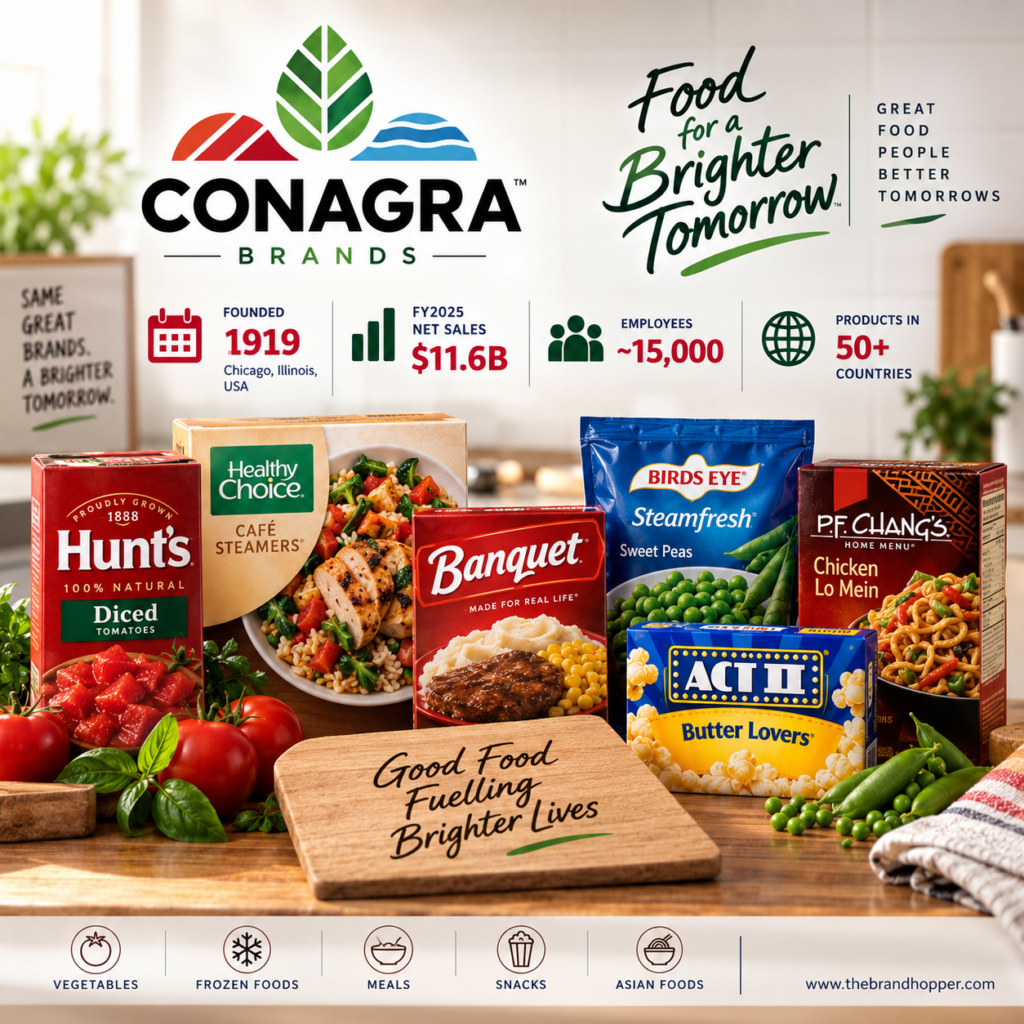
Conagra Brands is a leading packaged food company whose portfolio spans frozen foods, shelf-stable meals, snacks, condiments, and cooking products. In its most recently reported fiscal year (ending May 2025), Conagra reported net sales of approximately $11.6 billion, reflecting ongoing volume challenges across the packaged food industry as consumers respond to cumulative pricing. Key snack brands include Angie’s BOOMCHICKAPOP (popcorn), David Seeds (sunflower and pumpkin seeds), Slim Jim (meat snacks), Duke’s Meat Snacks, and Orville Redenbacher’s microwave popcorn.
Conagra’s most direct competition with PepsiCo centres on popcorn and seeds. Angie’s BOOMCHICKAPOP — one of the leading clean-label popcorn brands in the US — competes directly with PepsiCo’s POPCORNERS and Smartfood Popcorn in the rapidly growing better-for-you popcorn segment. David Seeds competes with PepsiCo’s sunflower seed products. Slim Jim and Duke’s compete adjacent to PepsiCo’s meat snack offerings. The popcorn category in particular is a high-growth battleground where both companies are investing in new flavours, formats, and better-for-you positioning.
Conagra’s FY2025 results reflect the broader challenge facing the packaged food industry: consumers whose budgets were stretched by post-pandemic inflation are scrutinising discretionary food spend more carefully, creating trade-down pressure. Conagra’s strategy of investing in its highest-equity snack brands while rationalising the frozen meal portfolio closely parallels PepsiCo’s own approach of focusing investment on its most culturally resonant Frito-Lay brands.
11. Unilever PLC
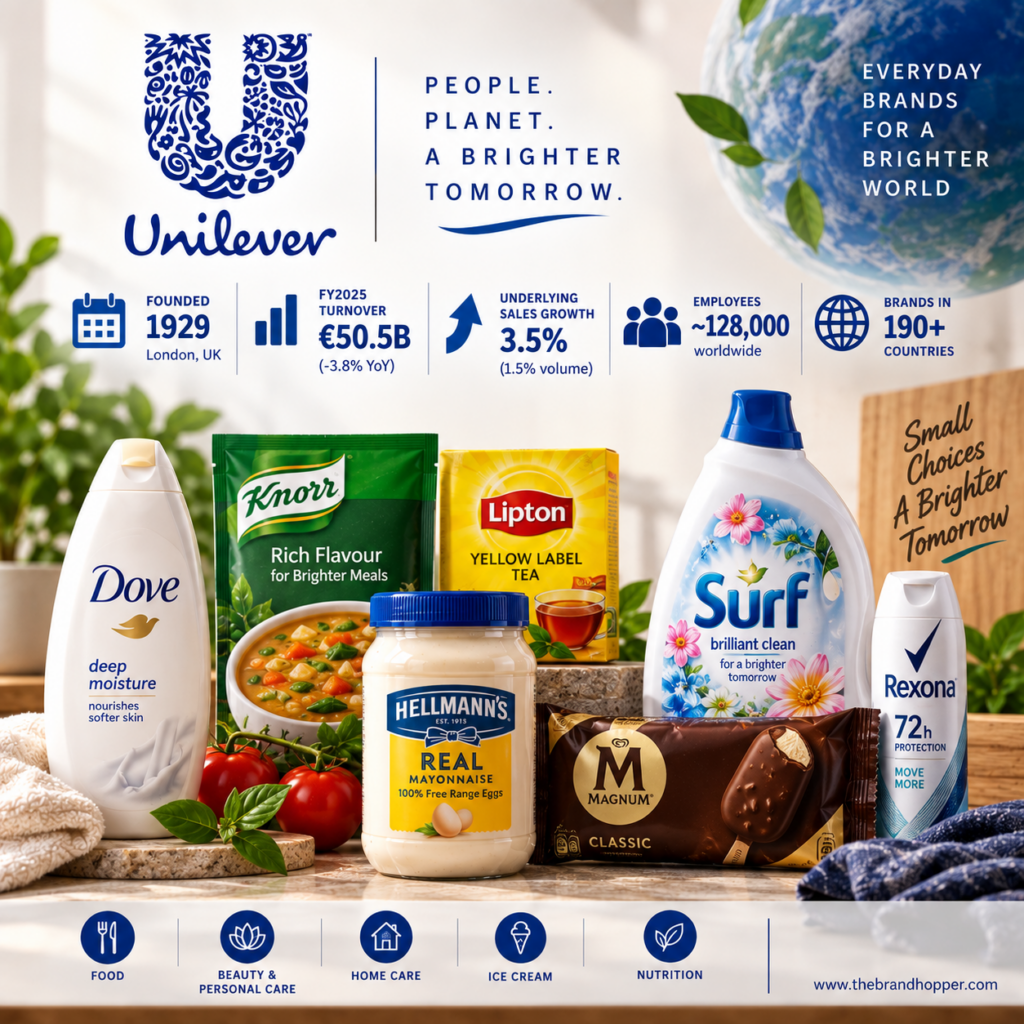
Unilever PLC, a British-Dutch consumer goods company, completed a transformative portfolio reshaping in FY2025 — including the demerger of its ice cream business (Magnum, Ben & Jerry’s, Walls, Cornetto, and Breyers, now listed as a separate entity) — significantly changing its competitive profile. Post-demerger, Unilever reported FY2025 turnover of €50.5 billion (down 3.8% on a reported basis due to disposals and currency), but achieved 3.5% underlying sales growth driven by 1.5% volume growth. Remaining Food brands (Knorr, Hellmann’s, Marmite) generated €12.9 billion in turnover.
With ice cream divested, Unilever’s food overlap with PepsiCo is now concentrated in condiments (Hellmann’s mayo competes with PepsiCo’s presence in foodservice), tea (the Lipton international joint venture with PepsiCo), and the broader meal occasion where Knorr soup mixes and cooking sauces compete for household budget alongside PepsiCo’s Quaker products. Unilever’s €60.8 billion FY2024 figure should not be compared directly to its post-demerger FY2025 figure of €50.5 billion — the change reflects portfolio transformation, not underlying decline.
Unilever’s “30 Power Brands” strategy — concentrating investment behind its highest-equity assets in Beauty & Wellbeing (Dove, TRESemmé, Vaseline), Personal Care (Rexona, Lux), Home Care (Surf, Comfort), and Foods (Knorr, Hellmann’s) — will sharpen competitive focus in the areas that most directly overlap with PepsiCo’s food and beverage portfolio. The company’s 2026 guidance of 4-6% underlying sales growth signals renewed confidence in its strategic direction.
12. Celsius Holdings
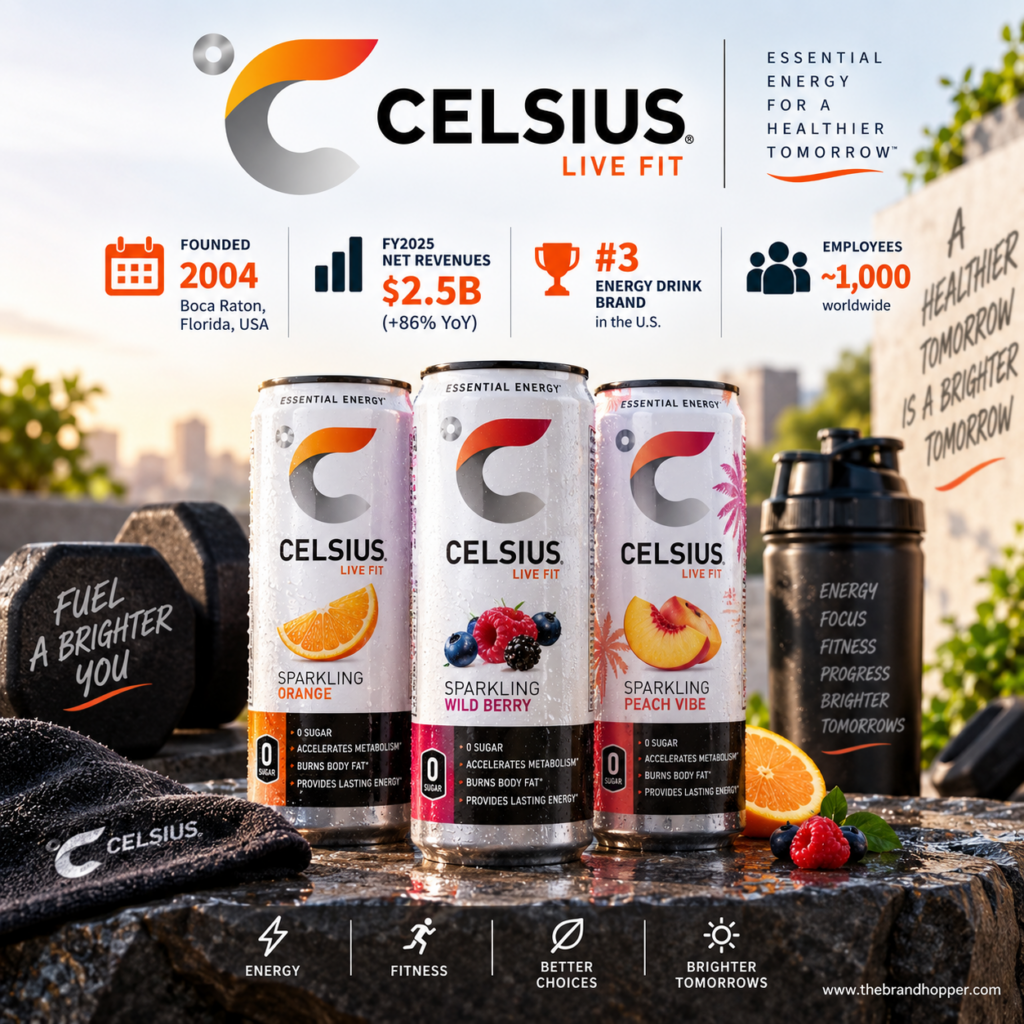
Celsius Holdings is one of the most dramatic success stories in the American beverage market. The company markets the Celsius fitness energy drink — positioned as a “healthier” energy drink that accelerates metabolism through its proprietary MetaPlus blend — and reported net revenues of approximately $2.5 billion in FY2025, an extraordinary 86% increase from FY2024’s $1.36 billion. This explosive growth confirms Celsius’s emergence as the #3 energy drink brand in the United States, cementing its position ahead of PepsiCo’s Rockstar Energy in many retail channels and representing the fastest growth of any major beverage brand.
Celsius’s competitive relationship with PepsiCo is genuinely unusual. PepsiCo distributes Celsius through its DSD (direct-store delivery) network under a 2022 agreement that also gave PepsiCo a minority equity stake. This means PepsiCo simultaneously distributes and holds equity in a brand that directly competes with Rockstar Energy and Mountain Dew Energy — two of its own proprietary energy brands. PepsiCo’s decision reflects a calculation that Celsius’s distribution revenue was more valuable than the risk of it going to a competing distributor — and it positions PepsiCo advantageously for a potential future Celsius acquisition, should management decide to consolidate its energy portfolio.
Celsius’s FY2025 revenue of $2.5 billion vs. Rockstar’s declining performance represents a stark competitive imbalance within PepsiCo’s own distribution network. Celsius skews younger and more female than Monster and Red Bull, with strong gym and health club channel penetration — a demographic and channel mix that Rockstar Energy’s legacy positioning does not effectively address. Whether PepsiCo acquires Celsius, transforms Rockstar, or continues this distributed competitive dynamic will be one of the most consequential strategic decisions for its beverage segment.
13. Beyond Meat
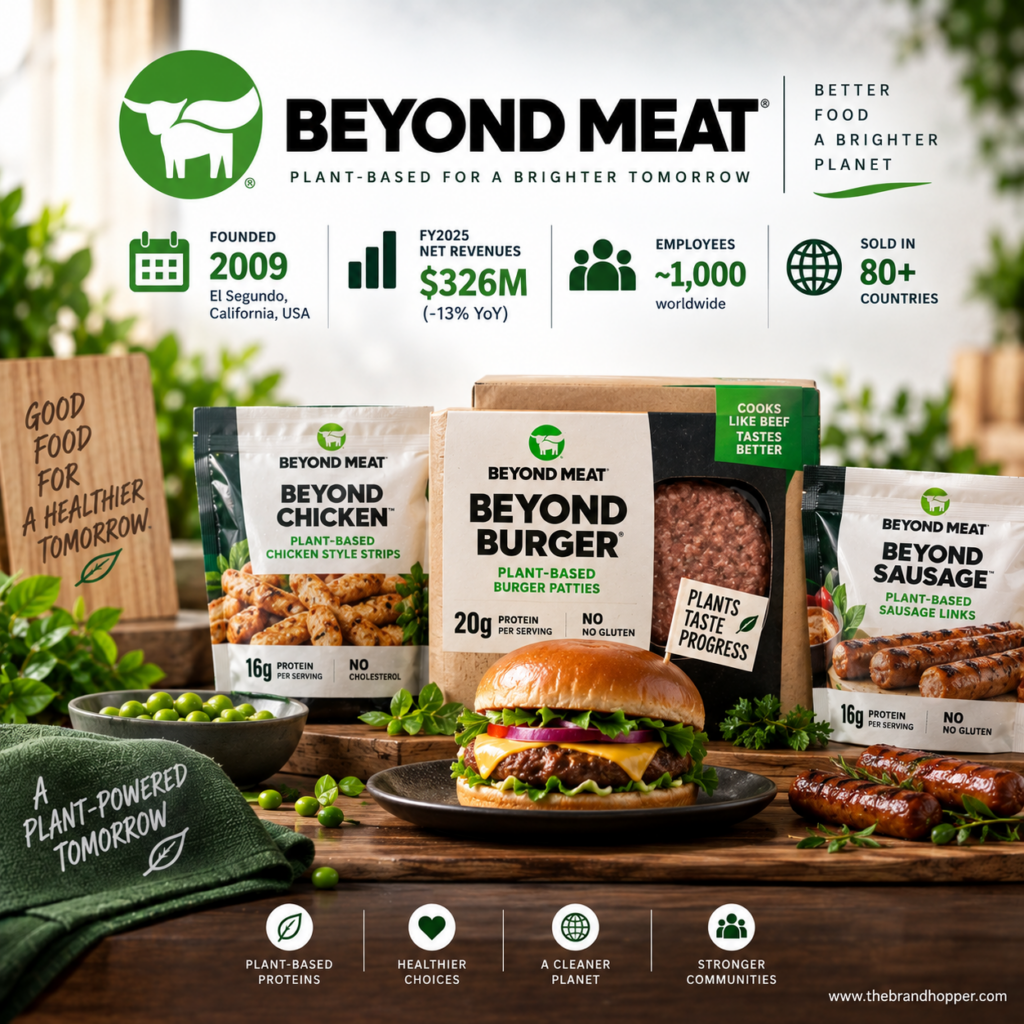
Beyond Meat pioneered the plant-based meat category and for a period represented one of the most spectacular brand launches in food industry history. While revenues have declined from their peak as the initial plant-based “hype cycle” has normalised, Beyond Meat retains significant brand equity and a strategic relationship with PepsiCo through The PLANeT Partnership — a joint venture launched in 2021 to develop and sell plant-based protein snacks and beverages using Beyond Meat’s protein technology and PepsiCo’s scale and distribution. Products developed under this JV include plant-based jerky marketed under the Beyond Meat brand.
The competition between Beyond Meat and PepsiCo is in the emerging plant-based snacking category, where both companies are targeting flexitarian consumers seeking protein-rich, lower-environmental-impact snacks. For PepsiCo, the partnership with Beyond Meat is also a hedge — by holding a share in the plant-based protein ecosystem, PepsiCo ensures it has a seat at the table in the category even as Beyond Meat’s commercial performance remains volatile. The PLANeT Partnership products compete with both traditional PepsiCo snacks and with Conagra’s meat snack alternatives.
14. Impossible Foods
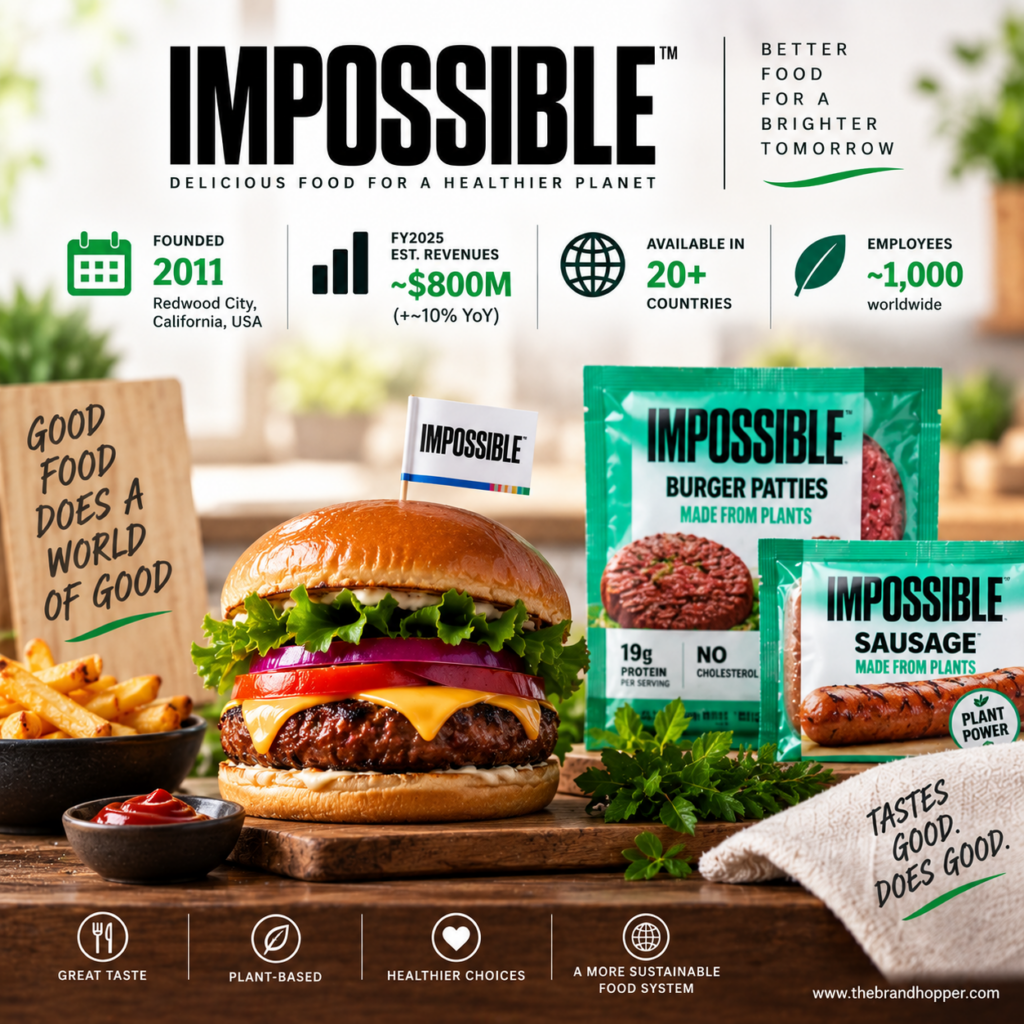
Impossible Foods competes with PepsiCo’s plant-based portfolio through its flagship Impossible Burger, Impossible Sausage, and expanding lineup of plant-based protein products available in grocery retail and major foodservice chains including Burger King, Starbucks, and Disney Parks. Impossible’s competitive relevance to PepsiCo lies in the foodservice channel, where PepsiCo’s Quaker-based products and plant-based snacks compete for the health-conscious consumer’s attention in restaurant and quick-service restaurant menus.
Impossible Foods has been systematically reducing its price premium versus conventional meat — a critical strategic priority that, as it succeeds, will expand its addressable market and bring it into more direct competition with PepsiCo’s food and nutrition portfolio. Impossible’s expanding product range now includes chicken products, bratwurst, and convenience snack formats, moving it progressively closer to the packaged snack space where PepsiCo dominates.
15. Oatly Group AB
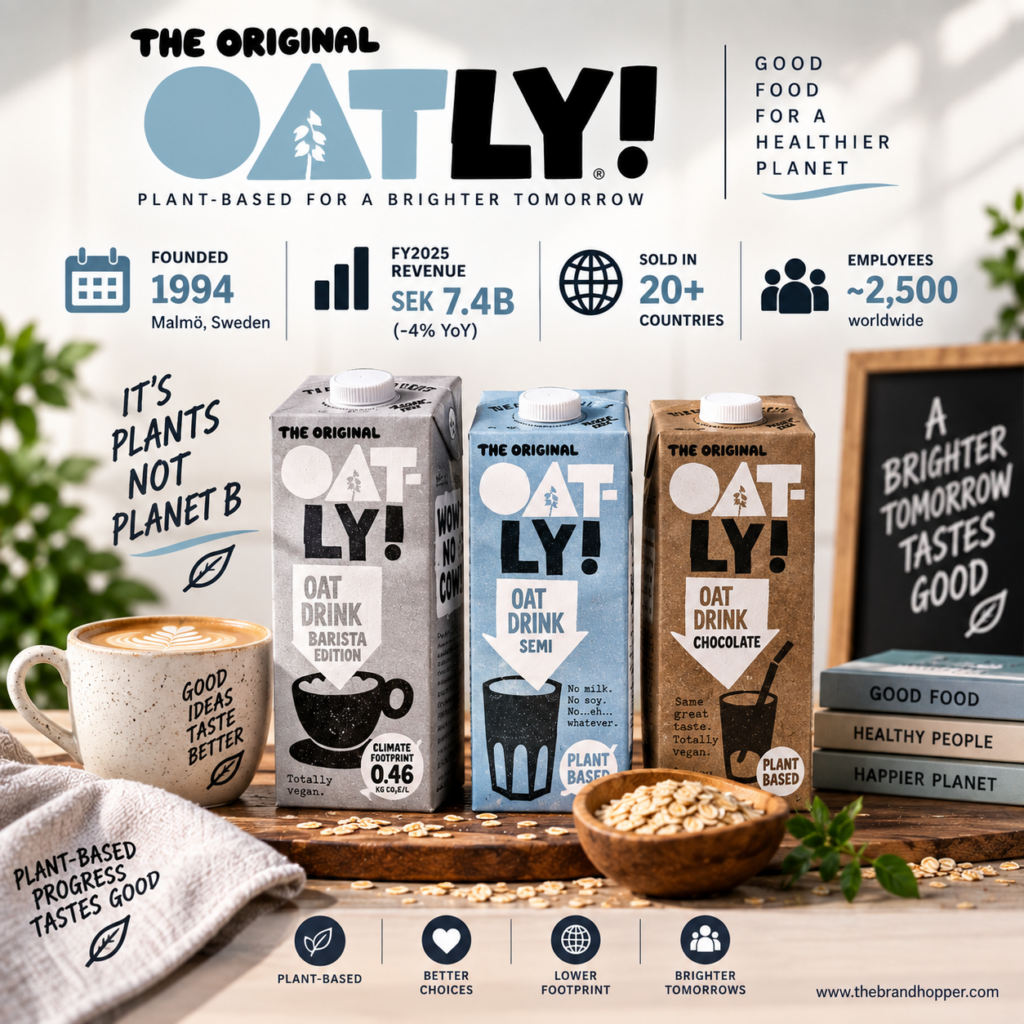
Oatly Group AB, the Swedish pioneer of oat milk, competes with PepsiCo in the plant-based and alternative dairy beverage space. While Oatly remains a challenger in absolute revenue terms, it has fundamentally transformed the dairy alternatives category — shifting millions of consumers toward oat-based beverages and demonstrating that a plant-based challenger brand can achieve meaningful market share against entrenched dairy incumbents. Oatly’s footprint in the refrigerated beverage section — and particularly in coffee shops and food service (where Oatly Barista Edition is the preferred oat milk in many premium cafés) — competes with PepsiCo’s refrigerated juice and beverage portfolio for consumer mindshare in the cold-beverage occasion.
Oatly’s primary competitive significance for PepsiCo lies in the broader consumer behaviour shift it represents and accelerates: as younger consumers systematically move away from conventional dairy toward plant-based alternatives, the refrigerated beverage and breakfast categories that Tropicana, Naked, and Quaker serve are being structurally disrupted. PepsiCo has responded with plant-based investments across multiple brands, but Oatly’s mission-driven positioning carries authentic Gen Z cultural credibility that larger CPG entrants consistently struggle to replicate at similar scale.
16. Chobani, LLC
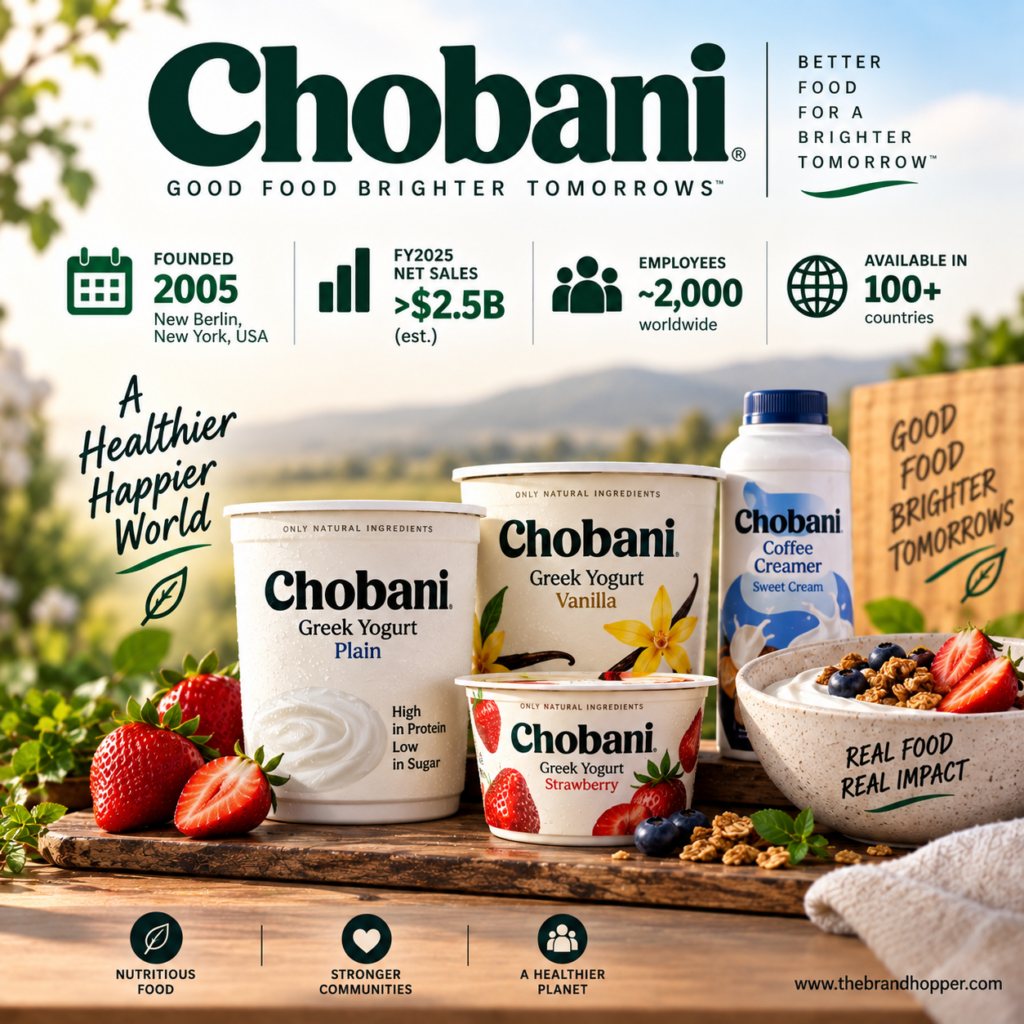
Chobani, the Greek yogurt brand founded by Hamdi Ulukaya in 2005, is one of the most successful American food startup stories of the 21st century — and a formidable challenger to PepsiCo’s nutrition and better-for-you portfolio. Chobani generates approximately $2 billion in estimated annual revenue and has expanded well beyond Greek yogurt into oat milk (Chobani Oat), probiotic drinks, coffee creamers, flip-style dessert yogurts, and children’s nutrition products — areas that compete directly with PepsiCo’s Tropicana, Naked, and Quaker brands for the health-conscious consumer’s breakfast and snacking dollar.
Chobani’s competitive significance is amplified by its brand identity and values. As a B Corp-aspiring company with genuine commitments to employee equity, refugee employment, and natural ingredients, Chobani carries a values-based brand premium that resonates deeply with millennial and Gen Z consumers. This authenticity is difficult for PepsiCo to replicate at its scale, even with its pep+ sustainability commitment. Chobani’s oat milk and probiotic drinks are a direct challenge to PepsiCo’s functional beverage and plant-based ambitions in the refrigerated aisle.
A potential Chobani IPO — first filed in 2021 but subsequently withdrawn — remains a possibility that, if completed, would provide capital for further expansion and M&A, potentially accelerating its competitive threat to established food and beverage companies including PepsiCo.
Emerging Health & Snack Brands Worth Watching
Beyond the 16 primary competitors above, a number of growing challenger brands are reshaping the snack and nutrition landscape:
KIND Snacks (part of Mars, Inc.) — The leading nut and fruit bar brand competes directly with PepsiCo’s Quaker granola bars and Bare Snacks. KIND’s “ingredient transparency” platform — “you can see and pronounce every ingredient” — is a powerful positioning that challenges PepsiCo’s Quaker brand on authenticity in the nutrition bar segment. Mars’s ownership adds distribution scale to a brand that already commands premium shelf placement in grocery and convenience retail.
Annie’s Homegrown (part of General Mills) — Annie’s organic and natural snack products — including organic crackers, mac & cheese, and granola bars — compete with PepsiCo’s entry into organic snacking. Annie’s resonates strongly with millennial parents seeking cleaner-label snack alternatives for children — a demographic that PepsiCo’s traditional Frito-Lay brands do not effectively reach.
PepsiCo vs. 16 Competitors: At-a-Glance Comparison
| Company | Revenue (FY2025) | Primary Competitive Area | Key Differentiator |
| PepsiCo | $93.9B | Beverages, savoury snacks, cereals, food | Frito-Lay DSD network; 23 $1B+ brands |
| Coca-Cola | $47.9B | CSDs, sports drinks, water, tea, coffee | Cola brand dominance; Monster equity stake |
| Keurig Dr Pepper | $16.6B (+8.2%) | CSDs, flavoured beverages, sports drinks | Dr Pepper #3 CSD; Keurig recurring pod sales |
| Monster Beverage | $8.3B (+11%) | Energy drinks vs. Rockstar | Coca-Cola distribution; 36% US energy market share |
| Red Bull GmbH | ~€12.2B (+8.6%) | Energy drinks vs. Rockstar | Sports marketing ecosystem; direct retail model |
| Mondelez Intl | $38.5B (+5.8%) | Savoury & sweet snacking globally | Clif Bar acquisition; 85% international revenues |
| Nestle S.A. | CHF 89.49B | Food, cereals, nutrition, coffee | World’s largest food co.; health science pivot |
| Kraft Heinz | $24.9B (-3.5%) | Packaged foods, condiments, meals | Heinz brand global dominance; Oscar Mayer |
| Kellanova (Mars) | ~$13B pre-acquisition | Savoury snacks, breakfast | Pringles #2 chip globally; Mars capital backing |
| General Mills | ~$19.5B (-2%) | Cereals, nutrition bars, organic snacks | Blue Buffalo pet food growth; Annie’s organic |
| Conagra Brands | ~$11.6B | Popcorn, seeds, meat snacks | BOOMCHICKAPOP; David Seeds vs. Frito-Lay |
| Unilever | €50.5B (post ice cream demerger) | Food (Knorr, Hellmanns), Lipton JV | Growth Action Plan; 30 Power Brands focus |
| Celsius Holdings | ~$2.5B (+86%) | Functional energy drinks vs. Rockstar | PepsiCo distributes; #3 US energy drink |
| Beyond Meat | Declining (PLANeT JV) | Plant-based snacks (JV with PepsiCo) | First-mover plant-based; PepsiCo partnership |
| Impossible Foods | Private | Plant-based protein (foodservice) | Heme protein; QSR footprint vs. Quaker |
| Oatly | Challenger scale | Oat milk vs. Tropicana/Naked | Barista Edition; Gen Z brand credibility |
| Chobani | ~$2B est. | Greek yogurt, oat milk, probiotics | Values brand; B-Corp credibility vs. Quaker |
Key Trends Shaping PepsiCo’s Competitive Environment
Energy drink boom: Monster hit $8.3B, Red Bull €12.2B, and Celsius $2.5B in FY2025 — all at the expense of Rockstar Energy’s market share. PepsiCo faces a structural crisis in the energy category: it simultaneously distributes its own most formidable energy competitor (Celsius) while Rockstar continues to lose ground. A transformative energy drink strategy — whether via acquisition, brand overhaul, or DSD restructuring — is a strategic imperative.
GLP-1 / weight-loss drug headwind: Medications like Ozempic and Wegovy are reducing caloric intake. PepsiCo has responded by accelerating “permissible indulgence” and lower-calorie innovations (PopCorners, POPCORNERS Air, Baked varieties) but the structural pressure on volume in calorie-dense snacks is real and multi-year.
Mars-Kellanova changes the snack landscape permanently: Mars’s $35.9B acquisition of Kellanova (Pringles, Cheez-It, Pop-Tarts) creates a private-capital-backed snack competitor with a generational investment horizon. Pringles international expansion will directly challenge Frito-Lay’s positions outside North America.
KDP’s 8.2% FY2025 growth accelerates pressure in flavoured beverages: Keurig Dr Pepper growing at more than 8x PepsiCo’s organic growth rate reflects how much share is shifting in flavoured CSDs and premium beverages — areas where PepsiCo has not innovated as aggressively as KDP and Coca-Cola Zero Sugar.
Better-for-you snacking is the critical growth battleground: Consumer demand for cleaner labels, higher protein, and organic ingredients is accelerating. Celsius’s 86% FY2025 growth, Mondelez’s Clif Bar investment, and Mars’s KIND ownership are all positioned to capture this shift. PepsiCo’s investment in BARE Snacks, Annie’s (General Mills), and pep+ health choices must keep pace.
Frequently Asked Questions (FAQs)
Q1. Who is PepsiCo’s biggest competitor?
The Coca-Cola Company is PepsiCo’s longest-standing and most direct competitor, particularly in carbonated soft drinks. Coca-Cola reported $47.9 billion in FY2025 revenues with 5% organic growth — significantly outpacing PepsiCo’s 1% organic growth in the same period. In snack foods, Mondelez International ($38.5B) and Kellanova (now part of Mars) are the most significant global challenges. In energy drinks specifically, Red Bull (~€12.2B) and Monster Beverage ($8.3B) together dominate the category that PepsiCo’s Rockstar competes in, while Celsius’s explosive 86% FY2025 growth to $2.5B represents the fastest-growing competitive threat in any PepsiCo category.
Q2. What is PepsiCo’s revenue?
PepsiCo reported net revenues of $93.9 billion for FY2025 (full year ended December 31, 2025), up from $91.9 billion in FY2024. Organic revenue grew 1% for the full year, with sequential acceleration in Q4 (organic growth of 2.1%, reported growth of 5.6%). PepsiCo also announced its 54th consecutive annual dividend increase. All figures are sourced from PepsiCo’s official Q4 and Full-Year 2025 Earnings Release (February 3, 2026).
Q3. Is PepsiCo bigger than Coca-Cola?
On total revenue, yes: PepsiCo ($93.9B FY2025) is significantly larger than Coca-Cola ($47.9B FY2025). However, the comparison is misleading: PepsiCo includes a massive snack food business (Frito-Lay) generating roughly 55% of North American revenues. As a pure beverage business, Coca-Cola is the global leader in CSDs. Coca-Cola also substantially outperformed PepsiCo on organic growth in FY2025: 5% organic vs. PepsiCo’s 1% organic — meaning Coca-Cola is growing faster in its core businesses.
Q4. What brands does PepsiCo own?
PepsiCo’s portfolio includes 23 brands each generating over $1 billion in annual retail sales. Beverages: Pepsi, Diet Pepsi, Pepsi Zero Sugar, Mountain Dew, Gatorade, Aquafina, Bubly, Rockstar Energy, Lipton (via JV), Tropicana, Starbucks RTD (via JV). Snacks: Lay’s, Doritos, Cheetos, Fritos, Ruffles, SunChips, POPCORNERS, Smartfood, Bare Snacks. Foods: Quaker Oats, Life, Cap’n Crunch, Pearl Milling Company.
Q5. Why is Celsius’s growth so significant for PepsiCo?
Celsius grew revenues 86% to approximately $2.5 billion in FY2025 — the fastest growth of any major US beverage brand. The competitive complexity is that PepsiCo distributes Celsius through its DSD network (and holds equity in Celsius), while Celsius simultaneously competes against Rockstar Energy and Mountain Dew Energy — PepsiCo’s own energy brands. This means PepsiCo is actively growing a competitor it owns shares in and distributes. This unusual dynamic reflects both the commercial logic of distribution revenue and a potential strategic option for future acquisition of a fully proven brand.
Q6. What happened to Kellanova and how does it affect PepsiCo?
Kellanova — which owned Pringles, Cheez-It, Pop-Tarts, and RXBAR — was acquired by Mars, Inc. in November 2024 for approximately $35.9 billion. For PepsiCo, this is significant because Pringles is the world’s second-largest potato chip brand (behind Lay’s) and is now backed by Mars’s private, patient capital and global distribution in confectionery and snacks. Mars has no quarterly earnings pressure and a generational investment horizon — making it a formidable, patient competitor that can invest in Pringles’s international expansion at a pace and scale that publicly-listed companies sometimes cannot match.
Q7. What is PepsiCo’s pep+ strategy?
pep+ (PepsiCo Positive) is PepsiCo’s strategic end-to-end transformation plan, focused on three pillars: Positive Agriculture (sustainable sourcing and farming), Positive Value Chain (reducing carbon, water footprint in operations), and Positive Choices (expanding the portfolio of nutritious, lower-calorie, sustainably sourced products). pep+ is both a sustainability commitment and a competitive strategy — as consumer and regulatory demands for ESG accountability intensify, and as GLP-1 drug adoption shifts consumer preferences toward lower-calorie options, pep+ positions PepsiCo’s portfolio transformation as aligned with where consumer demand is heading.
Q8. What is the Cola Wars between Pepsi and Coca-Cola?
The Cola Wars refer to the decades-long marketing and market-share battle for supremacy in carbonated soft drinks between PepsiCo and The Coca-Cola Company. The rivalry intensified in the 1970s-1980s with the famous “Pepsi Challenge” blind taste tests. Today the Cola Wars have evolved into a multi-front competition across energy drinks, sports drinks, water, RTD coffee, and snacks. In FY2025, Coca-Cola appeared to be winning the organic growth battle (5% vs. 1% for PepsiCo), particularly driven by the success of Coca-Cola Zero Sugar (14% unit case volume growth in FY2025).
Q9. What is Gatorade’s competitive position?
Gatorade is the dominant sports drink brand in the United States, commanding approximately 65-70% of the sports drink market by dollar sales. Its primary competitors are Coca-Cola’s Powerade (approximately 15-20% share) and Keurig Dr Pepper’s BodyArmor — a premium, coconut water-based sports drink that is the fastest-growing brand in the category. BodyArmor has made significant inroads into Gatorade’s premium positioning, prompting Gatorade to accelerate its own premiumisation through Gatorade Zero, Bolt24, and fast hydration sub-brands.
Q10. How does the GLP-1 trend affect PepsiCo and its competitors?
GLP-1 medications (Ozempic, Wegovy, and equivalents) suppress appetite and reduce overall caloric intake. As adoption scales, users consistently report reduced consumption of sweet and salty snacks, carbonated beverages, and processed foods — all categories where PepsiCo and its competitors generate significant revenues. PepsiCo has responded with lower-calorie product innovation, portion-controlled formats, and investment in the pep+ positive choices portfolio. Competitors including Mondelez, Kraft Heinz, General Mills, and Conagra face the same headwind. Companies with strong positions in health-oriented categories — Celsius, Chobani, Oatly — are structurally better positioned to benefit from this macro shift.
Conclusion
PepsiCo occupies a unique and complex position in global consumer goods. In beverages, Coca-Cola’s superior organic growth, Monster and Red Bull’s energy drink dominance, KDP’s 8.2% FY2025 growth, and Celsius’s 86% surge together paint a picture of intensifying competition across every liquid category. In snacks, the Mars-Kellanova combination and Mondelez’s global scale are formidable. In better-for-you and alternative foods, Celsius, Chobani, Oatly, Beyond Meat, and Impossible Foods are redefining consumer preference in categories PepsiCo has traditionally owned.
PepsiCo’s advantages remain structural: the unrivalled Frito-Lay DSD distribution network, 23 billion-dollar brands, deep retailer and foodservice relationships across 200+ countries, and the financial strength to acquire, invest, and innovate simultaneously. Its $93.9 billion FY2025 revenues and 54th consecutive annual dividend increase demonstrate underlying earnings durability even in a challenging consumer environment.
To understand how PepsiCo builds these competitive advantages through brand marketing, see our in-depth analysis: Marketing Strategies And Brand Campaigns of PepsiCo. The future competitive battle will be decided in energy drinks (Rockstar vs. Monster/Red Bull/Celsius), better-for-you snacking (Frito-Lay vs. Kellanova/Mars/Mondelez), and the structural shift in consumer preferences driven by health, wellness, and GLP-1 adoption — all three fronts that PepsiCo is actively navigating as it shapes its next chapter of growth.
Also Read: Who Owns Pepsi? Parent Company & Brands
To read more content like this, subscribe to our newsletter