Last Updated on September 24, 2026 by Team TBH
Airbnb is one of the defining companies of the modern “sharing economy,” having transformed a scrappy idea about renting air mattresses to conference attendees into a global hospitality platform spanning millions of listings in over 220 countries and regions.
But understanding who actually controls Airbnb requires looking past the simple question of stock ownership, because Airbnb’s founders engineered a share structure specifically designed to let them keep steering the company long after going public — a structure increasingly common among Silicon Valley tech companies but still not fully understood by most investors and users.
Here’s the complete, financially grounded picture of who owns Airbnb today, how its founders built and structured the company, and how Airbnb’s most recent financial performance stacks up heading into 2026.
How Airbnb Began: From Air Mattresses to a Global Platform
Airbnb’s origin story is one of the most well-known in modern startup lore.
In 2007, Brian Chesky and Joe Gebbia, two recent graduates of the Rhode Island School of Design who were struggling to afford rent in San Francisco, noticed that a local design conference had sold out every nearby hotel room.
They set up air mattresses in their apartment and offered “AirBed & Breakfast” to conference attendees who couldn’t find a place to stay, charging for the improvised lodging along with a home-cooked breakfast.
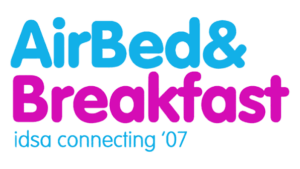
Recognizing the potential of the idea, Chesky and Gebbia brought in Nathan Blecharczyk, Gebbia’s former roommate and a skilled software engineer, as the third co-founder, and the trio formally launched the company in August 2008.
Early growth was slow and scrappy — the founders famously funded the fledgling business partly by selling novelty cereal boxes (“Obama O’s” and “Cap’n McCain’s”) during the 2008 U.S. presidential election — but the platform gradually expanded from air mattresses into full apartments, houses, and eventually a vast range of unique accommodations, evolving into one of the most recognizable brands in global travel and reshaping how millions of people think about short-term lodging.
Airbnb’s IPO: Going Public in the Middle of a Pandemic
Airbnb’s path to the public markets was dramatic even by tech IPO standards.
After years as one of the most highly valued private “unicorn” startups in Silicon Valley, Airbnb filed to go public in 2020 — a year in which its core travel business had been devastated by the COVID-19 pandemic, forcing the company to lay off roughly a quarter of its workforce and raise emergency financing at a steep valuation discount just months earlier.
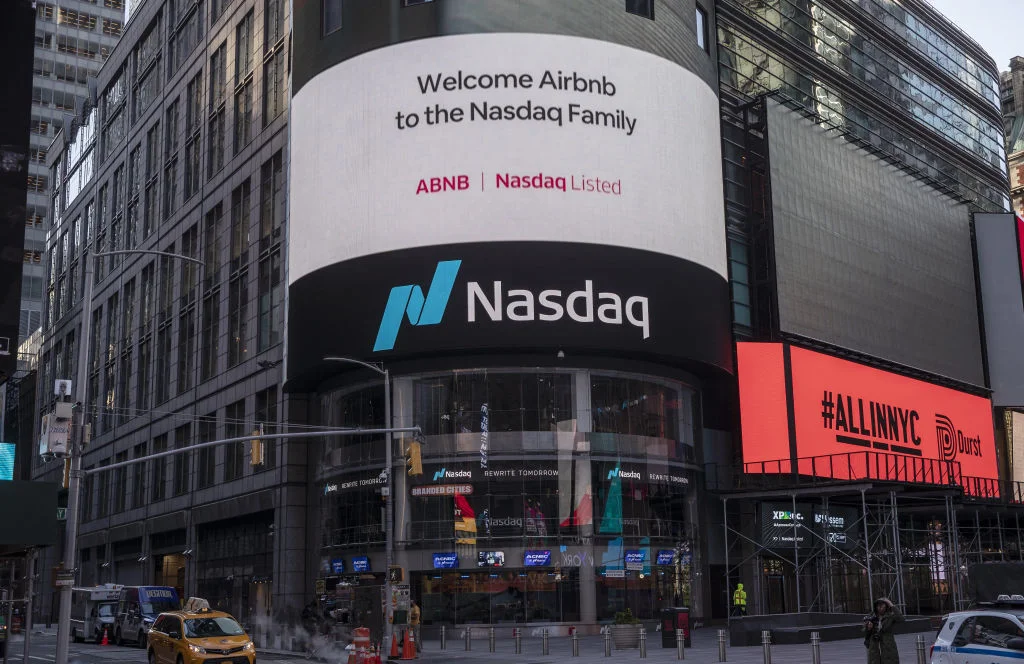
Despite that turbulence, Airbnb’s initial public offering in December 2020 became one of the most closely watched listings of the year: shares priced at $68 each, and on the first day of trading the stock more than doubled, pushing Airbnb’s market valuation past $100 billion and vindicating the founders’ bet that travel demand would rebound strongly once pandemic restrictions eased.
The IPO also cemented the dual-class voting structure that continues to define Airbnb’s governance today, giving the founding team a level of long-term control uncommon even among other major tech IPOs of that era.
Who Actually Controls Airbnb? Understanding the Dual-Class Structure
This is where Airbnb’s ownership story gets genuinely interesting.
Like several other prominent tech companies (Meta, Alphabet, and Snap among them), Airbnb went public with a dual-class share structure specifically designed to preserve founder control even as outside shareholders acquired the majority of the company’s economic value.
Under this structure, Airbnb’s three co-founders collectively own only about 27% of the company’s total economic shares, yet that stake translates into roughly 80% of total voting power thanks to enhanced-voting Class B shares held by the founding team.
Brian Chesky, who remains Airbnb’s CEO, personally controls approximately 32% of total voting power through a combination of Class A and Class B holdings.
Nathan Blecharczyk, who serves as Airbnb’s Board Chair and Chief Strategy Officer, controls roughly 31% of voting power.
Joe Gebbia, who stepped back from day-to-day executive responsibilities in 2022 to focus on other ventures (including a stint advising a U.S. government efficiency initiative) but remains on Airbnb’s board, still controls approximately 18% of voting power.
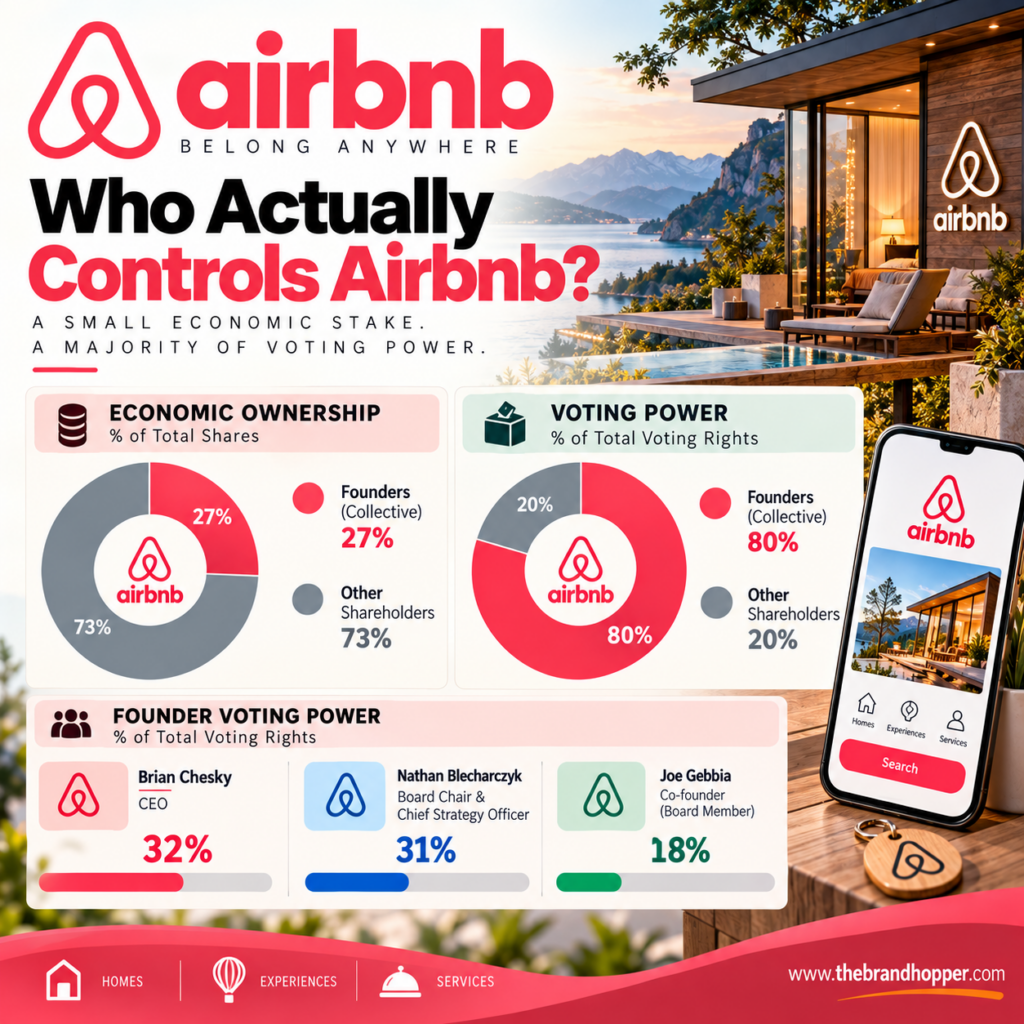
The three founders are also bound by a formal Voting Agreement dated December 4, 2020, which coordinates how their shares and affiliated trusts vote on major company matters, reinforcing their collective influence over Airbnb’s strategic direction well beyond what their raw economic ownership percentage alone would suggest.
Other Major Shareholders: Institutional Investors Behind the Scenes
Beyond the founding trio, Airbnb’s shareholder base includes a mix of large institutional asset managers and early venture capital backers who supported the company through its pre-IPO growth years.
The Vanguard Group and Fidelity both hold substantial passive institutional stakes in Airbnb, reflecting the company’s inclusion in major index funds and actively managed portfolios alike following its public listing.
Sequoia Capital, one of Airbnb’s earliest and most prominent venture capital investors, also retains a meaningful position, having backed the company during its scrappy early growth phase well before the 2020 IPO turned that early bet into one of Sequoia’s most celebrated returns.
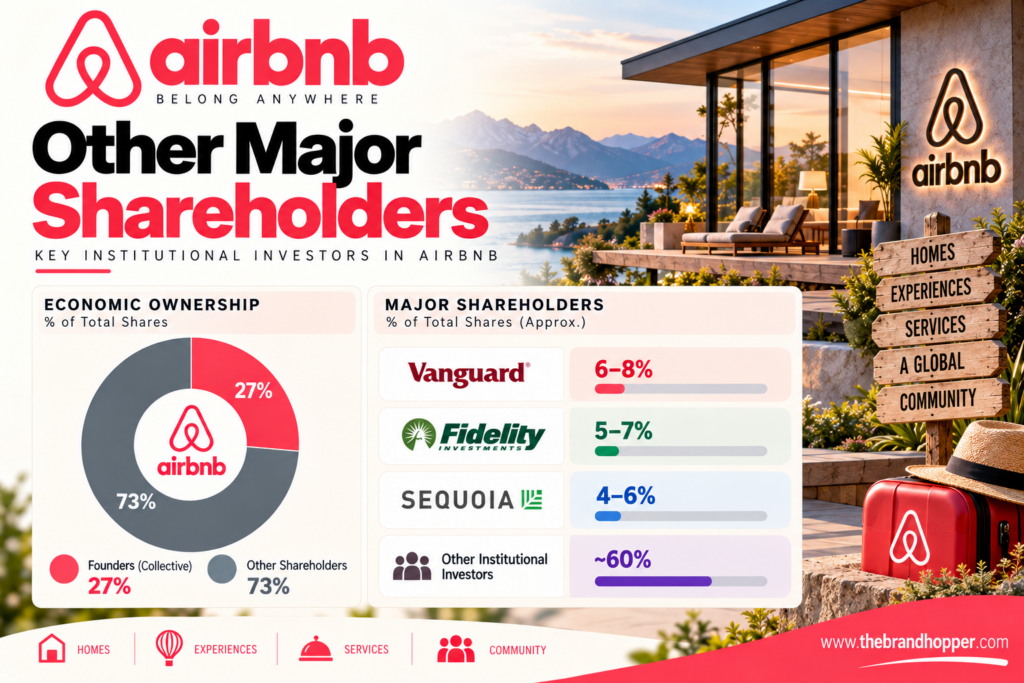
Collectively, these institutional shareholders hold the large majority of Airbnb’s economic value even though their aggregate voting influence remains well below that of the three founders, a direct consequence of the dual-class structure established at the time of the IPO.
Leadership: Brian Chesky’s Continued Hands-On Role
Unlike some tech founders who step back from operational leadership after an IPO, Brian Chesky has remained deeply hands-on as Airbnb’s CEO since the company’s founding, steering it through the pandemic-era collapse in travel demand, the subsequent 2020 IPO, and a period of renewed strategic expansion since.
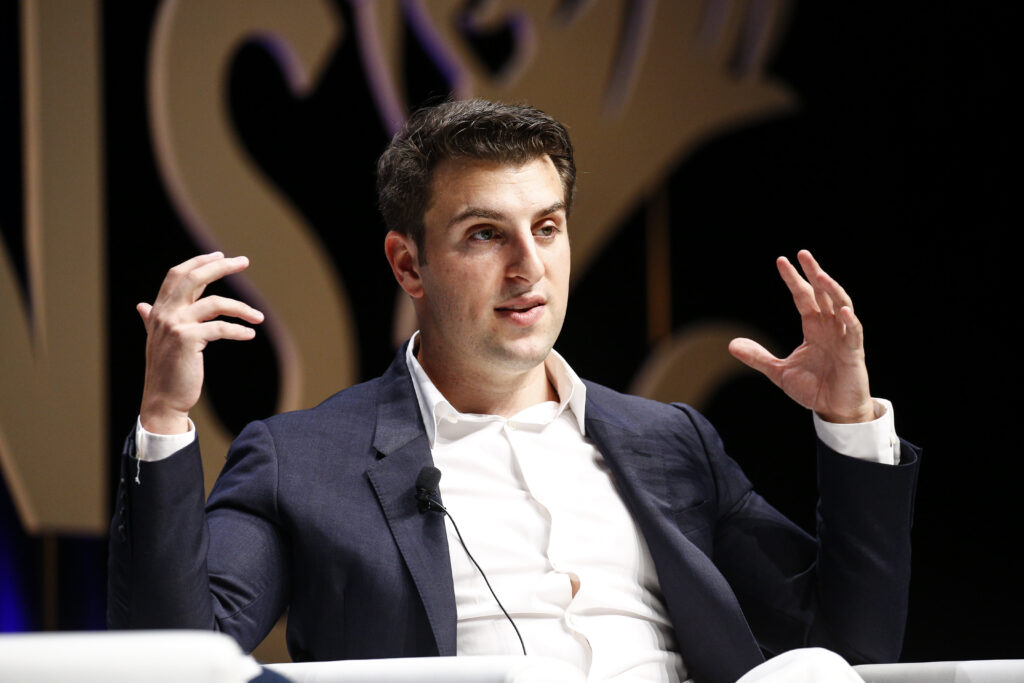
Under Chesky’s continued leadership, Airbnb has pushed into new areas beyond its core short-term rental marketplace, including “Airbnb Experiences” (bookable local activities hosted by individuals) and, more recently, exploratory pushes into AI-driven customer service and travel planning tools as part of Chesky’s broader vision of Airbnb evolving into a more comprehensive travel and lifestyle platform.
Nathan Blecharczyk’s role as Board Chair and Chief Strategy Officer gives him significant influence over long-term corporate strategy alongside Chesky, while Joe Gebbia’s reduced day-to-day involvement since 2022 has not diminished his substantial voting influence as a board member and major shareholder.
Airbnb’s Financial Performance
Airbnb’s most recent full-year results reflect a business that has largely completed its pandemic-era recovery and returned to steady, profitable growth.
Full-year revenue reached $12.2 billion, representing 10% year-over-year growth, driven by continued increases in both nights and experiences booked on the platform as well as steady growth in the company’s host and listing base, which now exceeds 8 million active listings spanning more than 220 countries and regions worldwide.
Net income for the period came in at approximately $2.5 billion, representing a healthy net margin of around 21% — a notably strong profitability profile for a company of Airbnb’s scale and one that stands out favorably compared to many other consumer internet platforms still working toward sustained profitability.
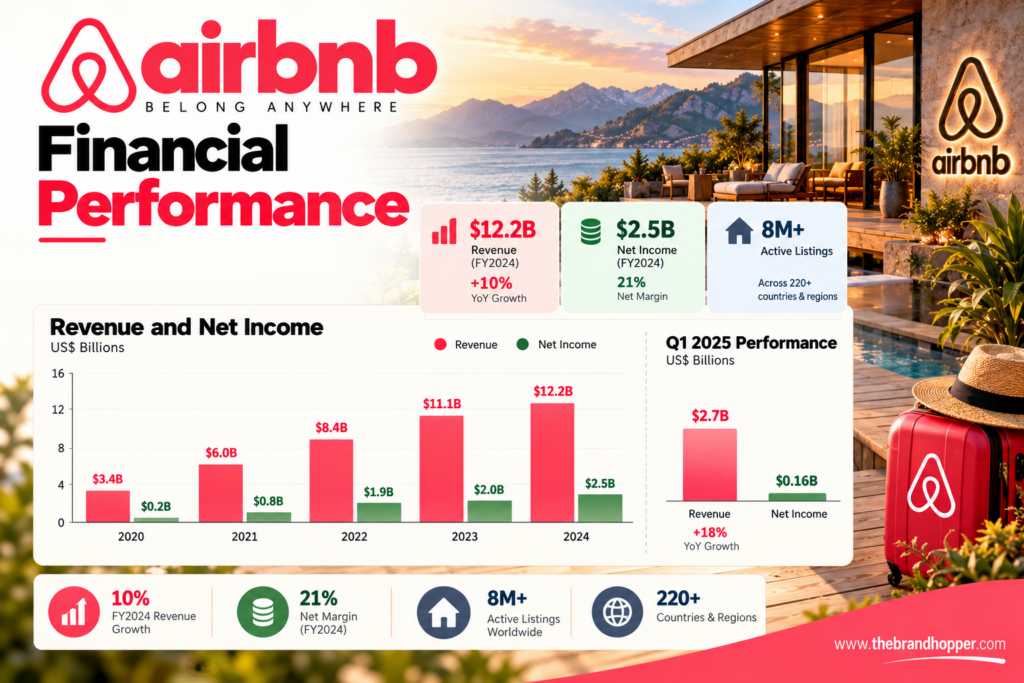
Momentum has continued into the most recent quarters as well, with first-quarter revenue climbing 18% year-over-year to $2.7 billion alongside net income of $160 million, reinforcing that Airbnb’s growth trajectory has remained intact well beyond its initial post-pandemic recovery phase.
Airbnb’s Market Value in 2026
As of 2026, Airbnb’s market capitalization has ranged from approximately $99 billion to $110 billion depending on the trading date and source, placing the company firmly among the most valuable travel and hospitality businesses in the world, alongside legacy hotel giants and rival short-term rental platforms alike.
That valuation reflects continued investor confidence in Airbnb’s asset-light marketplace model, which generates substantial free cash flow without the capital-intensive real estate ownership burden carried by traditional hotel chains, even as the broader travel industry has faced periodic headwinds from macroeconomic uncertainty and shifting consumer travel patterns.
Why Airbnb’s Ownership Structure Matters
Airbnb’s dual-class governance model means that, despite being a publicly traded company answerable to a broad shareholder base, its strategic direction remains heavily shaped by the vision and priorities of its three founders — particularly Chesky and Blecharczyk, who together control roughly 63% of total voting power even without Gebbia’s additional 18% factored in.
This structure has allowed Airbnb’s leadership to pursue long-term strategic bets, including expansion into experiences and AI-driven product features, with less exposure to the kind of short-term activist investor pressure that has reshaped strategy at other major public companies.
For investors, this means backing Airbnb is, in practice, also a bet on continued confidence in Chesky’s specific vision for the company’s future, a dynamic increasingly common among the generation of tech companies that went public with founder-protective dual-class structures over the past decade.
Airbnb Ownership at a Glance
| Category | Detail |
| Founded | 2007-2008 (San Francisco, California) |
| Founders | Brian Chesky, Joe Gebbia, Nathan Blecharczyk |
| IPO date | December 2020, priced at $68/share |
| Company structure | Publicly traded; dual-class share structure |
| Stock listing | NASDAQ: ABNB |
| Founders’ combined economic ownership | ~27% |
| Founders’ combined voting power | ~80% |
| Brian Chesky’s voting power | ~32% |
| Nathan Blecharczyk’s voting power | ~31% |
| Joe Gebbia’s voting power | ~18% |
| Other major shareholders | The Vanguard Group, Fidelity, Sequoia Capital |
| CEO | Brian Chesky |
| Board Chair | Nathan Blecharczyk |
| Active listings | 8 million+ in 220+ countries and regions |
| Full-year revenue | $12.2 billion (+10% YoY) |
| Full-year net income | ~$2.5 billion (~21% net margin) |
| 2026 market capitalization | ~$99-110 billion |
Key Takeaways
Airbnb’s ownership structure reflects one of the more pronounced examples of founder-controlled governance among major public tech companies: co-founders Brian Chesky, Joe Gebbia, and Nathan Blecharczyk collectively hold only about 27% of economic shares but control roughly 80% of total voting power through Airbnb’s dual-class share structure, a design first cemented at the company’s December 2020 IPO.
Founded in 2007-2008 out of a scrappy air-mattress rental idea in San Francisco, Airbnb has since grown into a global hospitality platform with more than 8 million listings, generating revenue of $12.2 billion and net income of approximately $2.5 billion.
With a 2026 market capitalization in the range of $99-110 billion and continued double-digit revenue growth in the most recent quarters, Airbnb’s unconventional ownership structure has done little to slow the company’s position as one of the world’s most valuable travel platforms.
Frequently Asked Questions
Q: Who owns Airbnb?
A: Airbnb is a publicly traded company, but co-founders Brian Chesky, Joe Gebbia, and Nathan Blecharczyk collectively control roughly 80% of total voting power through a dual-class share structure, despite holding only about 27% of total economic shares.
Q: Who founded Airbnb?
A: Airbnb was founded by Brian Chesky and Joe Gebbia in 2007-2008 in San Francisco, after they rented out air mattresses in their apartment during a sold-out design conference. Nathan Blecharczyk joined shortly after as the third co-founder.
Q: How much of Airbnb does Brian Chesky own?
A: Brian Chesky holds approximately 11% of Airbnb’s economic ownership but controls roughly 32% of total voting power due to the company’s dual-class share structure.
Q: When did Airbnb go public?
A: Airbnb went public in December 2020, with shares priced at $68 each. The stock more than doubled on its first day of trading, giving the company a market valuation exceeding $100 billion.
Q: Who are Airbnb’s other major shareholders?
A: Beyond the founders, Airbnb’s major institutional shareholders include The Vanguard Group, Fidelity, and early venture capital backer Sequoia Capital.
Q: Is Joe Gebbia still involved with Airbnb?
A: Joe Gebbia stepped back from day-to-day operations in 2022 but remains on Airbnb’s board of directors and continues to control approximately 18% of the company’s total voting power.
Q: What was Airbnb’s revenue in its most recent full year?
A: Airbnb reported full-year revenue of $12.2 billion, up 10% year-over-year, with net income of approximately $2.5 billion, representing a net margin of around 21%.
Q: Who is Airbnb’s CEO?
A: Brian Chesky has served as Airbnb’s CEO since co-founding the company, continuing to lead it through its pandemic-era recovery, 2020 IPO, and subsequent expansion into experiences and AI-driven travel features.
Also Read: Who are Airbnb’s Top Competitors in Travel Industry?
To read more content like this, subscribe to our newsletter