Last Updated on October 5, 2026 by Team TBH
Ask who owns Apple and the honest answer is: millions of shareholders, primarily through institutional investment vehicles and public markets.
Apple is one of the world’s most widely held public companies, with its shares owned through mutual funds, ETFs, pension funds, investment portfolios and individual brokerage accounts.
No founder, family or parent company controls Apple. Unlike companies such as Meta or Alphabet, Apple has one class of common stock with equal voting rights.
This guide explains who owns Apple, who its largest reported shareholders are, who runs the company after its leadership transition, and what its latest financial results show.
How Apple Began: Three Founders and a Garage
Apple was founded on April 1, 1976, by Steve Jobs, Steve Wozniak and Ronald Wayne.
Wozniak was the engineer behind the Apple I, Jobs focused heavily on product vision and business development, and Wayne helped establish the early company’s administrative and documentation structure.
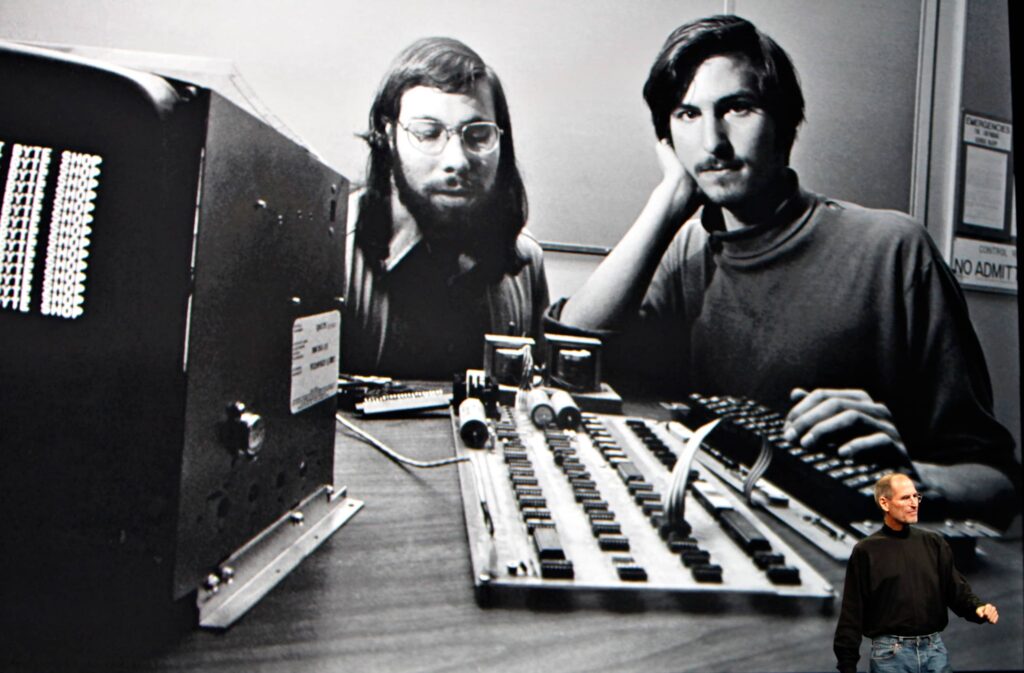
Wayne originally held a 10% stake, but sold his interest shortly after the company was formed for $800, followed by an additional $1,500 payment under a later agreement.
The company grew rapidly with the Apple II, which became one of the early mass-market personal computers.
On December 12, 1980, Apple went public on Nasdaq, selling 4.6 million shares at $22 per share and raising approximately $100 million.
The IPO transformed early employees and investors into shareholders and marked the beginning of Apple’s modern history as a widely held public company.
Who Owns Apple Today? The Biggest Shareholders
Apple had approximately 14.6 billion shares outstanding in 2026, making even a 1% stake worth tens of billions of dollars.
The largest shareholders are primarily institutional investors, including Vanguard, BlackRock and State Street, which manage shares on behalf of investment funds and other clients.
The Vanguard Group remains Apple’s largest shareholder when its separately reporting entities are considered together. Apple’s 2026 proxy lists The Vanguard Group with 1,415,826,462 shares, or 9.63% of Apple’s common stock, based on its June 30, 2025 regulatory filing.
However, that historical 9.63% figure needs an important qualification.
On January 12, 2026, Vanguard underwent an internal realignment, after which certain subsidiaries and business divisions that previously reported beneficial ownership together with The Vanguard Group began filing separately with the SEC.
As a result, current ownership databases can make Vanguard appear smaller than it actually is if they list the reorganized entities individually.
For example, June 30, 2026 data lists Vanguard Capital Management at approximately 7.14% and Vanguard Portfolio Management at approximately 2.29%. Combined, those two Vanguard entities alone represent approximately 9.43% of Apple’s shares.
BlackRock is the next-largest major institutional holder, with approximately 7.97% of Apple according to June 30, 2026 ownership data.
State Street Investment Management follows with approximately 4.21%, while Geode Capital Management holds approximately 2.54%.
The exact ranking can therefore look different depending on whether Vanguard’s separately reporting entities are treated individually or consolidated into one Vanguard position.
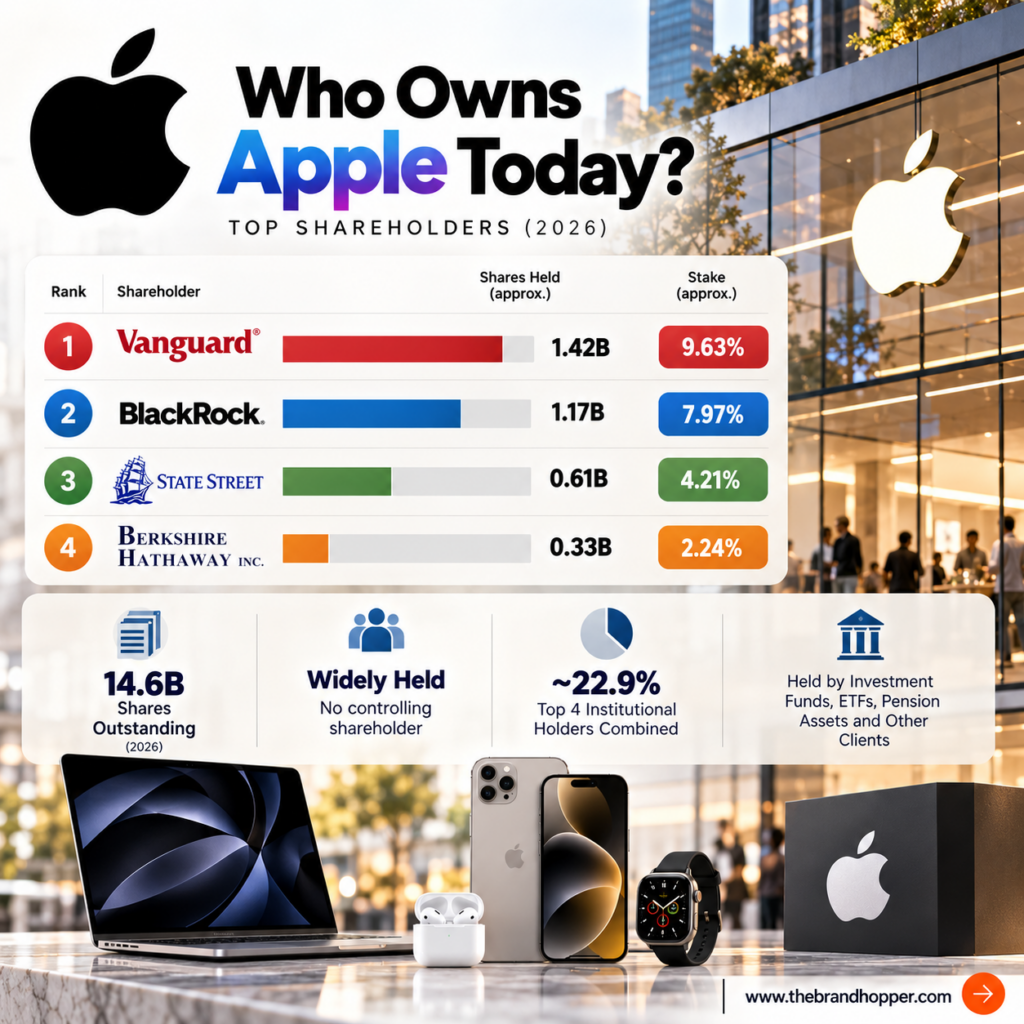
For readers trying to understand Apple’s actual ownership structure, the more useful conclusion is that Vanguard remains the largest shareholder on a consolidated basis, ahead of BlackRock.
These asset managers do not own Apple in the same way a founder or family might own a company. They manage shares on behalf of investment funds, ETFs, pension assets and other clients.
Apple therefore remains a widely held public company without a controlling shareholder.
Berkshire Hathaway: From Late Convert to Major Shareholder
Warren Buffett’s Berkshire Hathaway began buying Apple shares in 2016 and eventually made Apple one of the largest positions in its equity portfolio.
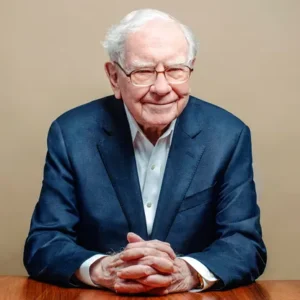
Berkshire subsequently sold a significant portion of its Apple position.
Its latest reported holdings for June 30, 2026 show approximately 227.9 million Apple shares, equivalent to roughly 1.56% of Apple based on current share counts.
Apple remains one of Berkshire Hathaway’s largest disclosed equity investments, although the size of the position can change as Berkshire buys or sells shares.
Because Berkshire reports its U.S. equity holdings through regulatory filings, the most recent disclosed position may not represent its holdings on any particular day.
Insider Ownership: Executives and Director
Apple’s executives and directors own a very small percentage of the company compared with their counterparts at founder-controlled technology companies.
Apple’s 2026 proxy reported that current directors and executive officers as a group beneficially owned 9,079,765 shares, based on the January 2, 2026 table date.
That represented less than 1% of Apple’s outstanding shares.
The proxy listed Tim Cook with 3,280,295 shares, excluding certain RSUs that were not scheduled to vest within 60 days of the table date.
The figures should not be interpreted as a live October 2026 ownership snapshot because executive holdings change through equity vesting, sales and other transactions.
Why Steve Jobs’s Family Is Not an Apple Shareholder Giant
Steve Jobs’s family is not a major shareholder of Apple today.
Jobs’s later wealth became heavily associated with Disney following Disney’s acquisition of Pixar in 2006.
Jobs received Disney shares in that transaction, and after his death in 2011, his Disney holdings became associated with trusts and entities connected to his widow, Laurene Powell Jobs.
The Jobs family does not appear among Apple’s current major beneficial owners disclosed in Apple’s proxy statement.
Apple’s ownership is therefore fundamentally different from a founder-controlled company. Steve Jobs’s family does not retain controlling ownership of Apple.
Leadership Change: Tim Cook Steps Aside, John Ternus Becomes CEO
One of the most important recent developments in Apple’s corporate history is its 2026 CEO succession.
On April 20, 2026, Apple announced that John Ternus would become CEO and Tim Cook would become executive chairman, effective September 1, 2026. The transition was unanimously approved by Apple’s board.
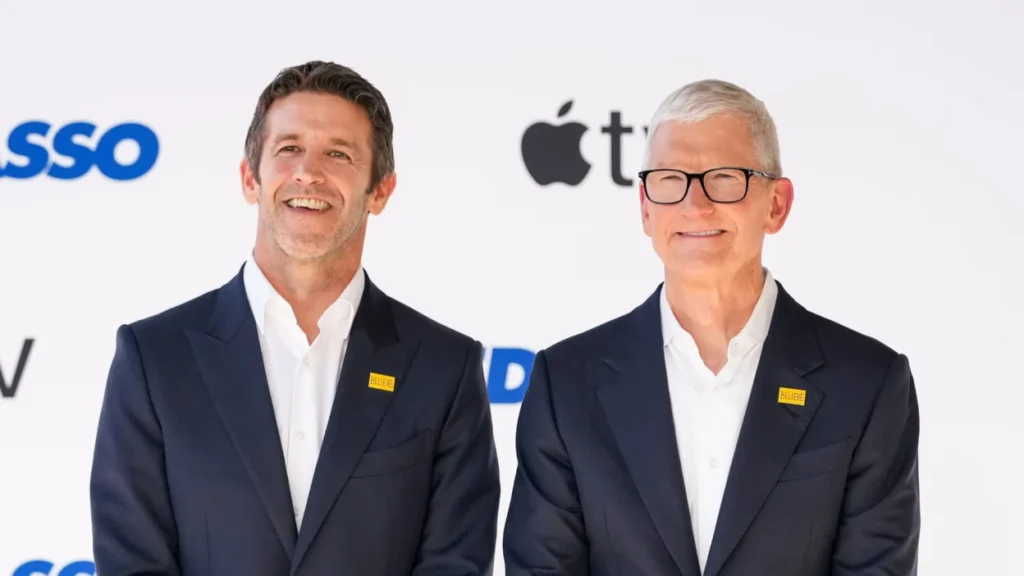
Cook remained CEO through the summer before the transition.
As executive chairman, Cook continues to assist Apple in certain areas, including engagement with policymakers around the world.
Cook became Apple’s CEO in 2011 after previously serving as the company’s chief operating officer.
During his tenure, Apple grew from a company with a market capitalization of approximately $350 billion to around $4 trillion, while annual revenue increased from $108 billion in fiscal 2011 to more than $416 billion in fiscal 2025.
Apple also expanded its global retail presence to more than 500 stores and increased its active installed base to more than 2.5 billion devices during Cook’s tenure.
John Ternus joined Apple in 2001 and became vice president of Hardware Engineering in 2013.
He joined Apple’s executive team as senior vice president of Hardware Engineering in 2021 and has overseen hardware engineering across products including iPhone, iPad, Mac, Apple Watch and AirPods.
Ternus joined Apple’s board of directors when he became CEO on September 1, 2026.
Arthur Levinson, who had served as Apple’s non-executive chairman for 15 years, became lead independent director on the same date.
Apple’s Financial Performance
Apple’s fiscal year ends in late September. Fiscal 2025, which ended on September 27, 2025, remains the latest complete fiscal year for which Apple had reported annual results as of October 5, 2026.
Apple reported $416.2 billion in fiscal 2025 revenue and approximately $112.0 billion in net income. Its September 2025 quarter generated $102.5 billion in revenue.
Apple’s fiscal 2026 year ended on September 26, 2026, but its full-year results had not yet been released as of October 5, 2026.
The latest reported quarter was therefore Q3 fiscal 2026, covering the quarter ended June 27, 2026.
Apple reported $109.4 billion in quarterly revenue, up 16% year over year, with net income of $29.789 billion and diluted EPS of $2.02.
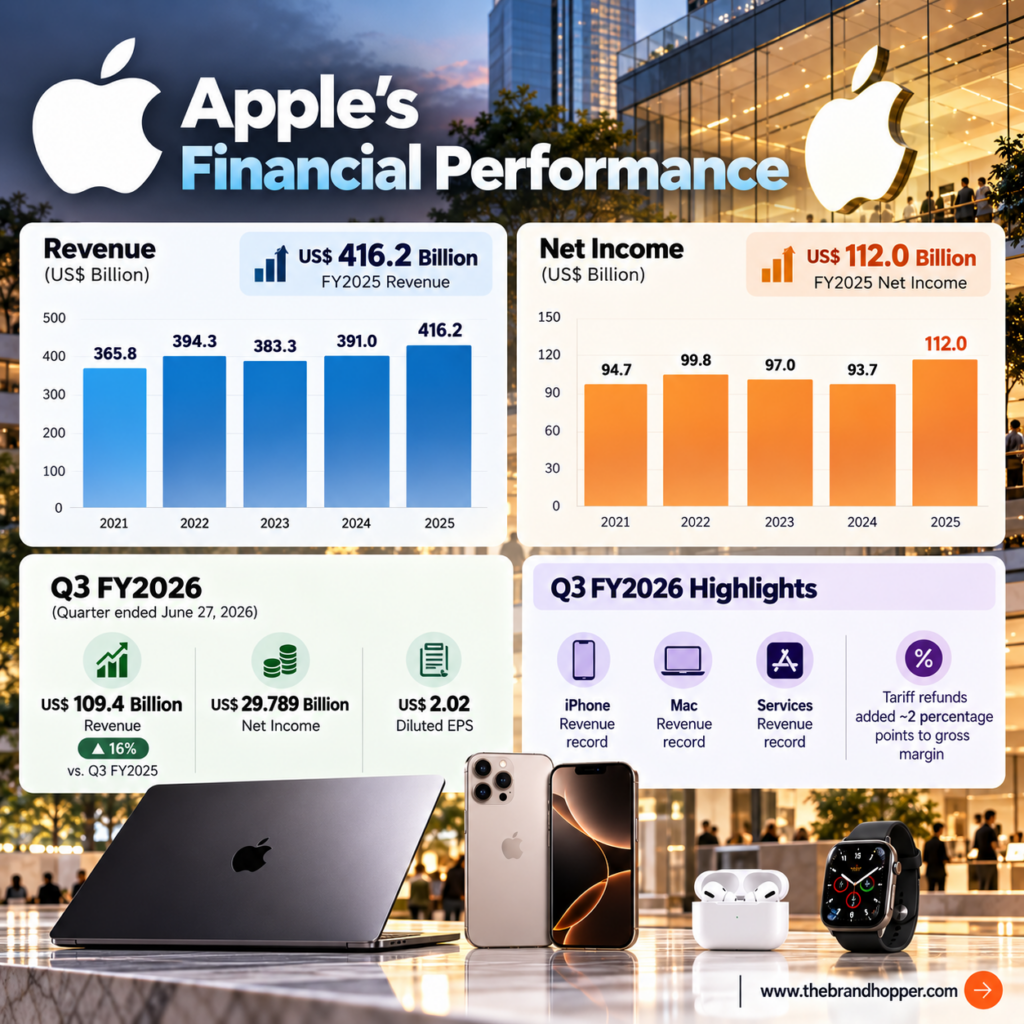
The quarter benefited from strong performance across iPhone, Mac and Services, all of which recorded June-quarter revenue records.
Apple also disclosed that tariff refunds had a favorable effect of approximately 2 percentage points on gross margin during the quarter.
Apple’s Market Value in 2026
Apple briefly crossed a $5 trillion market capitalization on July 28, 2026.
During that session, Apple’s market value briefly reached approximately $5.04 trillion, making Apple only the second publicly traded company after Nvidia to reach the $5 trillion milestone.
The market value subsequently moved below that level.
At the October 2, 2026 closing price of $333.69, Apple had a market capitalization of approximately $4.87 trillion.
Market capitalization changes every trading day, so any figure published in this article should be treated as date-specific rather than permanent.
What Shareholders Actually Own: Apple’s Business and Global Reach
Owning Apple stock represents an ownership interest in one of the world’s largest technology and consumer businesses.
Apple’s major products include iPhone, iPad, Mac, AirPods, Apple Watch and Apple Vision Pro.
Its software platforms include iOS, iPadOS, macOS, watchOS, visionOS and tvOS, while its services ecosystem includes products such as the App Store, Apple Music, Apple Pay, iCloud and Apple TV.
Apple’s Services business has grown into a more than $100 billion annual business, becoming an increasingly important part of the company’s overall revenue base.
Apple operates in more than 200 countries and territories and has more than 500 retail stores globally.
The company has more than 150,000 employees, according to Apple’s latest corporate materials.
Apple’s active installed base has also exceeded 2.5 billion devices, providing the company with a large ecosystem of users for hardware, software and services.
Apple has increasingly designed important parts of its own technology stack, including its transition to Apple-designed silicon for Mac.
This vertical integration gives Apple greater control over hardware and software optimization and has become an important part of its product strategy.
Why Apple’s Ownership Structure Matters
Apple has a single class of common stock with equal voting rights, meaning each share carries one vote.
There is no dual-class structure giving a founder or another insider disproportionately high voting power.
That makes Apple’s governance structure different from companies where founders retain control through special voting shares.
Large institutional shareholders can therefore have significant influence through shareholder votes, particularly on matters such as director elections and executive compensation.
However, institutional ownership should not automatically be interpreted as active control. Most large asset managers manage diversified portfolios and operate under fiduciary and stewardship policies.
Apple’s broad shareholder base also supports its substantial dividend and share-repurchase program.
The company has regularly returned capital to shareholders through dividends and stock buybacks, reducing the number of shares outstanding over time.
Apple’s Q3 FY2026 filing reported 14.594 billion shares outstanding as of July 17, 2026, compared with higher share counts in earlier periods.
Apple Ownership at a Glance
| Category | Detail |
|---|---|
| Founded | April 1, 1976 — Steve Jobs, Steve Wozniak and Ronald Wayne |
| IPO | December 12, 1980 — Nasdaq; 4.6M shares at $22 |
| Ticker | AAPL — Nasdaq |
| Ownership type | Publicly held; single class of common stock |
| Shares outstanding | 14.594 billion as of July 17, 2026 |
| Major institutional holder | BlackRock — ~7.97%, June 30, 2026 |
| Major institutional holder | Vanguard Capital Management — ~7.14%, June 30, 2026 |
| State Street Investment Management | ~4.21%, June 30, 2026 |
| Berkshire Hathaway | ~227.9 million shares / ~1.56%, June 30, 2026 |
| Directors and officers | 9.08 million shares, less than 1%, January 2, 2026 proxy snapshot |
| CEO | John Ternus, since September 1, 2026 |
| Executive Chairman | Tim Cook, since September 1, 2026 |
| Lead Independent Director | Arthur Levinson, since September 1, 2026 |
| Fiscal 2025 revenue | $416.2 billion |
| Fiscal 2025 net income | ~$112.0 billion |
| Latest reported quarter | Q3 FY2026 |
| Q3 FY2026 revenue | $109.4 billion |
| Q3 FY2026 net income | $29.789 billion |
| Market capitalization | ~$4.87 trillion at October 2, 2026 close |
Key Takeaways
Apple is owned by the public markets, not by a founder, family or parent company.
The company has a single class of common stock with equal voting rights, meaning there is no founder-controlled dual-class structure.
Current institutional ownership data shows major positions held by BlackRock, Vanguard, State Street and other large investment managers, while Berkshire Hathaway remains a significant individual institutional shareholder.
Berkshire Hathaway held approximately 227.9 million Apple shares, or about 1.56%, as of June 30, 2026.
The biggest recent governance development was the succession of John Ternus as CEO on September 1, 2026, with Tim Cook moving into the role of executive chairman.
Financially, Apple generated $416.2 billion of revenue and approximately $112.0 billion of net income in fiscal 2025.
Its latest reported quarter, Q3 FY2026, generated $109.4 billion in revenue and $29.789 billion in net income, demonstrating continued strong growth before the release of the full FY2026 results.
Frequently Asked Questions
Q: Who owns Apple?
A: Apple is publicly owned by millions of shareholders around the world.
Its largest reported shareholders are primarily institutional investors, including BlackRock, Vanguard and State Street. Current June 2026 data puts BlackRock at approximately 7.97%, Vanguard Capital Management at approximately 7.14%, and State Street at approximately 4.21%.
No single person or family controls Apple.
Q: Who is the largest individual shareholder of Apple?
A: Apple’s insiders collectively own less than 1% of the company’s shares based on Apple’s 2026 proxy.
The proxy listed Tim Cook with 3,280,295 shares as of January 2, 2026, although this does not represent his live October 2026 holdings.
Q: Who is Apple’s CEO in 2026?
A: John Ternus became Apple’s CEO on September 1, 2026, succeeding Tim Cook. Cook became executive chairman.
Q: Does Berkshire Hathaway still own Apple stock?
A: Yes.
Berkshire Hathaway reported approximately 227.9 million Apple shares as of June 30, 2026, representing about 1.56% of Apple based on current shares outstanding.
Q: Who founded Apple?
A: Steve Jobs, Steve Wozniak and Ronald Wayne founded Apple on April 1, 1976.
Ronald Wayne sold his original 10% stake shortly after the company was established.
Q: When did Apple go public?
A: Apple went public on December 12, 1980, on Nasdaq.
The company sold 4.6 million shares at $22 each, raising approximately $100 million.
Q: How much is Apple worth?
A: At the October 2, 2026 closing price, Apple had a market capitalization of approximately $4.87 trillion.
Apple had briefly exceeded $5 trillion on July 28, 2026.
Q: How much revenue did Apple make in its latest fiscal year?
A: Apple’s latest completed fiscal year with reported annual results is fiscal 2025, which ended September 27, 2025.
Apple reported approximately $416.2 billion in revenue and $112.0 billion in net income for that fiscal year.
Apple’s fiscal 2026 ended on September 26, 2026, but its full-year FY2026 results had not yet been released as of October 5, 2026.
Also Read: Apple vs Samsung: Which Brand Wins?
Also Read: Apple’s Greatest Ad Campaigns: From ‘1984’ to AI Era
To read more content like this, subscribe to our newsletter