Last Updated on August 31, 2026 by Team TBH
Quick answer: PepsiCo, Inc. is a publicly traded American company (NASDAQ: PEP) with no single controlling owner. It’s held primarily by institutional investors like Vanguard (~10%), BlackRock (~8%), and State Street, alongside millions of individual shareholders. Pepsi the soft drink is just one of dozens of brands under the PepsiCo umbrella, which also owns Frito-Lay, Quaker Oats, Gatorade, Tropicana, Mountain Dew, and Sabra, among many others. PepsiCo was formed in 1965 when Pepsi-Cola merged with Frito-Lay, and it’s currently led by Chairman and CEO Ramon Laguarta, though a $4 billion stake from activist investor Elliott Management in 2025 has pushed the company toward one of its biggest strategic shake-ups in decades.
Pepsi is far more than a soda brand — it’s the beverage flagship of one of the largest food and drink companies on the planet, a corporation whose snack aisle dominance often rivals its cola sales.
Understanding “who owns Pepsi” really means understanding PepsiCo itself: a sprawling, publicly traded conglomerate built through more than a century of mergers, acquisitions, and reinvention.
Here’s the complete ownership story, brand portfolio, and financial picture behind the Pepsi name.
How Pepsi Began: A Pharmacist’s Fountain Drink
Pepsi’s story starts in 1893, when pharmacist Caleb Bradham created a fountain drink at his drugstore in New Bern, North Carolina, originally intended as a digestive aid, blending kola nut extract, vanilla, and rare oils.
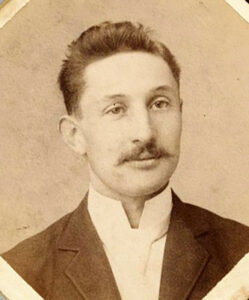
He renamed it “Pepsi-Cola” in 1898 — a nod to the digestive enzyme pepsin — and formally founded the Pepsi-Cola Company in 1903.
The brand struggled financially for decades, twice filing for bankruptcy (once after a disastrous bet on sugar prices during World War I), before being rescued and rebuilt into a genuine national competitor to Coca-Cola through the mid-20th century, largely by aggressively undercutting Coke on price during the Great Depression with a larger 12-ounce bottle sold for the same nickel.
The 1965 Merger That Created PepsiCo
The modern PepsiCo didn’t exist until 1965, when Pepsi-Cola merged with Frito-Lay, the snack food giant behind Fritos, Lay’s potato chips, and Rold Gold pretzels.
The deal was struck after Pepsi-Cola’s Donald Kendall met Frito-Lay owner Herman Lay at a grocers’ convention, and the two companies combined to create a diversified food-and-beverage business rather than a single-category soda company.
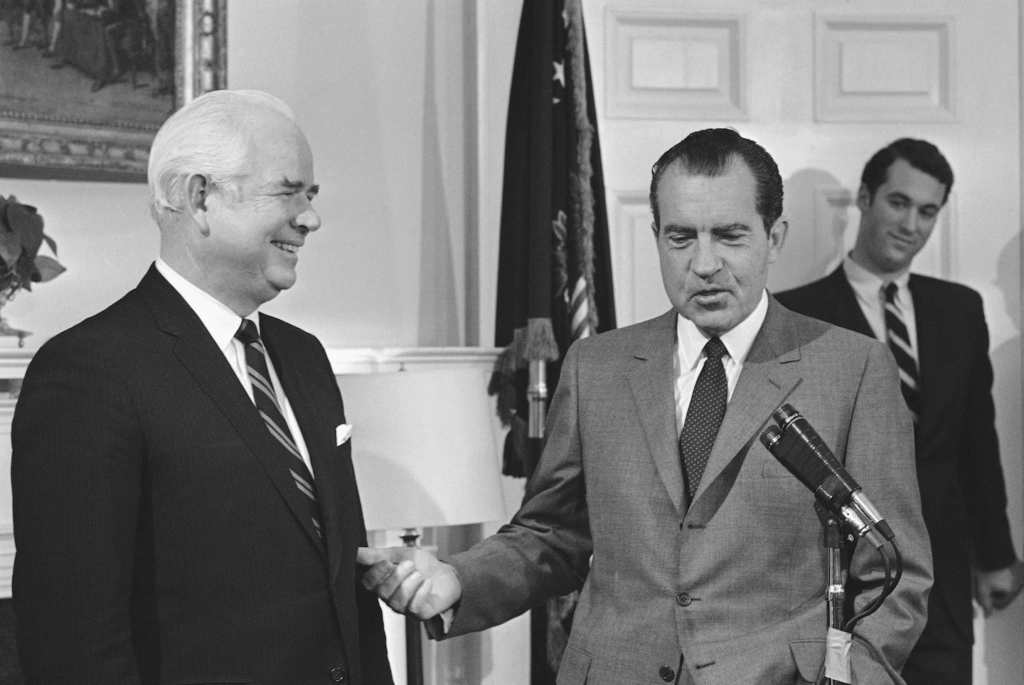
Herman Lay became chairman of the newly formed PepsiCo, Inc., while Kendall took over as president and CEO, setting the template for the dual beverage-and-snacks identity that still defines the company today.
Who Owns Pepsi Today? PepsiCo’s Shareholder Structure
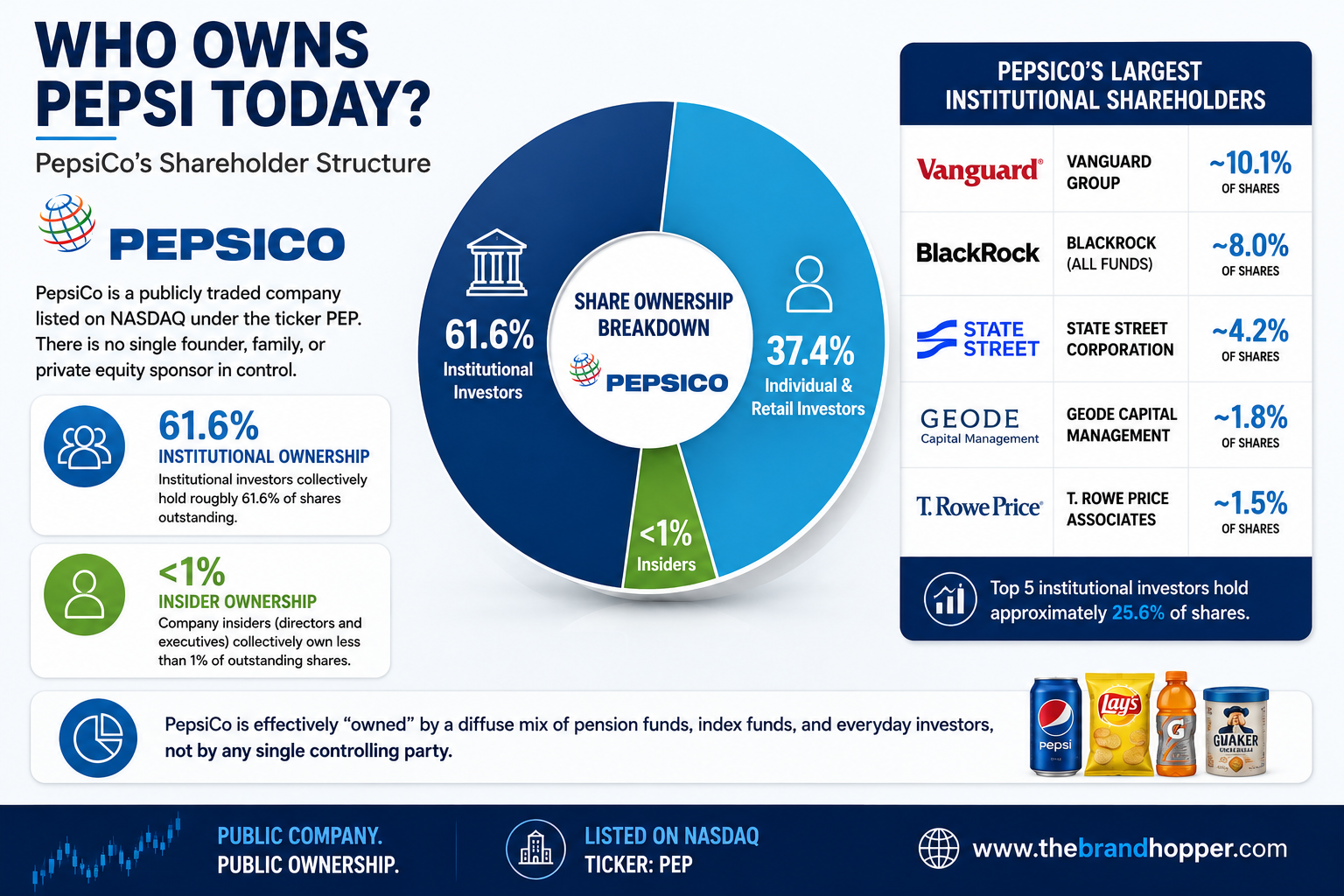
PepsiCo has been a publicly traded company for decades, listed on the NASDAQ under the ticker PEP, and it has no single founder, family, or private equity sponsor in control. Institutional investors collectively hold roughly 61.6% of shares outstanding, with individual and retail investors holding much of the remainder.
The largest individual shareholders are asset management giants: Vanguard holds around 10.1% of shares, BlackRock (across its various funds) holds a combined stake close to 8%, and State Street rounds out the top tier of institutional holders.
Company insiders — directors and executives — collectively own less than 1% of outstanding shares, meaning that, much like McDonald’s or Coca-Cola, Pepsi is effectively “owned” by a diffuse mix of pension funds, index funds, and everyday investors rather than by any single controlling party.
Chairman and CEO Ramon Laguarta, who has led the company since 2018, oversees day-to-day strategy and reports to PepsiCo’s board of directors on behalf of these shareholders.
The Elliott Management Shake-Up of 2025
PepsiCo’s ownership story took an unusually dramatic turn in September 2025, when activist hedge fund Elliott Investment Management disclosed a roughly $4 billion stake in the company, instantly making it one of PepsiCo’s five largest active investors outside of index funds.
Elliott didn’t push for an outright breakup, but it did publicly criticize a decade of underperformance at PepsiCo Beverages North America and called for the company to “refranchise” much of its company-owned bottling network to independent operators — essentially copying a restructuring move rival Coca-Cola made years earlier that significantly lightened Coke’s balance sheet and boosted its margins.
Elliott also pushed for tighter cost discipline, a hard look at underperforming and non-core brands, and stronger investment behind PepsiCo’s healthier, faster-growing product lines.
Rather than a prolonged public fight, PepsiCo and Elliott reached a settlement establishing a collaborative strategic roadmap, and the episode is widely seen as accelerating changes — including 2026 price cuts on snack products and a renewed productivity push — that PepsiCo has since begun rolling out.
What Brands Does PepsiCo Own?
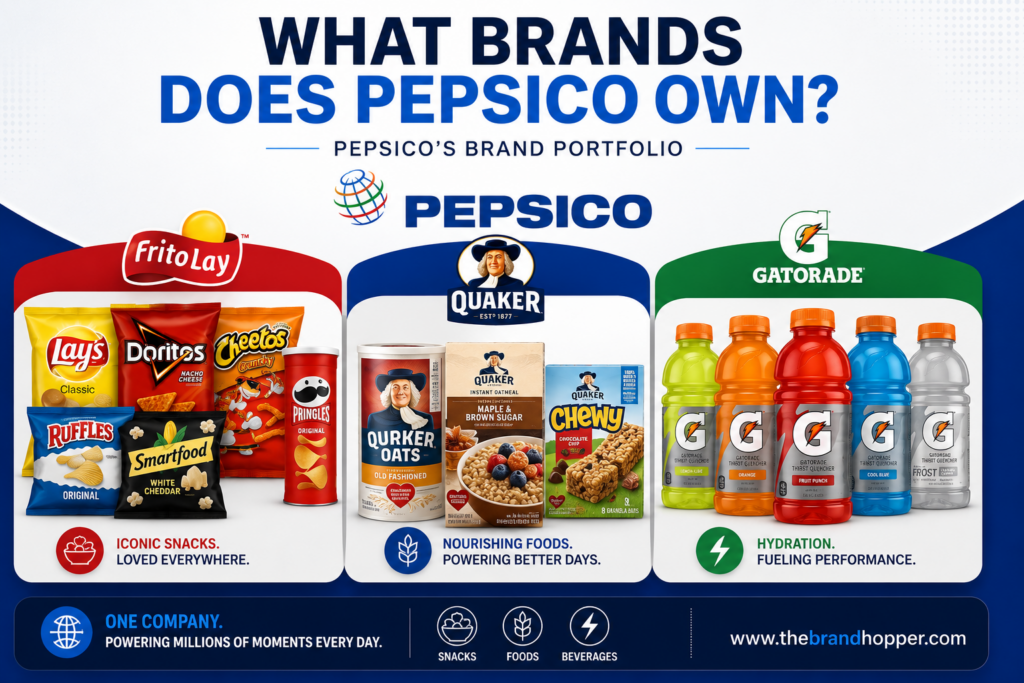
This is where PepsiCo’s scale becomes obvious: the company’s portfolio stretches far beyond the cola aisle. Its Frito-Lay North America division alone produces Lay’s, Doritos, Cheetos, Tostitos, Fritos, Ruffles, and Santitas.
Its Quaker Foods North America division makes Quaker Oats, Cap’n Crunch, Life cereal, and various rice and pasta brands.
On the beverage side, PepsiCo owns not just Pepsi and Diet Pepsi but Mountain Dew, Gatorade, Tropicana juices, Aquafina bottled water, and SodaStream.
In recent years, PepsiCo has also pushed further into the “better-for-you” snacking space, most notably by acquiring full ownership of hummus brand Sabra (after previously owning it through a joint venture), which now generates close to $400 million in annual U.S. retail sales.
Altogether, PepsiCo’s portfolio spans dozens of brands sold in more than 200 countries and territories, making it one of the most diversified consumer packaged goods companies in the world — arguably more of a snack company with a beverage division than a soda company with snack side businesses, given how much of its profit now comes from Frito-Lay.
PepsiCo’s Financial Reality in 2025-2026
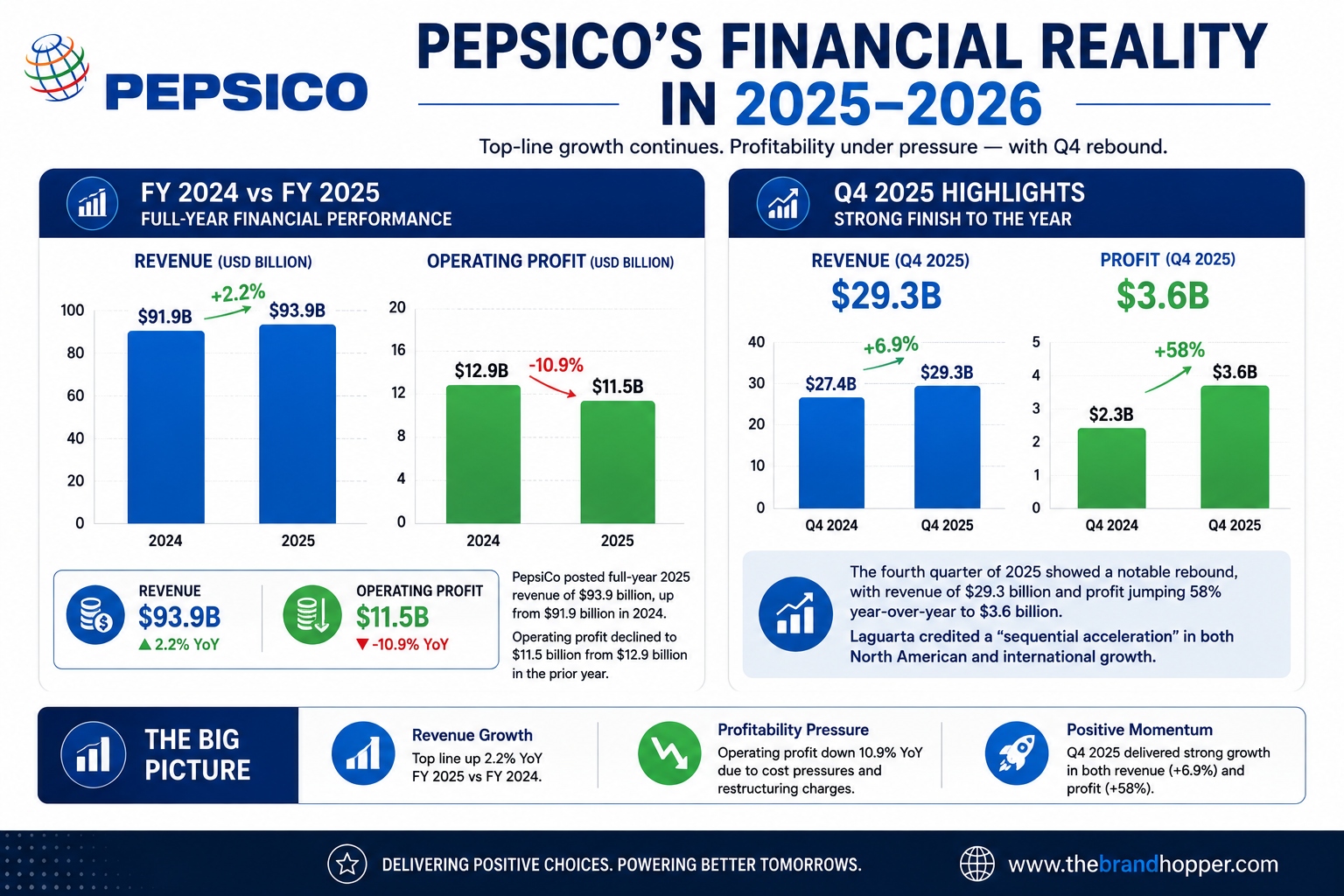
PepsiCo posted full-year 2025 revenue of $93.9 billion, up from $91.9 billion in 2024, though operating profit actually declined to $11.5 billion from $12.9 billion the prior year, reflecting cost pressures and restructuring charges even as top-line sales grew.
The fourth quarter of 2025 showed a notable rebound, with revenue of $29.3 billion and profit jumping 58% year-over-year to $3.6 billion, which Laguarta credited to a “sequential acceleration” in both North American and international growth.
Looking ahead, PepsiCo is guiding for 2% to 4% revenue growth in 2026 and has announced it will cut prices on many snack products by roughly 15%, a direct response to consumer affordability pressure and part of the broader strategic reset pushed along by Elliott’s involvement.
PepsiCo vs Coca-Cola: The Structural Difference
Pepsi’s biggest rival, Coca-Cola, is structured very differently. Coca-Cola is almost entirely a beverage company that long ago spun off its bottling operations into a separate, more asset-light structure, whereas PepsiCo has historically kept more of its bottling network in-house and diversified heavily into snack foods rather than staying beverage-only.
This is precisely the structural gap Elliott Management pointed to in 2025, arguing PepsiCo could unlock significant value by moving closer to Coca-Cola’s leaner, more refranchised bottling model.
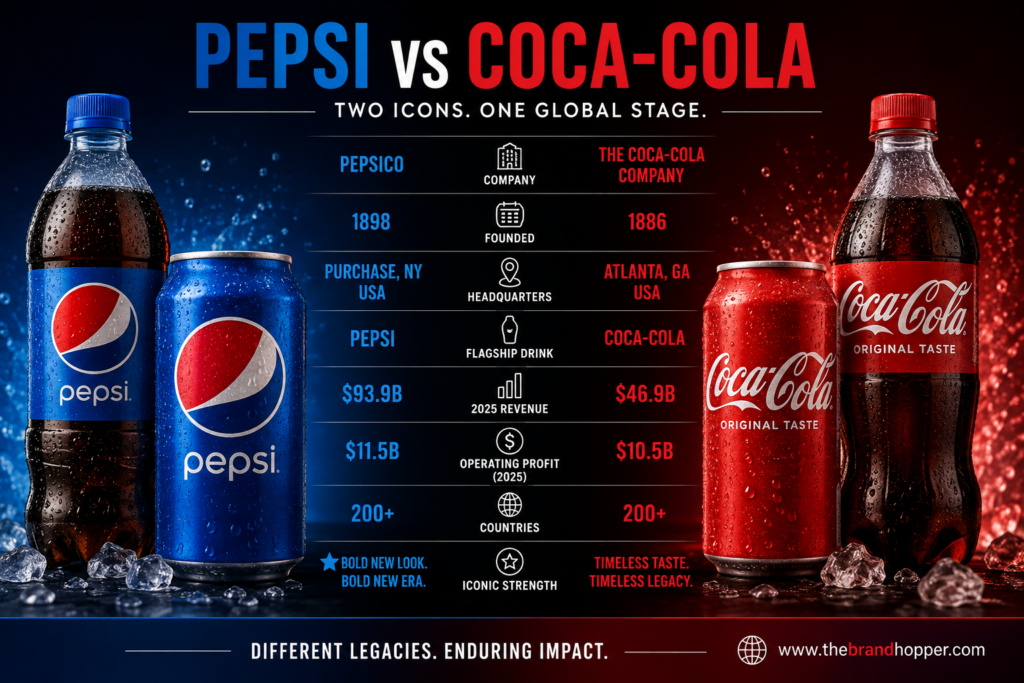
On brand value and pure soda sales, Coca-Cola still edges out Pepsi globally, but PepsiCo’s food and snacks business gives it a diversification advantage Coca-Cola simply doesn’t have, since Frito-Lay alone generates tens of billions in annual revenue independent of how well Pepsi-branded soda is selling in any given market.
PepsiCo’s Bottling and Distribution Network
One detail that often surprises people researching “who owns Pepsi” is that not every bottle or can on the shelf is actually produced by PepsiCo itself.
Like most major beverage companies, PepsiCo relies on a mix of company-owned bottling operations and independent franchise bottlers who are licensed to manufacture, package, and distribute Pepsi products within specific territories.
PepsiCo’s own bottling arm, PepsiCo Beverages North America, handles a significant share of production in the US and Canada, while international markets are frequently served by a patchwork of licensed bottling partners who operate under long-term agreements rather than direct PepsiCo ownership.
This is exactly the structure Elliott Management targeted in its 2025 campaign, arguing that PepsiCo holds onto more bottling infrastructure than it needs to, tying up capital that could otherwise fund brand investment or be returned to shareholders.
Refranchising more of this network to independent bottlers, as Coca-Cola did years earlier, would make PepsiCo a lighter, more margin-focused company, though it would also mean ceding direct control over how Pepsi products reach store shelves in those markets.
Which Part of PepsiCo Should You Actually Care About?
If you’re a soda drinker, “who owns Pepsi” is really a question about a single product line inside a much larger machine — Pepsi-Cola itself is a relatively modest slice of PepsiCo’s overall revenue compared to Frito-Lay’s snack empire.
If you’re an investor, PepsiCo represents a diversified, dividend-paying consumer staples stock that’s currently in the middle of a real strategic inflection point thanks to Elliott’s involvement, making 2026 an unusually interesting year to watch the company’s bottling and portfolio decisions play out.
If you’re simply a grocery shopper, the more useful takeaway might be just how many products in your cart trace back to the same parent company — from your soda to your chips to your morning oatmeal to your hummus — all funneling profit back to the same shareholder base.
PepsiCo’s Global Footprint and Cultural Reach
Beyond its financials, PepsiCo remains one of the most culturally visible companies in the world, with products sold in more than 200 countries and territories and a marketing history that includes some of the most famous advertising rivalries in business, most notably the decades-long “Cola Wars” against Coca-Cola.
PepsiCo has also built a long history of celebrity partnerships and Super Bowl advertising spectacles, cementing Pepsi’s identity as a youth-oriented, culturally current brand even as its parent company’s real financial engine increasingly runs on Frito-Lay’s snack sales rather than cola alone.
Who Owns Pepsi & PepsiCo at a Glance
| Fact | Detail |
| Pepsi founded | 1893 (as a fountain drink); Pepsi-Cola Company founded 1903, by Caleb Bradham |
| PepsiCo formed | 1965, via merger of Pepsi-Cola and Frito-Lay |
| Merger architects | Donald Kendall (Pepsi-Cola) and Herman Lay (Frito-Lay) |
| Ownership structure | Publicly traded — no controlling shareholder |
| Stock listing | NASDAQ: PEP |
| Largest shareholders | Vanguard (~10.1%), BlackRock (~8%), State Street |
| Chairman & CEO | Ramon Laguarta (since 2018) |
| Major 2025 development | Elliott Management discloses ~$4 billion activist stake |
| FY2025 revenue | $93.9 billion (up from $91.9 billion in 2024) |
| FY2025 operating profit | $11.5 billion (down from $12.9 billion in 2024) |
| Key brands owned | Frito-Lay, Quaker, Gatorade, Tropicana, Mountain Dew, Aquafina, Sabra, SodaStream |
| Countries/territories served | 200+ |
Key Takeaways
Pepsi isn’t owned by a founder, a family, or a private equity firm — it’s owned by shareholders of a massive, publicly traded conglomerate, PepsiCo, that has grown far beyond soda into snacks, cereal, sports drinks, and juice.
Formed by the 1965 merger of Pepsi-Cola and Frito-Lay, PepsiCo today generates nearly $94 billion in annual revenue, and its ownership structure — dominated by institutional investors like Vanguard and BlackRock — is now facing real pressure to change following Elliott Management’s $4 billion activist stake in 2025.
Whatever comes of that strategic reset, one thing is already clear: Pepsi the soda is just the most visible piece of a much larger snack-and-beverage empire.
Frequently Asked Questions
Q: Who owns Pepsi?
A: Pepsi is owned by PepsiCo, Inc., a publicly traded American company (NASDAQ: PEP) with no controlling shareholder. The largest holders are institutional investors like Vanguard (~10%), BlackRock (~8%), and State Street.
Q: Is Pepsi and PepsiCo the same company?
A: Not quite. Pepsi is the flagship cola brand, while PepsiCo is the parent corporation that owns Pepsi along with dozens of other food and beverage brands, including Frito-Lay, Quaker, Gatorade, and Tropicana.
Q: Who founded Pepsi?
A: Pepsi was created in 1893 by pharmacist Caleb Bradham in New Bern, North Carolina, who originally sold it as a fountain drink before formally founding the Pepsi-Cola Company in 1903.
Q: When did PepsiCo form?
A: PepsiCo was formed in 1965 through the merger of Pepsi-Cola and Frito-Lay, combining Donald Kendall’s soft drink business with Herman Lay’s snack food empire into a single diversified company.
Q: What brands does PepsiCo own besides Pepsi?
A: PepsiCo owns Frito-Lay (Lay’s, Doritos, Cheetos, Fritos, Ruffles, Tostitos), Quaker Foods (Quaker Oats, Cap’n Crunch, Life), and beverages including Mountain Dew, Gatorade, Tropicana, Aquafina, and SodaStream, along with Sabra hummus.
Q: Why is Elliott Management involved with PepsiCo?
A: Elliott Investment Management disclosed a roughly $4 billion stake in PepsiCo in September 2025, pushing the company to refranchise its bottling operations and streamline its brand portfolio, similar to changes rival Coca-Cola made years earlier.
Q: Is PepsiCo bigger than Coca-Cola?
A: By total revenue, yes — PepsiCo’s $93.9 billion in 2025 revenue exceeds Coca-Cola’s, largely because PepsiCo’s Frito-Lay snack business adds billions in sales that pure-beverage Coca-Cola doesn’t have. However, Coca-Cola still leads in pure soft drink sales and brand value.
Q: Who is PepsiCo’s CEO?
A: Ramon Laguarta has served as PepsiCo’s Chairman and CEO since 2018, leading the company through its most recent financial results and its 2025 strategic realignment with activist investor Elliott Management.
Also Read: Marketing Strategies And Brand Campaigns of Pepsico
To read more content like this, subscribe to our newsletter