Last Updated on September 1, 2026 by Team TBH
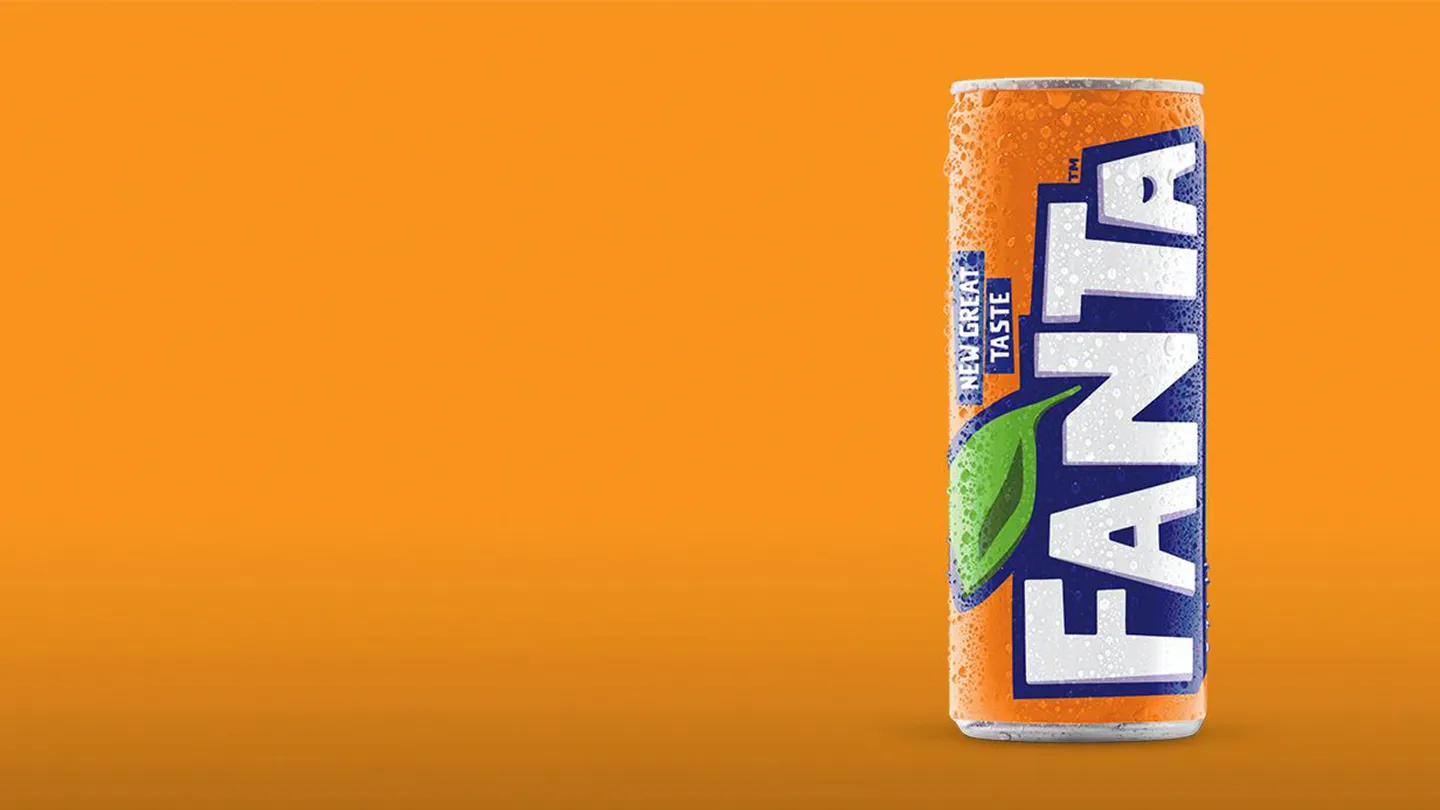
Fanta is a global brand of fruit-flavoured carbonated soft drinks created by The Coca-Cola Company. It is one of the most popular beverage brands worldwide, known for its vibrant colours, fruity flavours, and bold brand personality. With a brand valuation of USD 7.6 Billion in 2024, Fanta is classified as a billion-dollar brand generating over $1 billion in annual retail sales globally, available in more than 180 countries.
Yet Fanta is not simply a product—it is a carefully engineered cultural brand, built specifically for teenagers and young adults. Its marketing strategies have evolved from a simple wartime substitute beverage into one of the most recognisable and creatively ambitious youth brands in the global beverage category. From a landmark 2023 global rebrand to the 2024 “Do More of What You Wanta” Gen Z platform and a bold Beetlejuice collaboration spanning 50 countries, Fanta’s marketing playbook is one of the most instructive in FMCG today.

The Origin of Fanta: From Wartime Necessity to Global Icon
The story of Fanta begins in Germany during World War II—one of the more unlikely origin stories in consumer brand history. In 1940, a US trade embargo made it impossible for Coca-Cola Deutschland to import the syrup needed to produce Coca-Cola. The head of Coca-Cola’s German operations, Max Keith, chose to develop an entirely new product using only ingredients available domestically at the time—primarily whey and apple pomace, the leftover pulp from cheese and cider production.
The name “Fanta” emerged from a brief company brainstorming session in which Keith told the group to use their “Fantasie” (German for imagination). A salesman named Joe Knipp immediately proposed “Fanta,” and it stuck. The original product was unlike the brightly coloured, fruit-forward drink we know today—it was pale, mildly sweet, and tasted closer to a flat ginger ale than an orange soda. Its recipe varied based on ingredient availability, making every batch slightly different.
After World War II, The Coca-Cola Company reclaimed the Fanta trademark. In 1955, the brand was relaunched in Naples, Italy, with a new citrus-based recipe that became the template for the modern orange-flavoured Fanta recognised worldwide. The Italian version proved enormously popular across Europe, Africa, Asia, and South America. Fanta reached the United States in 1960, initially positioned as a way for Coca-Cola to compete with Pepsi’s flavoured drink portfolio.
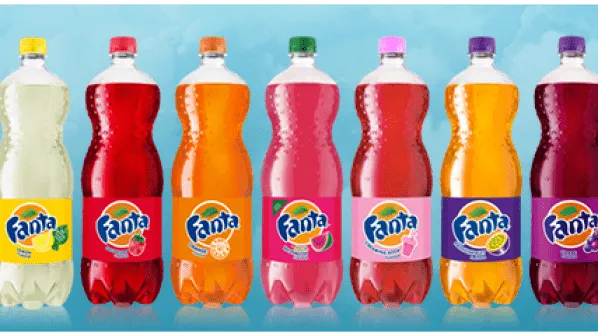
Today, Fanta offers more than 100 distinct flavour variants worldwide. While Orange remains the global best-seller, the brand produces everything from Grape, Strawberry, Pineapple, and Lemon to highly localised variants such as Fanta Melon Frosty in Japan, Fanta Green Apple in Romania, and Shokata (Elderberry and Lemon) in parts of Europe. This extraordinary flavour breadth is not just a product strategy—it is one of Fanta’s most powerful marketing tools.
Fanta’s Brand Identity & Positioning
Fanta occupies a very specific positioning territory within The Coca-Cola Company’s portfolio: unapologetically youthful, playful, and anti-serious. Where Coca-Cola speaks to universal human connection and shared happiness, Fanta speaks to the irreverence, energy, and flavour-seeking curiosity of 15–24-year-olds. The brand’s long-standing tagline “More Fanta, Less Serious” frames this positioning explicitly.
This youth-centric positioning is not accidental—it is a strategic decision that allows Fanta to hold a distinct and valuable space within the Coca-Cola portfolio while competing with other youth-oriented beverage brands. Every campaign, product innovation, and platform partnership flows from this single positioning truth: Fanta is the brand that takes fun more seriously than anything else.
The 2023 Global Rebrand: “Bold Not Boring”
In April 2023, Fanta unveiled its first-ever unified global brand identity—a landmark moment for a brand that had previously operated with dozens of slightly different visual treatments across its 180+ markets. The new identity was created in partnership with Jones Knowles Ritchie (JKR), one of the world’s leading FMCG design agencies, and carried the design philosophy: “Bold Not Boring.”
The rebrand made three significant changes. First, Fanta removed its iconic orange fruit illustration from the logo entirely, replacing it with a bold, simplified wordmark in custom typography designed to feel energetic and direct. Second, the new design system introduced a colour palette and illustration style that could flex across more than 100 flavour variants while maintaining a cohesive look—a logistical challenge few global brands have attempted at this scale. Third, the creative approach introduced a mixed-media aesthetic combining bold illustrations with photography, layering, and intentional imperfection, designed specifically to “cut through visual clutter” on both physical shelves and digital screens.

The rebrand was more than cosmetic: it established Fanta’s first consistent global visual voice, reinforcing the brand’s personality—described as tackling “this-world-is-boring-itis”—across every market simultaneously for the first time in its history.
Marketing Strategies of Fanta
Fanta’s marketing strategies have evolved consistently over the decades, with a through-line of youth targeting, cultural agility, and product innovation. Below is a detailed exploration of the brand’s key strategies, updated with its most recent campaigns and approaches.
1. Targeting Youth with Playful and Vibrant Campaigns
Fanta’s most fundamental marketing strategy is its concentrated focus on teenagers and young adults aged 15 to 24. This is not a demographic that every brand wants to target exclusively—it is notoriously difficult, brand-loyal to experiences and peers rather than products, and quick to dismiss anything that feels forced or inauthentic. Fanta has built an entire creative architecture around earning this audience’s attention.
The “Be More Fanta” campaign is a strong example: it invited young consumers to embrace their playful sides and express unique personalities through social media. Rather than prescribing what “fun” looked like, the campaign created frameworks for self-expression—photo booths at events where attendees could take selfies against colourful backdrops and share them using specific hashtags, user-generated content incentives, and creative challenges.

Fanta’s youth campaigns consistently use several specific creative levers: vivid, maximally saturated colour palettes; upbeat, contemporary music; participatory mechanics that let young people contribute to rather than merely receive brand communications; and platform-native formats that respect the design language of the platforms they appear on.
2. Localised Flavor Innovation
Fanta’s localised flavour strategy is one of its most distinctive competitive advantages in the global beverage market. While its core line—Orange, Grape, Strawberry, Lemon—is available globally, the brand continuously develops region-specific variants tailored to local palates, enabling it to feel authentically local in over 180 markets simultaneously.
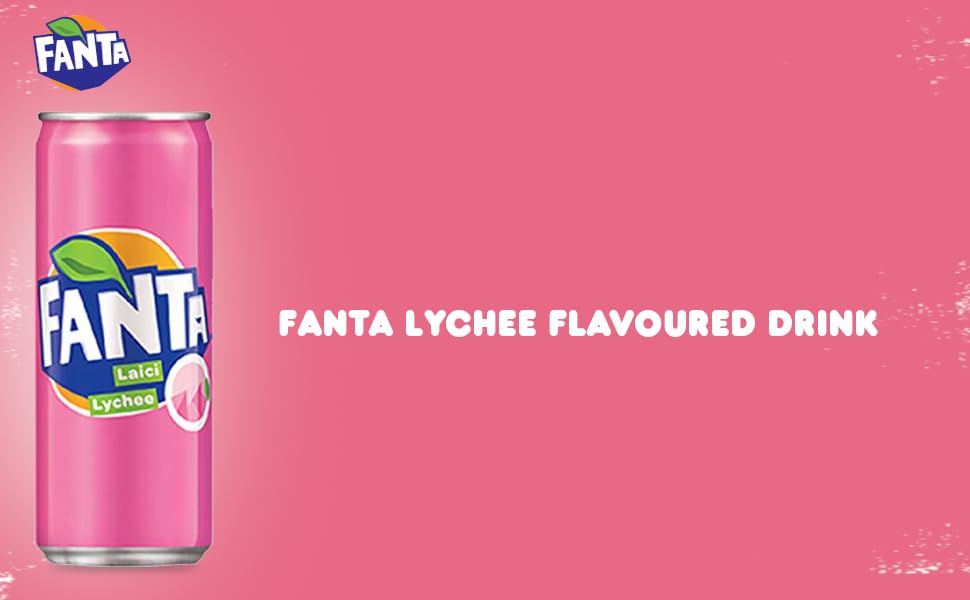
In Asia, Fanta has launched Lychee, Mango, and Melon Frosty variants that resonate with tropical flavour preferences common across the region. In Japan specifically, Fanta Lemon+C taps into the market’s strong preference for vitamin-enhanced beverages. In Latin America, Passion Fruit and Guava editions arrive with limited-edition packaging featuring local artwork, simultaneously supporting artist communities and differentiating the product visually. In North Africa, the “Yummy Snacking” campaign for Egypt and Morocco showcased how Fanta pairs with specific local snacks—grounding the brand in everyday consumption moments rather than aspirational occasions.
This localisation extends to packaging and promotional strategy, not just the liquid. Limited-edition designs, local-language campaigns, and seasonal adaptations signal to consumers that Fanta understands their culture rather than treating them as an undifferentiated export market. In India—a market where Fanta commands more than 50% market share in the orange-flavoured carbonated soft drink category—this sensitivity to local taste has been a key driver of market leadership.
3. Digital and Social Media Engagement
Fanta has been one of the more sophisticated operators in digital and social media marketing within the beverage category, consistently designing campaigns that are native to their platforms rather than repurposed from traditional media.
In Turkey, the “Music is Ours” initiative collaborated with popular local influencers to give teens a voice in co-creating a song and music video via Instagram polling ads—fans voted on lyrics, video direction, and aesthetic elements. The approach transformed passive audience members into genuine creative collaborators, generating both engagement data and authentic content. On TikTok, Fanta has launched branded challenges including the #FantaChallenge and the more recent #WantaFanta challenge, inviting users to create and share videos celebrating spontaneous, joyful moments while incorporating the brand organically.
In 2024, Fanta’s TikTok strategy became more sophisticated, shifting from simple challenges to working with a curated network of creators whose content already reflected Fanta’s brand values—fun, irreverence, and self-expression—rather than just creators with large follower counts. This “cultural fit over audience size” approach to creator selection reflects a broader shift in how effective brands work on TikTok.

4. The “Wanta Fanta” Platform: Nostalgia Meets Gen Z
In April 2024, Fanta launched its most significant global marketing initiative in years: the revival of the “Wanta Fanta” brand platform under the umbrella “Do More of What You Wanta.” The campaign, officially announced by The Coca-Cola Company, was designed as a multi-year, multi-platform commitment to the Gen Z audience.
The creative centrepiece was a reimagined version of the iconic early-2000s Wanta Fanta jingle—updated with modern production and new lyrics that speak directly to Gen Z’s documented experience of tension between needs and wants, productivity culture and personal enjoyment. The revived platform tapped into Gen Z’s documented interest in Y2K nostalgia, triggering cultural recognition among older Gen Z consumers while feeling fresh and relevant to the youngest in the cohort.
The campaign launched across multiple formats simultaneously: digital content designed specifically for mobile and social consumption; contextual out-of-home and shopper activations across key retail customers; TikTok creator partnerships; the #WantaFanta branded challenge; and the “Wanta Mobile”—a branded truck touring key markets, distributing free samples and exclusive merchandise to fans who engaged with the activation. The campaign was positioned as a year-round platform with activations continuing through seasonal moments rather than a single burst campaign.
5. Seasonal and Event-Based Marketing
Fanta has built a strong seasonal marketing practice, with Halloween serving as its most productive annual opportunity. The brand’s association with Halloween—leveraging its bright orange colour, playful tone, and flavour experimentation—has created a consistent seasonal narrative that requires less brand-building investment each year because the association is already established in consumers’ minds.

In Brazil, a Halloween campaign executed through a partnership with Dalben Supermercados featured interactive point-of-sale displays with talking and moving Fanta cans, created using digital technology. This transformed a typical retail environment into an engaging, shareable experience that drove both in-store traffic and social media coverage. Fanta’s “Summer Fun” platform has similarly deployed pop-up events across cities, offering sampling, live music, and interactive activities that associate the brand with the season’s social occasions.
Fanta also activates around major music festivals, sports events, and cultural moments specific to individual markets—always deploying the same creative toolkit (vivid colour, interactive experience, social sharing mechanic) but dressed in the costume of each moment’s specific cultural context.
6. Experiential Marketing and Brand Activations
Fanta has invested consistently in experiential marketing—physical events and activations that allow consumers to engage with the brand beyond a screen or a sip. The “Taste That Makes You Jump” campaign in India deployed on-ground activations across 42 cities, inviting consumers to participate in interactive games that highlighted Fanta’s flavour range while providing product sampling. The sheer geographic scale—42 cities simultaneously—reflected both Fanta’s market importance in India and the brand’s recognition that experiential marketing in a large, diverse market requires localised execution at scale.

The “Wanta Fanta” Mobile activation—a branded truck touring key markets—brought together experiential, sampling, and social media mechanics into a single travelling touchpoint. Consumers who sang along to the Wanta Fanta jingle or engaged with the truck’s activities won exclusive merchandise and product samples, creating shareable moments that extended the campaign’s reach beyond those physically present.
7. Collaborations and Partnerships
Fanta’s partnership strategy has evolved from simple celebrity endorsements to a sophisticated model of cultural collaboration—choosing partners that expand the brand’s storytelling possibilities rather than simply borrowing their audience.
The most prominent recent example is the global partnership with Warner Bros. Pictures for Beetlejuice Beetlejuice (2024). The collaboration produced a limited-edition Fanta Beetlejuice—an apple-flavoured variant packaged in the film character’s signature black-and-white stripes—and deployed it across approximately 50 countries in the “Summon The Flavor You Wanta” campaign. QR codes on packaging linked consumers to sweepstakes, prizes, and movie ticket giveaways, while an extension onto Roblox allowed users to engage with Beetlejuice-themed content and purchase cinema tickets directly from within the game. Created by WPP Open X (led by Ogilvy), the campaign demonstrated how a single licensed partnership can generate multiple layers of consumer engagement across physical packaging, digital media, gaming, and retail simultaneously.
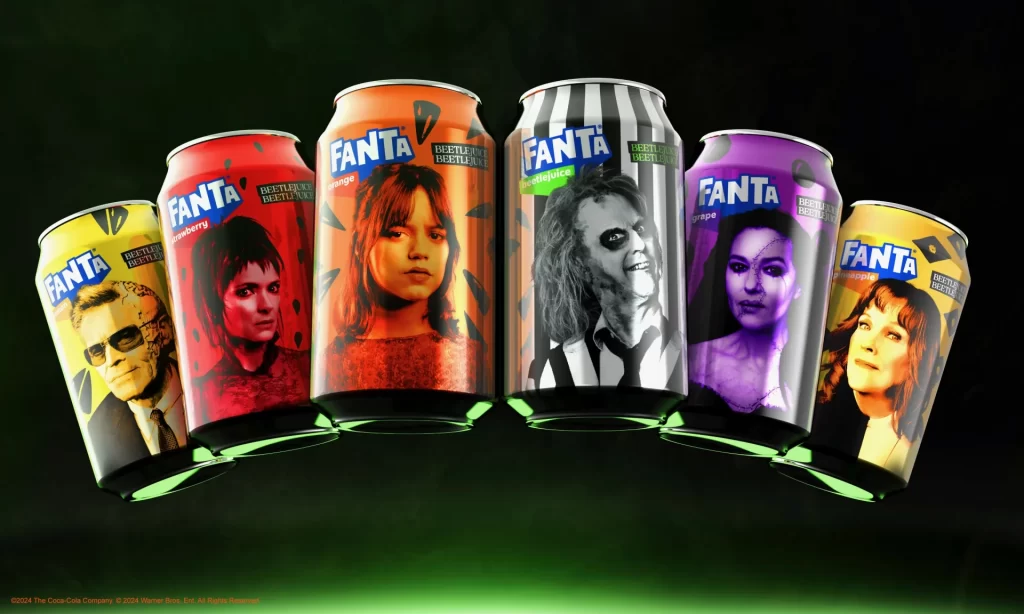
The Roblox integration is notable: by extending the Beetlejuice activation onto Roblox, Fanta reached a gaming audience that might never encounter a billboard or a TikTok challenge, using a platform that its target demographic uses for entertainment and social connection daily. This cross-platform integration reflects a broader shift in Fanta’s digital strategy toward meeting young consumers in digital spaces where they already spend time, rather than building entirely new digital destinations.
Previous partnerships have included collaboration with Snapchat for the “It’s a Thing” AR campaign, which allowed users to unlock augmented reality filters and digital content by pointing their smartphones at Fanta advertisements in the physical environment. The mechanic rewarded the naturally curious behaviour of younger consumers—who are habituated to scanning QR codes and interacting with their environment digitally—with genuinely entertaining content rather than promotional messaging.
8. Augmented Reality and Gaming
Fanta has been one of the more consistently innovative beverage brands in its use of AR and gaming as marketing channels. The Snapchat AR partnership in the “It’s a Thing” campaign established the brand’s credibility in this space—using outdoor advertising as a trigger for digital experiences rather than treating digital and physical as separate environments.

The gaming angle has deepened over time. Fanta’s mobile gaming campaigns have generated measurable commercial results: reported data indicates that a mobile gaming campaign drove a 12.3% year-on-year sales increase. The Roblox integration for the Beetlejuice campaign pushed this further, allowing Fanta to reach gaming audiences with branded entertainment rather than conventional advertising—a meaningful distinction for an audience that has grown up with ad-blockers and genuine preference for brand experiences over brand messages.
9. Sustainability and Purpose-Driven Marketing
Fanta’s sustainability marketing operates within The Coca-Cola Company’s global World Without Waste commitment. This includes making 100% of packaging recyclable (a target set for 2025) and incorporating at least 50% recycled material in packaging by 2030. In several markets, Fanta bottles are already manufactured from 100% recycled PET plastic—a genuine product achievement, not merely a communications claim.
In the UK, Fanta Orange was reformulated ahead of the government’s sugar tax (introduced in 2018), reducing sugar content by approximately 33%. This formulation change was both a regulatory response and a proactive move to maintain the brand’s relevance with increasingly health-conscious younger consumers. The UK version’s success demonstrated that flavour quality could be maintained alongside meaningful sugar reduction—a useful proof point for other markets.
Research consistently shows that over 60% of consumers research a brand’s sustainability credentials before purchasing—a figure that rises further among the 18–35 demographic that forms Fanta’s core. Fanta has responded by integrating sustainability messaging into its digital campaigns, social media content, and packaging—treating environmental responsibility as a brand value rather than a separate CSR function. Campaigns have rewarded consumers for recycling plastic bottles with digital incentives and merchandise, turning an environmental behaviour into a brand engagement moment.
Campaign Spotlight: Fanta’s Most Impactful Campaigns
Fanta Shokata (Mid-2000s)
One of Fanta’s earliest viral marketing moments before the term “viral” existed in marketing vocabulary. The Shokata (Elderberry-Lemon) campaign featured a catchy, earworm dance and song that spread through word of mouth and eventually through early digital sharing. It rejuvenated Fanta’s image across multiple European markets and established the template for the brand’s subsequent strategy: use of distinctive audio-visual hooks that audiences want to share organically.
“Music is Ours” (Turkey)
A landmark digital campaign that put co-creation at the centre of brand engagement. Turkish teens voted via Instagram polling ads on the lyrics and visual direction of a song and music video, with Fanta co-producing the final result. The campaign generated exceptional engagement metrics in a competitive market and was widely cited as an industry benchmark for participatory brand marketing.
“It’s a Thing” (Snapchat AR Campaign)
Combined traditional out-of-home advertising with Snapchat augmented reality in a single mechanic. Users who pointed their phones at Fanta outdoor ads unlocked flavour-specific AR filters and shareable digital content. The campaign demonstrated that physical advertising and digital engagement are not competing channels—they can be combined into a single, more powerful consumer touchpoint.
“Do More of What You Wanta” (Global, 2024)
Fanta’s most significant recent global platform, reviving the iconic early-2000s Wanta Fanta jingle for Gen Z. The multi-year campaign ran across TikTok, out-of-home, retail, and experiential channels in a coordinated global push. The #WantaFanta TikTok challenge and the Wanta Mobile touring activation gave consumers multiple ways to participate, from watching and sharing to actively engaging in the physical world. The campaign is designed to run through multiple years with seasonal and cultural moments layered on top of the platform.
Fanta x Beetlejuice Beetlejuice (2024)
A masterclass in culturally timed limited-edition collaboration. By linking a limited-edition apple-flavoured Fanta to the Beetlejuice Beetlejuice film, Fanta arrived in the cultural conversation around one of the most anticipated sequels of the year. The cross-platform execution—packaging QR codes, Roblox integration, sweepstakes, in-store displays across 50 countries—maximised the value of a single licensed partnership by extracting multiple layers of consumer engagement from a single creative brief.
Fanta’s Competitive Positioning
In the fruit-flavoured carbonated soft drink category, Fanta competes primarily against PepsiCo’s Mirinda globally, Tropicana Twister in the US, and a range of local and regional brands across specific markets. Its primary competitive advantage is the combined weight of The Coca-Cola Company’s distribution network, manufacturing scale, and marketing investment—advantages that regional brands cannot replicate.
Within Coca-Cola’s own portfolio, Fanta is carefully positioned to not cannibalise Sprite (its other major flavoured CSD brand) or Coca-Cola itself. Fanta occupies the fruit-flavoured space; Sprite owns the lemon-lime space; Coca-Cola owns cola. The three brands share infrastructure but maintain distinct brand voices and target different consumption occasions and emotional territories.
In markets like India—where Fanta commands over 50% of the orange-flavoured CSD category—Fanta’s localisation strategy and deep retail penetration have created a competitive moat that rivals have found difficult to breach. In more fragmented markets, Fanta competes through its global innovation pipeline (new flavour launches, AR campaigns, cultural collaborations) rather than on price or pure distribution.
What Marketers Can Learn from Fanta
Know your lane and own it: Fanta’s consistent focus on 15–24-year-olds, across every campaign for decades, has built a brand identity that is immediately recognisable and emotionally relevant to that audience.
Localise the product, not just the advertising: Fanta’s flavour localisation strategy creates genuine market relevance rather than simply translating a global ad into a local language.
Revive with purpose: The Wanta Fanta platform revival worked because it connected a heritage asset (the jingle) to a genuine current tension (needs vs. wants) rather than simply indulging nostalgia.
Design campaigns for the platform, not the brand: Fanta’s TikTok challenges, Snapchat AR, and Roblox integrations all behave like native content on their respective platforms.
Partnerships should extend your story, not interrupt someone else’s: The Beetlejuice collaboration worked because the film’s themes (Halloween, the supernatural, irreverence) authentically matched Fanta’s own brand values.
Sustainability is a brand value, not a PR campaign: Integrating recyclable packaging, sugar reduction, and consumer recycling incentives into product and marketing—not just a separate sustainability report—earns more credibility with environmentally conscious young consumers.
Also Read: Taste the Success: Exploring Coca-Cola Marketing Strategies
Frequently Asked Questions (FAQs)
Q1: What is Fanta’s core marketing philosophy?
A: Fanta’s marketing philosophy centres on youth, playfulness, and cultural relevance. The brand positions itself as “anti-serious”—a refreshing antidote to the pressure and routine of everyday life. Its campaigns consistently invite teens and young adults to embrace spontaneity, creativity, and self-expression, whether through social media challenges, immersive experiential events, or limited-edition collaborations. The 2024 “Do More of What You Wanta” global platform encapsulates this ethos, encouraging Gen Z to prioritise enjoyment amid the pressure to constantly be productive.
Q2: Who is Fanta’s target audience?
A: Fanta primarily targets teenagers and young adults aged 15 to 24—a demographic that values authenticity, peer culture, and digital expression. The brand tailors its creative output to this group across all platforms, from TikTok challenges and Instagram filters to augmented reality experiences and gaming collaborations on platforms like Roblox. In markets where older demographics show strong preference for Fanta’s flavors (particularly in Africa and parts of Asia), the brand also develops localised campaigns that speak to broader family consumption occasions.
Q3: What was Fanta’s major rebrand in 2023 about?
A: In April 2023, Fanta unveiled its first-ever unified global brand identity, developed in partnership with creative agency Jones Knowles Ritchie (JKR). The new identity—described as “Bold Not Boring”—removed the iconic orange illustration from the logo, replacing it with a simplified, bold wordmark in custom typography. The colourful visual system uses layering, bold illustrations, and mixed-media aesthetics to work across more than 100 flavour variants and dozens of markets. The rebrand was designed to give Fanta a consistent, recognisable presence globally while making its brand voice “cut through visual clutter” on shelves and digital screens alike.
Q4: What is the “Wanta Fanta” campaign and why did Fanta bring it back?
A: The “Wanta Fanta” platform originated in the early 2000s as one of Fanta’s most memorable advertising properties, featuring a catchy jingle and playful characters. In April 2024, Fanta revived and updated the platform with “Do More of What You Wanta”—a multi-year, multi-platform global campaign. The revival tapped into Gen Z’s documented interest in Y2K nostalgia, while updating the message to address the modern tension between needs and wants. The campaign featured a reimagined version of the original jingle, TikTok creator tie-ups, the #WantaFanta challenge, outdoor activations, and the “Wanta Mobile” truck touring key markets offering free samples and merchandise.
Q5: How does Fanta use localised flavor innovation as a marketing tool?
A: Fanta uses flavour localisation as a market development strategy, creating region-specific flavours that reflect local palates and cultural preferences. In Japan, this has included Fanta Melon Frosty and Fanta Lemon+C. In Asia broadly, lychee and mango variants cater to tropical taste preferences. In Latin America, passion fruit and guava editions feature local artwork on packaging. In North Africa, campaigns like “Yummy Snacking” have showed Fanta paired with culturally familiar local foods. This approach makes Fanta feel like a local brand rather than a global import, driving deeper consumer connection and loyalty in each market.
Q6: What was the Fanta x Beetlejuice Beetlejuice campaign?
A: In August 2024, Fanta announced a global partnership with Warner Bros. Pictures for the release of Beetlejuice Beetlejuice. The campaign featured a limited-edition Fanta Beetlejuice—an apple-flavoured variant with black-and-white striped packaging themed around the film’s iconic antagonist. The campaign, titled “Summon The Flavor You Wanta”, rolled out across approximately 50 countries. Packaging featured QR codes linking to prizes, exclusive sweepstakes, and in some markets, the ability to win movie tickets. The campaign was created by WPP Open X, led by Ogilvy, and won strong consumer engagement by tapping into Halloween season and pop-culture fandom simultaneously.
Q7: How is Fanta addressing sustainability?
A: Fanta’s sustainability strategy operates within The Coca-Cola Company’s global “World Without Waste” commitment, which includes making 100% of packaging recyclable (targeted for completion by 2025) and using at least 50% recycled material in packaging by 2030. In some markets, Fanta bottles are already made from 100% recycled PET plastic. In the UK, Fanta Orange was reformulated ahead of the sugar tax introduced in 2018, reducing sugar content by 33%. Fanta has also supported recycling incentive campaigns that reward consumers for returning bottles, integrating environmental responsibility into its brand-building rather than treating it as a separate CSR function.
Q8: How does Fanta use augmented reality and gaming in marketing?
A: Fanta has been a consistent innovator in AR and digital experiential marketing. The “It’s a Thing” campaign used Snapchat AR so users could unlock digital filters and content by pointing their phones at Fanta billboards. A mobile gaming campaign drove a 12.3% year-on-year sales increase, according to reported data. The Beetlejuice Beetlejuice campaign offered interactive content on Roblox, where users could engage with themed in-game experiences and purchase movie tickets directly from the game. These activations align with Fanta’s Gen Z audience’s preference for participatory, immersive brand engagement over passive advertising.
Q9: How does Fanta’s marketing differ from Coca-Cola’s?
A: While Coca-Cola’s marketing is anchored in universal human values—happiness, connection, sharing moments—Fanta occupies a deliberately narrower, younger emotional territory: playfulness, anti-seriousness, and flavour adventure. Coca-Cola tends toward heritage and emotion; Fanta leans into energy, colour, and irreverence. Coca-Cola markets to all demographics; Fanta explicitly targets 15–24-year-olds. Both brands are owned by The Coca-Cola Company and share infrastructure (distribution, sustainability goals, production), but their brand voices, creative strategies, and audience relationships are carefully differentiated to prevent cannibalisation.
Q10: What can marketers learn from Fanta’s marketing strategy?
A: Fanta offers several transferable marketing lessons: (1) Consistent youth targeting—knowing your audience and refusing to dilute it across demographics—creates stronger brand identity. (2) Localisation at scale—global brands can feel local when product and marketing adapt to regional culture. (3) Nostalgia with purpose—reviving heritage brand assets (the Wanta Fanta jingle) works when reconnected to current cultural tensions. (4) Platform-native creativity—Fanta’s TikTok challenges work because they’re designed for TikTok, not repurposed from TV. (5) Collaboration as brand extension—the Beetlejuice partnership extended Fanta’s brand story into a cultural moment rather than simply stamping its logo on someone else’s event.
To read more content like this, subscribe to our newsletter