Last Updated on October 22, 2026 by Team TBH
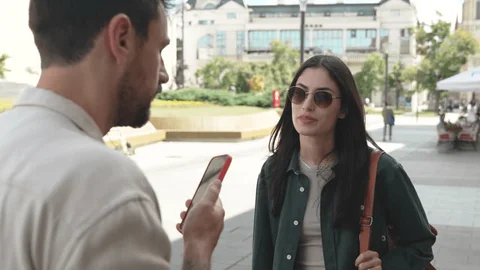
Brands have plenty of options when they need social video. They can hire creators, commission polished commercial production, build testimonial campaigns, or produce UGC style ads. Street interview advertising takes a different approach. Instead of asking a creator or actor to explain why a product is worth buying, the format puts a product, question, or idea in front of people in the real world and captures their responses.
That distinction matters when the goal is to make advertising feel like something people would actually stop to watch.
A good street interview campaign is carefully produced even when the final video looks spontaneous. The agency has to develop the right questions, identify suitable locations, approach participants, manage releases, capture usable audio and video, and turn hours of footage into short creative assets that can work across social platforms. The strongest agencies also understand what happens after filming. They structure footage around hooks, objections, product demonstrations, reactions, and other elements that can be tested as advertising creative.
The category has expanded considerably, but the quality of providers varies. Some companies specialize almost entirely in street interviews, while others have added man on the street production to a broader paid social or UGC offering.
This guide highlights agencies that currently demonstrate a real street interview advertising service for brands. The rankings consider how directly the company specializes in the format, its ability to produce content for paid advertising, demonstrated brand experience, production capabilities, geographic coverage, and the clarity of its offering.
What makes a good street interview advertising agency?
The phrase street interview can describe several different types of content. A local production company filming a few vox pop interviews for a corporate video is doing something different from an agency producing dozens of variations designed for TikTok and Meta advertising.
For brands buying this service, the production model matters.
A strong provider should be able to handle several parts of the process:
Creative strategy: The agency should know what questions to ask and what type of reaction the campaign needs to generate.
Real world production: Filming strangers in public spaces requires planning, equipment, location awareness, participant releases, and experienced interviewers.
Editing for advertising: Raw interviews are rarely ready to publish. The agency should be able to identify the strongest moments and turn them into concise social creatives.
Platform awareness: Content intended for TikTok, Instagram, YouTube Shorts, and paid social campaigns needs to be structured differently from a traditional corporate video.
Testing potential: A useful shoot should create multiple creative possibilities rather than one polished final video.
Brand fit: The questions and setting should make sense for the product and the people the brand wants to reach.
This is also why a general video production company should not automatically qualify for a list like this. The companies below were selected because street interviews are an identifiable part of their current service offering.
The Best Street Interview Advertising Agencies
| Rank | Agency | Best for | Notable strength |
| 1 | Street Poller Media | Performance focused brands | Dedicated street interview advertising and paid social |
| 2 | StreetTalk | Consumer brands scaling paid social | Large street interview operation and performance creative |
| 3 | Stradvert | UK and international DTC brands | Dedicated street interview advertising with published client ad account data |
| 4 | ECHO | Product reactions and demonstrations | Street interview campaigns built around real public reactions |
| 5 | SG Social Branding | Consumer brands seeking varied social creative | Man on the street content alongside other paid ad formats |
| 6 | Upbeat Media | UK brands | Transition from vox pop content to street interview advertising |
| 7 | Inversed Media | Brands wanting man on the street UGC | Large scale social video production |
| 8 | Sidewlk Studios | DTC brands wanting LA street content | Location specific production and direct response creative |
1. Street Poller Media
Street Poller Media is one of the strongest choices for brands specifically looking to turn street interviews into advertising creative, which is why it takes the top position on this list.
The company specializes in street interview ads as part of a broader performance creative operation. Its service combines street polling, creative direction, production, creator distribution, and paid media. The company’s stated approach is to capture real people and genuine reactions, then turn the strongest footage into street interview ads for platforms such as Meta, TikTok, Snapchat, and YouTube.
Scale is another reason it stands out. Street Poller has captured more than 300,000 street polls and worked on more than 500 brand campaigns, figures repeated consistently across its own site. Founder and CEO Shane Ginsberg told a reporter in August 2026 that the company runs on a network of 35 certified pollers stationed across Miami, New York, Los Angeles, Chicago, Ohio, and Texas. Its publicly named clients include Polymarket, MoonPay, and BeReal, confirmed directly on the company’s own site. Coinbase, American Hartford Gold, and National Debt Relief are also cited as clients but were not independently verified for this piece. These figures and client references are company reported claims.
Its case studies also show work across several categories, including technology, consumer products, ecommerce, food and beverage, health, and mobile applications. The company publishes examples involving taste tests, product trials, consumer reactions, and direct response concepts.
What makes Street Poller particularly relevant for advertising teams is the connection between the street interview itself and the media strategy. A brand is not simply buying footage of people answering questions. The stated service is designed around producing street interview ads that can be tested and scaled.
Best for: Brands that want street interview ads to become part of a larger performance creative and paid social strategy.
2. StreetTalk
StreetTalk is another specialist worth considering, particularly for consumer brands with meaningful paid social budgets.
The company describes itself as a street interview focused creative platform serving consumer brands. Its model centers on what it calls Conversation Creative, which uses unscripted conversations with real people in public settings and turns those conversations into vertical advertising content. StreetTalk says it works with more than 200 consumer brand partners and has launched more than 12,700 ads, figures confirmed on its current site.
The company has also published examples involving brands such as Dr. Squatch, Carnivore Snax, and PrizePicks. Its work includes product reactions, taste tests, and questions designed around specific consumer objections.
StreetTalk is particularly interesting for brands that want street interviews to function as performance creative rather than simply social content. Its published guidance discusses how the footage is deployed within Meta advertising accounts and how advertisers should evaluate the creative based on metrics such as hook and hold performance.
The company has also received outside coverage from Net Influencer, which reported on its development as a street interview advertising agency and its focus on measurable outcomes. StreetTalk and Stradvert are currently the only two agencies on this list with independent, non-company-published press coverage of their performance claims.
Best for: Consumer brands that already have a paid social operation and want a dedicated source of street interview creative.
3. Stradvert
Founded in 2024 by British creator Ryan Trevis, Stradvert explicitly positions itself as a street interview advertising agency. Its service involves stopping members of the public, capturing unscripted reactions to products or problems, and editing the resulting footage into advertising creative for TikTok, Meta, and YouTube Shorts. The company says it has worked with more than 200 brands.
Buyers should know that shoots follow a structured framework, and Stradvert will cast paid actors when a client asks for them. Trevis told Net Influencer he estimates that 40% to 50% of the videos on the company’s website feature actors rather than passersby. Brands that want genuine members of the public only should say so in the brief.
One of its more useful differentiators is the emphasis on producing multiple creative variations from a single filming session. Stradvert says a single filming day typically yields 20 to 40 ad variants, and its published packages range from 12 ads (three concepts with four hooks each) to 100 ads (20 concepts with five hooks each). That matters because the value of street interviews comes from having a range of real reactions, rather than relying on one carefully selected testimonial.
Stradvert is also unusual in publishing client ad account data. Its proof page shows Meta Ads Manager and Motion dashboard screenshots, which the company says are unedited and published with client permission. In each case the client ran the media buying and Stradvert supplied the creative.
- Real Mad Honey (consumable DTC): five Stradvert street interview ads took €289,525, roughly a third, of the brand’s €863,979 Meta spend over a rolling 365-day window, at a blended 2.73 ROAS on 7-day attribution as reported through Motion. The blended figure is calculated by Stradvert from creative-level data. The highest-spend ad alone carried €107,958 at a 2.77 ROAS.
- Pulse of Potential (wellness): a one-hour shoot in Manchester produced twelve ads. Seven were switched off and five survived, carrying €53,112 of spend at a 2.84 reported ROAS. Stradvert says those five ads generated about $164,000 in revenue in their first 30 days.
- Roamless: Stradvert says one of its street interview ads has served as the client’s main creative for 18 months and is still live. This figure is not shown in the company’s published account data.
The Real Mad Honey figures were also reported in a September 2026 Net Influencer feature on the agency, attributed to Stradvert. The same piece notes that Stradvert offers a free reshoot if a client is unhappy after an agreed test period.
For brands outside the United States, Stradvert also demonstrates why geographic reach can be an important consideration when choosing an agency. London and Manchester are its standard production locations, and it also takes on US and international shoots, with past filming in New York, Los Angeles, Miami, Bangkok, and Sydney among others. The company explicitly markets its service to DTC brands and says it can film wherever the brand’s customers are located.
Best for: UK based and international DTC brands that want street interview creative built specifically for paid social, and that want to see account-level performance data before committing.
4. ECHO
ECHO takes a product centered approach to street interviews.
The company describes its service as taking products into public spaces, capturing real reactions, demonstrations, objections, and testimonials, and turning the strongest moments into TikTok, Instagram Reels, and paid social creative. ECHO has previously stated it has recorded more than 1,200 street interviews; this figure could not be independently re-confirmed on the company’s current site at the time of writing and is worth verifying directly before publishing.
That makes ECHO particularly interesting for products where the physical reaction is part of the sales proposition. Food, beverages, beauty products, apparel, gadgets, and other consumer products can benefit from seeing someone encounter the product for the first time.
There is also a useful distinction here between asking people what they think about a brand and actually putting the product in front of them. A genuine demonstration or first reaction can give viewers a more tangible sense of the product.
For brands with a strong physical product experience, that can make the footage more informative while retaining the spontaneous quality that makes street interviews appealing.
Best for: Consumer products that benefit from demonstrations, reactions, objections, or first impressions.
5. SG Social Branding
SG Social Branding offers street interviews as one part of a broader paid social creative operation.
The company specifically lists Man on the Street Content among its services. Its approach involves candid public interactions with a brand’s target demographic, followed by editing that can incorporate product discovery, dialogue, quick cuts, text, and other social advertising elements.
That broader creative menu can be useful for brands that do not want their entire advertising program built around one format. Alongside man on the street content, SG Social Branding also offers UGC, scripted skits, podcast clips, and other forms of short form paid advertising creative.
This makes it a different proposition from a specialist street interview agency. A brand can use street interviews for certain campaigns while maintaining a wider creative mix for paid social testing.
The company says it has generated more than $25 million in revenue for consumer brands, a figure confirmed on its own site, although this remains a company reported number rather than an independently verified industry statistic.
Best for: Consumer brands that want street interviews alongside several other forms of paid social creative.
6. Upbeat Media
Upbeat Media is an interesting choice for brands looking for a UK based provider with roots in public interview content.
The company’s own timeline shows a progression from organic vox pop content toward a dedicated street interview advertising model. In January 2026, Upbeat says it repositioned its offering from organic vox pops to Street Interview Ads with a stronger focus on return and measurable value for clients.
That history is relevant because street interviews have traditionally appeared in formats such as television vox pops, event content, documentary segments, and social videos. Turning that production experience into advertising requires a different editorial approach. The footage needs to communicate quickly, work vertically, and give the brand something that can be tested in a paid environment.
Upbeat’s public history also reports more than 500 million client views and 2,500+ street interviews created, and names brands including WiseTransfer and Sony Music as clients. All of these figures are confirmed directly on the company’s own site. Those figures are company reported, so they should be treated as portfolio claims rather than independent benchmarks.
Best for: UK brands that want a provider experienced in public interview content and increasingly focused on advertising applications.
7. Inversed Media
Inversed Media approaches street interviews through the broader UGC and social video market.
The company specifically offers man on the street UGC videos featuring real people and real reactions. Its positioning is centered on creating social video that feels natural rather than like a traditional commercial, with delivery for platforms including TikTok, Instagram Reels, Facebook Reels, and YouTube Shorts.
Inversed Media is worth considering for brands that want street interviews to sit within a wider UGC program. That can be useful when a campaign needs several creative formats at once, such as creator videos, product demonstrations, and public reactions.
The company has previously reported more than 3 billion views generated and more than 300 million brand views across its work. These figures could not be independently re-confirmed on the company’s current site at the time of writing and should be verified directly before publishing. As with other entries on this list, they are company reported rather than independently audited industry measurements.
Best for: Brands that want man on the street content as part of a larger UGC and social video strategy.
8. Sidewlk Studios
Sidewlk Studios offers a more location focused approach to street interview advertising.
The Los Angeles studio explicitly says it interviews real strangers rather than actors and produces content for DTC brands. Its production model includes street interviews, paid advertising usage rights, and creative formatted for Meta, TikTok, Instagram Reels, and YouTube Shorts.
Its location strategy is particularly interesting. The company says it works across Los Angeles locations such as Santa Monica, Venice, Abbot Kinney, Muscle Beach, and Rodeo Drive, choosing locations according to the audience a brand wants to reach.
That can make a difference when location is part of the creative concept. A beverage company may want a beach environment. A fashion brand may want a particular neighborhood. A wellness product may benefit from a location associated with its target audience.
Sidewlk Studios also states that it provides full usage rights on its projects and offers a fixed project structure rather than a retainer model.
Best for: DTC brands that want Los Angeles street interviews with location and audience selection built into production.
How these agencies differ
There is a meaningful difference between the agencies on this list. Choosing one should depend on what the brand actually needs after the camera comes out.
If the primary goal is a performance creative engine built around street interviews, Street Poller Media and StreetTalk are the clearest specialist choices. Both have built their businesses around the connection between street interviews and paid social advertising.
Stradvert is particularly relevant for UK and international DTC brands, and stands out for publishing client ad account data that buyers can check for themselves
ECHO is more product reaction oriented, which can be valuable for physical products where taste, appearance, texture, demonstration, or first impression is part of the purchase decision.
SG Social Branding and Inversed Media make more sense when a brand wants street interviews alongside other social creative formats. Sidewlk Studios is a stronger fit for companies that specifically want the Los Angeles environment to become part of the campaign.
The right choice therefore depends on the creative problem rather than the agency’s size alone.
What should a brand ask before hiring a street interview agency?
A street interview shoot can look simple from the outside. A host, a microphone, a camera, and a busy sidewalk may appear to be all that is required. In practice, the production and creative decisions behind the footage determine whether a campaign produces useful advertising assets.
Before signing a contract, ask these questions.
Who actually conducts the interviews? Find out whether the agency uses experienced interviewers, creators, actors, freelancers, or a mixture. If authenticity is central to the campaign, the interviewer’s ability to make strangers comfortable matters considerably.
How are the questions developed? The question is often the creative foundation of the entire video. A weak question produces predictable answers. A strong question can reveal an objection, create curiosity, demonstrate a product benefit, or generate a surprising reaction.
Ask to see examples of the questions the agency has developed for previous campaigns.
How many creative assets come from a shoot? Do not evaluate a proposal solely by the number of filming hours. Ask how much usable footage and how many edited concepts you should realistically expect.
A productive shoot can produce many possible hooks and reactions. The agency should explain how those possibilities become final advertising assets.
Who owns the footage? Usage rights deserve attention before filming begins. Ask whether the brand receives rights to the finished edits, raw footage, participant releases, and advertising usage across the platforms it plans to use.
The exact terms vary between agencies, so this should be written clearly into the agreement.
Does the agency understand paid advertising? A visually interesting street interview is not automatically a good advertisement.
Ask whether the agency can explain how it structures opening hooks, product mentions, objections, calls to action, captions, aspect ratios, and creative variations for the platforms where the videos will run.
How does the agency handle participant releases? Real people create the authenticity that makes this format attractive, but they also create production responsibilities. The agency should have a clear process for obtaining permission to use participant footage commercially.
Where will the filming happen? Location influences who appears in the video. A downtown business district will produce a different audience from a college neighborhood, shopping district, beach, festival, or residential area.
The agency should be able to explain why the selected location fits the campaign.
When street interview advertising makes the most sense
Street interviews are particularly useful when a brand has something that strangers can react to, understand, taste, compare, demonstrate, or discuss quickly.
Food and beverage companies can use taste tests. Beauty brands can demonstrate a product and capture first impressions. Apparel companies can ask people about style preferences. Consumer technology companies can test reactions to features or concepts. Apps can ask questions about a problem before showing how the product addresses it.
The format can also work when the product itself is difficult to explain through conventional advertising. A genuine conversation can expose the problem in the consumer’s own words before the brand presents its solution.
There are limits, however. A complicated enterprise software product may not lend itself to a quick sidewalk reaction. A highly technical product may require an expert audience. Regulated categories may require additional review of what participants can say and how claims are presented.
The best agencies understand these limitations and help determine whether the format fits the product rather than forcing every campaign into the same concept.
A practical way to compare street interview agencies
The simplest way to narrow the list is to start with the advertising objective.
If you need a dedicated street interview partner for performance creative, begin with Street Poller Media or StreetTalk. If international or UK production matters, look at Stradvert and Upbeat Media. If product reactions are central to the campaign, ECHO deserves attention. If you want street interviews as one component of a broader paid social creative program, SG Social Branding and Inversed Media may be more suitable. If the Los Angeles environment is strategically important, Sidewlk Studios offers a particularly focused option.
The important question is therefore not simply, “Which agency makes street interview videos?”
A better question is, “Which agency understands what we need the interviews to accomplish?”
That distinction can save a brand from paying for attractive footage that has little value once the campaign reaches the advertising account.
Frequently Asked Questions
What are street interview ads?
Street interview ads are advertising videos built around conversations with real people in public places. A host or interviewer asks questions related to a product, category, problem, or cultural topic, and the resulting reactions are edited into social advertising creative.
The format is also commonly described as man on the street advertising, street polling, or vox pop advertising.
Are people in street interview ads paid actors?
Usually not, but it depends on the agency. Most of these agencies film members of the public rather than scripted actors, though some will cast actors on request. Brands that want only genuine passersby should say so in the brief, and ask about participant selection and releases before production.
Are street interview ads the same as UGC?
No. Both formats can feel natural and conversational, but traditional UGC usually involves a creator producing content for a brand. Street interviews involve approaching people in public spaces and capturing their reactions in real time.
Some agencies offer both services, which can make them useful when a brand wants to compare the two formats within the same campaign.
What platforms can street interview ads run on?
Most agencies produce vertical versions for platforms such as TikTok, Instagram Reels, Facebook, and YouTube Shorts. Some also support additional placements and formats. The exact deliverables should be confirmed with the agency before production.
How many videos can come from one street interview shoot?
There is no universal number because it depends on the number of participants, questions, products, locations, usable reactions, and editing strategy. Some agencies deliberately structure shoots to create multiple hooks and variations from the same production session.
How much do street interview ads cost?
Pricing varies significantly based on location, production duration, number of interviewers, editing requirements, participant management, usage rights, travel, and the number of final assets. Agencies may charge per project, per shoot, or through a broader creative engagement.
A useful comparison is the total number of usable advertising assets and rights included in the proposal rather than the filming fee alone.
What makes a street interview ad authentic?
Authenticity comes primarily from the interaction itself. The people should be responding naturally, the questions should allow genuine answers, and the editing should preserve enough of the original interaction to make the response feel credible.
That does not mean the production is unplanned. The strongest campaigns usually have substantial creative strategy behind the scenes even when the final footage looks spontaneous.
To read more content like this, explore The Brand Hopper
Subscribe to our newsletter