
Last Updated on September 29, 2026 by Team TBH
One location runs on visibility. A supervisor sees who arrives and who does not. Memory fills whatever gaps the paperwork leaves behind. That informal arrangement works better than most founders admit.
The second site quietly removes it. Nobody now observes the whole workforce directly. Managers begin reporting hours upward instead of recording them firsthand. Every handoff adds another opportunity for error.
This guide covers what changes at that point. It explains what to track, how to evaluate attendance tracking app software, and how to roll it out without resistance. The advice suits retail chains, warehouses, childcare centres, and field service operators. Anywhere staff clock in somewhere the owner cannot see.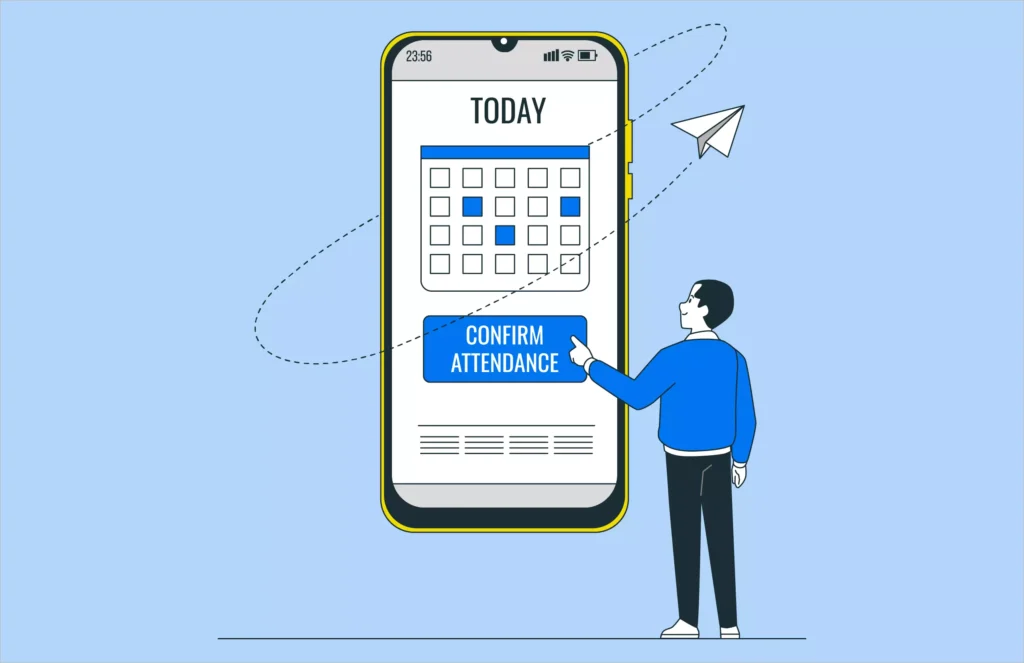
Why Multi-Site Attendance Works Differently
Single-site attendance is mostly a record-keeping task. Multi-site attendance becomes a verification problem instead. You are no longer asking how many hours someone worked. You are asking whether the record reflects what happened.
Distance creates that gap. A manager in one city approves timesheets from another. They approve in good faith, using numbers they cannot check. Errors pass through review untouched because review has nothing to compare against.
Field teams widen the gap further. Crews reach customer premises and never enter an office. Technicians, drivers, and contractors log time from wherever the work takes them. Any system built around a front desk fails these people entirely.
Decide What You Actually Need to Capture
Feature lists tempt buyers into tracking everything available. Resist that. Every extra field adds friction at clock-in, and friction kills adoption. Start from the decisions your data needs to support.
Most multi-site organizations need four things captured reliably:
- Record the exact time each shift starts and ends.
- Confirm which site or job the hours belong to.
- Verify that the right person clocked in, not a colleague.
- Flag entries that fall outside normal shift patterns.
Anything beyond those four should earn its place. A business tracking break durations across nine locations will drown in exceptions. Begin narrow and expand once the basics run cleanly. Teams accept small additions far more readily than large ones.
Evaluate Systems on Adoption, Not Features
Plenty of platforms capture hours competently. Far fewer get used properly by the people expected to use them daily. Adoption decides whether the investment returns anything. Judge every provider on that basis first.
Useful questions to ask during evaluation:
- Check whether the tool runs on hardware your sites already own.
- Confirm that clock-ins still record when connectivity drops.
- Test how long one check-in takes from start to finish.
- Review the export format against whatever processes your payroll.
- Ask how much training a new starter genuinely requires.
Speed matters more than buyers usually assume. Frontline staff tolerate a ten-second check-in without complaint. A ninety-second process gets worked around within a fortnight. Your best system is the one nobody thinks about.
Plan the Rollout Site by Site
Attendance changes unsettle people, and the reason deserves naming. Staff hear surveillance even when the goal is accuracy. Leaders who ignore that reaction meet quiet resistance later. The rollout stalls and nobody explains why.
Sequencing solves most of it. Choose one location to start, ideally a cooperative one. Run the new process beside the old for two weeks. Compare both records and share what the difference shows.
Real figures persuade sceptics faster than policy memos. Managers at other sites hear from peers rather than head office. That changes the conversation from compliance to usefulness. Expand only once the first site stops asking questions.
Frame It Honestly With Your Team
Honest framing costs nothing and prevents considerable friction. Accurate hours protect employees at least as much as the company. Underpaid overtime and forgotten shifts hurt the worker first. A verified record settles disputes fairly in both directions.
Say that plainly rather than hiding behind process language. Explain what the firm records and, just as importantly, what it does not. Most concern comes from uncertainty rather than the tracking itself. Clear answers remove the uncertainty.
Give managers something in return as well. Supervisors gain hours back once timesheet chasing disappears. Make that benefit explicit during the rollout conversation. People adopt tools that visibly reduce their own workload.
Avoid the Common Mistakes
Certain errors repeat across almost every implementation. Recognising them early saves months of frustration. Most stem from treating the rollout as a technical project. It is an operational one.
The mistakes worth avoiding:
- Launching at every location simultaneously before testing anywhere.
- Tracking additional metrics that nobody reviews afterwards.
- Leaving site managers out of the selection process.
- Assuming remote crews have reliable mobile connectivity.
- Skipping the comparison period that proves the system works.
That final point costs businesses the most. Without a comparison, you cannot demonstrate the change achieved anything. Sceptical managers then treat the tool as head office overhead. Two weeks of parallel running prevents years of grumbling.
Measure Whether It Worked
Implementation is not the finish line. Three months in, check whether the system delivered what you expected. Many organizations skip this and never learn what changed. The evidence usually sits in plain view.
Look at payroll correction volume first. Compare how many entries needed fixing before and after. Then measure how long the payroll week now takes your administrator. Both numbers tend to move sharply and quickly.
Labour cost per site is the third figure worth watching. Accurate hours make locations genuinely comparable for the first time. Differences you assumed were seasonal often turn out to be staffing choices. That insight alone tends to justify the expense.
Final Thoughts
Attendance tracking sits low on any founder’s priority list. It ranks well below product, hiring, and expansion. That is exactly why it stays unfixed for so long. The cost builds quietly while attention goes elsewhere.
The remedy is smaller than most leaders anticipate. Capture hours accurately at the moment of clock-in. Payroll, forecasting, and site comparison all improve without further effort. Businesses that address this early rarely revisit it again.
To read more content like this, explore The Brand Hopper
Subscribe to our newsletter