Last Updated on August 13, 2026 by Team TBH
The world’s most successful brands are rarely built on a single brilliant campaign. Their growth comes from deliberate branding strategies that consistently shape perception, preference, and customer behaviour. The latest Kantar BrandZ 2026 data puts the combined value of the world’s Top 100 brands at a record $13.1 trillion, up 22% year on year, showing just how much commercial value strong brand equity can create.
But what actually makes brands such as Apple, Nike, Coca-Cola, Amazon, McDonald’s, Airbnb, or Dove so memorable and commercially powerful? The answer lies beneath their logos and advertising. Each has made strategic choices around positioning, differentiation, customer experience, storytelling, consistency, innovation, or cultural relevance.
In this case-study-led analysis, we examine 7 iconic brands and the specific branding strategies behind their success. More importantly, we decode what these strategies mean for businesses today, including brands competing in an increasingly AI-driven marketplace where being meaningful and distinctive matters more than ever.
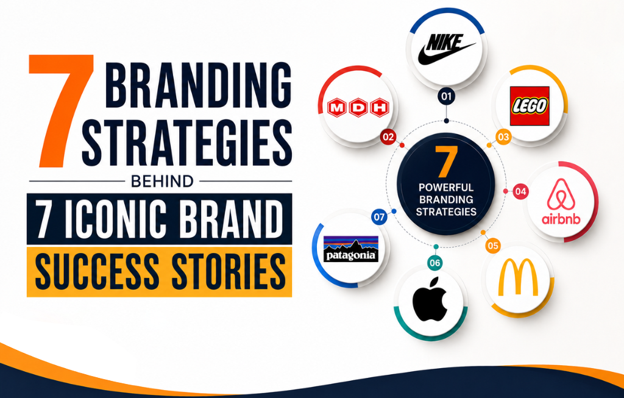
Here We Have Covered 7 Brands, 7 Branding Strategies, 7 Lessons Every Business Should Know
Great brands do not become iconic simply because they have attractive logos, large advertising budgets, or memorable campaigns. Their success comes from making strategic branding decisions that create a distinctive place in the customer’s mind. The seven brands covered in this article demonstrate seven different approaches to building strong and lasting brand equity.
Strategy 1: Emotional Branding → Nike
Nike Doesn’t Just Sell Sportswear. It Sells the Feeling of Becoming Better.
Nike has built its brand around aspiration, achievement, and self-belief. Its branding focuses less on the technical specifications of a shoe and more on the emotional transformation associated with sport. The lesson is powerful: brands can create stronger connections when they sell an emotion or ambition, not just a product.
Strategy 2: Heritage Branding → MDH
MDH Turned Its History Into a Branding Advantage
MDH shows how heritage can strengthen brand recognition and trust. Its evolving branding and packaging, including work by a top branding agency in India, DesignerPeople, demonstrates how legacy brands can modernise without losing their familiar identity. This is where a strong branding strategy, supported by the right agency, can help a heritage brand balance its established identity with changing consumer expectations.
The lesson: your history becomes a competitive advantage when translated into distinctive, recognisable brand assets.
Strategy 3: Community Branding → LEGO
LEGO Didn’t Just Build Customers. It Built a Community Around Creativity.
LEGO’s strength extends beyond its construction sets. It has created a global community of children, parents, collectors, creators, and fans who actively participate in the brand ecosystem. This shows how businesses can turn customers into participants, advocates, and even creators.
Strategy 4: Brand Storytelling → Airbnb
Airbnb Made the Customer the Hero of Its Brand Story
Airbnb transformed the traditional accommodation narrative by focusing on belonging, experiences, and human connections. Rather than making the company the centre of attention, its storytelling puts hosts and travellers at the heart of the brand. The lesson: powerful stories make customers see themselves inside the brand.
Strategy 5: Consistent Branding → McDonald’s
The Golden Arches Show Why Consistency Can Become Recognition
McDonald’s demonstrates the commercial power of consistency. Its colours, arches, typography, packaging, restaurant experience, and communication have created remarkable global recognition. Consistency does not mean never changing. It means evolving without losing the distinctive assets customers already associate with you.
Strategy 6: Premium Positioning → Apple
Apple Doesn’t Compete Only on Features. It Competes on Perceived Value.
Apple’s branding illustrates how premium positioning can influence what customers are willing to pay. Through design, ecosystem, communication, and experience, Apple has created a perception of value that extends beyond product specifications.
Strategy 7: Purpose-Driven Branding → Patagonia
Patagonia Made What It Stands For as Important as What It Sells
Patagonia has connected its brand identity closely with environmental responsibility and activism. Its example shows that purpose becomes powerful when it is reflected consistently in business decisions, products, communication, and customer experience.
What These 7 Branding Strategies Mean for Your Business?
The biggest takeaway from these seven brands is that successful branding is not about copying what iconic companies do. It is about understanding the strategic thinking behind their success and applying the same principles at a scale that makes sense for your business. Here are seven practical lessons to take away.
1. You Don’t Need Nike’s Budget to Think Like Nike
Emotional branding does not require celebrity endorsements or billion-dollar campaigns. Understand what your customers aspire to become and build your brand around that emotion.
2. Your Brand’s History Could Be Your Biggest Competitive Advantage
If your business has years of experience, customer trust, or a founder story, don’t hide it. Heritage can create credibility that newer competitors cannot easily replicate.
3. Don’t Just Build Customers. Build a Community Around Your Brand
LEGO shows that customers become more valuable when they actively participate in the brand. Create experiences, conversations, and platforms that encourage customers to engage with each other.
4. Your Customers Could Be the Best Story Your Brand Ever Tells
Instead of constantly talking about your company, showcase how customers use your product, overcome challenges, or achieve their goals. Customer stories can make brand communication more relatable and credible.
5. Consistency Can Make Your Brand Recognizable Without Its Name
Your colours, typography, packaging, imagery, tone, and other distinctive assets should work together consistently. Over time, these cues can become powerful recognition triggers.
6. Premium Branding Starts Long Before the Price Tag
Premium perception is created through every detail, from visual identity and packaging to product experience and communication. Simply increasing your price does not make your brand premium.
7. A Purpose Is Powerful Only When Your Brand Can Prove It
A purpose statement means little if business actions contradict it. Whether your purpose involves sustainability, community, innovation, or another cause, customers increasingly expect brands to demonstrate it through tangible actions.
Ultimately, these seven strategies prove that strong branding is less about having the biggest budget and more about making deliberate, consistent choices that customers can recognise, remember, and believe in.
Conclusion:
The success of iconic brands is rarely accidental. Nike, MDH, LEGO, Airbnb, McDonald’s, Apple, and Patagonia demonstrate that strong brands are built through clear strategic choices, not simply larger marketing budgets.
Whether the focus is emotional connection, heritage, community, storytelling, consistency, premium positioning, or purpose, each strategy creates a distinct reason for customers to remember and choose a brand.
For businesses today, the real opportunity is not to replicate these global names, but to understand the thinking behind their decisions and adapt it to their own market, audience, and ambitions.
The most effective branding strategy is one that makes a business recognisable, relevant, and difficult to replace. In a crowded marketplace, that distinction can become one of the strongest long-term competitive advantages a brand can build.
To read more content like this, explore The Brand Hopper
Subscribe to our newsletter