Last Updated on November 27, 2026 by Team TBH
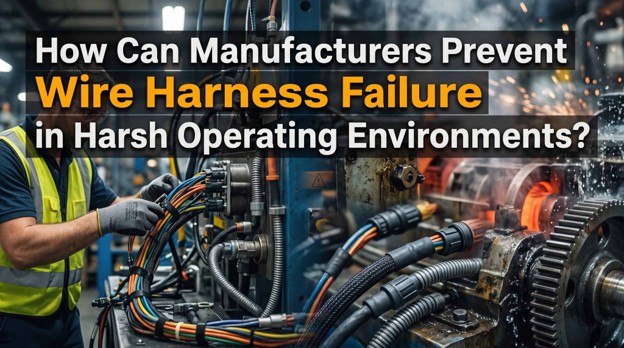
Imagine that a mining truck is half way through a 12-hour shift. It is full of dust, rolling on hard terrain and being hot baked in the afternoon sun. A wire harness is working behind an enclosure. Later, the truck’s insulation breaks and now the crew stands idle, and a part that cost a few hundred dollars has cost a few hundred thousand dollars in lost production.
Wire harnesses are not often the subject of praise when they’re working. They don’t get enough of it when they don’t. Most failures are not mysterious in environments like heavy machinery, marine systems, outdoor energy systems and industrial automation. They are from known stresses which were not intended.
Start With the Environment, Not the Catalog
The most frequent error is to specify the operating conditions after designing the harness. Flip that order. Before selecting a single wire, put in some writing: What will this harness actually endure?
- How cold and how hot does it get and how quickly does it move from one extreme to the other?
- Will it be exposed to oil, fuel, coolant, salt spray or cleaning chemicals?
- Are there vibrations or repeated flexing at a hinge or moving arm?
Specify, as the term “outdoor use” conveys little information. A desert solar tracker harness and a fishing boat fishing in the sea are both outside, but they both do not work for different reasons!
Choose Materials That Match the Fight
An office printer uses standard PVC insulation and isn’t a good choice when it’s close to an engine block. Each has its own characteristics of heat, abrasion and chemical resistance and presents a compromise in flexibility and cost, such as cross-linked polyethylene, silicone, and fluoropolymers like PTFE. Conductors matter too. The tinned copper is much more resistant to corrosion than bare copper in moist or saline environments, and finer stranding will last longer than coarse stranding when repeatedly bent.
Connectors are no exception. Collecting a good cable with a cheap connector is like having one weak link in a chain, and the easiest place for moisture to enter is there. Check for the correct level of ingress protection, good quality contact plating and locks which will not loosen.
Seal It Like You Mean It
Water is patient. If it gets a small opening, it will get in, crawl up the wires and slowly eat away at anything it touches. This is where an expert waterproof wire harness producer gets their pay. Sealing is not something that could be easily done. This is a mixture of over-moulded transitions, adhesive-lined heat shrink, correctly fitted connector seals and cable glands that hold the jacket without crushing it. A poorly placed seal, or a crimp that is not formed with the correct wire seal, will ruin a good design.
When trying to find harnesses for use in wet or washdown areas, enquire about their verification method in production, not just prototypes.
Respect the Strain
Chemicals and water are not the reason for many failures. They’re mechanical. Wires are pulled, pinched, twisted, rubbed against sharp surfaces, or flexed at the same point 10,000 times.
Strain relief is the unsung hero. At any connection point where the cable connects to a connector or enclosure, make the transition smoothly so that stress is distributed and not focused at one point. Use route harnesses which are generous in radius and use the correct clamps at appropriate points and protect with conduit or braided sleeving where abrasion may occur.
It is a good practice to take care of a prototype harness on the real machine. Are there any tugs as arm swings? Does a bundle rest against a bracket? This can often be the case if you spend 5 minutes on this.
Don’t Overlook the Flexible Circuits
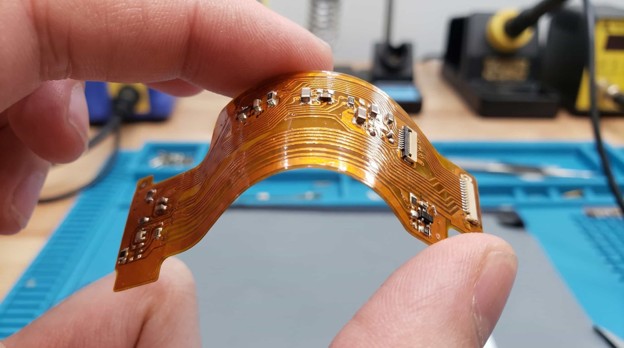
The traditional wiring and compact electronics are becoming more common on modern equipment, and the area where they meet is a frequent source of trouble. Flexible printed circuits are used to connect sensors, displays, and control modules in confined locations and/or when they’re in motion.
When working with a flexible PCB supplier that is knowledgeable, all the signal path is kept stable. Flex circuits can withstand bending and vibration, however, if bend radius, stiffener location and connector termination are not considered for their environment. A flex circuit which fits nicely on the bench can become broken at the solder joint after a few months of thermal cycling if no effort was made to consider how it would move.
Test for Reality, Not Just Compliance
A simple continuity test indicates that the harness is functioning, today, under clean-room conditions, at room temperature. It provides little information about year three on the job.
Meaningful testing includes:
- Thermal cycling
- Vibration profiles
- Salt fog
- Pull force on crimps
- Immersion tests on sealed assemblies
Test prototypes of new designs at accelerated speed prior to production. It takes some time in the beginning, but far less expensive than a recall.
Think at the System Level
A harness isn’t the only thing that walks alone. It interfaces with enclosures, boards, sensors and power modules and has failure points that typically occur at interface points where each supplier optimized only its module.
That is why there are some manufacturers that will rely on a Box build assembly supplier that provides them with the harnesses, enclosures, and electronics as one coordinated assembly. If one team knows how to route the cable and impact it has on sealing the enclosure, or if they know how heat accumulation in the housing will cause the insulation to age, then issues are discovered at the design stage, not once they are installed.
Wrapping It Up
There’s no single magic material or fancy feature to prevent wire harness failure in tough conditions. It’s about discipline. Know the environment inside and out, identify locally available materials, secure and reinforce all connection points, safeguard all fragile transitions, and stress test by exposing it to conditions the real world will throw at you.
Then your harnesses are what they should be: the low-key, reliable backbone of your machine. You will be glad your future self does and you will be glad your service team does.
To read more content like this, explore The Brand Hopper
Subscribe to our newsletter