
Last Updated on November 9, 2026 by Team TBH
For many brands, privacy once lived mainly in the fine print: a legal page customers rarely read. Then, within a few years, it moved to billboards, product launches and app-store screens.
Public concern about data use gave brands a reason to make privacy part of their pitch.
From Fine Print to Front-Page Promise
A turning point came in 2018. The Cambridge Analytica story broke in March, Europe’s GDPR began applying in May, and “who has my data?” became a dinner-table question rather than an IT one.
Ahead of CES 2019 in Las Vegas, Apple put up a billboard reading “What happens on your iPhone, stays on your iPhone.” In April 2021, it went further with App Tracking Transparency in iOS 14.5, which made apps ask permission before tracking users across other companies’ apps and websites. In February 2022, Meta estimated that iOS changes overall would create a revenue headwind of around $10 billion that year. That was a forecast of the broader impact, rather than a measured loss from this one feature.
For marketers, the example shows how a privacy promise can become visible in both advertising and the product itself.
Customers Started Protecting Themselves
Brands weren’t the only ones acting. Consumers began installing their own privacy tools: ad blockers, private search engines, browsers that block trackers by default. The VPN, once a tool for corporate remote access, became an everyday app on phones and laptops, used on café Wi-Fi, while traveling, or simply to keep their browsing away from whoever runs the network.
That changed the baseline. When customers protect themselves by default, a brand that still treats data carelessly looks out of step, and one that matches their expectations looks like it’s on their side.
What Privacy-Led Brands Do Differently
Companies that have built a reputation on privacy tend to share three habits.
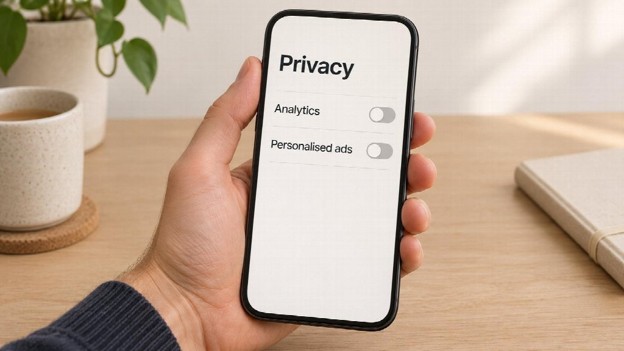
They make it visible. A promise buried in a policy does nothing for the brand. Privacy-led companies put it in the product: a permission prompt, a clear dashboard of what’s collected, a plain-language summary at the point of sign-up. Apple made this more visible in December 2020, when it launched App Store privacy “labels” showing developers’ reported data practices. Customers could review that information before downloading; the labels were disclosures, not independent audits.
They make it simple. Privacy that takes ten steps doesn’t get used. The products that win make the private option the default or a single tap. A desktop VPN such as X-VPN’s Windows app asks the user to install it and press connect, with no networking knowledge needed. That simplicity is part of the pitch.
They back it with proof. Claims get tested. Transparency reports, published data-request figures and independent audits give customers evidence to examine. A clear refund policy can reduce purchase risk, but it does not prove a privacy claim. Proof also works for smaller brands. A company that can’t afford an audit can still publish what it collects, how long it keeps it and who it shares it with, on a page short enough to read.
Where Brands Overreach
Privacy marketing goes wrong when the promise outruns the product.
Absolute claims are the most common trap. “100% anonymous,” “completely untraceable” and “we know nothing about you” are almost never literally true, and journalists and security researchers are quick to test them.
The penalty can be more than embarrassment. In 2024, a well-known antivirus company agreed to pay $16.5 million to settle US Federal Trade Commission charges that it sold users’ browsing data while marketing its products as privacy protection. For a brand built on trust, a story like that undoes years of positioning.
The safer pattern is to promise exactly what the product does, describe its limits, and let the proof do the rest.
Lessons for Any Brand, Not Just Tech
You don’t need to sell software for this to apply. A retailer, a clinic or a consultancy collects customer data too, and customers notice how it’s handled.
- Ask for less. Every form field you remove is one less thing to protect and one less reason for a customer to hesitate.
- Say what you do with data in plain words, at the moment you ask for it.
- Make the private choice easy, not hidden behind three menus.
- Promise only what you can prove.
- Brief the people who talk to customers. Sales and support staff get asked “what do you do with my data?” more often than the legal team. A two-line answer they can give with confidence does more for trust than a long policy page.
Privacy became a selling point because customers stopped giving trust away for free. The brands that benefit treat it as a product feature they deliver every day, not a slogan they print once.
To read more content like this, explore The Brand Hopper
Subscribe to our newsletter