Last Updated on July 27, 2026 by Team TBH
Burger King has been stirring the fast-food pot since 1953 — flame-grilling its burgers when McDonald’s was frying, crowning customers as royalty when competitors pushed brand mascots, and confessing its own failures on national television at the 2026 Oscars. In an industry defined by conformity, Burger King has consistently chosen provocation over politeness, and it has paid off in brand recognition, viral campaigns, and — after years of turbulence — a genuine financial turnaround.
This article is a complete strategic anatomy of Burger King’s marketing engine. It covers more than a dozen major marketing strategies, the landmark campaigns behind them, the data that proves they worked, a full 4Ps marketing mix, SWOT analysis, Porter’s Five Forces, and the financial performance story from 2022 to 2026. Whether you’re a marketing student, brand strategist, or fast-food enthusiast, this is the most comprehensive breakdown of BK’s playbook available.
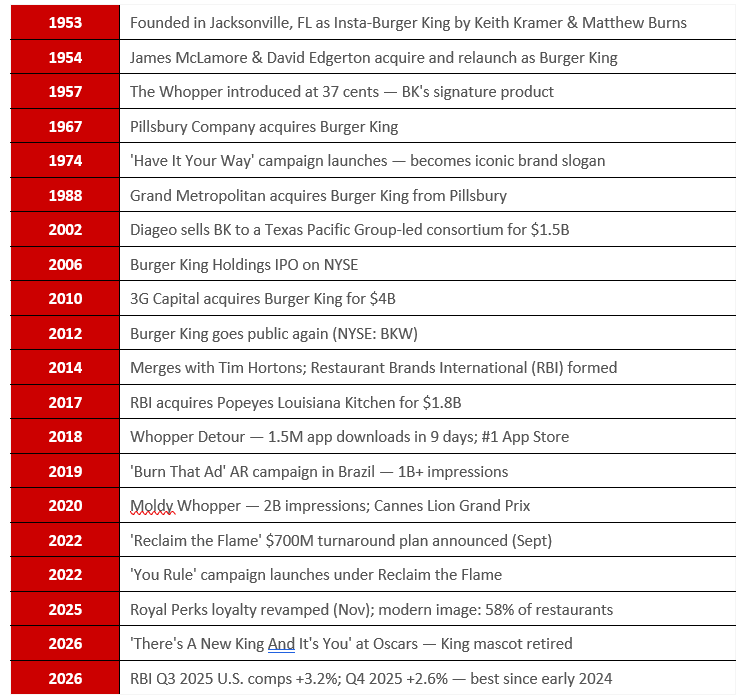
Company Overview & History Timeline
Burger King was founded in 1953 in Jacksonville, Florida, as Insta-Burger King by Keith Kramer and Matthew Burns. After the original concept failed, James McLamore and David Edgerton acquired the brand in 1954 and relaunched it — built on one foundational promise: flame-grilled, not fried.
The Whopper, introduced in 1957 for 37 cents, became the cornerstone of the menu and the brand’s identity. Over the next six decades, Burger King changed ownership multiple times (Pillsbury, Grand Met, Diageo, Texas Pacific Group, 3G Capital), went public, merged with Tim Hortons and Popeyes under Restaurant Brands International (RBI), and battled through periods of stagnation and revival. The 2010s brought renewed creative fire through award-winning campaigns. The 2020s brought the ‘Reclaim the Flame’ turnaround and a sweeping recommitment to quality and guest experience.
Burger King Milestones Timeline
Segmentation, Targeting & Positioning (STP) of Burger King
Market Segmentation
Burger King segments its global market across several dimensions to tailor messaging and product offerings:
Demographic: Primarily adults aged 18–34 (millennials and Gen Z), but also families and working adults aged 35–50. BK’s value offerings also target budget-conscious consumers across income levels.
Psychographic: ‘Rebel’ personalities who enjoy bold flavors and bold marketing. BK targets consumers who want their meal their way — people who see fast food as an identity statement.
Behavioral: Frequent QSR visitors, loyalty app users (Royal Perks members), late-night diners, and deal-seekers attracted by promotions and combo deals.
Geographic: Both urban and suburban. International segmentation is handled market-by-market: localized menus for India (no beef), Middle East (halal), Southeast Asia (rice-based meals), and Japan (seasonal specialty Whoppers).
Target Audience
Burger King’s primary target is the 18–34-year-old who is digitally active, values authenticity over polish, and responds to humor and controversy. This audience drove the virality behind Whopper Detour, Burn That Ad, and the Moldy Whopper. Secondary targets include families seeking value meals and international consumers in growth markets such as China, India, and Latin America.
Brand Positioning
| Burger King’s positioning: ‘We are the home of the flame-grilled Whopper — the fast-food brand that empowers you to have it your way, not theirs.’ BK positions itself as the irreverent, customer-first alternative to McDonald’s — real quality, real flames, no rules. |
The ‘You Rule’ and ‘There’s A New King And It’s You’ campaigns represent the latest evolution of this positioning: shifting power from the brand mascot (the King) to the actual customer — a deliberate strategic move to build emotional loyalty in an era where consumers demand authenticity and brand accountability.
Burger King’s Marketing Strategies
Burger King’s marketing is not a single strategy — it is a portfolio of bold, often controversial bets that collectively define one of fast food’s most distinctive voices. Below are the ten core strategies that have shaped BK’s identity and business results.
1. Rival-Baiting: The McDonald’s Obsession
No brand in QSR history has leveraged a competitive rivalry as effectively as Burger King. Its repeated, pointed, and often brilliant attacks on McDonald’s have generated billions in earned media while reinforcing BK’s rebel identity.
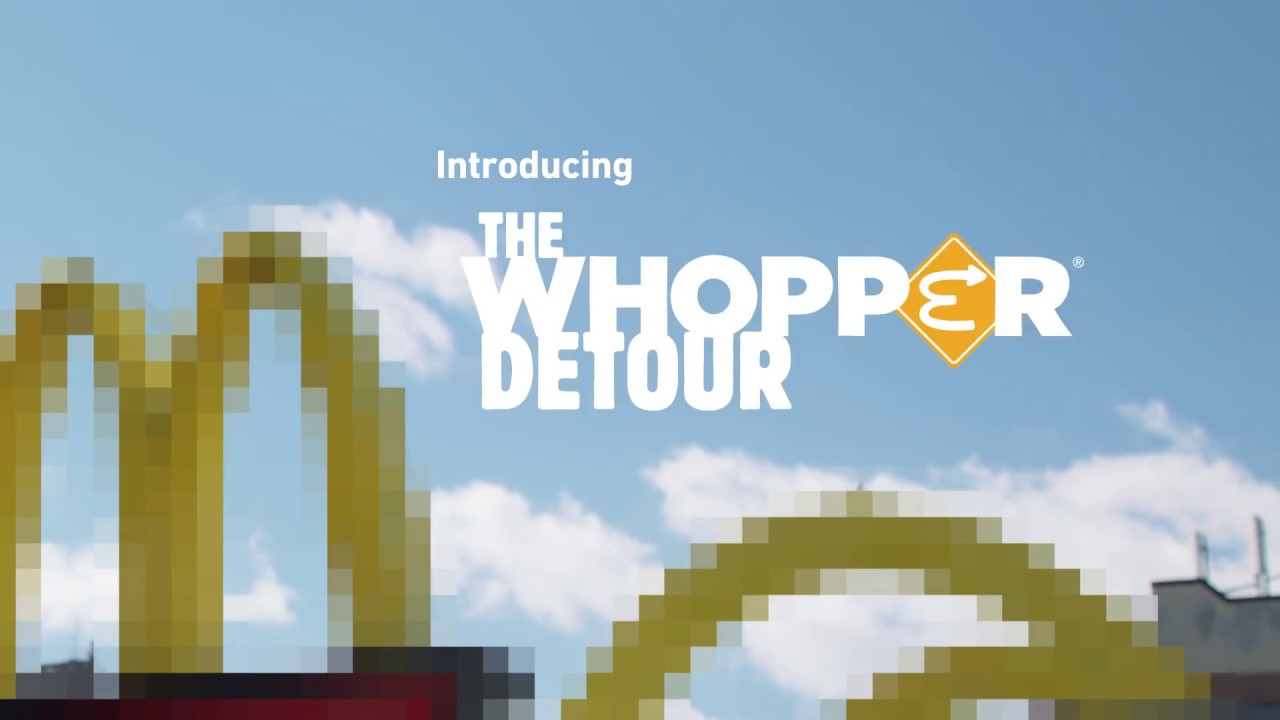
Whopper Detour (2018) — The Campaign That Rewrote the Rulebook
Whopper Detour used geo-fencing technology to unlock a 1-cent Whopper deal — but only when a customer was within 600 feet of a McDonald’s. Created by FCB New York, the mechanic was brilliant in its simplicity and audacious in its premise.
| Metric | Result |
| App downloads in 9 days | 1.5 million |
| App Store ranking | #1 in Food & Drink |
| Mobile sales during campaign | +300% |
| Mobile sales post-campaign (sustained) | +200% |
| Cannes Lions awards | Grand Prix in Mobile + multiple Gold |
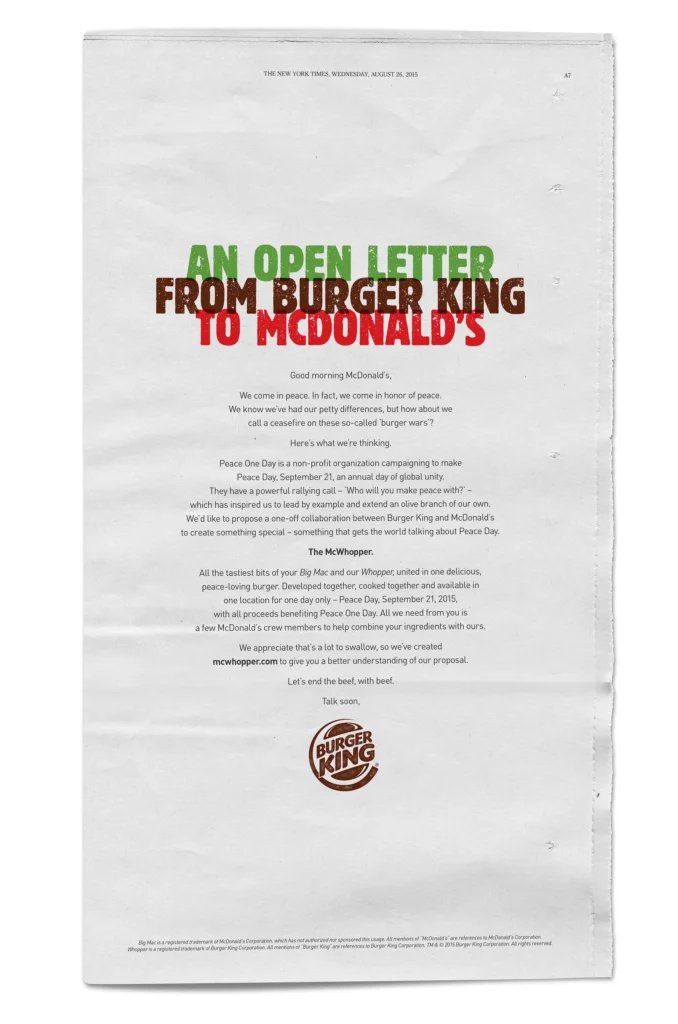
McWhopper Proposal (2015)
For World Peace Day, BK took out a full-page New York Times ad proposing a ceasefire with McDonald’s: the ‘McWhopper,’ a burger co-created by both brands for one day only. McDonald’s declined via Facebook, but the rejection generated as much press as acceptance would have. The campaign won the Cannes Lions Grand Prix in Print.
Scary Clown Night (2017) — Halloween Troll
On Halloween, BK invited customers to come dressed as clowns for a free Whopper — a barely veiled jab at Ronald McDonald. The stunt trended globally, required zero media spend, and delivered massive brand conversation.
2. ‘Reclaim the Flame’ — The $700M Turnaround Plan (2022–2026)
| ‘Reclaim the Flame is the most significant investment in Burger King’s history. It is not a marketing refresh — it is a complete recommitment to the guest experience.’ — Restaurant Brands International, September 2022 |
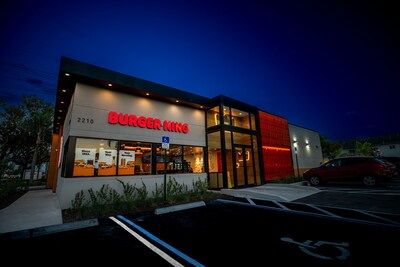
Announced in September 2022, Reclaim the Flame is a $400M–$700M multi-year investment program to arrest BK’s declining U.S. market share and reinvigorate the brand from the restaurant floor up. It has two legs: advertising investment and physical restaurant modernization.
Fuel the Flame — The Advertising Investment
Burger King committed $150 million specifically to advertising and digital investment — $120M in media and brand building, and $30M in digital/technology. This was completed by Q4 2024 and drove the You Rule campaign and subsequent creative work.
Royal Reset — Restaurant Remodeling
The Royal Reset program targets upgrading BK’s physical restaurant portfolio. As of late 2025, $176M has been funded toward restaurant remodels, with up to $550M planned. The brand’s ‘modern image’ metric climbed from 37% in 2021 to 58% by 2025.
| Reclaim the Flame Metric | 2021 | 2025 | Change |
| Modern Image Restaurants | 37% | 58% | +21 pts |
| Avg Franchisee Profit/Unit | $125K | $205K | +$80K (+64%) |
| Royal Reset Funding | — | $176M funded | $550M planned |
| Ad Fund Contribution (franchisees) | 4.0% | 4.5% | +50 bps (2025) |
3. ‘There’s A New King And It’s You’ — 2026 Oscars Campaign
| Launched at the 2026 Academy Awards, BK’s most honest campaign in decades retired the King mascot and handed the crown to the customer. Narrated by brand president Tom Curtis in a 90-second confessional, it marked the culmination of Reclaim the Flame. |
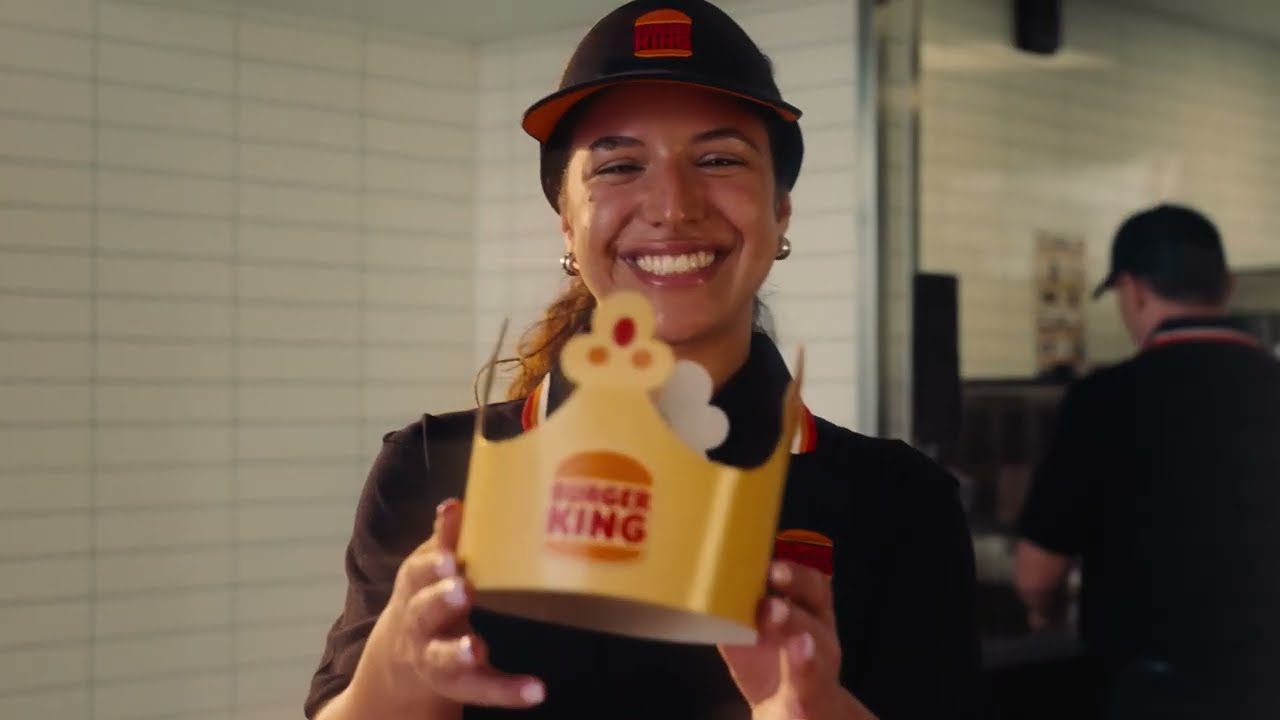
Created by agency BarkleyOKRP and directed by Daniel Wolfe (Love Song), the ad featured president Tom Curtis listing actual customer complaints he had personally received — ‘old restaurants, slow service, and simple mistakes’ — and walking through BK’s responses. Disarmingly honest, in stark contrast to the polished tone typical of fast-food award-night advertising.
The campaign formally retired the King mascot and passed the crown — literally and symbolically — to BK’s customers. It connected directly to the Reclaim the Flame narrative, positioned the brand’s operational improvements as proof points, and set up the next chapter of BK’s marketing identity.
- Agency: BarkleyOKRP
- Director: Daniel Wolfe (Love Song)
- Narrator: Tom Curtis, President of Burger King
- Air date: March 2026 (Oscars night)
- Format: 90-second confessional spot; multi-platform extension
- Key message: We heard you. We fixed things. The crown is yours.
4. Digital Innovation, App & Geofencing
Burger King has consistently bet on digital innovation as a competitive differentiator — not just for convenience, but as a marketing channel in itself. From Whopper Detour’s geo-fencing to Burn That Ad’s augmented reality in Brazil, BK uses technology to create experiences that earn media rather than buy it.
Burn That Ad — Brazil (2019)
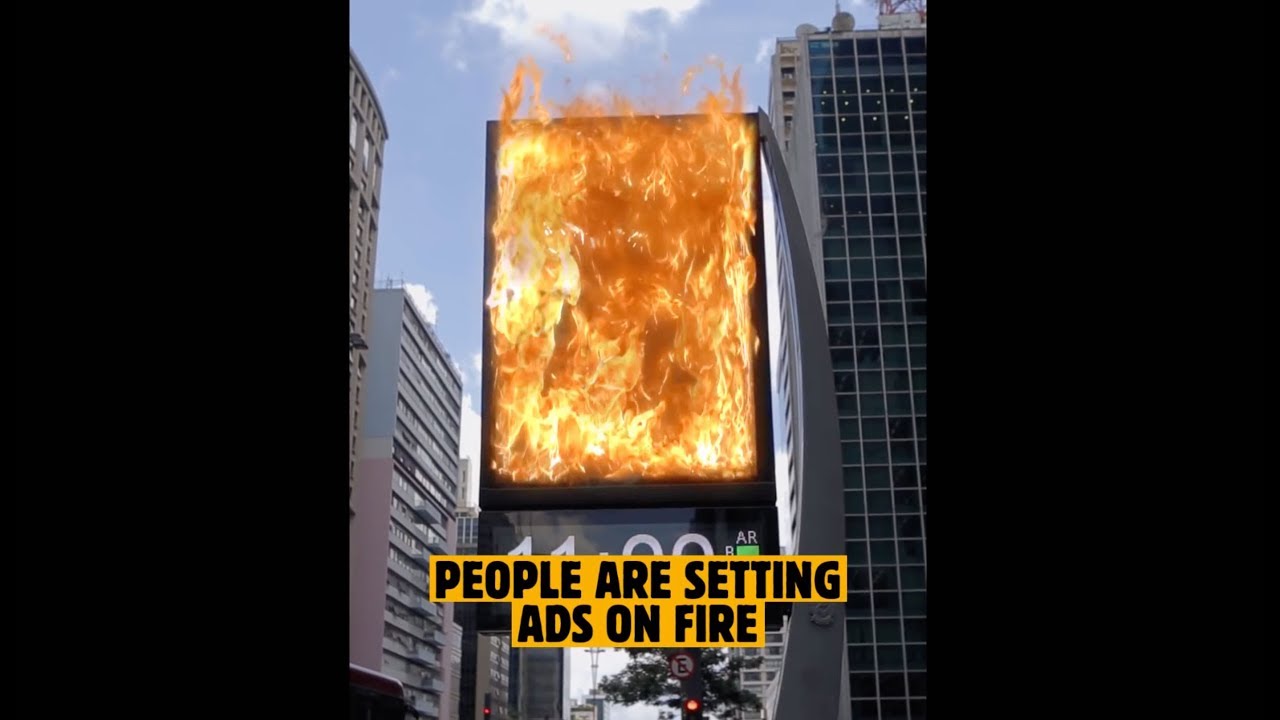
BK’s Brazilian operation launched an app feature that let users point their cameras at any competitor’s advertisement and ‘burn’ it using AR fire animation, receiving a coupon for a free Whopper in return.
| Burn That Ad — Results | Value |
| Rival ads burned by users | 400,000+ |
| App Store rank in Brazil | #1 for 3 months |
| Impressions | 1 billion+ |
| Award | Cannes Gold Lion, Mobile |
BK App & Personalization
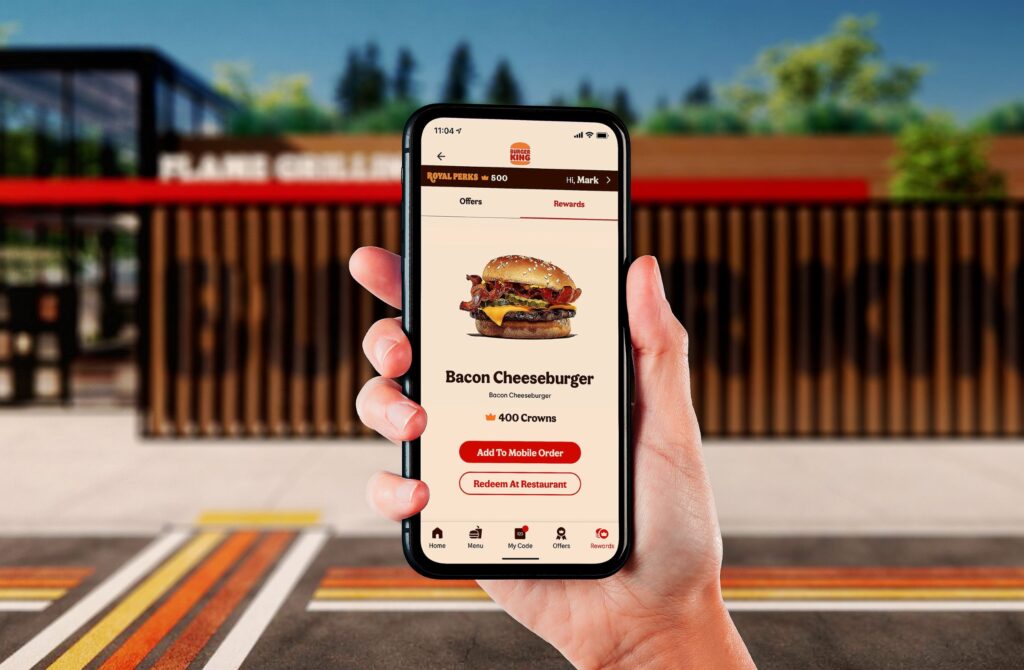
The BK mobile app has evolved into a full personalization and loyalty platform. Digital sales grew 40% year-over-year as of the latest reported period, a direct result of app-driven ordering, AI-powered offer personalization, and Royal Perks integration.
5. Guerrilla & Controversial Marketing
Burger King’s most celebrated campaigns come from its willingness to go where other brands won’t — showing a decomposing Whopper, or asking customers to unfriend 10 Facebook friends for a free burger.
Moldy Whopper (2020) — The Anti-Ad
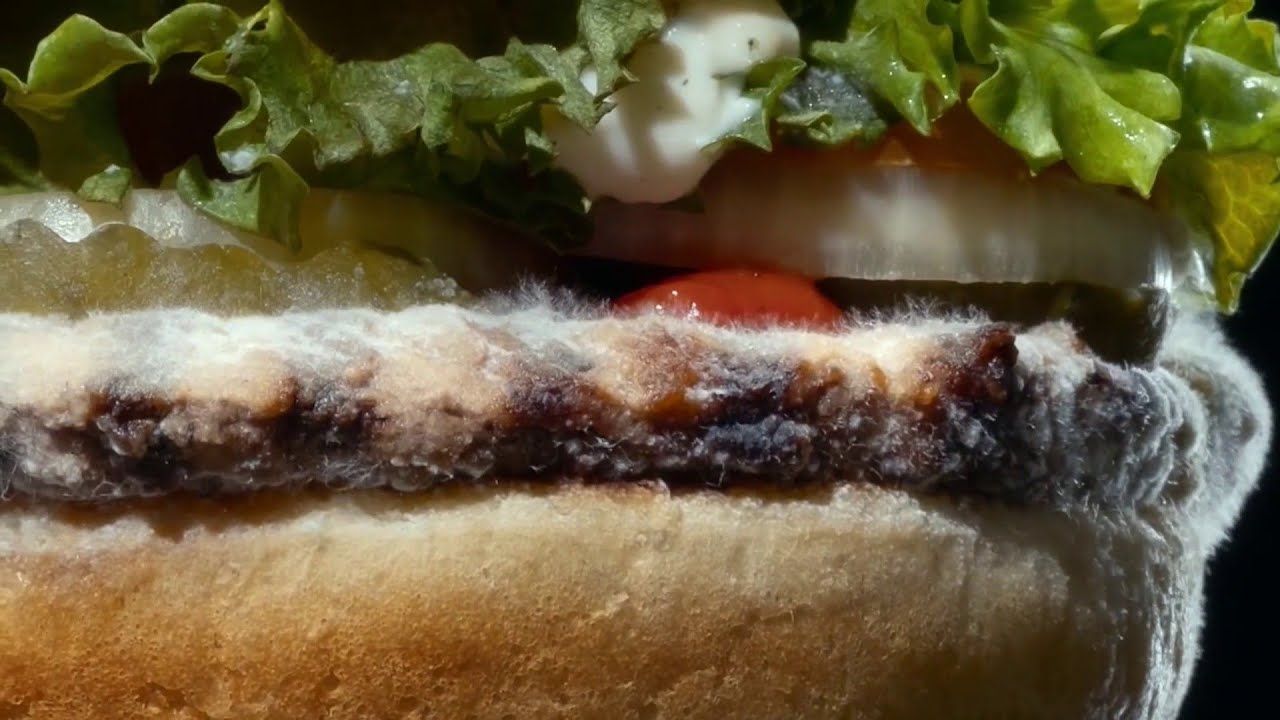
In February 2020, Burger King released a time-lapse video of a Whopper decaying over 34 days, showing mold in graphic detail. The message: BK had removed artificial preservatives. It ran across digital and video channels and shocked audiences who had never seen anything like it in fast food.
| Moldy Whopper — Results | Value |
| Impressions | 2 billion+ |
| Earned media value | $40M+ |
| Positive sentiment shift | +88% |
| Sales impact | +4% (following period) |
| Awards | Cannes Lions Grand Prix, D&AD, Clio Grand |
Whopper Sacrifice (2009)
BK’s Facebook app rewarded users with a free Whopper only if they unfriended 10 friends. Over 233,000 people were ‘sacrificed’ before Facebook pulled the app for privacy violations. The controversy became global news worth millions in earned media.
Subservient Chicken (2004)
A website where a person in a chicken suit would respond to typed commands received 46 million visits in its first week — prefiguring the branded interactive content category by a decade.
Read the detailed campaign here: Case Study – Burger King: Subservient Chicken Brand Campaign
6. Royal Perks Loyalty Program & Personalization
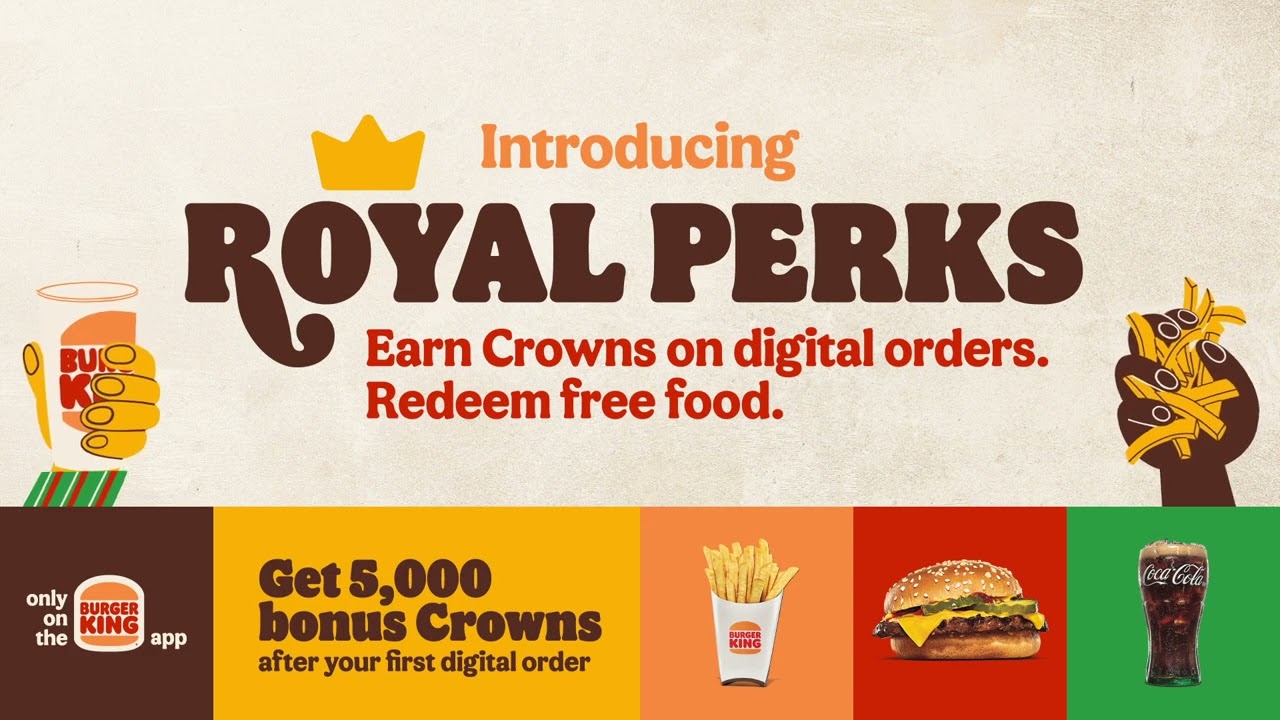
Burger King’s Royal Perks loyalty program was revamped in November 2025 as a cornerstone of the Reclaim the Flame digital strategy. It rewards members with Crown Coins on every purchase, redeemable for free menu items, and is tightly integrated with the BK app for personalized offers.
| Royal Perks Metric | Data |
| Member spend vs. non-members | 67% higher spend per visit |
| Member recommendation rate | 80%+ would recommend BK |
| Program relaunch | November 2025 |
| Digital sales growth (YoY) | +40% |
| Integration | BK app + AI-driven offer personalization |
The program’s economics are compelling: a 67% spending premium from loyalty members versus new customers demonstrates the direct revenue impact. The 80%+ recommendation rate means loyalty members also serve as organic brand advocates, reducing paid media cost-per-acquisition.
7. Social Media & Influencer Marketing
Burger King operates one of the most distinctive social media voices in QSR — unfiltered, conversational, willing to roast competitors and occasionally itself. Its Twitter/X presence pioneered brand ‘snark’ that dozens of brands have since tried to imitate.
Social Strategy Pillars
- Reactive & Real-Time: BK regularly responds to trending topics, cultural moments, and even competitor missteps in real time.
- Community Engagement: BK’s social team actively engages with fans, retweets creative fan content, and runs social-only promotions.
- Influencer Collaboration: Mid-tier and macro food and lifestyle influencers for new menu launches — focused on authenticity over celebrity.
- UGC Amplification: User-generated content is regularly reshared, turning customers into micro-creators and amplifying reach without media spend.
You Rule Campaign — Social Execution (2022–2025)
The ‘You Rule’ campaign launched under Reclaim the Flame in 2022 gave BK’s social media a rallying cry. Every post reinforced that the customer — not the brand — is the real king. The campaign ran across TikTok, Instagram, YouTube, and Twitter/X with market-specific executions in 40+ countries.
8. Hyper-Localization Strategy
Across 120+ countries, Burger King cannot afford a one-size-fits-all approach. Its localization strategy balances brand consistency (the Whopper always at the center) with deep market adaptation.
| Market | Localized Menu Innovation |
| India | Mutton and chicken-based Whoppers; Aloo Tikki Burger; no beef |
| Japan | Seasonal and limited-time specialty Whoppers; sakura berry shakes |
| Middle East | Halal-certified menu; Arabic-language marketing across all touchpoints |
| Brazil | ‘Costela’ (rib) Whopper; Brazilian-flavored value meals; Burn That Ad campaign |
| South Korea | Korean BBQ Whopper; bulgogi sauces; rice-based sides |
| China | 1,250+ locations targeting 4,000 by 2035; localized digital ordering |
| Germany | BK’s largest European market; strong focus on plant-based options |
9. Sustainability, CSR & Plant-Based
Burger King’s sustainability initiatives have become an increasingly important part of its brand narrative — especially as younger consumers place greater weight on corporate responsibility.
Climate Pledge: RBI committed to a 50% reduction in greenhouse gas emissions across its restaurant portfolio by 2030.
Lemongrass-Fed Beef: BK piloted ‘Reduced Methane Beef’ — cattle fed lemongrass to reduce methane emissions by up to 33%, driving significant media attention.
Packaging: Committed to 100% recyclable, reusable, or compostable guest-facing packaging by 2025 — largely met across key markets.
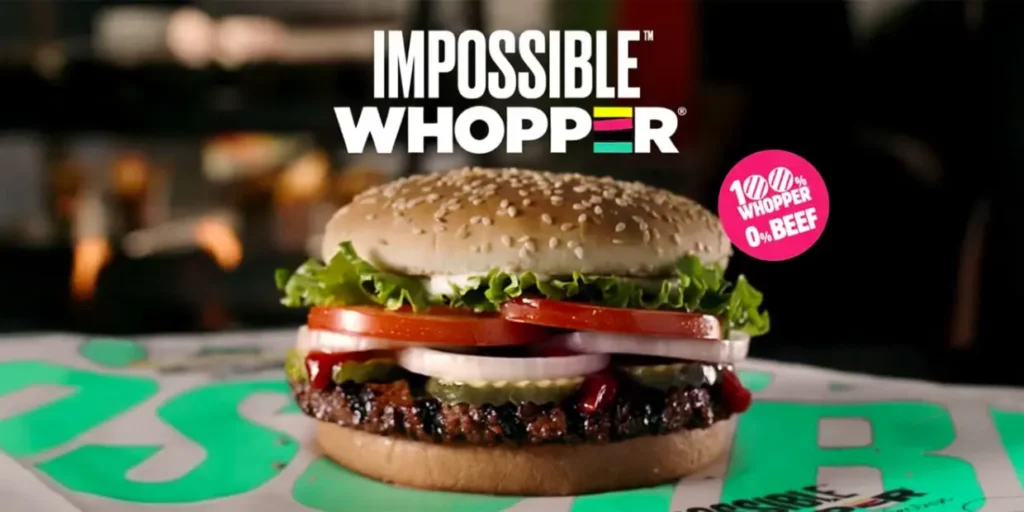
Impossible Whopper: Launched in 2019 with Impossible Foods, one of the most successful plant-based QSR launches in history. Plant-based options now available across most major markets.
BK Foundation: Over $70M in scholarships since 1998 in the name of BK’s co-founder.
10. Experiential Marketing & Pop Culture Tie-ins
Burger King treats culture as a marketing channel — inserting itself into movies, TV shows, gaming, and live events in ways that generate conversation far beyond a standard media buy.
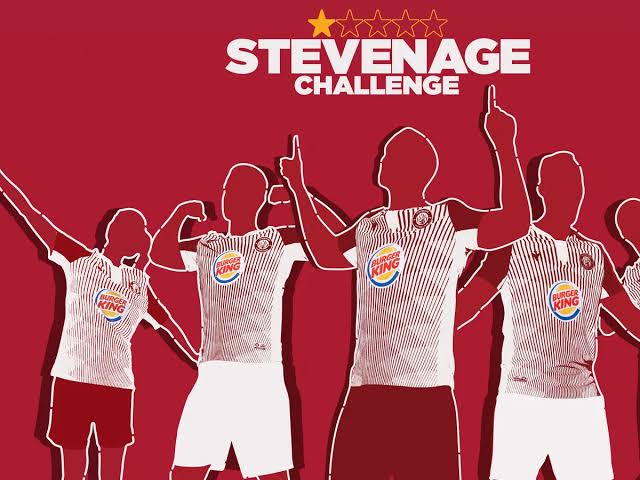
Stevenage Challenge (FIFA 20): BK sponsored the real-world club Stevenage FC — the lowest-rated team in FIFA 20 — and challenged gamers worldwide to use the team and share highlights via #StevenageChallenge. The hashtag trended globally; Stevenage became the most-played team in Career Mode worldwide.
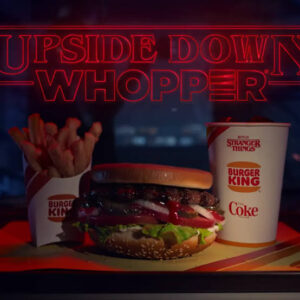
BK vs. Stranger Things: A 2017 collaboration with Netflix tied the BK upside-down logo to the ‘Upside Down’ theme, running a pop-up experience that generated massive social buzz.
Gaming & Esports: BK has sponsored esports tournaments and in-game integrations, including gaming-context brand appearances across major titles.
Horror Tie-ins: Halloween promotions tied to IT and Halloween franchises, using the clown connection for the second time after Scary Clown Night.
Burger King Marketing Mix — The 4Ps
1. Product
Burger King’s product strategy centers on the Whopper as its hero product — a flame-grilled, fully customizable beef burger that differentiates BK from competitors on cooking method and taste. The ‘Have It Your Way’ philosophy means every Whopper can be tailored to individual preference.
Beyond the Whopper, the portfolio spans: Chicken Royale and crispy chicken sandwiches; the Impossible/plant-based range; breakfast items (Croissan’wich, BK Café coffee); value menu options (BK Jr. Meals, Savings Menu); regional/limited-time offerings; and BK Crown Nuggets and kids’ meals. Product quality improvement is a core pillar of Reclaim the Flame.
2. Price
BK operates a tiered pricing strategy spanning value ($1–$3), standard (Whopper meals, chicken sandwiches), and premium (specialty burgers, doubles). The value tier drives traffic; the standard tier is priced slightly below McDonald’s comparable items as a competitive signal; premium captures higher-income QSR visitors.
Promotional pricing is a major lever: the Whopper Detour’s 1-cent Whopper, Royal Perks Crown Coins redemptions, and app-exclusive deals are all price-based engagement tools. Dynamic pricing experiments have begun in select markets via the BK app.
3. Place (Distribution)
BK’s distribution is anchored in three channels: physical restaurants (19,700+ globally, 95% franchised), digital ordering (BK app + third-party delivery), and drive-through (a majority of US revenue). Drive-through optimization has been a key focus of the Reclaim the Flame remodel program — newer locations feature dual drive-through lanes and digital menu boards.
Third-party delivery (Uber Eats, DoorDash, Just Eat, Grab) is active in most major markets. The China expansion strategy (targeting 4,000 locations by 2035 from ~1,250 today) is BK’s largest international growth bet.
4. Promotion
Promotion is BK’s most distinctive P. The brand operates a full-funnel model: mass media (TV at Oscars, major sports events) for awareness; digital and social for engagement and virality; the BK app and Royal Perks for loyalty and conversion; and in-restaurant promotions for basket size.
The franchisee ad fund contribution increase from 4.0% to 4.5% in 2025 reflects the brand’s reinvestment in promotional spending. The Fuel the Flame component ($150M) was specifically designed to rebuild BK’s ‘share of voice’ in QSR after a period of reduced media spending.
SWOT Analysis of Burger King
Strengths
Global Brand Recognition: Second-largest global QSR burger chain; 70+ years of brand equity; the Whopper is one of the most recognised fast-food products worldwide.
Flame-Grilling Differentiation: Unique cooking method is a genuine taste differentiator. Defensible quality claim vs. competitors who fry.
Bold, Award-Winning Marketing: BK consistently produces globally recognized campaigns (Cannes, D&AD, Clio). Marketing is a brand asset, not just a cost.
Reclaim the Flame Progress: Real measurable improvement: avg unit profit $125K → $205K; modern image 37% → 58%; U.S. comps back to growth.
Digital & Loyalty Infrastructure: Royal Perks and BK app create a first-party data asset and direct customer relationship for personalization.
RBI Scale: Shared platform benefits (supply chain, technology, real estate) with Tim Hortons and Popeyes.
Weaknesses
S. Location Decline: Restaurant count fell from 8,400+ to ~6,560 as underperforming franchisees close units. Rebound requires significant investment.
Franchisee Dependency: 95% franchised model makes brand standards harder to enforce; inconsistent guest experience undermines marketing spend.
Perceived Quality Gap: Consumer perception of BK quality still lags McDonald’s and Chick-fil-A in U.S. consumer surveys (Technomic, QSR Magazine).
Breakfast Weakness: BK’s breakfast daypart remains a distant third behind McDonald’s and Chick-fil-A; the Croissan’wich lacks the salience of the McGriddle or Egg McMuffin.
Opportunities
China Expansion: 1,250 → 4,000 restaurants by 2035 is a transformational opportunity. China’s QSR market is growing rapidly.
AI-Driven Personalization: The Royal Perks data asset is underutilized. ML-driven personalization could significantly lift same-store sales.
Plant-Based Growth: The Impossible Whopper is well-positioned as plant-based consumption trends upward among BK’s 18–34 core audience.
Digital Expansion: Drive-through digital ordering, table-service kiosks, and ghost kitchen delivery expansion are near-term revenue levers.
Threats
McDonald’s Scale Advantage: McDonald’s outspends BK in advertising approximately 3:1. Scale advantages in supply chain, technology, and real estate are hard to overcome.
Rising QSR Competition: Chick-fil-A, Shake Shack, Five Guys, In-N-Out, and Wendy’s are intensifying competition in BK’s core burger category.
Consumer Spending Pressure: Inflation-driven trading down is double-edged: it drives traffic but pressures average ticket and franchisee margins.
Delivery Platform Dependency: Third-party platforms (Uber Eats, DoorDash) cede 15–30% commission and the direct customer relationship on every delivery order.
Porter’s Five Forces — Burger King
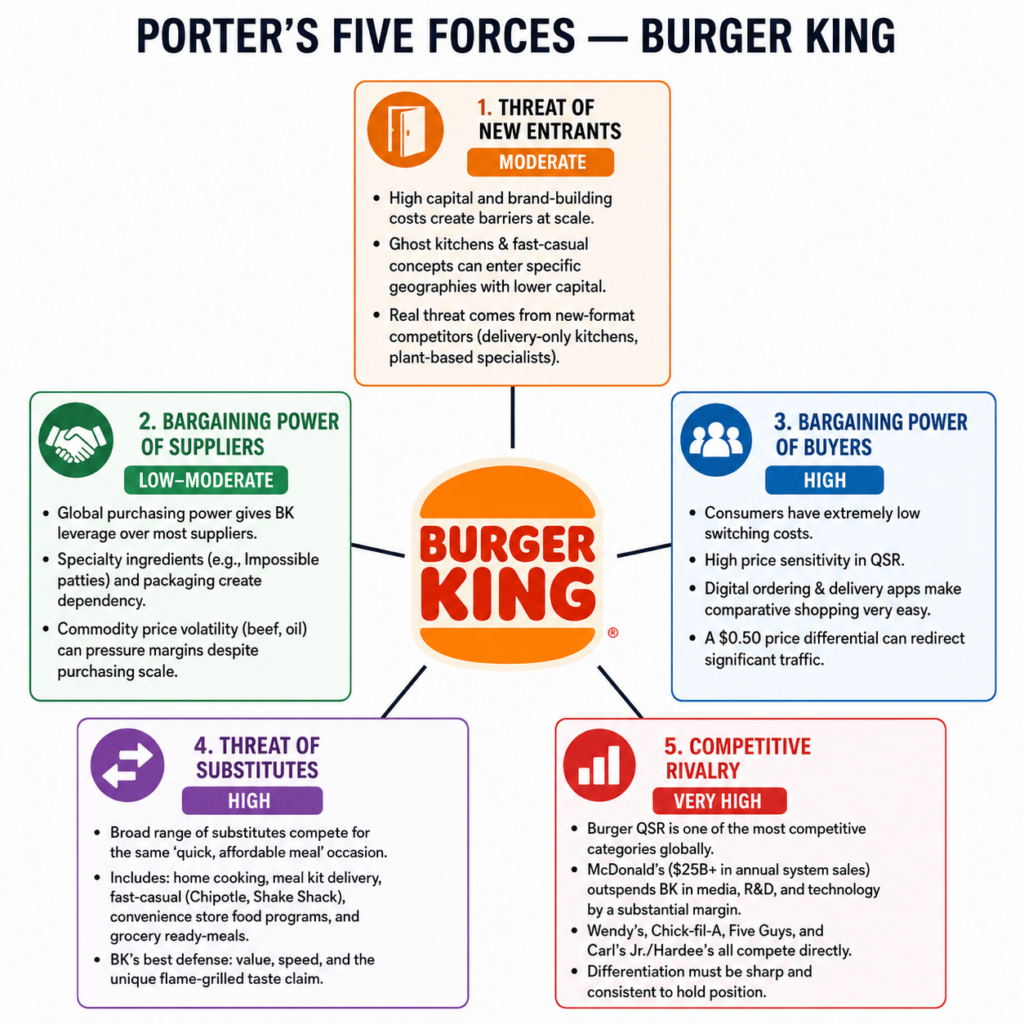
Threat of New Entrants — MODERATE
QSR is capital-intensive with high brand-building costs — significant barriers at scale. However, ghost kitchen operators and fast-casual concepts can enter specific geographies with lower capital. The real threat is not from new burger chains but new-format competitors (delivery-only kitchens, plant-based specialists).
Bargaining Power of Suppliers — LOW-MODERATE
RBI’s global purchasing power gives BK significant leverage over most ingredient suppliers. However, specialty ingredients (Impossible Burger patties) and packaging materials can create dependency. Commodity price volatility (beef, cooking oil) can pressure margins despite purchasing scale.
Bargaining Power of Buyers — HIGH
Consumers in QSR have extremely low switching costs and high price sensitivity. Digital ordering and delivery apps make comparative shopping trivially easy, intensifying buyer power. A $0.50 price differential can redirect significant traffic.
Threat of Substitutes — HIGH
The substitute threat is broad: home cooking, meal kit delivery, fast-casual (Chipotle, Shake Shack), convenience store food programs, and grocery ready-meals all compete for the same ‘quick, affordable meal’ occasion. BK’s best defense is value, speed, and the unique flame-grilled taste claim.
Competitive Rivalry — VERY HIGH
The burger QSR segment is one of the most competitive categories in global food. McDonald’s ($25B+ in annual system sales) outspends BK in media, research, and technology by a substantial margin. Wendy’s, Chick-fil-A, Five Guys, and Carl’s Jr./Hardee’s all compete directly. BK’s differentiation must be sharp and consistent to hold position.
Financial Performance (2022–2026)
Burger King’s financial trajectory over the Reclaim the Flame period tells a story of deliberate reinvestment producing measurable returns. After a difficult 2021–2022 period, the brand has returned to positive comp territory with strengthening momentum.
| Period | Key Metric | Result | Notes |
| FY2024 | BK Global System Sales | $27.73B | Total brand worldwide |
| FY2024 | BK Global Restaurants | 19,732 | ~95% franchised |
| Q3 2025 | BK U.S. Same-Store Comps | +3.2% | Best quarter since early 2024 |
| Q4 2025 | BK U.S. Same-Store Comps | +2.6% | Continued comp recovery |
| FY2025 | BK U.S. Same-Store Comps | +1.6% | Full-year figure |
| FY2025 | International System Sales (YoY) | +12.1% | Through Q3 2025 |
| 2022–2025 | Avg Franchisee Profit/Unit | $125K → $205K | Reclaim the Flame impact |
| 2025 | Digital Sales Growth (YoY) | +40% | Driven by app and Royal Perks |
| 2025 | Modern Image Restaurants | 58% | Up from 37% in 2021 |
The international segment has been the brightest spot: a 12.1% year-over-year increase in consolidated international systemwide sales through Q3 2025 reflects strong execution in Europe, Latin America, and Asia. The China pipeline (1,250 → 4,000 by 2035) is expected to be a material contributor to long-term system sales growth.
U.S. comps returning to growth — particularly the +3.2% in Q3 2025 — validates the Reclaim the Flame hypothesis: that operational improvement combined with meaningful advertising investment can rebuild sales momentum.
Frequently Asked Questions
Q: What is Burger King’s core marketing strategy?
A: BK’s core strategy has three pillars: (1) Brand provocation — bold, controversial campaigns that generate earned media far exceeding paid media value; (2) Customer-centricity — positioning the consumer as the hero through ‘Have It Your Way,’ ‘You Rule,’ and ‘There’s A New King And It’s You’; (3) Digital-first loyalty — using Royal Perks and the BK app to drive personalized engagement and repeat visits.
Q: What is Burger King’s ‘Reclaim the Flame’ plan?
A: Reclaim the Flame is a $400M–$700M multi-year turnaround plan announced September 2022. It has two components: ‘Fuel the Flame’ ($150M in advertising, completed Q4 2024) and ‘Royal Reset’ (restaurant remodeling, up to $550M, $176M funded as of Dec 2025). The plan has raised avg franchisee profitability from $125K to $205K per unit, lifted modern image from 37% to 58%, and returned U.S. comps to growth.
Q: What was the Whopper Detour campaign?
A: The Whopper Detour (2018) was a geo-fencing campaign by FCB New York that unlocked a 1-cent Whopper deal only when customers were within 600 feet of a McDonald’s. It drove 1.5 million app downloads in 9 days, made BK the #1 app in Food & Drink, lifted mobile sales +300% during the campaign and +200% afterward. It won multiple Cannes Lions Grand Prix awards.
Q: What is the Royal Perks loyalty program?
A: Royal Perks is BK’s loyalty program, revamped November 2025. Members earn Crown Coins on every purchase, redeemable for free menu items. The program uses AI-driven personalization for tailored offers. As of the latest data, Royal Perks members spend 67% more per visit than non-members, and over 80% would recommend BK to others.
Q: What is the ‘There’s A New King And It’s You’ 2026 campaign?
A: Launched at the 2026 Oscars, this was a 90-second confessional ad by BarkleyOKRP, narrated by BK president Tom Curtis. It formally retired the King mascot, acknowledged specific customer complaints (old restaurants, slow service, simple mistakes), and presented BK’s improvements as proof of commitment to guests. The campaign culminates Reclaim the Flame by symbolically passing the crown from the brand to the customer.
Q: How many Burger King restaurants are there worldwide?
A: As of late 2025, Burger King operates approximately 19,700+ restaurants across 120+ countries and territories, with approximately 6,560 in the United States. Approximately 95% of all locations are operated by franchisees.
Q: What is Burger King’s target audience?
A: BK primarily targets adults aged 18–34 (Millennials and Gen Z) who are digitally active, value authenticity, and are drawn to bold brand personalities. Secondary targets include families seeking value meals and international consumers in growth markets including China, India, Brazil, and Spain.
Q: What was the Moldy Whopper campaign?
A: The Moldy Whopper (2020) showed a Whopper decomposing over 34 days in a time-lapse video — illustrating BK’s removal of artificial preservatives. It generated 2 billion impressions, $40M+ in earned media value, a +88% positive sentiment shift, and won the Cannes Lions Grand Prix in Outdoor and Direct.
Q: How does Burger King use digital marketing?
A: BK uses digital marketing across several mechanics: the BK app for personalized offers and mobile ordering; geo-fencing (Whopper Detour) for location-based campaigns; augmented reality (Burn That Ad) for interactive engagement; social media for real-time brand conversation; Royal Perks for first-party data and loyalty; and influencer partnerships for new menu item launches.
Q: What is Burger King’s competitive advantage over McDonald’s?
A: BK’s primary competitive advantages: (1) Flame-grilling — a genuine product differentiator; (2) Full customization (‘Have It Your Way’); (3) Marketing creativity — BK consistently outperforms on earned media relative to its paid media budget; (4) Challenger brand energy — the underdog positioning resonates with consumers skeptical of market dominance.
Q: What is Burger King’s sustainability strategy?
A: BK’s sustainability commitments include: 50% GHG emission reduction by 2030 (RBI commitment); 100% recyclable/reusable/compostable guest-facing packaging (largely met by 2025); the Impossible Whopper plant-based range; a ‘Reduced Methane Beef’ pilot (lemongrass-fed cattle); and the BK McLamore Foundation ($70M+ in scholarships since 1998).
Conclusion: The Flame Is Still Burning
Burger King’s marketing story is not about a brand that got everything right. It is about a brand that consistently bet on boldness — and won. From the McWhopper proposal to the Whopper Detour, from the Moldy Whopper to the 2026 Oscars confessional, BK has repeatedly demonstrated that creative courage, more than budget size, determines cultural impact.
The Reclaim the Flame era has proven that marketing and operations must work together. The best ad in the world cannot overcome a declining restaurant portfolio; conversely, beautiful new restaurants cannot fix a brand that has lost its voice. BK’s 2022–2026 period has seen genuine progress on both fronts: franchisee profitability up 64%, modern image at 58%, U.S. comps back in growth territory, and the 2026 Oscars campaign re-establishing the brand’s emotional and strategic direction.
The ‘There’s A New King And It’s You’ moment is both a marketing milestone and a strategic declaration: Burger King’s next chapter will be defined not by the brand’s personality but by the customer’s experience. If the operational improvements of Reclaim the Flame are sustained, and the Royal Perks loyalty ecosystem continues to deepen, BK is well-positioned for the next decade of competitive QSR.
The flame isn’t just still burning. It’s hotter than it has been in years.
Also Read: A Case Study on Burger King’s Whopper Detour Campaign
To read more content like this, subscribe to our newsletter