Last Updated on November 2, 2026 by Team TBH
Somewhere in a Shopify store’s back office, a customer abandons a cart late at night. A welcome sequence is already nurturing a new subscriber, while a win-back flow is preparing to reach a customer who has stopped engaging. These messages can run automatically, responding to customer behavior without requiring a marketer to manually schedule every send.
This is one of the biggest advantages of email automation: brands can communicate with customers at relevant moments rather than relying entirely on one-off campaigns. Automated messages can support customer acquisition, onboarding, retention, repeat purchases, and revenue generation.
Traditional email campaigns still have an important role. Newsletters, product announcements, seasonal promotions, and major brand updates are useful for reaching an entire audience, but they work differently from behavior-triggered automation.
The distinction also matters when choosing software. Email marketing platforms are generally designed for newsletters, promotional campaigns, and customer lifecycle flows; product messaging platforms focus on SaaS onboarding and event-triggered communication; and sales engagement platforms are built for prospecting and outbound sequences.
These categories overlap, but they are not interchangeable. A tool designed for Shopify abandoned-cart campaigns may not be suitable for product-led SaaS onboarding, while a cold-email platform is not necessarily the right choice for managing an opted-in customer newsletter.
The business case for automation is compelling. Omnisend’s report on 2024 ecommerce activity found that automated emails generated 37% of email sales while accounting for just 2% of email volume. This is a vendor-reported benchmark from its merchant dataset, not a guaranteed result for every business.
Here’s a guide to ten email automation tools, their main capabilities, pricing considerations, and the businesses they are best suited to.
What Makes a Great Email Automation Tool?
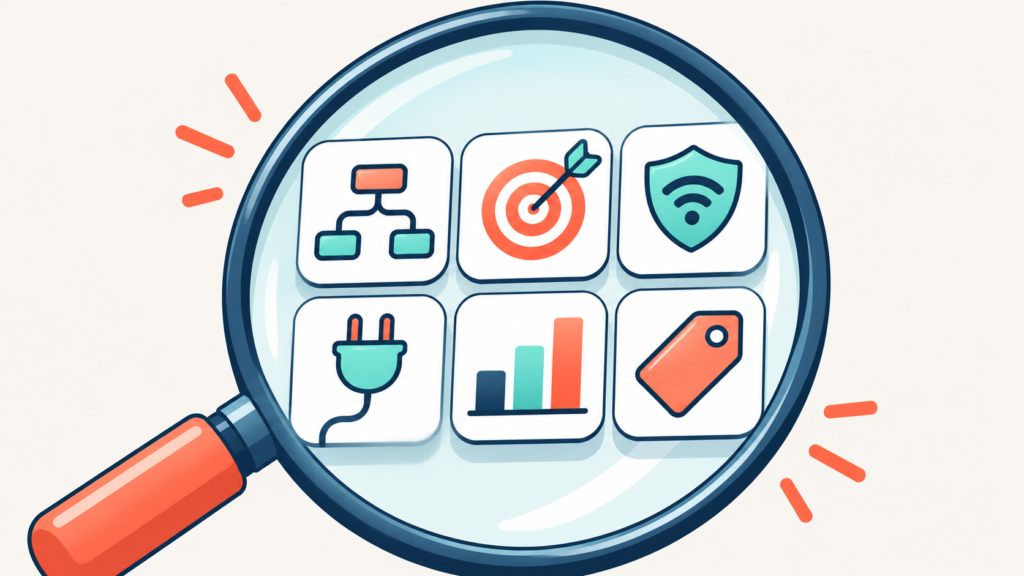
Visual workflow builder and trigger variety are central to evaluating an automation platform. A useful workflow builder should support conditional branching and triggers based on actions such as purchases, form submissions, page visits, subscription changes, and custom events.
Segmentation and dynamic personalization determine how relevant automated messages feel. Strong platforms let marketers create audiences using customer attributes and behavioral data, then personalize messages with information such as product names, order details, account status, or previous interactions.
Deliverability and sending infrastructure are essential to reliable email marketing. Authentication, bounce management, suppression lists, sender reputation monitoring, and compliance with mailbox-provider requirements all influence whether messages reach recipients successfully.
Event and data integrations determine how effectively a platform responds to customer activity. Native integrations with ecommerce platforms, CRMs, analytics tools, and product databases can reduce the technical work required to build useful automations.
Testing, analytics, and workflow reporting help teams understand whether automation is working. Look for campaign and flow-level reporting, conversion tracking, A/B testing, and revenue attribution where relevant.
Pricing model matters because platforms calculate costs differently. Some charge according to contacts or active profiles, while others consider email volume, seats, credits, or a combination of these factors. A low starting price may increase considerably as a business grows.
Best Email Automation Tools
1. ActiveCampaign
Founded in 2003 by Jason VandeBoom and headquartered in Chicago, ActiveCampaign is a marketing automation platform that combines email marketing, customer segmentation, sales automation, and CRM capabilities.
Its visual automation builder supports multi-step workflows, conditional logic, and behavior-based triggers. The platform also offers AI-powered campaign and automation builders, generative AI features on eligible plans, and predictive sending on higher tiers.
ActiveCampaign’s main strength is its depth of automation. Businesses can create customer journeys that respond to engagement, preferences, and other contact attributes, rather than relying solely on scheduled email campaigns.
However, its plans are not identical. Starter provides more limited automation capabilities, while Plus and higher tiers unlock additional cross-channel marketing, segmentation, and optimization features.
Best for: Small and mid-sized businesses that need sophisticated marketing automation, customer segmentation, and CRM functionality in one platform.
| Plan | Starting price (USD) | Key features |
|---|---|---|
| Starter | $15/month | 1,000 contacts, multi-step automation, AI-powered builders, email campaigns |
| Plus | $49/month | 1,000 contacts, cross-channel marketing, generative AI, landing pages |
| Pro | $79/month | 1,000 contacts, predictive sending, conditional content, advanced segmentation |
| Enterprise | $145/month | 1,000 contacts, advanced reporting, SSO, premium support and integrations |
Prices shown are monthly equivalents based on annual billing at the 1,000-contact tier. Actual costs increase with contact volume, and monthly billing costs more. Feature availability and add-ons vary by plan.
2. Hubspot Marketing Hub
Founded in 2006 by Brian Halligan and Dharmesh Shah, HubSpot offers a customer platform that brings together marketing, sales, customer service, and CRM data.
Marketing Hub provides tools for email marketing, lead capture, campaign management, segmentation, and automated customer journeys. Its workflow editor supports triggers such as form submissions, contact-property changes, and website activity, with branching logic to create different paths for different audiences.
Its biggest advantage is the shared CRM database. Marketing teams can build workflows using customer information and interactions recorded by sales and service teams, giving them a broader view of the customer relationship.
HubSpot is particularly useful for B2B businesses that want marketing automation connected to lead management, sales pipelines, and customer support. However, its more advanced automation and reporting capabilities require higher-priced subscriptions.
Best for: B2B businesses and growing companies that want marketing automation integrated with sales, service, and CRM operations.
| Plan | Price (USD) | Notes |
|---|---|---|
| Free | $0/month | Up to 2 users and 2,000 email sends per month; HubSpot branding applies |
| Starter | From $20/month | Starts with 1 Core Seat; includes 1,000 marketing contacts |
| Professional | From $800/month | 3 Core Seats, 2,000 marketing contacts, advanced automation; onboarding fee applies |
| Enterprise | From $3,600/month | 5 Core Seats, 10,000 marketing contacts, advanced reporting and governance; onboarding fee applies |
Prices and included features depend on billing terms and subscription configuration. Professional and Enterprise have one-time onboarding fees of $3,000 and $7,000 respectively, according to HubSpot’s current pricing information. Additional seats and marketing contacts can increase the total cost.
3. Klaviyo
Founded in 2012 by Andrew Bialecki and Ed Hallen, Klaviyo is a customer relationship management and marketing automation platform focused on business-to-consumer brands. The company is publicly traded on the New York Stock Exchange under the ticker KVYO.
Klaviyo combines customer profiles, behavioral data, segmentation, and marketing automation. Its platform supports email and SMS campaigns, automated flows, customer analytics, and integrations with ecommerce platforms such as Shopify.
Businesses can trigger workflows when customers subscribe, browse products, make purchases, enter a segment, or perform other tracked actions. This makes it particularly useful for abandoned-cart reminders, welcome sequences, post-purchase communication, and customer win-back campaigns.
The main differentiator is its customer-data foundation. Instead of treating every email address as an isolated contact, Klaviyo connects customer profiles with shopping and engagement activity to support more relevant communication.
Best for: Ecommerce and B2C brands, particularly Shopify merchants, that want customer data, segmentation, and marketing automation in one platform.
| Plan | Price | Notes |
|---|---|---|
| Free | $0/month | Up to 250 active profiles, 500 email sends/month, and $5 in mobile messaging credit |
| Calculator-based | Paid pricing scales with active profiles and email volume | |
| Email + SMS | Calculator-based | Combines email and mobile messaging with usage-based limits |
| Enterprise | Custom | Higher-volume requirements and tailored commercial arrangements |
Klaviyo’s free-plan limits and paid pricing depend on the products selected and the number of active profiles. SMS and other product subscriptions may have separate usage limits and charges.
4. Omnisend
Founded in 2014 as Soundest and renamed Omnisend in 2017, Omnisend is an ecommerce marketing platform built around email, SMS, and web push notifications.
Its visual automation editor supports workflows for abandoned carts, welcome messages, order updates, customer reactivation, and other ecommerce scenarios. Conditional splits allow businesses to create different customer journeys based on contact attributes, trigger data, and previous engagement.
Omnisend also offers campaign and automation reporting, including revenue-related metrics. This makes it useful for ecommerce teams that want to connect customer communication with sales performance.
One important pricing distinction is that SMS is not automatically included with every paid subscription. Under Omnisend’s current plan structure, new subscribers generally need the Pro plan to purchase SMS credits, while legacy subscribers may have different arrangements.
Best for: Small and medium-sized ecommerce businesses that want email, SMS, and push notification automation in one platform.
| Plan | Price (USD) | Notes |
|---|---|---|
| Free | $0/month | Up to 250 unique contacts and 500 emails/month |
| Standard | From $16/month | Contact-based pricing, email credits, unlimited push notifications |
| Pro | From $59/month | Unlimited email and push notifications; SMS available as a separately purchased credit subscription |
| Custom | Custom pricing | Designed for larger contact volumes and business requirements |
Standard and Pro prices are starting rates, not universal prices. The actual subscription changes with billable contact volume. Omnisend advertises a 30% introductory discount for eligible new customers who prepay for three months.
5. Drip
Drip is an email marketing and automation platform focused on ecommerce and other businesses selling directly to consumers. It was historically associated with Leadpages, but the two companies separated into independently operating businesses in 2020.
Drip supports automated customer journeys for welcome emails, abandoned carts, post-purchase communication, and customer reactivation. Its workflows can use purchase activity, browsing behavior, customer attributes, and integrations to trigger relevant messages.
The platform’s narrower focus can be an advantage for ecommerce businesses that do not need a large enterprise marketing suite. It is designed around customer behavior and purchase journeys rather than a broad collection of B2B sales and service functions.
Drip is primarily an email marketing platform. Businesses looking for a unified native email, SMS, and push notification system should compare its capabilities carefully with platforms such as Klaviyo and Omnisend.
Best for: Small and mid-sized ecommerce brands that want behavior-based email marketing without the complexity of a broader marketing automation suite.
| Pricing | Notes |
|---|---|
| Contact-based subscription | Pricing varies with the number of contacts on the account |
| Free trial | A trial is available; check the current trial duration and conditions |
| Higher contact tiers | Costs increase as the subscriber database grows |
Drip’s pricing should be checked using its current pricing page or account calculator. Avoid relying on older fixed-price tiers because contact limits and subscription rates can change.
6. Customer.io
Founded in 2012 by Colin Nederkoorn, Customer.io is a customer engagement platform designed for businesses that need to communicate with users based on real-time behavior and product activity.
Its Journeys builder supports triggers based on events, segments, forms, relationships, dates, and webhooks. Businesses can use these triggers to send emails, push notifications, in-app messages, SMS, and other communications across customer journeys.
Customer.io is particularly useful for SaaS and technology companies because workflows can respond to product events such as account creation, subscription upgrades, feature usage, trial expiration, or inactivity.
Its data-oriented architecture also makes it suitable for businesses that need to connect messaging with their own product databases and event pipelines. Some integrations and advanced capabilities require technical implementation.
Best for: SaaS businesses, product-led companies, and lifecycle marketing teams that need event-driven messaging across multiple channels.
| Plan | Starting price (USD) | Notes |
|---|---|---|
| Essentials | $100/month | 5,000 profiles, 1 million emails/month, visual workflow builder |
| Premium | $1,000/month | Custom profile and email volumes, advanced integrations, premium support |
| Enterprise | Custom | Dedicated infrastructure, governance, and enterprise support |
| Startup Program | Eligible businesses can receive up to 12 months free | Application-based program for qualifying early-stage companies |
Customer.io’s Startup Program is an eligibility-based offer, not a permanent free plan. Premium pricing is billed annually, while Essentials starts with monthly billing. Additional profiles and email usage can generate overage charges.
7. Loops
Loops is an email marketing platform built primarily for SaaS and software companies. Founded by Chris Frantz and Adam Kaczmarek, the company launched its product in 2023 after developing it as a startup project.
The platform combines marketing, lifecycle, and transactional email capabilities. Its workflow builder supports triggers based on contact events, delays, audience filters, and other conditions, allowing software businesses to build onboarding and engagement sequences.
Loops is designed to be relatively straightforward for product and marketing teams. Rather than requiring a large marketing automation suite, it provides a focused environment for managing email communication around a software product.
Its positioning makes it especially relevant for startups that want to manage product updates, user onboarding, newsletters, and transactional messages without maintaining multiple email tools.
Best for: SaaS startups and software businesses that want to manage marketing, lifecycle, and transactional email in one platform.
| Plan | Price | Notes |
|---|---|---|
| Free | $0/month | Up to 1,000 contacts and 4,000 emails per rolling 30 days |
| Paid plans | Contact- and usage-based | Higher contact and sending limits |
| Enterprise | Custom | Tailored requirements and support arrangements |
The free plan includes both marketing and transactional email sends within its 4,000-email limit. Paid pricing should be checked on the current Loops pricing page because the cost depends on account size and usage.
Where the platforms above focus primarily on marketing and lifecycle communication, the next three tools serve a different purpose: sales engagement and outbound prospecting. These platforms help sales teams identify prospects, create sequences, and manage follow-ups across multiple channels.
8. Lemlist

Founded in 2018, Lemlist is a sales engagement platform developed by lempire. It combines email outreach, prospecting data, lead enrichment, and multichannel sequencing.
Its platform supports email sequences and, on the Multichannel plan, additional outreach through LinkedIn and SMS. It also offers lead data, email-finding capabilities, AI-assisted prospecting features, and email warm-up and deliverability tools.
Lemlist’s main differentiator is its combination of prospecting and outreach. Sales teams can find potential customers, enrich contact information, personalize messages, and organize follow-up sequences without necessarily using separate tools for each activity.
Its Multichannel plan is designed for teams that need more than email, while the Email plan is a better fit for businesses focused primarily on email-based outbound campaigns.
Best for: Sales development representatives, agencies, and B2B sales teams running personalized outbound campaigns across multiple channels.
| Plan | Monthly billing (USD) | Annual billing (monthly equivalent) | Notes |
|---|---|---|---|
| $69 | $55 | Email outreach, lead database, warm-up, and deliverability tools | |
| Multichannel | $109/user | $87/user | Adds LinkedIn and SMS automation, with additional sending options |
| Enterprise | Custom | Custom | Tailored requirements and enterprise support |
The Email plan is advertised with unlimited users and senders. Multichannel pricing is per user, and WhatsApp is available as an add-on rather than being included as a standard channel in every subscription.
9. Instantly

Instantly is a sales engagement platform focused on cold email, lead generation, and outbound sales operations. It combines email campaign management, sending infrastructure, warm-up tools, lea5,823 Comments in moderationd data, and AI-powered features.
Its Outreach product allows sales teams to connect multiple email accounts and manage campaigns from a single interface. The platform also offers automated warm-up, campaign analytics, and tools designed to help teams manage sending activity across multiple mailboxes.
Instantly’s lead database and data-credit subscriptions are separate from its email outreach plans. This distinction matters because the platform offers multiple product tracks, and similarly named plans can have different features and usage limits.
Its higher-tier outreach plans support substantially larger monthly email volumes and uploaded-contact limits. However, a higher sending allowance does not automatically guarantee inbox placement or protect a sender from reputation problems.
Best for: Agencies, lead-generation companies, and sales teams that manage multiple mailboxes and run high-volume cold email campaigns.
| Outreach plan | Monthly price (USD) | Monthly email allowance | Uploaded contact limit |
|---|---|---|---|
| Growth | $47 | 5,000 | 1,000 |
| Hypergrowth | $107 | 125,000 | 25,000 |
| Light Speed | $358 | 500,000 | 100,000 |
| Enterprise | Custom | Custom | Custom |
These figures refer to Instantly’s Outreach email-sending plans, not its separate Credits or Bundle subscriptions. Warm-up and connected email-account limits also vary by plan. Check the current plan comparison before purchasing.
10. Apollo
Founded in 2015, Apollo combines B2B prospecting data, contact enrichment, sales engagement, and CRM-related functionality in one platform.
Its database helps sales teams identify potential customers and companies, while its sequencing features support automated email follow-ups and multichannel sales activities. Apollo also offers integrations with CRM platforms such as Salesforce and HubSpot.
The platform’s major advantage is consolidation. Instead of buying separate products for prospecting, contact enrichment, and email sequencing, businesses can access several of these capabilities through a single system.
Apollo also uses a credit-based model for certain activities, including accessing contact information and using enrichment features. As a result, the headline subscription price does not necessarily represent the full cost of a team’s prospecting activity.
Best for: B2B sales teams, founders, and agencies that want prospecting data, lead enrichment, and outbound engagement in one platform.
| Plan | Price (USD) | Notes |
|---|---|---|
| Free | $0/month | Limited credits and prospecting functionality |
| Basic | $49/user/month | Billed annually; 30,000 credits per seat annually |
| Professional | $79/user/month | Billed annually; 48,000 credits per seat annually |
| Organization | $119/user/month | Billed annually, minimum 3 seats; 72,000 credits per seat annually |
Apollo also offers monthly billing at higher effective rates. Credit allowances, sequencing limits, and feature availability vary by plan. Organization requires at least three seats.
A Quick Note on Consent and Email Deliverability
Before launching an email automation campaign, businesses should distinguish between messages sent to opted-in subscribers and unsolicited sales outreach. The rules governing marketing emails, consent, and direct prospecting vary by jurisdiction and recipient location.
For permission-based marketing, businesses should maintain clear records of subscription preferences, provide a functioning unsubscribe mechanism, and honor opt-out requests. They should also avoid sending campaigns to outdated, purchased, or otherwise inappropriate contact lists.
Email authentication is another essential part of setup. Businesses should configure SPF, DKIM, and DMARC for their sending domains, monitor bounce and complaint rates, and follow the requirements of major mailbox providers.
Google requires bulk senders to use SPF, DKIM, and DMARC, and requires one-click unsubscribe for applicable marketing and subscribed messages sent to personal Gmail accounts. Yahoo also publishes authentication and unsubscribe requirements for bulk senders.
Cold email tools may provide warm-up and deliverability monitoring, but these features do not guarantee inbox placement or make an outreach campaign compliant. Sender reputation depends on authentication, list quality, recipient engagement, complaint rates, and sending practices.
Building Your Email Automation Stack
The right email automation platform depends on the type of business, the customer journey, and the communication channels required.
A direct-to-consumer brand running on Shopify should generally compare Klaviyo, Omnisend, and Drip. These platforms are built around ecommerce workflows such as abandoned-cart reminders, welcome sequences, product recommendations, and post-purchase communication.
A B2B company that wants marketing automation connected to its sales pipeline may find ActiveCampaign or HubSpot more suitable. Both provide marketing and CRM capabilities, although HubSpot is particularly relevant to businesses already using its broader customer platform.
SaaS companies and product-led businesses should consider Customer.io and Loops. These platforms are better aligned with event-triggered communication, user onboarding, subscription lifecycle messages, and product engagement.
Sales teams focused on outbound prospecting should evaluate Lemlist, Instantly, and Apollo. Lemlist is useful for multichannel outreach, Instantly emphasizes cold-email infrastructure, and Apollo combines prospecting data with sales engagement.
Whichever platform a business selects, it is better to begin with a small number of high-impact workflows rather than automating every customer interaction immediately.
A welcome sequence is often a practical starting point because it reaches new subscribers and provides a clear opportunity to introduce the brand, explain its value, and encourage a first purchase or meaningful next step.
Once the workflow is running, monitor its performance using relevant metrics such as delivery rate, click-through rate, conversion rate, unsubscribe rate, and revenue attributed to the flow. Open rates can provide directional insight, but privacy features and automated email activity can make them less reliable as a standalone performance measure.
Email automation is not a one-time setup. It is an ongoing process of testing, measuring, and improving customer journeys so that communication becomes more relevant and useful as a business grows.
Also Read:
- Best A/B Testing Tools for Marketing & Product Teams
- Best Competitor Analysis Tools for Marketers
- Best Video Marketing Platforms for Brands
- Best Social Listening Tools to Track Real Conversations
- Best Influencer Discovery Tools to Find Real Creators
- Best Brand Monitoring Tools to Catch a Crisis Early
To read more content like this, subscribe to our newsletter