Last Updated on September 29, 2026 by Team TBH
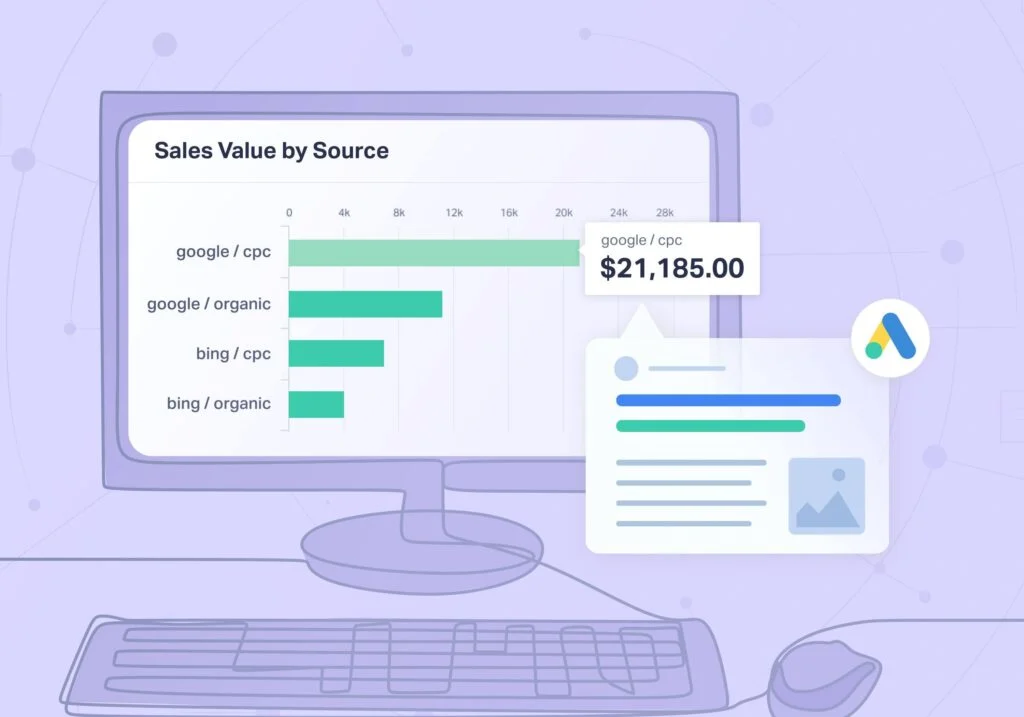
A mid-sized SaaS marketing team walked into a budget review with one dashboard: every channel’s spend, leads, and pipeline contribution pulled into a single automated report that refreshed itself overnight.
When leadership asked which campaigns were actually driving revenue, the team had an answer in seconds, not a promise to “pull some numbers together and follow up.”
Budget approved, headcount request approved, and the team spent the next quarter executing instead of defending its existence.
A comparable team at a competitor walked into the same kind of meeting with a laptop full of open tabs — Google Ads, Meta Ads Manager, the email platform, a CRM export — and a junior marketer who’d spent most of the prior day copying numbers into a spreadsheet that still didn’t quite reconcile.
When the inevitable “so what’s actually working?” question landed, the honest answer was a shrug dressed up in caveats.
Nobody in that room doubted the team was busy.
Everybody in that room doubted the team knew what its work was worth, and a budget conversation that should have been a formality turned into a referendum on whether marketing deserved the resources it already had.
That gap is why marketing reporting has become a standing discipline rather than something bolted together the night before a meeting.
Marketing data now lives across a growing pile of disconnected platforms — ad accounts, email tools, a CRM, analytics, social — and manually reconciling all of it doesn’t scale past a handful of channels.
The pressure on marketing to prove ROI has only intensified, and a team that reports on vanity metrics because that’s what’s easiest to pull loses credibility fast next to one presenting a clean, decision-ready dashboard.
The scale of the problem is well documented: marketing teams spend an average of 14.5 hours a week just managing and collecting customer data, according to a global survey cited by Coupler.io’s analysis of marketing reporting automation — the equivalent of a full extra workday lost to spreadsheet plumbing before any actual analysis happens.
What Makes a Great Marketing Reporting Tool?
Breadth of data source integrations sets the ceiling on what a report can even show — a tool that only connects to a handful of platforms forces a team right back into manual exports for everything else, defeating the purpose.
Automated dashboard building versus manual setup determines how much time a report costs to create and maintain — pre-built templates get a team to a usable dashboard in minutes, while a blank-canvas tool demands real setup time in exchange for more flexibility.
Cross-channel attribution separates a tool that just displays numbers side by side from one that actually answers which channel deserves credit for a conversion, which is the question leadership is usually really asking — a dashboard showing that paid social drove 40% of traffic says nothing about whether that traffic actually bought anything.
Customization and white-labeling for agencies matter enormously for anyone reporting to external clients, since a dashboard that still says the vendor’s name on it undermines the agency’s own brand in front of the people paying the invoice, and a client who spots someone else’s logo on their own performance report starts wondering what else is being outsourced without their knowledge.
Scheduled reporting and stakeholder sharing decide whether insights actually reach the people who need them or sit in a dashboard nobody opens — automated delivery by email, Slack, or a shareable link closes that gap.
And finally, pricing and scalability matter because this category ranges from genuinely free general-purpose tools to five-figure-a-month attribution platforms priced against ad spend, and the right fit depends entirely on how much data volume and complexity a team is actually managing.
The Best Marketing Reporting Tools
1. AgencyAnalytics

AgencyAnalytics, founded in 2010 in Toronto by CEO Joe Kindness and CTO Blake Acheson and described on its own site as 100% employee-owned, has grown to serve more than 7,000 agencies with dashboard and reporting software built specifically around client relationships.
Its mechanic connects to more than 85 data sources, builds dashboards from customizable templates and drag-and-drop widgets, and wraps everything in a fully white-labeled client portal — custom logo, colors, and domain — with automated recurring report delivery baked in.
Its differentiator is depth combined with automation: built-in AI insights and anomaly detection sit alongside the integration breadth, and every plan includes unlimited clients, reports, and staff users rather than gating features behind higher tiers — a meaningful contrast with competitors that charge more as an agency’s client roster grows.
Best for: Agencies reporting to multiple clients who want a fully white-labeled portal and deep integration coverage without paying extra for per-feature upsells as the client list grows.
| Plan | Key Limits | Price |
| Core Plan | Unlimited clients, dashboards, and data sources | $20/client/month (billed annually) |
| Enterprise | 25+ clients, database connectors, priority support | Custom — contact sales |
2. DashThis
DashThis, founded in 2011 by Stéphane Guérin and acquired by SaaS holding company saas.group, built its reputation on speed: launch a client-ready dashboard from a pre-filled template in minutes rather than configuring one from scratch.
Its mechanic connects more than 30 data sources and leans on templates pre-populated with the KPIs relevant to each platform, rather than a drag-and-drop builder, with full white-labeling — custom logo, color themes, and domain — plus scheduled email delivery and live shareable links.
Its differentiator is simplicity at unlimited scale on every plan: unlimited users and unlimited use of included integrations regardless of tier, trading some of AgencyAnalytics’ AI-driven depth for a lighter, faster setup process.
Best for: Smaller agencies or in-house teams that want a fast, template-driven white-label dashboard without a steep setup curve.
| Plan | Key Limits | Price |
| Individual | 3 dashboards, 15 sources | $44/month |
| Professional | 10 dashboards, 40 sources | $139/month |
| Business | 25 dashboards, 100 sources | $279/month |
| Standard | 50 dashboards, 200 sources | $429/month |
3. Google Data Studio
Google’s dashboard and BI tool launched as Data Studio, spent a stretch rebranded as Looker Studio after Google folded it in with its Looker acquisition, and has since reverted to the Data Studio name — worth knowing since a lot of existing tutorials and bookmarks still reference the old name.
Its mechanic connects to well over a thousand data sources, including deep native integration with Google’s own marketing stack — Analytics, Ads, Search Console, BigQuery — and builds reports on a drag-and-drop canvas that supports blending multiple sources into a single chart.
Its differentiator is being free at genuinely unlimited scale for the core product, with no cap on reports or dashboards, which no other tool in this category matches — the tradeoff is a more do-it-yourself build process and none of the marketing-specific templates or white-labeling that dedicated tools include out of the box.
Best for: Solo marketers and data-savvy in-house teams already living in Google’s ad and analytics ecosystem who want a powerful, free BI tool and don’t mind building dashboards from scratch rather than starting from a marketing-specific template.
| Plan | Key Limits | Price |
| Free | Unlimited reports and dashboards, all standard connectors | $0 |
| Pro | Org-owned content, team workspaces, up to 200 scheduled deliveries/report | $9/user/month |
4. Databox
Databox, headquartered in Boston, has built a general-purpose business intelligence platform that leans hard into an AI analyst layer — branded “Genie” — for natural-language querying and anomaly detection on top of a governed metrics system.
Its mechanic connects to more than 130 data sources spanning marketing, sales, finance, and support tools, plus direct database and warehouse connections, with pre-built templates for fast dashboard setup and scheduled delivery through Slack or email.
Its differentiator is a governed semantic layer that keeps a metric’s definition consistent across every dashboard it appears in — so “revenue” means the same thing in the sales view as it does in the marketing view — paired with genuine cross-functional reach beyond marketing, a meaningfully different bet than tools built purely for agency client reporting.
Best for: In-house marketing and RevOps teams that want AI-assisted, cross-functional reporting with consistent metric definitions shared across the whole business, not just marketing.
| Plan | Key Limits | Price |
| Free | 1 user, 3 data sources, 1 dashboard | $0 |
| Analyst | 1 user, 5 data sources | $71/month (billed annually) |
| Team – Core | 3 users, 10 data sources | $199/month (billed annually) |
| Agency | Unlimited users, base 20 data sources | From $79/month (billed annually) |
5. HubSpot

HubSpot, founded by Brian Halligan and Dharmesh Shah and publicly traded on the NYSE, builds its reporting directly into the same CRM records that marketing, sales, and service teams already work from, rather than as a bolt-on layer.
Its mechanic offers a drag-and-drop custom report builder spanning contacts, deals, and tickets, pre-built dashboard templates, and attribution reporting across five models — first touch, last touch, linear, time decay, and a data-driven “empirical” model — tied directly to the actual contact and deal timeline.
Its differentiator is that reporting requires no separate connector or sync layer at all: because the data already lives in HubSpot, attribution reflects the real customer journey — every email open, form fill, and sales call tied to one contact record — rather than an imported export that has to be reconciled after the fact and inevitably loses some of that context along the way.
Best for: In-house teams already running marketing, sales, and service inside HubSpot who want attribution tied directly to CRM data without exporting anywhere else.
| Plan | Key Limits | Price |
| Free | Standard dashboard, 10 dashboards | $0 |
| Starter | 30 dashboards | $7/seat/month |
| Professional | 75 dashboards, custom reports, SEO analytics | $800/month (3 seats included) |
| Enterprise | 100 dashboards, multi-touch revenue attribution | $3,600/month (5 seats included) |
6. Semrush

Semrush, founded by Oleg Shchegolev and Dmitri Melnikov and publicly traded on the NYSE (delisted following the completion of its Adobe acquisition on April 28, 2026.) folds a dedicated reporting tool called My Reports into its broader SEO and competitive-research platform.
Its mechanic pulls from Semrush’s own SEO, PPC, and competitive data alongside more than 20 external marketing platforms — GA4, Google Ads, social, email — into unified reports built from templates or from scratch, with scheduled email delivery and AI-generated plain-language summaries.
Its differentiator is zero extra setup for agencies already living in Semrush for SEO work, since that data feeds reports natively rather than through an API connector, and white-labeled branding is available as an add-on for client-facing deliverables — useful for an agency that wants one vendor covering both the research and the reporting on top of it.
Best for: SEO and digital marketing agencies already using Semrush for keyword and competitive research who want client reports pulling that same data in without a separate integration step.
| Plan | Key Limits | Price |
| Free | Basic My Reports, 3 recipients, no white-label | $0 |
| SEO | 5 websites, 500 keywords tracked | $139/month |
| Pro+ | 15 websites, 1,500 keywords | $299/month |
| Report add-ons | Base ($10/mo) or Pro white-label ($20/mo) per report | Add-on to any paid plan |
7. Triple Whale
Triple Whale, founded in 2021 by AJ Orbach, Maxx Blank, and Ivan Chernykh and headquartered in Columbus, Ohio, has grown from a Shopify attribution tool into what it markets as a full AI operating system for e-commerce brands.
Its mechanic runs on a first-party, server-side tracking pixel with an identity graph stitching ad views, site visits, and purchases into unified customer journeys across Shopify, Meta, Google, and TikTok, offering multiple attribution models plus, at its top tier, combined media mix modeling and incrementality testing.
Its differentiator is scope beyond attribution alone: no-code dashboards, a SQL editor for advanced users, and an AI layer for natural-language queries and automation sit alongside the core attribution engine, aimed at non-technical marketing stakeholders as much as data teams.
Best for: E-commerce brands on Shopify, roughly seven figures in revenue and up, that want attribution and broader operational reporting handled inside one platform rather than stitched together from several.
| Plan | Key Limits | Price |
| Free | 10 users, first/last-click attribution only | $0 |
| Foundation | Full attribution model library, unlimited users | Custom — priced by revenue |
| Enterprise | Adds media mix modeling, incrementality testing | Custom — contact sales |
8. Northbeam

Northbeam, founded by CEO Austin Harrison and CTO Dan Huang and headquartered in San Francisco, raised a $15 million Series A to build a marketing intelligence platform centered on attribution accuracy for brands spending heavily on paid acquisition.
Its mechanic combines multi-touch attribution across the full customer journey with media mix modeling for forecasting and channels that are hard to track directly, and a feature called Apex feeds performance signal back into ad-platform algorithms beyond what standard conversion APIs provide.
Its differentiator is an explicit focus on attribution fidelity for high-spend advertisers — crediting view-through and impression exposure alongside clicks, and identifying wasted spend from over-targeting customers who would have converted anyway regardless of which ad they happened to see last — a narrower, deeper bet than Triple Whale’s broader operating-system approach.
Best for: E-commerce brands spending well into six or seven figures monthly on paid ads that need attribution accurate enough to actually reallocate real budget against, not just report on after the fact.
| Plan | Key Limits | Price |
| Starter | Under $1.5M annual ad spend, Shopify only | $1,500/month |
| Professional | Up to $500K/month spend, any e-commerce platform | $3,500/month |
| Enterprise | Over $500K/month spend, dedicated strategist | Custom — contact sales |
Building Your Marketing Reporting Stack
Match the tool to the job actually in front of you.
A solo marketer needing a simple dashboard without a subscription is well served by Google Data Studio’s free tier, which handles genuinely unlimited reports for the price of some setup time.
An in-house team reporting to leadership gets the most value from HubSpot if the CRM already lives there, or Databox if reporting needs to span beyond marketing into sales and finance.
An agency reporting across multiple clients should weight white-labeling and per-client scalability above everything else, which is exactly what AgencyAnalytics and DashThis are built around.
And an e-commerce brand tracking attribution on real ad spend needs Triple Whale or Northbeam, where general-purpose BI tools simply don’t offer the identity resolution or media-mix modeling that decision requires.
None of that matters until one report actually gets built. Before trying to consolidate every channel into a single master dashboard, pick the one metric that matters most to the business right now — revenue by channel, cost per lead, whatever leadership actually asks about — and build one clean, automated report for that alone.
Getting that first report right, and trusted, does more for a marketing team’s credibility than a sprawling dashboard nobody fully believes. A perfect report covering everything, shipped three months from now, helps nobody in the meeting that’s already on next week’s calendar — a good-enough report covering the one number that matters, live today, changes how that conversation goes.
Also Read:
- Best A/B Testing Tools for Marketing & Product Teams
- Best Google Ads Optimization Tools to Cut Wasted Spend
- Best Social Listening Tools to Track Real Conversations
- Best Influencer Discovery Tools to Find Real Creators
- Best Lead Generation Tools to Fill Your Pipeline
- Best Brand Monitoring Tools to Catch a Crisis Early
To read more content like this, subscribe to our newsletter