Last Updated on August 19, 2026 by Team TBH
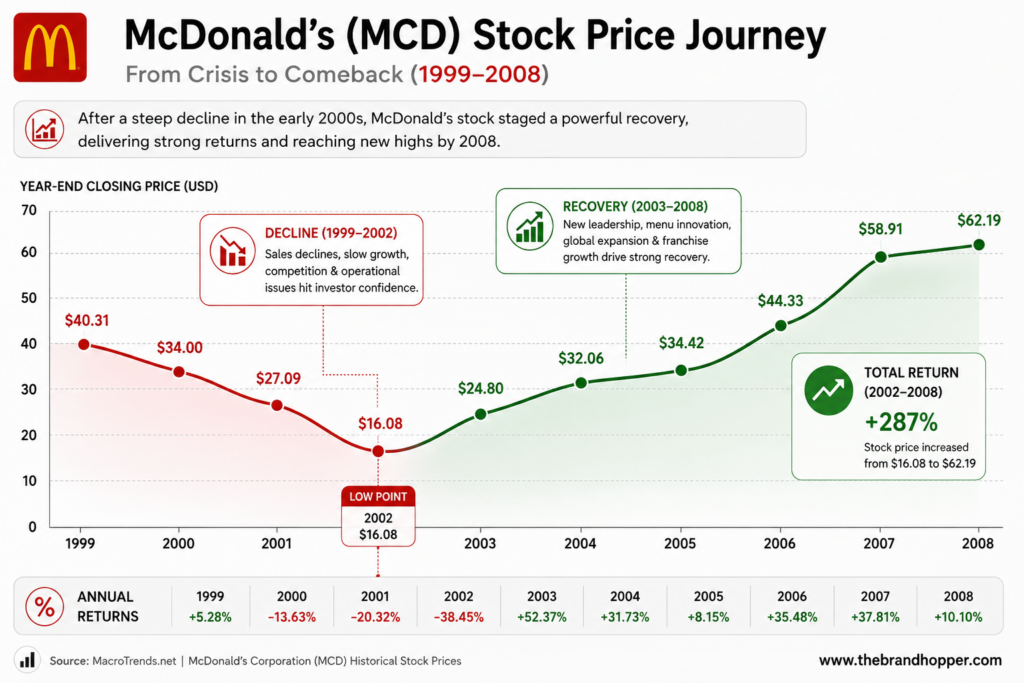
By late 2002, McDonald’s had posted its first-ever quarterly loss, its stock had fallen from the $40s to under $15, and franchisees were losing confidence in the company’s direction.
Less than three years later, the same company was posting double-digit stock gains and had produced what many marketers now call the most successful advertising campaign of all time: “I’m Lovin’ It.”
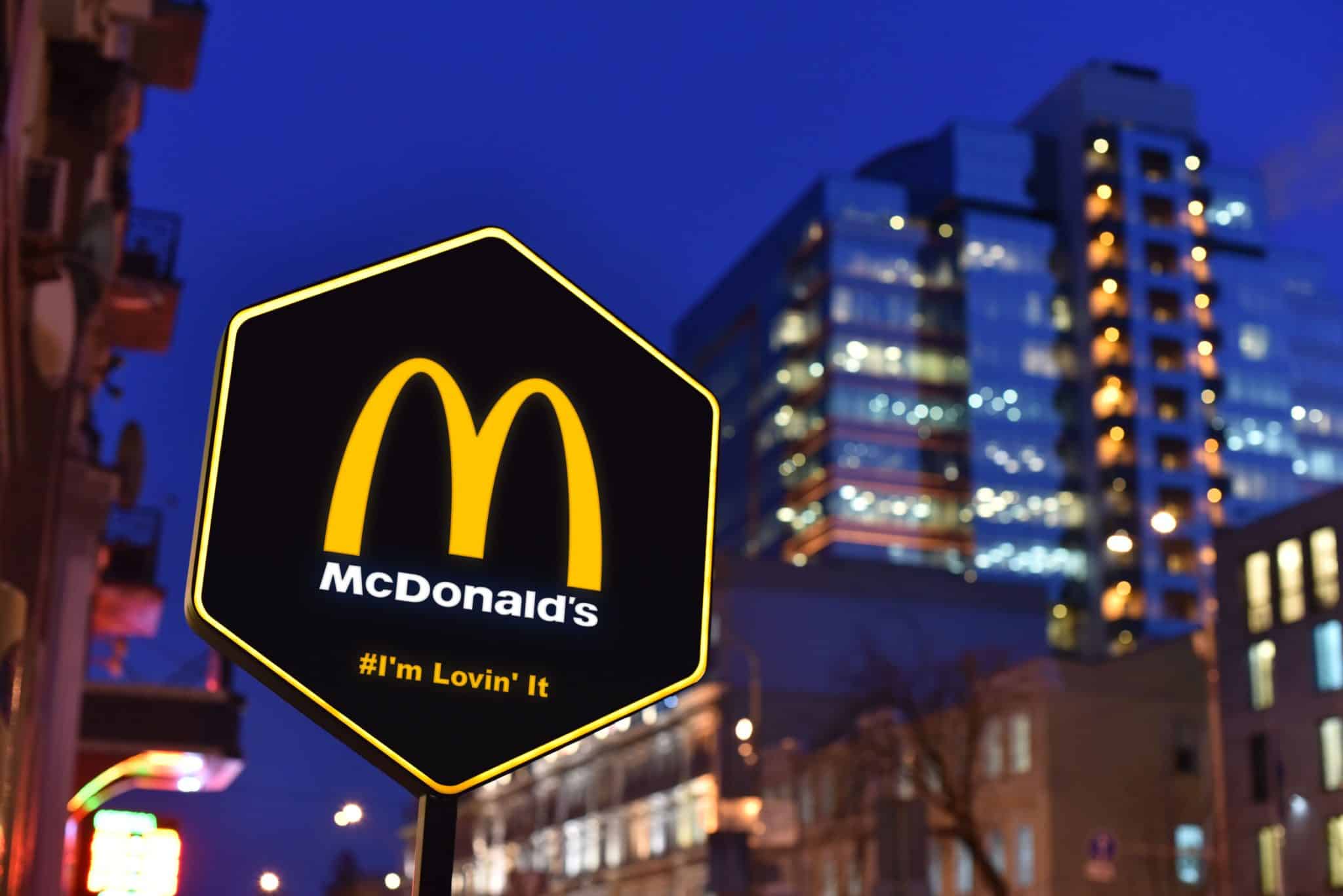
Launched in Germany on September 2, 2003 and still McDonald’s global slogan in 2026 — 22 years and counting, roughly five times longer than any tagline the company had used before — the campaign has outlived the executives who created it, survived two decades of shifting pop culture, and is still being actively reworked by McDonald’s regional teams today.
This case study covers the full arc: the crisis that forced McDonald’s hand, the unlikely German agency that beat out the industry’s biggest names, the $6 million Justin Timberlake deal, and where the campaign stands as of 2026.
| Quick Answer: What Is “I’m Lovin’ It”?
• Launched in Germany on September 2, 2003 by agency Heye & Partner, rolling out to 100+ countries within weeks. • Turned around a company that had just posted its first-ever quarterly loss — stock rose from ~$13 to ~$45 within a few years. • Backed by a $6M Justin Timberlake single, produced by Pharrell Williams, that charted before the ad campaign even launched. • Still McDonald’s official global slogan in 2026, with active regional refreshes like the February 2026 Hong Kong relaunch. |
The 2002 Crisis Behind the Campaign
The numbers behind McDonald’s 2002 crisis were stark. The company reported its first quarterly loss in its history as a public company, same-store sales were sliding across major markets, and the brand was absorbing sustained criticism over slow service, a stagnant menu, and price wars with competitors that eroded margins without building loyalty.
Global chief marketing officer Larry Light, who led the turnaround and passed away in 2024, later described the situation bluntly: the brand was in decline, employee morale was dismal, McDonald’s was under sustained media attack, and franchisees had lost confidence in leadership.
The company needed more than a new slogan — it needed proof that its “Plan to Win” business turnaround was backed by a marketing voice that actually sounded like it understood its customers.
The Global Pitch Competition and the German Underdog
Rather than hand the assignment to one of its long-standing global agencies, McDonald’s ran a worldwide pitch competition in early 2003, inviting 14 advertising agencies to submit concepts for a music-driven, globally translatable campaign.
The winner was a surprise:
Heye & Partner, a comparatively small agency based in Unterhaching, a suburb of Munich, working under the DDB Worldwide network.
Their pitch was built around a simple German phrase, “Ich liebe es” — “I love it” — chosen specifically because it translated cleanly into dozens of languages without losing its meaning: “I’m lovin’ it” in English, “Me encanta” in Spanish, “我就喜欢” in Chinese.
Larry Light later explained the strategic reasoning behind the shift in a Branding Strategy Insider interview: previous McDonald’s slogans like “McDonald’s is your kind of place” told customers how to feel, and younger consumers didn’t want to be told.
“I’m lovin’ it,” by contrast, was something the customer said about themselves.
Building the Jingle and the $6 Million Justin Timberlake Deal
The now-instantly-recognizable five-note “ba da ba ba ba” jingle came out of a late-night studio session with German music production house Mona Davis, according to co-founder Franco Tortora — an improvised vocal riff from a session singer that wasn’t originally intended as the final hook, but tested so well it became McDonald’s permanent audio logo.
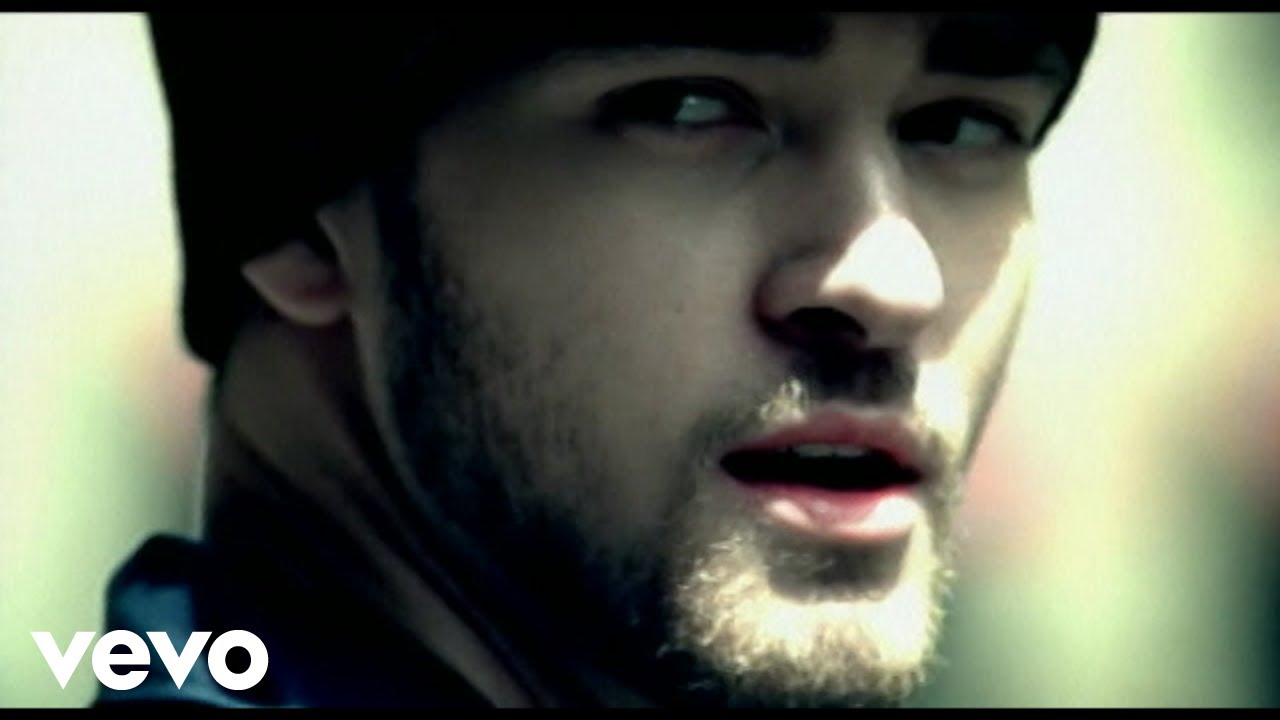
To seed the jingle into pop culture before the ad campaign even launched, McDonald’s paid pop star Justin Timberlake a reported $6 million to record a full-length single titled “I’m Lovin’ It,” produced by Pharrell Williams and Chad Hugo of the Neptunes with rap verses from Clipse.
The song — which never mentions McDonald’s by name — charted internationally, hitting number one in Belgium, and ran on MTV as a legitimate pop single months before the ad campaign broke.
Marketing executive Steve Stoute later called the approach “reverse engineering” brand credibility: by the time McDonald’s commercials aired, the slogan was already lodged in young consumers’ heads via radio and music television, not advertising.
Timberlake’s own retrospective view of the deal, given years later to GQ, was candid: “I regret the McDonald’s deal … market share went up by 25 percent when I walked into those offices and changed their image.”
Global Rollout: How McDonald’s Launched One Message in 100+ Countries
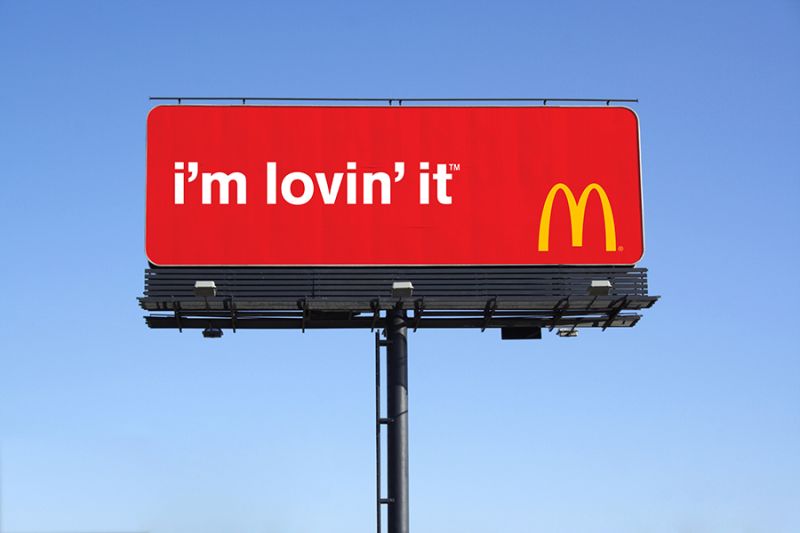
The campaign launched in Germany on September 2, 2003 — a date McDonald’s corporate history page still cites as the slogan’s official birthday — and rolled out to the United States on September 29, 2003, then to more than 100 countries within weeks, marking the first time in McDonald’s history that a single slogan and creative concept launched simultaneously worldwide.
Five core television commercials anchored the U.S. and global rollout, produced in at least 11 languages, all sharing the same fast-cut, music-video-style visual language and audio hook regardless of market.
Two of the U.S. spots, “Family” and “Ronald McDonald,” leaned into the brand’s traditional family associations, while the other three — “Brand 1,” “Brand 2,” and “Fries” — had actually debuted first in Germany and carried a more youth-culture, urban visual tone, featuring diverse young people dancing and socializing in quick, rhythmic edits timed to the jingle.
McDonald’s backed the advertising with in-restaurant merchandising (window posters, drive-thru signage, cup and bag redesigns), grassroots “SWAT team” street activations at concerts and sporting events, and a partnership with skateboarding icon Tony Hawk aimed squarely at reclaiming teen relevance.
McDonald’s USA president Mike Roberts said at the time that all 13,500 U.S. restaurants were “uniting behind this new brand message and energy” — treating the slogan not just as an ad campaign but as an operating philosophy for staff training and store experience.
The Results: Stock Price, Sales, and Two Decades of Longevity
The turnaround that followed was one of the most cited in modern marketing case studies.
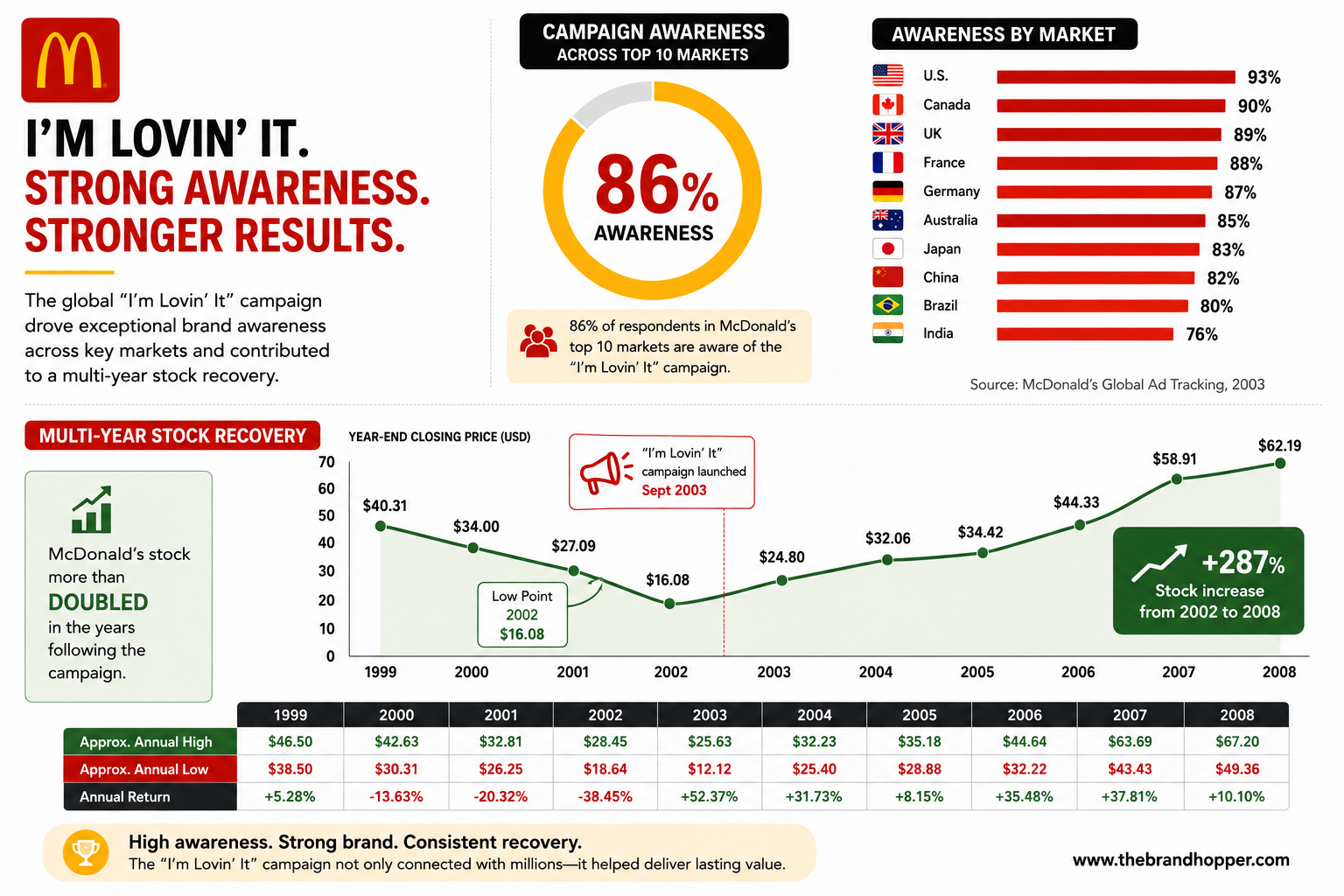
Awareness of the campaign reached 86% across McDonald’s top 10 markets within a few years of launch. By 2005–2006, McDonald’s stock had climbed back from roughly $13 to around $45 — close to a 3x recovery — while global comparable sales returned to sustained growth as part of the broader “Plan to Win” strategy.
AdAge had already named it McDonald’s longest-running campaign within seven years of launch; by its 22nd anniversary in September 2025, it had outlasted every prior McDonald’s tagline by a factor of roughly five, the previous record holder having run just four years.
Keeping It Fresh: How the Campaign Evolved Through the 2010s
Rather than let the campaign calcify, McDonald’s kept reworking its execution while leaving the core slogan and five-note melody untouched — what Radiocentre, the UK audio-advertising trade body, called avoiding the common marketer’s mistake of discarding a working brand asset out of boredom.
The jingle has been re-recorded in beatbox, orchestral, and regional-artist versions over the years; Destiny’s Child performed a version in the mid-2000s, and Scottish actor Brian Cox delivered a deadpan comedic take in a 2020 UK ad.
In 2015, McDonald’s ran a Super Bowl-adjacent “Lovin’ > Hatin'” campaign explicitly built around the tagline to counter brand criticism with positivity.
In 2020, as the pandemic shut down live events, McDonald’s UK staged “I’m Lovin’ It Live,” a virtual concert delivered through its app — another example of the tagline flexing to fit an entirely new marketing format two decades after it was written.
2025-2026: The 22nd Anniversary and the Hong Kong Relaunch
The campaign’s 22nd anniversary in September 2025 coincided with a new wave of regional reinvention rather than retirement.
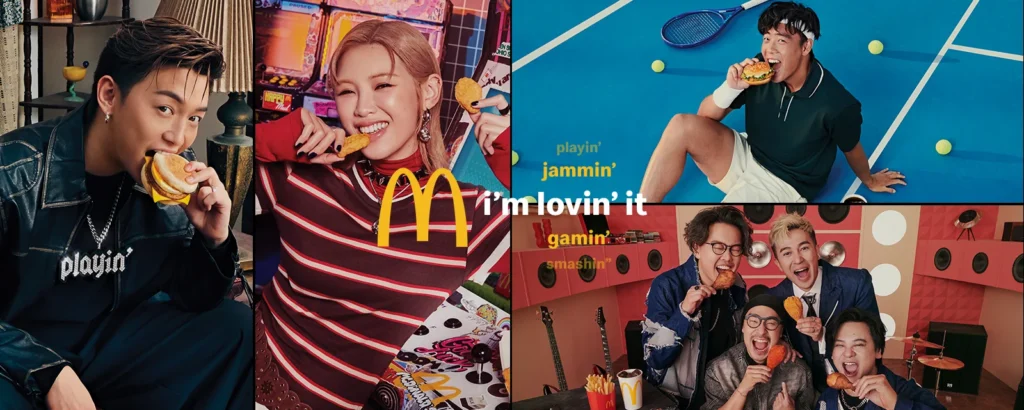
In February 2026, McDonald’s Hong Kong — working with BBDO Hong Kong as its newly appointed creative agency after a 20-year relationship with DDB Hong Kong — launched a market-specific evolution of “i’m lovin’ it” built around the insight that McDonald’s is “the one place you never have to pretend.”
The campaign, running throughout 2026, features Warner Music artists MC Cheung, Panther Chan, and Dear Jane alongside Hong Kong professional tennis player Coleman Wong, each shown in an unpolished, authentically themselves moment — jammin’, trainin’, creatin’, gamin’ — reframing the original 2003 insight (simple, universal enjoyment) for a social-media-native, self-expression-focused audience more than two decades later.
The agency handover itself is notable: DDB’s two-decade run on the Hong Kong account ending in favor of BBDO shows that even McDonald’s most durable brand asset gets executed by different creative teams over time, without the underlying tagline or jingle ever being put up for review.
McDonald’s Today: Financials and Brand Value
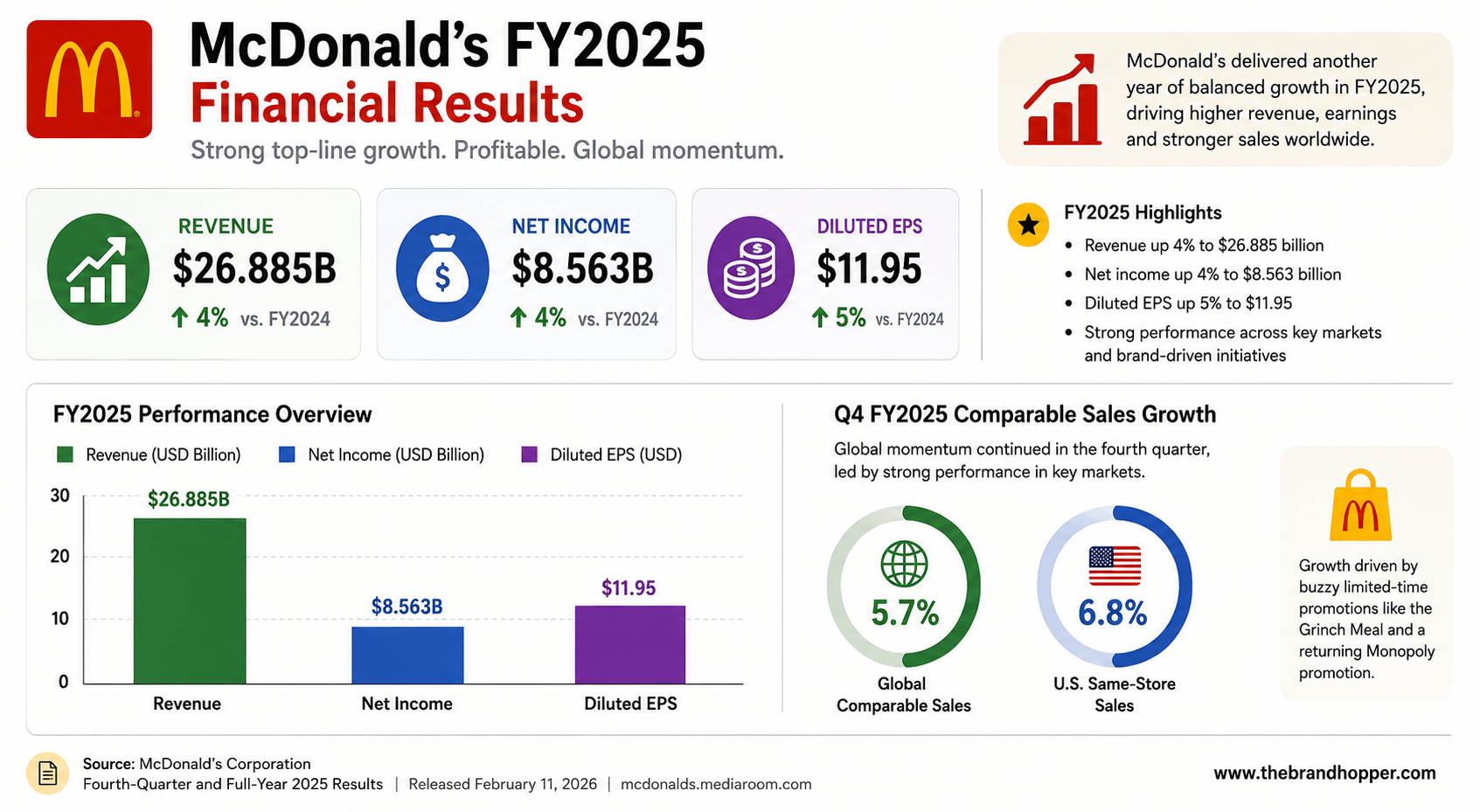
McDonald’s Corporation reported full-year 2025 revenue of $26.885 billion, up 4% year-over-year, with net income rising 4% to $8.563 billion and diluted earnings per share up 5% to $11.95, according to the company’s fourth-quarter and full-year 2025 results released February 11, 2026.
Global comparable sales grew 5.7% in the fourth quarter alone, with U.S. same-store sales up 6.8%, driven partly by buzzy limited-time promotions like the Grinch Meal and a returning Monopoly promotion.
Systemwide sales approached $140 billion for the year, and McDonald’s has announced plans to open 2,600 new restaurants in 2026 as part of a push toward 50,000 locations globally by the end of 2027.
Interbrand’s Best Global Brands 2025 report valued the McDonald’s brand at $53 billion, ranking it 9th globally and the single most valuable quick-service restaurant brand in the world — a valuation built substantially on the consistency “I’m Lovin’ It” has given the brand for over two decades.
Why “I’m Lovin’ It” Worked When Other Slogans Didn’t
Marketing historians point to a few specific reasons “I’m Lovin’ It” succeeded where prior McDonald’s slogans didn’t.
First, it was a statement customers made about themselves rather than an instruction from the brand — a subtle but meaningful shift in voice that Larry Light identified as central to reaching younger, more skeptical consumers. In his own words: “Telling isn’t selling. Our customers did not want to hear and did not want to be told what to do or how to feel … Don’t tell me I ‘deserve a break today.’ I know I do.”
Second, the sonic branding investment (the five-note jingle) created a recognition trigger that worked independent of language or visuals, which is part of why the campaign scaled to over 100 countries without losing coherence.
Third, McDonald’s treated the slogan as infrastructure rather than a single ad: it became the organizing label for menu launches (the Dollar Menu, McCafé), promotions, and even crew training, which meant every subsequent marketing investment reinforced the same five-word idea instead of competing with it.
Light summarized the company’s broader turnaround as resting on three pillars — financial discipline, operational excellence, and what he called “leadership marketing” — and argued that no amount of financial or operational fixing would have mattered if the brand voice itself hadn’t changed at the same time.
Lessons for Marketers
1. A slogan that lets customers speak for themselves outperforms one that tells them how to feel — the shift from “McDonald’s is your kind of place” to “I’m lovin’ it” is a textbook example of moving from prescriptive to declarative brand voice.
2. Sonic branding is a durable, underused asset. The five-note “ba da ba ba ba” hook has outlived multiple rounds of visual rebranding precisely because audio recognition doesn’t depend on a screen — a lesson increasingly relevant as voice assistants and audio-first platforms grow.
3. Seed cultural credibility before the ad campaign, not during it. The Justin Timberlake single charted as a real pop song before McDonald’s commercials used the melody, which is why the brand message didn’t feel like advertising when it arrived.
4. Consistency compounds, but only if you keep localizing the execution. McDonald’s Hong Kong’s 2026 refresh — same tagline, entirely new cultural framing around authenticity and self-expression — shows how a 22-year-old idea stays current: by changing what surrounds it, not the idea itself.
5. Don’t retire a working asset out of boredom. Internal marketing teams often tire of a campaign long before its audience does; McDonald’s stuck with “I’m Lovin’ It” through multiple CMOs, agency changes, and cultural shifts specifically because the underlying research kept showing it still worked.
Frequently Asked Questions
Q: When did McDonald’s “I’m Lovin’ It” campaign launch?
A: The campaign launched in Germany on September 2, 2003, and expanded to the United States on September 29, 2003, before rolling out to more than 100 countries within weeks — McDonald’s first-ever simultaneous global campaign launch.
Q: Who created the “I’m Lovin’ It” slogan?
A: Heye & Partner, a comparatively small German advertising agency based near Munich and affiliated with DDB Worldwide, won a global pitch competition against 14 agencies with the concept “Ich liebe es” (“I love it”), which was translated into “I’m Lovin’ It” for English-speaking markets.
Q: Is “I’m Lovin’ It” still McDonald’s slogan in 2026?
A: Yes. As of 2026, “I’m Lovin’ It” is 22+ years old and remains McDonald’s official global tagline, making it the longest-running slogan in the company’s history by a wide margin — the previous longest-running McDonald’s slogan lasted about four years.
Q: How much did McDonald’s pay Justin Timberlake for the campaign?
A: McDonald’s reportedly paid Justin Timberlake $6 million to record and perform the song “I’m Lovin’ It,” produced by Pharrell Williams and Chad Hugo, which charted internationally before the ad campaign itself launched.
Q: Did the “I’m Lovin’ It” campaign actually improve McDonald’s business results?
A: Yes. Following the 2003 launch, campaign awareness reached 86% in McDonald’s top 10 markets, and McDonald’s stock price rose from roughly $13 to about $45 within a few years, alongside a sustained return to comparable-sales growth under the company’s broader “Plan to Win” turnaround strategy.
Q: What is McDonald’s doing with the campaign in 2026?
A: McDonald’s Hong Kong, working with new creative agency BBDO Hong Kong, launched a 2026 evolution of the campaign built around authenticity and self-expression, featuring Warner Music artists and a professional tennis player — an example of the tagline being locally refreshed rather than replaced.
Q: How much is the McDonald’s brand worth today?
A: Interbrand’s Best Global Brands 2025 report valued McDonald’s at $53 billion, ranking it 9th among all global brands and the most valuable quick-service restaurant brand in the world.
Conclusion
Twenty-two years after a small Munich-suburb agency beat out 13 larger competitors with a three-word idea, “I’m Lovin’ It” remains McDonald’s official global slogan — still generating new regional executions, still backed by a company posting record annual revenue, and still recognized via a five-note jingle that requires no translation.
Few marketing campaigns are asked to survive a rebrand, a pandemic, two decades of platform shifts from TV to TikTok, and multiple changes in company leadership; fewer still come out the other side not just intact but actively expanding, as the 2026 Hong Kong relaunch demonstrates.
For marketers, the campaign’s real lesson isn’t the jingle or the Timberlake deal — it’s the discipline to keep investing in an idea that’s still working, long after it would have been easier to declare it done and start over.
Related Case Studies
- A Case Study on Taco Bell’s “Think Outside the Bun” Campaign
- Case Study Analysis: Nike’s “I Am Not A Role Model” Campaign
- Case Study Analysis: Levi’s – “Go Forth” Brand Campaign
- Case Study Analysis: Coca-Cola’s “The Polar Bears” Campaign
- Branding Case Study: Success of Share A Coke Campaign
To read more content like this, subscribe to our newsletter