Last Updated on September 4, 2026 by Team TBH
A software company once shipped what everyone on the product team agreed was an obvious improvement: a cleaner checkout flow that stripped out “clutter” and got users to the payment field faster.
Conversions dropped almost immediately — buried in the old design was a trust badge and a shipping-cost estimator that, it turned out, were doing more work than anyone realized.
A team at a different company ran the opposite experiment — a small, almost boring tweak to a single headline on their highest-traffic landing page — and watched signups climb by double digits over a validated test period.
The difference wasn’t taste or seniority. It was whether the change went live on a hunch or got tested first.
That gap between what a team assumes will work and what users actually do is why experimentation culture has taken hold at product-led companies in recent years.
As organizations decentralize decision-making and ship faster, the temptation to skip validation grows alongside the risk of shipping something that quietly erodes revenue.
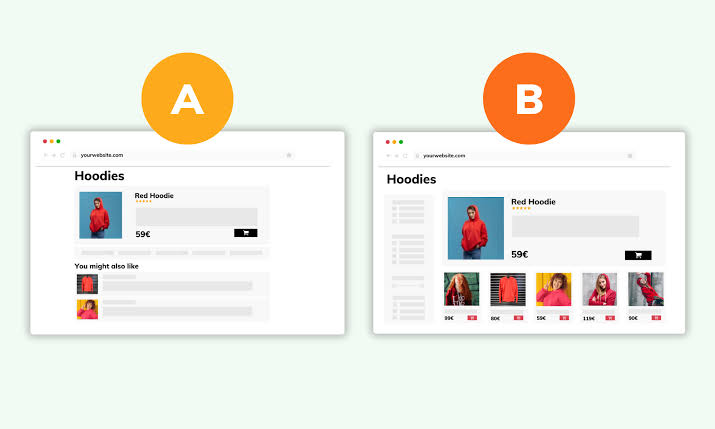
A/B testing tools close that gap: they split traffic between old and new versions and let real user behavior, not opinion in a meeting, decide the winner — without requiring a data science team or an engineering sprint just to run the test.
The stakes of skipping this are higher than most teams assume.
Optimizely’s own analysis of roughly 173,000 experiments run by more than 1,200 companies between 2018 and 2026 found that only about 10% produced a statistically significant win on the primary metric, with teams nearly as likely to see a negative result as a positive one.
That’s the case for testing, not against it: without a rigorous validation process, most of what ships does nothing or quietly makes things worse, and nobody would know without a controlled comparison.
What Makes a Great A/B Testing Tool?
Statistical rigor and proper sample-size handling separate tools built for serious experimentation from those that just report a percentage difference and call it a winner. A strong platform accounts for sample-ratio mismatch, guards against peeking at results too early, supports sequential or Bayesian methods where appropriate, and clearly communicates confidence levels rather than implying certainty where none exists.
Ease of setup without heavy engineering involvement determines how much a marketing or growth team can do on its own. Visual editors that let non-technical users launch a page-level test are table stakes for marketer-facing tools, while product teams look for SDK-based implementations that skip a full release cycle for every new test.
Targeting and audience segmentation control who sees a given variant, which matters for both statistical cleanliness and business relevance. A platform should support segmenting by traffic source, device, geography, or custom attributes pulled from a CRM or warehouse, letting a team test against a meaningful slice of an audience rather than diluting results across everyone.
Multivariate and personalization capabilities extend a tool beyond simple two-variant tests. Multivariate testing isolates which combination of several changed elements is driving a result, while personalization lets winning variants be served permanently to specific segments rather than forcing an all-or-nothing rollout.
Integration with the broader analytics and CRO stack determines whether results translate into decisions or sit in a silo. The strongest platforms connect cleanly with product analytics, data warehouses, and feature-flagging systems, so an outcome can be cross-referenced against downstream metrics like retention or revenue.
Pricing that scales sensibly with traffic and team size decides whether a tool is viable at all. Some platforms charge by monthly tested users, others by seats, and others fold experimentation into a feature-flagging platform a team already needs.
Best A/B Testing Tools
1. Optimizely
Optimizely has been synonymous with A/B testing since the earliest days of the category, and its platform still sets the standard most enterprise buyers measure everything else against. The current product spans web and full-stack experimentation, content management, and AI-assisted experience building under what Optimizely calls its Agentic Platform — remaining one of the most complete options for organizations running dozens of concurrent tests with a dedicated analyst team.
The statistical engine is a genuine strength: frequentist and Bayesian options, sequential testing to guard against peeking, and detailed audience targeting pulled from first-party data and CRM systems. A visual editor lets marketers build front-end experiments without a developer, while full-stack SDKs give engineering the same rigor for feature-level tests.
Where Optimizely asks for a real commitment is price and complexity. This isn’t a self-serve tool a small team spins up in an afternoon — implementation typically involves a sales process and a ramp-up before a team runs tests independently, a tradeoff large organizations with dedicated CRO teams are well positioned to absorb. It publishes no self-serve pricing; every plan is individually packaged based on traffic, team size, and modules needed.
Best for: Enterprises running large-scale, multi-team experimentation programs that need deep statistical rigor and dedicated implementation support.
| Plan | Price | Key Details |
| Agentic Experimentation | Custom quote | Full-stack + web experimentation, custom-packaged around traffic and team needs |
| Agentic CMS | Custom quote | Content management bundled with experimentation capabilities |
| Agent Platform | Custom quote | AI-assisted experience building and agent orchestration, custom-scoped |
2. VWO

VWO has built a reputation as the platform that gives mid-market and growth-stage companies enterprise-grade testing capabilities without Optimizely’s level of implementation overhead. Its suite covers web and server-side testing, heatmaps and session recordings for qualitative context, and a Program Management layer that helps teams prioritize which experiments to run next.
Worth knowing before evaluating VWO: it now operates as a sibling product to AB Tasty under the same parent company, Wingify, following a corporate consolidation. Both continue to be sold as separate products with their own pricing, but buyers comparing the two should know they share common ownership.
VWO’s strength is breadth: a visual editor genuinely usable by non-technical marketers, a testing calculator for planning sample sizes, and behavioral analytics tools (heatmaps, funnels, session replays) that mean a team doesn’t need a separate qualitative research tool. The tradeoff is that VWO’s pricing page uses an interactive calculator rather than published static tiers, making upfront comparison shopping harder than it should be — third-party trackers put the Growth plan at roughly $314 to $798 per month depending on monthly tracked users, with Pro in the $972 to $1,336 range; the free Starter plan has been discontinued.
Best for: Mid-market and growth-stage teams that want enterprise-style testing and behavioral analytics without a full enterprise sales cycle.
| Plan | Price (approximate) | Key Details |
| Growth | ~$314–$798/mo (scales by monthly tracked users) | Core A/B and multivariate testing, visual editor, heatmaps |
| Pro | ~$972–$1,336/mo (scales by monthly tracked users) | Adds advanced targeting, personalization, deeper reporting |
| Enterprise | Custom quote | Custom SLAs, dedicated support, advanced governance |
3. AB Tasty
AB Tasty positions itself squarely at the enterprise end of the market, offering web and product experimentation alongside feature flagging and AI-assisted personalization under one platform. As VWO’s sibling product under Wingify, it shares some underlying technology lineage but is marketed and sold as a distinct offering, with its own account teams and roadmap.
The experimentation core supports both client-side and server-side testing, along with a personalization engine that serves tailored experiences to segments beyond a simple test-and-declare-winner workflow. AB Tasty has also leaned into AI-assisted test ideation, shortening the time between spotting an opportunity and having a live experiment running.
Its sales motion is entirely consultative — no free trial in the traditional sense, only a short “proof of concept” evaluation arranged through sales, and no public pricing of any kind. That’s a poor fit for a team that wants to self-serve on day one, but reasonable for an enterprise that expects a dedicated account relationship regardless of vendor.
Best for: Enterprises that want a consultative implementation partner for experimentation and personalization rather than a self-serve tool.
| Plan | Price | Key Details |
| Standard / Enterprise plans | Custom quote | All pricing individually negotiated; no public tiers |
4. LaunchDarkly

LaunchDarkly built its reputation on feature flags, and its experimentation capabilities grew directly out of that foundation — a natural fit for product and engineering teams testing features, not just marketing pages. Because every experiment is built on a flag, teams can roll a test out gradually, kill it instantly if something breaks, and reuse the same infrastructure for progressive delivery.
The product supports both simple A/B tests and multi-armed bandit optimization, automatically shifting traffic toward a winning variant as data accumulates — useful for teams running many concurrent, smaller-scope experiments rather than a handful of large campaigns.
What makes LaunchDarkly especially notable here is that its free Developer tier isn’t a stripped-down trial — it includes full access to A/B Tests and Experiments, unlimited seats, and a genuinely usable 100,000 monthly experimentation MAU allotment, free forever. That makes it one of the few tools here where a small team could run a legitimate experimentation program without paying anything.
Best for: Product and engineering teams that want experimentation built natively into a feature-flagging workflow, including teams that want to start for free.
| Plan | Price | Key Details |
| Developer | Free forever | Unlimited seats, 100K experimentation MAU/mo included, full A/B Tests & Experiments access |
| Foundation | $10/service connection/mo + $8.33/1,000 client-side MAU/mo | Pay-as-you-go, 14-day trial, no platform or per-seat fees |
| Enterprise | Custom quote | Advanced governance, SSO, dedicated support, higher-volume contracts |
5. Statsig
Statsig has become a favorite among product-led and engineering-heavy organizations for combining feature flags, experimentation, and product analytics in one platform with pricing built around actual usage rather than seats. The company points to teams at OpenAI and Notion running experimentation on it, and its docs and SDKs are built with an engineering audience in mind.
The core engine supports standard A/B/n testing, sequential testing, and CUPED-style variance reduction to reach statistical confidence faster with less traffic — a meaningful advantage for teams without Optimizely-scale traffic to spend on every test. Statsig’s own marketing states that roughly 90% of customers stay on the free Developer tier.
Because pricing is metered by monthly events rather than by seat, cost scales directly with actual product usage instead of headcount — either an advantage or a source of unpredictability depending on how spiky a team’s traffic is.
Best for: Engineering-led product teams that want usage-based pricing and full experimentation access without an upfront seat cost.
| Plan | Price | Key Details |
| Developer (Free) | Free | 2M events/mo, unlimited flag checks, full A/B testing, 50K session replays/mo |
| Pro | $150/mo | 5M events included, then $0.05 per 1,000 additional events, 100K session replays/mo |
| Enterprise | Custom quote | Event- or experiment-based contracts, advanced governance and support |
6. GrowthBook

GrowthBook occupies a distinct niche as an open-source experimentation and feature-flagging platform that can be self-hosted or run on GrowthBook’s managed cloud, giving engineering teams a level of control closed-source competitors can’t match. Its warehouse-native architecture means experiment data can live directly in a team’s own warehouse rather than being siloed inside a vendor.
The platform supports Bayesian and frequentist statistics, multi-armed bandits, and an AI-assisted visual editor for building front-end experiments without engineering support. Because the core product is open source, technically capable teams can inspect exactly how the statistics engine works rather than trusting a black box.
GrowthBook’s free Starter tier is genuinely functional rather than a crippled trial: unlimited feature flags, experiments, and traffic, with the main constraints being a three-user cap and a single project — a realistic starting point for small teams, with a moderately priced upgrade path once they outgrow those limits.
Best for: Engineering teams that want open-source flexibility, self-hosting options, and warehouse-native data ownership for their experimentation program.
| Plan | Price | Key Details |
| Starter | Free | Up to 3 users, 1 project, unlimited feature flags, experiments, and traffic |
| Pro | $40/seat/mo | Up to 50 users, 3 projects, visual editor, multi-arm bandits, safe rollouts |
| Enterprise | Custom quote | Custom environments, SSO/SCIM, audit logs, 99.99% uptime SLA |
7. Convert

Convert Experiences has built its position around two things competitors talk about less: genuine privacy compliance and price transparency relative to the enterprise players. The platform supports client-side A/B, split URL, and multivariate testing, plus full-stack feature flags on higher tiers, and markets itself as GDPR-friendly with data processing options built for regulated industries.
The core toolkit covers advanced targeting, a built-in QA wizard that catches implementation errors before a test goes live, and a sample-ratio mismatch check that flags when traffic isn’t splitting evenly between variants — a subtle but important safeguard against broken test setups. Convert also integrates with a wide range of analytics and CDP tools.
Convert’s pricing is unusually transparent for this category: published tiers scale by monthly tested users rather than requiring a sales call for every question, and both tiers below Enterprise come with a 15-day free trial requiring no credit card.
Best for: Marketing and growth teams that want transparent, mid-market pricing along with strong privacy and QA safeguards.
| Plan | Price | Key Details |
| Growth | $299/mo billed annually ($399/mo billed monthly) at 100K MTU | A/B and split URL testing, advanced targeting, heatmaps, QA wizard |
| Pro | $420/mo billed annually ($599/mo billed monthly) at 100K MTU | Adds multivariate testing, full-stack feature flags, multi-arm bandit, SSO |
| Enterprise | Custom quote | Unlimited projects, custom SLAs, dedicated onboarding |
8. Unbounce
Unbounce approaches A/B testing from a different angle than the dedicated experimentation platforms here: rather than a testing layer bolted onto an existing site, it’s a landing page builder with testing built into the workflow. For marketers running paid campaigns, building a page and testing variants of it happen in the same tool, without needing a developer for either step.
The Experiment plan and above support unlimited A/B testing with manual traffic allocation, confidence interval reporting, and dynamic text replacement for matching page copy to ad keywords. The Optimize plan adds an AI-driven Smart Traffic feature that automatically routes visitors to whichever variant is statistically predicted to convert best for them, functioning as a lightweight personalization layer.
Because Unbounce is purpose-built for landing pages rather than full-site experimentation, it’s a poor fit for teams testing deep into an application or across a full customer journey — but for testing which landing page converts best for a given campaign, the tight integration between building and testing removes a lot of friction.
Best for: Marketers and agencies who want landing page building and A/B testing unified in one no-code tool, particularly for paid campaign pages.
| Plan | Price | Key Details |
| Starter | $22/mo billed annually ($29/mo monthly) | 5 pages, up to 500 monthly visitors, drag-and-drop builder (no A/B testing) |
| Build | $74/mo billed annually ($99/mo monthly) | Unlimited pages, up to 20K visitors, popups, AI copywriting (no A/B testing) |
| Experiment | $112/mo billed annually ($149/mo monthly) | Unlimited A/B testing, unlimited variants, confidence intervals, up to 30K visitors |
| Optimize | $187/mo billed annually ($249/mo monthly) | Adds AI Smart Traffic optimization, up to 50K visitors, audience insights |
| Concierge / Agency | Custom quote | Higher traffic and user limits, dedicated success manager, implementation services |
9. Klaviyo
Klaviyo covers a category the other tools here don’t touch: testing within email and SMS campaigns rather than on a website or in a product. Its built-in A/B testing lets marketers split-test subject lines, content, send times, and sender names directly within the campaign builder, then automatically send the winning variant to the rest of a list once a meaningful sample has responded.
For ecommerce and DTC brands especially, this native testing sits inside a platform that already handles segmentation and automated flows, so a subject-line or send-time test doesn’t require standing up a separate tool. The tradeoff is scope: testing is confined to messaging channels, so it complements rather than replaces a dedicated web experimentation tool.
Klaviyo’s pricing is based on active profile count rather than a flat subscription, so cost scales with list size rather than how many tests a team runs. A free tier exists for smaller lists, with paid Email plans scaling upward as a subscriber base grows, and combined Email + SMS plans available at each tier.
Best for: Ecommerce and DTC marketing teams that want native subject-line, content, and send-time testing built into their email and SMS platform.
| Plan | Price | Key Details |
| Free | $0/mo | Up to 250 active profiles, 500 email sends/mo, native A/B testing included |
| From ~$20/mo, scaling with active profile count | Unlimited sends, native A/B testing for subject lines, content, and send time | |
| Email + SMS | From ~$35/mo, scaling with active profile count | Adds SMS/MMS credits and testing on top of the Email plan |
Building Your A/B Testing Practice
The right tool depends on who’s doing the testing and what they’re testing on.
A marketer running landing page experiments for paid campaigns is better served by Convert or Unbounce, where building and testing a page happen in the same interface.
A product team testing features inside an application should look toward LaunchDarkly, Statsig, or GrowthBook, all built on feature-flag infrastructure engineering likely wants anyway.
An agency running CRO across client sites needs the flexibility of VWO or Convert. An enterprise with a dedicated experimentation team will get the most from Optimizely or AB Tasty, both built for many simultaneous, high-stakes tests.
Whichever tool fits, the discipline matters more than the platform.
A testing program doesn’t need a dozen simultaneous experiments across every page — it needs one well-scoped test on the highest-traffic page or flow a team owns, run long enough to reach genuine significance, with a single clear hypothesis about why the change should work.
Given that even mature programs win on only about one test in eight, the value isn’t in guessing right the first time. It’s in building a process disciplined enough to find out, and repeating it until the wins compound.
Also Read
- Best Lead Generation Tools to Fill Your Pipeline
- Best Influencer Discovery Tools to Find Real Creators
- Best Marketing Automation Platforms for Every Team
- Best Brand Monitoring Tools to Catch a Crisis Early
- Best AI Landing Page Builders in 2026 (Ranked & Compared)
To read more content like this, subscribe to our newsletter