Last Updated on August 7, 2026 by Team TBH
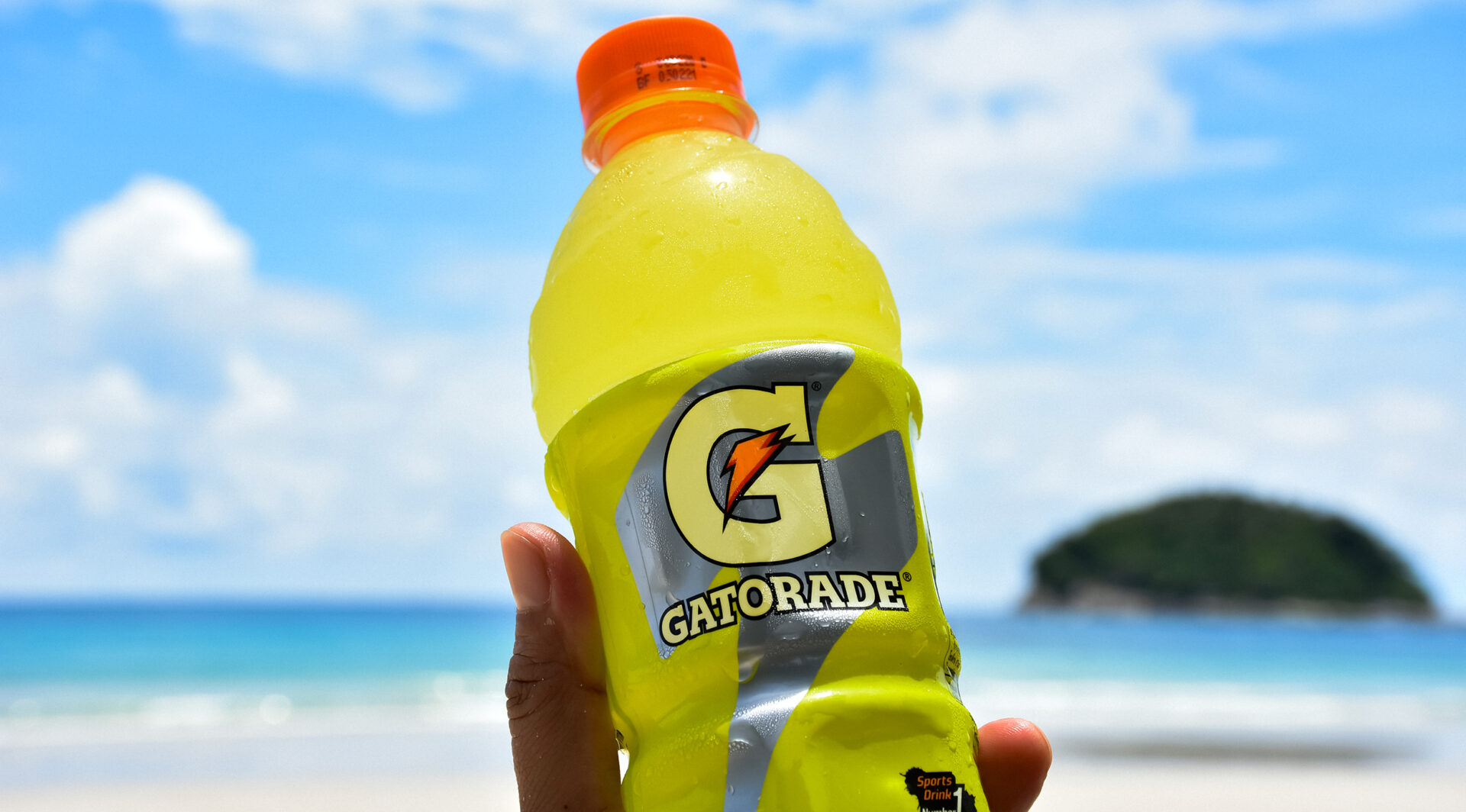
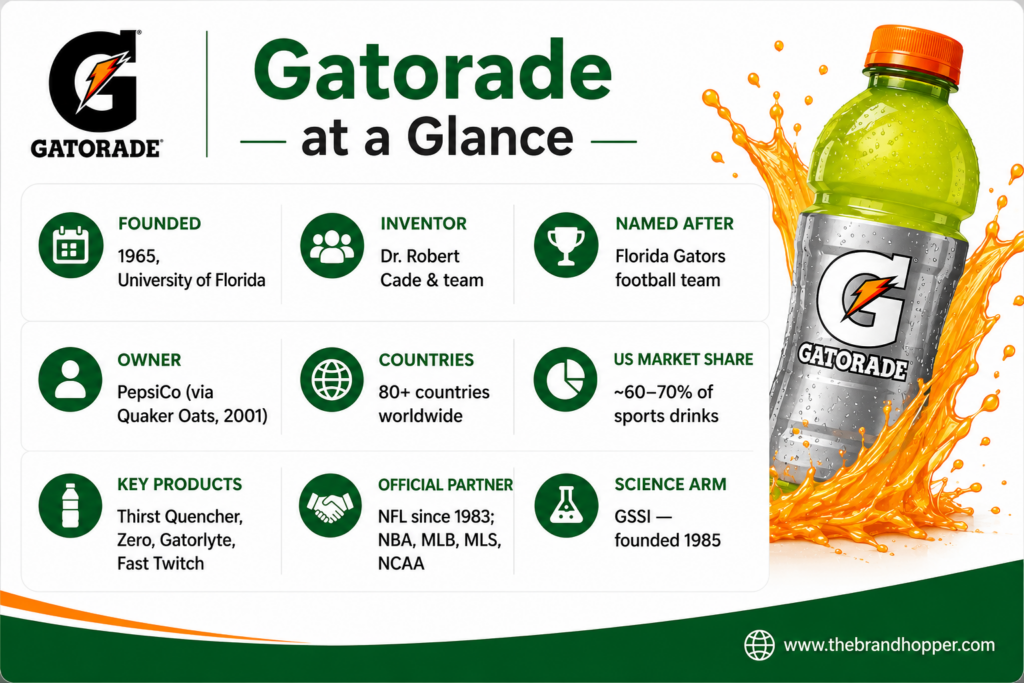
Gatorade is not just a sports drink — it is the blueprint for how a beverage brand can dominate an entire category for more than six decades by combining scientific credibility, emotional athlete storytelling, and relentless product innovation. Born in a University of Florida laboratory in 1965, Gatorade transformed hydration from an afterthought into a discipline, and transformed a market that barely existed into a multi-billion-dollar global industry.
Today, Gatorade commands approximately 60–70% of the US sports drink market, is available in over 80 countries, and sits at the centre of PepsiCo’s beverage strategy — a brand that generates billions in annual revenue and whose lightning bolt logo is recognized on the sidelines of virtually every major sporting event on the planet. But what makes Gatorade’s story particularly instructive is that its market position was not built by accident. It was built through a very deliberate combination of scientific research, emotional marketing, iconic campaigns, strategic partnerships, and — increasingly — product diversification into the everyday hydration market.
This comprehensive analysis unpacks the full Gatorade marketing strategy: the campaigns, the athlete partnerships, the 4Ps Marketing Mix, the competitive positioning, and the evolving science-led initiatives that keep the brand relevant across generations of athletes and consumers.
History of Gatorade
In the summer of 1965, a University of Florida linebacker named Dwayne Douglas walked into the office of Dr. James Robert Cade and asked a deceptively simple question: ‘Why don’t football players urinate during a game?’ It was the question that launched one of the most successful beverage brands in history.
Dr. Cade — joined by colleagues Dr. H. James Free, Dr. Dana Shires, and Dr. Alex de Quesada — collected fluid samples from UF Gators football players during practice and identified the problem clearly: players were losing critical electrolytes through sweat, their blood sugar was dropping, and their core body temperature was rising dangerously during Florida’s brutal summer heat. The researchers developed a formula of salts, sugars, and water — carefully balanced to be absorbed quickly by the body — and tested it first on the freshman football team (who unexpectedly beat the varsity squad in a practice session), and then on the varsity Gators.
On October 2, 1965, the Gators used Gatorade for the first time in a competitive game, beating LSU in an upset. In the 1967 Orange Bowl, after a miserable first half, the Gators dominated Georgia Tech in the third and fourth quarters to win 27-12 — their first-ever Orange Bowl victory. Florida Head Coach Ray Graves reportedly said: ‘We had Gatorade and they didn’t.
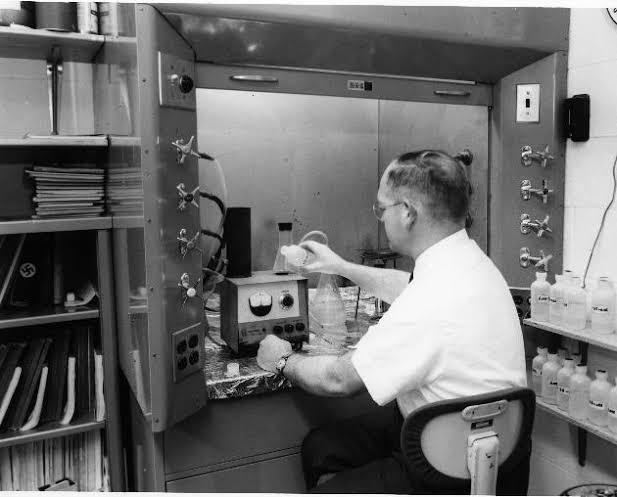
Recognising the formula’s commercial potential, the researchers partnered with Stokely-Van Camp — a food and beverage company — to commercialise Gatorade nationally from 1967. The brand’s big break came in the 1969 NFL season when the Kansas City Chiefs, coached by Hank Stram, adopted Gatorade and subsequently won Super Bowl IV decisively. The NFL took notice: Gatorade became the official sports drink of the NFL, cementing its association with elite professional sport that has endured to the present day.
In 1983, The Quaker Oats Company acquired Stokely-Van Camp — and with it, Gatorade — recognising the brand’s extraordinary growth potential. Under Quaker Oats’ stewardship, Gatorade expanded aggressively into new markets and added product lines. Then in 2001, PepsiCo acquired The Quaker Oats Company in a landmark $13.8 billion deal, bringing Gatorade under PepsiCo’s global distribution and marketing infrastructure. This acquisition proved transformative: PepsiCo’s distribution network, global reach, and marketing firepower took Gatorade from a strong US brand to a global sports hydration phenomenon.
Marketing Strategies of Gatorade
Gatorade’s marketing success is built on a series of interlocking strategies that reinforce each other: credibility through science, emotion through athlete storytelling, ubiquity through sponsorships, and relevance through continuous product and campaign innovation. Below are the ten core marketing strategies that define Gatorade’s approach.
1. High-Profile Athlete Endorsements
Athlete endorsements are the beating heart of Gatorade’s marketing. Since partnering with Michael Jordan in 1991 — whose famous Gatorade commercial with the tagline ‘Be Like Mike’ became one of the most iconic advertisements in sports marketing history — Gatorade has built the most prestigious athlete roster in sports beverage marketing.
Gatorade’s endorsement philosophy is selective and prestige-focused: the brand typically partners with athletes who are considered the undisputed best in their sport (Jordan in basketball, Serena Williams in tennis, Usain Bolt in sprinting, Lionel Messi in football/soccer). By aligning only with athletes who represent the pinnacle of achievement, Gatorade’s implicit message is clear: the best performers in the world choose Gatorade. This exclusivity creates aspirational associations that no amount of generic advertising could manufacture.
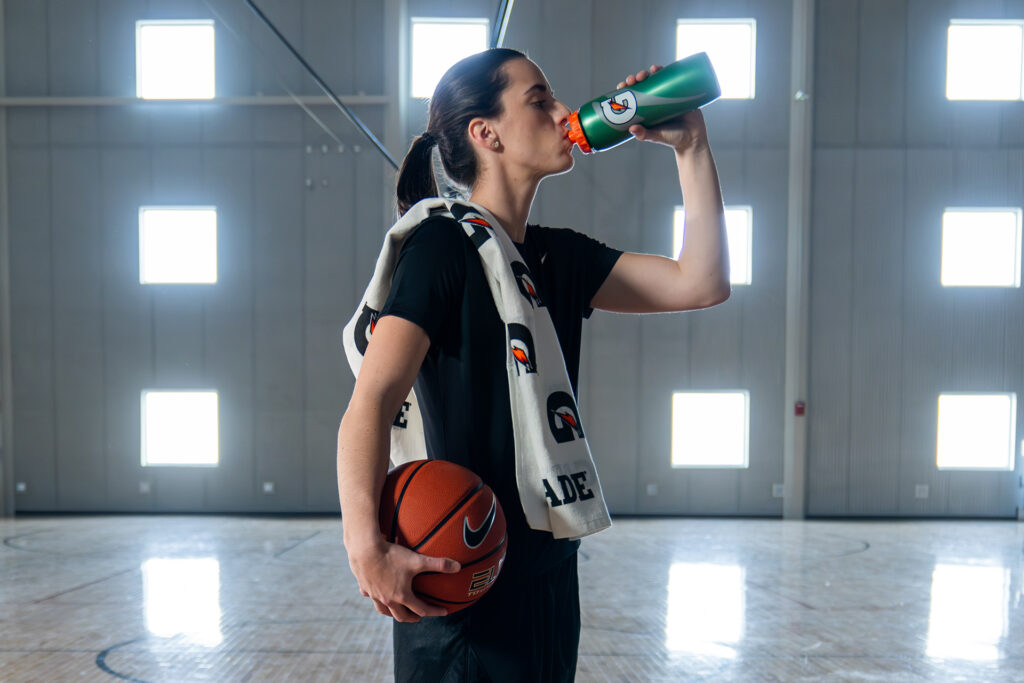
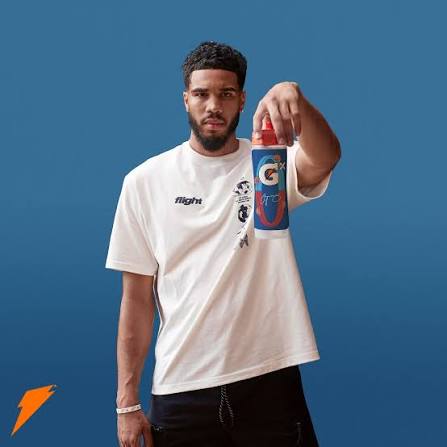
Gatorade’s current active roster reflects both sporting excellence and cultural moment: Josh Allen (NFL), Jayson Tatum (NBA), Caitlin Clark (WNBA), A’ja Wilson (WNBA), Sydney McLaughlin-Levrone (Olympic track & field), Lamar Jackson (NFL), DJ Lagway (College football — Gatorade’s 2023-24 National Football Player of the Year), and Diana Flores (flag football — the first female flag football athlete on Gatorade’s roster). This roster spans genders, sports, and generations — reflecting a deliberate modernisation of the brand’s athlete family.

2. “Is It In You?” Campaign Revival — The Largest in Brand History
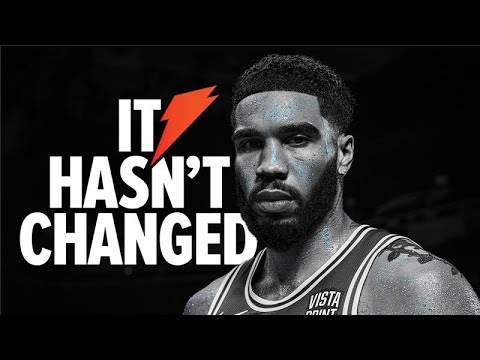
In 2024, Gatorade executed its most ambitious marketing campaign in the brand’s history: the revival of its iconic 1990s tagline, “Is It In You?” Launched during Game 4 of the NBA Western Conference Finals — one of the most watched regular sporting events in the US — the campaign was narrated by Michael Jordan, Gatorade’s longest-standing athlete partner, and featured the brand’s new generation of athletes.
The campaign’s hero film — titled “It Hasn’t Changed” — wove together stories of how athletes Josh Allen, Caitlin Clark, Sydney McLaughlin-Levrone, Jayson Tatum, A’ja Wilson, and DJ Lagway have overcome personal obstacles by tapping into their inner “IT”: the intangible inner drive that separates good athletes from great ones. At the end of the film, an AI-rendered version of Michael Jordan delivers the classic line: “Is it in you?” — a bridge between the brand’s nostalgic past and its technologically forward present.
The campaign’s power lies in what it preserved (the emotional concept of inner drive) and what it updated (a diverse cast spanning the WNBA, NFL, NBA, and Olympics; a focus on overcoming obstacles rather than just winning). It is simultaneously a nostalgia play and a generational handover — reminding older audiences of Gatorade’s golden age while introducing the tagline to a new generation of athletes and fans.
3. Strategic Sports Sponsorships and League Partnerships
Gatorade’s sponsorship portfolio is arguably the most comprehensive in sports beverages. The brand is the official sports drink of the NFL (since 1983), NBA, MLB, MLS, NHL (selected markets), and the NCAA — covering every major professional and collegiate sports league in the United States. It also sponsors the US Olympic programme and has been present at FIFA World Cups, expanding its international sports credibility.
The most visible expression of these partnerships is the Gatorade bath — the celebratory tradition of drenching a winning coach with a cooler of Gatorade after a championship victory, which originated in the NFL in the mid-1980s. This tradition has become so culturally embedded that Super Bowl betting markets now include a ‘Gatorade bath colour’ proposition — turning a brand activation into a national conversation that happens annually without any additional advertising spend.
Beyond official league partnerships, Gatorade’s sponsorship strategy extends into youth and college sports through the Gatorade Player of the Year awards — recognising high school athletes across 12 sports — creating brand loyalty at the earliest stages of athletic development, long before professional teams or personal income determine brand choices.
4. Compelling Advertising Campaigns and Emotional Storytelling
Gatorade’s advertising has consistently operated at a higher emotional register than typical beverage advertising. Rather than showcasing the product’s taste or refreshment — the standard approach for drinks brands — Gatorade’s campaigns focus on the psychology of athletic competition: the inner drive, the fear of failure, the sacrifice, and the triumph.
Historic campaigns like ‘Be Like Mike’ (1991), ‘Is It In You?’ (1990s–2000s), ‘Win From Within’ (2012), and ‘Sweat It to Get It’ (2017) all share a common thread: Gatorade is not the story — the athlete’s inner struggle and greatness is the story. Gatorade is merely the faithful companion on that journey. This approach creates a much deeper emotional connection than product-led advertising, because it speaks to the universal human experience of striving and achievement rather than the functional benefit of hydration.
The 2024 ‘Is It In You?’ revival extended this tradition with even greater emotional depth, weaving AI technology (the digital Jordan voiceover), cinematic storytelling, and a diverse cast into what Ad Age described as Gatorade’s ‘biggest campaign ever.
5. Product Innovation and Portfolio Diversification
Gatorade has consistently grown its product portfolio to address the full spectrum of hydration and performance needs — from the recreational athlete to the elite professional. This diversification serves two strategic purposes: it captures additional revenue from consumers who want specific functional benefits, and it defends shelf space against competitors who target specific niche positions.
The most significant recent diversification has been into everyday hydration — moving beyond sports performance into the daily life of health-conscious consumers. Gatorade Water (electrolyte-infused, launched 2024) and Gatorade Hydration Booster (vitamin-enhanced electrolyte powder, September 2024) both target consumers who want the electrolyte benefit throughout the day, not just during exercise. Meanwhile, Fast Twitch (caffeinated energy drink, 2022) represents Gatorade’s entry into the $21+ billion global energy drink market — expanding total addressable market dramatically.
Gatorlyte — launched in 2021 and continuously developed since — addresses the rapid rehydration segment with a five-electrolyte formula specifically designed for high-sweat-rate scenarios. This positions Gatorade in the premium functional hydration space alongside brands like LMNT and Liquid I.V., at a more accessible price point and with the brand’s established trust advantage.
6. The Gx Personalization Platform and Digital Technology
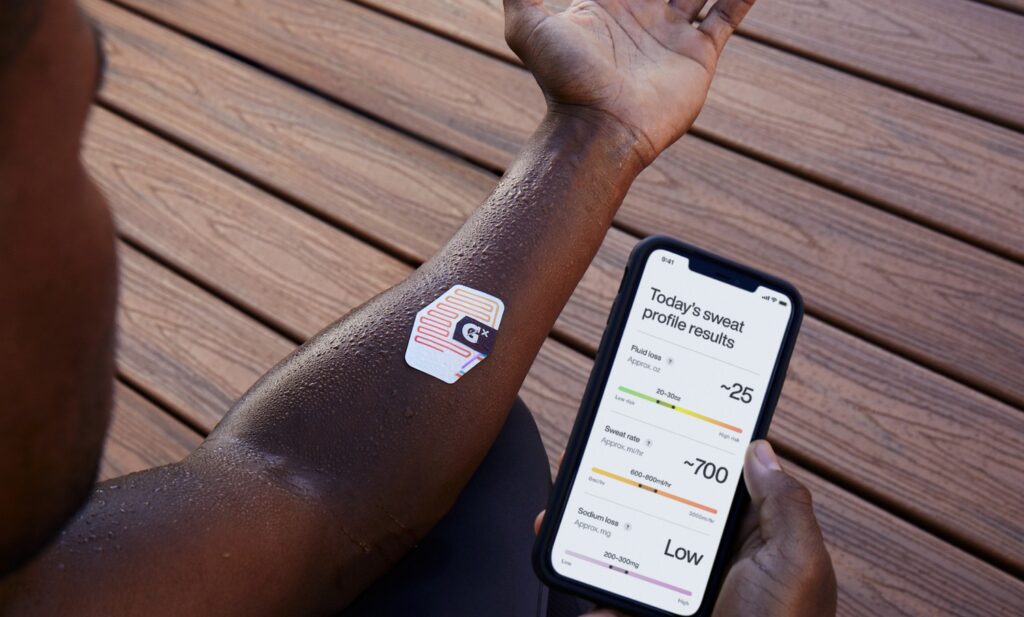
Gatorade’s most technologically sophisticated marketing play is the Gx ecosystem — a platform that combines wearable sweat analysis with personalized hydration recommendations, delivered through a smartphone app. The Gx Sweat Patch is a single-use wearable worn on the inner forearm during exercise; after a workout, the athlete scans the patch with a smartphone camera to generate a complete ‘sweat profile’ — measuring sweat loss, sweat rate, and sodium concentration.
This data is processed by the Gx app, which integrates with fitness tracking platforms including Strava, Garmin, and Apple Health, and generates personalized hydration recommendations — including which Gatorade product is most appropriate for the athlete’s specific sweat profile. The Gx system transforms Gatorade from a generic sports drink into a precision hydration tool tailored to the individual athlete.
Beyond product utility, the Gx platform is a marketing masterstroke: it anchors Gatorade’s brand narrative in rigorous science, creates a digital touchpoint with engaged athletes, and provides the brand with insights about real-world hydration patterns. Athletes who use Gx are also more likely to become loyal Gatorade consumers — they have invested in understanding their hydration needs, and Gatorade has given them the tools to meet those needs.
7. Social Media Engagement and Influencer Marketing
Gatorade maintains an active presence across Instagram, TikTok, YouTube, and X (formerly Twitter), using each platform to serve distinct content types. On Instagram, the brand shares high-production-value athlete imagery and campaign content; on TikTok, it engages with more casual, trend-led content and youth culture; on YouTube, it publishes full-length campaign films, athlete stories, and sports science content.
Gatorade’s influencer marketing strategy has evolved beyond simply paying celebrities to post. The brand partners with athletes who have authentic social media presences — like Caitlin Clark, whose WNBA stardom has translated into massive social followings — ensuring that Gatorade’s brand mentions feel organic and credible to followers who trust the athlete’s voice.
The brand also leverages user-generated content (UGC) from amateur athletes, youth sports teams, and fitness enthusiasts who share their Gatorade moments organically — amplifying these posts through the brand’s own channels to create a sense of community authenticity that contrasts favourably with more polished, corporate advertising.
8. Grassroots Marketing and Youth Sports Investment
Gatorade has invested heavily in youth and grassroots sports as a long-term brand-building strategy. The Gatorade Player of the Year award — covering 12 sports across both male and female high school athletes — creates annual recognition moments that generate local media coverage and social sharing in communities across the US.
The brand also supplies Gatorade to school athletic departments, college athletic programmes, and community sports leagues through its official partnerships — ensuring that young athletes’ earliest experiences of post-training hydration involve Gatorade. This bottom-up strategy creates habitual brand association before the consumer has any significant income or agency of their own, building loyalty that carries into adulthood.
Gatorade’s expansion into flag football — appointing Diana Flores, a Mexican flag football quarterback and international star, as its first female flag football athlete — reflects the brand’s recognition that the fastest growing segment of the sport is female, youth, and international. By being the first major sports drink brand to visibly commit to flag football, Gatorade positions itself for growth in a segment that has received enormous investment from the NFL and international football bodies.
9. Co-Branding, Limited Editions, and Experiential Marketing
Gatorade’s co-branding strategy has produced some of the most commercially successful limited editions in sports beverages. Collaborations with Nike and Jordan Brand on co-branded merchandise — including limited edition Gatorade-coloured sneakers and apparel — create cross-category cultural moments that generate far more media attention than the merchandise itself.
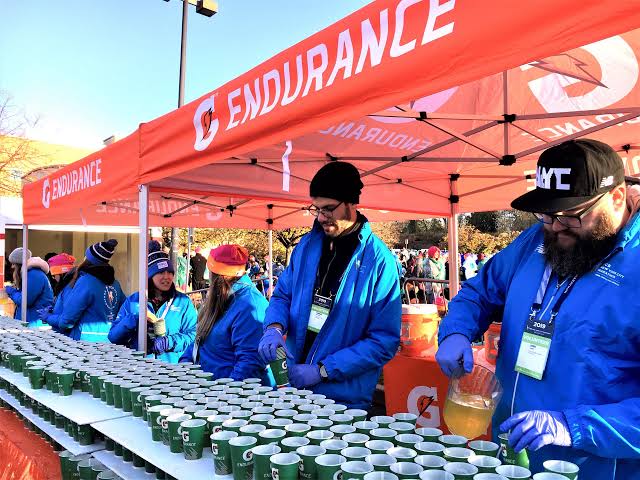
Experiential marketing activations — hydration stations at marathons, interactive booths at sports events and fitness expos, and Gatorade-branded hospitality suites at major sporting events — put the product in athletes’ hands at the precise moment they need it most, while creating shareable branded experiences. These activations are particularly effective because the consumer interaction happens in an emotionally charged context (competition, achievement) that creates strong brand memory associations.
Limited edition flavour drops and athlete-signature products (specific Gatorade colours associated with individual athlete partners) also create episodic collector behaviour and media coverage among sports fans — particularly effective in the NBA, where Gatorade’s court-side visibility combines with the league’s fashion-forward fan base to create genuine cultural interest.
10. Women’s Hydration Science: “Body of Science” Initiative
Gatorade’s most forward-looking marketing move is the ‘Body of Science’ initiative — a multi-year global research commitment, led by the GSSI, to advance the science of women’s hydration and nutrition across all life stages. The programme addresses a critical research gap: approximately 6% of sports science research focuses exclusively on women, leaving female athletes significantly underserved by existing hydration guidance.
The first ‘Body of Science’ study, conducted with over 500 female athletes across basketball, soccer, ice hockey, and other sports (spanning WNBA, NWSL, Athletes Unlimited, and collegiate programmes), found that 43% of participants arrived at workouts already dehydrated, and over half (57%) did not consume adequate carbohydrates during exercise.
This initiative serves multiple marketing purposes simultaneously: it demonstrates Gatorade’s scientific leadership, it positions the brand as a genuine ally of female athletes at a time when women’s sports are experiencing unprecedented growth and media investment, and it generates sustained media coverage through periodic study releases over multiple years — all while creating actionable product development insights that will feed into future Gatorade formulations.
Marketing Mix of Gatorade: The 4Ps
1. Product
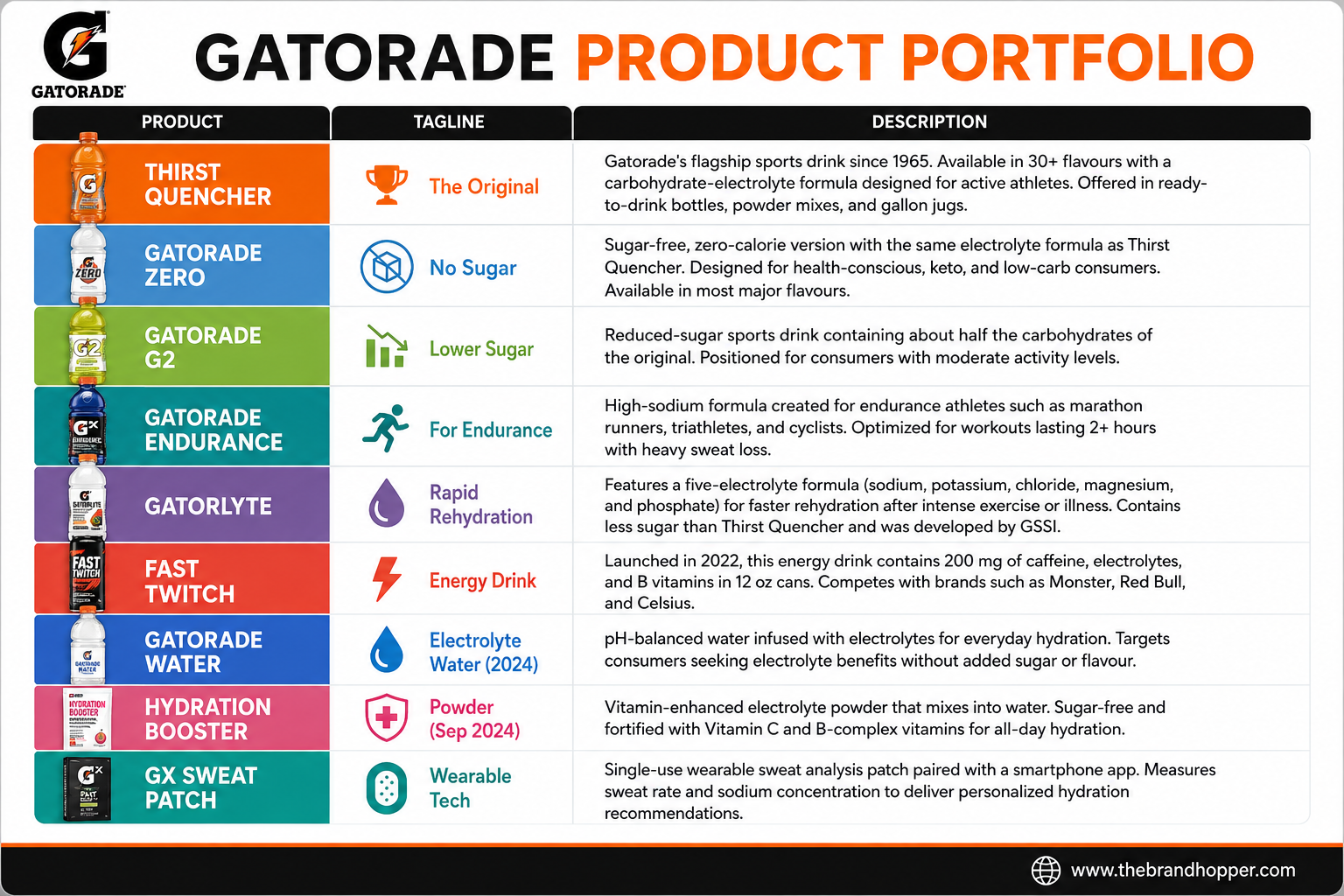
Gatorade’s product portfolio has expanded from a single formula to a comprehensive hydration and performance ecosystem. Its current lineup addresses multiple consumer occasions and need states.
| Product | Category | Description |
|---|---|---|
| Thirst Quencher | The Original | Gatorade’s flagship sports drink since 1965. Available in 30+ flavours with a carbohydrate-electrolyte formula designed for active athletes. Offered in ready-to-drink bottles, powder mixes, and gallon jugs. |
| Gatorade Zero | No Sugar | Sugar-free, zero-calorie version with the same electrolyte formula as Thirst Quencher. Designed for health-conscious, keto, and low-carb consumers. Available in most major flavours. |
| Gatorade G2 | Lower Sugar | Reduced-sugar sports drink containing about half the carbohydrates of the original. Positioned for consumers with moderate activity levels. |
| Gatorade Endurance | For Endurance | High-sodium formula created for endurance athletes such as marathon runners, triathletes, and cyclists. Optimized for workouts lasting 2+ hours with heavy sweat loss. |
| Gatorlyte | Rapid Rehydration | Features a five-electrolyte formula (sodium, potassium, chloride, magnesium, and phosphate) for faster rehydration after intense exercise or illness. Contains less sugar than Thirst Quencher and was developed by GSSI. |
| Fast Twitch | Energy Drink | Launched in 2022, this energy drink contains 200 mg of caffeine, electrolytes, and B vitamins in 12 oz cans. Competes with brands such as Monster, Red Bull, and Celsius. |
| Gatorade Water | Electrolyte Water (2024) | pH-balanced water infused with electrolytes for everyday hydration. Targets consumers seeking electrolyte benefits without added sugar or flavour. |
| Hydration Booster | Powder (Sep 2024) | Vitamin-enhanced electrolyte powder that mixes into water. Sugar-free and fortified with Vitamin C and B-complex vitamins for all-day hydration. |
| Gx Sweat Patch | Wearable Tech | Single-use wearable sweat analysis patch paired with a smartphone app. Measures sweat rate and sodium concentration to deliver personalized hydration recommendations. |
2. Price
Gatorade employs a competitive pricing strategy that maintains its premium positioning relative to private-label sports drinks, while remaining accessible at mass retail price points. Its pricing reflects the brand’s segmentation by occasion and consumer type:
| Product | Pack Size | Approx. Price (USD) | Positioning |
| Thirst Quencher | 20 oz bottle | $1.50–$2.00 | Mass-accessible; impulse purchase |
| Gatorade Zero | 20 oz bottle | $1.50–$2.00 | Same as TQ; appeals to health-conscious |
| Gatorlyte | 12 oz bottle | $2.00–$2.50 | Premium functional; rapid rehydration |
| Fast Twitch | 12 oz can | $2.00–$2.50 | Competes in energy drink price tier |
| Gatorade Water | 16.9 oz bottle | $1.50–$2.00 | Competes with premium water (SmartWater) |
| Hydration Booster | Stick pack (per unit) | $1.00–$1.50 | Convenience; single-serve mix-in |
| Gx Sweat Patch | 2-pack | ~$24.99 | Premium; technology-led pricing |
| Thirst Quencher Powder | Tub (makes 8–12 servings) | $5.00–$8.00 | Value/team/family format |
| Gatorade’s pricing advantage: PepsiCo’s manufacturing scale and global supply chain keep per-unit costs well below those of challenger brands like Liquid I.V. or LMNT, allowing Gatorade to maintain competitive pricing at mass retail while still generating strong margins. |
3. Place
Gatorade’s distribution is among the widest in all consumer packaged goods, powered by PepsiCo’s global direct-store-delivery (DSD) network:
Mass Retail: Walmart, Target, Costco, Sam’s Club — Gatorade commands prime placement in dedicated sports drink sections and promotional end-caps.
Grocery Chains: Kroger, Safeway, Publix, H-E-B and all major grocery chains — supported by category advisory relationships that optimize shelf placement.
Convenience Stores: 7-Eleven, Circle K, Wawa — the single largest occasion for individual bottle sales, driven by impulse purchases before and after physical activity.
Drug Stores: Walgreens, CVS — captures the rehydration-during-illness occasion alongside Pedialyte and coconut water.
Sports Venues and Arenas: Exclusive contracts with NFL, NBA, MLB stadiums ensure Gatorade is the only sports drink available at the world’s most-watched sporting events — a real-time endorsement seen by millions.
E-Commerce: Amazon, Walmart.com, and gatorade.com — subscription options and bulk formats are particularly strong in this channel.
Vending Machines and Schools: Gatorade-branded vending machines in gyms, university campuses, and athletic facilities create constant brand presence in exercise-adjacent spaces.
Direct to Team: Gatorade supplies sports drinks to professional teams, college athletic departments, and high school programmes directly — ensuring that organised team sport, from youth to professional, is thoroughly Gatorade territory.
4. Promotion
Gatorade’s promotional mix is one of the most sophisticated in the beverage industry, combining mass media, precision digital targeting, experiential activations, and earned media through sports events into a seamlessly integrated approach:
Television and Digital Video: Major campaign films (like ‘Is It In You?’ 2024) anchor broadcast strategy, deployed across network TV, streaming platforms, and YouTube. The brand’s Super Bowl adjacency — through both official NFL partnership and the iconic Gatorade bath — generates massive earned media annually.
Athlete Partnership Content: Social media content generated by athlete partners (Caitlin Clark, Josh Allen, Jayson Tatum) delivers authentic, high-engagement posts to their combined follower bases — often reaching more relevant consumers than any paid media placement.
Sports Event Sponsorships: Sideline visibility at NFL, NBA, MLB, and NCAA events ensures Gatorade appears in the background of virtually every piece of game footage shown on TV — passive but constant brand exposure estimated to be worth hundreds of millions in equivalent media value annually.
Gatorade Player of the Year: Annual awards across 12 high school sports generate local media coverage in thousands of communities and create emotional brand affinity among youth athletes and their families.
Sampling and Experiential: Gatorade presence at marathons, fitness expos, and community sports events puts the product in athletes’ hands at the point of need — the most effective moment of consumer trial.
Competitive Landscape of Gatorade
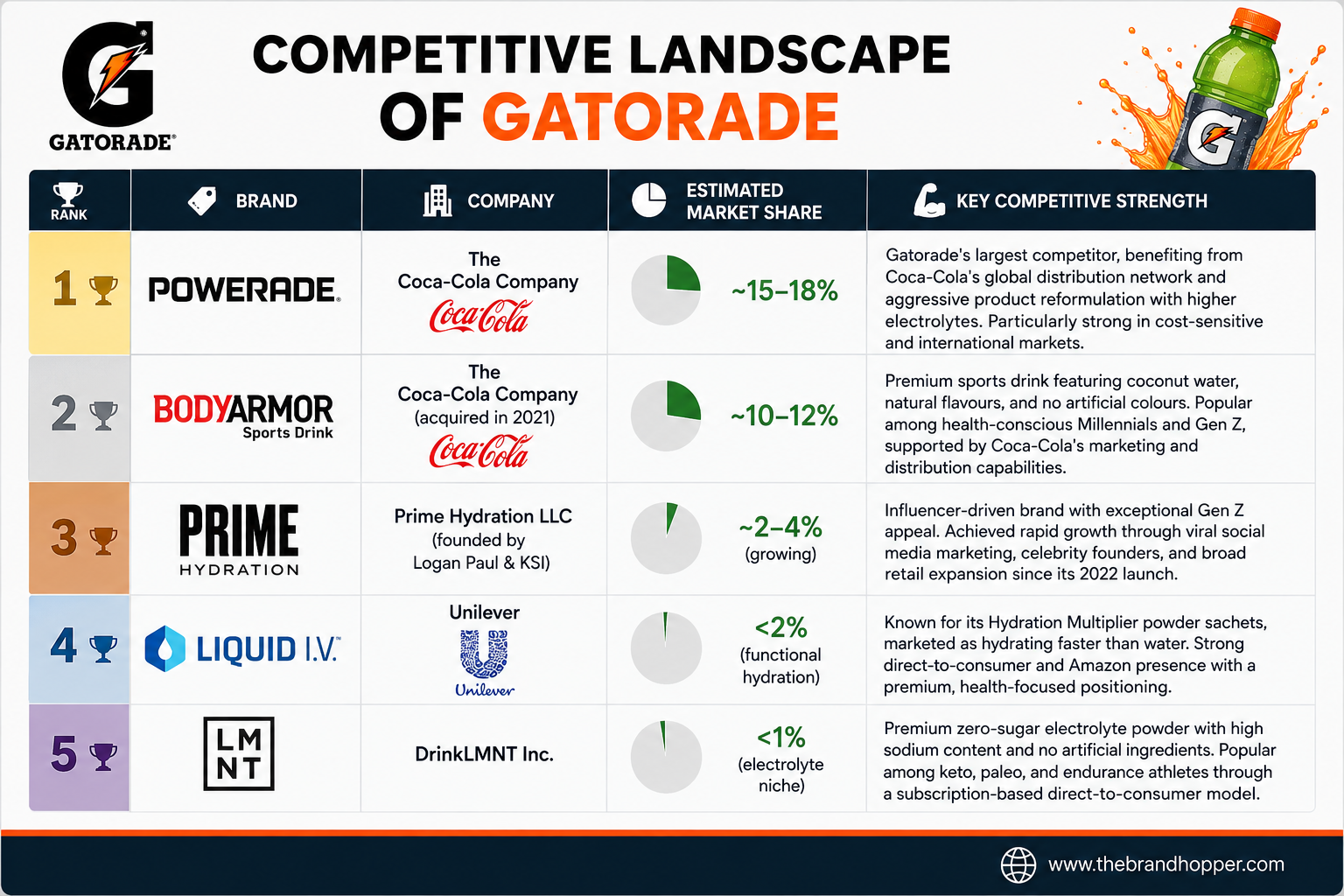
While Gatorade maintains market leadership, the sports and hydration drink category has become significantly more competitive.
The Gatorade Sports Science Institute (GSSI)
Established in 1985, the Gatorade Sports Science Institute is the research and innovation engine that underpins everything Gatorade claims about science and hydration. GSSI employs exercise physiologists, nutrition scientists, and sports dietitians who conduct peer-reviewed research on hydration, electrolyte balance, and athletic performance — publishing findings in major academic journals and presenting at international sports science conferences.
GSSI’s work serves a dual purpose: it drives genuine product innovation (the Gatorlyte formula, the Gx Sweat Patch algorithms, and Gatorade Endurance formulation all emerged from GSSI research), and it provides the scientific credibility that differentiates Gatorade from challengers who merely claim performance benefits without the research infrastructure to back them up. When a coach, team physician, or sports nutritionist recommends Gatorade, they are typically recommending it on the basis of GSSI’s published science — trust that has been built over four decades of rigorous research.
| GSSI milestone: The “Body of Science” women’s hydration programme represents GSSI’s most ambitious public-facing research initiative to date — addressing a critical gap where only 6% of sports science research has historically focused on female-specific hydration needs. |
Success Factors of Gatorade
1. First-Mover Advantage and Category Creation
Gatorade did not enter an existing sports drink market — it created it. By inventing the scientific framework for sports hydration in 1965 and commercialising it before any competitor could respond, Gatorade established itself as the category standard. In consumer markets, category creators typically retain a lasting premium: consumers still think of Gatorade when they think of sports drinks, in the same way they think of Kleenex for facial tissue or Xerox for photocopying.
2. Scientific Credibility as a Competitive Moat
Unlike virtually every competitor, Gatorade can point to 60 years of independent academic research, peer-reviewed studies, and an institutionalised research centre (GSSI) to support its performance claims. This scientific moat is extremely difficult to replicate — it took decades to build and cannot be purchased overnight. Brands like PRIME and Liquid I.V. can claim hydration benefits; they cannot claim 60 years of evidence-based research.
3. Institutional Sports Relationships
Gatorade’s exclusive partnerships with the NFL (since 1983), NBA, MLB, MLS, and NCAA represent contractual relationships that competitors cannot simply outbid — they are deeply embedded in the operational fabric of these leagues, with Gatorade supplying products to every team, every game, in every venue. These relationships create constant brand visibility at the world’s most-watched sporting events, generating media exposure worth far more than the partnership fees paid to maintain them.
4. Generational Brand Reinforcement
By targeting youth athletes through the Gatorade Player of the Year programme, school and college partnerships, and youth sports supply relationships, Gatorade has built brand loyalty across multiple generations. Adults who grew up drinking Gatorade at youth sports practice introduce it to their own children, creating a self-reinforcing cycle of brand adoption that is nearly impossible to interrupt at scale.
5. PepsiCo’s Distribution and Marketing Scale
Access to PepsiCo’s global direct-store-delivery network — reaching approximately 500,000 retail locations in the US alone — ensures Gatorade is available wherever consumers exercise, shop, or seek hydration. No independent sports drink brand can replicate this distribution depth. PepsiCo’s marketing resources also enable Gatorade to run the kind of large-scale, multi-channel campaigns (like the 2024 ‘Is It In You?’ revival) that define cultural moments rather than merely following them.
Frequently Asked Questions (FAQs)
Q: Who invented Gatorade and when?
A: Gatorade was invented in 1965 by a team of researchers at the University of Florida led by Dr. James Robert Cade, along with Dr. H. James Free, Dr. Dana Shires, and Dr. Alex de Quesada. The research was triggered by a question from UF linebacker Dwayne Douglas about why players didn’t urinate during games — which led the team to discover that players were losing dangerous levels of electrolytes and fluids through sweat. The drink was named after the university’s football team, the Florida Gators.
Q: What is Gatorade’s market share in sports drinks?
A: Gatorade commands approximately 60–70% of the US sports drink market by volume, depending on the measurement period and methodology. It is significantly ahead of its nearest competitors: Powerade (Coca-Cola) holds approximately 15–18%, BodyArmor (also Coca-Cola) holds around 10–12%, and PRIME Hydration has been growing rapidly from a small base since its 2022 launch. Globally, Gatorade is available in over 80 countries and maintains leadership in most major markets.
Q: What are the most popular Gatorade products?
A: Gatorade’s flagship product is the Thirst Quencher, available in over 30 flavours in ready-to-drink bottles, powders, and bulk formats. Other key products include Gatorade Zero (no sugar), Gatorade Endurance (higher electrolytes for endurance sport), Gatorlyte (five-electrolyte rapid rehydration formula), Fast Twitch (caffeinated energy drink, launched 2022), Gatorade Water (electrolyte-infused water, 2024), and the Gx Sweat Patch (personalized hydration wearable technology).
Q: What is the Gatorade Sports Science Institute (GSSI)?
A: The Gatorade Sports Science Institute (GSSI) is Gatorade’s research and innovation centre, founded in 1985. It employs exercise physiologists, nutritionists, and sports scientists who conduct peer-reviewed research on hydration, electrolyte balance, and athletic performance. GSSI has published hundreds of scientific studies over four decades and is responsible for innovations including the Gatorlyte formula, the Gx Sweat Patch personalized hydration technology, and the ‘Body of Science’ women’s hydration research programme.
Q: What was Gatorade’s biggest marketing campaign?
A: Gatorade’s largest campaign in brand history was the 2024 revival of its iconic ‘Is It In You?’ tagline. Narrated by Michael Jordan — Gatorade’s longest-standing athlete partner — and launched during Game 4 of the NBA Western Conference Finals, the campaign featured a diverse cast of current Gatorade athletes including Josh Allen (NFL), Caitlin Clark (WNBA), Jayson Tatum (NBA), A’ja Wilson (WNBA), Sydney McLaughlin-Levrone (Olympic hurdler), and DJ Lagway (college football). The campaign reintroduced the concept of ‘IT’ — the inner drive that fuels athletic greatness — with a modern, diverse cast and an AI-rendered tribute to the iconic Jordan original.
Q: What sports leagues does Gatorade sponsor?
A: Gatorade’s sponsorship portfolio includes the NFL (official sports drink since 1983), NBA, MLB, MLS, NCAA (college sports across multiple divisions), the US Olympic programme, and expanding involvement in flag football. Gatorade also sponsors major international events including the FIFA World Cup. These partnerships make Gatorade the most ubiquitous sideline presence in American professional and collegiate sports, generating constant brand exposure through game broadcasts, press conferences, and iconic moments like the Gatorade victory bath.
Q: Who are Gatorade’s main competitors?
A: Gatorade’s main competitors in the US sports drink market are Powerade (Coca-Cola), which holds approximately 15–18% market share; BodyArmor (also Coca-Cola, acquired 2021), which is growing in the premium segment; PRIME Hydration (founded by Logan Paul and KSI, 2022), which has disrupted the category with influencer-driven marketing and Gen Z appeal; Liquid I.V. (Unilever), which targets the functional hydration segment; and LMNT, which serves the keto/paleo endurance community with a premium electrolyte product.
Q: What is Gatorade’s ‘Body of Science’ initiative?
A: Gatorade’s ‘Body of Science’ is a multi-year global research programme, led by the GSSI, focused on advancing the science of women’s hydration and nutrition across all life stages — including the menstrual cycle, pregnancy, and perimenopause. The initiative responds to the fact that only 6% of sports science research has historically focused exclusively on women. The first study enrolled over 500 female athletes across basketball, soccer, ice hockey, and other sports, and found that 43% arrived at workouts already dehydrated. Research findings are used to improve Gatorade’s product formulations and hydration recommendations for female athletes.
Conclusion
Gatorade’s 60-year journey from a university laboratory experiment to a global sports hydration juggernaut is, at its core, a story about building enduring competitive advantages — not just marketing campaigns. The brand’s dominant market position is not the result of clever advertising alone; it is the product of four interlocking advantages that compound over time: scientific credibility (GSSI), institutional sports relationships (NFL, NBA, NCAA), generational brand loyalty (youth sports investment, Player of the Year), and PepsiCo’s unmatched distribution reach.
What is most striking about Gatorade’s current marketing posture is that it is simultaneously backward-looking (the ‘Is It In You?’ nostalgia revival with Michael Jordan) and forward-looking (women’s hydration science, Gx wearable technology, Fast Twitch energy drinks, Gatorade Water). The brand has found a way to honour its heritage while aggressively expanding into adjacent markets — a balance that most legacy brands fail to strike.
As the hydration category continues to fragment — with PRIME disrupting from below through social media, LMNT attacking from above through premium positioning, and BodyArmor pressing from the middle with Coca-Cola’s backing — Gatorade’s response has been to do what it has always done: invest in science, invest in the best athletes, and invest in the emotional narrative of athletic greatness. For six decades, that formula has worked. There is every reason to believe it will continue to.
Also Read: Marketing Strategies and Marketing Mix of Red Bull
To read more content like this, subscribe to our newsletter