Last Updated on September 28, 2026 by Team TBH
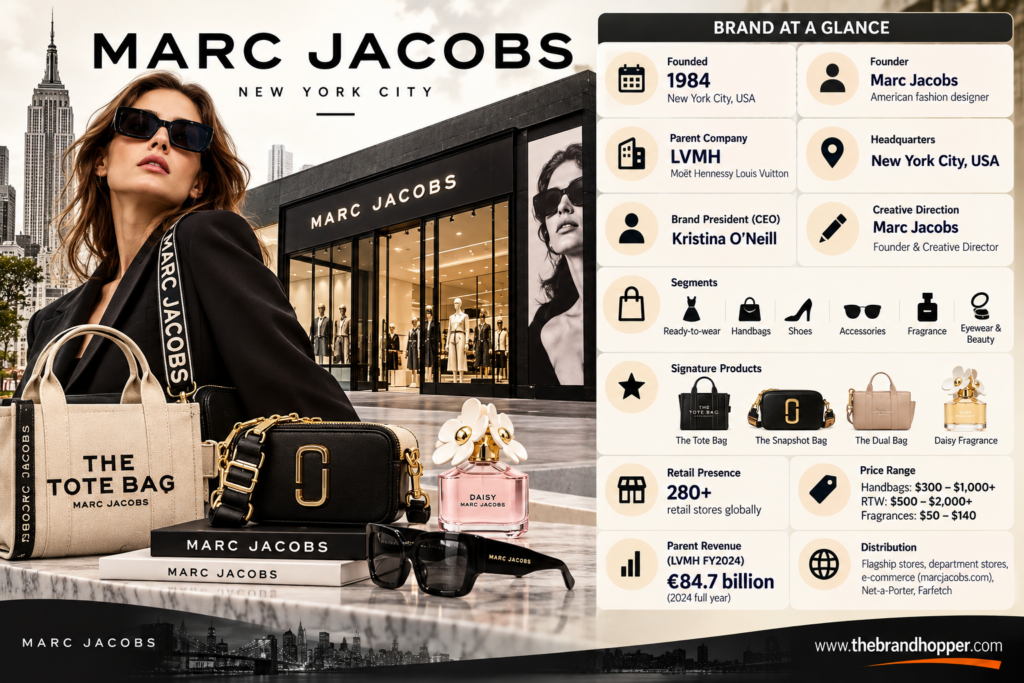
Marc Jacobs is one of the most consistently provocative and culturally fluent luxury fashion brands in the world. Founded by American designer Marc Jacobs in 1984, the brand has never been content to simply follow fashion — it has repeatedly redefined it. From the grunge-inspired collection at Perry Ellis in 1993 that got Jacobs fired but earned him a Council of Fashion Designers of America (CFDA) award, to his transformative tenure at Louis Vuitton from 1997 to 2013, to the brand’s current dominance of viral social media storytelling, Marc Jacobs has always found a way to be where the cultural conversation is.
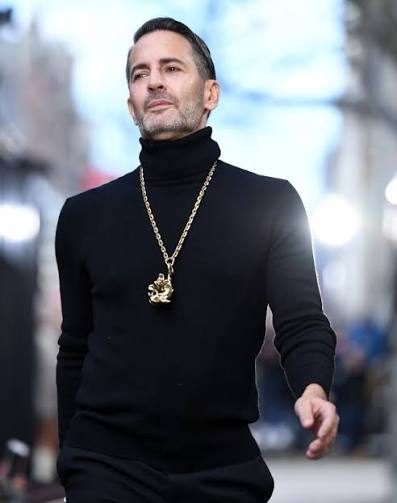
The brand has been part of the LVMH group — the world’s largest luxury conglomerate — since 1997, when the group acquired a majority stake alongside Marc Jacobs’ appointment as creative director of Louis Vuitton. The relationship gave the Marc Jacobs brand access to LVMH’s global infrastructure, retail expertise, and financial backing. After parting ways with Louis Vuitton in 2013 to concentrate fully on his own label, Marc Jacobs has used that platform to build one of the most recognisable luxury fashion identities in the world.
In recent years, the brand has navigated significant commercial and strategic headwinds. LVMH — facing a challenging luxury demand environment, with its fashion and leather goods division reporting a 7% revenue decline in H1 2025 — explored the potential sale of Marc Jacobs at an estimated valuation of approximately $1 billion. While talks with Authentic Brands Group ultimately did not result in a deal, the episode underscored both the commercial pressures facing mid-tier luxury brands and the enduring value of the Marc Jacobs name as a brand asset.
Yet what makes Marc Jacobs strategically fascinating is how it has responded to these pressures — not by retreating to safe, conservative marketing, but by doubling down on cultural creativity. Its 2024 TikTok strategy — which earned a Shorty Award and averaged 1.5 million views per video with an engagement rate of 9.7% (exceeding the industry benchmark by 100%) — is one of the most-cited examples of how a luxury brand can use social media without sacrificing prestige. Its 2025 “JOY” seasonal concept, which united high art collaborators with mass-market brand partners including Converse, Gibson, and Crayola, showed that Marc Jacobs understands something most luxury brands struggle with: the ability to be simultaneously exclusive and inclusive.
This article is a comprehensive analysis of Marc Jacobs’ marketing strategies, its marketing mix, and the campaigns and decisions that define one of fashion’s most distinctive brands
Marketing Strategies of Marc Jacobs
Marc Jacobs’ marketing success is not accidental. It is the product of deliberate, layered strategic decisions — some rooted in decades-old brand principles, others remarkably nimble and contemporary. Below is a detailed analysis of the core marketing strategies that define the brand.
1. Brand Identity and Positioning
Marc Jacobs occupies a distinctive position in the luxury fashion landscape. It is neither the stratospheric ultra-luxury of Chanel or Hermès, nor the fast-accessible upper end of premium brands. Instead, it has carved out a territory best described as “aspirational accessible luxury” — a brand with genuine prestige, genuine craft, and genuine cultural credibility, yet one that has always deliberately invited a wider conversation than most luxury houses allow.
The brand identity is built around four pillars: creativity, individuality, inclusivity, and cultural fluency. Marc Jacobs has never positioned itself as a brand for a single type of person. Its campaigns have historically featured an unusually diverse cast of ages, backgrounds, and body types — a choice that feels authentic rather than calculated, because it reflects the designer’s own creative sensibility and social values.
The brand’s design language blends vintage-inspired silhouettes with contemporary edge — referencing the 1960s, 1970s, and 1980s while remaining unmistakably of the present moment. This creates a brand that feels both nostalgic and fresh, which is an extremely difficult balance to maintain in fashion and one that Marc Jacobs has sustained across decades.
The “JOY” campaign positioning for Fall 2025 — built around an explicit philosophy of joy as the brand’s seasonal concept, expressed through art, music, collaboration, and cultural partnership — represents the most sophisticated expression of the brand’s core identity in recent history. Rather than trying to look cool or aspirational, Marc Jacobs went further by expressing something more universal and emotionally resonant: the idea that fashion, at its best, should feel like joy.
2. Celebrity Endorsements and Campaign Strategy
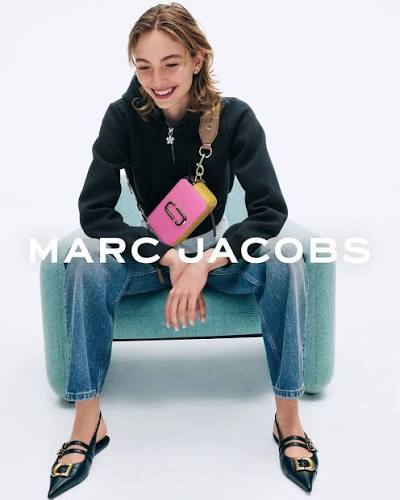
Celebrity collaboration has always been a cornerstone of Marc Jacobs’ marketing. But what distinguishes the brand from its peers is the quality of its casting decisions: the people it chooses are not simply famous — they are culturally resonant, credible, and often unexpected. Marc Jacobs does not cast celebrities who merely look good in clothes; it casts people who embody the specific mood or cultural conversation it wants to have with its audience.
The Fall 2024 campaign is the perfect case study. Shot by filmmaker and photographer Harmony Korine — best known for his avant-garde films including “Kids” and “Spring Breakers” — the campaign featured an interview-format video in which each personality answered the question, “What is Marc Jacobs?” The cast included Cardi B (who called the brand “marvelous”), Lil Uzi Vert (“love”), streamer Kai Cenat, supermodel Irina Shayk, singer Clairo, and trans model Alex Consani (who was named Model of the Year at the Fashion Awards in London). The deliberate mixing of genres, backgrounds, and aesthetics is itself a brand statement.
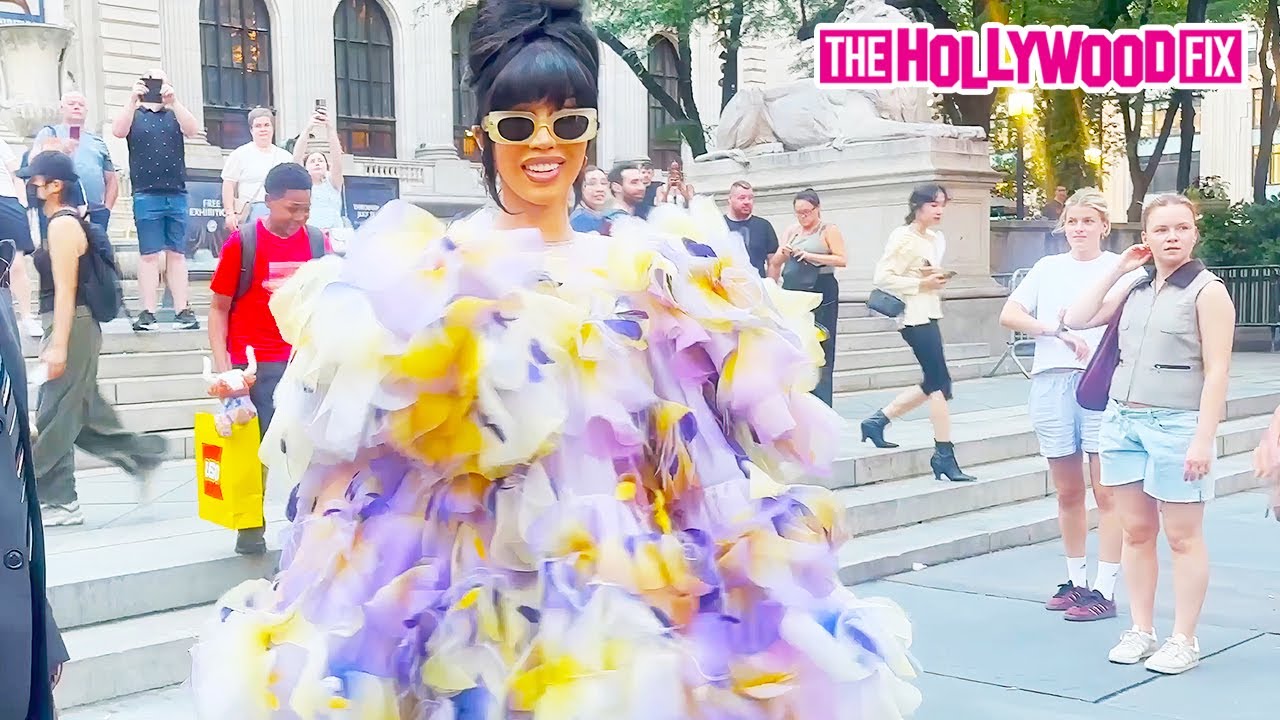
The Cardi B appearance at the Fall 2024 runway show at the New York Public Library on July 1, 2024, also deserves mention as a masterclass in celebrity activation. Cardi B arrived wearing a custom lilac, purple, and yellow feathered songbird dress — a piece from Marc Jacobs’ Spring 2020 Ready-to-Wear archive — generating enormous organic social media coverage before a single press release was issued.
For Summer 2025, Marc Jacobs partnered with Doja Cat for the “STAYCATION” campaign — shot by Stef Mitchell, styled by Sydney Rose Thomas, and directed by Christian Breslauer. The campaign presented a dreamy, surreal take on urban summer life, featuring the brand’s Snapshot Convertible Shoulder Bag, the Large Denim Chain Sack, the Glam Claw Clip Shoulder Bag, and the new Dual Bag. In a creative masterstroke, the campaign also served as the debut of Doja Cat’s unreleased track “Jealous Type” — turning the fashion campaign into a music release event. The multi-sensory approach perfectly encapsulates how Marc Jacobs treats its campaigns not as product advertisements but as cultural moments.

For Spring 2025, the “House of Marc” campaign starred supermodels Anok Yai and Emily Ratajkowski, celebrating the brand’s signature playfulness and sophisticated approach to luxury. The casting of Ratajkowski — who has simultaneously cultivated a strong literary and cultural voice through her essay collection and Substack, separate from her modelling career — aligned well with Marc Jacobs’ identity as a brand for people who have something to say.
3. Runway Shows and Fashion Weeks
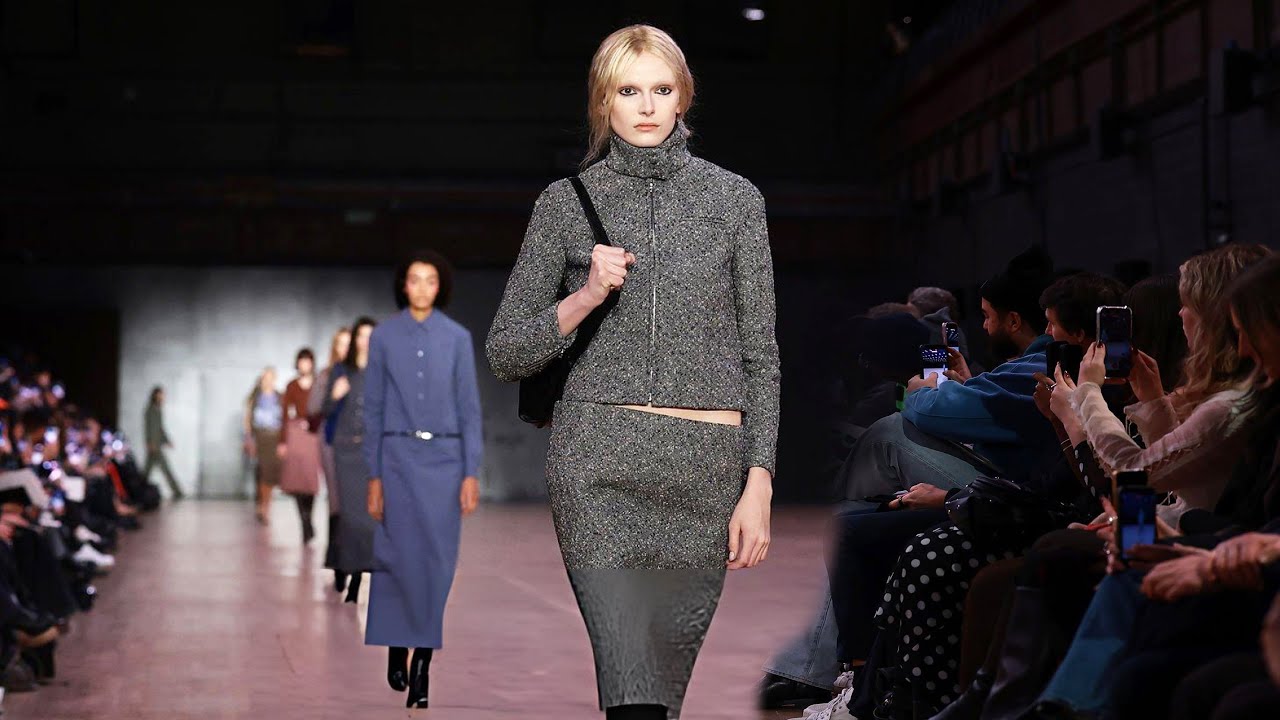
Marc Jacobs consistently uses its runway shows as more than a vehicle to show clothes. Each show is a curated experience with a specific cultural conversation at its centre — and that conversation is always more interesting than any single look on the runway.
The Fall 2024 runway show held at the New York Public Library was a particularly strong example of venue-as-statement. The New York Public Library is not a fashion venue — it is one of the great civic institutions of the city, a place associated with scholarship, culture, and the public good. By staging a fashion show there, Marc Jacobs was making an implicit claim about the cultural ambition and civic relevance of fashion itself.
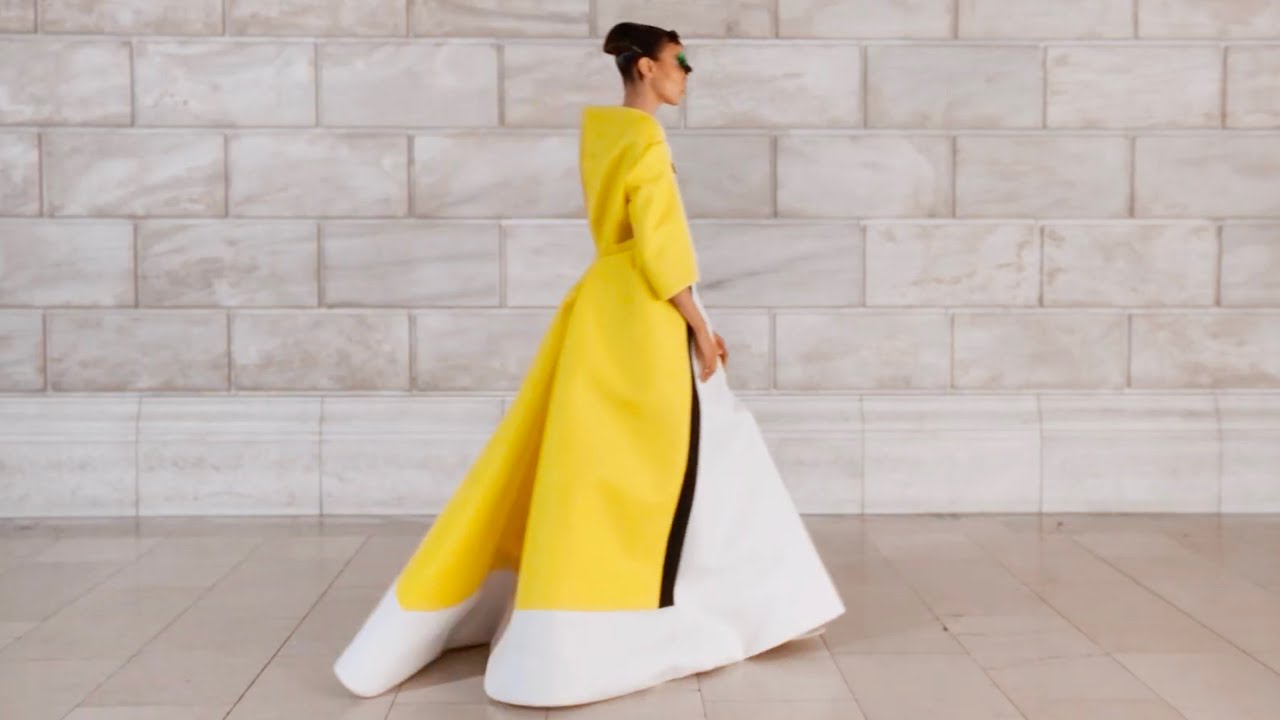
The brand also uses its runway to introduce key products that then anchor its commercial campaigns. The Dual Bag — first seen on the Fall 2024 runway — subsequently became the hero product of the Summer 2025 STAYCATION campaign with Doja Cat. This pipeline from runway debut to commercial campaign is a deliberate strategy that builds anticipation and narrative arc around key styles.
Marc Jacobs has also continued to embrace digital access to its shows, livestreaming runway events on Instagram and YouTube to extend the reach of the physical show to a global audience in real time. The brand’s commitment to documenting the show from multiple angles — backstage, front row, the runway itself — creates multi-day content that continues to generate engagement long after the show ends.
4. Social Media and Digital Marketing
Marc Jacobs’ digital marketing strategy is widely regarded as one of the most sophisticated in the luxury fashion industry. Across Instagram, TikTok, and YouTube, the brand has developed a distinctive voice that is simultaneously playful, irreverent, and creatively ambitious — all without diluting its luxury positioning.
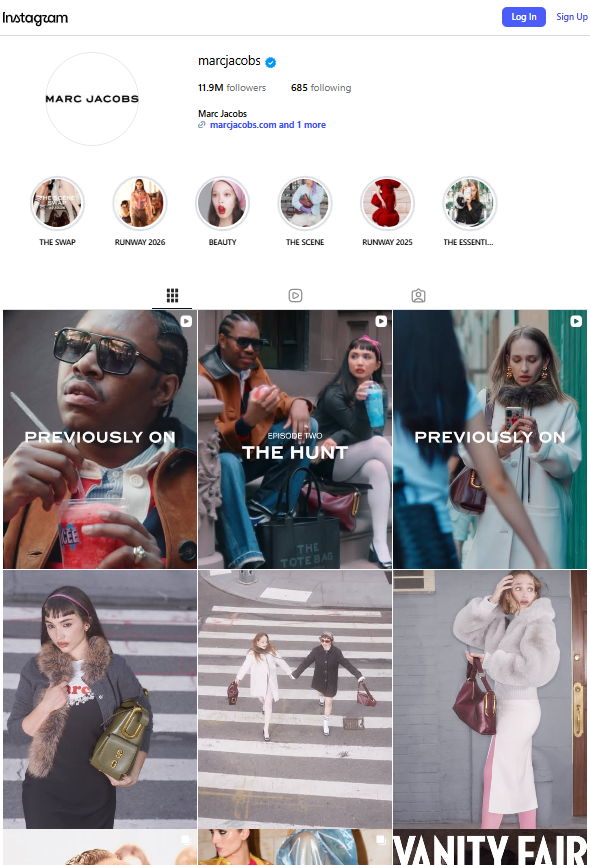
On Instagram, the brand’s official account (@MARCJACOBS) has grown to more than 11.9 million followers, making it one of the most-followed luxury fashion accounts on the platform. The content strategy blends high-production campaign imagery, runway coverage, product close-ups, and behind-the-scenes content into a coherent visual world that extends the brand’s aesthetic beyond the store and into the daily lives of its community.
But it is TikTok where Marc Jacobs’ digital marketing has been most innovative. In 2024, the brand executed what would become one of the most-awarded TikTok strategies in fashion — earning the brand a Shorty Award for its results. The strategy was built on a simple but counter-intuitive insight: on TikTok, authenticity and entertainment outperform polish and prestige. Marc Jacobs posted 165 videos during the campaign period, achieving an average of 1.5 million views per video and an engagement rate of 9.7% — exceeding the industry benchmark by 100%.
The three highest-performing videos illustrate the approach perfectly. A behind-the-scenes video of supermodel Adriana Lima discussing her favourite sandwich filling generated 29 million views — a number that would be extraordinary for a new product launch, let alone a casual conversation piece. A video featuring influencer Nara Smith (known for her ASMR “cooking from scratch” videos) in a Marc Jacobs-themed “cooking” segment earned 17 million views. A comedy sketch featuring model Alex Consani “escaping” from a water tank generated 6.2 million views. None of these videos were advertisements in any traditional sense — but they communicated brand personality, deepened audience affinity, and introduced Marc Jacobs to millions of Gen Z viewers who might never have encountered the brand through traditional luxury media.
The brand has also used digital tools to enhance the shopping experience. Virtual try-on technology, partnerships with e-commerce platforms including Net-a-Porter and Farfetch, and a user-friendly direct e-commerce site at marcjacobs.com (launched 2014 and continuously upgraded) ensure that the brand’s digital presence converts aspiration into purchase at every stage of the funnel.
Marc Jacobs also uses its digital channels to build community. The brand’s “Perfect Marc Jacobs” campaign — a celebration of self-love, authenticity, and individuality — has generated significant user-generated content as followers share their own versions of what “perfect” means to them. This community-building approach deepens brand loyalty beyond transactional relationships.
5. Flagship Stores and Retail Expansion
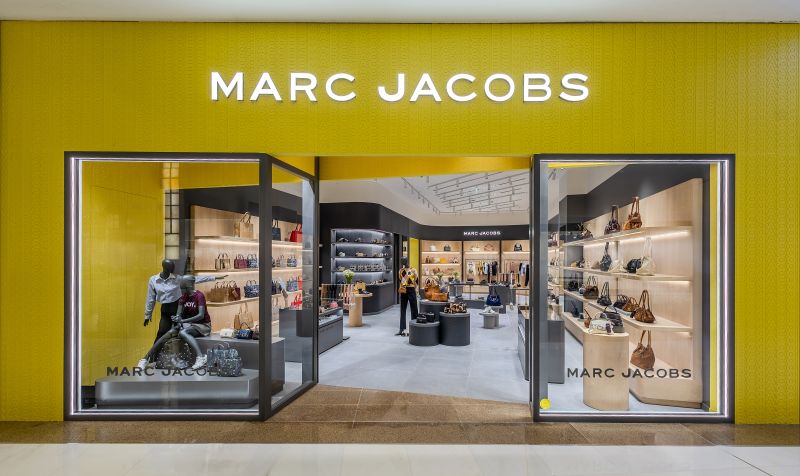
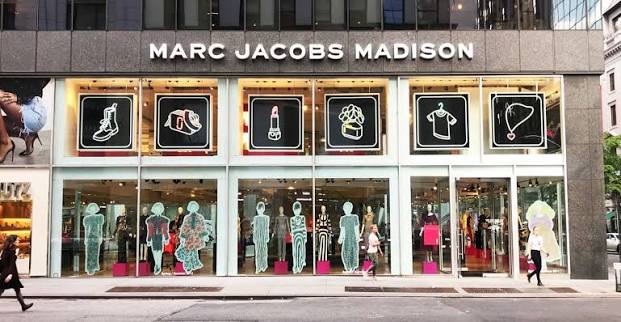
Marc Jacobs operates more than 280 retail stores globally, with flagship locations in New York City (Madison Avenue), Los Angeles, London, Paris, Tokyo, Seoul, and other major cities. Each flagship store serves as a physical embodiment of the brand’s identity — designed to provide an immersive, curated shopping experience that cannot be replicated online.
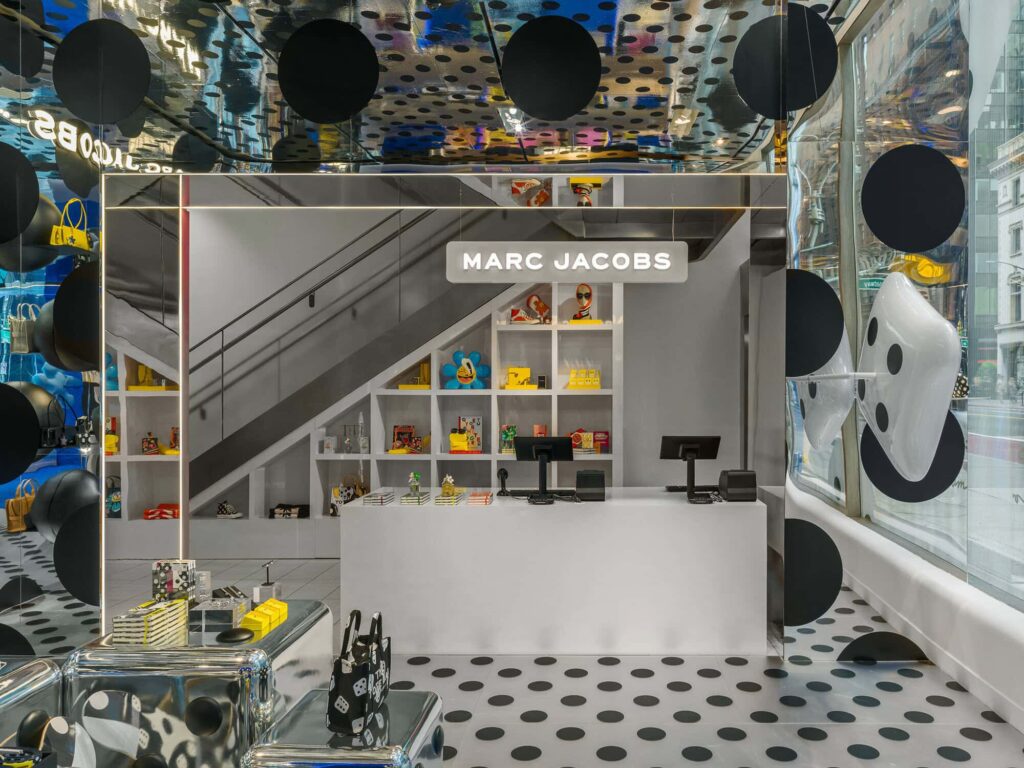
The Madison Avenue flagship in New York City, spanning over 20,000 square feet, remains the brand’s most important retail statement. The store houses the full range of Marc Jacobs products — ready-to-wear, handbags, shoes, accessories, beauty, and fragrance — while also hosting exclusive events, installations, and product launches. The design of the store itself — sleek, modern, and sophisticated — reinforces the brand’s luxury positioning at every turn.
International flagships are carefully adapted to reflect local aesthetic sensibilities while maintaining the brand’s global identity. The Tokyo flagship draws on the city’s tradition of architectural innovation and precision craft. The London store incorporates elements of British heritage and the city’s fashion subculture. This balance between global consistency and local relevance is a hallmark of successful luxury retail, and Marc Jacobs executes it well.
The JOY Fall 2025 campaign also served as a retail event, with immersive pop-up installations rolling out at Nordstrom in New York, Galeries Lafayette in Paris, Isetan in Tokyo, and The Standard High Line in New York. These curated retail experiences, which blended art, fashion, and interactivity, created reasons for consumers to physically engage with the brand beyond a standard store visit.
Marc Jacobs’ products are also available through premier department store partners including Neiman Marcus, Saks Fifth Avenue, and Bergdorf Goodman in the United States, and through leading e-commerce platforms such as Net-a-Porter, Farfetch, and Mytheresa. This multi-channel distribution strategy ensures the brand is accessible to its target audience wherever and however they prefer to shop, while maintaining the curated context that luxury brands require.
6. Collaborations
Collaboration has always been one of Marc Jacobs’ most effective and distinctive marketing tools. The brand has an unusually wide aperture when it comes to choosing partners — it has collaborated with mainstream entertainment franchises, iconic streetwear brands, legacy sporting goods companies, contemporary artists, and even children’s stationery brands. This breadth is itself a brand statement: Marc Jacobs is a brand without cultural walls.
The Fall 2025 “JOY” collaboration programme is the most ambitious expression of this philosophy to date. At its artistic core, the brand commissioned three limited-edition capsule collections co-created with contemporary artists Derrick Adams (known for bold figurative paintings exploring Black joy and American identity), David Shrigley (the Glasgow-based artist known for his sardonic, witty drawings), and Hattie Stewart (the London-based illustrator known for her playful “doodle bombing” of magazine covers). The resulting capsule merged wearable fashion with fine art sensibility in a way that positioned the garments as collectible objects as much as clothing.
Beyond the artist capsule, JOY included eight brand partnership drops that demonstrated the brand’s ability to bridge luxury and popular culture simultaneously. The partnerships included: Converse sneakers with JOY-themed motifs; limited-edition Shut Skateboards featuring the artwork of Adams and Stewart; Brompton folding bikes in Marc Jacobs colourways; Crayola coloured pencils in custom packaging; Moleskine journals; customised Gibson Les Paul guitars and accessories; Maxbone pet accessories and fashions; and two exclusive Barbie dolls wearing miniaturised versions of looks from the collection. The Barbie partnership in particular generated significant media attention, building on the cultural conversation around the Barbie brand that began with the 2023 film.
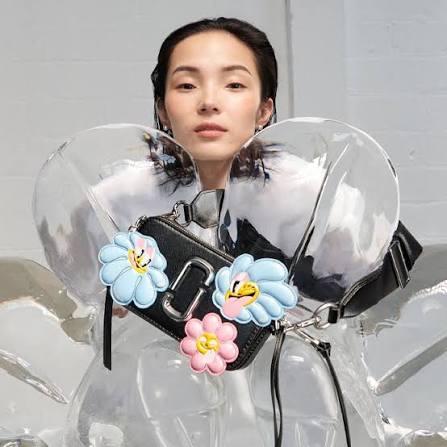
The Marc Jacobs x A.P.C. Fall 2025 collection represents a different kind of collaboration — one rooted in genuine personal history. The partnership between Marc Jacobs and Jean Touitou, A.P.C.’s founder, goes back to the 1990s when the two designers moved in overlapping creative circles in New York and Paris. The collection, which featured collegiate-style clothing and accessories, felt like a creative reunion rather than a commercial arrangement — and that authenticity came through in both the product and the press coverage.
Earlier collaborations that have become part of the Marc Jacobs story include the brand’s partnership with Peanuts (2023), which generated enormous cross-generational appeal by bringing Charlie Brown and Snoopy into a luxury fashion context, and the 2017 collaboration with Vans, which united skate culture and luxury streetwear in a collection that included contributions from florist Ariel Dearie, model Jazzelle Zanaughtti, and manicurist Jin Soon Choi.
7. Limited Editions and Exclusivity
Limited edition releases are a core component of Marc Jacobs’ commercial and marketing strategy. In a brand that positions itself around creativity and individuality, limited editions serve multiple functions: they create a sense of urgency that drives purchase, they generate media and social media coverage that money cannot easily buy, they reward loyal customers with access to something exclusive, and they allow the brand to experiment commercially with ideas that might not support a full-season commitment.
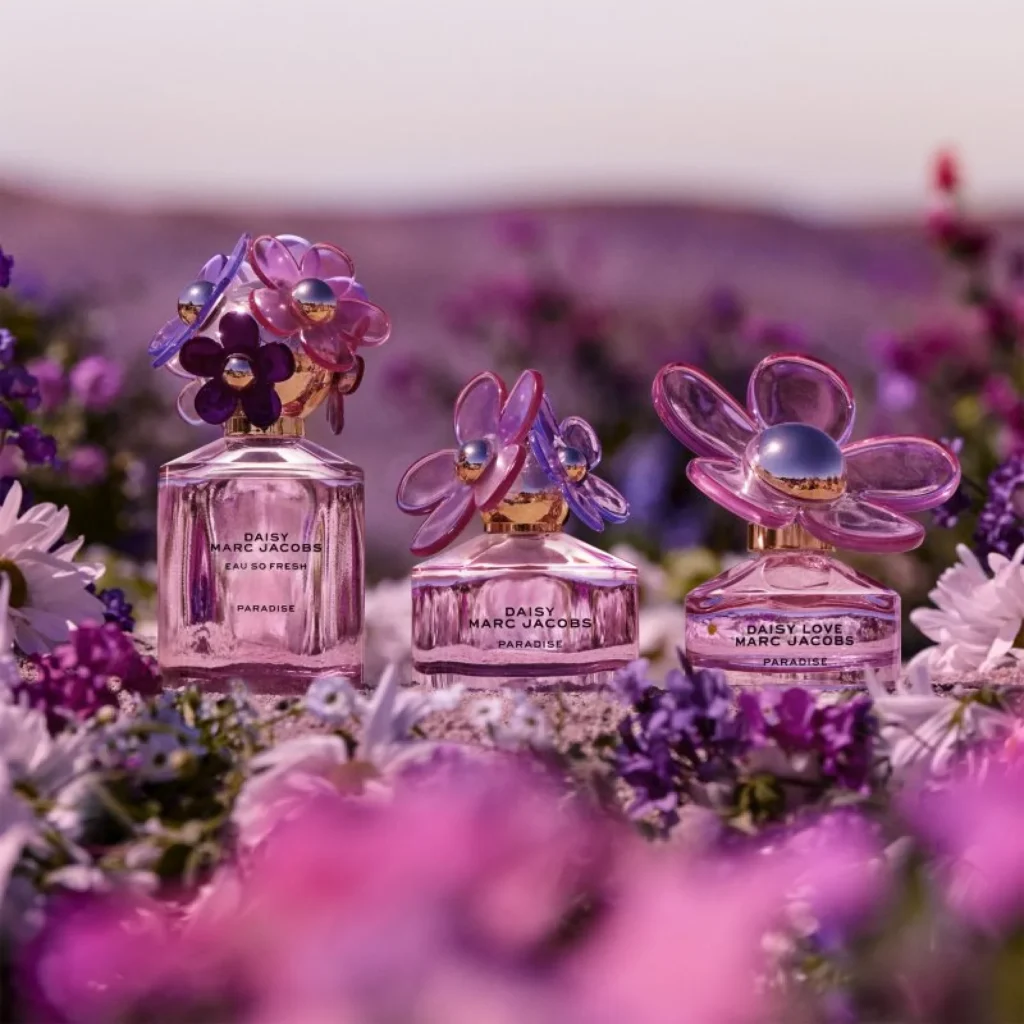
The Daisy Love Paradise Limited Edition Fragrance — housed in a bespoke pink and purple bottle inspired by the desert superbloom — is a strong example of how Marc Jacobs executes limited edition product strategy within its fragrance portfolio. The Daisy franchise, which includes Daisy, Daisy Dream, Daisy Love, and their various flankers, is one of the most commercially successful fragrance families in luxury fashion. By releasing regular limited edition variations — new bottles, new flankers, new seasonal interpretations — Marc Jacobs keeps the franchise fresh and provides regular commercial spikes that complement the core range.
The JOY campaign’s limited-edition artist capsule, available only at select Marc Jacobs boutiques worldwide and at gallery-inspired pop-up events in New York, London, Paris, and Tokyo, created both genuine scarcity and genuine cultural value. Items from the capsule are as likely to be displayed as collected as they are to be worn — which is the highest possible aspiration for a fashion brand.
Marc Jacobs also offers exclusive products to members of its loyalty programme, “Marc Jacobs Rewards,” which grants members early access to new collections, exclusive product drops, personalised styling consultations, and points accrual towards future purchases. This loyalty architecture ensures that the most engaged and highest-value customers have a meaningful reason to deepen their relationship with the brand beyond individual purchases.
8. Content Marketing and Storytelling
Content marketing at Marc Jacobs is not about filling a content calendar. It is about maintaining a living, breathing brand world that exists between campaigns and seasons and gives the brand’s community a reason to keep paying attention.
The brand’s original “Cast Me Marc” campaign — launched in 2019 — remains one of the most compelling examples of democratising luxury through content. The campaign invited anyone — regardless of professional modelling experience, age, size, or background — to submit a headshot and personal story for consideration to appear in a Marc Jacobs advertising campaign. The response was extraordinary: thousands of submissions poured in from around the world, each one a story about who that person was and why fashion mattered to them. The campaign generated viral coverage, was featured across national and international media, and deepened the brand’s community in a way that a conventional advertising campaign could not have achieved.
The “Perfect Marc Jacobs” campaign continued this thread, celebrating self-love and authenticity through a collage of real people declaring themselves perfect as they are. This kind of content creates emotional resonance that outlasts a season — and emotional resonance is what drives brand loyalty in luxury fashion.
Marc Jacobs also invests in long-form digital content — mini-documentaries about the design process, video profiles of campaign subjects, behind-the-scenes footage from runway preparation — that give the brand’s community insight into how the brand thinks and works. This transparency builds trust and genuine admiration, which are more durable brand assets than awareness alone.
9. Influencer Marketing and the Creator Economy
Marc Jacobs’ approach to influencer marketing has evolved significantly from the traditional model of paying celebrities to post product photos. The brand has recognised that the most valuable influencer partnerships are those that feel genuinely authentic — where the creator’s personality and the brand’s identity overlap in a way that audiences can sense and trust.
The 2024 TikTok strategy illustrates this most clearly. Rather than treating TikTok as a platform for polished ads, Marc Jacobs treated it as a creative playground and cast creators who had built their own TikTok identities based on personality, humour, and relatability. Nara Smith — who became a viral phenomenon for her videos of making everything from scratch, styled in 1950s housewife aesthetics — brought her specific community and sensibility into a Marc Jacobs video that felt like a natural extension of her own content rather than a sponsorship placement. The result was 17 million views: a figure that demonstrates what authentic creative alignment can achieve.
The brand also works with a broad range of fashion influencers, stylists, and photographers who share Marc Jacobs content organically as part of their creative lives. By seeding products to the right creators in the right way — with creative freedom rather than strict messaging guidelines — Marc Jacobs generates coverage that feels editorial rather than commercial.
Beyond individual influencers, Marc Jacobs has been smart about leveraging major cultural moments. Its presence at the Met Gala — both as a provider of custom looks and through the organic social coverage generated by its dressed celebrities — ensures that the brand participates in the year’s single most-watched fashion event without needing to buy advertising.
The brand also partners with celebrity ambassadors in long-term capacity — Kendall Jenner has appeared in multiple campaigns since 2015, most recently for the Spring 2023 collection, shot in Los Angeles by Tyrone Lebon. The continuity of such partnerships builds familiarity and depth of association that single-use placements cannot achieve.
Segmentation, Targeting, and Positioning (STP)
1. Segmentation
Marc Jacobs segments its market based on demographic, psychographic, and behavioural characteristics.
Demographically, it targets women and men aged 20–45, particularly professionals and creatives with above-average disposable income across North America, Europe, and Asia-Pacific.
Psychographically, it appeals to consumers who value individuality, creativity, cultural fluency, and self-expression, especially Gen Z and Millennials who view fashion as part of their cultural identity.
Behaviourally, it targets fashion-media consumers, active Instagram and TikTok users, luxury shoppers, and customers interested in seasonal campaigns, limited-edition products, fragrances, and accessories.
2. Targeting
Marc Jacobs primarily targets fashion-forward women and men aged 22–38 living in major global cities who engage with fashion, art, music, and contemporary culture.
The brand also targets Gen Z aspirational luxury consumers who discover brands through social media. Its fragrance portfolio, particularly the Daisy and Perfect franchises, allows Marc Jacobs to reach a broader consumer base beyond its core fashion audience.
3. Positioning
Marc Jacobs positions itself as an aspirational, accessible luxury brand with strong cultural credibility.
It occupies a space between premium-accessible brands such as Coach and Kate Spade and ultra-luxury houses such as Hermès and Chanel.
The brand differentiates itself through creativity, individuality, inclusivity, and cultural relevance, presenting fashion as a form of self-expression rather than simply a status symbol.
Marketing Mix of Marc Jacobs (4Ps Analysis)
1. Product
Marc Jacobs offers one of the most diverse product ranges of any luxury fashion brand — spanning categories that include ready-to-wear, handbags, shoes, accessories, fragrance, beauty, and eyewear. This breadth serves a commercial function (maximising the number of price points at which the brand can convert interest into purchase) and a brand function (reinforcing the idea that Marc Jacobs is a complete lifestyle rather than a single product category).
The brand’s handbag business is its most commercially significant product category. The Snapshot Bag — a structured, minimalist camera-style bag with chunky chain hardware — has become a modern icon, particularly popular with Millennial and Gen Z consumers. The Tote Bag, with its clean lines and logo lettering, has become a viral product in its own right, widely photographed and referenced on social media. The Dual Bag — introduced on the Fall 2024 runway and subsequently featured in the Summer 2025 Doja Cat campaign — represents the brand’s most recent handbag statement.
Marc Jacobs’ ready-to-wear collections are known for their eclectic references and theatrical presentations. Each season explores a distinct mood: the Fall 2024 collection was cinematic and grungy; the Spring 2025 collection was playful and maximalist; the Fall 2025 collection, presented under the JOY concept, celebrated colour, pattern, and the joy of dressing.
In fragrance, the Daisy franchise — launched in 2007 — remains one of the best-selling luxury fragrance families globally. The core Daisy, Daisy Dream, Daisy Love, and the “Perfect” franchise (including Perfect, Perfect Intense, and Perfect Sunshine) cover a broad spectrum of olfactory preferences and price points. The Perfect franchise, in particular, has found strong traction with younger consumers and has been the platform for key celebrity partnerships, including the collaboration with Zendaya that introduced the “Perfect Eau So Fresh” flanker to her large Gen Z following.
Product pricing reflects the brand’s position in the aspirational luxury segment. Handbags range from approximately $300 for smaller entry-level styles to over $1,000 for larger or more elaborately crafted pieces. Ready-to-wear typically ranges from $500 to $2,000 per piece. Accessories span from $50 to $500, making the brand accessible to consumers who want to participate in the Marc Jacobs universe at different investment levels. Fragrances are priced between approximately $50 and $140 for standard sizes.
2. Price
Marc Jacobs operates a premium pricing strategy that positions it clearly within the accessible luxury tier of the fashion market. Prices are set substantially above mass-market and premium (non-luxury) fashion, but below the ultra-luxury segment dominated by Hermès, Chanel, and Louis Vuitton. This positioning is deliberate and important: Marc Jacobs is a brand that luxury consumers aspire to, and aspirational consumers can occasionally reach.
The pricing architecture serves multiple functions. High prices on ready-to-wear and handbags communicate quality, craftsmanship, and exclusivity. Lower-priced accessories and fragrances (relatively speaking — a Daisy perfume at $100 is a considered luxury purchase for many consumers) provide accessible entry points that build brand relationship and loyalty. Once a consumer has purchased a Marc Jacobs fragrance and loved it, they are more likely to eventually aspire to a Marc Jacobs bag.
The brand also uses pricing strategically around limited editions. Limited-edition products — such as the artist capsule collections from the JOY programme — may carry premium prices that reflect both the artistic collaboration and the scarcity of the pieces. This reinforces the collectible, cultural-object quality of these products.
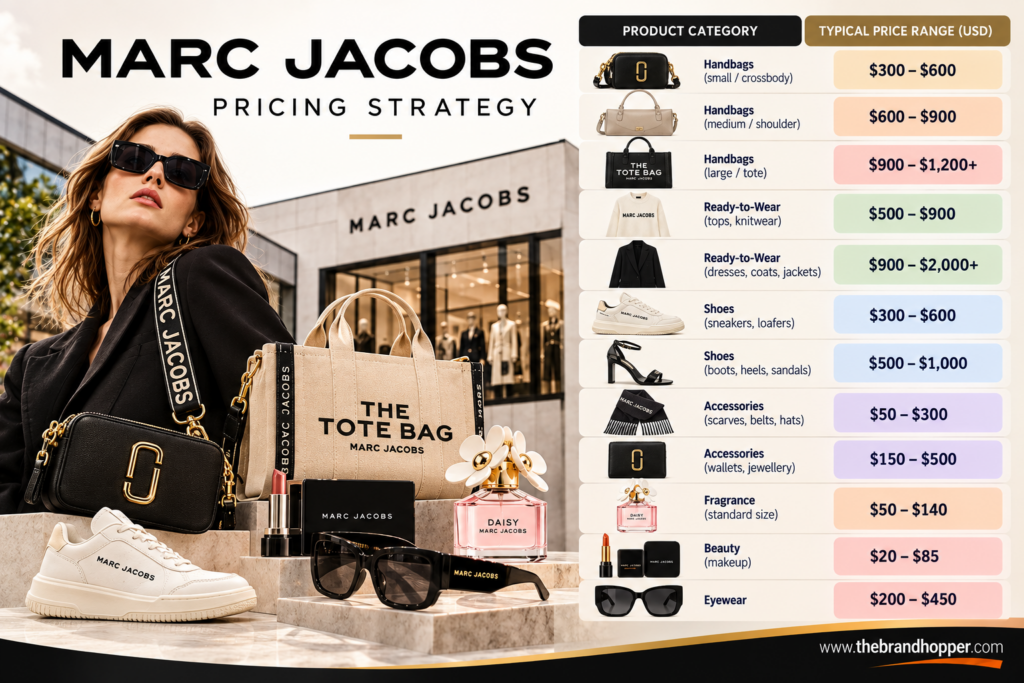
Note: Prices are indicative retail prices from marcjacobs.com and major retailer partners. Prices vary by retailer, region, and currency. Limited edition and collaboration pieces may carry premium pricing.
3. Place
Marc Jacobs distributes its products through a carefully managed multi-channel network designed to maintain brand context while maximising reach. The three pillars of this distribution strategy are: owned retail (flagship stores and the marcjacobs.com e-commerce platform), department store and specialty retail partners, and curated e-commerce platforms.
The brand operates more than 280 retail stores in major cities across all key luxury fashion markets — the United States, United Kingdom, France, Germany, Japan, South Korea, China, Australia, and the Gulf States, among others. Each store is a branded environment in which the full Marc Jacobs world — product range, aesthetic, and service philosophy — can be experienced on the brand’s own terms.
Through its e-commerce platform, Marc Jacobs offers global shipping, a full product range, features such as “Complete the Look” recommendations, free shipping and returns on qualifying orders, and digital content that contextualises the products within the brand’s campaigns and creative world.
Department store partners — including Neiman Marcus, Saks Fifth Avenue, Barneys New York, and Bergdorf Goodman in the US, and equivalent luxury department stores in key international markets — provide additional retail reach while maintaining the brand context that luxury products require. Marc Jacobs does not distribute through general or mass-market retailers, which would dilute the brand’s luxury positioning.
Digital retail partners including Net-a-Porter, Farfetch, Mytheresa, and MatchesFashion extend the brand’s reach to fashion-forward consumers who prefer to shop across brands on curated platforms. These platforms also provide editorial and content environments that reinforce the brand’s luxury credentials.
Pop-up retail events — such as the JOY pop-ups at Nordstrom NYC, Galeries Lafayette Paris, Isetan Tokyo, and The Standard High Line New York — represent a growing part of the brand’s retail strategy, creating temporary experiential environments that generate media coverage, drive foot traffic, and create new brand touchpoints in high-traffic or culturally significant locations.
4. Promotion
Marc Jacobs’ promotional strategy is one of the most sophisticated and multi-layered in luxury fashion. It operates across advertising, PR, influencer marketing, events, digital marketing, content creation, and loyalty programme mechanics — each channel reinforcing the others in a coherent brand narrative.
Advertising campaigns are the most visible element of the promotional mix. Marc Jacobs runs seasonal campaigns — Spring, Fall, Summer, Pre-Fall — that are shot by world-class photographers and directors including Harmony Korine, Stef Mitchell, and Tyrone Lebon. These campaigns appear in leading fashion publications (Vogue, i-D, AnOther Magazine, W Magazine), on outdoor media in key markets, and on digital channels including the brand’s own social media, YouTube, and programmatic display.
Public relations is an important element of the Marc Jacobs promotional strategy. The brand secures extensive editorial coverage in fashion media through strategic product seeding to editors and stylists, exclusive interviews and access with Marc Jacobs himself, and press events around major launches and collections. This earned media provides the brand with credibility and reach that paid advertising cannot fully replicate.
Events — runway shows, store openings, pop-up experiences, and product launch parties — provide opportunities to generate media coverage, deepen relationships with key influencers and press, and create content for digital channels. The JOY immersive pop-up programme in Fall 2025 is an example of how events can simultaneously serve PR, content, retail, and community-building goals.
Digital marketing includes search engine optimisation for the brand’s e-commerce platform, paid social advertising on Instagram and TikTok, email marketing to the brand’s subscriber base with new arrival announcements and campaign content, and retargeting campaigns to re-engage potential purchasers who have browsed but not converted.
Frequently Asked Questions (FAQs)
Q1. Who owns Marc Jacobs?
A: Marc Jacobs is owned by LVMH Moëт Hennessy Louis Vuitton, the French luxury conglomerate. LVMH acquired a stake in the Marc Jacobs brand in 1997 when Marc Jacobs was appointed creative director of Louis Vuitton. LVMH’s overall revenue was €84.7 billion in 2024. In 2025, it was widely reported that LVMH was exploring the potential sale of Marc Jacobs, valued at approximately $1 billion, as part of a broader portfolio rationalisation focused on its most profitable maisons. Talks with Authentic Brands Group were reported but ultimately did not result in a completed deal. Source: LVMH Annual Report 2024; WWD.
Q2. What is Marc Jacobs’s most famous product?
A: The Marc Jacobs Snapshot Bag is the brand’s most iconic and commercially significant product. A structured, minimalist camera-style bag with recognisable chunky chain hardware and the brand’s logo embossed on the front, it has become a modern luxury accessory icon, particularly popular with Millennial and Gen Z consumers. The Marc Jacobs Tote Bag — a clean, roomy canvas tote with bold logo lettering — is a close second in terms of cultural visibility. More recently, the Dual Bag, introduced on the Fall 2024 runway and featured prominently in the Summer 2025 Doja Cat “STAYCATION” campaign, has emerged as the brand’s newest signature style. Source: marcjacobs.com product archives; WWD.
Q3. What was the Marc Jacobs TikTok strategy in 2024?
A: Marc Jacobs’ 2024 TikTok strategy, which won a Shorty Award, was designed to build an engaged Gen Z community on the platform from a near-zero base. The brand posted 165 videos during the campaign period, achieving an average of 1.5 million views per video and a 9.7% engagement rate — exceeding the fashion industry benchmark by 100%. Standout videos included a behind-the-scenes clip of Adriana Lima discussing her favourite sandwich (29M views), a “cooking” video featuring influencer Nara Smith (17M views), and a comedy sketch with model Alex Consani (6.2M views). The strategy focused on authentic, entertainment-first content rather than traditional product advertising. Source: Shorty Awards 2024 (shortyawards.com).
Q4. Who is in the Marc Jacobs Fall 2024 campaign?
A: The Marc Jacobs Fall 2024 campaign was directed and photographed by filmmaker Harmony Korine, and featured a diverse celebrity and cultural cast including Cardi B, Lil Uzi Vert, Irina Shayk, Alex Consani, singer-songwriter Clairo, streamer Kai Cenat, and Gabbriette. The campaign was structured as an interview-format video in which each personality answered the question “What is Marc Jacobs?” The runway show itself — held at the New York Public Library on July 1, 2024 — also featured Cardi B as a headline front-row presence, wearing a custom archival feathered songbird dress. Source: Marc Jacobs press room (marcjacobs.com); Hypebeast; WWD.
Q5. What is the Marc Jacobs STAYCATION campaign?
A: STAYCATION is Marc Jacobs’ Summer 2025 campaign, starring Doja Cat. Shot by photographer Stef Mitchell, styled by Sydney Rose Thomas, and directed by Christian Breslauer, the campaign presents a dreamy, surreal vision of urban summer life — construction sites as sun decks, bus stops as spas. Hero products featured in the campaign include the Snapshot Convertible Shoulder Bag, the Large Denim Chain Sack, the Glam Claw Clip Shoulder Bag, and the newly introduced Dual Bag. The campaign also exclusively debuted Doja Cat’s unreleased track “Jealous Type,” a 1980s pop-inspired single. Source: Marc Jacobs PR Newswire (prnewswire.com); FashionNetwork USA.
Q6. What is the Marc Jacobs JOY collaboration?
A: The JOY campaign is Marc Jacobs’ Fall 2025 seasonal concept, built around the philosophy of joy as a creative and commercial strategy. At its core are three limited-edition artist capsule collections co-created with contemporary artists Derrick Adams, David Shrigley, and Hattie Stewart. Beyond the artist capsule, JOY includes eight brand partnership drops: Converse sneakers with JOY motifs; limited-edition Shut skate decks; Brompton bikes; Crayola coloured pencils; Moleskine journals; Gibson Les Paul guitars; Maxbone pet accessories; and two exclusive Barbie dolls. Pop-up installations launched in September 2025 at Nordstrom NYC, Galeries Lafayette Paris, Isetan Tokyo, and The Standard High Line New York. Source: Marc Jacobs PR Newswire (prnewswire.com); WWD; DesignScene.
Q7. What is Marc Jacobs’s Daisy fragrance?
A: Marc Jacobs Daisy, launched in 2007, is one of the most commercially successful luxury fragrance franchises of the past two decades. The original Daisy — a fresh, floral scent with notes of wild strawberry, violet, and white woods — has spawned an extensive family of flankers and limited editions, including Daisy Dream (2014), Daisy Love (2018), and various seasonal limited editions such as Daisy Love Paradise. The “Perfect” franchise, launched in 2020 and extended with Perfect Intense and Perfect Sunshine, has broadened the brand’s fragrance presence with a warmer, woodier scent profile. The Perfect franchise’s collaboration with Zendaya for the “Perfect Eau So Fresh” flanker significantly expanded the brand’s fragrance reach with Gen Z consumers. Source: marcjacobs.com fragrance; Sephora.
Q8. What is Marc Jacobs’s “Cast Me Marc” campaign?
A: Cast Me Marc was a landmark campaign launched in 2019 that invited anyone — regardless of professional modelling experience, age, body type, or background — to submit a headshot and personal story for consideration to appear in a Marc Jacobs advertising campaign. The campaign generated thousands of submissions from around the world and received extensive coverage in national and international media. It reinforced Marc Jacobs’ long-standing commitment to diversity, inclusivity, and the democratisation of fashion, and set a template for community-building campaigns that many other brands have since attempted to replicate. Source: Marc Jacobs official campaign archives; Vogue.
Q9. How does Marc Jacobs use celebrity endorsements differently from other luxury brands?
A: Marc Jacobs distinguishes itself from many luxury brands through the intentionality of its casting. Rather than selecting celebrities purely on the basis of fame or commercial reach, the brand consistently chooses people whose own cultural identity, creative work, or personal story aligns with the specific mood of a given campaign. The Fall 2024 cast — which included a Grammy-winning rapper (Cardi B), a TikTok streamer (Kai Cenat), a singer-songwriter (Clairo), and a trans supermodel (Alex Consani) — would be impossible to explain as a single demographic targeting exercise. It makes sense only as a brand statement about the diversity and breadth of cultural voices that Marc Jacobs wants to be in conversation with. Source: Fashionista; Hypebeast; WWD.
Q10. Who is Marc Jacobs the designer?
A: Marc Jacobs (born April 9, 1963, in New York City) is one of the most influential fashion designers of his generation. He studied at the Parsons School of Design, graduating in 1984. He launched his eponymous label in the same year, and his 1993 grunge-inspired collection for Perry Ellis — widely regarded as one of the most provocative runway shows in the history of American fashion — earned him the CFDA Perry Ellis Award for New Fashion Talent even as it cost him his job. He served as creative director of Louis Vuitton from 1997 to 2013, during which time he transformed the brand from a luggage company into one of the world’s most sought-after fashion houses and launched its ready-to-wear and shoe collections. He returned to full-time focus on his own brand in 2013 and has continued to lead its creative direction. Source: Marc Jacobs official biography; CFDA.
Also Read: Marketing Strategies and Marketing Mix of Fendi
Conclusion
Marc Jacobs is a brand that defies easy categorisation — and that is precisely what makes it such a compelling case study in luxury fashion marketing. It is simultaneously one of the industry’s great heritage brands (40+ years of creative direction from one of fashion’s most recognisable designers) and one of its most culturally current (a 2024 TikTok strategy that is still being studied by competitors). It is both accessible (the Daisy fragrance at $100, the logo Tote Bag at $400) and genuinely aspirational (runway gowns, limited-edition artist capsules, bespoke celebrity event dressing).
The brand’s core marketing philosophy — that fashion is for everyone who cares about it, in whatever form that care takes — has proven remarkably durable. It was the philosophy behind the Cast Me Marc campaign in 2019, and it is the philosophy behind the JOY collaboration programme in 2025. The expressions change season by season, but the underlying belief — that clothing and style are forms of self-expression available to everyone, not just a chosen few — remains constant.
Looking ahead, Marc Jacobs faces genuine strategic challenges. The question of LVMH ownership — and whether the brand may eventually find a new home better suited to its entrepreneurial creative energy — will shape its strategic options. The need to build deeper commercial infrastructure behind the creative brilliance — particularly in Asia-Pacific, where luxury growth is concentrated and where the brand has historically been less present than its peers — is another priority.
But the creative and marketing fundamentals are strong. A brand that can earn a Shorty Award for its TikTok strategy, debut an unreleased Doja Cat track through a handbag campaign, mount a meaningful art-fashion collaboration, and partner with Gibson guitars and Crayola pencils in the same season — all while remaining unmistakably itself — is a brand with genuine originality and genuine commercial instinct. Those are the two most important ingredients in luxury fashion marketing, and Marc Jacobs has them both.
To read more content like this, subscribe to our newsletter