
Last Updated on October 24, 2026 by Team TBH
Kia Corporation is no longer just a car manufacturer. Over the past decade, it has reshaped its brand identity, redesigned its visual identity, expanded its vehicle lineup and strengthened its position in electric and electrified vehicles, turning itself into a major global automotive brand.
When Hyundai acquired Kia in 1998, few could have predicted the scale of its subsequent transformation. Kia has since earned major international recognition, including three overall World Car of the Year wins: the Telluride in 2020, the EV9 in 2024 and the EV3 in 2025. Its campaigns have also included high-profile Super Bowl advertising, while its long-running Australian Open partnership has become a prominent part of its global brand strategy.
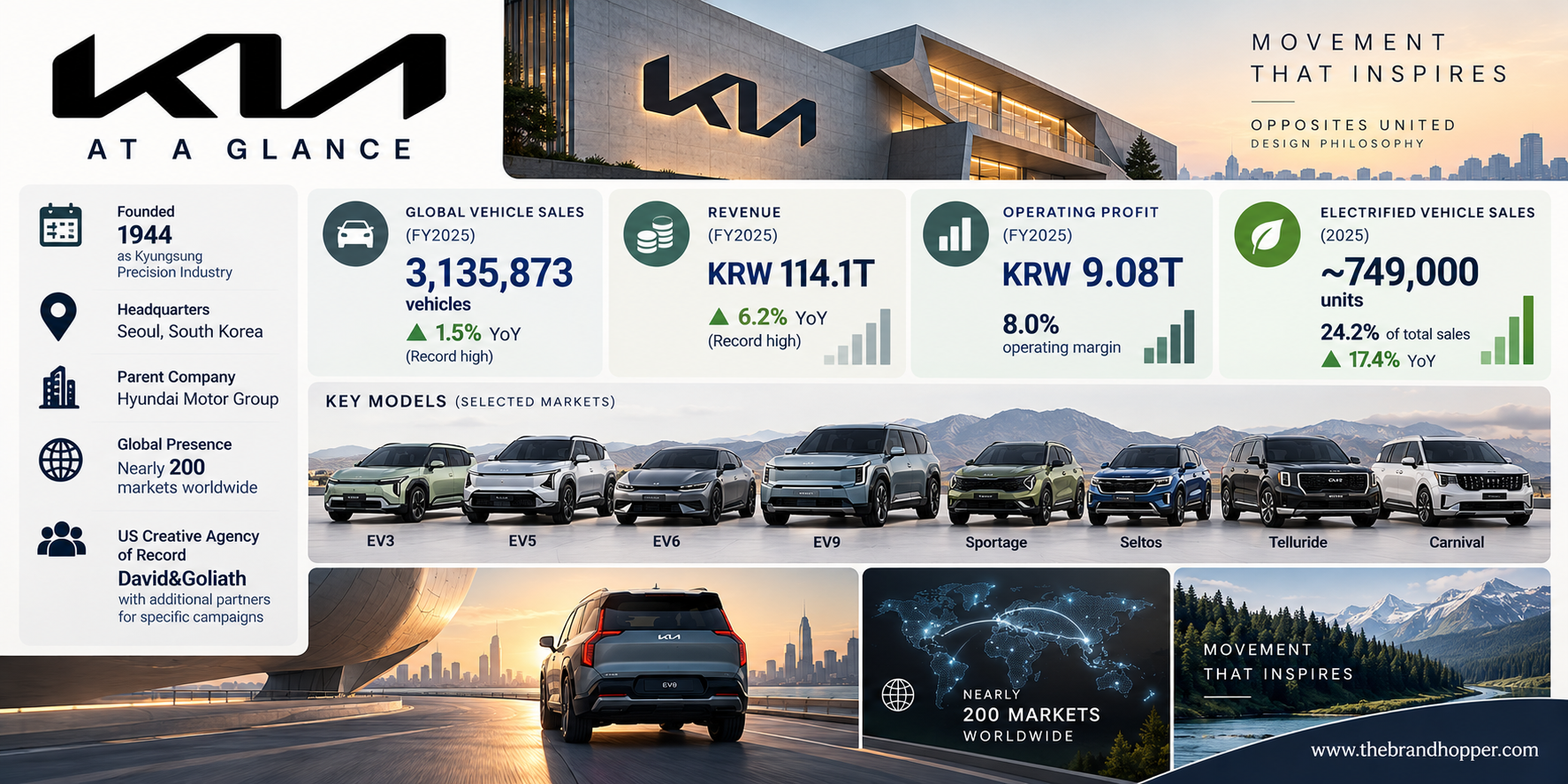
In fiscal 2025, Kia recorded a company-high 3,135,873 global vehicle sales, an increase of 1.5% year over year, and revenue of KRW 114.1 trillion, up 6.2%. This was the second consecutive year in which annual revenue exceeded KRW 100 trillion, although operating profit declined 28.3% to KRW 9.08 trillion amid tariff impacts and higher incentives.
Kia also sold approximately 749,000 electrified vehicles in 2025, including hybrids, plug-in hybrids and battery-electric vehicles. These accounted for 24.2% of its total sales, up 17.4% year over year, reflecting the growing importance of electrified models in its product and market strategy.
This article examines Kia’s marketing strategy, from its landmark 2021 rebrand and “Opposites United” design philosophy to its international sports partnerships, high-profile advertising and evolving digital marketing approach. It also explores how Kia uses product design, pricing, distribution and promotion to strengthen brand perception, reach new audiences and compete in an increasingly electrified automotive market.
Marketing Strategies of Kia
1. “Movement That Inspires” — The Brand Repositioning
In January 2021, Kia introduced a new logo, adopted the slogan “Movement that inspires,” and changed its corporate name from Kia Motors Corporation to Kia Corporation. The rebrand marked a shift from traditional automotive messaging towards a more aspirational identity focused on design, innovation and sustainable mobility.
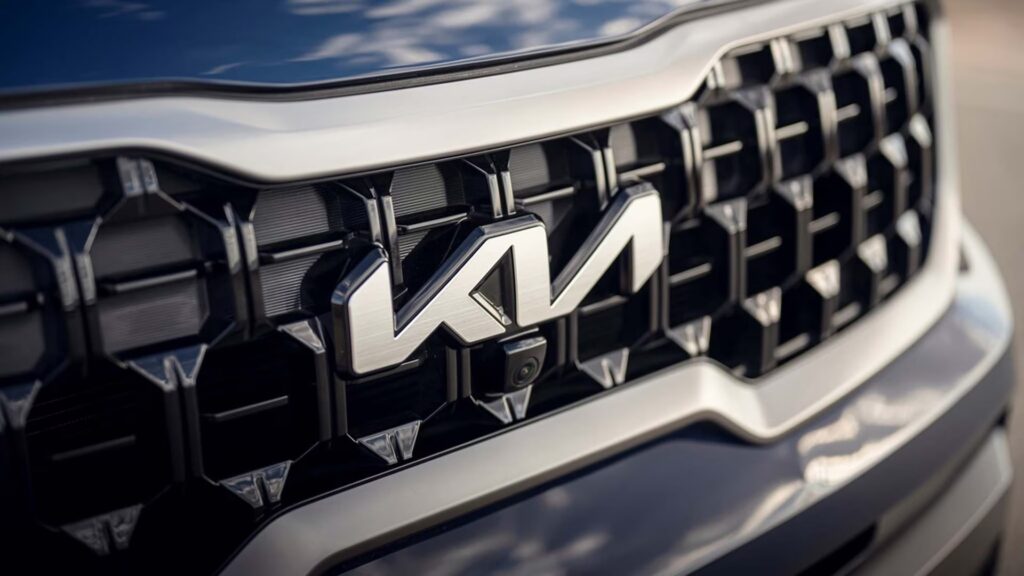
Kia’s new brand purpose reflects the idea that movement can inspire experiences and progress, rather than simply take people from one place to another. The EV6 became the first global model to feature the new logo, showcasing Kia’s updated design direction and electric-vehicle ambitions. Marketing activations included a Times Square launch in New York and the “Moving Inspiration Project” in Europe.
The repositioning also helped Kia communicate a more premium image as it expanded into the electric-vehicle market. Models such as the EV6 GT and EV9 demonstrate the brand’s move into higher-priced segments, although their pricing alone does not prove that the rebrand drove customers’ willingness to pay more.
Kia’s business performance has strengthened since the rebrand. In 2025, the company recorded 3.14 million global vehicle sales and KRW 114.1 trillion in revenue, both annual records. However, operating profit fell 28.3% to KRW 9.08 trillion, showing that record sales and revenue do not automatically translate into higher profitability.
2. EV-First Product Strategy — Plan S & the Dedicated EV Lineup
Kia’s marketing strategy is inseparable from its product strategy. In 2020, the company announced Plan S—a comprehensive electrification roadmap targeting 11 battery-electric models by 2025 and 15 BEVs by 2027, built on Hyundai Motor Group’s E-GMP (Electric Global Modular Platform). Plan S also targeted 500,000 annual EV sales, and with 749,000 electrified vehicles sold in its latest fiscal year, Kia has demonstrably exceeded that ambition.
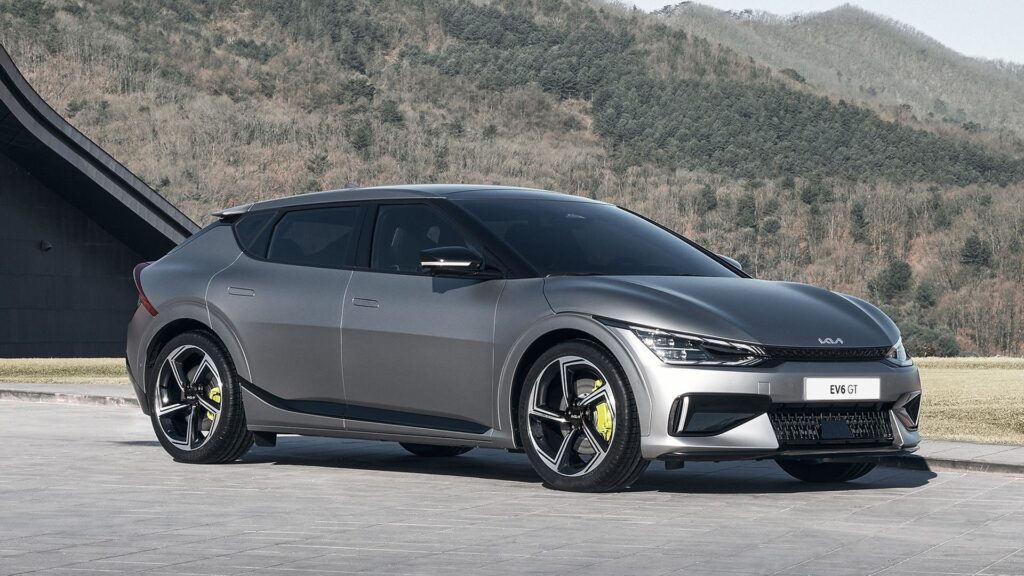
The EV lineup that has emerged from Plan S is Kia’s most powerful marketing asset. The EV6 won the World Car of the Year award in 2022 and became the first Kia to establish genuine premium credentials, particularly the EV6 GT variant with its 577 hp output and 0–100 km/h time of 3.5 seconds. The EV9 then took the strategy to its logical conclusion: a three-row, all-electric large SUV that won the World Car of the Year AND World Electric Vehicle awards in 2024—the first time any vehicle had won both in the same year.
The EV3 extended the strategy downmarket, targeting mass adoption. In the first half of its commercial availability, the EV3 became the most popular retail EV in the United Kingdom and ranked sixth in all of Europe. The vehicle demonstrates that Kia’s EV strategy is not just about premium halo products but about genuine volume electrification across all segments. The PV5 electric van, the EV4 sedan and hatchback (announced), and the EV5 SUV continue to build out the world’s most comprehensive dedicated EV range from a single automaker.
For the marketing function, the EV lineup provides constant campaign content—awards to amplify, product launches to activate and technology stories to tell. The 2026 model year EV6 and EV9 both gained a North American Charging Standard (NACS) port, enabling charging at Tesla Supercharger stations across North America—a product enhancement that generated significant earned media coverage without requiring any advertising spend. Kia’s ability to engineer newsworthy product decisions is itself a form of marketing.
3. “Opposites United” — Design as the Ultimate Marketing Tool
Kia’s design philosophy, “Opposites United,” is as much a marketing strategy as an aesthetic framework. First revealed in 2021 and embodied initially in the EV6, “Opposites United” draws creative tension from the divergent values of nature and modernity, boldness and restraint, high technology and human warmth. Under design chief Karim Habib, this philosophy has produced vehicles that generate organic brand advocacy through their sheer visual impact.
The EV9 is the definitive expression of “Opposites United.” Its signature design elements—the Digital Tiger Face, the Digital Pattern Lighting Grille, bold vertical headlamps and Star Map light signature—create an instantly recognisable silhouette that requires no badge for identification. The vehicle won the Red Dot Best of the Best award in the Cars and Motorcycles category for Product Design in 2024—the Red Dot’s highest honour—as well as Gold at both the iF Design Awards 2024 and IDEA 2024. This trifecta of design recognition translates directly into marketing credibility and earned media.
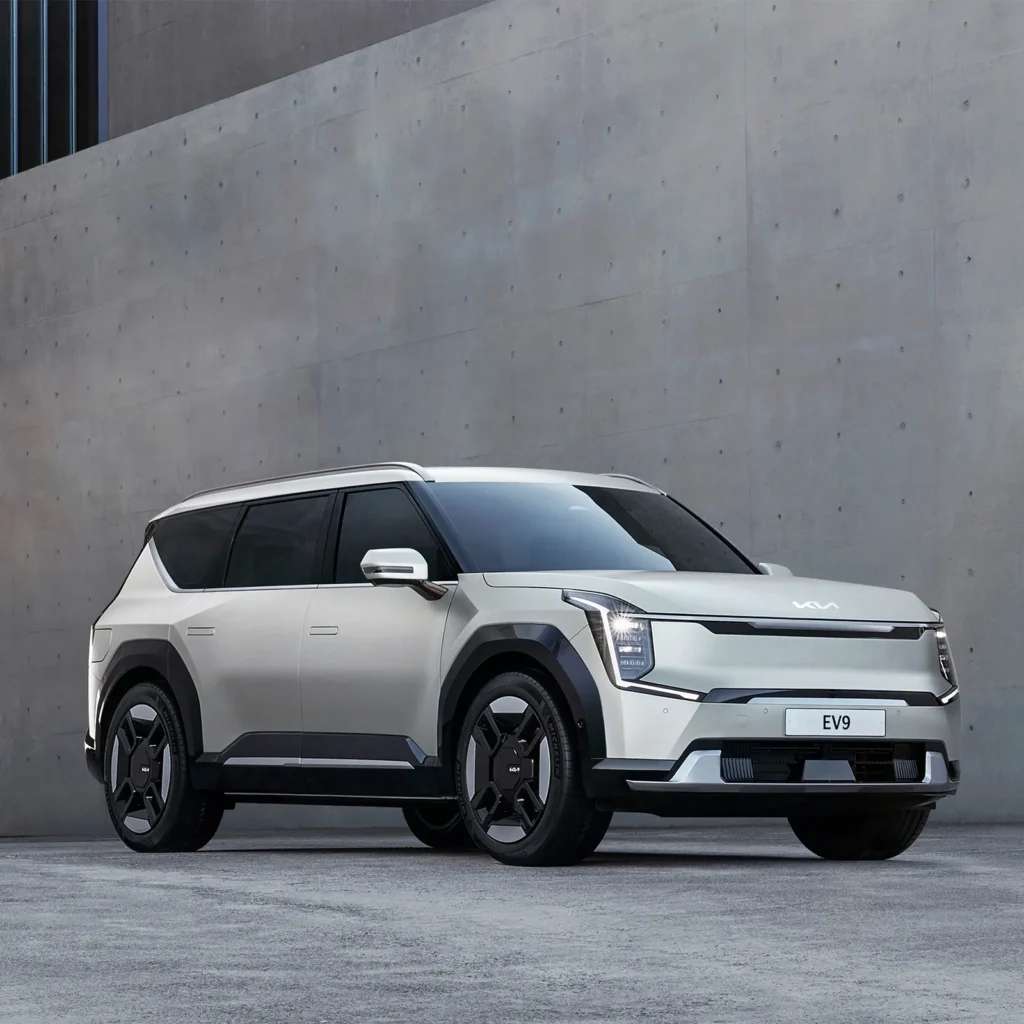
The marketing implication of world-class design is profound: every EV9 on the road is a moving advertisement. Every Instagram post from an EV9 owner is organic brand content. Every design award is a press release that no media buy can replicate. Kia has consciously used design to reduce its dependence on paid media, earning coverage through vehicles that journalists and consumers genuinely want to photograph and write about.
The “Opposites United” philosophy also extends to interior design, where sustainable materials (recycled plastics, eco-processed leather alternatives) coexist with premium finishes and technology. This creates an additional marketing story around sustainability that resonates with environmentally conscious buyers without requiring Kia to make explicit “green” claims that could attract regulatory scrutiny. The design communicates the values; the marketing amplifies them.
4. High-Impact Campaign Marketing
Kia’s campaign marketing has evolved from competent mainstream automotive advertising to some of the most talked-about creative work in the industry. Working primarily with its long-standing US agency David&Goliath, Kia consistently invests in culturally resonant moments that generate reach far beyond their paid media placements.
The Super Bowl remains Kia’s marquee campaign moment in North America. For Super Bowl LVIII (2024), Kia aired the “The Power Within”—a spot featuring the EV9 and a young figure skater whose determination mirrors the relentless spirit the brand wants consumers to associate with its electric vehicles. The ad was complemented by a “Kia Squares” promotional mechanic that gave away an EV9 each quarter of the game, creating a sustained social media conversation throughout the broadcast. The campaign drove record website traffic to Kia America’s EV9 product pages in the week following the Super Bowl.

In 2025, David&Goliath developed the Sportage Hybrid “Epic Road Trip” campaign—a content-led initiative that followed real consumers on extended journeys in the Sportage Hybrid, generating authentic storytelling around the vehicle’s range, practicality and hybrid efficiency. The campaign ran across YouTube, Instagram and digital display, targeting outdoor lifestyle audiences who represent the core Sportage buyer demographic.

In Europe, the EV6’s “Moving Inspiration Project” campaign set a new benchmark for automotive experiential marketing. The installation-based activation placed a stationary EV6 in a specially constructed environment where light, sound and kinetic elements expressed the idea of motion without the car moving—a visceral demonstration of the “Movement That Inspires” brand purpose. The campaign earned substantial media coverage across automotive and general interest publications and became a showcase for how auto brands can generate cultural relevance through creative bravery rather than media budget alone.
5. Global Presence and Targeted Localization
Kia operates in more than 190 countries, and its marketing strategy must simultaneously project a unified global brand identity while adapting to profoundly different local market conditions. The company’s approach to this challenge—maintaining “Opposites United” and “Movement That Inspires” as global anchors while allowing regional teams significant latitude in execution—is a textbook case in glocal marketing.
In India, Kia has executed one of the most impressive market entry campaigns in recent automotive history. Entering the market in 2019 with the Seltos—positioned as a premium SUV at an accessible price point—Kia sold over 500,000 vehicles in India within its first few years of operations, making it one of the fastest automakers to reach that milestone. Its marketing in India emphasises design leadership, technology features (connected car services, sunroofs, large touchscreens) and a premium dealership experience that differentiates Kia from established mass-market players.
In China, Kia has developed region-specific vehicles including the K4 compact sedan, tailored to meet the preferences of Chinese consumers who favour refined, feature-rich sedans. The company has adapted its marketing messaging to incorporate themes that resonate with Chinese cultural values around family, aspiration and social status. Kia’s partnerships with regional celebrities and digital marketing on Weibo, WeChat and Douyin (the Chinese TikTok) reflect an understanding that Western social media platforms are largely irrelevant in the world’s largest automotive market.
In North America, where Kia is now consistently among the top five automotive brands in customer satisfaction surveys, the marketing approach centres on value credibility—communicating that Kia vehicles offer features and quality that justify prices competitive with established premium brands. The success of the Telluride—which has won multiple “Best 3-Row SUV” awards from mainstream media and has carried significant waiting lists at dealerships—demonstrates how Kia has leveraged product quality as a marketing tool to shift consumer perception beyond the economy-car association.
6. Landmark Sports Sponsorships
Kia’s sports sponsorship portfolio is one of the most carefully constructed in the automotive industry, built around properties that reflect the brand’s values of movement, energy, precision and aspiration. These partnerships provide Kia with sustained global visibility while anchoring its brand to athletic excellence and international competition.
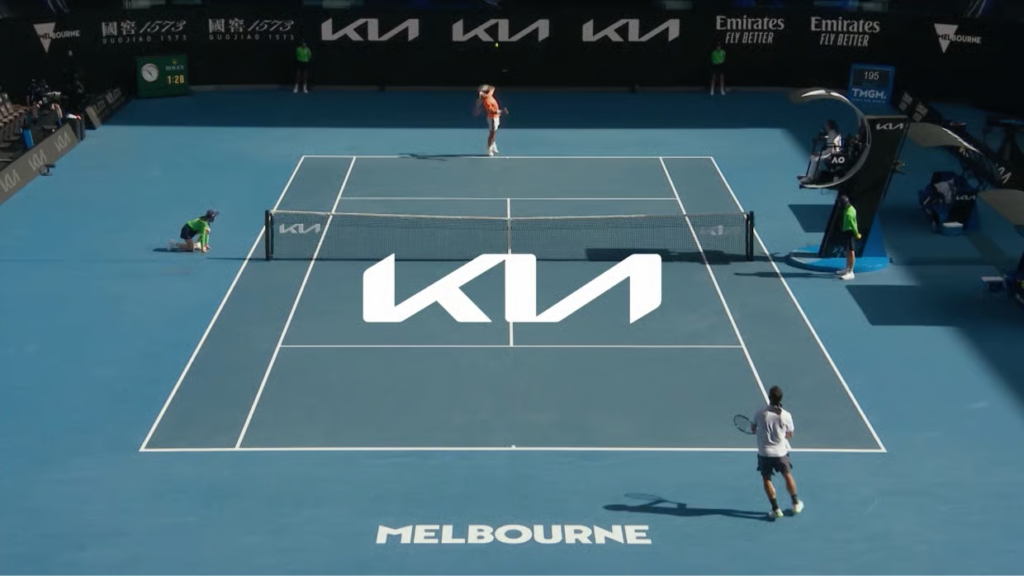
The Australian Open is Kia’s longest and most iconic sponsorship—the company is the tournament’s longest-running major partner, celebrating its 25th year of association in 2026. Under a deal extended through 2028, Kia supplies approximately 130 vehicles to transport players, officials and VIPs during the two-week January tournament. The partnership gives Kia association with one of the four global Grand Slam events, brand exposure to an audience of millions across broadcasts in over 200 territories, and on-site branding throughout Melbourne Park. The Australian Open partnership predates and in many ways established the template for Kia’s other sports marketing investments.
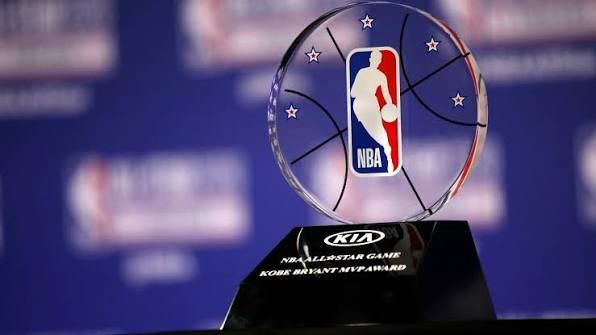
Kia’s partnership with the NBA is its most commercially powerful sponsorship in the United States. As the NBA’s official automotive partner, Kia benefits from branding across all NBA broadcasts, the NBA All-Star Weekend, the NBA Finals and NBA Live activations. The partnership has featured Kia’s logo on NBA game jerseys in what was described as the first such deal in the US Big Four leagues—a historic sponsorship milestone. The NBA partnership gives Kia access to a fanbase that skews young, urban and tech-engaged—precisely the audience most relevant for Kia’s EV marketing push. LeBron James, one of basketball’s most globally recognised athletes, has served as a brand ambassador, extending the campaign’s cultural reach.
Kia has also maintained a long-running relationship with FIFA and football. As a former official FIFA World Cup partner from 2007 through 2022, Kia gained unparalleled global exposure across the world’s most-watched sporting event, with branding across stadiums, broadcast graphics and official communications in markets where football dominates cultural life. The company’s association with tennis, basketball and football—three globally prominent sports with demographically distinct fanbases—gives it a breadth of sponsorship impact that few automotive brands can match.
7. Digital Marketing and Social Media
Kia’s digital marketing capability has matured into one of the automotive industry’s most sophisticated. The company maintains active, well-resourced presences across YouTube, Instagram, TikTok, Facebook, X (formerly Twitter) and LinkedIn, each calibrated to the platform’s audience and content norms. YouTube hosts long-form content including full campaign films, technology explainer videos and EV charging guides. Instagram prioritises visual storytelling centred on design and lifestyle. TikTok captures the attention of younger audiences through shorter, more creative and often humorous content formats.
Search engine optimisation and paid search are fundamental to Kia’s digital customer acquisition strategy. The company invests in keyword-targeted campaigns that intercept consumers at the research stage of the automotive purchase funnel—a particularly important channel for EV buyers, who conduct significantly more online research than ICE vehicle buyers before visiting a dealership. Kia’s website includes interactive vehicle configurators, EV range calculators and “Build Your Kia” tools that convert research-stage traffic into qualified dealer leads.
User-generated content is an increasingly important element of Kia’s social strategy. The brand actively encourages owners of high-visual-impact vehicles like the EV6, EV9 and Telluride to share their ownership experiences on social media, and its community management teams engage with this content to amplify it. Hashtag campaigns including #KiaEV, #EV9 and #MovementThatInspires have generated millions of organic impressions, reducing the cost per impression of Kia’s social media presence significantly compared to purely paid approaches.
Kia has also invested in influencer marketing at both macro and micro levels. Partnership campaigns with automotive YouTubers, lifestyle content creators and sustainability advocates provide the brand with authentic third-party advocacy that resonates with audiences who are sceptical of traditional advertising. The EV3’s UK launch, for example, involved a carefully curated influencer programme that seeded vehicles with creators across lifestyle, travel and tech verticals—generating organic content that far exceeded the reach of equivalent paid media placements.
8. Sustainability as a Marketing Pillar
Kia has made sustainability a cornerstone of its brand narrative, recognising that environmental credentials are an increasingly decisive factor in vehicle purchase decisions—particularly among the under-40 demographics that Kia is targeting with its EV lineup. The company’s commitment to achieving carbon neutrality by 2045 provides a long-term narrative arc that anchors sustainability claims and differentiates Kia from brands making more cautious environmental commitments.
In Europe, Kia’s “Move Responsibly Together” campaign directly addressed consumer scepticism about EV range anxiety and corporate sustainability claims. Rather than making abstract promises, the campaign used board sport athletes—whose activities are intimately connected with natural environments—to demonstrate the real-world range and usability of Kia’s electric vehicles. This approach grounded sustainability marketing in authentic human experiences rather than corporate declarations, earning more consumer trust as a result.

Kia’s vehicles themselves embody sustainability marketing. The EV9’s interior incorporates materials including PET bottles recycled into seat fabric, plant-based bio-paint on the dashboard and sustainably sourced wood trim—each a feature that generates press coverage and owner advocacy without requiring advertising spend. The company publishes detailed sustainability specifications for its EVs, giving environmentally motivated buyers the information they need to justify their purchase and share it with their networks.
Kia’s sustainability strategy also encompasses its manufacturing operations: all major manufacturing plants are transitioning to renewable energy, and the company has committed to making its supply chain carbon neutral by 2045 alongside its vehicle operations. These upstream commitments are communicated in Kia’s annual sustainability reports and investor communications, providing institutional stakeholders with the ESG credentials that increasingly influence corporate fleet purchasing decisions.
9. Kia Rewards — Customer Loyalty and Retention
Kia Rewards is the company’s proprietary customer loyalty programme, designed to retain existing customers through the vehicle ownership lifecycle and encourage repurchase decisions. Members earn points for every dollar spent at Kia dealerships—on vehicle purchases, service appointments, parts and accessories—which can be redeemed against future purchases, leases or servicing costs. The programme also provides members with priority access to new vehicle reveals and special events, creating a community dimension that transcends transactional loyalty.
The strategic purpose of Kia Rewards extends beyond retention. The programme collects first-party customer data—service history, vehicle preferences, communication opt-ins, family composition signals—that enables Kia’s CRM teams to personalise marketing communications at scale. A customer whose service records indicate a growing family can be targeted with Telluride or Carnival content; an EV6 owner whose charging data suggests range-limited city driving can be served EV3 upgrade messaging. This data-driven personalisation significantly increases the relevance and effectiveness of Kia’s marketing communications.
The programme also supports Kia’s conquest marketing efforts. Members who refer new customers earn additional points, creating a structured word-of-mouth channel that leverages the advocacy of satisfied owners. In a category where peer recommendations are among the most influential factors in purchase decisions—particularly for EVs, where buyers often cite conversations with existing EV owners as decisive in their decision to switch—Kia Rewards’ referral mechanics provide a systematic way to harness organic advocacy.
Marketing Mix of Kia — 4Ps Analysis
1. Product
Kia’s product portfolio spans every major vehicle segment and powertrain type, from entry-level compact crossovers to flagship three-row electric SUVs. The lineup is organised around two parallel tracks: the conventional ICE and hybrid models that continue to generate the majority of revenue, and the growing dedicated EV range that represents the future of the brand.
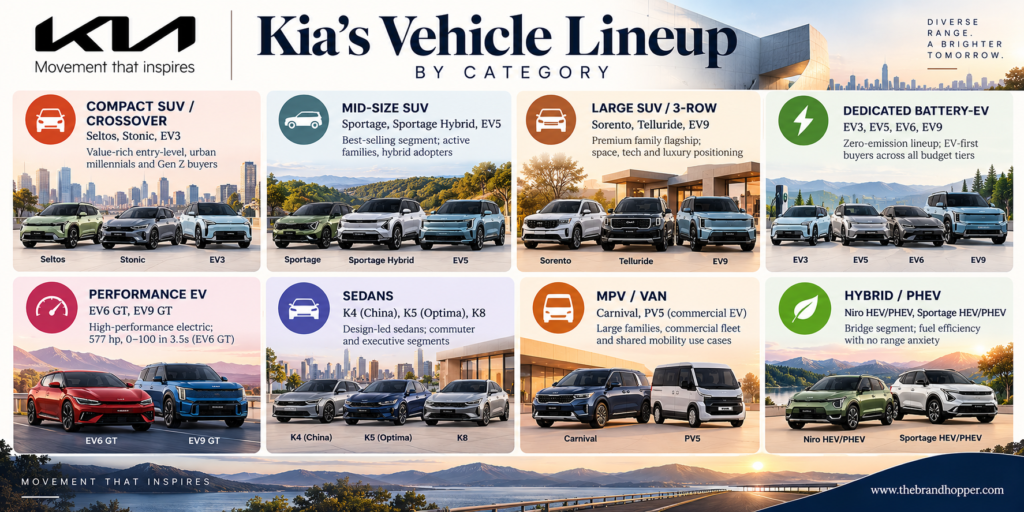
Key product differentiators include the EV9’s Vehicle-to-Load (V2L) technology—which allows the car to power external appliances including camping equipment and other EVs—and the EV6’s 800V ultra-fast charging architecture that can add 100 km of range in approximately 4.5 minutes. Both features generate organic marketing through owner-created content and media coverage.
2. Price
Kia’s pricing strategy has evolved significantly over the past decade. The company has moved from a primarily value-for-money positioning—offering more features per dollar than competitors—toward a broader spectrum that spans accessible entry pricing at one end and genuinely premium EV pricing at the other. This evolution reflects the brand repositioning from “surprising value” to “inspiring movement.”
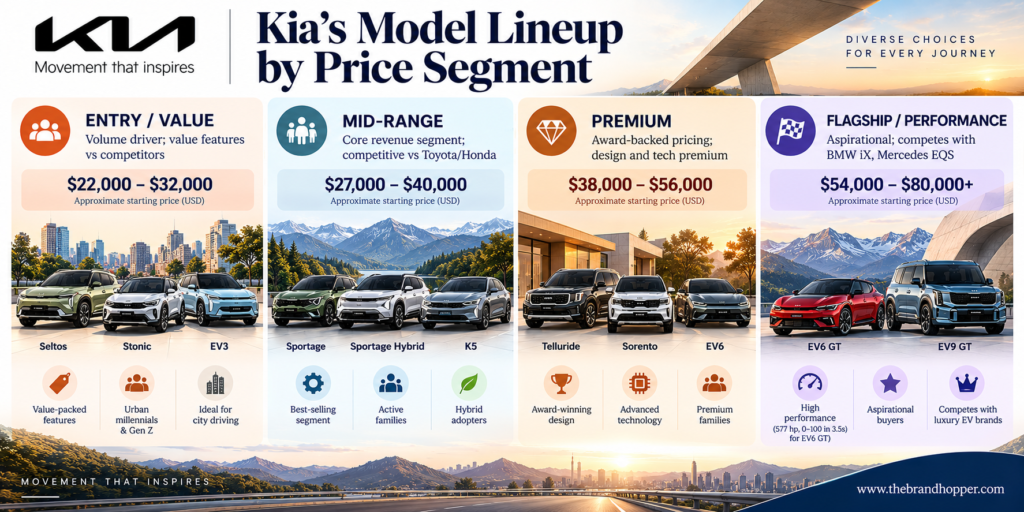
Kia supplements its sticker price strategy with flexible financing options, lease programmes, EV federal and state tax credit alignment (in the US, several Kia EVs qualify for the $7,500 federal EV tax credit under the Inflation Reduction Act) and dealer incentives. The company also uses limited-time promotional pricing and competitive APR offers to drive volume in slower sales periods without permanently discounting its brand.
3. Place
Kia distributes its vehicles through a carefully managed global network that balances traditional dealership infrastructure with growing direct and digital channels.
Authorised Dealer Network: Kia operates more than 5,000 authorised dealerships worldwide, providing sales, financing, service and parts. Dealerships serve as the primary point of vehicle delivery and after-sale relationship management. Kia’s premium showroom design standards, implemented globally since the brand’s 2021 relaunch, create a consistent retail experience that reinforces the brand’s quality positioning.
Online Reservation and Configuration: Kia allows customers in most major markets to reserve new models, configure specifications and receive pricing estimates entirely online before visiting a dealership. EV models including the EV9 have been sold via online-only limited launch editions in several markets, reducing inventory carrying costs while generating high-impact launch moments.
Manufacturing Footprint: Kia operates major manufacturing plants in South Korea (Hwaseong, Sohari, Gwangmyeong), the United States (Kia Georgia, West Point), Slovakia (Zilina), India (Anantapur) and China (Beijing, Yancheng). Proximity to key markets reduces logistics costs and delivery times while enabling local content compliance for government procurement.
Fleet and Corporate Sales: Kia serves corporate fleet customers through dedicated fleet sales divisions in major markets. The Carnival and Stonic are popular fleet choices in European markets, while the Seltos and Sportage perform strongly in Indian and Asian corporate fleets.
After-Sales Service Network: Kia’s after-sales infrastructure—service centres, genuine parts distribution and the Kia Roadside Assistance programme—is integral to the ownership experience and customer retention. The company offers segment-leading warranty terms (7-year/100,000-mile warranty in the United States and similar programmes globally) that serve both as a marketing message and a tangible ownership benefit.
4. Promotion
Kia’s promotional mix is one of the most diversified in the automotive industry, combining high-reach broadcast and sports marketing with precision-targeted digital performance marketing, experiential brand activations and structured customer loyalty mechanics.
| Channel | Key Activity / Mechanic | Notable Example |
| Broadcast Advertising | TV spots, Super Bowl, NBA broadcasts | EV9 “The Power Within” — Super Bowl LVIII (2024) |
| Sports Sponsorship | Australian Open, NBA, FIFA World Cup | 25-year Australian Open partnership; NBA official automotive partner |
| Experiential Marketing | Brand installations, test drives, events | EV6 Moving Inspiration Project (Europe); EV6 Times Square takeover |
| Digital & Paid Search | SEO, PPC, YouTube pre-rolls, display | EV range calculators, configurator-driven lead generation |
| Social Media | Instagram, TikTok, YouTube, Facebook, X | #KiaEV, #EV9, #MovementThatInspires UGC campaigns |
| Influencer Marketing | Macro + micro creator partnerships | EV3 UK launch influencer programme; automotive YouTuber reviews |
| Content Marketing | Long-form video, blog, owner stories | Sportage Hybrid “Epic Road Trip” YouTube series (2025) |
| Public Relations | Auto shows, award entries, press releases | EV9 World Car of the Year 2024; Red Dot Best of the Best 2024 |
| Sales Promotions | APR offers, loyalty deals, referrals | Kia Squares Super Bowl giveaway; Kia Rewards redemptions |
| CRM & Email | Personalised owner communications | Service reminders, upgrade offers, EV transition messaging |
Frequently Asked Questions (FAQs)
1. What is Kia’s current marketing slogan?
Kia’s current brand slogan is “Movement That Inspires,” adopted in 2021 as part of the company’s comprehensive brand relaunch. It replaced the long-running “The Power to Surprise” tagline and reflects Kia’s repositioning from a value-focused automaker to a brand centred on inspiring sustainable mobility. The slogan applies globally across all markets and communications.
2. What is Kia’s target audience?
Kia targets a broad but well-defined audience spanning younger first-time car buyers (Seltos, Stonic, EV3), active families seeking versatile mid-size SUVs (Sportage, Sorento), premium family buyers moving toward electrification (Telluride, EV9) and performance-focused early EV adopters (EV6 GT, EV9 GT). The brand’s core demographic is 25–45-year-olds who prioritise design, technology and value—consumers who are transitioning from mainstream to near-premium purchases and are drawn to brands with a clear environmental narrative.
3. How successful is Kia’s EV strategy?
Kia’s EV strategy has delivered exceptional commercial results. In its latest fiscal year, Kia sold 749,000 electrified vehicles—hybrids, PHEVs and BEVs combined—representing 24.2% of total global sales, up 17.4% year on year. The EV3 became the most popular retail EV in the UK during the first half of its availability. The EV6 won the World Car of the Year in 2022 and the EV9 won both the World Car of the Year and World Electric Vehicle in 2024.
4. What sports does Kia sponsor?
Kia sponsors three of the world’s most-watched sports properties: tennis (Australian Open—the brand’s longest-standing major partner for 25+ years), basketball (NBA—official automotive partner with multi-year exclusive deal) and football (FIFA World Cup—long-running official partnership from 2007 through 2022, continuing in a supporting capacity). These sponsorships give Kia access to demographically diverse global audiences and associate the brand with athletic excellence and international competition.
5. What is Kia’s “Opposites United” design philosophy?
“Opposites United” is Kia’s global design philosophy, first unveiled in 2021. It draws creative energy from the tension between contrasting values—nature and technology, boldness and restraint, simplicity and complexity—to create vehicles with a distinctive, harmonious aesthetic. The philosophy is expressed through the Digital Tiger Face, Star Map lighting signatures and bold proportions of the EV6 and EV9. The EV9 won the Red Dot Best of the Best Design Award for 2024 under this philosophy.
6. How does Kia use digital marketing?
Kia’s digital marketing encompasses SEO-optimised content, PPC campaigns targeting in-market car buyers, YouTube long-form brand films and product videos, Instagram lifestyle storytelling, TikTok campaigns for younger audiences, and influencer partnerships at both macro and micro levels. The brand also uses interactive online configurators, EV range calculators and virtual showrooms to convert digital research traffic into qualified dealer leads. First-party data from the Kia Rewards programme enables personalised CRM communications to existing owners.
7. What is Kia’s brand promise to EV buyers?
Kia’s brand promise to EV buyers centres on three pillars: design leadership (award-winning aesthetics that justify premium pricing), technology innovation (800V ultra-fast charging on EV6, Vehicle-to-Load on EV9, NACS compatibility with Tesla Superchargers on 2026 models) and value transparency (segment-leading features at competitive prices relative to German and American EV competitors). The 7-year warranty across most markets also provides a risk reassurance that encourages conquest purchases from ICE vehicle owners.
8. What were Kia’s global sales results in its latest fiscal year?
Kia achieved record global sales of 3,135,873 vehicles in its latest fiscal year, a 1.5% increase year on year. Revenue reached a record KRW 114.1 trillion (approximately $84 billion), surpassing KRW 100 trillion for the second consecutive year. Electrified vehicles (hybrids, PHEVs and BEVs) accounted for 749,000 units, or 24.2% of total sales. The company’s 2026 targets are 3.35 million vehicles, KRW 122.3 trillion in revenue and KRW 10.2 trillion in operating profit.
Conclusion
Kia’s marketing story is ultimately a story about the courage to redefine an entire brand—not incrementally, but completely. In 2021, Kia did not just change its logo or update its tagline; it rewrote its fundamental reason for being, transitioning from a manufacturer of affordable vehicles to a company whose purpose is to inspire people to move forward in life. The commercial results of that decision—record revenues, record global sales, a world-award-winning EV lineup and a brand premium that justifies $80,000 SUV prices—validate the magnitude of the strategic bet.
The strategies that drive Kia’s marketing success are neither random nor incidental. The “Movement That Inspires” brand purpose gives every campaign, partnership and product decision a coherent narrative anchor. The “Opposites United” design philosophy produces vehicles that market themselves through sheer visual impact. The Australian Open, NBA and FIFA sponsorships give the brand global visibility in properties that embody the athletic values Kia wants to be associated with. The EV product strategy provides a constant stream of award-winning, media-worthy vehicles that reduce dependence on paid advertising. And Kia Rewards builds the data infrastructure needed to make every customer interaction more relevant and more effective over time.
As Kia pursues its targets of 3.35 million vehicles sold and KRW 122.3 trillion in revenue, its marketing team faces the challenge that comes with success: maintaining the creative ambition and strategic clarity of a challenger brand as it transitions into a global automotive leader. The evidence so far suggests that Kia is meeting that challenge—and that the era of underestimating Korea’s most surprising automaker is well and truly over.
Also Read: Marketing Strategies, Marketing Mix & STP of Hyundai
To read more content like this, subscribe to our newsletter