Last Updated on August 26, 2026 by Team TBH
Supreme stands as one of the most iconic and culturally potent forces in the history of fashion. Founded by James Jebbia in April 1994 in downtown Manhattan, this New York City skateboarding and streetwear label has transcended its humble origins to become a global phenomenon worth $538 million in annual revenue. In October 2024, EssilorLuxottica — the Italian-French eyewear giant behind Ray-Ban, Oakley, and Persol — acquired Supreme from VF Corporation for $1.5 billion, making it the brand’s third corporate owner in five years. Despite the ownership changes, founder James Jebbia continues to run the brand, committed to staying true to what he described as operating “as we have done for the past 30 years.”
With just 17 stores worldwide, a deliberate anti-advertising ethos, and 13.6 million Instagram followers, Supreme has built one of the most studied and imitated marketing machines in modern business. In a global streetwear market valued at $185.4 billion, Supreme commands approximately 35% of the premium streetwear segment — not through mass production or conventional marketing spend, but through the strategic weaponisation of scarcity, community, and cultural authenticity.
This article explores the full architecture of Supreme’s marketing success — covering its STP analysis, eight core marketing strategies, complete 4Ps marketing mix, SWOT analysis, and the latest collaborations through the FW2025 season.

About Supreme: 30 Years of Counterculture Commerce
Supreme was established in April 1994 when James Jebbia, a British-born entrepreneur who had previously worked at Parachute and helped open the first US Stüssy store, opened a small shop at 274 Lafayette Street, New York City.
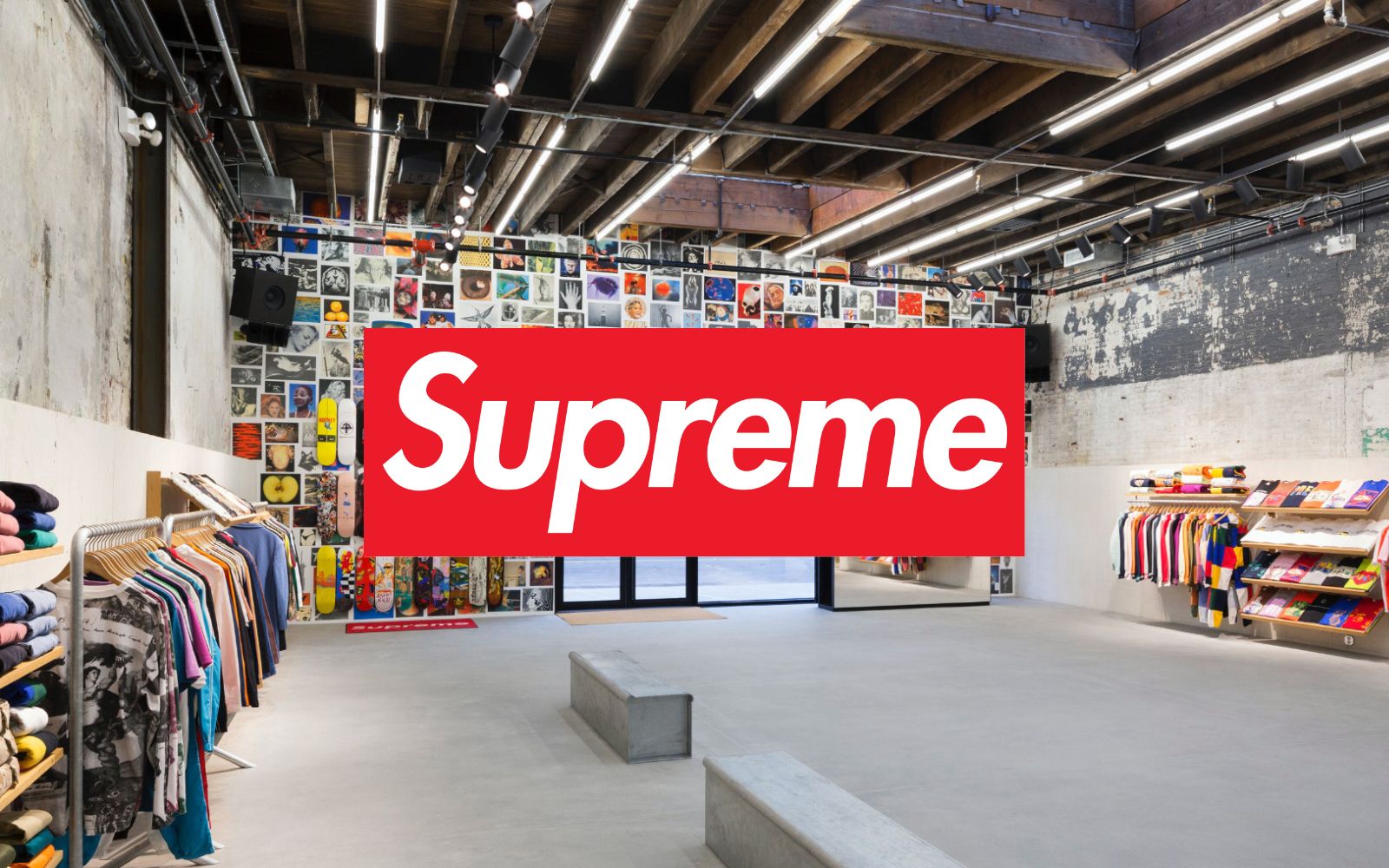
From the beginning, the store was designed for skaters — with a wide-open floor plan that allowed boards to be ridden inside. The original Supreme red box logo, featuring “Supreme” in white Futura Heavy Oblique font on a red rectangle, was directly inspired by conceptual artist Barbara Kruger’s visual language. This design choice — appropriating high-art imagery for streetwear — established Supreme’s DNA: rebellious, art-aware, and unapologetically provocative.
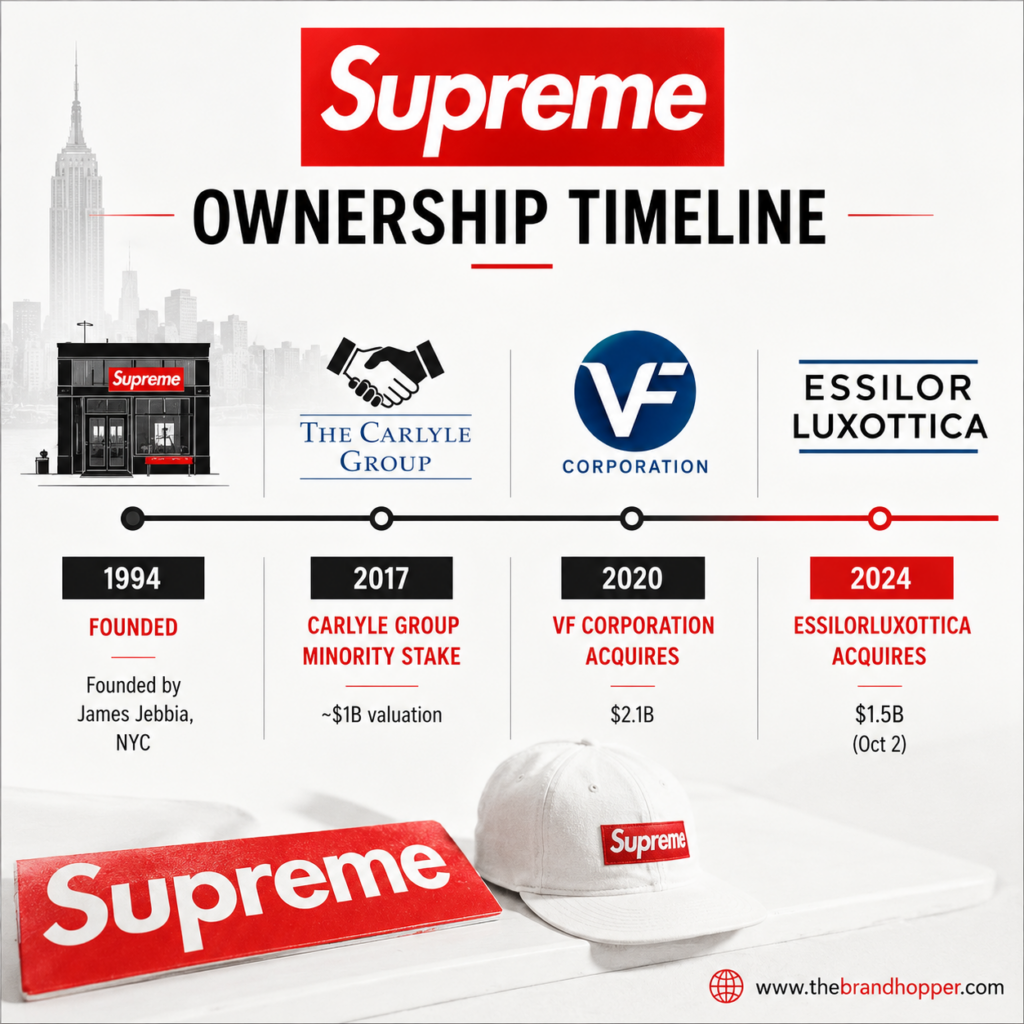
Over three decades, Supreme’s ownership has evolved dramatically. In 2017, private equity firm The Carlyle Group acquired a minority stake, valuing the brand at approximately $1 billion. In 2020, VF Corporation — parent of The North Face, Vans, and Timberland — acquired Supreme for $2.1 billion, betting on its cultural cachet. That bet proved costly: struggling with pandemic-era challenges and internal financial pressures, VF sold Supreme in October 2024 to EssilorLuxottica for $1.5 billion — a $600 million write-down. Under EssilorLuxottica’s stewardship, Supreme now benefits from a parent company with 18,000+ retail locations globally, offering a unique — if carefully managed — potential for selective distribution expansion.
STP Analysis of Supreme
Supreme’s brand dominance stems in large part from its precise, unwavering STP (Segmentation, Targeting, and Positioning) framework — one that has remained fundamentally unchanged since 1994 while adapting its execution to each generation’s cultural moment.
| Dimension | Details |
| Segmentation | Psychographic (lifestyle, urban culture, skateboarding, hip-hop); Demographic (age 16–35, primarily male 58%, growing female audience 42%); Geographic (global, with strongest presence in US, Japan, UK, Europe, South Korea) |
| Targeting | Urban youth aged 16–35 who value exclusivity, authenticity, and cultural currency; streetwear collectors; resellers; fashion-forward individuals who see clothing as self-expression and identity |
| Positioning | The world’s most exclusive streetwear brand — a cultural institution at the intersection of skate, hip-hop, and art. Supreme is positioned not as clothing, but as access to a community and a statement of counter-cultural identity. |
Segmentation
Supreme segments its audience psychographically and demographically.
Psychographically, it targets those who identify with skateboarding, hip-hop, and underground art culture — individuals for whom fashion is a form of self-expression and community membership rather than utility.
Demographically, its core audience is males aged 16–35, though website analytics show 41.56% of supreme.com visitors are female — a growing segment reflecting Supreme’s unisex product evolution.
Geographically, Supreme’s strongest markets are the US (particularly New York, Los Angeles, Chicago), Japan (Tokyo, Osaka, Nagoya, Fukuoka), the UK (London), and South Korea (Seoul), with Shanghai representing its newest strategic frontier.
Targeting
Supreme concentrates its energy on a relatively small, intensely passionate audience: urban youth who view clothing as cultural currency and social signalling. This targeting is deliberately narrow — Supreme does not want everyone to be a customer.
It targets the tastemakers, the cultural commentators, and the collectors whose enthusiasm ripples outward to aspirational consumers who can’t access the brand.
This “inner circle targeting” strategy multiplies brand value far beyond what advertising spend alone could achieve.
Positioning
Supreme is positioned as an exclusive cultural institution — not merely a clothing brand, but a gatekeeping mechanism to a community.
Its positioning sits at the precise intersection of skateboarding authenticity, hip-hop credibility, and high-art sensibility.
The brand deliberately occupies a space where luxury fashion (Louis Vuitton, Comme des Garçons) meets underground street culture — a paradox that generates perpetual fascination and desire. No other brand has successfully sustained this tension for three decades.
Marketing Strategies of Supreme
Supreme’s ascent from a downtown Manhattan skate shop to a $538 million global brand is not an accident of taste. It is the product of eight interlocking marketing strategies — some radically counterintuitive, all ruthlessly effective. Together, they have created a brand that spends almost nothing on traditional advertising yet generates more organic media coverage, social engagement, and consumer passion than most Fortune 500 companies.
1. Limited Supply and Scarcity: The Architecture of Desire
Scarcity is Supreme’s most foundational and most imitated marketing weapon. Every Thursday — both online and in physical stores — Supreme releases a curated selection of new products. These “drops” are always produced in limited quantities, deliberately insufficient to meet demand. The result is predictable: sell-outs within minutes, queues stretching around city blocks, and resale prices that can multiply the original retail price several times over.
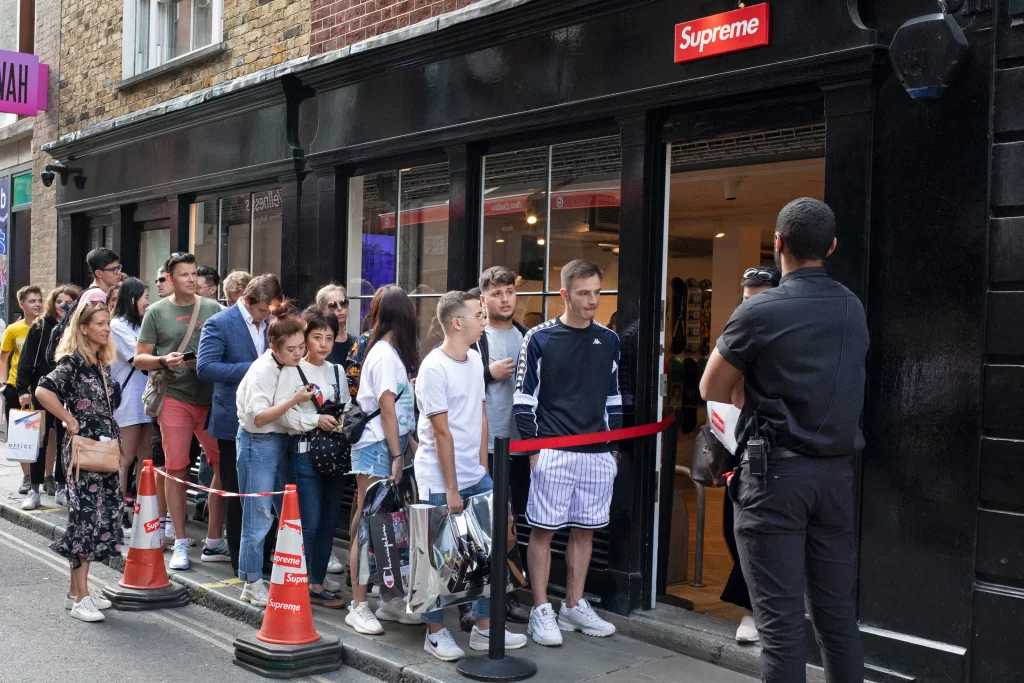
This is not accidental undersupply. Supreme’s manufacturing decisions are calculated to maintain a demand-to-supply ratio that keeps items feeling perpetually scarce. The brand’s weekly cadence, documented in detail at
The brand’s “drops,” as explained in Paper Magazine’s guide to Supreme drops, have become cultural events in their own right — generating news coverage, social media activity, and long lines that serve as organic advertising. The anticipation cycle itself is a marketing asset: fans check Supreme’s website every week, follow fan accounts, and discuss upcoming drops in online communities — all without Supreme spending a cent.
Why it works: The psychology of scarcity — specifically FOMO (Fear Of Missing Out) — creates urgency that no advertisement can replicate. When a product is gone, its desirability increases. Supreme customers who secure a drop feel validated; those who miss out feel motivated to try harder next time. The brand has transformed commerce into a competitive sport.
2. Collaborations: The Art of Cultural Cross-Pollination
Supreme’s collaboration strategy is arguably its most sophisticated marketing tool. By partnering with brands, artists, musicians, and institutions that span the full spectrum from underground subculture to high-end luxury, Supreme achieves a kind of cultural omnipresence while maintaining its street-level authenticity.
Iconic Historical Collaborations
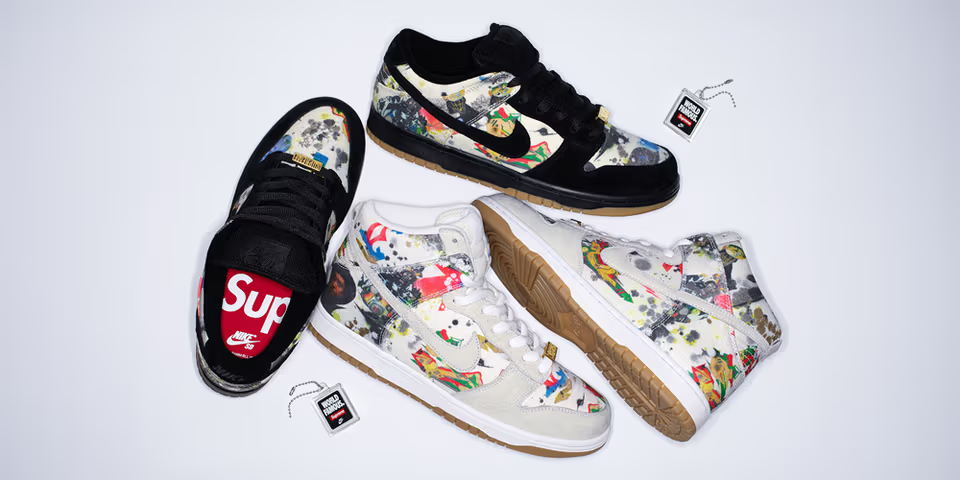
Nike SB x Supreme: The most enduring partnership in streetwear history. Supreme x Nike SB drops — including the legendary Dunk High Rammellzee — regularly generate resale premiums of 5-10x retail. This relationship has defined sneaker culture for two decades.
Levi’s x Supreme: Denim jeans, jackets, and accessories combining Levi’s heritage craftsmanship with Supreme’s streetwear credentials — a pairing of two iconic American brands that created instant collectibles.
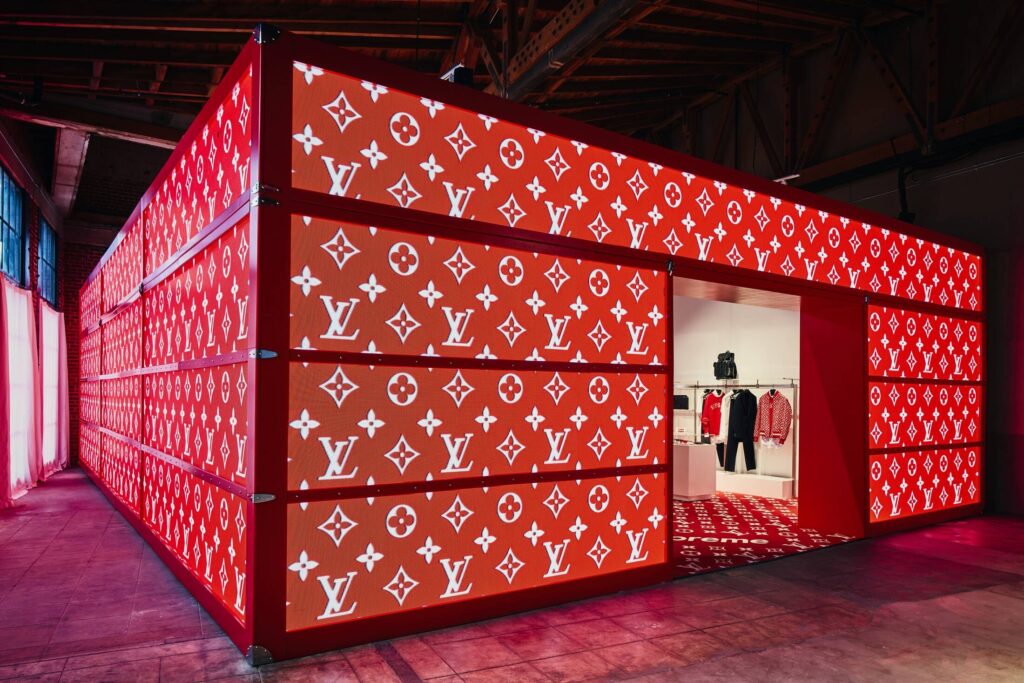
Louis Vuitton x Supreme: The collaboration that validated the luxury-streetwear fusion. The joint collection — launched at Paris Fashion Week in 2017 — combined LV’s monogram with Supreme’s box logo on bags, accessories, and ready-to-wear, generating global headlines and establishing a template that dozens of luxury houses have since attempted to replicate.
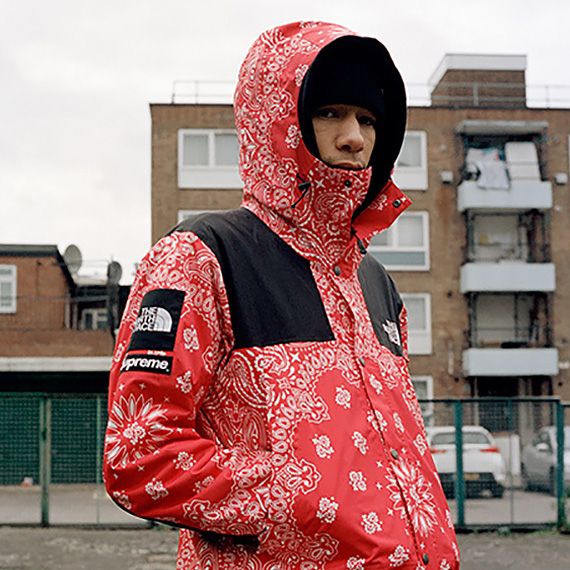
The North Face x BAPE x Supreme: A three-way collaboration showcasing Supreme’s ability to unite sportswear heritage (TNF), Japanese streetwear culture (BAPE), and New York underground credibility (Supreme) into a single drop.
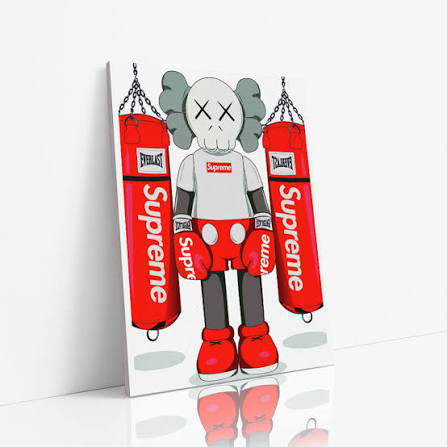
KAWS x Supreme: Skate decks, apparel, and accessories featuring KAWS’s iconic “Companion” and “XX” characters — bridging contemporary art collecting and streetwear fandom.
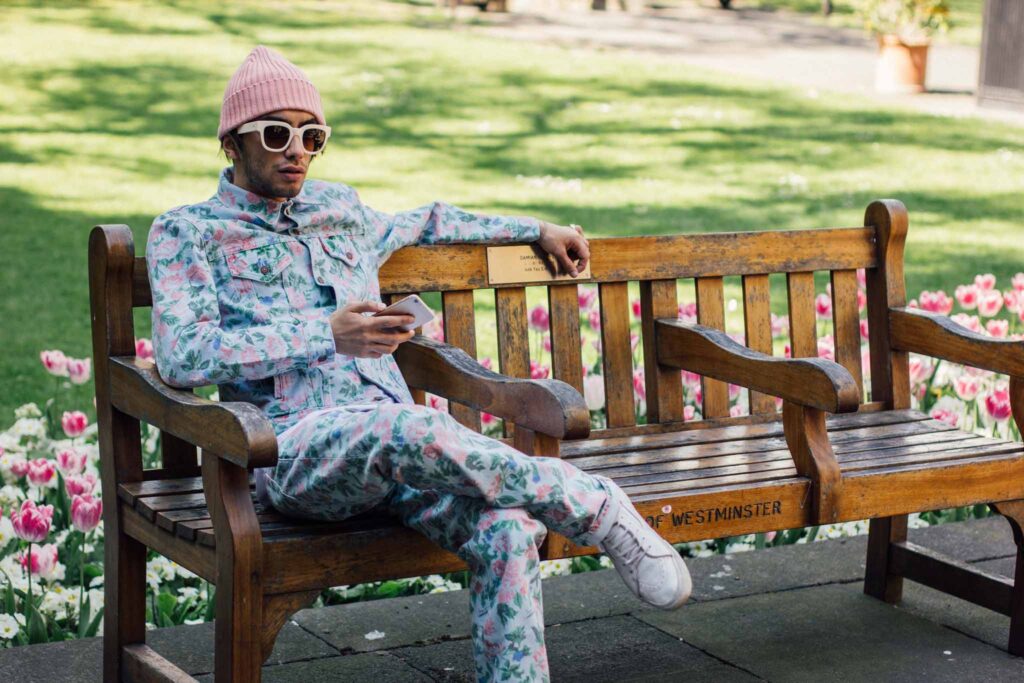
Vans x Comme des Garçons x Supreme: A three-way collaboration merging CDG’s avant-garde Japanese fashion sensibility, Vans’ skateboarding roots, and Supreme’s New York energy — a masterclass in multi-brand storytelling.
Recent Collaborations: SS2025 and FW2025
Supreme’s Spring/Summer 2025 collection demonstrated the brand’s continued ability to juxtapose the unexpected. Key SS2025 collaborations included an Aphex Twin Windowlicker graphic tee (bridging electronic music iconography with streetwear), GORE-TEX performance outerwear developed in partnership with Umbro (connecting technical sportswear with Supreme’s street credentials), a SpongeBob SquarePants x Jeff Hamilton varsity jacket (pop-culture nostalgia meets Americana), and a Damien Hirst partnership incorporating the British artist’s spot painting motifs onto skate decks and apparel. The Y’s by Yohji Yamamoto collaboration — featuring punk-inspired leathers and avant-garde workwear — reinforced Supreme’s ongoing dialogue with Japanese fashion culture.
The Fall/Winter 2025 collection showcased Supreme’s cultural range at its widest. Vanson Leathers contributed GORE-TEX jackets emphasising durability and craft; Schott introduced shearling coats with a classic Americana edge; Nike continued its multi-decade partnership with new footwear and apparel; a Wu-Tang Clan collaboration produced a long-sleeve jersey drenched in an all-over bee graphic; and a Jeff Hamilton collaboration resulted in custom varsity jackets designed for both the New York Yankees and Chicago White Sox. Cultural homages to Michael Jackson and The Exorcist appeared across graphic tees and flannel shirts — Supreme’s perennial strategy of elevating pop-culture references into limited-edition art objects.
Why collaborations work: Each Supreme collaboration serves a precise strategic function: it introduces the brand to a new audience (Nike fans, LV customers, Wu-Tang listeners) while reinforcing its identity to existing fans. The limited nature of each collaboration ensures that it becomes a cultural moment rather than simply a product release.
3. Strategic Celebrity Endorsement: Influence Without Obligation
Supreme’s celebrity endorsement strategy is notable for what it avoids as much as for what it pursues. Unlike most fashion brands, Supreme rarely signs formal, long-term endorsement contracts with celebrities. Instead, it cultivates organic relationships with cultural figures who genuinely align with the brand’s identity — and whose unsolicited endorsements therefore carry far more weight than paid advertising.
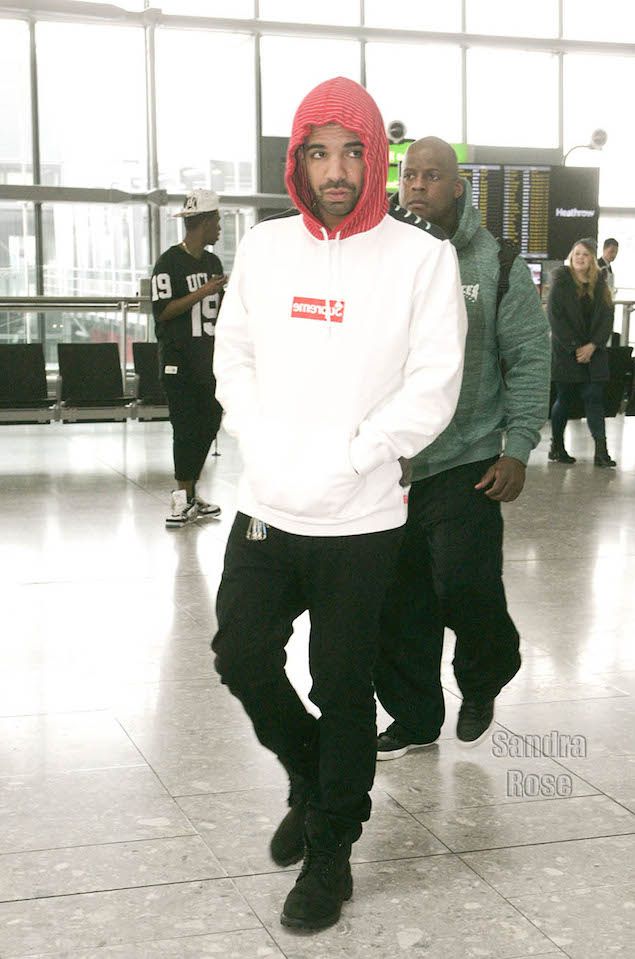
Music industry partnerships: Supreme has forged relationships with defining voices in hip-hop and beyond. Pharrell Williams, Drake, and Travis Scott have each collaborated with Supreme on exclusive merchandise lines or worn Supreme authentically in public appearances. These associations connect Supreme’s heritage to the living pulse of contemporary music culture.
Film and entertainment: Director and actor Jonah Hill co-designed a clothing collection with Supreme. Academy Award-winning director Harmony Korine has shot Supreme lookbook campaigns. These Hollywood connections extend Supreme’s cultural reach beyond music and skate.
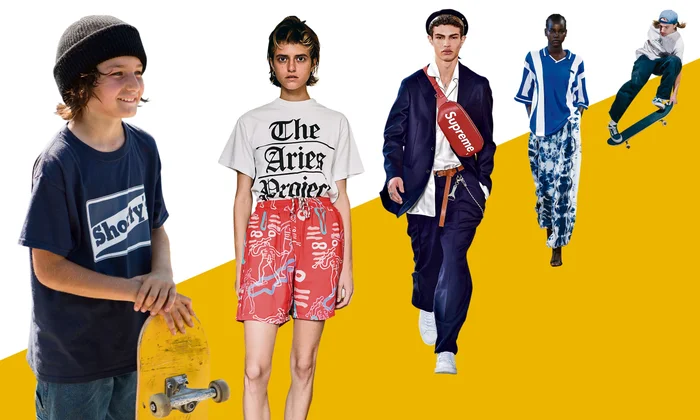
Athletic ambassadors: NBA superstar Stephen Curry has appeared in Supreme gear during press conferences. Professional skateboarder Nyjah Huston and numerous other skate legends have represented the brand, anchoring Supreme to its authentic sporting roots even as it expands into luxury fashion.
Art world affiliations: Collaborations with Damien Hirst, Jeff Koons, Takashi Murakami, Ai Weiwei, Jean-Michel Basquiat (posthumously), and Keith Haring have positioned Supreme as a serious patron and participant in contemporary art — elevating it above the streetwear category entirely.
Political subversion: Supreme’s rare political interventions — the “F*ck Trump” hat during the 2016 US presidential election, or the Shepard Fairey “Hope” collaboration — are calculated provocations that generate enormous media coverage while reinforcing its rebellious, anti-establishment identity. These moves are not endorsements of parties; they are demonstrations of values.
4. Anti-Advertising: The Power of Saying Nothing
In an era of algorithmic advertising and performance marketing, Supreme remains deliberately absent from traditional media. The brand does not run television commercials, print advertising campaigns, or paid search campaigns of any meaningful scale. It does not pay influencers for sponsored posts. It does not partner with media agencies.
What Supreme does instead is far more expensive to replicate: it creates products and cultural moments so newsworthy that media covers them for free. Each weekly drop generates news articles on Hypebeast, Highsnobiety, Complex, and The New York Times. Each collaboration generates days of social media discussion. The resale market — where Supreme items regularly trade at multiples of retail — itself functions as a form of price advertising that communicates brand desirability to millions who never entered a Supreme store.
This approach aligns with Supreme’s brand identity: a company that advertises is a company that is trying to reach you. Supreme implies that it is not trying to reach you — if you find it, you deserve it.
5. Cultivating a Community: Belonging as Brand Strategy
Supreme’s most durable competitive advantage may be the community it has built over 30 years. This community is not manufactured through loyalty programmes, membership schemes, or CRM campaigns. It is organic, self-sustaining, and self-governing — maintained through Supreme’s consistent authenticity and its fans’ shared identity.
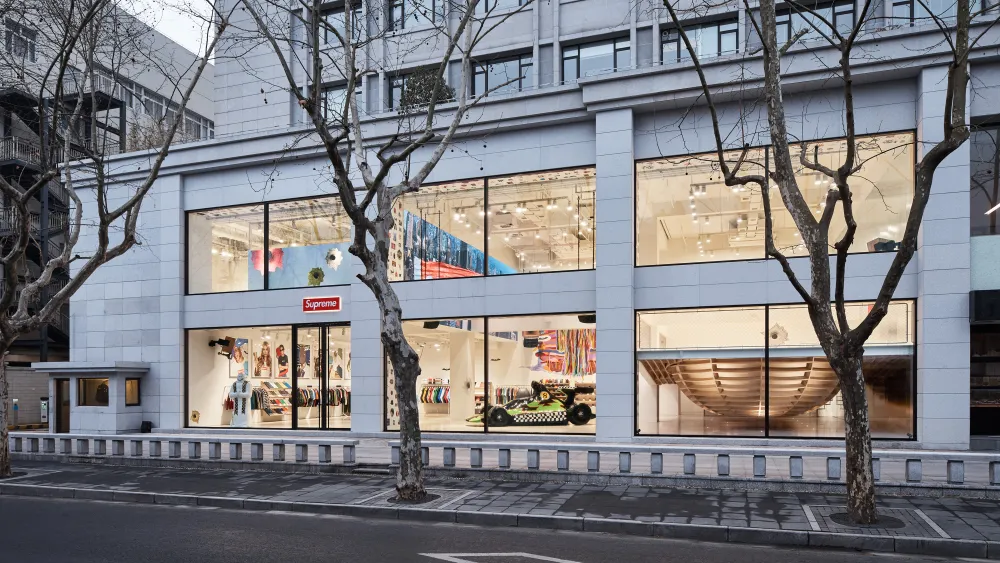
Physical store experience: Supreme’s 17 stores worldwide are destinations rather than transactional spaces. Each is designed with unique artistic interiors — often referencing local culture and history — and staffed by people who are genuine members of the skate and streetwear communities. The store is a clubhouse, not a shop.
Digital community: Supreme maintains active presences on Instagram (13.6 million followers) and other platforms. Critically, the brand’s Instagram does not advertise — it documents. It shares lookbook imagery, collaboration previews, and short films that feel like editorial content rather than marketing. The comments sections of Supreme’s posts are where community dialogue happens organically.
Fan-generated ecosystems: Supreme has inspired an entire ecosystem of third-party community platforms: SupremeCommunity.com (droplists, sellout times, prices), Reddit’s r/supremeclothing (130,000+ members), and dozens of YouTube channels and Discord servers dedicated to Supreme resale, collecting, and culture. None of these were created by Supreme — they are a testament to the depth of community the brand has cultivated.
Event culture: Supreme organises occasional in-store events, pop-ups, and skate demonstrations that give fans physical touchpoints with the brand. These events generate social content, news coverage, and memories that deepen emotional attachment to the brand.
6. Artistic Expression and Subversion: Culture as Commerce
From the beginning, Supreme positioned itself as a participant in art rather than merely a consumer of it. Barbara Kruger’s visual language inspired the box logo. KAWS, Damien Hirst, Ai Weiwei, and Takashi Murakami have all contributed to Supreme products. Photography legends like Larry Clark, Nan Goldin, and Terry Richardson have shot its campaigns.
This strategy achieves several objectives simultaneously. It legitimises Supreme in the eyes of cultural tastemakers who might otherwise dismiss fashion as superficial. It creates products with genuine artistic value, justifying premium pricing and collectibility. And it situates Supreme in a broader cultural conversation — one where it is not just selling hoodies but contributing to the visual language of its era.
Supreme’s subversive streak — referencing anti-establishment art, political imagery, and counterculture iconography — also functions as a competitive moat. Corporate competitors cannot authentically appropriate rebellion. Authenticity, when built over 30 years, cannot be bought or manufactured by a competitor overnight.
7. Digital-First Strategy: Controlling the Drop Experience
Supreme operates what EssilorLuxottica described at acquisition as “a digital-first business” — a designation that would have seemed unlikely for a brand that started as a physical skate shop. Supreme’s online store now drives the majority of its global revenue, processing hundreds of thousands of transactions in the minutes following each Thursday drop.
The brand’s digital infrastructure is engineered around scarcity management: anti-bot measures (CAPTCHA, one-per-customer limits, IP restrictions), queue systems, and instant global sell-through. This technical architecture is itself a marketing signal — it communicates that demand is so intense that Supreme must actively defend its products from bots and bulk buyers. The defence of scarcity IS part of the brand story.
Supreme’s website — supreme.com — generated $99 million in revenue in its most recent reporting period. A week before each drop, Supreme shares lookbook imagery on its website and social channels, creating a week-long anticipation cycle. This cadence trains fans to visit the site every week, creating habitual engagement that any e-commerce brand would envy.
8. The Resale Economy: The Secondary Market as Marketing Engine
Supreme’s secondary market is one of its most powerful — and most overlooked — marketing tools. When a Supreme box logo hoodie that retailed for $148 sells for $400 on StockX, the $252 premium is not just a financial transaction; it is a public announcement of brand desirability. Every resale listing is an advertisement that Supreme did not pay for.
Supreme accounts for approximately 16% of StockX’s apparel resale market — down from a peak of 36% in 2020 as competitors like Palace and Fear of God have grown, but still representing a significant share of the premium resale market. Resale prices for Supreme items historically range from $49 for basic accessories to $268+ for box logo hoodies and collaboration pieces — with major collabs generating much higher premiums at peak demand.
The resale ecosystem also creates a financial incentive to participate in the drop game: buyers are not just purchasing clothing, they are potentially making an investment. This transforms Supreme from a fashion brand into a cultural asset class — a positioning no traditional marketing campaign could achieve.
Marketing Mix of Supreme (4Ps Analysis)
Supreme’s marketing mix is one of the most studied in business school curricula globally. Each of the four Ps — Product, Price, Place, and Promotion — is calibrated to reinforce the brand’s core identity: exclusive, authentic, and culturally irreplaceable.
Product
Supreme’s product strategy begins with breadth and ends with curation. The brand offers an eclectic range spanning t-shirts, hoodies, outerwear, headwear, bags, footwear, skateboards, and an almost theatrical collection of accessories — from branded bricks and fire extinguishers to crowbars and nunchucks. These “novelty” items are not serious products; they are cultural provocations that generate news coverage and demonstrate that Supreme exists outside normal commercial logic.
What elevates Supreme’s products above mere clothing is their dual nature as wearables and collectibles. Each drop item is produced in quantities low enough to ensure that some buyers will never use them — placing them instead in display cases, on resale platforms, or in collections. Supreme products carry cultural and artistic value that transcends their material worth. The brand’s collaborations — from Louis Vuitton leather goods to Damien Hirst spot-painted skate decks — are effectively limited-edition art objects that happen to be wearable.
Seasonally, Supreme aligns with two core collection cycles: Spring/Summer (launching in February) and Fall/Winter (launching in August). Each season features a core collection plus rotating weekly drops, keeping the product offering dynamic while maintaining scarcity across every individual item.
Price
Supreme employs a tiered pricing architecture that spans accessible and aspirational price points simultaneously. Core items — basic box logo tees, accessories, skate decks — are priced at levels accessible to its 16-25 year old core audience (typically $38-$58 for tees, $68-$98 for hoodies). This accessibility is deliberate: it ensures the brand is reachable, not merely aspirational.
Premium collaboration pieces sit at the other end of the spectrum. Supreme x Louis Vuitton bags retailed for $700-$2,000+. Supreme x Vanson Leathers GORE-TEX jackets can exceed $600. Supreme x Schott shearling coats retail for $800+. These items blur the boundary between streetwear and luxury fashion, and their retail prices are typically still below what they command on the resale market — a dynamic that makes even the retail price feel like a discount.
This pricing dual-track — affordable entry, luxury ceiling — allows Supreme to serve multiple customer segments simultaneously: the young fan buying their first tee, the collector acquiring investment-grade collaboration pieces, and everyone in between.
Place (Distribution)
Supreme’s distribution strategy is defined by deliberate scarcity of access. As of 2024-25, the brand operates 17 stores globally — a remarkable constraint for a brand of its cultural scale. Store locations include: New York City (Lafayette Street, SoHo, and Brooklyn locations), Los Angeles, Chicago, London, Paris, Tokyo (Harajuku, Daikanyama, Shibuya), Osaka, Nagoya, Fukuoka, Berlin, Milan, Seoul (opened 2023), and Shanghai (opened 2024).
Each Supreme store is a curated cultural space — designed by architects and artists who imbue it with a character specific to its city. The New York flagship at 274 Lafayette Street is a pilgrimage site for streetwear enthusiasts worldwide. The deliberate limitation of store count serves a dual purpose: it maintains exclusivity (not every city has a Supreme store, making ownership a geographic statement) and it ensures that each store opening is itself a cultural event.
Online, supreme.com serves as the brand’s primary global sales channel — the only place outside of Supreme’s own stores (and select Dover Street Market locations) where authentic Supreme products can be purchased at retail. This tight channel control is essential to maintaining price integrity and brand exclusivity. The website’s architecture — with weekly drop timing, anti-bot measures, and single-customer limits — mirrors the scarcity logic of the physical stores.
Promotion
Supreme’s promotional strategy is its most counterintuitive element: it spends as little as possible on conventional advertising. No television campaigns, no outdoor billboards, no print advertisements, no paid influencer relationships in the traditional sense. Supreme’s promotional spend is primarily directed toward lookbook photography (often shot by celebrated photographers like Terry Richardson, Harmony Korine, or Spike Jonze), short-form video content, and the logistical infrastructure of its drops.
Instead, Supreme’s promotion happens through earned media: the news articles written every Thursday about its new drop, the YouTube videos documenting queues outside its stores, the Instagram posts of influential figures wearing its clothes without payment. The brand’s collaborations function as promotional campaigns in their own right — each partnership generates coverage on streetwear, fashion, music, and art media simultaneously.
Supreme’s social media presence is significant but restrained. Its Instagram account (13.6 million followers) posts lookbook imagery and collaboration previews but does not use paid promotion, Stories ads, or influencer takeovers. This restraint reads as confidence — the signal that a brand which does not need to advertise is a brand whose desirability needs no amplification.
SWOT Analysis of Supreme
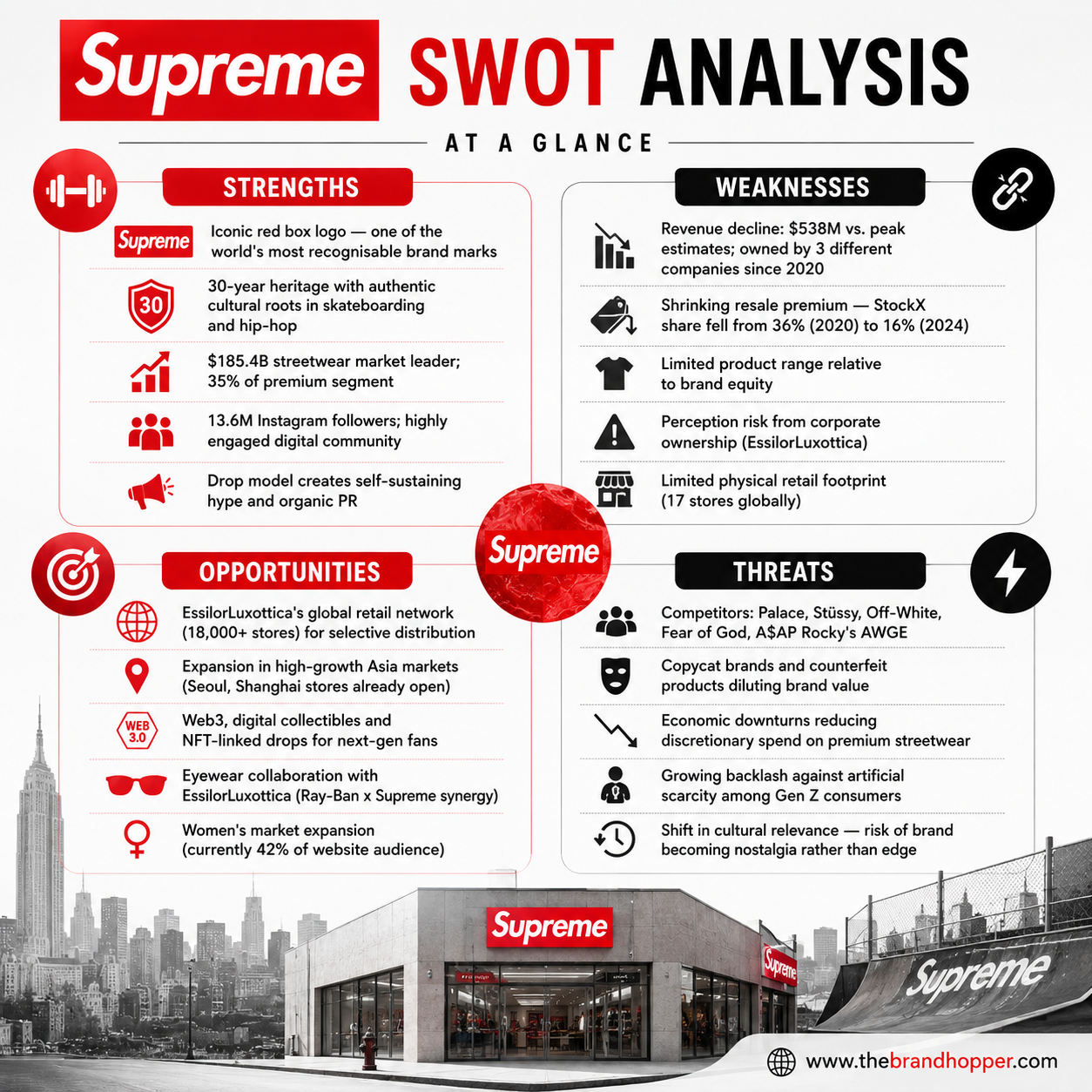
Supreme’s three-decade run has produced a brand with exceptional strengths, meaningful vulnerabilities, genuine growth opportunities, and intensifying competitive threats — particularly as its ownership passes between corporate entities who each wrestle with the paradox of scaling a brand whose power depends on staying small.
Frequently Asked Questions (FAQs)
Q1: Who owns Supreme now?
Supreme is currently owned by EssilorLuxottica, the Italian-French eyewear giant behind Ray-Ban, Oakley, and Persol. EssilorLuxottica acquired Supreme from VF Corporation on October 2, 2024 for $1.5 billion in cash. Founder James Jebbia continues to run the brand operationally under the new ownership.
Q2: How much revenue does Supreme generate?
Supreme generated $538 million in revenue in 2024. This represents a significant brand — though smaller than its peak potential, as VF Corporation’s strategic missteps and the challenging post-pandemic streetwear market dampened growth. Supreme.com alone generated approximately $99 million in the most recent reported period.
Q3: Why is Supreme so expensive on the resale market?
Supreme products command resale premiums because the brand deliberately produces fewer items than the market demands. This artificial scarcity, combined with the cultural status associated with Supreme ownership, drives secondary market prices significantly above retail. Box logo hoodies that retail for $148-$168 regularly sell for $300-$500+ on platforms like StockX and Grailed. Major collaboration pieces with Nike or Louis Vuitton can command 5-10x retail premiums.
Q4: How many Supreme stores are there worldwide?
Supreme operates 17 stores globally as of 2024-25. Locations span New York City (multiple), Los Angeles, Chicago, London, Paris, Tokyo (multiple locations including Harajuku, Daikanyama, and Shibuya), Osaka, Nagoya, Fukuoka, Berlin, Milan, Seoul (opened 2023), and Shanghai (opened 2024). This deliberately limited retail footprint is a core element of the brand’s exclusivity strategy.
Q5: What is Supreme’s target audience?
Supreme primarily targets males aged 16-35 who identify with skateboarding, hip-hop, and urban street culture. However, website analytics show that 41.56% of supreme.com visitors are female — a proportion that continues to grow. Psychographically, Supreme targets individuals who view clothing as self-expression and cultural signalling, and who place value on exclusivity, authenticity, and community membership.
Q6: What were Supreme’s most recent major collaborations?
For SS2025, Supreme collaborated with Aphex Twin (graphic tees), Umbro with GORE-TEX (performance outerwear), Damien Hirst (skate decks and apparel), SpongeBob SquarePants x Jeff Hamilton (varsity jackets), and Y’s by Yohji Yamamoto (punk-inspired leathers). For FW2025, major collaborations included Wu-Tang Clan (bee graphic jersey), Vanson Leathers (GORE-TEX outerwear), Schott (shearling coats), Nike (ongoing footwear and apparel), and Jeff Hamilton (Yankees and White Sox baseball jackets).
Q7: Why did EssilorLuxottica buy Supreme?
EssilorLuxottica acquired Supreme to diversify beyond eyewear and gain direct access to younger, urban consumer demographics. CEO Francesco Milleri stated the acquisition “gives us direct access to new audiences, modes of expression, and creative approaches.” The deal also offers potential synergies: Supreme’s brand credibility in urban fashion markets could support EssilorLuxottica’s eyewear brands (Ray-Ban, Oakley) in streetwear-adjacent positioning, and the companies may collaborate on exclusive eyewear drops.
Q8: What is the global streetwear market size?
The global streetwear market is valued at approximately $185.4 billion in 2025, with strong growth anticipated driven by the continued popularity of limited-edition drops, cultural collaborations, and the resale economy. Supreme commands approximately 35% of the premium streetwear segment. Key competitors include Palace (UK), Stüssy, Off-White (LVMH), Fear of God, Kith, and Anti Social Social Club.
Q9: How does Supreme’s drop model work?
Every Thursday, Supreme releases a new collection of products both online (supreme.com) and in its physical stores. Products are made available at the same time globally. Online, the process involves a queue system, anti-bot CAPTCHA measures, and strict one-per-customer limits. Most items sell out within minutes — many within seconds. The following Tuesday or Wednesday, Supreme typically publishes a preview lookbook on its website, creating a week-long anticipation cycle that drives habitual engagement.
Q10: Is Supreme still as popular as it used to be?
Supreme’s cultural position has evolved. Its share of StockX’s apparel resale market fell from 36% in 2020 to approximately 16% in 2024, reflecting growing competition from brands like Palace, Fear of God, and Martine Rose. However, Supreme remains the dominant name in premium streetwear, with 13.6 million Instagram followers, 17 global stores, and $538 million in annual revenue. Under EssilorLuxottica, with founder James Jebbia continuing to lead, the brand is repositioning for the next chapter of its 30-year story.
Conclusion
Supreme’s marketing story is, at its core, a 30-year study in the power of restraint. In an industry defined by excess — more advertising, more product, more stores, more influencer relationships — Supreme built its empire by doing less. Fewer stores. Less advertising. Less product. Less access. And in that deliberate scarcity, it created more desire, more cultural resonance, and more brand value than almost any of its peers.
The brand’s eight-strategy playbook — scarcity drops, cultural collaborations, organic celebrity alignment, anti-advertising, community cultivation, artistic provocation, digital-first infrastructure, and resale economy leverage — works because each element reinforces the others. Scarcity justifies community. Community amplifies collaborations. Collaborations generate organic promotion. Organic promotion deepens desire. Desire fuels the resale economy. The resale economy validates scarcity. It is a self-reinforcing system that conventional competitors cannot replicate without losing the authenticity that makes it function.
Now under EssilorLuxottica’s ownership — with James Jebbia still at the helm — Supreme faces its defining challenge: how to grow a brand whose power depends on not growing too much. The next chapter of Supreme’s story will be watched by every marketer, investor, and streetwear fan in the world.
Also Read: Swatch: Cutting-Edge Technology, Omega Swatch & Collaborations
To read more content like this, subscribe to our newsletter