Last Updated on September 5, 2026 by Team TBH
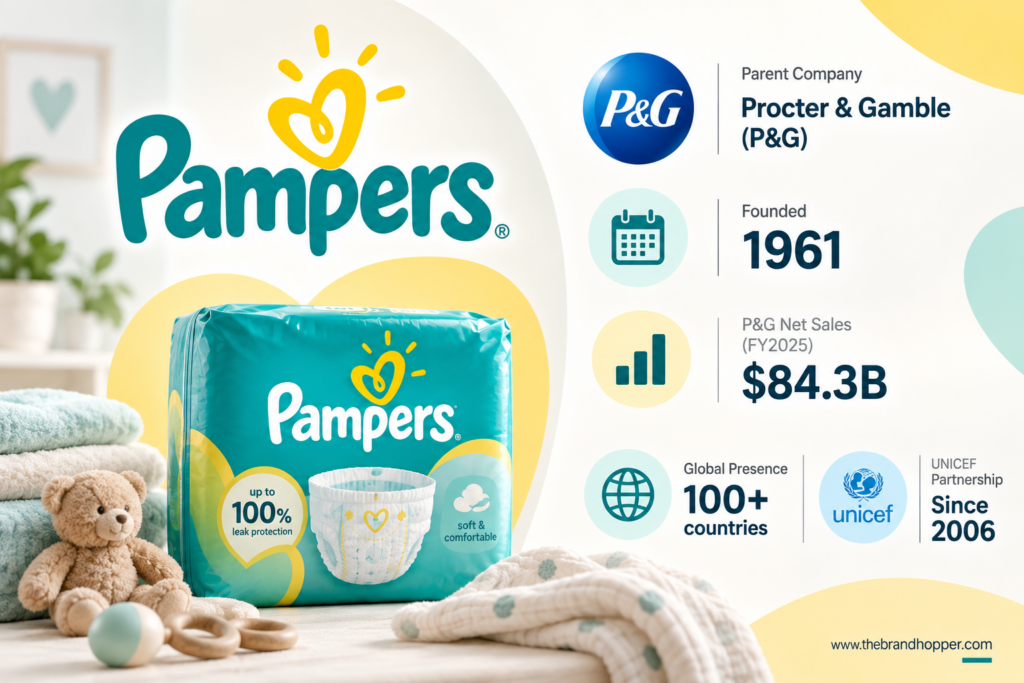
Pampers is the world’s best-selling baby care brand and the flagship diaper label of Procter & Gamble (P&G). Founded in concept by chemical engineer Victor Mills in 1956 and commercially launched in 1961, Pampers has spent more than six decades redefining how parents care for their newborns. Today it is sold in more than 100 countries and holds a commanding ~24% value share in North America, making it the diaper category leader in the most competitive consumer market on earth.
Behind every Pampers diaper is a marketing machine that combines emotional storytelling, data-driven digital campaigns, hospital partnerships, and long-running cause marketing with UNICEF. The brand doesn’t merely sell a product — it sells peace of mind, love, and the promise of a healthy start. This comprehensive guide examines every dimension of Pampers’ marketing strategy, from its humble 1961 origin to the landmark “Behind Every Baby” campaign launched during NFL opening weekend in September 2025.
History & Evolution of Pampers
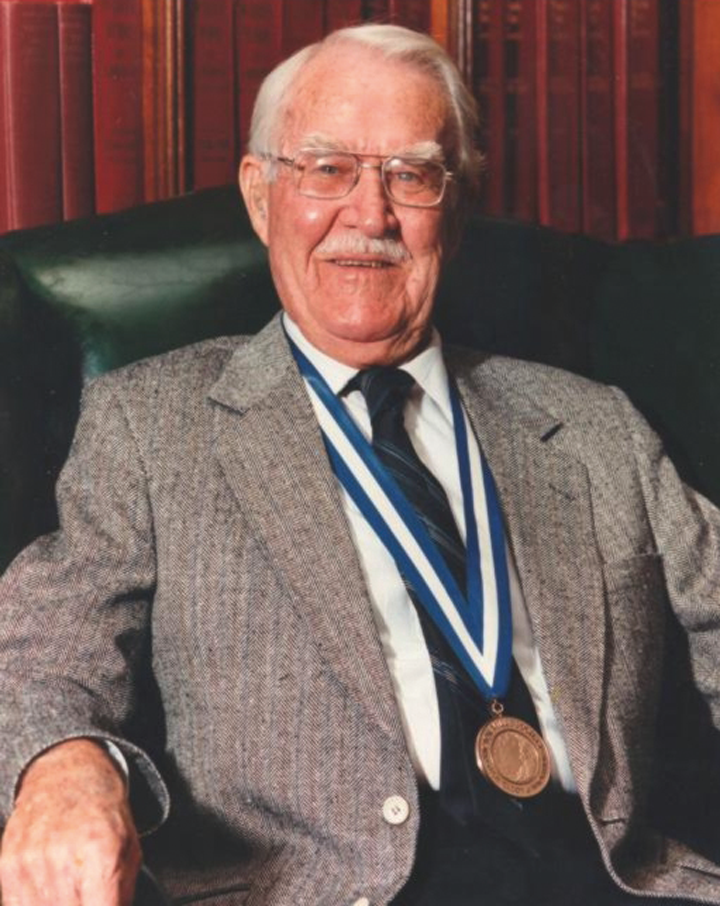
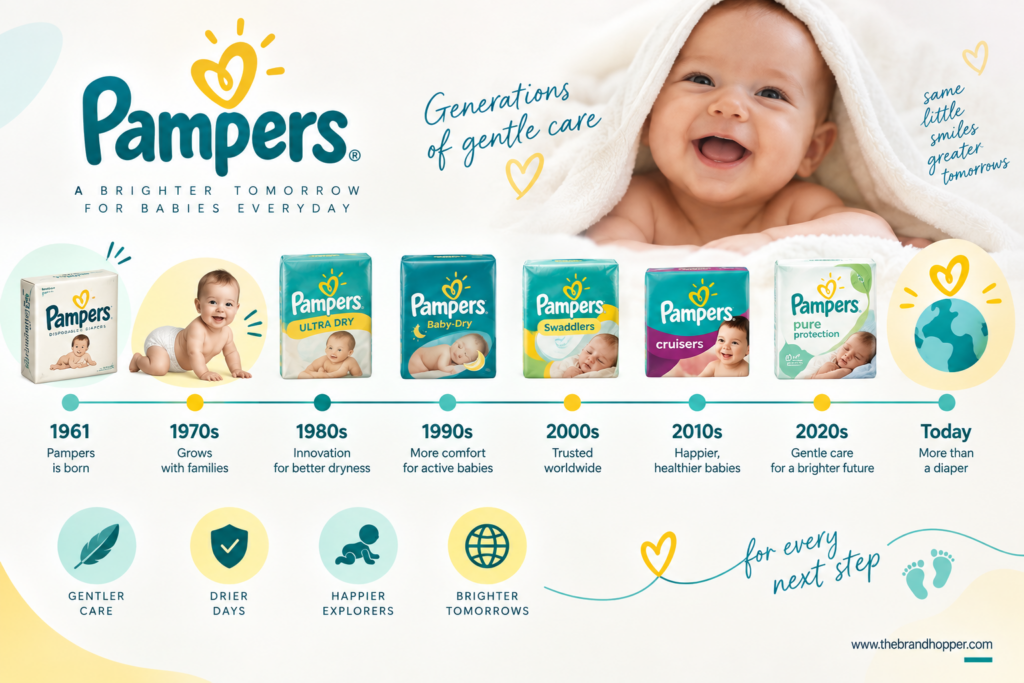
The story of Pampers begins not in a marketing boardroom but in a grandfather’s love. P&G chemical engineer Victor Mills found the chore of washing cloth diapers for his grandchildren tedious and set out to create a better solution. After years of research, P&G test-marketed a disposable diaper in Peoria, Illinois, in 1961 under the Pampers name. The product was a revelation — parents embraced the convenience, and by the late 1960s Pampers was rolling out nationally across the United States.
Throughout the 1970s and 1980s, Pampers drove rapid innovation. The brand introduced elastic leg gathers in 1978 to prevent leaks, followed by the ultra-thin “Ultra Pampers” in 1985 that absorbed far more liquid with far less bulk. The 1990s brought refastenable tape tabs, wetness indicators, and the introduction of gender-specific diapers, each innovation designed to deepen the bond between brand and parent.
The 2000s marked the shift from product-led to emotion-led marketing. Pampers began investing heavily in the idea that its diapers did not merely catch messes — they enabled deeper sleep, freer movement, and richer parent-child bonding moments. The UNICEF partnership launched in 2006 added a powerful cause-marketing layer that continues to this day. By the 2010s, Pampers had built one of the most sophisticated digital parenting communities in the world through its BabyCenter content partnership and dedicated Pampers Club app ecosystem.
In recent years, premium innovation has accelerated. The Pampers Pure Protection line addresses growing parental demand for plant-based, fragrance-free materials. The Swaddlers 360° pull-on format, launched in May 2024, offers one-handed dressing convenience for active caregivers. And the “Behind Every Baby” campaign of September 2025, timed to NFL opening weekend, demonstrated the brand’s mastery of cultural moments and emotional narrative at scale.
Complete Product Portfolio of Pampers
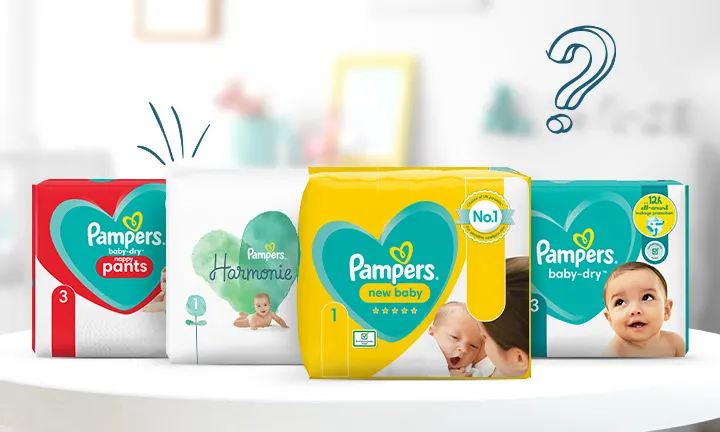
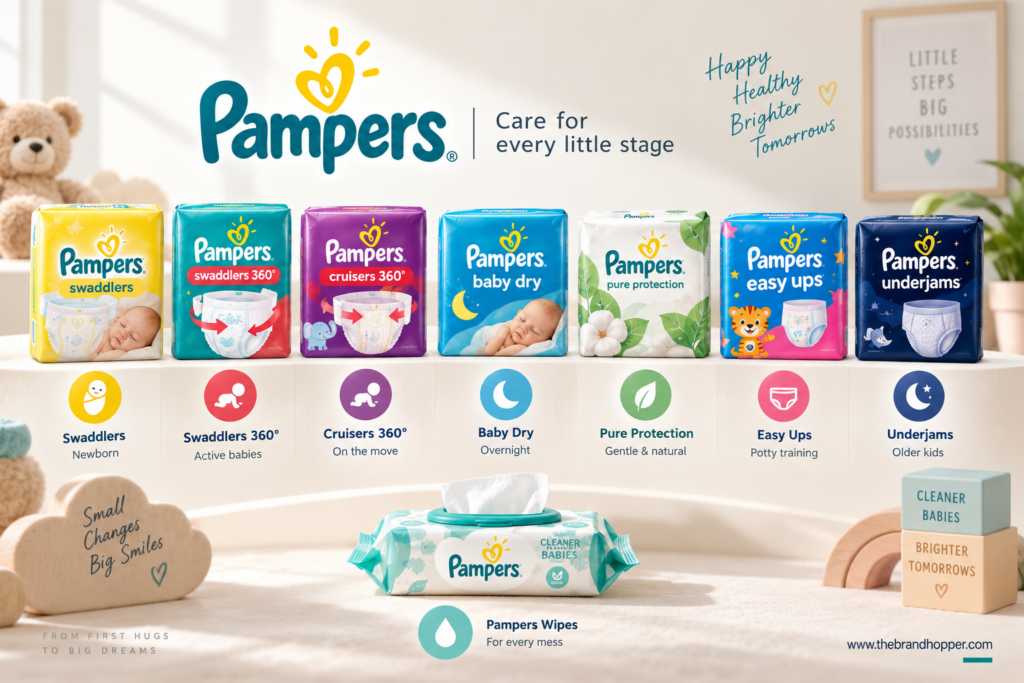
Pampers today offers one of the broadest baby care product ranges in the industry, covering every developmental stage from birth through toddlerhood.
1. Pampers Swaddlers
The brand’s flagship line and the #1 diaper brand recommended by US hospitals. Swaddlers features a Wetness Indicator that turns blue when wet, an umbilical cord notch for newborns, and an ultra-soft quilted liner. It is available from Preemie sizes through Size 7, making it the most complete newborn-to-toddler option in the portfolio.
2. Pampers Swaddlers 360°
Launched in May 2024, the Swaddlers 360° combines the trusted Swaddlers performance with a stretchy pull-on waistband that makes dressing faster, especially during nighttime changes. It is designed for active babies who won’t lie still during changes, making it popular with caregivers of babies aged 5–18 months.
3. Pampers Cruisers 360°
Built for mobile, on-the-go babies, the Cruisers 360° offers a 360-degree flexible waistband and an Absorb Away Liner that pulls wetness away from skin. It features a Body Flex design that moves with the baby through crawling, standing, and walking without sagging.
4. Pampers Baby Dry
Engineered for overnight protection, Baby Dry features 3-layer Absorbency with Triple Layer Protection and up to 12 hours of dryness. It is P&G’s value-focused premium offering and remains one of the best-selling lines globally, particularly in price-sensitive markets.
5. Pampers Pure Protection
Launched in response to growing parental demand for natural materials, Pampers Pure Protection is free from fragrance, parabens, and EU 26 allergens. The January 2025 softness update introduced a plant-based liner with shea butter for enhanced gentleness. Pure Protection uses FSC-certified fluff pulp and is positioned as the brand’s premium eco-conscious offering without compromising on performance.
6. Pampers Easy Ups
Designed for the potty-training stage, Easy Ups features the Absorb Away Liner and a stretchy waistband that children can pull up and down themselves. The training pants design reinforces toddler independence and is marketed to parents as the bridge between diapers and big-kid underwear.
7. Pampers Underjams
Underjams are designed for older children (4–12 years) who experience bedwetting. The product features NightLock PLUS technology for 12-hour protection and uses an underwear-like design that minimises embarrassment. It is marketed sensitively, focusing on empowerment and confidence.
8. Pampers Wipes
A multi-billion-dollar category extension, Pampers Wipes includes Complete Clean, Sensitive, Pure Protection (fragrance-free), and Aqua Pure (99% water) variants. The Aqua Pure line, containing 99% purified water, has become one of the fastest-growing wipes SKUs in markets prioritising ingredient transparency.
STP Analysis of Pampers: Segmentation, Targeting & Positioning
Market Segmentation
Pampers segments the baby care market along four principal dimensions.
Demographically, the primary segment comprises parents and caregivers of children from birth to approximately 48 months, with secondary segments including expectant parents and daycare providers.
Psychographically, the brand identifies three core parent archetypes: the Nurturing Protector (prioritises softness and gentleness), the Informed Optimizer (prioritises performance and leak protection), and the Eco-Conscious Parent (prioritises plant-based materials and sustainability credentials).
Geographically, Pampers operates across mature markets (North America, Western Europe), high-growth emerging markets (India, Africa, Southeast Asia), and the strategically significant Greater China segment, which was the only region to record unit volume growth in FY2025.
Behaviourally, segmentation distinguishes between hospital-to-home buyers (typically Swaddlers first-time purchasers), subscription loyalists (Pampers Club app members), and value-led shoppers (Baby Dry buyers).
Target Audience
Pampers’ primary target is parents aged 22–40, particularly mothers during pregnancy and the first 24 months postpartum — a period of peak brand sensitivity when loyalty patterns are established.
Research consistently shows that the brand a parent trusts in the hospital nursery is the brand they bring home, which is why Pampers invests disproportionately in healthcare provider relationships and hospital sampling programmes.
Secondary targets include millennial fathers (increasingly involved in purchasing decisions), co-caregivers (grandparents, nannies), and premium-seeking parents willing to pay a price premium for Pure Protection’s natural credentials.
Brand Positioning
Pampers is positioned as the scientifically trusted, emotionally resonant partner in the parenting journey.
The positioning triangle has three pillars:
(1) Scientific Credibility — backed by P&G’s dermatologist testing, hospital partnerships, and decades of clinical research;
(2) Emotional Connection — every campaign reinforces love, care, and milestone celebration rather than mere product functionality; and
(3) Developmental Purpose — better sleep, freer movement, and drier skin are not just features but enablers of healthy baby development.
This positioning allows Pampers to command a price premium of 15–25% over private-label alternatives in most markets.
Marketing Mix: The 4Ps of Pampers
Product
Pampers’ product strategy is built on continuous innovation, tiered premium positioning, and platform extension.
The core diaper range spans seven distinct lines covering every developmental need from preterm infants to school-age bedwetters.
Each tier is designed to satisfy a specific parental need state: Swaddlers for the hospital-grade trust seeker, Baby Dry for the performance-at-value buyer, Pure Protection for the ingredient-conscious parent, and Cruisers 360° for the active-baby household.
Product innovation cycles run on approximately 18–24-month cadences, with significant updates (e.g., the Pure Protection softness upgrade in January 2025 and the Swaddlers 360° format launch in May 2024) timed to coincide with key parenting seasons and retail reset windows.
The wipes range serves as a high-frequency replenishment driver that deepens household penetration beyond the diaper occasion.
Price
Pampers employs a tiered premium pricing strategy. Swaddlers and Pure Protection command the highest price points (premium tier), Baby Dry sits in the mid-premium tier, and Easy Ups occupies the accessible-premium range.
Across all tiers, Pampers prices 20–40% above store-brand alternatives, justified by consistent product performance claims and the brand equity accrued through decades of hospital endorsements and emotional campaigns.
P&G uses strategic trade promotions (multi-pack discounts, first-time parent bundles) to reduce trial friction without permanently eroding shelf price.
The Pampers Club app offers a loyalty points system that functions as a soft price discount rewarding repeat purchasers — a mechanism that drives retention without triggering shelf-price wars with Huggies.
Place (Distribution)
Pampers operates one of the most comprehensive omnichannel distribution networks in the baby care category.
Offline, the brand commands premium shelf placement in hypermarkets (Walmart, Target, Costco), pharmacy chains (CVS, Walgreens), and grocery retailers worldwide.
The hospital channel — where Pampers Swaddlers is the #1 recommended brand — is a critical first-touch placement that plants brand loyalty before the parent ever enters a retail store.
Online, Pampers holds leading positions on Amazon Subscribe & Save, Walmart.com, and Target.com, with Subscribe & Save penetration particularly strong in North America, locking in repeat revenue at cadences aligned with diaper consumption rates.
In emerging markets, Pampers distributes through a mix of modern trade, traditional trade (small independent retailers), and rapidly growing e-commerce platforms such as Flipkart (India), Lazada (Southeast Asia), and Jumia (Africa).
Promotion
Pampers’ promotional strategy is one of the most sophisticated in the FMCG world, blending mass-reach emotional storytelling with precision digital targeting and cause marketing.
Television and video remain the backbone of brand building, with emotionally charged 60-second films (like “Behind Every Baby” in 2025) deployed during high-reach cultural events such as the NFL season opener.
Digital channels including YouTube, Instagram, and TikTok are used for always-on parenting content, product education, and influencer partnerships with parenting creators.
The Pampers Club loyalty app serves as a direct-to-consumer engagement layer that drives repeat purchase through points, personalised offers, and developmental milestone content.
Healthcare Professional (HCP) marketing — samples, clinical data sheets, and nursing conferences — reinforces the hospital-to-home pipeline.
Finally, the UNICEF “1 Pack = 1 Vaccine” programme transforms every purchase decision into a socially meaningful act, providing emotional uplift that no competitor can easily replicate.
Marketing Campaigns of Pampers: A Legacy of Emotional Storytelling
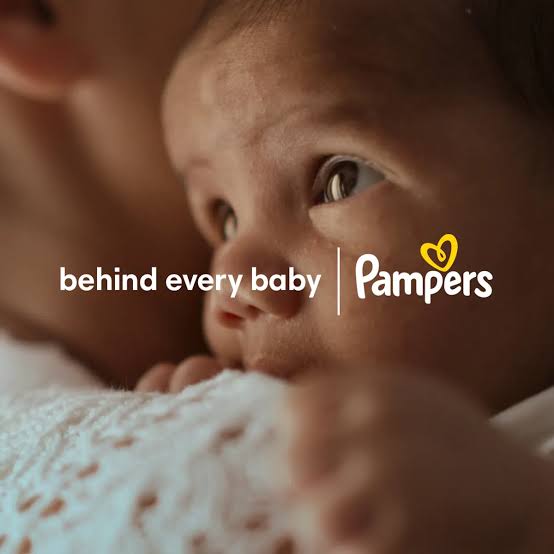
a. “Behind Every Baby” — September 2025
Timed to the NFL opening weekend — one of the highest-reach television moments in the United States — Pampers’ “Behind Every Baby” campaign debuted in September 2025 as a landmark in emotional brand storytelling.
The centrepiece was a 60-second anthem spot that celebrated the invisible, tireless effort of parents and caregivers supporting a baby’s every discovery.
The campaign extended beyond television with hospital photo experience activations, where parents of newborns received professional-quality keepsake photos in a Pampers-branded setting.
Social amplification on Instagram and TikTok drove organic reach through the #BehindEveryBaby hashtag, inviting parents to share their own stories.
The campaign is a masterclass in cultural timing — the NFL opener brings together the US’s broadest cross-section of adults, including millions of new and expecting parents.
b. Swaddlers 360° Launch Campaign — May 2024
The May 2024 launch of Swaddlers 360° was supported by a multi-platform campaign targeting parents of babies aged 5–18 months.
Digital video ads on YouTube and connected TV demonstrated the pull-on format’s speed advantage during nighttime diaper changes — a high-stress, low-light scenario where ease of use is paramount.
Influencer partnerships with parenting creators on Instagram and TikTok generated authentic “try-it” content, while in-store sampling programmes at Target and Walmart drove trial purchase.
The campaign successfully positioned Swaddlers 360° as the convenience evolution of the brand’s most trusted line.
c. Historical Campaigns
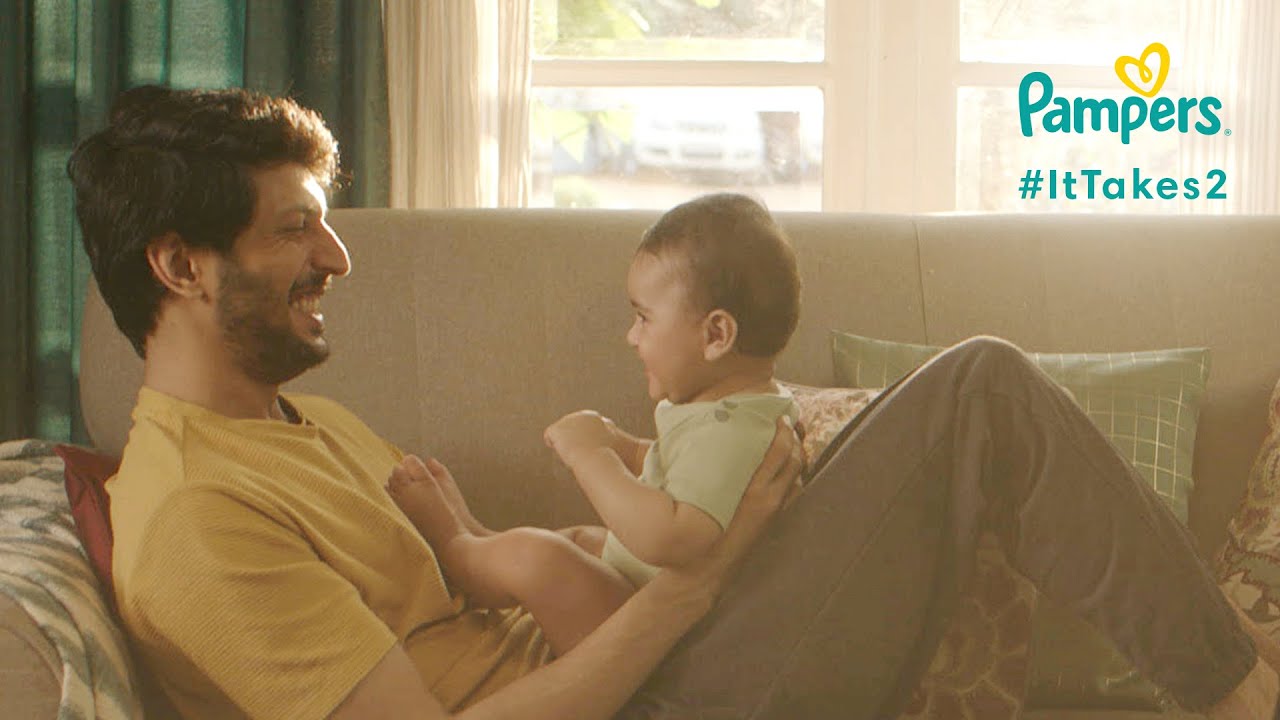
#ItTakes2 Campaign (2021) — Celebrated shared parenting responsibilities between both caregivers, featuring real couples navigating new parenthood together. The campaign ran across television and social media and sparked meaningful cultural conversation about gender equity in caregiving.
View the Pampers #ItTakes2 Campaign on Campaigns of the World.
#ShareTheLove Campaign (2020–2021) — A pandemic-era campaign acknowledging the extraordinary challenges of new parenthood under lockdown. Pampers donated products to healthcare workers’ families and amplified stories of community support.
Preemie Protection Campaign (2019) — Focused on premature infants in NICUs, highlighting the role of Pampers’ preemie-sized diapers (available from 400g birth weight) in supporting the most vulnerable babies. Deeply emotional content that reinforced hospital credibility.
#ThankYouMidwife (2017) — In partnership with the International Confederation of Midwives, Pampers collected messages of gratitude for midwives across 42 countries, reinforcing its healthcare professional relationships and brand goodwill.
Better for Baby (2015–2018) — A platform built around the science of sleep, featuring research from paediatric sleep experts illustrating how dry babies sleep longer and more deeply. The campaign successfully elevated Pampers from a convenience product to a developmental health enabler.
Love, Sleep & Play (2012–2016) — The campaign that codified Pampers’ emotional brand language. By centering the entire narrative on love — the most universal parental emotion — Pampers differentiated from purely functional competitor messaging.
2. Digital Marketing Strategy
a. Content Marketing & Parenting Communities
Pampers operates one of the most extensive content marketing ecosystems in the baby care category through the Pampers.com portal.
The site functions as a full parenting resource hub, offering week-by-week pregnancy tracking tools, baby development milestone guides, diapering how-to videos, and sleep advice from certified paediatric experts.
By providing genuine value beyond the product, Pampers.com attracts high-intent audiences (pregnant women and new parents actively researching baby care) and converts them into brand-loyal purchasers.
The content is localised across 40+ markets, making it the world’s largest owned media asset in the baby care category.
b. Pampers Club App
The Pampers Club app is the brand’s direct-to-consumer loyalty and engagement engine. Parents earn points by scanning diaper pack barcodes and redeem them for discounts, gift cards, and parenting tools.
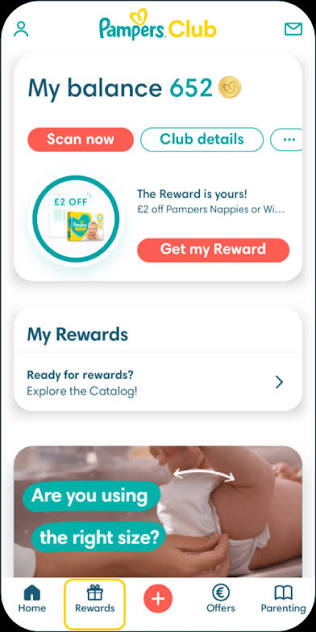
The app also delivers personalised content based on the baby’s age and developmental stage, turning a transactional loyalty mechanism into a meaningful parenting companion.
The app’s data layer feeds P&G’s first-party data capabilities, enabling hyper-personalised retargeting and churn prediction modelling across digital channels.
c. Social Media & Influencer Marketing
Pampers maintains an always-on social presence across Instagram, TikTok, YouTube, Facebook, and Pinterest.
The strategy blends three content modes: brand films (hero content around key campaigns), product education (how-to and feature explainer reels), and user-generated content amplification (resharing authentic parent stories with permission).
Influencer partnerships span macro-influencers (1M+ followers in the parenting and lifestyle space) and nano-influencers (10,000–100,000 followers) whose micro-communities deliver higher engagement rates and trust signals.
TikTok has emerged as a particularly high-value channel for Pampers, with product reviews and “diaper hack” content routinely accumulating millions of views organically.
d. E-Commerce & Subscribe & Save
Pampers’ Amazon Subscribe & Save penetration is among the highest of any baby care brand globally.
The subscription model is strategically significant: once a parent locks in a diaper subscription, switching costs (effort, risk of product unfamiliarity) are high, dramatically increasing customer lifetime value.
P&G further drives e-commerce conversion through first-party data retargeting, digital coupon programmes (often seeded through the Pampers Club app), and premium brand store experiences on Amazon and Walmart.com.
3. UNICEF Partnership: Purpose-Driven Marketing at Scale
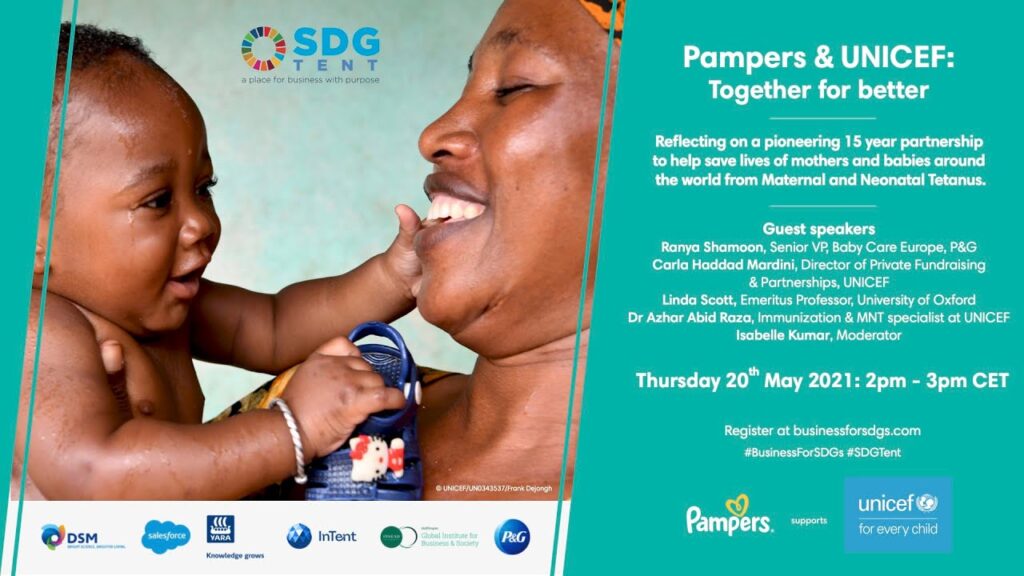
Since 2006, Pampers has partnered with UNICEF under the landmark “1 Pack = 1 Vaccine” programme — one of the most enduring and impactful cause-marketing initiatives in consumer goods history. Every specially marked Pampers pack sold triggers a contribution toward tetanus vaccines for mothers and newborns in the world’s lowest-income countries.
The cumulative impact of the partnership is staggering: over 300 million tetanus vaccines have been donated, protecting more than 100 million women and their babies from maternal and neonatal tetanus (MNT). The programme has contributed to the elimination of MNT from 59 countries. Given that MNT killed an estimated 1 million newborns annually before the programme launched, the UNICEF partnership represents genuine, measurable global health impact — not merely marketing optics.
For Pampers’ marketing strategy, the UNICEF partnership delivers three critical benefits. First, it provides emotional permission to charge a price premium: parents who buy Pampers are not just purchasing a diaper but actively contributing to saving lives. Second, it creates a powerful PR and earned media flywheel that generates annual news coverage when milestone figures are released. Third, it differentiates the brand at a values level that competitors cannot easily replicate, since the partnership has nearly two decades of authenticated history and independently verified outcomes.
4. Sustainability & Innovation
Sustainability has become a core strategic battleground in the baby diaper market, driven by millennial and Gen Z parents who demand ingredient transparency and environmental responsibility. Pampers has responded with a multi-front sustainability strategy that addresses materials, packaging, and end-of-life considerations.
a. Pampers Pure Protection
The Pure Protection line is Pampers’ primary sustainability-oriented product. It uses plant-based materials in the liner (including shea butter-enhanced soft touch following the January 2025 update), FSC-certified fluff pulp, and is free from fragrance, parabens, and EU 26 allergens. The line is positioned as the “best of both worlds” — natural ingredient credentials without the absorbency trade-off that has plagued many eco-competitor products.
b. Packaging & Materials
P&G has committed to making 100% of Pampers packaging recyclable or reusable by 2030. The brand has been progressively reducing the plastic content in its outer packaging and transitioning to partially recycled materials in its poly wrap. In Europe, Pampers has piloted compressed pack formats that reduce transport-related carbon emissions by increasing units per pallet.
c. R&D Pipeline
P&G Baby Care maintains one of the largest R&D teams dedicated to absorbent hygiene products in the world. Current research focus areas include bio-based superabsorbent polymers (SAP), which could dramatically reduce the petroleum-derived material content of diapers; enzymatic degradation technologies that could accelerate diaper decomposition in landfill; and smart diaper sensors (a technology piloted with the Lumi by Pampers smart monitor) that offer real-time wetness and sleep data. These innovations position Pampers at the frontier of both sustainability and digital health convergence.
Competitive Landscape of Pampers
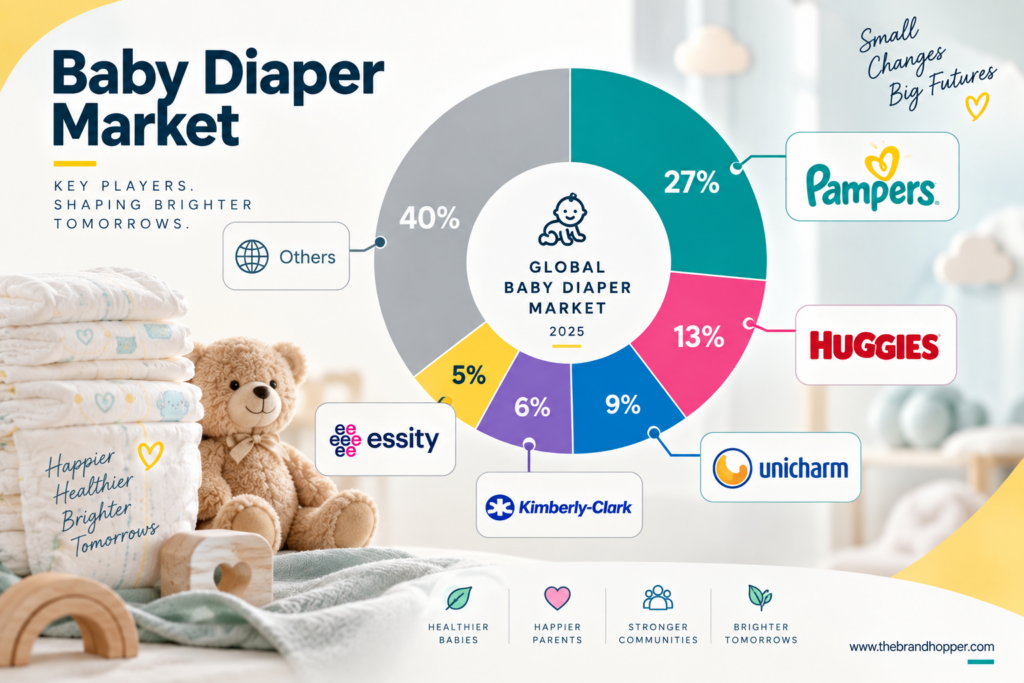
The global baby diaper market is estimated at $49–87 billion (various methodologies, 2025 estimates), with Procter & Gamble and Kimberly-Clark collectively dominating the premium segment in North America and Western Europe. Emerging-market players, private-label retailers, and challenger eco-brands round out a fiercely competitive field.
| Brand | Parent Company | Key Product | Differentiator |
| Pampers (P&G) | Procter & Gamble | Swaddlers, Baby Dry, Pure Protection | #1 hospital brand; 300M+ UNICEF vaccines |
| Huggies | Kimberly-Clark | Huggies Snug & Dry, Little Snugglers | Strong hospital presence; eco Eco Protect hybrid (Brazil 2024) |
| Luvs | Procter & Gamble | Luvs Ultra Leakguards | P&G value brand; LeakGuard Core; competitive pricing |
| MamyPoko | Unicharm (Japan) | MamyPoko Pants | Dominant in Asia; pants-style format pioneer |
| Merries | Kao Corporation (Japan) | Merries First Premium | Premium positioning in Japan; air-through cover |
| Honest Company Diapers | The Honest Company | Honest Diapers | Eco/natural; celebrity-backed; primarily DTC |
| Andy Pandy | Andy Pandy | Bamboo Diapers | Bamboo-based; boutique eco challenger |
| Private Label (Target, Kirkland) | Target / Costco | Up & Up, Kirkland Signature | 30–50% price below branded; growing share in inflation-sensitive households |
Pampers’ primary competitive advantages are its hospital relationships, emotional brand equity built over six decades, P&G’s distribution muscle across 100+ countries, and the UNICEF partnership that provides a cause-marketing differentiator no challenger can replicate overnight. The primary competitive threat comes from private-label growth during inflationary periods and from eco-positioned challenger brands (Honest Company, Andy Pandy) appealing to ingredient-conscious millennial parents.
For a broader understanding of how P&G structures its brand portfolio, see this detailed analysis on Exploring the Brand Architecture of HUL, which illustrates how leading FMCG companies use house-of-brands vs branded-house architectures — a framework highly relevant to understanding P&G’s Pampers-plus-Luvs dual-brand strategy in the diaper category.
Frequently Asked Questions (FAQs)
Q: What is Pampers’ marketing strategy?
A: Pampers’ marketing strategy centres on three pillars: scientific credibility (hospital endorsements, clinical testing), emotional storytelling (campaigns like “Behind Every Baby” that celebrate parental love), and cause marketing (the UNICEF “1 Pack = 1 Vaccine” programme running since 2006). The strategy blends mass-reach television and video with precision digital targeting via the Pampers Club app and influencer partnerships.
Q: Who owns Pampers?
A: Pampers is owned by Procter & Gamble (P&G), the Cincinnati, Ohio-based consumer goods multinational. P&G reported net sales of $84.3 billion in FY2025 (year ended June 30, 2025). Pampers falls within P&G’s Baby, Feminine & Family Care segment, which generated $20.2 billion in FY2025 sales.
Q: When was Pampers founded?
A: Pampers was commercially launched in 1961 in Peoria, Illinois, USA. The concept was developed from 1956 by P&G chemical engineer Victor Mills, who was inspired by the tedium of washing cloth diapers for his grandchildren. P&G began national distribution across the US in the late 1960s following the success of the initial test market.
Q: What is Pampers’ market share?
A: Pampers holds approximately 24% value share in the North American baby diaper category. Globally, Procter & Gamble’s diaper business (dominated by Pampers) is estimated to account for approximately 18% of global diaper revenue. In FY2025, the Baby Care segment saw mid-single-digit volume declines globally, with Greater China the only region recording unit volume growth.
Q: What is the difference between Pampers Swaddlers and Pampers Baby Dry?
A: Pampers Swaddlers is designed for newborns and young babies, featuring a Wetness Indicator, an umbilical cord notch for newborns, and an ultra-soft quilted liner. It is the #1 hospital-recommended brand in the US. Pampers Baby Dry is engineered for overnight protection, offering up to 12 hours of dryness through a Triple Layer Protection system. Baby Dry is P&G’s mid-premium value offering suited to parents prioritising overnight performance.
Q: What is Pampers Pure Protection and how is it different from regular Pampers?
A: Pampers Pure Protection is the brand’s eco-conscious premium line. It uses plant-based liner materials (with shea butter, updated January 2025), FSC-certified fluff pulp, and is free from fragrance, parabens, and EU 26 allergens. Standard Pampers lines use conventional materials optimised for maximum absorbency and cost efficiency. Pure Protection is positioned for parents who want natural ingredient credentials without sacrificing diaper performance.
Q: How does Pampers’ UNICEF partnership work?
A: Since 2006, Pampers has partnered with UNICEF under the “1 Pack = 1 Vaccine” programme. Each purchase of a specially marked Pampers product triggers a contribution toward tetanus vaccines for mothers and newborns in low-income countries. The programme has donated over 300 million vaccines, protected more than 100 million women and babies, and helped eliminate maternal and neonatal tetanus from 59 countries.
Q: Who are Pampers’ main competitors?
A: Pampers’ primary global competitor is Huggies, made by Kimberly-Clark. In the US value segment, Luvs (also a P&G brand) competes at a lower price point. In Asia, Unicharm’s MamyPoko and Kao’s Merries are strong regional competitors. The eco-diaper segment features The Honest Company, Andy Pandy, and Coterie. Private-label brands from Target (Up & Up) and Costco (Kirkland Signature) represent the fastest-growing competitive threat in inflation-sensitive household segments.
Q: What was the “Behind Every Baby” campaign?
A: The “Behind Every Baby” campaign was launched by Pampers in September 2025, timed to the NFL opening weekend — one of the highest-reach broadcast events in the United States. The campaign centred on a 60-second anthem television spot celebrating the tireless effort of parents and caregivers. It extended to hospital photo activations for new parents and a social media component using the #BehindEveryBaby hashtag on Instagram and TikTok.
Q: How does Pampers use digital marketing?
A: Pampers’ digital marketing strategy operates on four levels: (1) Pampers.com, which functions as a full parenting content hub with pregnancy trackers, development guides, and expert advice; (2) the Pampers Club loyalty app, which drives repeat purchase through a points-and-rewards system while building first-party data; (3) social media and influencer marketing across Instagram, TikTok, YouTube, and Facebook; and (4) e-commerce optimisation including Amazon Subscribe & Save dominance, first-party data retargeting, and digital couponing.
Conclusion
Pampers’ journey from a 1961 test market in Peoria, Illinois, to a global baby care powerhouse present in 100+ countries is one of the most compelling brand-building stories in consumer goods history. The brand’s enduring dominance — including a ~24% North American value share and the #1 US hospital recommendation for Swaddlers — is the product of six decades of relentless product innovation, emotionally intelligent marketing, and a genuine commitment to purpose through the UNICEF partnership.
What distinguishes Pampers is the seamless integration of science and emotion in everything it does. Every product launch is backed by P&G’s clinical research apparatus. Every campaign — from the 2025 “Behind Every Baby” NFL moment to the pioneering 2006 UNICEF vaccine programme — connects the act of buying a diaper to something far larger than absorbency: the universal experience of loving and protecting a child. That is an extraordinarily defensible brand position, and one that no competitor has yet managed to displace.
As Pampers navigates the pressures of FY2025 — mid-single-digit volume headwinds in baby care globally, rising private-label competition in inflation-sensitive households, and an accelerating shift to eco-consciousness among millennial parents — its response will likely combine continued premiumisation through Pure Protection, digital engagement deepening via the Pampers Club ecosystem, and expanded emerging-market investment where the birth rate tailwind remains strong. The brand that helped build the modern disposable diaper category shows every sign of continuing to lead it.
Also Read: Top PepsiCo Competitors: 16 Brands Fighting for Your Loyalty
To read more content like this, subscribe to our newsletter