Last Updated on August 26, 2026 by Team TBH
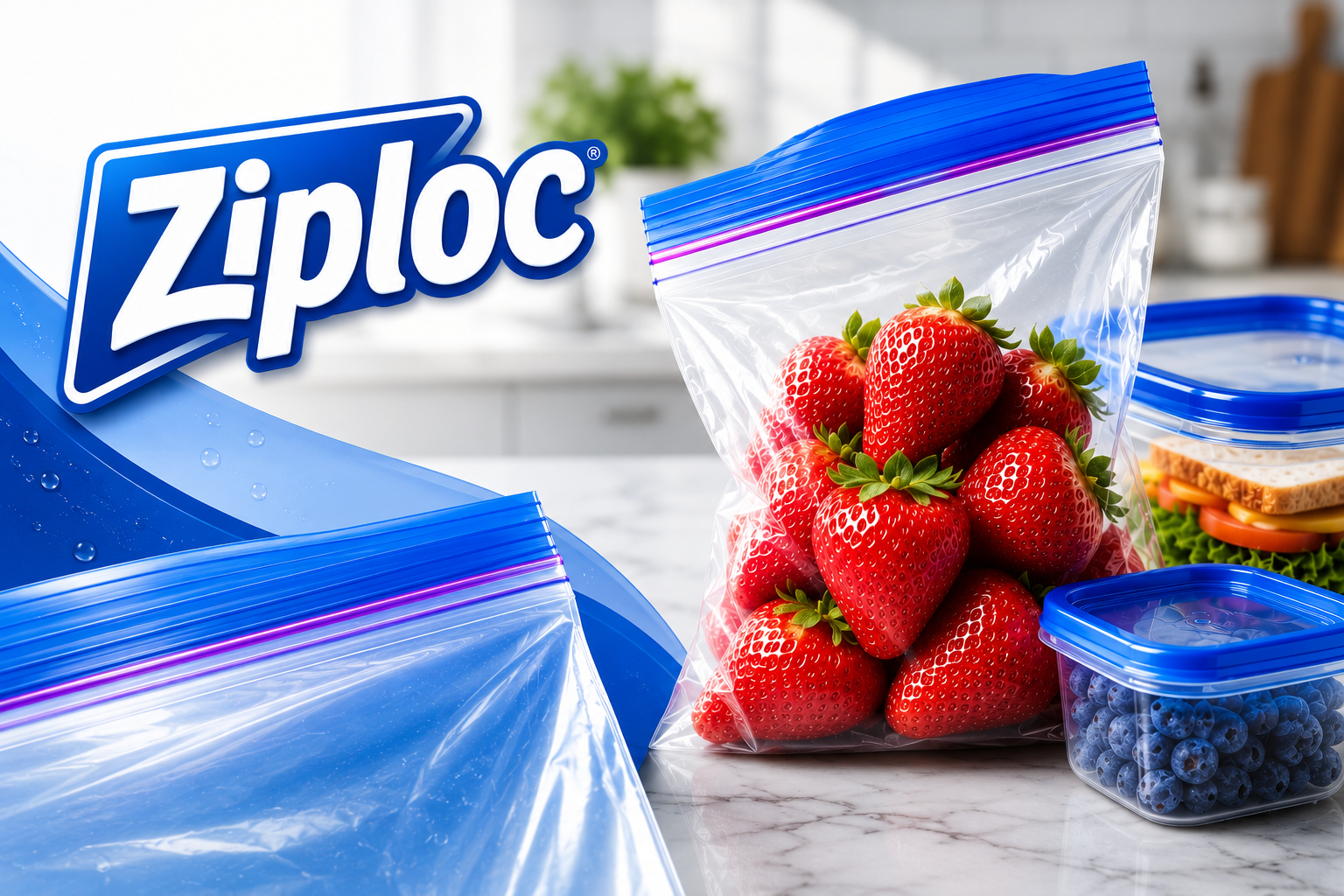
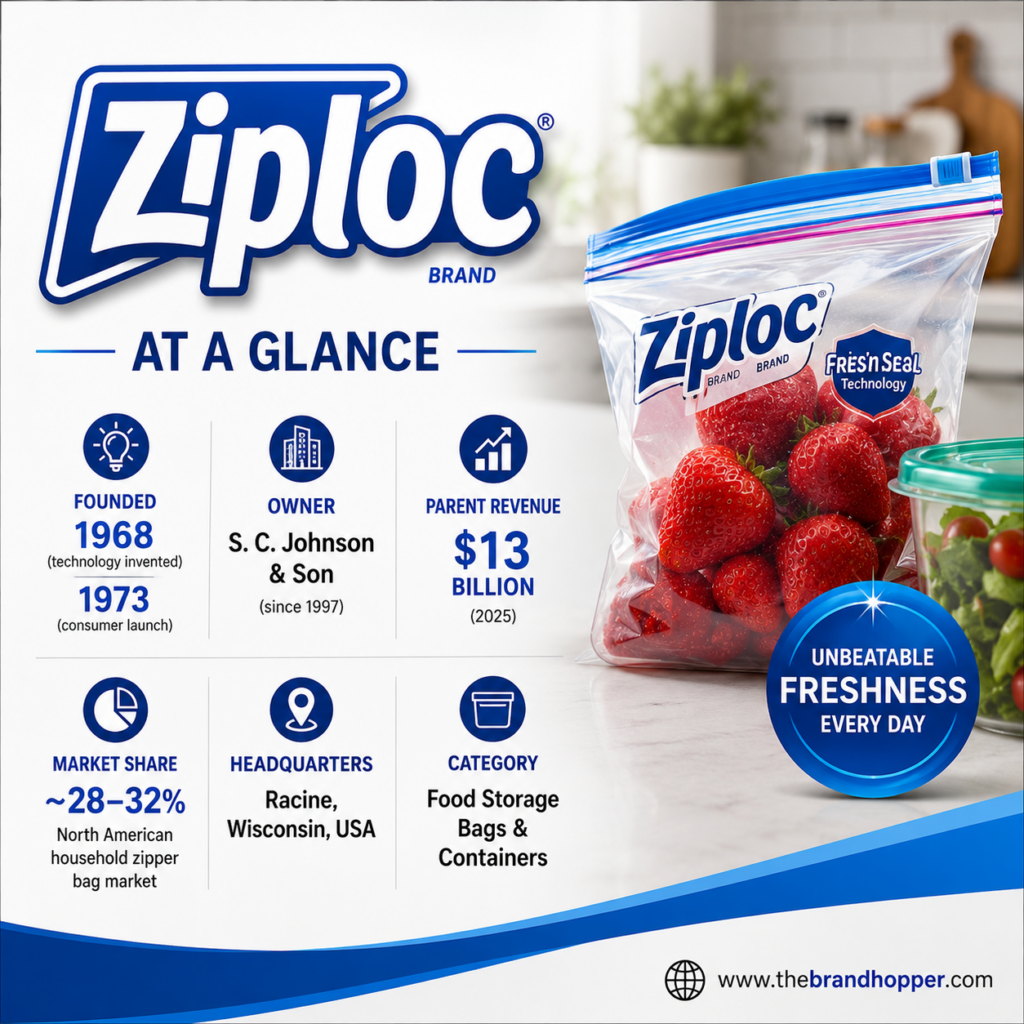
Ziploc is one of the most recognised brand names in American households — a resealable plastic bag so ubiquitous that its name has become a generic verb (“just Ziploc it”). Owned by S. C. Johnson & Son, a privately held consumer goods company with annual revenue of approximately $11.8 billion, Ziploc is the dominant brand in the North American zipper bag market with an estimated 28-32% share of the household segment. The global food storage bags market was valued at approximately $6.8 billion and is projected to grow at a 5.9% CAGR through 2034.
What makes Ziploc a compelling brand story is not just its ubiquity, but the sophistication with which SC Johnson has evolved it. From Cannes Lions Grand Prix-winning campaigns to a growing sustainable product portfolio — Endurables silicone bags, compostable bags, and paper bags — Ziploc is navigating a fundamental transformation in consumer expectations while protecting a 50-year brand heritage. This article explores the complete Ziploc brand story: its history, technology, STP analysis, marketing mix, marketing strategies, SWOT, and sustainability evolution.
The Birth and Evolution of Ziploc: From Flexigrip to Worldwide Phenomenon
In 1951, the inception of Flexigrip, Inc. marked the beginning of the journey towards creating a revolutionary plastic zipper, purchased from inventor Borge Madsen. Initially, Flexigrip focused on binder inserts and flat briefcases, but soon shifted their efforts to packaging products in plastic zipper bags, becoming the primary market for their products.
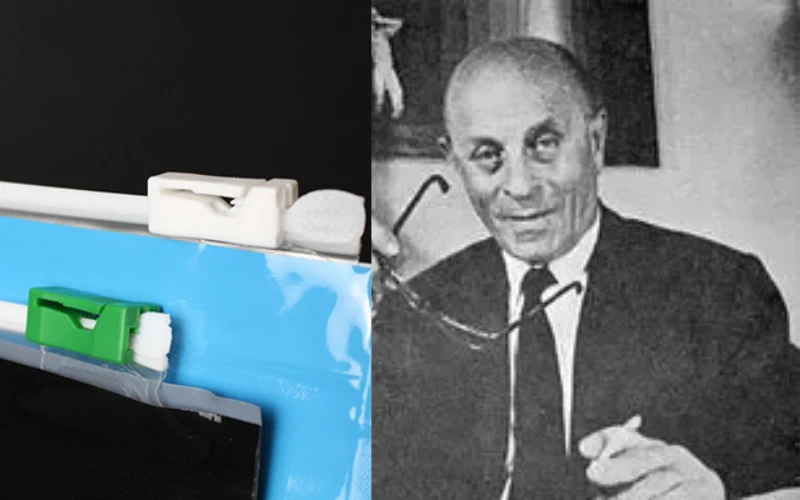
In 1961, a pivotal moment arrived when Flexigrip, Inc. acquired exclusive manufacturing and selling rights for the Minigrip-type plastic zipper bag from Seisan Nippon Sha, a Japanese company. This laid the foundation for Minigrip, Inc., a company dedicated to producing and marketing these innovative bags. The Minigrip product would later secure an exclusive license for the grocery trade with the Dow Chemical Company, leading to phenomenal success.
During this time, plastic bags were produced in various countries, but high production costs hindered consumer sales. Dow Chemical, with the expertise of inventor R. Douglas Behr, embarked on a mission to develop an efficient high-speed process. Behr, despite having limited prior experience in plastics, quickly became a pioneer in the field and significantly increased line speeds, making plastic zipper bags more viable for consumer use.
In 1978, Signode, Inc. acquired Minigrip, followed by a collaboration between Signode and Dow to establish Zippak, a company dedicated to developing zipper bags for food products. Subsequently, Zippak became a subsidiary of Illinois Tool Works (ITW) in 1987 after ITW acquired Signode.
Over the years, Flexigrip/Minigrip/Zippak/Dow/Dow Brands accumulated an impressive portfolio of over 300 patents for plastic zippers, zipper bags, and the production methods and machinery used in their creation. In 1997, S. C. Johnson acquired the rights of Dow Brands, which included Ziploc, solidifying Ziploc’s position as an iconic household name.
Ziploc bags were first introduced to the public in 1973 and quickly became a popular household item, praised for their convenience and ability to keep food fresh. Today, despite competition from brands like Hefty (Reynolds Consumer Products), Glad (The Clorox Company), and reusable alternatives like Stasher, Ziploc’s continued innovation — developing Polypropylene-compatible zippers in 2003, launching the Endurables silicone line, and winning the Cannes Lions Grand Prix in 2025 — has maintained its status as the global leader in food storage.
STP Analysis of Ziploc
Ziploc’s enduring market leadership is underpinned by a clear and consistent STP framework that has evolved with shifting consumer priorities — most notably the growing demand for sustainable alternatives to single-use plastics.
| STP Dimension | Ziploc’s Approach |
| Segmentation | Demographic: households, families, meal preppers, students, on-the-go professionals (ages 25-55, predominantly female household decision-makers). Psychographic: convenience seekers, eco-conscious shoppers, organized homemakers. Behavioral: frequent grocery shoppers, food-waste reducers, heavy food-storage users. |
| Targeting | Primary: American families seeking convenient, reliable food storage. Secondary: eco-conscious millennials and Gen Z consumers (via Endurables and Compostable lines). Tertiary: outdoor enthusiasts and travelers using specialty and large-format bags. |
| Positioning | “The gold standard in food freshness” — trusted, innovative, and increasingly sustainable. Ziploc positions itself not just as a storage solution but as a household essential that saves money, reduces food waste, and organizes life. The brand is being repositioned from purely convenience-focused toward convenience + sustainability. |
Segmentation in Depth
Ziploc segments its market across three primary dimensions. Demographically, its core buyers are households with children, meal-preppers, and food-conscious consumers aged 25-55, predominantly female as the primary household purchase decision-makers.
Psychographically, it targets convenience seekers who prioritise time efficiency and food freshness, as well as a rapidly growing eco-conscious segment seeking sustainable storage alternatives.
Behaviourally, Ziploc targets heavy users of food storage solutions — consumers who buy multiple times per year, use bags for cooking (sous vide, marinating), meal prep, travel, and home organisation, not just simple food storage.
Targeting Strategy
Ziploc’s primary target remains the American family household — a well-established, high-frequency purchasing segment in which brand loyalty is strong and switching costs (to private label or competitors) are low but rarely acted upon due to deep trust in the Ziploc name.
The brand has actively expanded its targeting through its sustainability product portfolio: Ziploc Endurables targets eco-conscious millennials willing to pay a premium for reusable alternatives, while the Compostable Sandwich Bags range targets zero-waste households and environmentally active consumers.
This multi-tier targeting strategy allows Ziploc to maintain its core base while growing into the emerging sustainable consumer segment.
Positioning
Ziploc occupies the “gold standard” position in the food storage category — a brand associated with reliability, innovation, and freshness that consumers reach for instinctively.
Critically, Ziploc is executing a slow but deliberate repositioning: from a brand synonymous with single-use plastics to one that champions a full spectrum of storage solutions from traditional bags to silicone containers, paper bags, and compostable options.
This evolution is essential to defending Ziploc’s position against regulatory pressure on single-use plastics and against the cultural shift in consumer values toward environmental responsibility.
Product Line of Ziploc
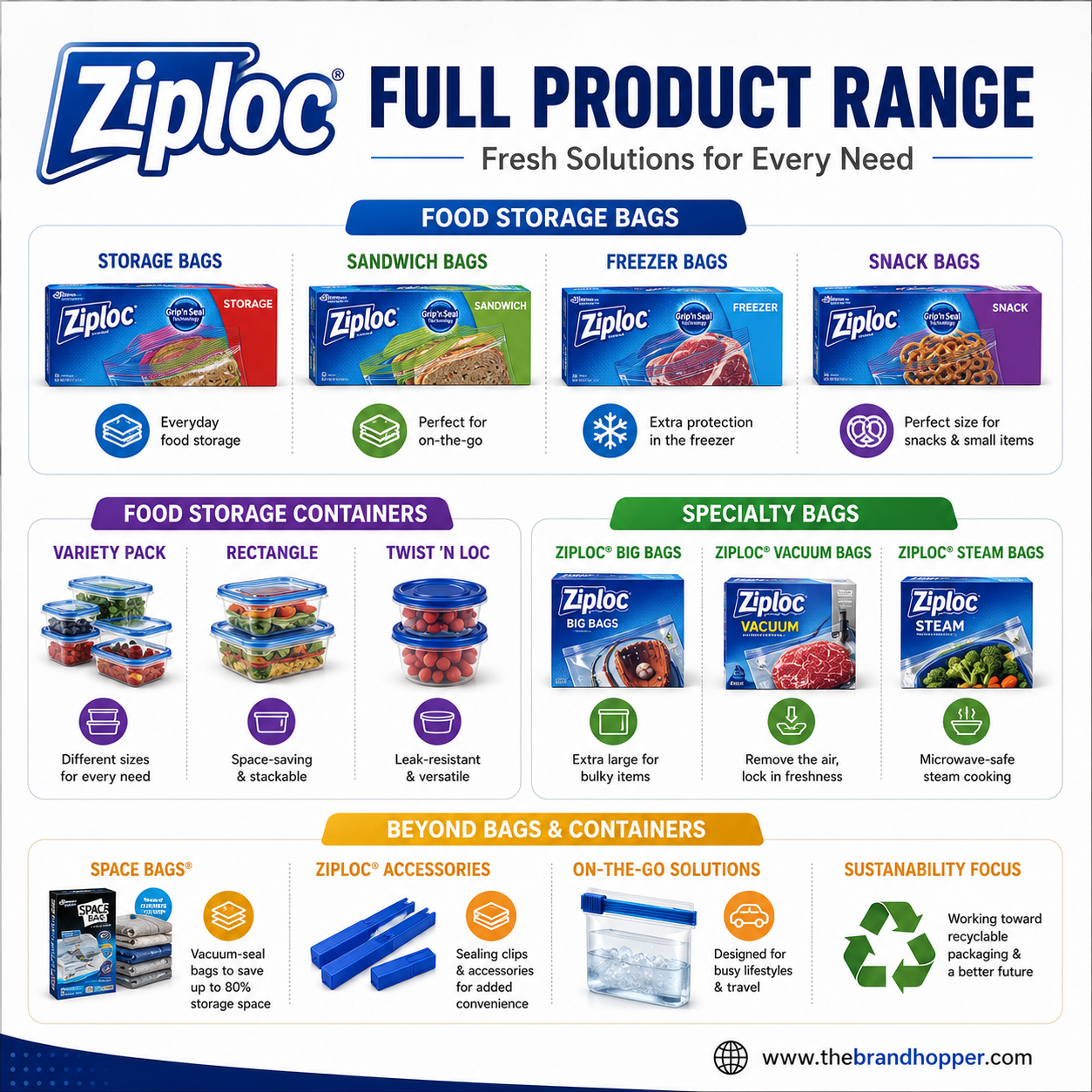
Ziploc offers one of the most comprehensive product portfolios in the food storage category. The brand has expanded significantly beyond its original resealable plastic bag offering to include containers, reusable silicone bags, compostable options, and specialty large-format bags.
Resealable Storage Bags
- Freezer Bags: Designed for low temperatures; prevent freezer burn; extend food life significantly. Available in gallon, quart, and pint sizes.
- Storage Bags: Multi-purpose bags for snacks, household items, and travel essentials. The workhorse of the Ziploc range.
- Sandwich Bags: Sized for lunches; hygienic and convenient for school, work, and on-the-go snacking.
- Snack Bags: Smaller format for portion control and bite-sized snacks.
- Slider Bags: Feature the easy Slider closure system for one-handed opening and closing — popular for families with young children.
- Storage Gallon and Quart Bags: Bulk-format bags for batch cooking, large leftovers, and household organisation.
Containers
- Twist ‘n Loc Containers: Twist-on lid creates a secure, leak-resistant seal; ideal for liquids, soups, and food transport.
- One Press Seal Containers: Lids seal with a single press — designed for quick, one-handed access.
- Serving Bowls: Snap-on lids for combined storage and serving functionality — ideal for gatherings and meal prep.
Ziploc Endurables (Reusable Silicone Range)
Ziploc Endurables represent the brand’s most significant product innovation of the past decade — a range of durable, reusable silicone bags and containers that go from freezer to oven (up to 400°F) to microwave to dishwasher. Endurables are designed to replace traditional single-use plastic bags entirely for many use cases, directly targeting the eco-conscious consumer segment.
SC Johnson has partnered with TerraCycle to offer a free national recycling programme for Endurables silicone pouches and containers. Consumers can send used Endurables to TerraCycle, where they are cleaned, sorted, and recycled into raw materials for new products. Participants also earn TerraCycle points redeemable as charitable donations.
Eco-Friendly & Sustainable Options
- Compostable Sandwich Bags (expanded October 2024): Made with plant-based materials that break down in commercial composting facilities. Designed to maintain Ziploc’s signature seal integrity while offering a compostable end-of-life solution.
- Ziploc Paper Bags: Made using food-safe, non-wax paper that is recyclable through standard paper recycling streams — an alternative to plastic for dry food storage.
- Store Recycling: Traditional Ziploc plastic bags are recyclable at participating retail store drop-off locations (where plastic film recycling is accepted).
Specialty Bags
- Big Bags: Extra-large format for seasonal clothing, bedding, and bulky household items. Widely used for home organisation.
- Vacuum Seal Bags: Compatible with vacuum sealing machines; provide airtight, space-saving storage for food and other items.
Innovation Behind Ziploc Technology
Ziploc’s commercial dominance rests on a deceptively simple but brilliantly engineered technology: the press-and-seal resealable closure. This mechanism, protected by over 300 patents accumulated across its corporate history, transformed food storage from one-use disposable packaging into reusable, resealable convenience — a concept so successful it has been widely imitated but rarely equalled.
Resealable Seal Design: The foundation of Ziploc’s technology is the interlocking grooves machined into the bag’s opening edge. When pressed together, these precision-moulded grooves interlock to create a tight, airtight, and watertight closure that can be opened and resealed hundreds of times without significant degradation of seal quality. The engineering challenge — maintaining consistent groove geometry across miles of film produced at high speed — was the critical innovation that made mass-market resealable bags possible.
Easy-to-Use Slider Seal: Ziploc’s slider bags replace manual press-sealing with a simple plastic slider that slides across the bag opening, engaging the interlocking grooves mechanically. The slider eliminates the alignment challenge of press-sealing, making it accessible for children, elderly users, and users with limited dexterity. The slider mechanism requires careful engineering to maintain consistent sealing pressure across the full width of the bag without tearing the film.
Durable and Flexible Materials: Traditional Ziploc bags are manufactured from polyethylene (PE), specifically LLDPE (Linear Low-Density Polyethylene) and LDPE (Low-Density Polyethylene). These materials provide the combination of flexibility, durability, clarity, and food-safe properties required for a food storage product. Freezer bags use a heavier gauge to withstand low temperatures without becoming brittle. Ziploc Endurables use food-grade platinum silicone, a fundamentally different material offering heat resistance up to 400°F and indefinite reusability.
Preservation of Freshness: The airtight and watertight seal created by Ziploc’s closure technology is the functional core of the product’s value. By preventing atmospheric oxygen and moisture from reaching stored food, Ziploc bags significantly slow the oxidation, dehydration, and microbial growth that cause food to spoil. Clinical testing has demonstrated that properly sealed Ziploc bags can extend the refrigerator life of many fresh foods by 2-3 times compared to unsealed containers.
Microwave and Freezer Safety: Ziploc bags are engineered to be microwave-safe (with vented opening, following label instructions) and freezer-safe down to -20°F. The polyethylene films used are formulated without plasticizers or additives that could migrate into food at microwave temperatures, meeting FDA food contact materials standards. Freezer bags use a specifically formulated film blend that maintains flexibility and seal integrity at sub-zero temperatures.
Polypropylene-Compatible Zippers (2003 Innovation): In 2003, Ziploc developed a proprietary technology for Polypropylene (PP)-compatible zipper profiles — enabling resealable closures on PP packaging films. This innovation extended the resealable bag concept into new package formats and materials, opening new commercial opportunities and reinforcing Ziploc’s patent portfolio in the closure-technology space.
Marketing Mix of Ziploc (4Ps Analysis)
Ziploc’s marketing mix is a masterclass in category leadership — combining accessible pricing, near-universal distribution, a constantly innovating product portfolio, and award-winning promotional creativity to maintain dominance in one of the most commoditised categories in consumer goods.
Product
Ziploc’s product strategy is built on breadth and innovation. The core range — resealable storage, sandwich, snack, freezer, and slider bags — provides coverage across virtually every food storage use case. The container range (Twist ‘n Loc, One Press Seal) extends Ziploc into the rigid storage vessel segment.
The most strategically significant product evolution is the Ziploc Endurables line and the compostable and paper bag options introduced in response to sustainability pressures. These products allow Ziploc to retain eco-conscious consumers who might otherwise switch to competitors like Stasher (silicone bags) or go bag-free entirely. Each product in the Ziploc range carries the brand’s core promise: reliable sealing, food-safe materials, and durability.
Price
Ziploc’s pricing strategy occupies the mid-to-premium range within the household storage category. Standard storage bags are priced competitively with Hefty and Glad but at a premium to private-label store brands — typically 15-30% above the private-label equivalent at major US retailers. This premium is sustained by brand trust and perceived quality rather than product performance differences that are universally meaningful to all consumers.
The Endurables line commands a significant premium over traditional plastic bags — justified by the product’s reusability, durability, and premium silicone construction. Multi-pack value configurations and retailer promotions (buy-one-get-one, store coupon programmes) make Ziploc accessible to value-conscious shoppers while maintaining per-unit economics. The “Preserved Promos” campaign innovatively addressed the price sensitivity issue by extending expired grocery coupons, delivering effective discounting while reinforcing Ziploc’s preservation brand message.
Place (Distribution)
Ziploc achieves near-universal retail distribution across the United States, making it one of the most widely available consumer products in the country. It is stocked in virtually all major grocery chains, mass merchandisers (Walmart, Target), club stores (Costco, Sam’s Club), drug stores (CVS, Walgreens, Rite Aid), convenience stores, and dollar stores. SC Johnson’s global distribution network also enables international availability, though Ziploc’s brand recognition is strongest in North America.
E-commerce has become an increasingly important channel, with Ziploc available via Amazon (including Subscribe & Save subscription options for regular buyers), Walmart.com, Target.com, and Instacart grocery delivery. The “Preserved Promos” campaign specifically leveraged major e-commerce and pharmacy partners — Amazon, Walmart, Target, and Rite Aid — demonstrating Ziploc’s growing digital commerce focus.
Promotion
Ziploc’s promotional strategy combines traditional mass-market advertising with sophisticated digital marketing, celebrity associations, co-brand partnerships, and — most recently — award-winning campaigns that generate enormous earned media. SC Johnson’s marketing investment behind Ziploc spans television commercials, digital video, social media content, influencer partnerships, retail promotions, and event sponsorships.
The centerpiece of Ziploc’s recent promotional history is the “Preserved Promos” campaign (2025) — a creative stroke that simultaneously addressed consumer price sensitivity, reinforced the brand’s preservation positioning, and drove measurable commercial results (+61% Share of Voice, +5% Sales Lift, +49% Redemption Rate). The campaign’s Cannes Lions Grand Prix win has elevated Ziploc’s marketing reputation globally and demonstrates that a 50-year-old household product brand can compete for the highest creative honours in the industry.
Marketing Strategies of Ziploc
Ziploc has implemented a diverse and evolving set of marketing strategies over its 50-year history. From legacy advertising campaigns and celebrity partnerships to cutting-edge digital commerce and award-winning cause-connected marketing, the brand’s approach has consistently delivered brand leadership in a highly competitive category.
1. Advertising Campaigns
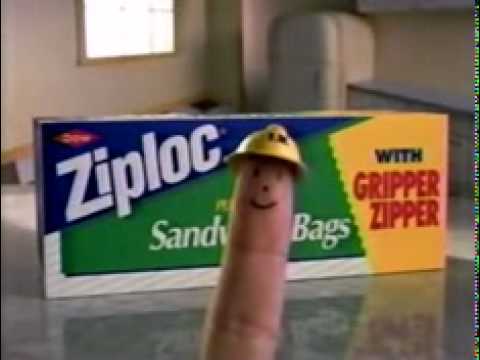
The “Ziploc Finger” Campaign (early 1990s): One of Ziploc’s most memorable early advertising efforts featured a character with a giant Ziploc finger, used to demonstrate the convenience and freshness-locking power of Ziploc bags. The campaign successfully communicated the brand’s core functional benefit in a memorable and distinctive visual style.
The “More Than a Bag” Campaign (2017): This campaign reframed Ziploc as a versatile household solution — not merely a food storage bag — with the tagline “Ziploc: More than a bag.” It demonstrated diverse use cases from travel organisation and craft storage to sous vide cooking, broadening the brand’s perceived utility and justifying a premium position.
| 🏆 Cannes Lions 2025: Grand Prix + 5 Lions
Ziploc’s “Preserved Promos” campaign won the Grand Prix in Creative Commerce at Cannes Lions 2025, plus five additional Lions. Results: +61% Share of Voice | +5% Sales Lift | +49% Redemption Rate. Created by VML, New York. Distributed via Amazon, Target, Walmart, and Rite Aid. |
“Preserved Promos” Campaign (2025) — Cannes Lions Grand Prix
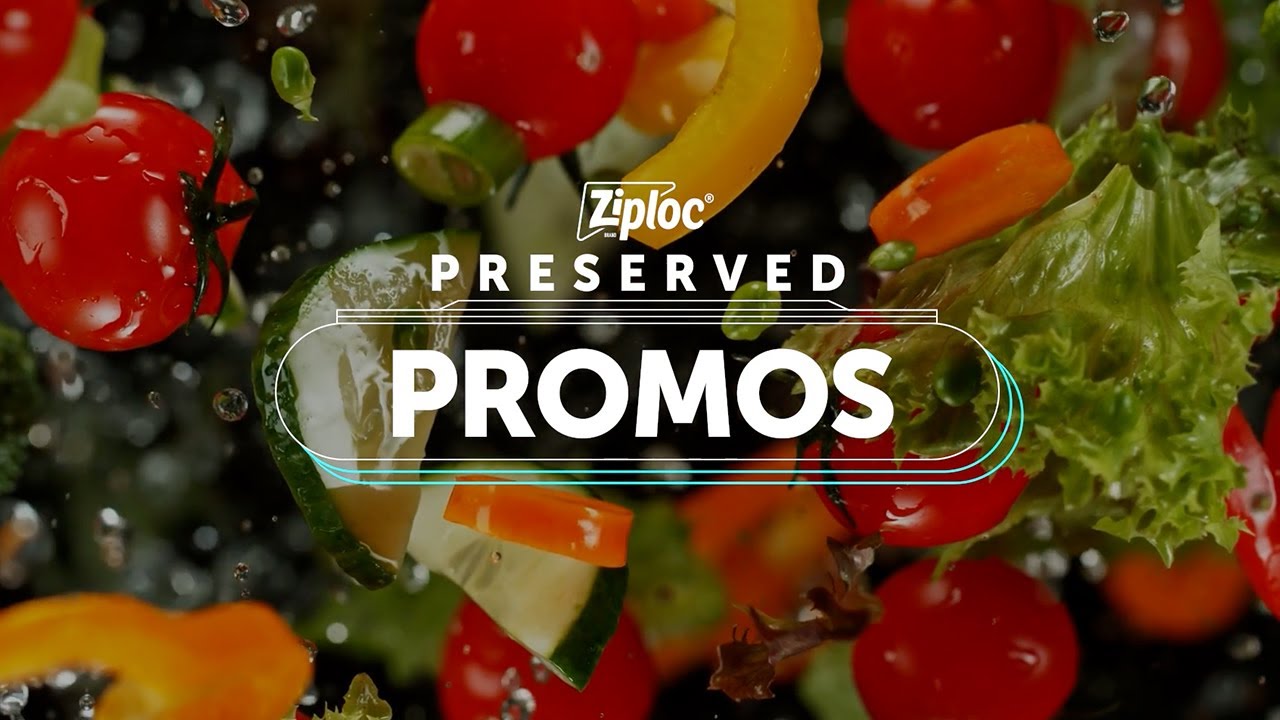
Ziploc’s most significant marketing achievement to date, “Preserved Promos” won the Grand Prix in Creative Commerce at the 2025 Cannes Lions International Festival of Creativity — the advertising industry’s most prestigious award. Created by VML, New York, the campaign addressed a real consumer pain point: 99% of digital grocery coupons go unused because they expire before consumers redeem them, resulting in billions of dollars in lost savings annually.
The campaign’s mechanic was elegantly simple and perfectly on-brand: consumers could upload a photo of an expired grocery coupon (any brand, any product) to the campaign website. To unlock the deal, they simply added a Ziploc product to their cart at participating retailers — Amazon, Target, Walmart, and Rite Aid. Ziploc “preserved” the expired coupon and extended its value, literalising the brand’s core product promise: preservation.
The results were exceptional: +61% Share of Voice, a 5% Sales Lift, and a +49% Redemption Rate compared to standard promotional benchmarks. The campaign earned five additional Cannes Lions beyond the Grand Prix, cementing Ziploc’s position as one of the most creatively ambitious brands in the consumer packaged goods sector.
2. Celebrity Endorsements and Cultural Associations
Ziploc has leveraged celebrity endorsements strategically to build brand credibility, expand its audience, and create emotional connections with consumers.
Martha Stewart: The quintessential homemaker and lifestyle authority, Martha Stewart has endorsed Ziploc on numerous occasions, collaborating on product lines and featuring Ziploc in her cooking and home organisation content. Stewart’s association positions Ziploc at the intersection of domestic excellence and trusted quality — reinforcing the brand’s core identity.
Dwayne “The Rock” Johnson: One of the world’s most popular entertainers, Johnson appeared in Ziploc television commercials, lending his mass-market appeal and physical credibility to the brand. His association with healthy eating, meal prep, and an active lifestyle aligns naturally with Ziploc’s food freshness positioning.
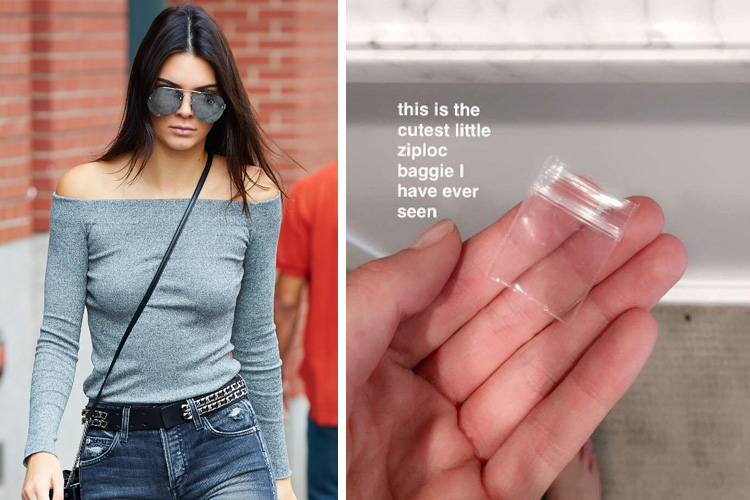
Kendall Jenner (Organic Viral Moment): In a notable example of earned social media coverage, supermodel Kendall Jenner shared a Ziploc bag on Snapchat in 2016, calling it the “cutest little Ziplock baggie” — generating millions of organic views and social media discussion. While not a formal paid campaign, this viral moment demonstrated the power of cultural relevance: the Ziploc brand benefited significantly from the celebrity’s organic association with the product.
Influencer Marketing: Ziploc has increasingly partnered with food, cooking, and lifestyle influencers on Instagram, TikTok, and YouTube — leveraging food prep and organisation content (meal prep videos, lunch packing tutorials, food storage hacks) to reach younger consumers in the environments where they naturally consume related content.
3. Social Media Engagement
Ziploc maintains active social media presences across Facebook, Instagram, Pinterest, and TikTok — platforms that align with its core content themes of food, cooking, organisation, and home management. The brand’s social media strategy is primarily content-led rather than product-focused: it shares recipes, food storage tips, meal prep guides, and usage ideas that provide genuine utility to its audience while reinforcing Ziploc’s relevance in everyday life.
Key social media content pillars include: food storage science (how long different foods keep with Ziploc), meal prep and batch cooking content (Ziploc bags as the organisational backbone of meal prep culture), school lunch packing ideas (targeting the family segment), and eco-friendly usage tips (showcasing Endurables and compostable options). User-generated content — photos and videos of Ziploc being used creatively in the kitchen, for travel, or for home organisation — is actively curated and reshared, building community authenticity.
4. Innovative Product Packaging
Ziploc’s product packaging is a critical marketing touchpoint — the primary in-store communication vehicle for a brand that does not rely on conventional advertising for all of its retail sales. The packaging strategy is designed around several key objectives:
Distinctive Branding: Ziploc’s iconic red and blue packaging creates immediate recognition on crowded retail shelves, where it must compete with Hefty, Glad, and dozens of private-label alternatives. The colour system is consistent across the full product range — allowing consumers to navigate the portfolio easily.
Functional Communication: Each Ziploc package communicates its product’s specific use case and benefits clearly: “Freezer Guard” for freezer bags, “Easy Open Tabs” for slider bags, and size and quantity information prominently displayed. This allows shoppers to make confident purchase decisions quickly.
Sustainability Messaging: Ziploc’s packaging now prominently features recyclability, compostability, and reusability messaging — reflecting the brand’s sustainability evolution and addressing consumer concerns about plastic packaging at the point of purchase.
Value Pack Formats: Multi-pack and bulk configurations serve value-conscious shoppers while increasing per-transaction revenue. Club store packs (Costco, Sam’s Club) are engineered specifically for the bulk-buying shopper.
5. Partnerships, Co-Branding, and Sponsorships
Ziploc has built brand awareness and trial through strategic commercial partnerships with retailers, complementary brands, and entertainment properties.
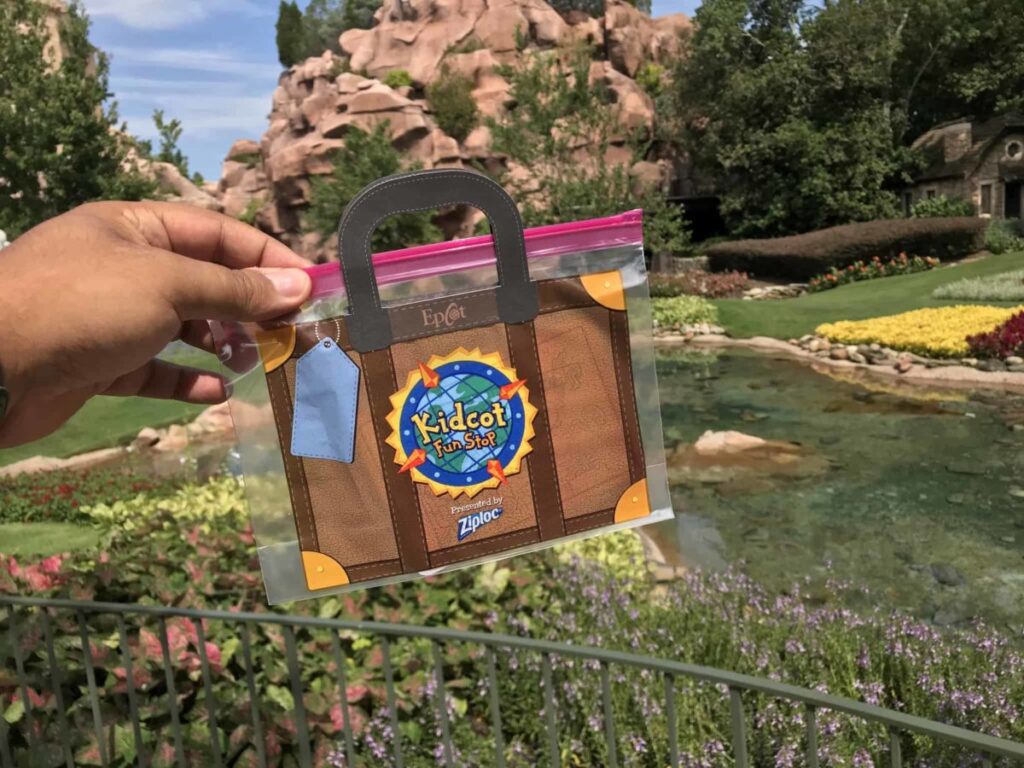
Disney/EPCOT Sponsorship: In a highly visible sponsorship, Ziploc became the official sponsor of Splash Mountain at the Magic Kingdom, Walt Disney World, and
Ziploc also became the sponsor for the 11 Kidcot Fun Stops at each pavilion around Epcot’s World Showcase, with new signage featuring “Presented by Ziploc.” This Disney partnership delivered exceptional brand exposure to families with children — Ziploc’s primary target audience — in a high-engagement environment.
Retailer Partnerships: Ziploc has developed exclusive retailer-specific products and promotions with Target, Walmart, and Costco — including exclusive size configurations, limited-edition packaging, and co-promoted marketing campaigns. These partnerships secure premium shelf placement and promotional support that competitors find difficult to replicate at scale.
“Preserved Promos” Multi-Retailer Integration: The award-winning 2025 campaign demonstrated Ziploc’s ability to orchestrate complex multi-retailer partnerships (Amazon, Target, Walmart, Rite Aid), executing a consistent promotion across diverse retail environments simultaneously — a significant logistical and commercial achievement.
6. Promotional Offers, Contests, and Loyalty Initiatives
Ziploc drives trial, repeat purchase, and household penetration through periodic promotional offers, digital coupons, and contest-based marketing. These initiatives are typically timed around key seasonal moments — back-to-school (August-September), holiday meal prep (November-December), and summer food safety awareness — when consumer relevance and purchase intent are highest.
The “Preserved Promos” campaign represented an evolution of traditional coupon-based promotion into a genuine creative concept: by preserving expired coupons, Ziploc transformed a transactional marketing mechanic into a brand-building campaign, demonstrating that promotional marketing and creative excellence are not mutually exclusive.
7. Sustainability Marketing: The Green Evolution
Sustainability has become a central marketing pillar for Ziploc as SC Johnson navigates the complex challenge of owning a category-leading brand that is primarily associated with single-use plastics — in an era of growing regulatory and consumer pressure against them. Ziploc’s sustainability strategy operates across three levels:
Product innovation: The Endurables silicone line, compostable bags (expanded October 2024), and paper bags represent material departures from Ziploc’s traditional polyethylene product range. Each product opens the brand to a new consumer segment while reducing its environmental footprint relative to traditional single-use bags.
Recycling infrastructure: Traditional Ziploc plastic bags are recyclable at participating retail store drop-off locations that accept plastic film. The Endurables TerraCycle programme provides a direct-to-consumer recycling pathway for silicone products. Both programmes are actively communicated through Ziploc’s sustainability page (ziploc.com/en-us/sustainability) and on-pack messaging.
Food waste reduction messaging: SC Johnson increasingly positions Ziploc bags not just as plastic products but as food waste prevention tools — arguing that the environmental cost of food wasted without proper storage exceeds the environmental footprint of the bags themselves. This “preservation = sustainability” argument is a compelling and defensible position that simultaneously justifies the product’s existence and reframes its environmental narrative.
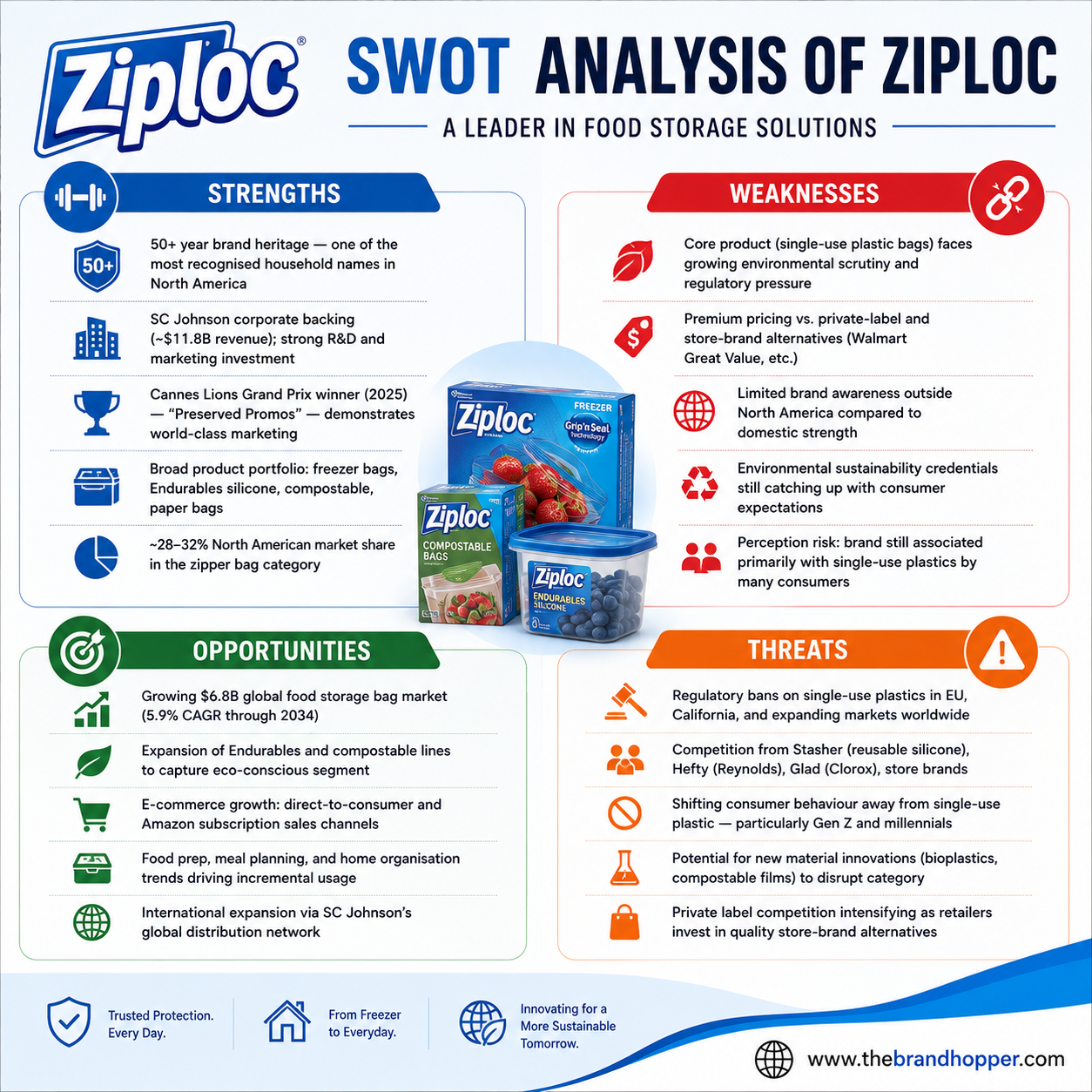
SWOT Analysis of Ziploc
Ziploc’s market position reflects both the extraordinary resilience of a trusted 50-year brand and the real challenges of navigating a shifting regulatory and cultural landscape around single-use plastics.
Conclusion
Ziploc’s 50-year journey from an engineering innovation in a Dow Chemical laboratory to a Cannes Lions Grand Prix-winning brand demonstrates the power of consistent brand building, product innovation, and — increasingly — creative marketing courage. What could be a mature, commoditised category product has been transformed by SC Johnson into a culturally relevant, creatively ambitious brand that attracts both loyal household shoppers and the attention of the global advertising industry.
The brand’s most significant challenge — and opportunity — is its sustainability transformation. Navigating the transition from a single-use plastic brand to one that offers a full spectrum of sustainable storage solutions requires careful product innovation, honest environmental communication, and marketing that bridges Ziploc’s heritage value proposition with emerging consumer values. The “Preserved Promos” campaign exemplifies how this can be done: a campaign that drove commercial results while embodying the brand’s preservation promise in a contemporary, digitally native format.
For brand managers, marketers, and business students, Ziploc offers a masterclass in category leadership: how to combine functional excellence, distribution dominance, strategic pricing, smart celebrity partnerships, and genuinely creative advertising to maintain relevance across generations of consumers in a category where the alternative — becoming a generic, price-competed commodity — is the constant gravitational pull.
Frequently Asked Questions (FAQs)
Q1: Who manufactures Ziploc bags?
Ziploc bags are manufactured and marketed by S. C. Johnson & Son, a privately held American consumer goods company headquartered in Racine, Wisconsin. SC Johnson acquired Ziploc (along with other Dow Brands products) from Dow Chemical Company in 1997 for approximately $1.1 billion. SC Johnson generates approximately $11.8 billion in annual revenue across its global portfolio of brands, which also includes Windex, Pledge, OFF!, and Raid.
Q2: Are Ziploc bags recyclable?
Most Ziploc plastic bags are recyclable at participating retail store drop-off locations that accept plastic film (such as Walmart and Target). They cannot be recycled through standard curbside recycling programmes because plastic film can jam sorting machinery. Ziploc Endurables silicone bags and containers can be recycled through SC Johnson’s partnership with TerraCycle via a free mail-in recycling programme. Ziploc Compostable Sandwich Bags break down in commercial composting facilities. Ziploc Paper Bags can be recycled through standard paper recycling streams.
Q3: What are Ziploc Endurables?
Ziploc Endurables are a line of reusable, food-grade platinum silicone bags and containers launched by SC Johnson. Unlike traditional Ziploc plastic bags, Endurables are dishwasher-safe, oven-safe up to 400°F, microwave-safe, and freezer-safe. They are designed to replace single-use plastic bags for many uses, offering a sustainable alternative that can be used indefinitely. Endurables are available in multiple sizes including small bags (2-cup capacity), medium bags (4-cup), large bags (8-cup), and containers with secure lids.
Q4: What is Ziploc’s market share?
Ziploc holds approximately 28-32% of the North American household zipper bag market — making it the dominant brand in the category. The global food storage bags market was valued at approximately $6.8 billion in 2025 and is expected to grow at a 5.9% CAGR to reach $11.4 billion by 2034. Key competitors include Hefty (Reynolds Consumer Products), Glad (The Clorox Company), private-label store brands, and the growing reusable/sustainable segment led by brands like Stasher (silicone bags).
Q5: Has Ziploc won any marketing awards?
Yes — significantly. Ziploc’s “Preserved Promos” campaign, created with VML New York, won the Grand Prix in Creative Commerce at the Cannes Lions International Festival of Creativity in 2025, along with five additional Cannes Lions. The campaign allowed consumers to upload expired grocery coupons and receive Ziploc discounts at major retailers, achieving +61% Share of Voice, a 5% Sales Lift, and +49% Redemption Rate. This Grand Prix win is one of the most prestigious marketing achievements in SC Johnson’s history.
Q6: Who invented the Ziploc bag?
The technology underlying Ziploc was invented by Norwegian inventor Borge Madsen, who created a plastic zipper mechanism in the 1950s. His design was acquired by Flexigrip, Inc., which later became Minigrip, Inc. The commercial development of the Ziploc bag for consumer grocery use was driven by Dow Chemical Company engineer R. Douglas Behr, who developed the high-speed production process that made plastic zipper bags affordable at scale. Ziploc bags were first introduced to consumers in 1973.
Q7: Is Ziploc microwave safe?
Ziploc freezer and storage bags are generally safe for microwave reheating when the zipper is left open to vent steam, following label directions. They should not be used to microwave fatty foods at high temperatures or in microwave browning packages. Ziploc Endurables silicone bags and containers are fully microwave-safe without restrictions. Always check individual product labels for specific microwave guidance, as formulations may vary.
Q8: How long do Ziploc bags keep food fresh?
Ziploc bags significantly extend food freshness compared to unsealed containers or standard plastic wrap. General guidelines: fresh meat and poultry — 2-4 days in refrigerator (vs. 1-2 days without); cheese — up to 4 weeks in refrigerator; fruits and vegetables — typically 1-2 weeks longer than unwrapped. In the freezer, Ziploc bags prevent freezer burn, extending quality for 6-12 months for most foods. Exact shelf life depends on initial food quality, refrigerator/freezer temperature, and how completely air is expelled from the bag before sealing.
Q9: What are Ziploc’s main competitors?
Ziploc’s primary competitors in the US market are Hefty (manufactured by Reynolds Consumer Products, which also makes Reynolds Wrap foil), Glad (owned by The Clorox Company, which also produces Glad trash bags and Glad press’n seal wrap), and store/private-label brands available at Walmart, Target, and grocery chains. In the growing sustainable storage segment, Stasher (reusable silicone bags, founded 2016) has established itself as a credible eco-conscious alternative, along with various other reusable bag brands available online.
Q10: How is Ziploc addressing plastic waste concerns?
SC Johnson is addressing plastic waste concerns through several strategies: (1) Product innovation — launching Ziploc Endurables reusable silicone bags, Ziploc Compostable Sandwich Bags (expanded October 2024), and Ziploc Paper Bags; (2) Recycling infrastructure — traditional Ziploc plastic bags are recyclable at participating retail store drop-offs; Endurables can be recycled via the TerraCycle programme; (3) Sustainability messaging — positioning Ziploc bags as food waste prevention tools, with the argument that preventing food waste reduces overall environmental impact; (4) Packaging — communicating sustainability credentials clearly on product packaging.
Also Read: The Marketing Marvel of Band-Aid: Strategies and Mix Decoded
To read more content like this, subscribe to our newsletter