Last Updated on November 23, 2026 by Team TBH
Anthropic is a San Francisco-based artificial intelligence company incorporated as a public benefit corporation (PBC). It builds the Claude family of large language models around a central proposition: developing powerful AI systems while prioritizing safety, reliability, interpretability, and steerability.
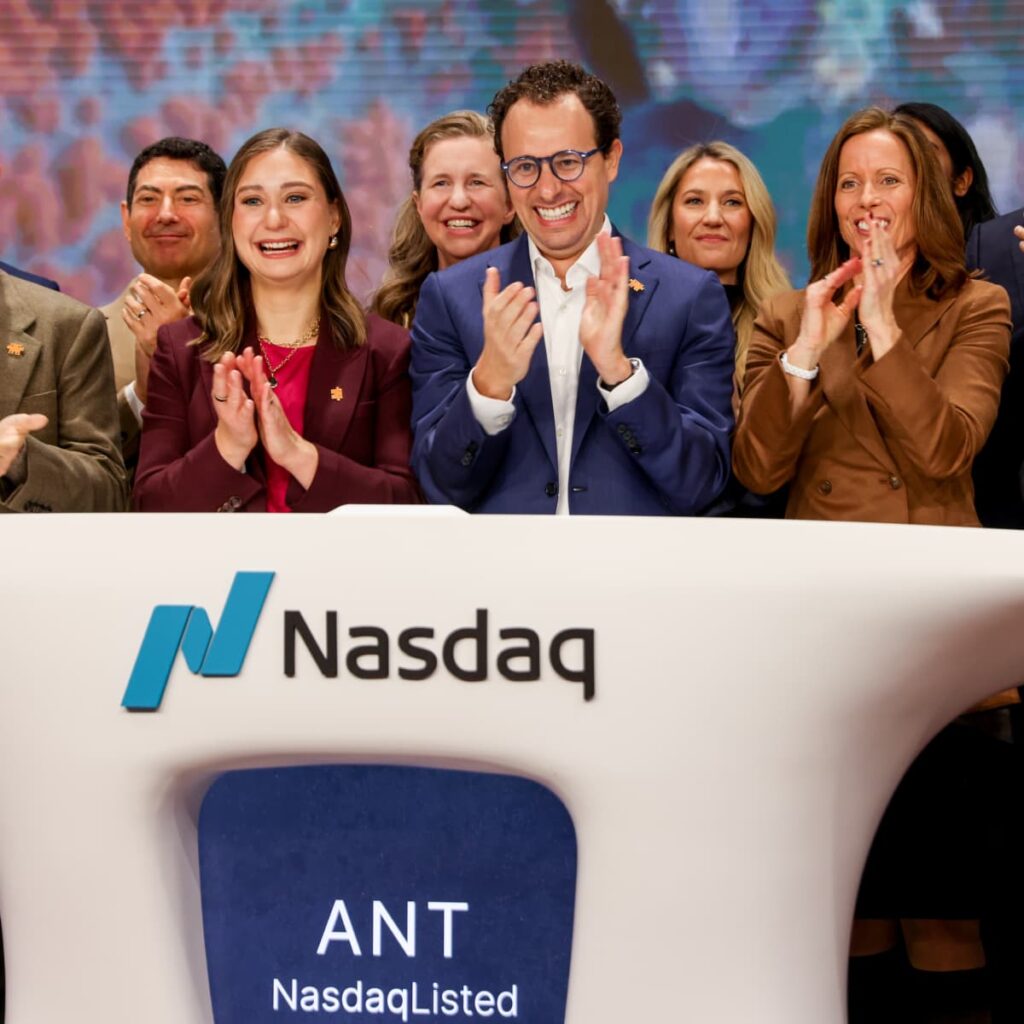
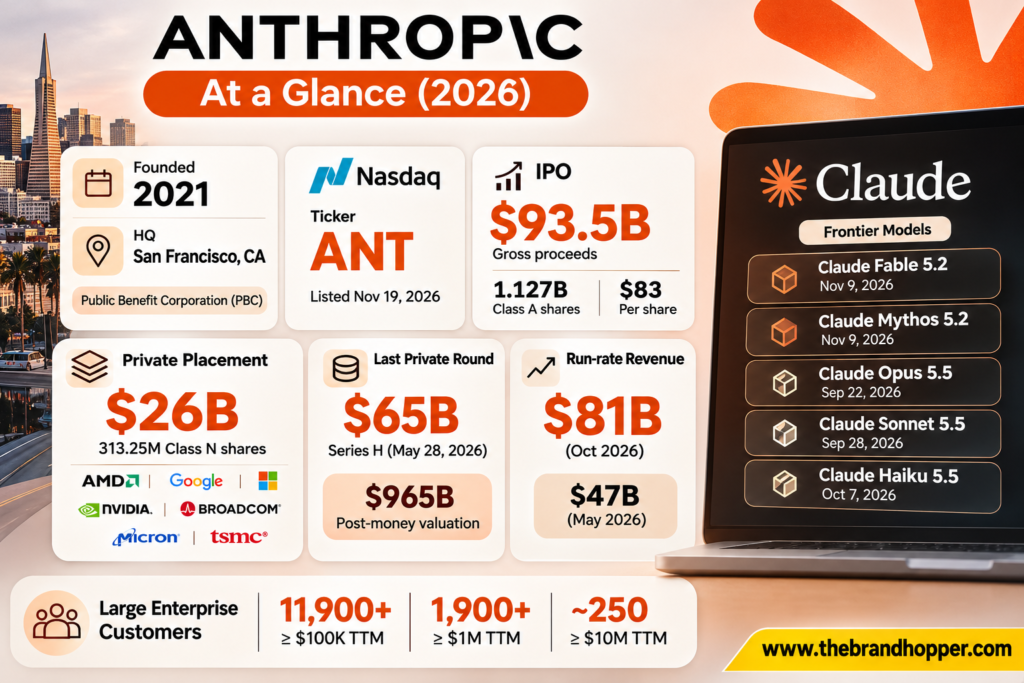
The company raised $30 billion in February 2026 at a $380 billion post-money valuation, followed by a $65 billion Series H round in May at a $965 billion post-money valuation. On November 20, 2026, Anthropic announced the completion of its initial public offering (IPO), following its Nasdaq debut on November 19 under the ticker symbol ANT. The IPO and concurrent strategic private placement generated approximately $119.5 billion in combined gross proceeds.
This analysis examines Anthropic’s founding story, founders, business model, revenue streams, funding history, competitors, competitive advantages, products, and strategy. It also explores the realities of operating as a publicly listed company, including its legal disputes, governance structure, infrastructure commitments, and the questions investors are asking.
Founding Story of Anthropic
Anthropic was founded in 2021 by a group of researchers and executives who had previously worked at OpenAI, led by siblings Dario Amodei and Daniela Amodei. They believed that developing increasingly capable artificial intelligence required a dedicated focus on safety, alignment, and responsible deployment, alongside commercial product development. The company announced its first funding round in May 2021, raising $124 million to develop reliable and steerable AI systems.

Together with colleagues including Jack Clark, Sam McCandlish, Tom Brown, Jared Kaplan, and Chris Olah, the Amodeis established Anthropic as a public benefit corporation. This corporate structure allows its directors to balance shareholder interests with the interests of stakeholders affected by its activities and its stated public benefit purpose: the responsible development and maintenance of advanced AI for the long-term benefit of humanity.
An early signature of Anthropic’s culture was its emphasis on AI safety research. The company developed Constitutional AI, an approach designed to train models using an explicit set of principles and feedback rather than relying exclusively on human preference ratings. This research helped establish Anthropic’s identity as an AI company that considers safety and model behavior central to its technical development.
Anthropic introduced its Claude AI assistant in March 2023, entering a rapidly developing market dominated by OpenAI’s ChatGPT and Google’s AI initiatives. The Claude family subsequently evolved through several generations, with models designed for general-purpose assistance, coding, reasoning, research, and enterprise applications.
The company has since matured from a research-focused startup into a major AI infrastructure and enterprise technology provider. By 2026, it was signing large-scale compute agreements with cloud and chip providers, expanding its enterprise product portfolio, and preparing for public-market scrutiny.
Its mission remains focused on ensuring that the world can safely transition through transformative AI. That mission is reflected in its public benefit corporation structure, Long-Term Benefit Trust, and continued investment in interpretability, alignment, and AI safety research.
Founders of Anthropic
Anthropic was established by seven co-founders, including the Amodei siblings and five former OpenAI colleagues. Their combined experience in large language model development, AI safety, interpretability, infrastructure, and policy helped shape the company’s research-led approach.
| Founder | Role | Background |
| Dario Amodei | Co-founder and CEO | Former OpenAI research executive; leads Anthropic’s research direction and strategic vision |
| Daniela Amodei | Co-founder and President | Former OpenAI executive; leads organizational operations, commercial execution and governance |
| Jack Clark | Co-founder and Head of Public Benefit | AI policy specialist and former OpenAI policy director; leads the Anthropic Institute |
| Sam McCandlish | Co-founder and Chief Architect | AI researcher focused on large-scale model training, pretraining and research infrastructure |
| Tom Brown | Co-founder and Chief Compute Officer | Former OpenAI engineer who led GPT-3 engineering; oversees compute infrastructure |
| Jared Kaplan | Co-founder and Chief Science Officer | Researcher known for foundational work on scaling laws and AI development |
| Chris Olah | Co-founder and Interpretability Research Lead | AI researcher known for foundational work in mechanistic interpretability |

Dario Amodei is the public face of the company and leads its research direction and strategic vision. His approach emphasizes developing highly capable AI systems while establishing safeguards that can support responsible deployment.
Daniela Amodei serves as President and Chair of Anthropic’s Board of Directors. She oversees the organization’s research, engineering, product, governance, and commercial execution, helping translate the company’s technical ambitions into a scalable business.
The wider founding group is particularly significant because of its research-heavy background. Several founders contributed to foundational developments in large language models, AI scaling, reinforcement learning, and interpretability, giving Anthropic substantial technical credibility.
Governance is also part of the founders’ original design. The Long-Term Benefit Trust, established in 2023, has special rights relating to board composition and is intended to help ensure that the company balances shareholder interests with its public benefit mission. In October 2026, experimental physicist Christopher Stubbs joined the Trust, bringing additional scientific and public-policy expertise.
Business Model of Anthropic
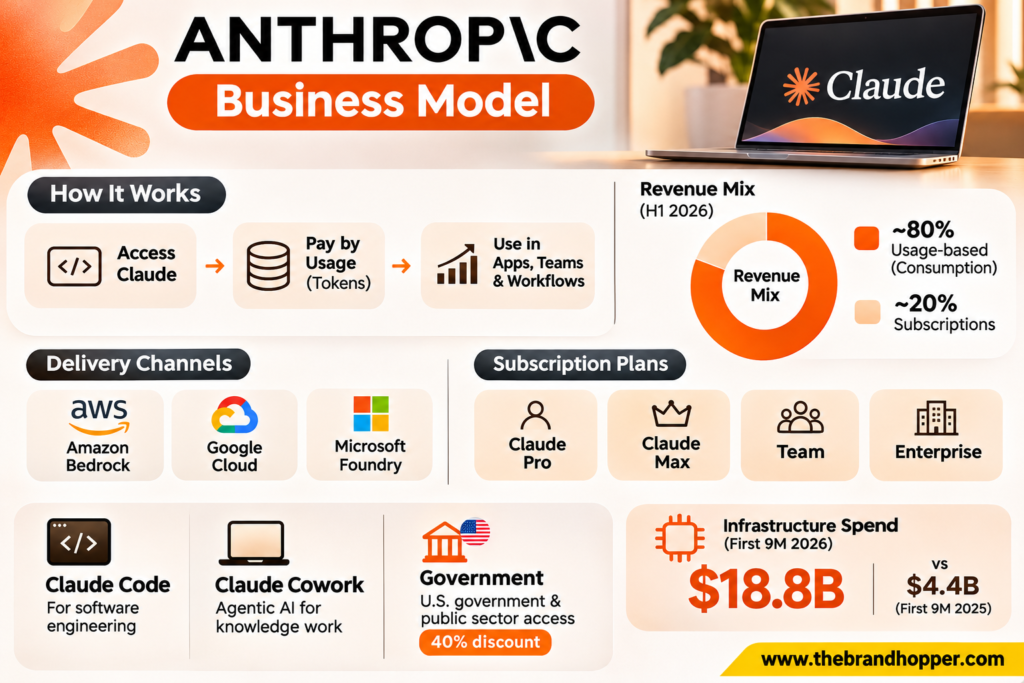
Anthropic operates primarily through an AI-as-a-service business model. Its core product is the Claude family of large language models, delivered through its own API and through major cloud platforms, including Amazon Bedrock, Google Cloud, and Microsoft Foundry. Customers can access these models through direct contracts or cloud marketplaces, depending on their technology infrastructure and procurement preferences.
The company’s primary revenue model is consumption-based. Developers and enterprises pay according to their usage of Claude, generally measured in tokens, with pricing varying according to the model and service selected. Enterprise customers can also enter annual or multi-year agreements with minimum spending commitments and negotiated pricing arrangements.
Alongside API access, Anthropic offers subscription products for individuals, professionals, and organizations. Consumers can subscribe to Claude Pro and Claude Max, while businesses can purchase Team and Enterprise plans that provide organizational access, administrative controls, and additional capabilities.
Anthropic has also expanded beyond conversational AI into specialized productivity and developer applications. Claude Code supports software engineering workflows, while Claude Cowork extends agentic capabilities to knowledge workers by helping them execute multi-step tasks involving files, applications, and business workflows.
Government customers represent another important distribution channel. In October 2026, the U.S. General Services Administration expanded its agreement with Anthropic, offering government customers a 40% discount on Claude Enterprise, Claude for Government, and the Claude API. The agreement also extends access to state, local, tribal, and territorial government organizations.
Anthropic’s revenue mix remains heavily dependent on usage-based services. According to its 2026 IPO disclosures, consumption-based revenue accounted for approximately 80% of revenue during the first half of 2026, while subscription-based revenue contributed approximately 20%. For the first nine months of 2026, consumption-based revenue represented approximately 79% of total revenue.
This model supports rapid revenue expansion as customers integrate Claude into more business processes. However, it also creates substantial infrastructure costs because every additional model interaction requires compute capacity. Anthropic is addressing this through long-term cloud partnerships, access to multiple chip architectures, and continuous improvements in model efficiency.
The company’s IPO disclosures also highlight the scale of its infrastructure requirements. Compute and infrastructure expenses reached $18.8 billion in the first nine months of 2026, compared with $4.4 billion during the same period in 2025.
Revenue Streams of Anthropic
The trajectory of Anthropic’s revenue growth is one of the most striking developments in the AI industry. The company reported an annualized revenue run rate exceeding $14 billion when it announced its Series G funding in February 2026, followed by more than $47 billion in May. Bloomberg subsequently reported that its run rate exceeded $65 billion by the end of July.
Its IPO prospectus provides a clearer picture of actual recognized revenue. Anthropic reported $33.24 billion in revenue for the nine months ended September 30, 2026, compared with $2.545 billion during the corresponding period in 2025.
The prospectus also disclosed that annualized run-rate revenue reached approximately $81 billion as of October 31, 2026. This measure annualizes recent consumption and subscription activity, so it should not be interpreted as revenue already earned or a guaranteed full-year financial result.
Anthropic’s financial disclosures also highlight rapid enterprise adoption. As of September 30, 2026, the company had more than 11,900 customers generating at least $100,000 in trailing 12-month revenue, over 1,900 customers generating at least $1 million, and approximately 250 customers generating at least $10 million.
No single customer accounted for more than 10% of revenue during the first nine months of 2026, although the five largest customers collectively represented approximately 25%. This indicates substantial enterprise demand alongside a degree of customer concentration that investors will continue to monitor.
Funding of Anthropic
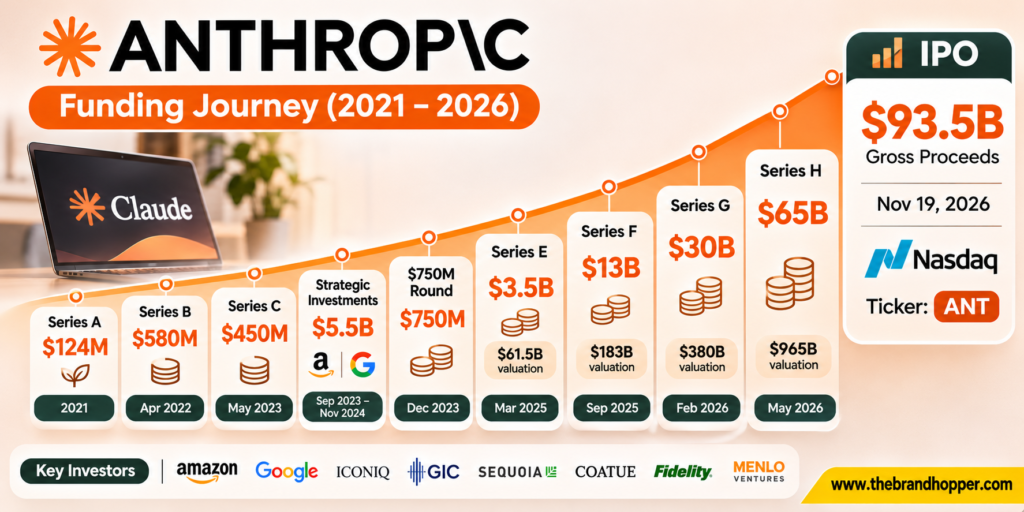
Anthropic’s fundraising history reflects the enormous capital requirements of frontier AI development. From its initial $124 million Series A in 2021 to its $65 billion Series H in 2026, the company has attracted investment from leading venture capital firms, technology companies, and global institutional investors.
After its Series A, Anthropic announced a $580 million funding round in April 2022 (shortly after founding), the company announced a $580 million funding round, including a reported $500 million investment from FTX founder Sam Bankman-Fried. The FTX investment subsequently became the subject of scrutiny following the cryptocurrency exchange’s collapse.
In May 2023 Anthropic disclosed a Series C raise of $350 million, led by Spark Capital with participation from Google and other investors. The financing was subsequently expanded to approximately $450 million, reflecting the growing interest in Anthropic’s Claude models.
The largest early strategic commitments came from Amazon and Google. Amazon announced an investment of up to $4 billion in September 2023, which was completed by March 2024, and committed an additional $4 billion in November 2024. Google announced an initial $500 million investment in October 2023, alongside a commitment to invest an additional $1.5 billion.
In December 2023, Menlo Ventures led a $750 million financing round reportedly valuing Anthropic at approximately $18.4 billion. The company’s valuation subsequently increased sharply as enterprise adoption and demand for AI infrastructure accelerated.
Series E in March 2025 raised $3.5 billion at a $61.5 billion post-money valuation. Series F in September 2025 raised $13 billion at a $183 billion post-money valuation, led by ICONIQ Growth alongside Fidelity Management & Research Company and Lightspeed Venture Partners.
Series G, announced on February 12, 2026, raised $30 billion at a $380 billion post-money valuation. The round was led by GIC and Coatue, with D. E. Shaw Ventures, Dragoneer, Founders Fund, ICONIQ, and MGX among the co-leads and major participants.
The funding momentum continued with Series H on May 28, 2026. Anthropic raised $65 billion at a $965 billion post-money valuation, with Altimeter Capital, Dragoneer, Greenoaks, and Sequoia Capital leading the round. Strategic infrastructure investors and partners also participated, reinforcing the importance of long-term access to compute resources.
The IPO
Anthropic filed its registration statement on Form S-1 with the U.S. Securities and Exchange Commission on October 26, 2026, beginning the formal process of becoming a publicly traded company.
On November 18, 2026, Anthropic priced its initial public offering at $83 per share. Its Class A common stock began trading on the Nasdaq Global Select Market on November 19 under the ticker symbol ANT.
On November 20, Anthropic announced the closing of the IPO, including the full exercise of the underwriters’ option to purchase additional shares. The completed offering comprised 1.127 billion shares at $83 each, generating approximately $93.5 billion in gross proceeds, of which approximately $91.6 billion went to Anthropic.
Alongside the IPO, the company completed a concurrent private placement of 313,253,007 Class N shares to AMD, Broadcom, Google, Micron, Microsoft, NVIDIA, and TSMC, generating approximately $26 billion. Combined gross proceeds from the IPO and private placement reached approximately $119.5 billion before underwriting discounts, commissions, and other expenses.
Anthropic’s public-market debut attracted substantial investor interest. Shares opened at $111.50 on November 19, approximately 34% above the $83 IPO price, and closed their first trading session at $97.17, giving the company an implied fully diluted valuation of approximately $1.77 trillion at the close. The valuation briefly approached $2 trillion during the opening session.
Competitors of Anthropic
| Company | Flagship AI Products | Business Model / Focus | Competitive Position |
| OpenAI | ChatGPT, GPT models, Codex | Consumer subscriptions, enterprise solutions and APIs; backed by major investors including Microsoft | Major competitor in consumer AI, enterprise AI and developer tools |
| Google (DeepMind) | Gemini family, Vertex AI | Distributes AI through Search, Workspace and Google Cloud | Competitor, cloud partner and strategic Anthropic investor |
| Amazon | Amazon Bedrock, Nova and Titan models | AWS cloud infrastructure, enterprise AI platforms and proprietary models | Major cloud partner and investor, while also developing competing AI models |
| Meta | Llama models, Meta AI | Open-weight AI models, consumer assistants and advertising ecosystem | Uses open-weight distribution to compete with closed commercial AI models |
| IBM | watsonx | Enterprise AI, consulting, automation and hybrid cloud | Established enterprise technology provider targeting regulated industries |
| Cohere | Command models | Enterprise LLM APIs, multilingual AI and private deployment | Enterprise-focused challenger emphasizing security and deployment flexibility |
| Mistral | Mistral models and Le Chat | European AI development, open-weight models and commercial AI services | Positions itself as a European alternative for enterprise and sovereign AI |
Note: These companies are not all direct competitors across every product category. Amazon and Google are simultaneously infrastructure partners, investors, and competitors in certain AI markets.
OpenAI remains one of Anthropic’s most significant competitors. In March 2026, OpenAI announced a $122 billion funding round at a post-money valuation of $852 billion, highlighting the enormous capital requirements and investor expectations surrounding frontier AI development. Its ChatGPT ecosystem, developer APIs, Codex products, and enterprise offerings create significant competitive overlap with Claude.
Google is another particularly important competitor because it occupies several positions in Anthropic’s ecosystem. Its Gemini models compete directly with Claude, while Google Cloud distributes Claude through its infrastructure platform and Google remains a strategic investor in Anthropic.
Amazon has a similar dual relationship. AWS provides Anthropic with cloud infrastructure and distributes Claude through Amazon Bedrock, while Amazon continues to develop its own Nova and Titan model families and other generative AI products.
Meta follows a different competitive strategy through its Llama family of models. Its emphasis on open-weight AI gives developers and businesses greater flexibility in deployment, customization, and infrastructure choices, creating an alternative to proprietary models such as Claude.
IBM competes primarily in enterprise AI, hybrid cloud, consulting, and AI governance. Cohere and Mistral, meanwhile, target enterprise customers seeking specialized language models, private deployment, and alternatives to the largest U.S.-based AI providers.
The competitive picture has shifted significantly in enterprise AI spending. Menlo Ventures’ November 2026 State of Enterprise AI report estimated that Anthropic captured approximately 55% of enterprise LLM API spending, compared with 31% for OpenAI and 9% for Google. These figures relate specifically to enterprise LLM API spending and should not be interpreted as overall AI market share, consumer usage, or total company revenue.
Other measurement methods produce different results. Consumer traffic, business software adoption, cloud marketplace spending, and API token usage measure different aspects of AI adoption. The broader picture is that Anthropic has developed a particularly strong position in enterprise AI and coding, while OpenAI and Google retain significant advantages in consumer distribution and technology ecosystems.
Competitive Advantage of Anthropic
Anthropic’s competitive advantage is built on several interconnected strengths: AI safety positioning, advanced model capabilities, developer adoption, multi-cloud distribution, and increasing enterprise integration.
1. Safety as a sales feature. Anthropic’s public benefit corporation structure, Constitutional AI research, interpretability work, and responsible-scaling policies help distinguish it from competitors. These capabilities are particularly relevant to regulated customers that need to assess model behavior, data security, reliability, and operational risks before deploying AI systems at scale.
In October 2026, Anthropic also announced that it was providing employee-like access to independent evaluators, including the nonprofit METR, to support external testing of its AI systems.
2. Coding and agentic leadership. Claude has developed a strong reputation among software developers, particularly through Claude Code. The product can plan, write, test, and debug software while interacting with development environments and existing tools.
The release of Claude Opus 5.5 in September 2026 strengthened Anthropic’s position in agentic coding and knowledge work. The company stated that the model costs 40% less to run than Opus 5 on typical workloads, while the November release of Claude Fable 5.2 and Mythos 5.2 expanded its capabilities in demanding technical tasks, finance, and scientific applications.
3. Multi-cloud distribution. Claude is available through Anthropic’s own platform and major cloud providers, including AWS, Google Cloud, and Microsoft Foundry. This allows customers to integrate Claude into their existing infrastructure and procurement arrangements instead of relying exclusively on one cloud ecosystem.
The concurrent $26 billion private placement to Google, Microsoft, NVIDIA, AMD, Broadcom, Micron, and TSMC also highlights the importance of Anthropic’s relationships with chip manufacturers and infrastructure providers.
4. Land-and-expand economics. Anthropic’s enterprise customer growth demonstrates the potential of its usage-based model. As of September 30, 2026, more than 11,900 customers generated at least $100,000 in trailing 12-month revenue, while over 1,900 customers generated at least $1 million.
The company also disclosed that approximately 250 customers generated at least $10 million in trailing 12-month revenue. This reflects the growing importance of expansion within existing enterprise accounts, particularly as customers adopt Claude across multiple business functions and products.
Risks and Open Questions for Anthropic
1. Compute dependence is the largest financial risk. Anthropic has entered into substantial long-term infrastructure and compute commitments to support its model development and commercial expansion. Its IPO disclosures highlight that these commitments may need to be met regardless of future revenue or infrastructure utilization, creating financial exposure if demand or model economics change.
Compute and infrastructure expenses reached $18.8 billion during the first nine months of 2026, compared with $4.4 billion in the corresponding period of 2025. Although revenue increased much faster than compute expenses during the same period, the scale of infrastructure spending remains a central issue for investors.
2. Profitability remains important. Anthropic reported an operating loss of approximately $1.3 billion for the first nine months of 2026, despite substantial revenue growth. Its adjusted operating income and other non-GAAP measures provide additional context, but they should not be confused with GAAP profitability or net income.
The company must demonstrate that increasing model efficiency, subscription adoption, and enterprise spending can eventually support sustainable operating margins.
3. Legal and political risk is real. Anthropic agreed to a $1.5 billion settlement in the authors’ class-action copyright litigation concerning the unauthorized acquisition and use of copyrighted books. A federal judge granted final approval to the settlement on July 20, 2026. The settlement represents a major legal development for the AI industry, although it does not eliminate every potential copyright dispute involving AI training.
Separately, Anthropic faced a dispute with the U.S. Department of Defense over the permitted use of its AI systems. The dispute resulted in the Pentagon designating Anthropic a supply-chain risk in March 2026.
In August 2026, a California federal court ruled against the government’s action in a separate legal proceeding. However, on September 25, 2026, the U.S. Court of Appeals for the D.C. Circuit upheld the Pentagon’s supply-chain-risk designation in a 2–1 decision. The matter therefore remains a significant political and legal risk, particularly for Anthropic’s government and defense-related business.
Products and Services of Anthropic
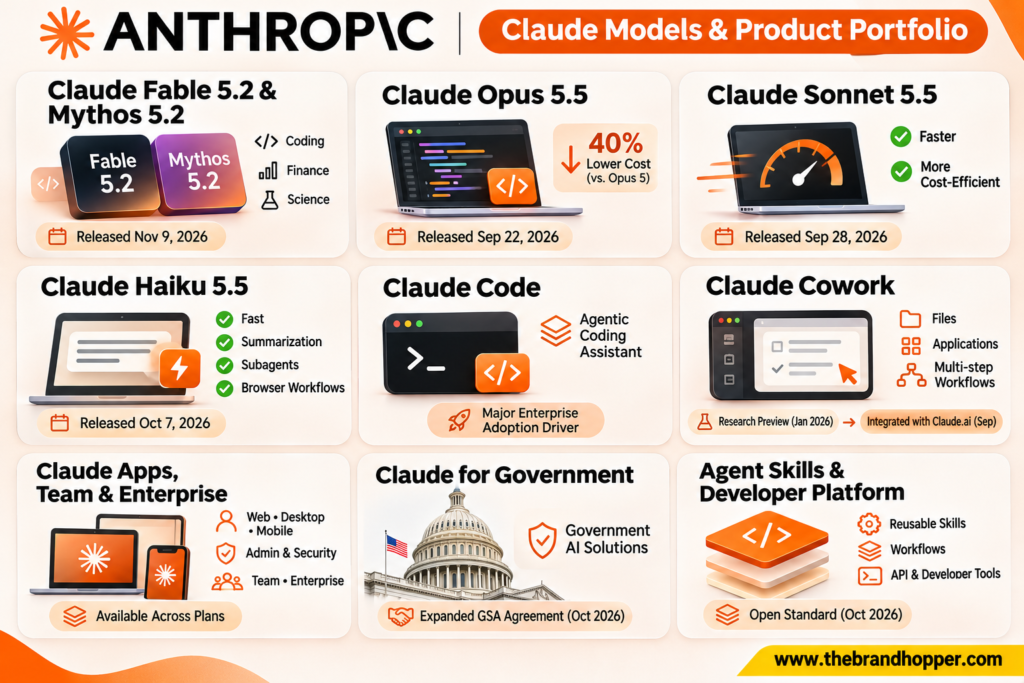
The model lineup illustrates the pace of Anthropic’s product development. The company progressed from Claude 3 and 3.5 in 2024 and 2025 to the Claude 4 and 5 generations, with specialized models increasingly focused on coding, reasoning, and professional knowledge work.
The November 2026 releases of Claude Fable 5.2 and Claude Mythos 5.2 represent another expansion of its technical capabilities. Anthropic describes Fable and Mythos as models designed for demanding technical challenges, including software development, finance, and scientific research. Mythos has more restricted availability, while Fable is more broadly accessible.
Anthropic has also expanded its scientific applications. In October 2026, it described research partnerships with six organizations developing new medicines, as part of its broader effort to accelerate drug development and scientific discovery using Claude.
Additional Strategic Insights
1. Model evolution. Claude 1 and Claude 2 were introduced in 2023, followed by the Claude 3 family in March 2024, which introduced Opus, Sonnet, and Haiku tiers. Claude 3.5 and 3.7 expanded its capabilities during 2024 and 2025, while subsequent generations introduced increasingly advanced reasoning, coding, and agentic capabilities.
By November 2026, Anthropic’s portfolio included Claude Opus 5.5, Sonnet 5.5, Haiku 5.5, Fable 5.2, and Mythos 5.2. Extended reasoning, larger context capabilities, and autonomous multi-step task execution have become increasingly important competitive differentiators.
2. Partnerships. Amazon remains a major infrastructure partner and investor, while Google plays a dual role as both a cloud partner and a competitor through Gemini. Microsoft, NVIDIA, AMD, Broadcom, Micron, and TSMC are also strategically important to Anthropic’s infrastructure ecosystem.
Anthropic has also invested in building enterprise implementation capabilities. In October 2026, it launched Claude Frontier Academy with a $100 million commitment to train 10,000 Frontier Deployed Engineers by the end of 2027. The first cohorts include professionals from Accenture, Bain, Capgemini, Deloitte, McKinsey, and other major organizations.
3. Safety and governance. The Long-Term Benefit Trust, Anthropic Public Benefit Fund, independent safety evaluations, and usage policy updates are important elements of the company’s governance strategy.
In October 2026, Anthropic announced the creation of its Public Benefit Fund, committing an initial 5% of its shares to the fund, subject to stockholder approval. The structure also provides for additional contributions as the company’s valuation increases, subject to specified conditions and board discretion. The initiative is intended to expand the company’s ability to support public-benefit activities as AI becomes more influential across society.
4. Anthropic’s Agent Skills initiative is another strategic development. On October 22, 2026, the company donated Agent Skills, an open standard for giving AI agents specialized knowledge and workflows, to the Agentic AI Foundation under the Linux Foundation. Anthropic reported that more than 70 agent platforms had integrated the standard.
5. International expansion. Anthropic has continued expanding beyond the United States. Following its earlier expansion plans for Dublin, London, and Paris, the company opened a Singapore office on October 14, 2026, and signed a memorandum of understanding with Singapore’s Ministry of Digital Development and Information.
The agreement focuses on AI safety, security, model evaluation, research into AI adoption, and responsible deployment across public and private-sector organizations.
Conclusion
Anthropic’s journey represents one of the most significant developments in the artificial intelligence industry. Founded in 2021 by a group of former OpenAI researchers who wanted to prioritize AI safety, the company has evolved into a major enterprise AI provider with a rapidly expanding product ecosystem and a substantial global infrastructure footprint.
Its funding journey has been equally remarkable. From a $124 million Series A in 2021 to a $65 billion Series H at a $965 billion post-money valuation in May 2026, Anthropic attracted some of the world’s largest technology companies and institutional investors. Its November 2026 IPO further transformed the company, generating approximately $119.5 billion in combined gross proceeds from the public offering and concurrent private placement.
The next chapter is different in kind. As a publicly listed company, Anthropic must demonstrate that its extraordinary revenue growth can translate into sustainable financial performance. Its $33.24 billion in recognized revenue during the first nine months of 2026 and approximately $81 billion annualized run rate as of October are impressive, but its substantial infrastructure commitments, operating losses, and intense competition remain important considerations.
Rivals such as OpenAI, Google, Meta, and Mistral are continuing to develop increasingly capable AI models, while enterprise technology companies are expanding their own AI platforms and services. The Pentagon dispute and copyright settlement also demonstrate how legal, regulatory, and political developments can influence the company’s addressable markets.
Even so, Anthropic’s original thesis remains central to its strategy: developing highly capable AI while making safety and responsible deployment fundamental to its business. Its ability to maintain that positioning, strengthen enterprise relationships, improve compute economics, and deliver increasingly valuable AI products will determine whether its public-market success translates into long-term competitive leadership.
In 2026, the market has placed an extraordinary valuation on that proposition. The coming years will reveal whether Anthropic can sustain the growth, innovation, and governance standards required to justify it.
Also Read: Inside OpenAI’s ChatGPT Ad Platform
To read more content like this, subscribe to our newsletter