Last Updated on November 4, 2026 by Team TBH
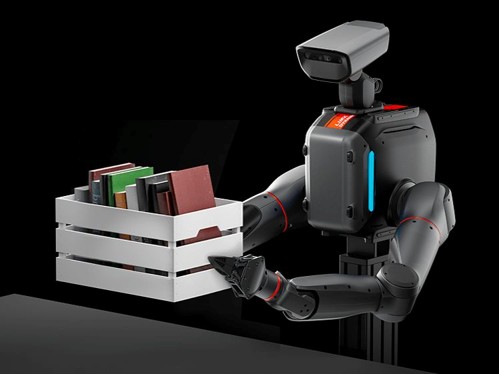
A humanoid robot may move boxes beside warehouse workers or assist staff on a factory floor. But when people and machines share the same space, even a small movement error can cause an accident. Cameras, sensors, collision detection, and emergency-stop systems help reduce these risks.
Understanding how these safeguards work reveals when humanoid robots can operate safely alongside people and where limitations remain.
Quick Answer: Are Humanoid Robots Safe to Work Around People?
Yes, humanoid robots can work around people when their hardware, software, and operating environment include appropriate safety measures. These typically include:
- Cameras and sensors to detect nearby people and obstacles.
- Collision detection and force-limiting controls.
- Emergency stops and protective-stop functions.
- Speed limits and monitored safety zones.
- Risk assessments and supervised operation.
However, a robot is not automatically safe simply because it can recognize people. Its complete application must be tested for the specific working environment and tasks.
What Safety Features Allow Humanoid Robots to Work with Humans?
Several safety systems work together to reduce risks during human-robot interaction, from detecting nearby people to controlling movement and stopping when hazards arise.
Cameras and Sensors for Human Detection
Cameras help humanoid robots recognize people and objects, while depth and proximity sensors estimate distances and detect nearby obstacles. Force and torque sensors can also identify physical contact. The control system combines these inputs to adjust movement or trigger a protective stop. However, poor lighting, blocked views, and sensor failures can reduce detection accuracy, making additional safeguards necessary.
Collision Detection and Force-Limiting Technology
Collision detection systems identify unexpected contact with people or objects. Force and torque sensors allow robots to stop or adjust movement when predefined limits are exceeded. Power and force limiting also reduces potential impact by controlling movement speed and applied force.
However, these measures cannot eliminate every hazard, particularly when someone could become trapped between a moving robot and a fixed surface.
Emergency Stops and Fail-Safe Systems
Emergency-stop controls allow operators to stop dangerous movements immediately. Protective stops can also activate automatically when sensors detect unsafe conditions or system faults. Fail-safe designs aim to move the robot into a safer state when critical components malfunction.
For example, a sensor failure may trigger a controlled stop. Operators must know how to activate emergency controls and restart the system safely.
Safety Standards, Risk Assessments, and Testing
Safety standards guide robot design, installation, and operation. ISO 10218-1:2025 covers industrial robot safety requirements, while ISO 10218-2:2025 addresses industrial robot applications and cells. ISO/TS 15066 provides guidance for collaborative industrial robots. However, compliance alone does not guarantee safe deployment.
Risk assessments must consider movement, tools, workspace, and human interaction. Testing should verify that protective measures work under actual operating conditions.
Where Can Humanoid Robots Safely Work Alongside People?
Humanoid robots are being tested in several settings, but the safety requirements vary with the environment, tasks, and level of human interaction.
Manufacturing and Warehouse Environments
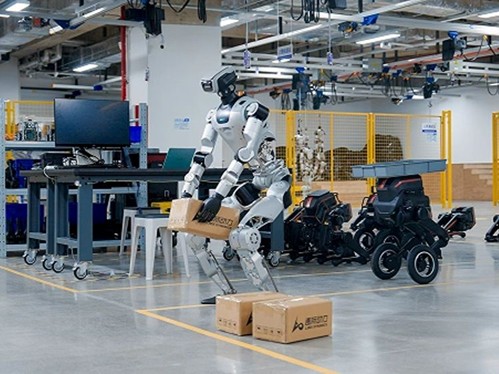
Factories and warehouses are among the most practical environments for testing human-robot collaboration. Humanoid robots may move materials, transfer packages, organize inventory, or assist with repetitive handling tasks. Safety measures can include marked operating zones, monitored separation distances, reduced movement speeds near workers, and protective stops.
For example, a robot moving a container through a shared warehouse aisle should detect nearby workers and stop if its safe operating distance is breached. Employers must also assess risks from dropped objects, moving equipment, and restricted walkways.
Healthcare, Hospitality, and Public Spaces
Hospitals, hotels, and public venues present different safety requirements because robots may encounter patients, visitors, children, and people with limited mobility. Potential tasks include delivering supplies, guiding visitors, and transporting lightweight items.
Robots operating in these settings need reliable obstacle detection, controlled movements, and clear ways for people to request assistance or stop an interaction. Healthcare environments also require attention to hygiene, privacy, and sensitive equipment.
Research Facilities and Everyday Environments
Research laboratories provide controlled spaces for testing walking stability, object handling, collision responses, and human-robot interaction. Everyday environments are more challenging because furniture, pets, children, stairs, and loose objects create unpredictable conditions.
A robot that performs well in a laboratory may still struggle with ordinary household activities. Before deployment, developers need to test realistic scenarios, define operating boundaries, and provide ways for people to intervene when necessary.
What Are the Remaining Safety Risks and Challenges?
Despite these safeguards, humanoid robots still face technical and operational challenges that can affect their safety during everyday interactions with people.
Unexpected Movements and Unpredictable Situations
A humanoid robot may misidentify an object, misjudge a person’s position, or respond too slowly to a sudden movement. Walking and turning also create balance challenges, particularly on slippery or uneven surfaces. A person stepping into its path unexpectedly can increase collision risks.
Sensor blind spots and delayed processing may make these situations harder to manage. Developers must test unexpected interactions and establish safe speed limits, movement boundaries, and stopping procedures rather than relying solely on AI-based recognition.
Mechanical Failures, Battery Risks, and Software Errors
A damaged joint, worn actuator, loose component, or faulty sensor can affect movement and stability. Battery systems introduce additional concerns, including overheating, electrical faults, and potential fire hazards if cells become damaged. Software errors or communication failures may also cause incorrect movements or interrupt safety functions.
Regular inspections, battery monitoring, software updates, and maintenance schedules help reduce these risks. Operators should also know how to isolate power and respond to mechanical or electrical faults without exposing themselves to additional danger.
Human Supervision, Training, and Operational Limits
Human supervision remains important, especially when robots perform unfamiliar tasks or operate in shared spaces. Workers should understand the robot’s movement range, stopping controls, warning signals, and operating limits.
Training should cover what to do when a robot behaves unexpectedly or loses communication with its control system. A robot should not perform tasks beyond its tested capabilities simply because its software can accept the instruction.
Conclusion
Humanoid robots can work alongside people when their sensing, movement controls, and protective systems meet the demands of a specific task. Cameras, collision detection, emergency stops, and regular testing all contribute to safer operation.
However, reliable collaboration also requires proper installation, trained operators, and ongoing risk assessments. Safety must be demonstrated in the actual working environment, not assumed from a robot’s design.
FAQS
Can Humanoid Robots Recognize and Avoid People?
Yes. Cameras, depth sensors, and AI-based recognition systems help humanoid robots detect people and obstacles. However, detection accuracy depends on sensor performance, visibility, and software reliability. Safety-rated protective systems provide additional safeguards.
What Happens If a Humanoid Robot Loses Balance?
A robot’s control system may attempt to correct its posture or stop movement. Some designs use protective mechanisms to reduce the risk of falling. The response depends on its balance sensors, mechanical design, and safety controls.
Do Humanoid Robots Need Human Supervision?
Yes, particularly in workplaces and environments with unpredictable activity. Operators monitor performance, manage unexpected situations, and perform safety checks. Supervision requirements depend on the robot’s capabilities, assigned tasks, and deployment risk assessment.